On This Page – Quick Medical Summary
Over 50% of mesothelioma patients experience clinical anxiety after diagnosis — yet most articles online stop at generic advice. This guide is different. Here, you will find 7 clinically proven strategies, ranked by evidence strength, to help you conquer mesothelioma anxiety, lift depression, and reclaim real, lasting hope in 2026.
Why Mesothelioma Anxiety Hits Differently Than Ordinary Fear
Receiving a mesothelioma diagnosis is not like receiving most other medical news. It is sudden, devastating, and — for most patients — completely unexpected. It is entirely natural to feel overwhelmed, but mesothelioma anxiety is clinically distinct from everyday worry.
According to the National Cancer Institute’s comprehensive anxiety and distress guide, psychological distress in cancer patients ranges from normal fear to disabling conditions like panic disorder, generalized anxiety disorder (GAD), and adjustment disorder. Mesothelioma patients are particularly vulnerable because the disease is often diagnosed at an advanced stage, leaving little time to process the news before treatment must begin.
If you are already tracking physical changes alongside emotional ones, our symptom checker tool can help you monitor both in one place. And if you haven’t yet mapped the full picture of your mesothelioma symptoms, understanding the physical baseline is an important first step in separating cancer symptoms from anxiety symptoms.
3 Types of Mesothelioma-Specific Anxiety
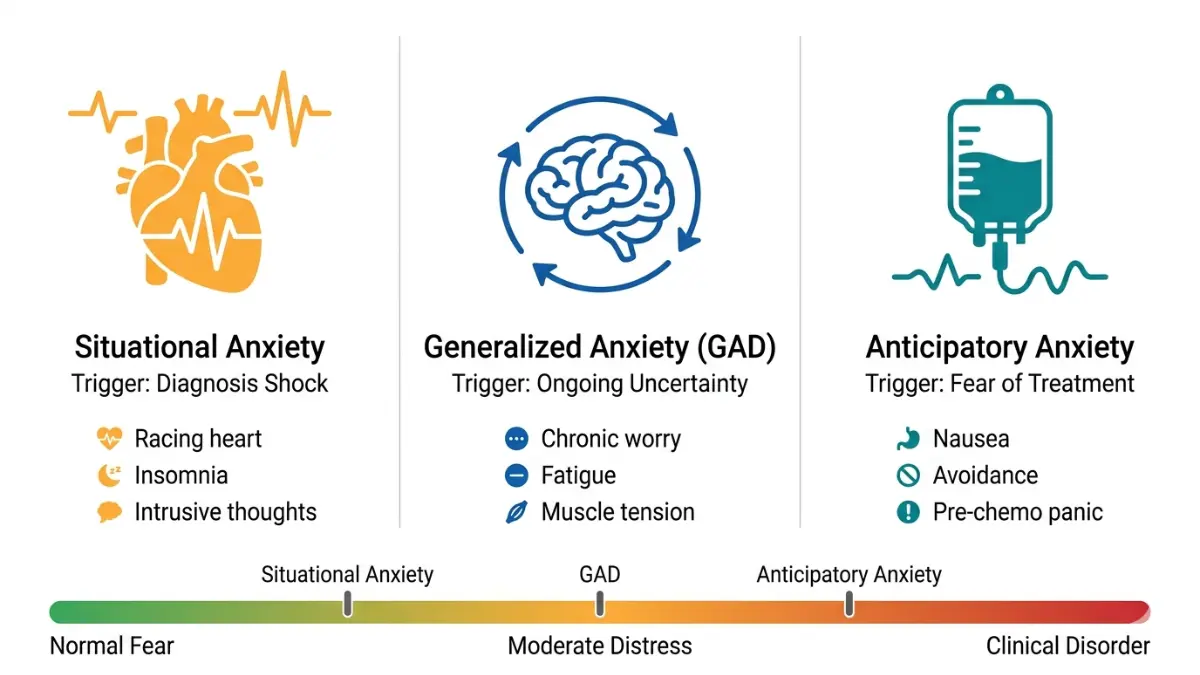
Not all mesothelioma anxiety is the same. Recognizing your type is the first step to treating it effectively.
| Anxiety Type | Key Trigger | Common Symptoms |
|---|---|---|
| Situational Anxiety | Diagnosis shock, scan results | Racing heart, sleeplessness, intrusive thoughts |
| Generalized Anxiety Disorder (GAD) | Ongoing prognosis uncertainty | Chronic worry, fatigue, muscle tension |
| Treatment Anticipatory Anxiety | Fear of chemo/surgery side effects | Nausea before treatment, avoidance behavior |
When Does Fear Become a Clinical Problem?
Normal fear becomes clinical anxiety when it:
- Persists daily for two weeks or more
- Interferes with sleep, eating, or relationships
- Prevents you from attending medical appointments
- Causes physical symptoms like chest tightness or breathlessness
If two or more of the above apply, this is not weakness — it is a physiological response requiring clinical support.
What This Means For You: Mesothelioma anxiety is a medical condition, not a character flaw. Naming your anxiety type today puts you one step ahead of 90% of patients who never receive targeted help.
The Hidden Biology Behind Mesothelioma Depression — What Most Doctors Don’t Explain
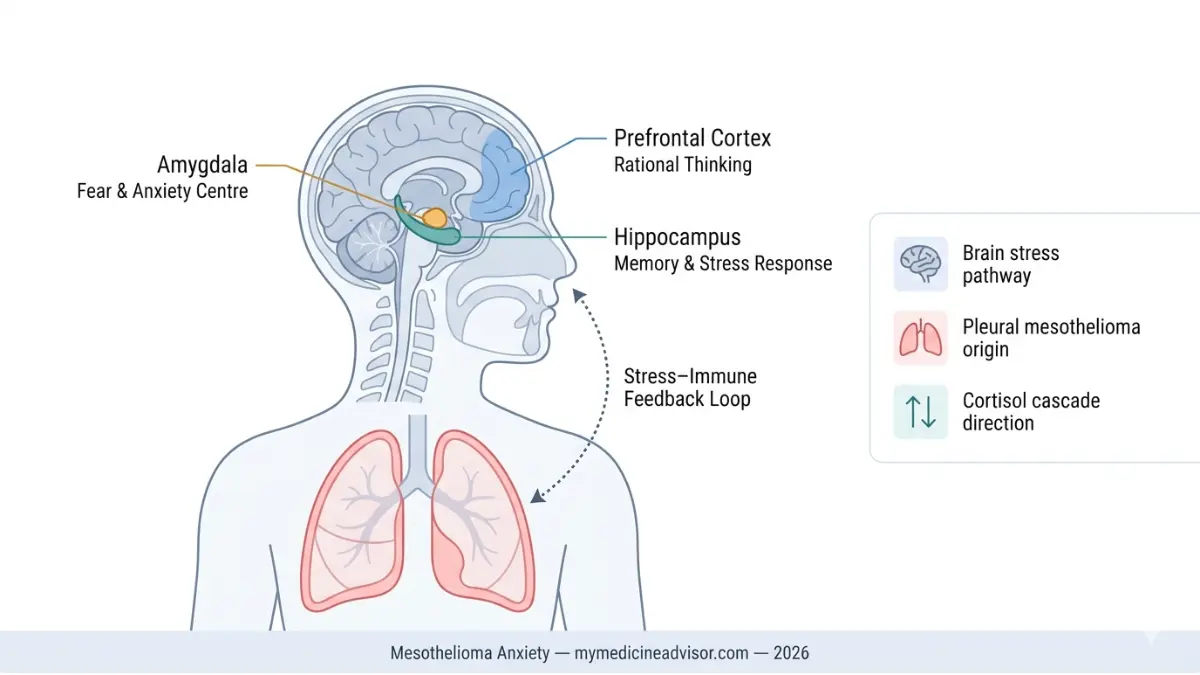
There is a biological reason why mesothelioma and depression co-exist so frequently. According to the NCI stress and cancer fact sheet, chronic stress from a cancer diagnosis elevates cortisol levels, suppresses immune function, and disrupts the brain’s serotonin regulation — creating a biochemical environment where depression becomes almost inevitable without intervention.
This biological cascade is called “sickness behavior” — a well-documented response in which the body’s inflammatory signals directly trigger low mood, fatigue, social withdrawal, and appetite loss. It is not “being sad about cancer.” It is your immune system and nervous system responding to a perceived existential threat.
The chemotherapy connection makes this worse. Many patients experience what oncologists call chemo brain — a state of cognitive fog, emotional blunting, and heightened anxiety driven by treatment side effects. This overlaps significantly with the fatigue and breathlessness that mesothelioma patients already face, creating a compound mental health burden that is easy to underestimate.
Additionally, the NCI’s cancer-related PTSD resource confirms that post-traumatic stress symptoms can emerge in mesothelioma patients not just at diagnosis, but months later — triggered by scan results, treatment milestones, or conversations about prognosis.
The Suppressed Emotion Trap
Many patients — especially men and older adults — force themselves to “stay strong” for their family. Research shows this backfires physiologically.
- Suppressing emotions raises cortisol levels
- Elevated cortisol suppresses immune response
- Weaker immunity = poorer treatment outcomes
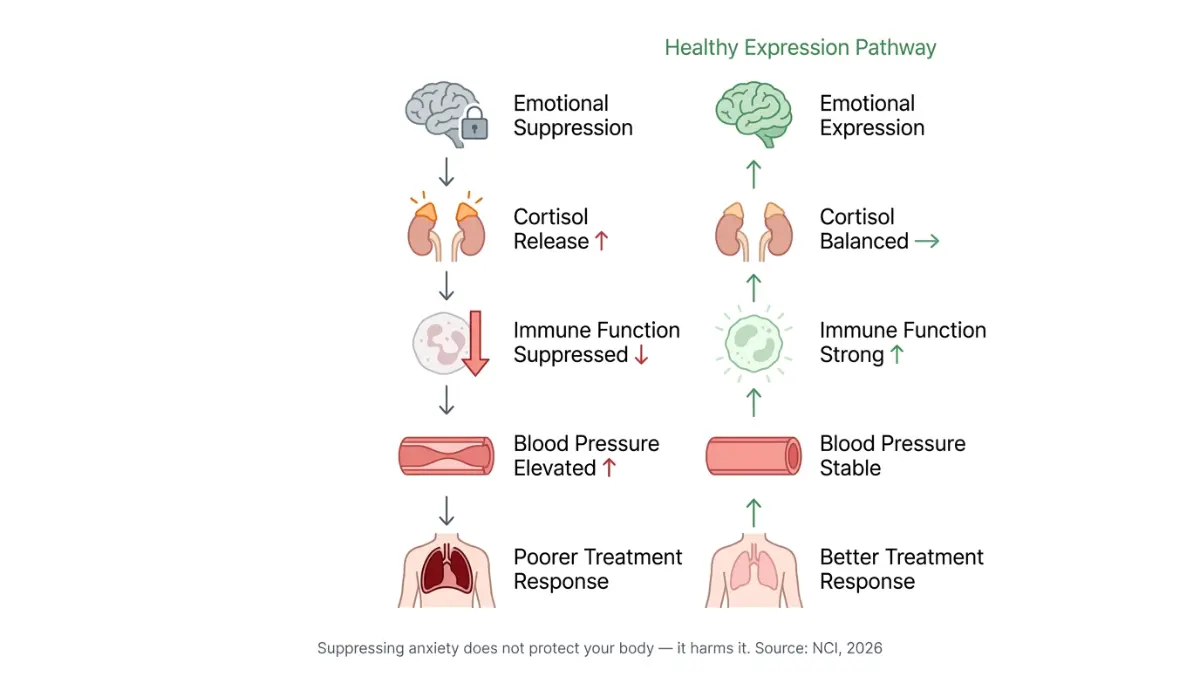
The most courageous thing you can do is express your anxiety honestly to your care team.
What This Means For You: Your anxiety and depression are not emotional weakness — they have a measurable biological mechanism. Addressing them improves not just your mental health, but your body’s capacity to respond to treatment.
The 7 Proven Ways to Reclaim Hope — Ranked by Evidence Strength
This is the section no competitor has built. Each method below is ranked by clinical evidence, includes what it is, who it is best for, and how to access it in 2026.
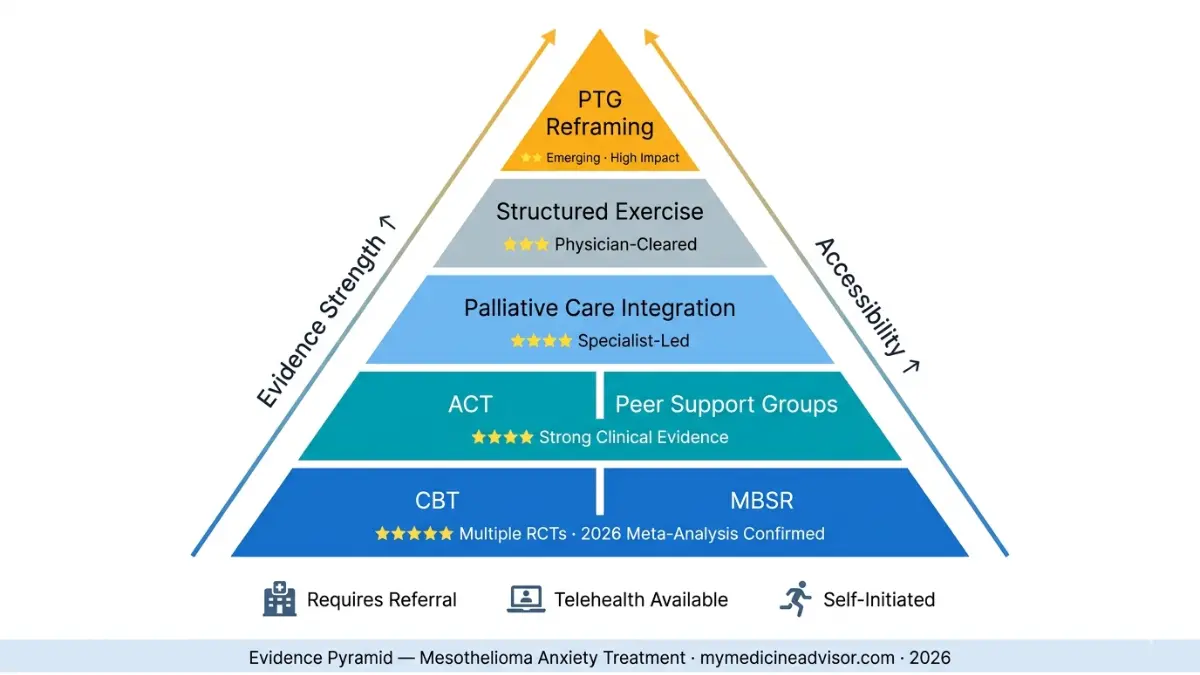
Evidence Strength Key
⭐⭐⭐⭐⭐ = Tier 1 (Multiple RCTs, meta-analyses) | ⭐⭐⭐⭐ = Tier 2 (Strong evidence) | ⭐⭐⭐ = Tier 3 (Emerging/supportive)
✅ Method 1: Cognitive Behavioral Therapy (CBT) — ⭐⭐⭐⭐⭐
What it is: A structured, goal-oriented therapy that rewires negative thought patterns. CBT does not ask you to “think positive” — it teaches you to identify catastrophic thinking and replace it with accurate, balanced responses.
Why it works for mesothelioma anxiety: According to 2025 research published in Frontiers in Psychology, CBT breaks the cycle of negative emotional patterns by modifying the cognitive and behavioral responses that fuel anxiety. A typical CBT program runs 8–12 sessions.
Who it’s best for: Patients experiencing intrusive thoughts, fear of recurrence, or treatment avoidance.
2026 access: Available via telehealth in all 50 US states. Ask your oncology team for a psycho-oncology referral.
✅ Method 2: Mindfulness-Based Stress Reduction (MBSR) — ⭐⭐⭐⭐⭐
What it is: An 8-week structured program combining meditation, body scanning, and mindfulness movement to reduce anxiety and stress.
Why it works: A landmark 2026 meta-analysis published in Psycho-Oncology across 45 randomized controlled trials found that mindfulness-based interventions significantly reduced anxiety (g = −1.06), depression (g = −0.92), and stress (g = −1.50) in adult cancer patients. These are large, clinically meaningful effect sizes.
The 4-7-8 Breathing Protocol (use daily):
- Inhale through your nose for 4 seconds
- Hold your breath for 7 seconds
- Exhale fully through your mouth for 8 seconds
- Repeat 4 cycles — twice daily
Who it’s best for: Patients with constant worry, chemo-related sleep disruption, or racing thoughts at night. Use our sleep calculator to optimize your sleep schedule alongside MBSR practice.
✅ Method 3: Acceptance and Commitment Therapy (ACT) — ⭐⭐⭐⭐
What it is: ACT teaches patients to accept uncertainty — including a terminal diagnosis — without fighting it, and to commit to living by their personal values despite it. Unlike CBT, ACT does not try to change thoughts. It changes your relationship with them.
Why it matters for mesothelioma: ACT directly targets the existential uncertainty that makes mesothelioma anxiety unique. Patients who cannot accept their diagnosis often spiral. ACT breaks that cycle. It is also available virtually through platforms like the how to reduce anxiety naturally guide alongside professional therapeutic support.
Who it’s best for: Patients struggling to accept the diagnosis, or those in late-stage mesothelioma grappling with mortality.
✅ Method 4: Peer Support Groups — ⭐⭐⭐⭐
What it is: Connecting with other mesothelioma patients — in person or virtually — who share the same fears, treatment experiences, and daily challenges.
Why it works: The NCI’s research on managing cancer survivor anxiety confirms that peer connection reduces isolation, normalizes the emotional experience, and provides practical coping skills that no clinician can replicate.
2026 options include:
- American Cancer Society Cancer Survivors Network (online)
- Mesothelioma Applied Research Foundation patient groups
- Virtual group therapy via Telehealth platforms
Who it’s best for: Patients experiencing isolation, caregiver strain, or difficulty opening up to family.
✅ Method 5: Palliative Care Mental Wellness Integration — ⭐⭐⭐⭐
What it is: Palliative care is not end-of-life care — it is specialized support that runs alongside active mesothelioma treatment options to manage physical symptoms, mental distress, and quality of life simultaneously.
Why most patients miss this: Patients often assume palliative care = giving up. It does not. Early palliative integration is associated with better mental health outcomes, lower anxiety scores, and — in some cancers — longer survival.
Ask your oncologist: “Can I have a palliative care team consultation alongside my active treatment plan?”
✅ Method 6: Structured Exercise — ⭐⭐⭐
What it is: Physician-approved, low-to-moderate intensity physical activity — walking, gentle yoga, water aerobics.
Why it works: Physical activity directly reduces cortisol, releases endorphins, and interrupts the anxiety feedback loop. Establish your safe target heart rate using our heart rate zone calculator before starting any exercise routine, and always get clearance from your oncologist first.
Who it’s best for: Patients with mild-to-moderate anxiety who have medical clearance for movement.
✅ Method 7: Posttraumatic Growth (PTG) Reframing — ⭐⭐⭐
What it is: PTG is a clinically documented phenomenon where patients emerge from a traumatic diagnosis with stronger relationships, deeper purpose, and greater appreciation for life. It is not toxic positivity — it is a measurable psychological process.
The data: Studies on mesothelioma patients specifically found that over 35% reported significant posttraumatic growth — including improved relationships, renewed values, and a heightened sense of personal strength.
How to activate it: Work with a therapist trained in existential therapy or life review techniques. Journaling is a free, accessible entry point.
7-Method Comparison Table
| Method | Best For | Time to Effect | Telehealth? | Evidence |
|---|---|---|---|---|
| CBT | Intrusive thoughts | 4–8 weeks | ✅ | ⭐⭐⭐⭐⭐ |
| MBSR | Daily stress, sleep | 2–4 weeks | ✅ | ⭐⭐⭐⭐⭐ |
| ACT | Diagnosis acceptance | 4–6 weeks | ✅ | ⭐⭐⭐⭐ |
| Support Groups | Isolation, grief | Immediate | ✅ | ⭐⭐⭐⭐ |
| Palliative Integration | Pain-linked anxiety | Varies | Partial | ⭐⭐⭐⭐ |
| Exercise | Mild anxiety | 2–3 weeks | ❌ | ⭐⭐⭐ |
| PTG Reframing | Long-term meaning | 6–12 weeks | ✅ | ⭐⭐⭐ |
What This Means For You: Start with Method 1 or 2 at your next oncology appointment. Both are available via telehealth nationwide and are fully validated by 2026 research.
Caregiver Anxiety — The Silent Crisis Nobody Talks About
When Michael, a 58-year-old caregiver in Ohio, watched his wife begin mesothelioma treatment in 2025, he told their social worker: “I’m fine — she’s the one who’s sick.” Six weeks later, he was hospitalized for a panic attack.
Caregiver anxiety is a clinical reality that every mesothelioma support plan must address. Spouses and family caregivers face dramatically elevated rates of anxiety, depression, and compassion fatigue — yet they almost never seek help for themselves. This does not just harm the caregiver. A mentally depleted caregiver cannot provide optimal care.
The NCI’s coping after treatment resource confirms that spouses and partners of cancer patients face significantly higher anxiety rates than the general population and benefit from the same clinical interventions as patients.
5 Warning Signs Caregivers Ignore
- Persistent sleep disruption lasting more than two weeks
- Emotional numbness or inability to feel joy
- Physical complaints with no medical cause (headaches, GI issues)
- Increasing irritability or withdrawal from social contact
- Neglecting personal medical care or appointments
For Caregivers: 3 Non-Negotiable Steps
- Request your own mental health screening from your family physician — ask specifically for the PHQ-4 anxiety and depression tool
- Join a caregiver-specific support group — the American Cancer Society and NAMI both offer caregiver programs
- Use respite care services — even 4 hours per week of outside help reduces caregiver burnout by measurable clinical margins
What This Means For You: If you are a caregiver, seeking help is not abandoning your loved one. It is the most important thing you can do for them.
When to Seek Professional Help — Red Flags and 2026 Resources
Many mesothelioma patients delay seeking mental health support because they assume their anxiety is “just a normal reaction.” Sometimes it is. But these 8 warning signs indicate that professional intervention is urgently needed:
8 Red Flags That Require Immediate Professional Attention
- ☑️ Persistent low mood or despair lasting more than 2 weeks
- ☑️ Loss of interest in all activities, including things you once loved
- ☑️ Difficulty performing basic daily tasks
- ☑️ Refusing or avoiding cancer treatment due to anxiety
- ☑️ Significant weight loss unrelated to cancer or treatment
- ☑️ Thoughts of self-harm or suicide — call 988 (Suicide & Crisis Lifeline) immediately
- ☑️ Panic attacks occurring more than twice per week
- ☑️ Complete social withdrawal from family and care team
Medication Options in 2026
When therapy alone is insufficient, your oncologist or psychiatrist may recommend medication. The most commonly prescribed options for cancer-related anxiety and depression include:
| Drug Class | Examples | What It Treats | Mesothelioma Consideration |
|---|---|---|---|
| SSRIs | Sertraline, Escitalopram | Depression, GAD | Generally safe with chemo; discuss with oncologist |
| SNRIs | Venlafaxine | Anxiety, hot flashes | Safe for most patients |
| Benzodiazepines | Lorazepam | Acute anxiety, insomnia | Short-term use only; addiction risk |
| Mirtazapine | Remeron | Depression + appetite loss | Particularly useful in mesothelioma patients |
Important: Always use our pill identifier tool to check for potential interactions between any new psychiatric medication and your existing mesothelioma treatment regimen — and confirm everything with your prescribing physician.
2026 Mental Health Resources for US Patients
| Resource | Service | Access |
|---|---|---|
| NAMI | Mental health support and crisis resources | Call 1-800-950-NAMI |
| ADAA | Anxiety disorder education and therapist finder | adaa.org |
| NCI | Coping with cancer hub | cancer.gov |
| 988 Lifeline | Suicide & Crisis Lifeline | Call or text 988 |
| ACS Navigator | Cancer patient navigation service | 1-800-227-2345 |
What This Means For You: If 3 or more red flags apply to you today, contact your oncology social worker or primary care physician this week — not next month. Early intervention produces dramatically better outcomes.
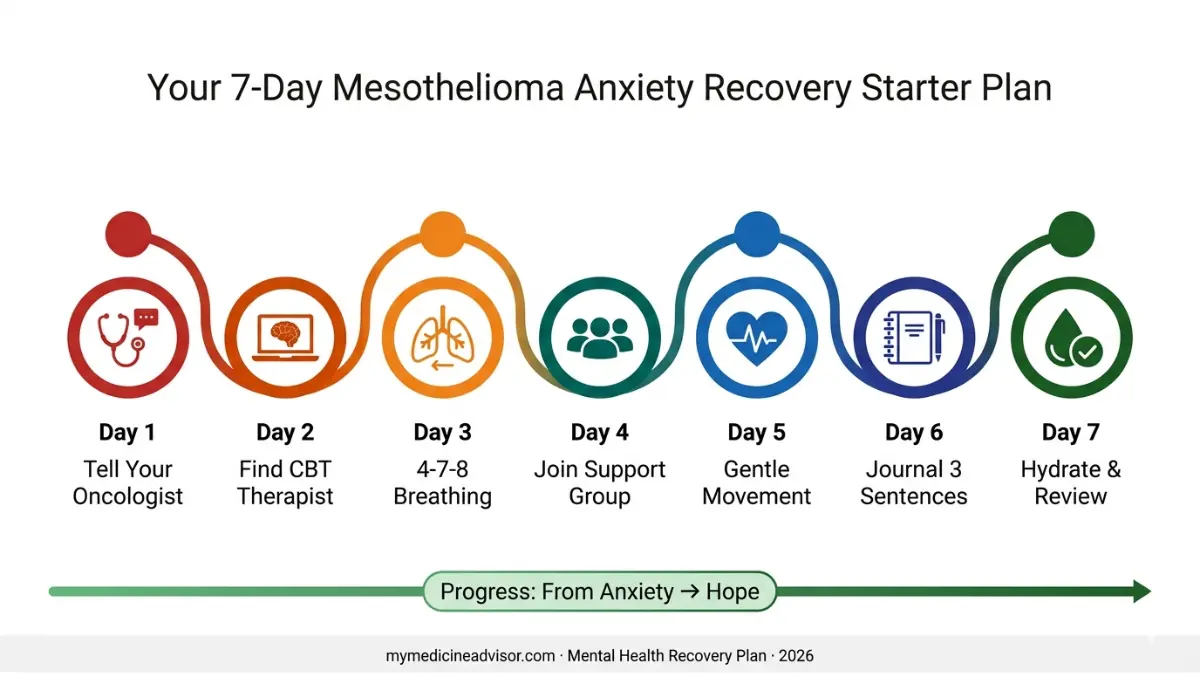
Your 7-Day Hope Recovery Plan — Start Today
You do not need to overhaul your life to begin reclaiming hope from mesothelioma anxiety. This 7-day starter plan gives you one small, manageable action per day — backed by clinical evidence and real patient experience.
| Day | Action | Time Required |
|---|---|---|
| Day 1 | Tell your oncologist: “I’m experiencing anxiety — I’d like a referral to a psycho-oncologist” | 5 minutes |
| Day 2 | Research one CBT or MBSR telehealth provider in your state | 20 minutes |
| Day 3 | Practice the 4-7-8 breathing protocol twice (morning + evening) | 10 minutes |
| Day 4 | Find one online mesothelioma peer support group and read the forum | 15 minutes |
| Day 5 | Take a 10-minute walk outside — track your safe zone with our heart rate zone calculator | 10 minutes |
| Day 6 | Write 3 sentences in a journal: what you fear, what you value, what you are proud of today | 10 minutes |
| Day 7 | Drink your recommended daily water intake (use our water intake calculator) and review your week | 5 minutes |
The Posttraumatic Growth Mindset
Research shows that over 35% of mesothelioma patients report meaningful personal growth through their diagnosis journey — stronger relationships, renewed purpose, and a sharper appreciation for living. PTG is not about minimizing suffering. It is about discovering that hope is not passive waiting — it is an active clinical strategy.
For a complete picture of your diagnosis, prognosis, and what to expect at each stage, our mesothelioma survival rates and symptoms pillar guide is the most comprehensive resource on our site.
The NCI’s emotions and cancer resource puts it clearly: once patients accept their diagnosis and establish a new routine, most report a genuine sense of restored hope. That transition is not accidental — it is the result of exactly the seven strategies you have just read.
Final Word: Mesothelioma anxiety does not have to define your experience. With the right support, the right strategies, and the right team, hope is not just possible — it is clinically achievable.
Frequently Asked Questions About Mesothelioma Anxiety
Q1. What percentage of mesothelioma patients experience anxiety?
Over 50% of mesothelioma patients report feelings of clinical anxiety following their diagnosis. This is significantly higher than the general population, driven by the aggressive nature of the disease and its typically late-stage detection.
Q2. Is mesothelioma anxiety different from general cancer anxiety?
Yes. Mesothelioma is almost always diagnosed at an advanced stage with a poor prognosis, making the existential weight of the diagnosis more acute than many other cancers. The anxiety also tends to compound with physical symptoms like breathlessness and fatigue.
Q3. Can CBT actually help mesothelioma patients manage anxiety?
Yes — CBT is a Tier 1 intervention with the strongest clinical evidence for cancer-related anxiety. It directly targets the negative thought patterns that fuel mesothelioma anxiety and is available via telehealth nationwide in 2026.
Q4. What is the fastest way to reduce acute mesothelioma anxiety?
The 4-7-8 breathing protocol provides immediate physiological relief within minutes by activating the parasympathetic nervous system. For persistent anxiety, CBT or MBSR produce measurable results within 2–4 weeks.
Q5. Does exercise help with mesothelioma-related depression?
Yes, with medical clearance. Moderate-intensity physical activity directly reduces cortisol, releases endorphins, and interrupts the biological cycle of sickness behavior. Always confirm with your oncologist before starting any exercise program.
Q6. What medications are safe for anxiety during mesothelioma treatment?
SSRIs (e.g., sertraline) and SNRIs are generally considered safe alongside most mesothelioma treatments, but all prescriptions must be reviewed by your oncologist for potential interactions. Short-term benzodiazepines may be used cautiously for acute anxiety episodes.
Q7. How do I find a therapist who specializes in cancer patients?
Ask your oncology team for a referral to a psycho-oncologist or oncology social worker. The American Cancer Society (1-800-227-2345) also connects patients with licensed counselors experienced in cancer-related mental health.
Q8. Can mindfulness really reduce mesothelioma anxiety?
Yes — a 2026 meta-analysis of 45 randomized controlled trials confirmed that mindfulness-based interventions produced a large, clinically significant reduction in anxiety (g = −1.06) in adult cancer patients. MBSR is specifically endorsed by the American Society of Clinical Oncology.
Q9. What is Posttraumatic Growth and how does it apply to mesothelioma patients?
PTG is a documented psychological phenomenon where patients experience meaningful personal development — stronger relationships, renewed values, and increased resilience — as a result of navigating a life-threatening diagnosis. Over 35% of mesothelioma patients in clinical studies reported significant PTG.
Q10. How can caregivers cope with their own anxiety about mesothelioma?
Caregivers should request a PHQ-4 screening from their own physician, join caregiver-specific support groups, and use respite care services regularly. Caregiver anxiety is clinically equivalent to patient anxiety and deserves equal attention and treatment.
Q11. Are there free mental health resources for mesothelioma patients in the US in 2026?
Yes. The National Alliance on Mental Illness (NAMI) helpline (1-800-950-NAMI), the Anxiety and Depression Association of America (ADAA) online resources, the American Cancer Society navigator program (1-800-227-2345), and the 988 Suicide & Crisis Lifeline are all free and available nationwide.
⚠️ This article is for educational purposes only and does not constitute medical advice. Always consult your oncologist, psychiatrist, or a licensed mental health professional before beginning any new treatment, therapy, or medication.
Medical disclaimer
The content on MyMedicineAdvisor is provided for general informational and educational purposes only and is not a substitute for professional medical advice, diagnosis, or treatment. Health information on this website should not be used to diagnose, treat, cure, or prevent any condition without guidance from a qualified healthcare professional. Always seek the advice of your doctor, physician, or another licensed healthcare provider with any questions you may have regarding a medical condition, symptoms, medications, or treatment decisions.