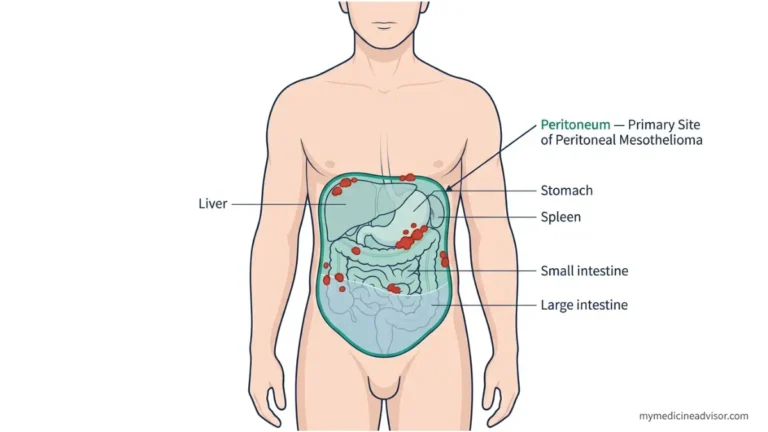
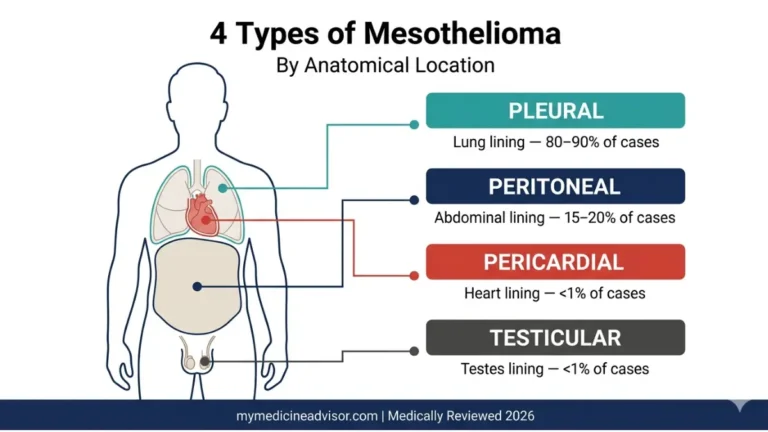
On This Page – Quick Medical Summary
The Brutal Reality: What Mesothelioma Chemotherapy Really Feels Like
James, a 67-year-old Navy veteran from Virginia, sat in the infusion room on Day 1 of his mesothelioma chemotherapy cycle. The IV drip started, the anti-nausea meds kicked in — and within 48 hours, the fatigue hit like a wall. “Nobody told me how fast it would change everything,” he later said.
That experience is real. And it’s what this guide is built around — not just the clinical facts, but the full truth of what mesothelioma chemotherapy actually does to the body, which drugs are used, and how to fight the worst side effects.
What is mesothelioma chemotherapy? Mesothelioma chemotherapy uses powerful anti-cancer drugs to target and destroy mesothelioma cells. It is one of the most common treatments for both pleural and peritoneal mesothelioma, used alone or combined with surgery and radiation. According to the National Cancer Institute, chemotherapy can extend survival and significantly improve quality of life in eligible patients.
In this guide, you’ll learn:
- Which 3 drugs oncologists actually prescribe — and why
- A severity-rated side effects table no competitor shows you
- A week-by-week breakdown of what your body experiences
- The caregiver action guide your oncology team won’t hand you
- The 2026 NCCN treatment updates that change first-line decisions
How Mesothelioma Chemotherapy Targets Cancer Cells
How Chemo Destroys Mesothelioma
Mesothelioma cancer cells divide faster than most normal cells. Chemotherapy drugs exploit this weakness — they damage the DNA inside rapidly dividing cells, stopping them from multiplying and triggering their death.
The drugs travel through the bloodstream, which is why chemo can reach cancer cells throughout the entire body. This is why it works as a systemic treatment — and also why side effects can appear far from the tumor site.
Two Types of Mesothelioma Chemotherapy
| Type | How It’s Given | Target Area | Best For |
|---|---|---|---|
| Systemic Chemotherapy | IV infusion or oral | Entire body via bloodstream | Pleural mesothelioma, widespread disease |
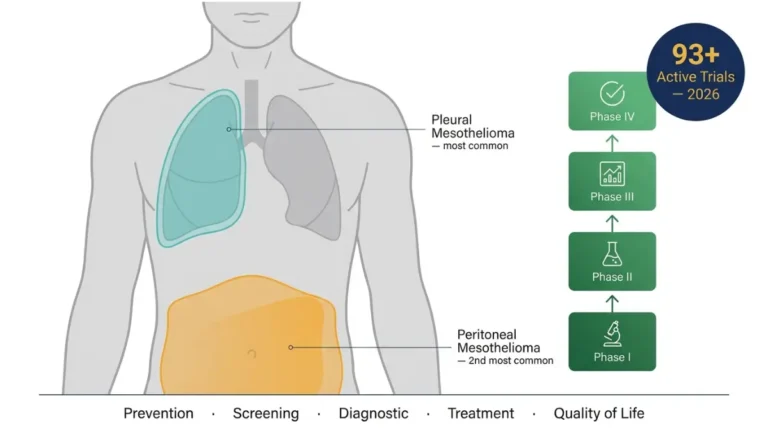
| Intracavitary (Local) Chemo | Directly into chest or abdomen during surgery | Localised cavity | Peritoneal mesothelioma (HIPEC), pleural (HITHOC) |
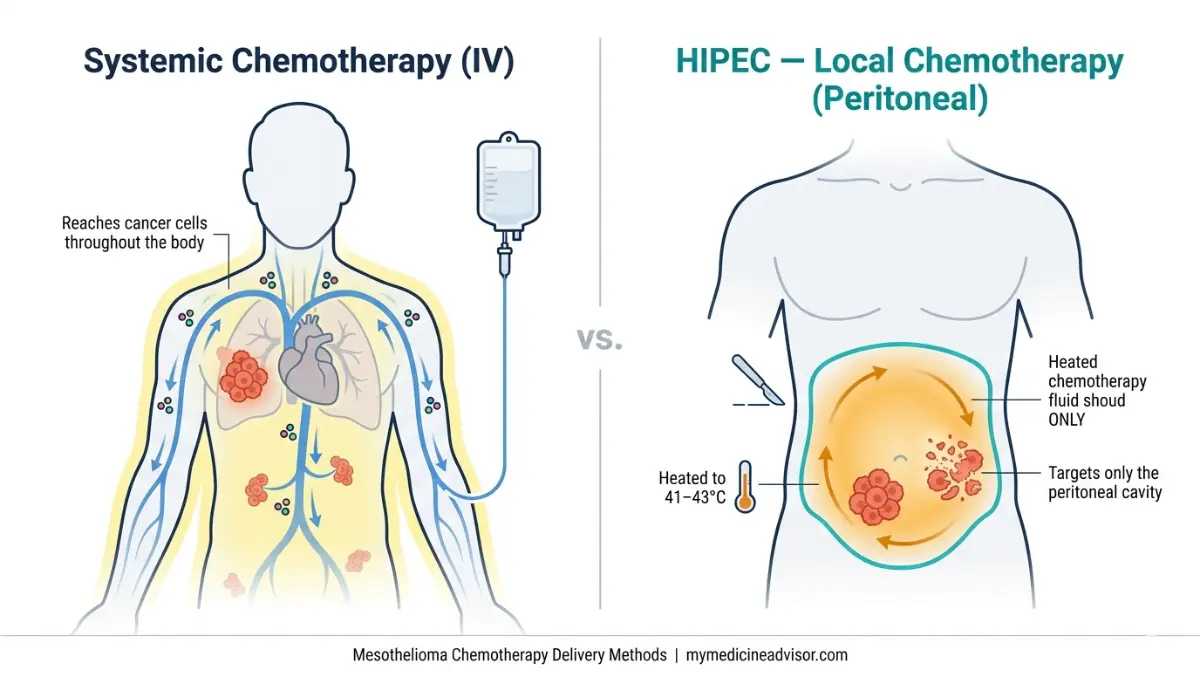
HIPEC (Heated Intraperitoneal Chemotherapy) is considered the gold standard for peritoneal mesothelioma. Surgeons wash the abdominal cavity with heated chemo drugs immediately after cytoreductive surgery, dramatically improving survival outcomes.
Neoadjuvant vs. Adjuvant Chemotherapy
- Neoadjuvant (Before Surgery): Shrinks the tumor first, making it more operable
- Adjuvant (After Surgery): Targets any cancer cells left behind after surgical removal
Who Qualifies for Mesothelioma Chemotherapy?
Not every patient is a candidate. Eligibility depends on:
- Overall fitness level (ECOG performance status 0–2)
- Kidney, liver, and heart function within normal ranges
- White blood cell and platelet counts above treatment thresholds
- Stage of mesothelioma (see our Mesothelioma Stages Survival Guide)
If you’re tracking early symptoms, use our Symptom Checker to document and organize them before your first oncology consultation.
What This Means For You: Your oncologist will run blood and organ function tests before every chemo cycle — not just at the start. These protect you from treatment when your body isn’t ready.
The 3 Key Mesothelioma Chemotherapy Drugs (2026 NCCN-Approved)
This is the section every competitor gets wrong — they list drugs without telling you how they differ, when each is chosen, and what patients actually experience.
Master Drug Comparison Table
| Drug (Brand) | Generic | Approved Use | How Delivered | Combined With | Key Side Effects |
|---|---|---|---|---|---|
| Alimta | Pemetrexed | Pleural + Peritoneal | IV infusion | Cisplatin or Carboplatin | Fatigue, mouth sores, low counts |
| Platinol | Cisplatin | Pleural (1st line standard) | IV infusion | Pemetrexed | Nausea, kidney damage, neuropathy |
| Gemzar | Gemcitabine | Recurrent / 2nd-line cases | IV infusion | Cisplatin or Carboplatin | Flu symptoms, low blood counts |
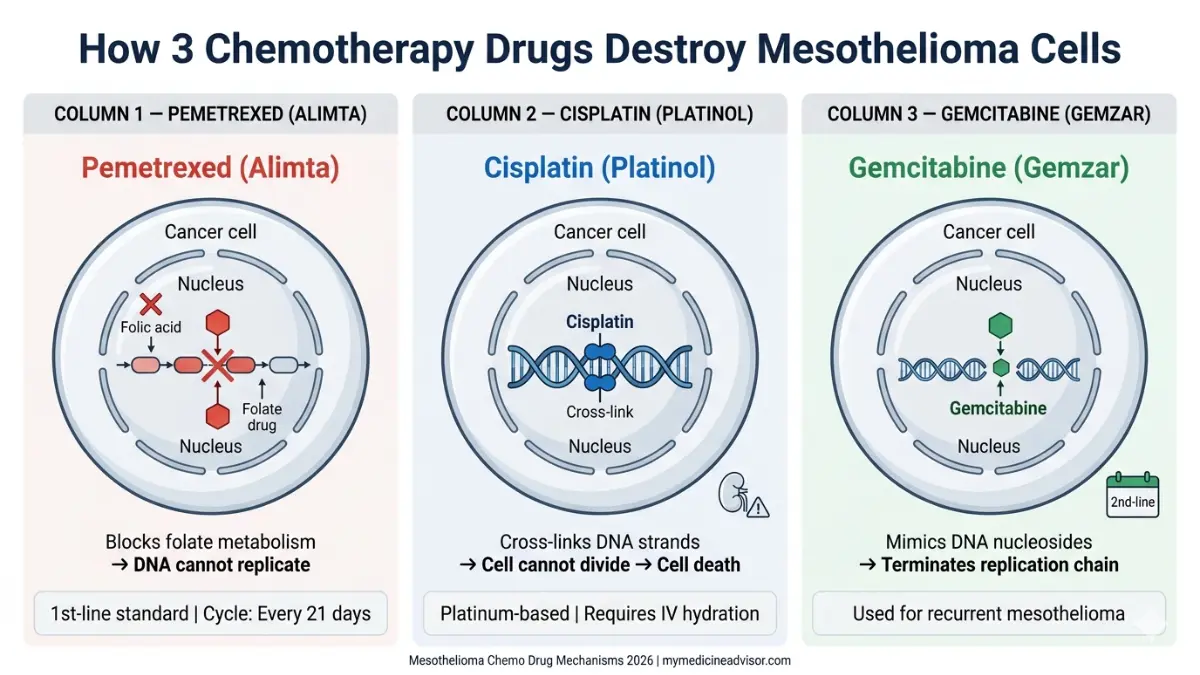
Drug 1 — Pemetrexed (Alimta): The Gold Standard
Pemetrexed is the cornerstone of first-line mesothelioma chemotherapy in the United States. It works by disrupting folate metabolism — a process cancer cells depend on for rapid DNA production.
Critical fact most patients miss: Pemetrexed lowers folic acid and Vitamin B12 levels in the body. The American Cancer Society confirms that patients must supplement with both vitamins throughout treatment to prevent severe toxicity.
2026 Update: Per NCCN Version 2.2026, pemetrexed + cisplatin remains the standard first-line doublet for unresectable pleural mesothelioma. This combination has shown a median survival of 12–16 months versus 4–8 months without treatment.
Patient experience (composite): Most patients report manageable fatigue during days 2–5 of the cycle, with appetite returning significantly by week 3.
If you take other medications alongside pemetrexed, verify interactions using our Pill Identifier tool, and always disclose your full medication list to your oncology team.
Drug 2 — Cisplatin (Platinol): The Power Driver
Cisplatin is a platinum-based chemotherapy drug and the most common partner to pemetrexed. It works by directly cross-linking DNA strands in cancer cells, making it impossible for them to replicate.
The carboplatin switch: Patients who cannot tolerate cisplatin due to kidney disease, hearing loss, or severe neuropathy may receive carboplatin instead. Carboplatin is gentler on the kidneys but slightly less potent.
Kidney protection is non-negotiable during cisplatin treatment. Oncologists administer aggressive IV fluids before and after each infusion. Patients should aim for consistent daily hydration between sessions — calculate your exact daily fluid needs with our Water Intake Calculator.
A landmark 2003 study published on PubMed (PMID: 15199091) by Vogelzang et al. demonstrated that pemetrexed + cisplatin improved median survival to 12.1 months vs 9.3 months for cisplatin alone — a breakthrough that set the modern treatment standard.
Drug 3 — Gemcitabine (Gemzar): The Recurrence Fighter
Gemcitabine enters the picture when mesothelioma returns or progresses after first-line treatment. It is a nucleoside analogue — it mimics the building blocks of DNA to fool cancer cells into incorporating it during replication, causing cell death.
It’s typically combined with cisplatin or carboplatin in second-line settings. Clinical data shows partial response rates of 12–26% in recurrent pleural mesothelioma cases.
Flu-like pattern: Unlike cisplatin, gemcitabine produces a distinct flu-like syndrome — fever, body aches, and fatigue peaking 6–12 hours after infusion. Most patients find this manageable with rest and hydration.
What This Means For You: If your oncologist proposes switching to gemcitabine, it typically means the primary regimen is no longer suppressing growth — not that all hope is lost. Second-line chemo extends life for many patients. Explore the full picture in our Mesothelioma Survival Rate guide.
Your genetic profile may also influence how your body metabolises these drugs. Our Genetic Risk Assessment Tool can help you document hereditary factors to discuss with your oncologist.
The Brutal Side Effects: Severity-Rated, Managed, and Humanised
This is what no competitor gives you. Not just a list — a complete severity and action framework.
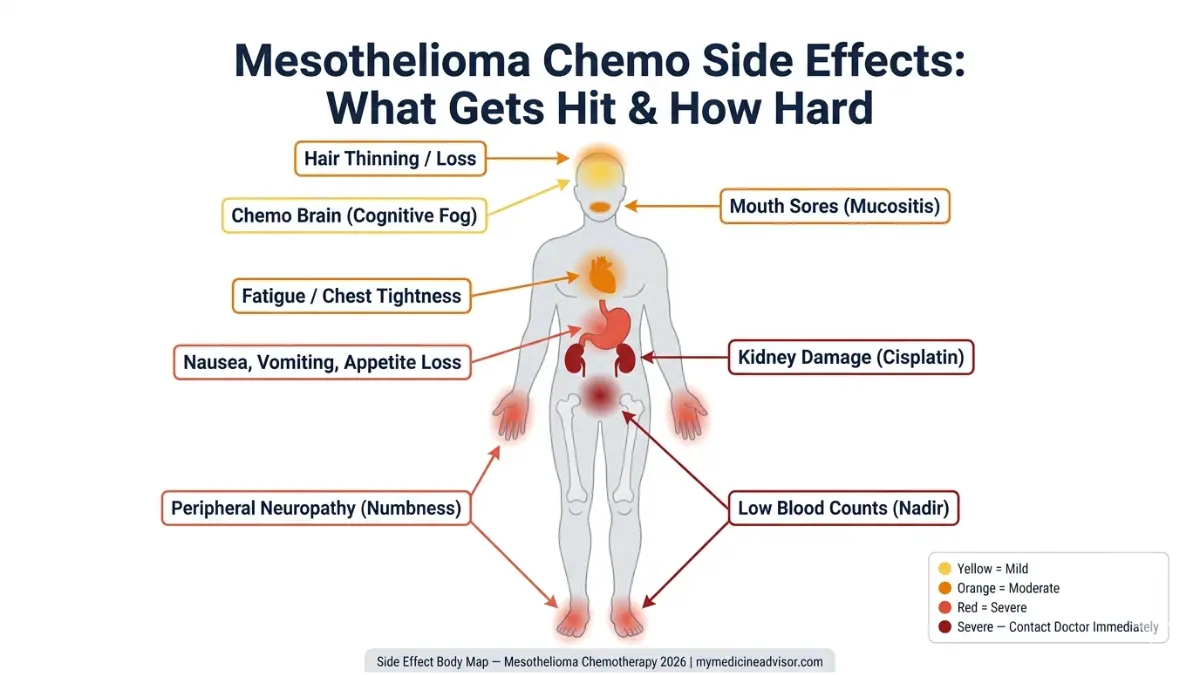
Side Effect Severity Rating Table (2026)
| Side Effect | Severity Level | When It Peaks | Management Strategy | When to Call Your Doctor |
|---|---|---|---|---|
| Nausea & Vomiting | Moderate–Severe | Days 1–3 of cycle | Ondansetron, Aprepitant, ginger, small meals | Cannot keep fluids down for 24 hours |
| Fatigue | Moderate | Week 1–2 | Rest + gentle 10-min walks | Unable to get out of bed |
| Hair Loss | Moderate | Weeks 2–3 | Cold cap therapy (ask your centre) | Cosmetic — inform care team |
| Peripheral Neuropathy | Moderate–Severe | Cumulative cycles | B-vitamin supplements, Gabapentin | Numbness spreading to arms/legs |
| Mouth Sores (Mucositis) | Mild–Moderate | Days 5–10 | Warm saltwater rinse, soft diet, ice chips | Unable to eat or drink for 12+ hours |
| Chemo Brain (Cognitive Fog) | Mild | During active cycles | Memory apps, written notes, rest | Severe confusion or disorientation |
| Low Blood Counts (Nadir) | Severe | Days 7–14 | Avoid crowds, wash hands, G-CSF if prescribed | Fever above 38°C / 100.4°F — go to ER |
| Kidney Damage | Severe (cisplatin) | Cumulative | Aggressive IV + oral hydration | Reduced urination, swelling, dark urine |
Managing Nausea: The 3-Step Oncology Protocol
Most oncologists follow a tiered anti-nausea approach:
- Step 1 (Day of Infusion): IV Ondansetron (Zofran) + Dexamethasone administered before chemo starts
- Step 2 (Days 2–3): Oral Aprepitant (Emend) to block delayed nausea signals
- Step 3 (Supportive): Ginger tea, cold foods, frequent small meals (5–6 per day), avoid strong smells
The CDC’s nutrition guidance for cancer patients recommends prioritising protein and hydration throughout each cycle to support recovery.
Maintaining Nutrition During Chemo
Chemo dramatically affects appetite, taste, and digestion. Protein intake is the single most important nutritional target during mesothelioma treatment — it preserves muscle mass and supports immune function.
Use our Protein Intake Calculator to calculate your daily target based on body weight and activity level during treatment. Consistently hitting your protein goal can shorten recovery time between cycles.
Caregiver Action Guide — 5 Things to Do Right Now
Caring for someone on mesothelioma chemotherapy is one of the most demanding roles a person can take on. Here is what you can do immediately:
- Track symptoms daily in a written log — note fatigue score (1–10), appetite, temperature, any new pain
- Monitor temperature every morning during the nadir period (days 7–14); a fever above 38°C requires same-day medical contact
- Prepare soft, nutrient-rich foods in advance for days 2–5 when nausea peaks
- Handle all household hygiene tasks during low blood count periods to reduce infection risk
- Attend at least one oncology appointment per cycle to help ask questions and absorb information
Recovery sleep is equally critical. Use our Sleep Calculator to help the patient find the optimal rest schedule aligned with their chemo cycle timing.
For a broader guide on what to expect through the full treatment journey, read our Mesothelioma Cancer Recovery Guide.
Week by Week: What REALLY Happens During a Mesothelioma Chemo Cycle
No competitor gives patients this. This is the lived-experience roadmap for a standard 3-week mesothelioma chemotherapy cycle.
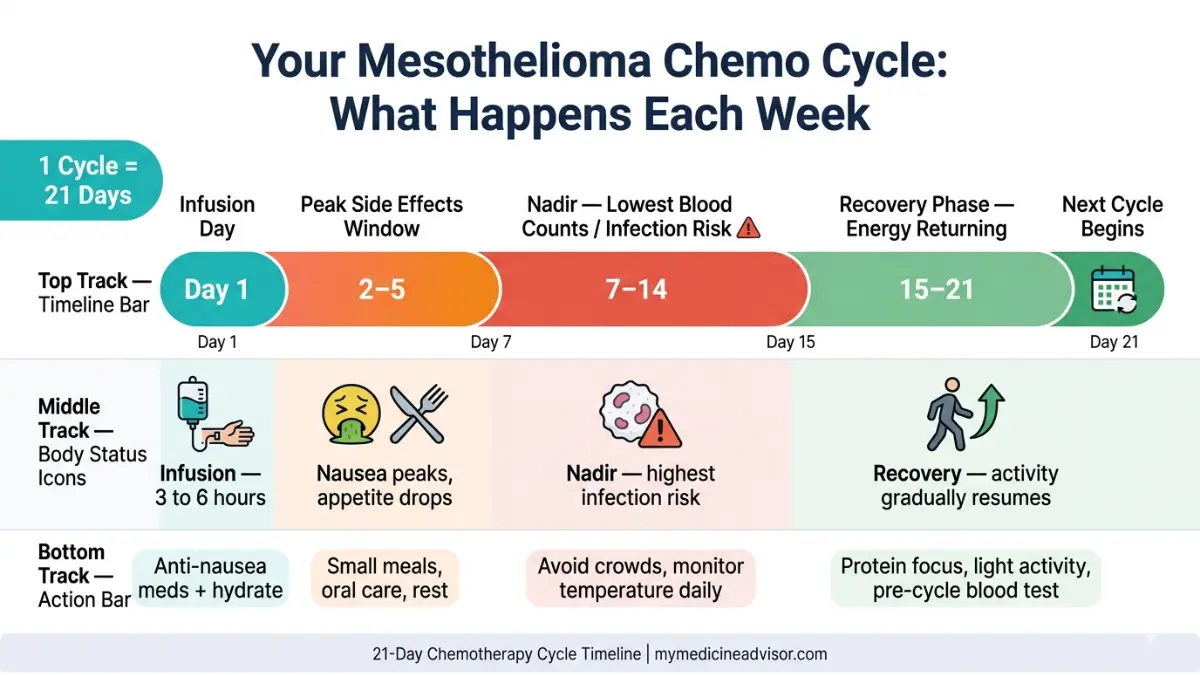
Week-by-Week Chemo Cycle Breakdown
| Week | What’s Happening Physically | How Most Patients Feel | Key Actions |
|---|---|---|---|
| Day 1 (Infusion Day) | IV pemetrexed + cisplatin administered over 3–6 hours | Anxious, mild fatigue setting in | Rest afterward, hydrate aggressively, anti-nausea meds |
| Days 2–5 | Peak nausea and fatigue window; body processing drug load | Appetite loss, tiredness, possible mouth soreness | Small frequent meals, saltwater rinses, minimal activity |
| Week 2 (Days 7–14) | Blood counts drop — nadir period, highest infection risk | Possible fever risk, low energy | Avoid crowds and sick contacts; check temperature daily |
| Week 3 (Days 15–21) | Blood counts recovering; body stabilising | Energy gradually returning | Light activity, increase protein intake, prepare for next cycle |
| Pre-Cycle Assessment | Blood tests, organ function check | Nervousness about results | Oncology appointment — report ALL symptoms honestly |
What to Pack for Chemo Day — Checklist
Most patients forget how long infusion sessions run (3–6 hours). Here is the essential packing list:
- ✅ Warm layers or blanket (infusion rooms are cold)
- ✅ Refillable water bottle (minimum 1.5 litres)
- ✅ Easy-to-digest snacks (crackers, banana, plain rice cakes)
- ✅ Anti-nausea tablets (if prescribed for day-of use)
- ✅ Headphones or a book for distraction
- ✅ A written list of all current medications and supplements
- ✅ Emergency contact numbers saved in your phone
- ✅ Phone charger — sessions are long
7 Questions to Ask Your Oncologist Before Every Cycle
- Are my kidney and blood counts safe to proceed today?
- Which anti-nausea drugs should I take — and exactly when?
- Should I adjust my Vitamin B12 or folic acid dose this cycle?
- Is my weight loss in the danger range? (Track target weight with our Ideal Weight Calculator)
- Is this cycle’s response consistent with your target outcome?
- Are there any clinical trials I should be considering?
- When should I go to the emergency room vs. call the clinic?
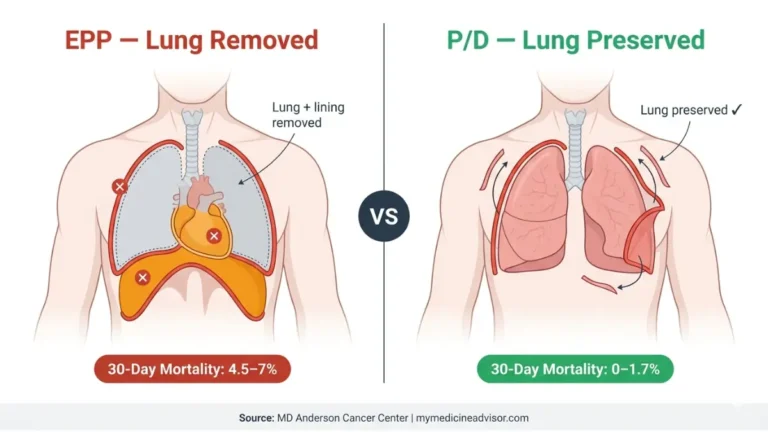
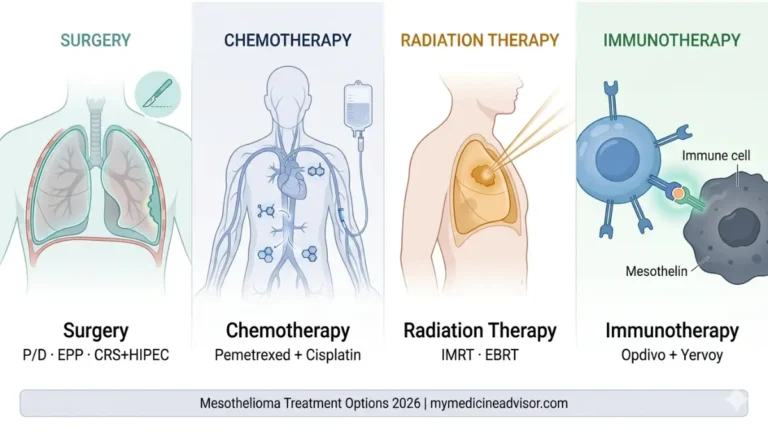
For context on how chemo fits into the bigger treatment picture, see our complete guide to Mesothelioma Treatment Options and learn how chemo compares against surgery and radiation therapy.
Mesothelioma Chemotherapy in 2026: New Combinations and What’s Changing
Is Chemo Still the First Choice in 2026?
The answer is nuanced. For most patients with malignant pleural mesothelioma, pemetrexed + cisplatin remains the NCCN-recommended first-line chemotherapy standard as of Version 2.2026. However, the treatment landscape is shifting significantly toward combination approaches.
Chemotherapy + Immunotherapy: The 2026 Frontier
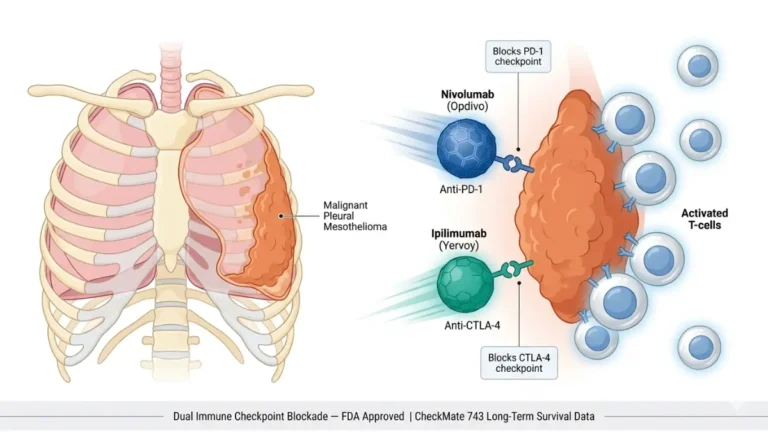
A major shift in 2026 guidelines is the integration of immunotherapy alongside chemotherapy for certain mesothelioma subtypes. The combination of Opdivo (nivolumab) + Yervoy (ipilimumab) — approved by the FDA for unresectable pleural mesothelioma — has demonstrated improved survival in non-epithelioid subtypes.
Ongoing clinical trials at ClinicalTrials.gov are actively evaluating triple combinations: chemo + immunotherapy + anti-angiogenic agents (such as Avastin/bevacizumab).
The Cancer Research UK clinical team notes that combination therapy is showing significant promise in extending progression-free survival in 2025–2026 phase III data.
HIPEC in 2026: Peritoneal Mesothelioma’s Gold Standard
For peritoneal mesothelioma, cytoreductive surgery + HIPEC continues to deliver the strongest long-term outcomes of any treatment. Selected patients achieve median survival of over 5 years — a dramatic improvement over systemic chemo alone. Read the full breakdown in our Peritoneal Mesothelioma guide.
What the FDA Approved — And What’s Coming Next
The FDA’s approval of pemetrexed (Alimta) for mesothelioma remains a landmark in modern oncology. Current FDA and NIH/NCI research pipelines are focused on mesothelin-targeted therapies and CAR-T cell approaches specific to mesothelioma.
What This Means For You: Ask your oncologist at your next appointment whether you are eligible for a combination immunotherapy protocol or an active 2026 clinical trial. Eligibility criteria are broader than most patients realise.
For broader context on how immunotherapy is reshaping cancer treatment, read our dedicated guide on how immunotherapy works.
Stay informed on the full mesothelioma survival outlook with our Survival Rate & Symptoms Pillar Article — the most comprehensive resource on our platform.
FAQs — Mesothelioma Chemotherapy (People Also Ask)
Q1. What is the most common chemotherapy drug for mesothelioma?
Pemetrexed (Alimta) combined with cisplatin is the most widely prescribed first-line regimen for malignant pleural mesothelioma, as confirmed by NCCN and ACS guidelines.
Q2. How many chemo cycles do mesothelioma patients typically need?
Most patients receive 4 to 6 cycles, each lasting 3–4 weeks. Continuation beyond 6 cycles depends on response and tolerance.
Q3. Does mesothelioma chemotherapy cure the cancer?
Chemotherapy is unlikely to cure mesothelioma completely. It is most effective at shrinking tumors, slowing growth, and improving survival — often extending life from 4–8 months (untreated) to 12–21 months or more.
Q4. What are the worst side effects of mesothelioma chemo?
The most severe side effects are low blood counts (increased infection risk), kidney damage from cisplatin, and peripheral neuropathy. These require immediate medical attention if severe.
Q5. Can you eat normally during mesothelioma chemotherapy?
Most patients can eat normally during recovery weeks (Week 3). Days 2–5 are hardest — soft, bland, high-protein foods in small portions work best.
Q6. How long does a mesothelioma chemo session take?
A standard IV infusion session lasts 3 to 6 hours, followed by IV hydration (especially with cisplatin). Plan for a full day.
Q7. Is cisplatin or carboplatin better for mesothelioma?
Cisplatin is clinically preferred for its potency. Carboplatin is substituted when patients have kidney disease, significant neuropathy, or cannot tolerate cisplatin’s toxicity profile.
Q8. What is the success rate of mesothelioma chemotherapy?
Pemetrexed + cisplatin achieves a response rate of approximately 41% in clinical trials, with significant disease stabilisation in many additional patients.
Q9. Can chemo be combined with immunotherapy for mesothelioma?
Yes. In 2026, combination protocols pairing chemotherapy with Opdivo + Yervoy are increasingly used, particularly for non-epithelioid subtypes. Check active trials at ClinicalTrials.gov.
Q10. How do you manage hair loss from mesothelioma chemo?
Cold cap therapy (scalp cooling during infusion) reduces hair loss for some patients. Not all chemo regimens cause complete hair loss — pemetrexed-based regimens tend to cause thinning rather than full loss.
Q11. When should a mesothelioma patient stop chemotherapy?
Your oncologist will recommend pausing or stopping if: imaging shows no response after 2–3 cycles, side effects become life-threatening, organ function deteriorates significantly, or quality of life cannot be maintained at an acceptable level.
Final Word: You Deserve the Full Truth
Mesothelioma chemotherapy is not easy. But understanding exactly which drugs are being used, what your body will experience week by week, and how to fight the worst side effects puts you — and your family — back in control.
For additional support resources and the complete picture of mesothelioma management, explore our Mesothelioma Symptoms & Survival Rates Pillar and our broader Health Tips resource centre.
Medical disclaimer
The content on MyMedicineAdvisor is provided for general informational and educational purposes only and is not a substitute for professional medical advice, diagnosis, or treatment. Health information on this website should not be used to diagnose, treat, cure, or prevent any condition without guidance from a qualified healthcare professional. Always seek the advice of your doctor, physician, or another licensed healthcare provider with any questions you may have regarding a medical condition, symptoms, medications, or treatment decisions.