On This Page – Quick Medical Summary
When Marcus Webb, a 62-year-old construction worker from Texas, was diagnosed with stage II epithelioid pleural mesothelioma in late 2024, his oncologist gave him a choice that would define the rest of his life: EPP or P/D surgery. Guided by the latest 2025 ASCO guidelines, Marcus chose P/D — a lung-sparing procedure — and is now 14 months post-surgery with preserved lung function and an active daily life.
Mesothelioma surgery is the most powerful weapon against malignant pleural mesothelioma (MPM) — but it only works for the right patient, at the right center, with the right procedure. This guide delivers everything you need to understand the EPP vs P/D decision in 2026: the survival data, eligibility criteria, updated treatment guidelines, and a step-by-step action plan.
In this article: What each surgery involves → Survival comparison table → Who qualifies → 2025–2026 guidelines → Recovery roadmap → How to find the best surgical center.
What Is Mesothelioma Surgery — And Why This Decision Is Life-Critical
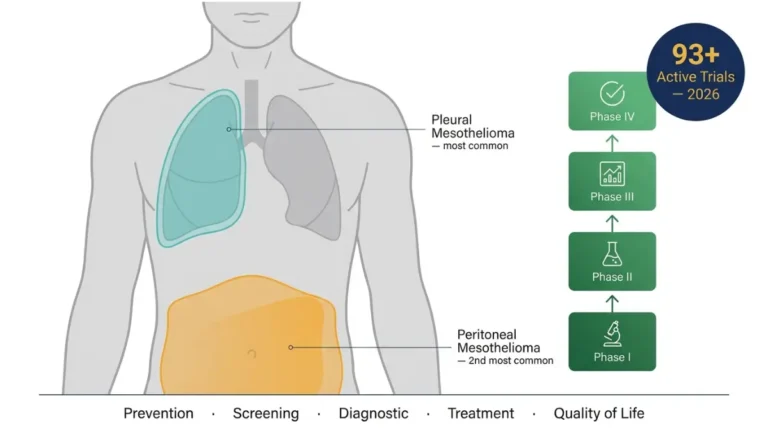
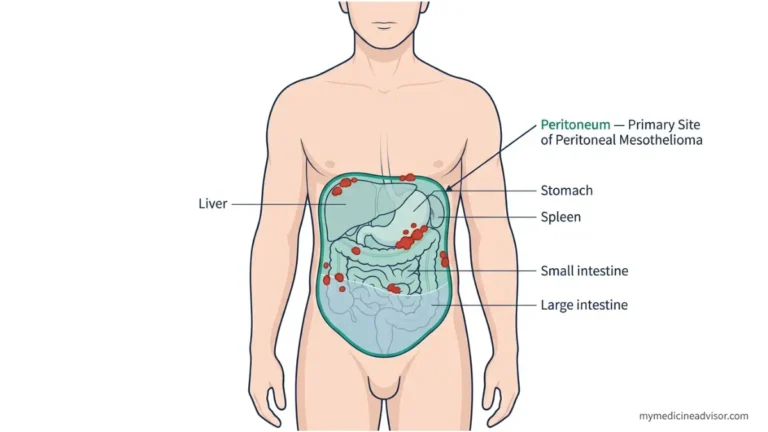
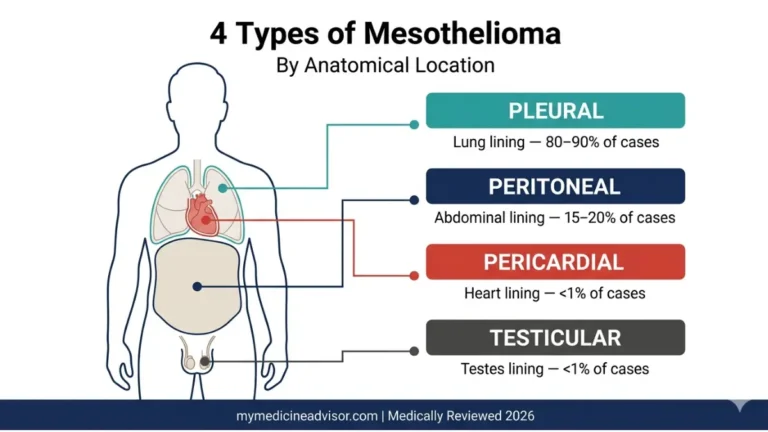
Malignant pleural mesothelioma is an aggressive, asbestos-linked cancer that develops in the pleura — the thin membrane surrounding the lungs. According to the National Cancer Institute, approximately 3,000 Americans are diagnosed annually, with a 5-year survival rate of just 5–10% without aggressive treatment.
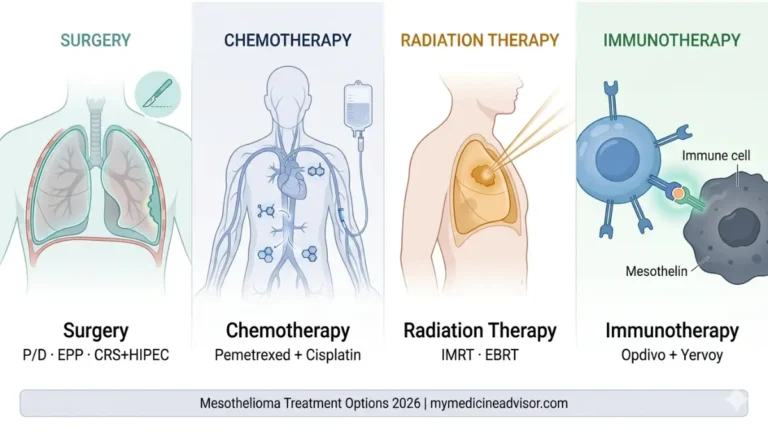
The critical objective of any mesothelioma surgery is achieving macroscopic complete resection (MCR) — removing all visible tumor tissue. Unlike many other cancers, complete margin-free resection is anatomically impossible in MPM. This is precisely why surgery is always delivered as part of a multimodal treatment plan — paired with chemotherapy, radiation, and increasingly, immunotherapy.
Only about 20% of MPM patients qualify for curative-intent surgery. The two procedures used are EPP and P/D.
What Happens During EPP (Extrapleural Pneumonectomy)?
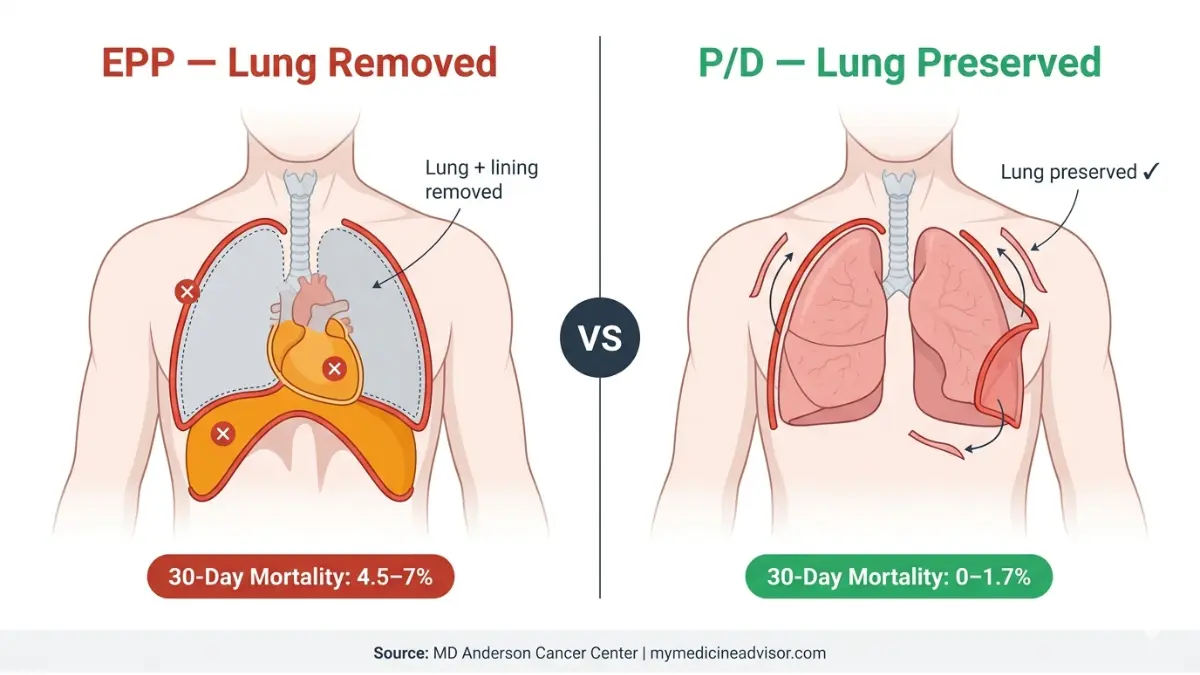
EPP is the most radical mesothelioma surgery. The surgeon performs en bloc resection — removing all of the following in a single operation:
- The entire affected lung
- The parietal and visceral pleura (both layers of chest lining)
- The pericardium (heart’s outer sac)
- All or part of the diaphragm
- Regional lymph nodes
Operative time: 3–5 hours. Average hospital stay: 10–14 days.
What Happens During P/D (Pleurectomy/Decortication)?
P/D is a lung-sparing surgery — the affected lung remains in place. The surgeon removes:
- Both layers of the pleura surrounding the lung
- All visible tumors on the chest wall, diaphragm surface, and heart sac
- The lung itself is preserved
Operative time: 4–6 hours. Average hospital stay: 7–10 days.
| Feature | EPP | P/D |
|---|---|---|
| Lung removed? | Yes — entire lung | No — lung preserved |
| Surgery duration | 3–5 hours | 4–6 hours |
| Hospital stay | 10–14 days | 7–10 days |
| 30-day mortality | 4.5–7% | 0–1.7% |
| Best suited for | Selected advanced epithelioid | Early-stage, preserved lung function |
| Quality of life post-op | Significantly impaired | Better preserved |
If you’ve been recently diagnosed and are tracking your symptoms before your surgical consultation, our Symptom Checker can help you document changes and prepare for your first oncology appointment.
EPP vs P/D — The Data-Driven Survival Comparison 2026
This is where most competitor articles either go vague or cite outdated data. Here is what the most rigorous, current evidence actually shows.
Survival Rates: What the Latest Research Shows
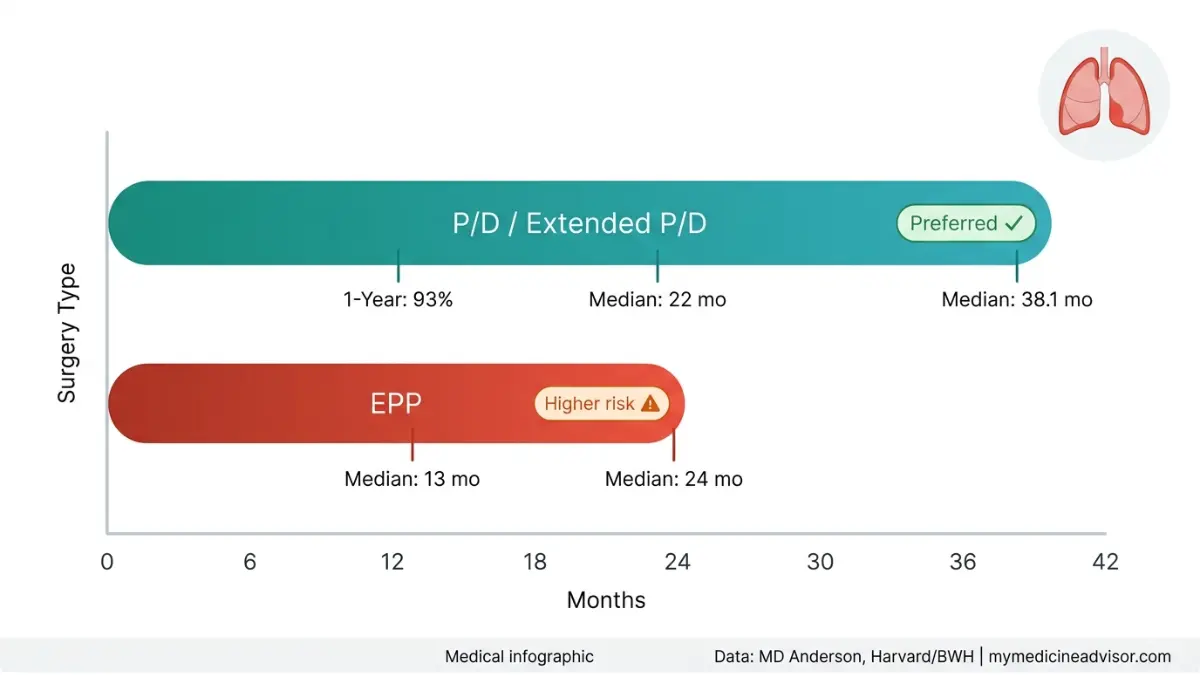
A landmark matched-cohort study from MD Anderson Cancer Center, published in The Annals of Thoracic Surgery (2021), compared patients who received EPP vs P/D between 2000 and 2019:
- P/D median overall survival: 22 months
- EPP median overall survival: 13 months
- Perioperative mortality: EPP = 11% vs P/D = 0% (p = 0.031)
A 2023 PMC study from Brigham and Women’s Hospital and Harvard Medical School analyzed 355 patients undergoing P/D-based multimodal therapy:
- Extended P/D (ePD) median OS: 38.1 months
- EPP comparison group median OS: 24 months
- 30-day and 90-day mortality in the ePD group: 0%
These are the most compelling survival numbers in current MPM literature — and they consistently favor P/D.
| Surgery | Median OS | 30-Day Mortality | 90-Day Mortality |
|---|---|---|---|
| EPP | 13–24 months | 4.5–7% | 10–18% |
| P/D / Extended P/D | 22–38 months | 0–1.7% | 3–5% |
Survival by Cell Type — The Decision Matrix Competitors Don’t Provide
| Cell Type | Preferred Surgery | Clinical Notes |
|---|---|---|
| Epithelioid (~60% of cases) | P/D (first choice) | Best surgical outcomes; ASCO/NCCN recommend P/D first |
| Sarcomatoid (~15%) | Surgery rarely indicated | High perioperative risk; poor prognosis regardless |
| Biphasic (~25%) | P/D preferred if eligible | Depends on sarcomatoid component percentage |
Understanding your mesothelioma stage before any surgical discussion is non-negotiable. Our guide on mesothelioma stages and survival explains exactly how staging dictates both surgical eligibility and expected outcomes.
Quality of Life: The Critical Factor Most Articles Ignore
A QoL study comparing P/D and EPP patients six months post-surgery found that P/D patients consistently outperformed EPP patients across all measured domains: social function, physical function, pain levels, and lung capacity.
The authors concluded: patients undergoing P/D had better quality of life for an extended period following surgery — and this finding is now formally integrated into both ASCO and NCCN 2025 decision-making frameworks.
MARS 2 Trial 2023 — The Only Randomized Evidence in Existence
The MARS 2 randomized controlled trial (RCT) is the only randomized study evaluating surgery vs chemotherapy alone in MPM. The original MARS feasibility trial showed EPP provided no survival benefit and potentially caused harm. MARS 2 continued this trajectory, further supporting careful patient selection for any surgical intervention. A 2025 review published in PMC confirms that the role of surgery in MPM “remains to be determined” — and that future research must focus on well-staged epithelioid patients.
⚡ What This Means For You: If your surgeon recommends EPP over P/D, ask for a specific clinical rationale. Current evidence and all major 2025 guidelines strongly favor P/D as the first-line surgical choice.
Who Is a Surgical Candidate? — Your 2026 Eligibility Checklist
Only the right patients benefit from mesothelioma surgery. Patient selection is as important as the surgery itself.
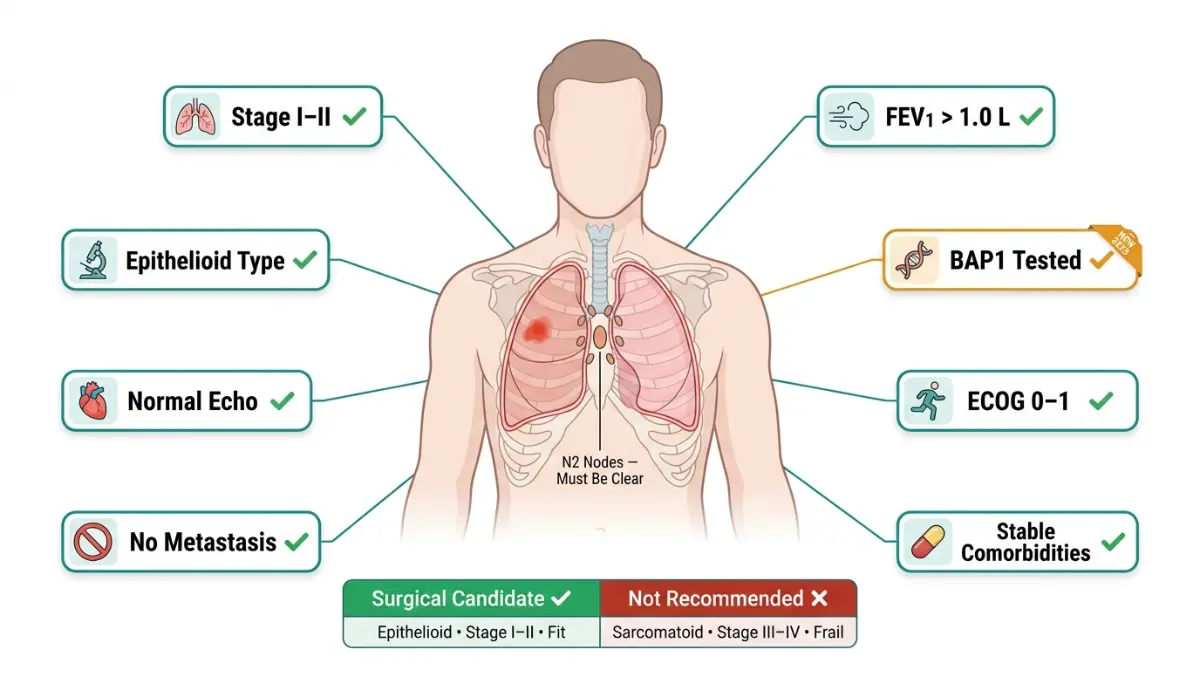
Clinical Criteria: What Surgeons Assess Before Recommending Surgery
Before any surgical recommendation, a multidisciplinary team evaluates:
- Disease stage: Stage I and II are the primary surgical indications
- Histology: Epithelioid cell type carries the best surgical prognosis
- Pulmonary function: FEV1 must typically exceed 1.0 L for EPP candidacy
- Cardiac function: Echocardiogram must confirm normal heart function
- ECOG Performance Status: Patients must score 0 (fully active) or 1 (restricted in strenuous activity only)
- Nodal disease: No N2 (mediastinal) lymph node involvement
- Absence of distant metastasis: Cancer confined to the chest cavity
Your 8-Point Surgical Candidate Checklist
Take this into your next appointment:
- [ ] Stage I or II disease confirmed on CT/PET/MRI staging
- [ ] Epithelioid or low-sarcomatoid-component biphasic histology on biopsy
- [ ] No confirmed chest wall, mediastinal, or spinal invasion
- [ ] FEV1 > 1.0 L (for EPP) or adequate bilateral function (for P/D)
- [ ] Normal echocardiogram
- [ ] ECOG performance status 0 or 1
- [ ] No uncontrolled comorbidities (uncontrolled diabetes, severe COPD, cardiac failure)
- [ ] BAP1 mutation status confirmed (now recommended by ASCO 2025 at diagnosis)
New for 2026: ASCO 2025 now formally recommends germline genetic testing — including BAP1 mutation status — for every MPM patient at diagnosis. BAP1 mutations are linked to better prognosis and may influence surgical and systemic treatment planning. Use our Genetic Risk Assessment Tool to understand your genetic risk profile before your surgical consultation.
Also reviewed in the EPP vs P/D PMC comparative analysis: patients with pure sarcomatoid histology showed no survival benefit from surgery and are generally not recommended for curative-intent resection.
Who Is NOT a Candidate for Mesothelioma Surgery?
Surgery is generally not recommended for:
- Stage III or IV disease
- Pure sarcomatoid cell type
- Severe cardiopulmonary compromise
- ECOG performance status 2 or higher
- Tumor invasion into the chest wall, spine, or mediastinum
- Patients unwilling or unable to commit to post-surgical multimodal therapy
6 Critical Questions to Ask Your Surgeon Before Agreeing to Surgery
No other article on this topic gives patients this list:
- Why is P/D not appropriate for my case — and what specific findings rule it out?
- What is your center’s annual volume of EPP and P/D procedures?
- What is your personal 30-day and 90-day mortality rate for each procedure?
- Will HITHOC (heated intrathoracic chemotherapy) be incorporated into my surgery?
- Has my case been reviewed by a full multidisciplinary tumor board?
- Do you recommend a second opinion at a dedicated, high-volume mesothelioma center?
For critical pre-surgical tests and what results mean for your eligibility, our mesothelioma diagnosis guide walks through every test your team will use.
2025–2026 Treatment Guidelines — ASCO, NCCN, HITHOC & Immunotherapy
ASCO 2025 + NCCN 2025 — What Changed for Mesothelioma Surgery
Both organizations updated their MPM guidelines in 2025 — and the changes are clinically significant.
ASCO 2025 Surgical Updates:
- P/D is now formally preferred over EPP as first-line surgical choice
- Post-surgery immunotherapy: no longer routinely recommended (insufficient evidence)
- Pre-surgery immunotherapy: remains acceptable
- Genetic testing (BAP1 germline) now recommended for all MPM patients at diagnosis
- Timing of systemic therapy is flexible — can be given before or after surgery
NCCN 2025 Surgical Updates:
- P/D preferred over EPP due to lower respiratory morbidity and better QoL data
- IMRT after EPP: no longer routinely recommended
- IMRT after P/D: may be considered in select cases at experienced centers
- Palliative radiation remains effective for symptom relief
The NCCN patient guidelines for mesothelioma are publicly accessible and provide the complete framework your medical team should be following.
The Medscape mesothelioma treatment guidelines offer a synthesized view of NCCN, ASCO, and ERS/ESTS/EACTS international guideline alignment — and confirm that P/D (extended pleurectomy decortication) is preferred by all major bodies over EPP.
HITHOC: The Surgical Add-On That No Competitor Properly Explains
HITHOC — Hyperthermic Intrathoracic Chemotherapy — is one of the most important advances in mesothelioma surgery in the past decade, yet almost no patient-facing article explains it clearly.
Here is exactly what happens:
- Immediately after MCR — before the chest incision is closed — a heated chemotherapy solution (typically cisplatin at 40–42°C) is circulated through the chest cavity
- Duration: 60–90 minutes
- The heat increases chemotherapy penetration into residual microscopic cancer cells by 3–4 times
- Goal: eliminate residual disease at the cellular level before wound closure
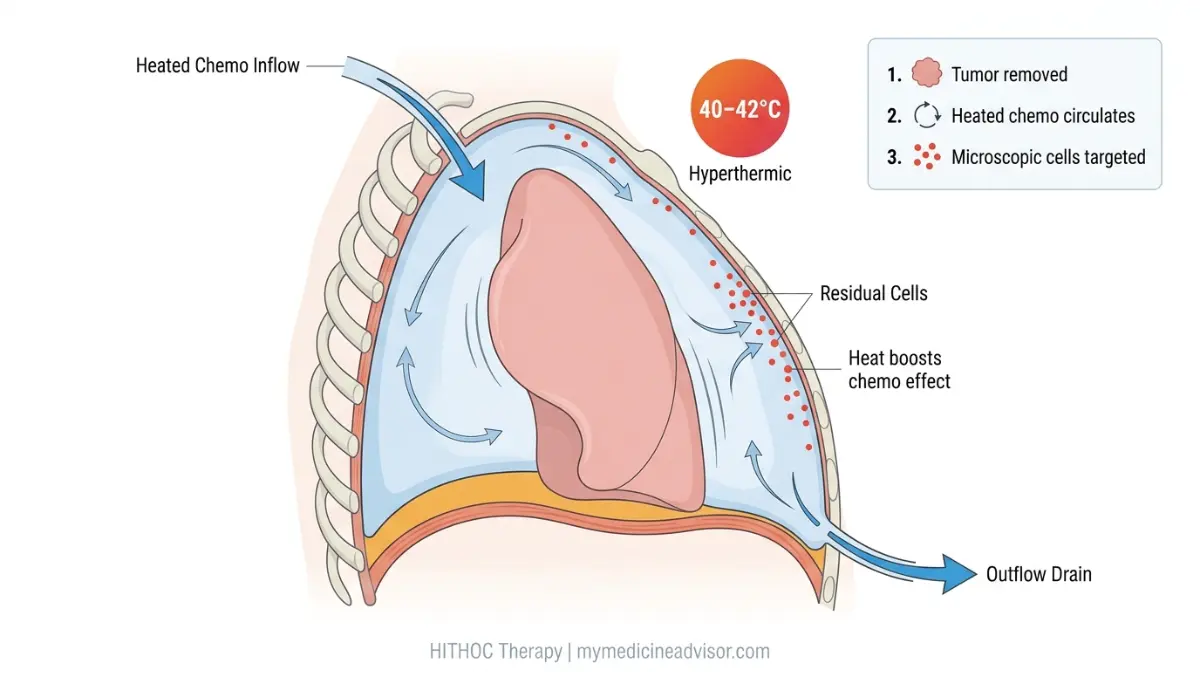
HITHOC is compatible with both P/D and EPP and is offered at high-volume mesothelioma centers in the USA, UK, and Australia. Ask your surgeon explicitly whether HITHOC will be part of your procedure.
Mesothelioma Surgery + Immunotherapy in 2026
The FDA approval of Keytruda (pembrolizumab) in September 2024 for MPM — in combination with pemetrexed and platinum chemotherapy — fundamentally changed the treatment landscape.
Current 2026 surgery + immunotherapy integration guidance:
| Timing | Immunotherapy Role |
|---|---|
| Pre-surgery | Acceptable; may downstage disease before resection |
| During surgery | HITHOC (chemotherapy only, not immunotherapy) |
| Post-surgery | No longer routinely recommended per ASCO 2025 |
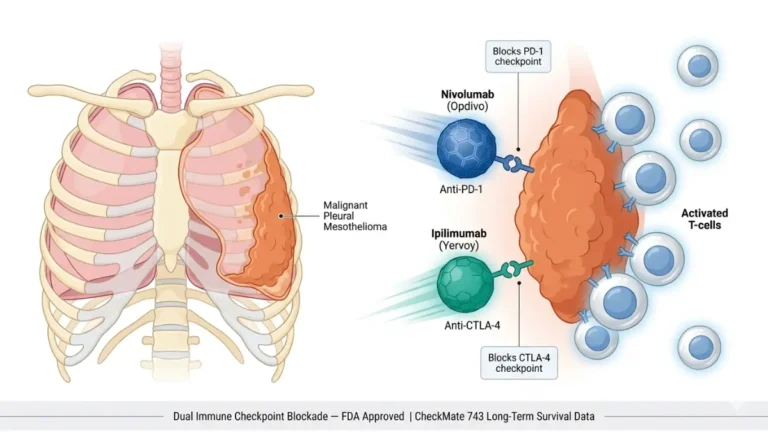
| Inoperable patients | Nivolumab + Ipilimumab (CheckMate 743) first-line for non-epithelioid |
Our dedicated article on mesothelioma immunotherapy with nivolumab covers CheckMate 743 trial results in full and explains what they mean for patients who are not surgical candidates. For a complete overview of all available treatments, the American Cancer Society’s mesothelioma treatment guide provides a current evidence-based summary.
Recovery, Surgical Risks & Life After Mesothelioma Surgery
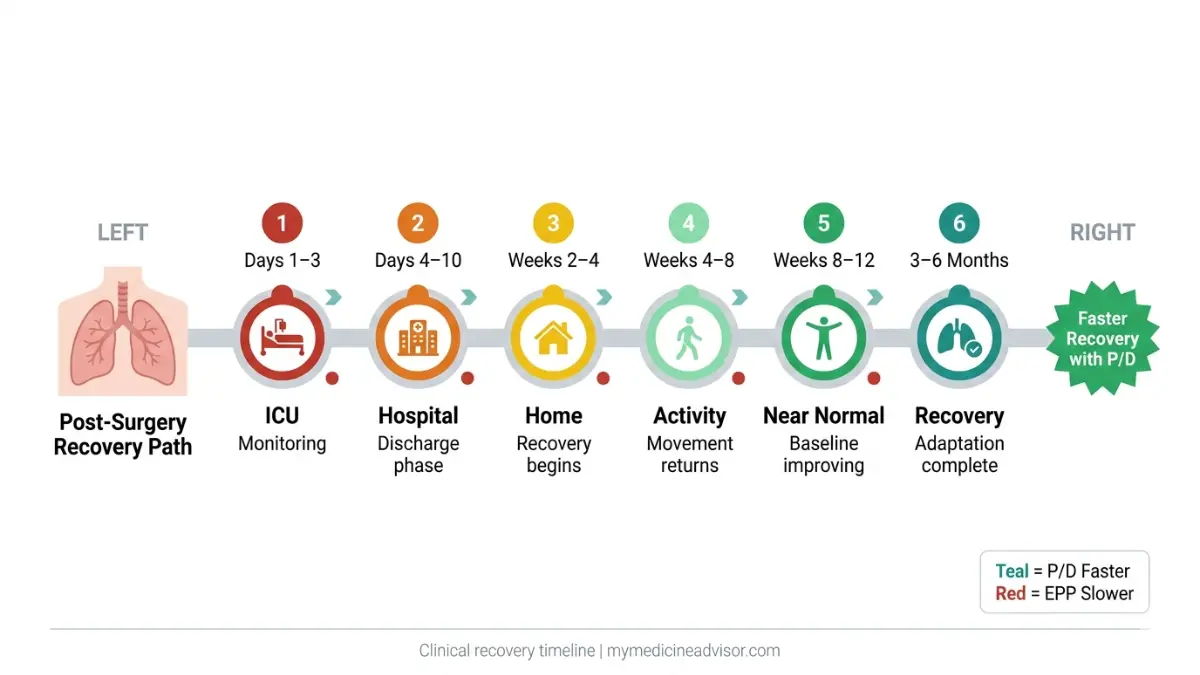
Recovery Timeline: Week-by-Week After P/D and EPP
No competitor article presents recovery as a structured patient roadmap. This is what to realistically expect:
| Timeframe | P/D Recovery | EPP Recovery |
|---|---|---|
| Days 1–3 | ICU monitoring, chest tubes, ventilator support | ICU monitoring, mediastinal rebalancing, drainage |
| Days 4–7 | Step-down ward, chest tubes removed | Extended ICU or step-down unit |
| Days 7–10 | Hospital discharge | Still hospitalized |
| Days 10–14 | Home recovery begins | Hospital discharge (EPP) |
| Weeks 2–4 | Breathing exercises, guided light activity | Restricted activity, pulmonary rehab starts |
| Weeks 4–8 | Gradual return to daily activities | Continued pulmonary rehabilitation |
| Weeks 8–12 | Most patients resume light normal activities | Slower return — one-lung physiology adaptation |
| 3–6 months | Near-baseline function for P/D patients | Still adapting to single-lung respiratory reserve |
During rehabilitation, monitoring your cardiovascular response to gradual activity increases is important for patient safety. Our Heart Rate Zone Calculator helps patients and caregivers identify safe exertion levels during post-surgical recovery.
Surgical Risks and Complication Profiles
P/D Risks (lower overall severity):
- Prolonged air leak (most common complication, 15–20%)
- Pleural effusion recurrence
- Wound infection
- Pneumonia
- Atrial fibrillation (10–15%)
EPP-Specific Risks (higher severity and frequency):
- Bronchopleural fistula — abnormal connection between bronchus and pleural cavity; 5–10% incidence; potentially life-threatening
- Cardiac herniation — rare but carries high mortality
- Respiratory failure due to one-lung physiology
- Empyema (infected chest cavity)
- Cardiac arrhythmias (up to 25% incidence)
- Chylothorax (lymphatic fluid leakage)
The 2021 MD Anderson matched-cohort study documented EPP perioperative mortality at 11% vs 0% for P/D in matched patients — definitively demonstrating the risk differential and why surgical center expertise is a survival variable.
Multimodal Therapy: The Complete Treatment Picture
Surgery alone is never sufficient for MPM. The most effective mesothelioma surgery outcomes come from a multimodal approach:
Standard Multimodal Pathway (2026):
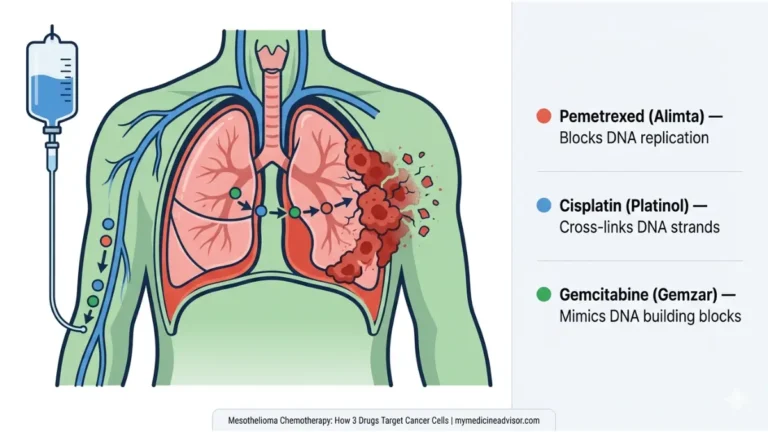
- Pre-surgery: Pemetrexed + cisplatin chemotherapy ± pre-surgical immunotherapy to downstage
- Surgery: P/D or EPP + HITHOC (at eligible centers)
- Post-surgery: Additional chemotherapy cycles; adjuvant IMRT in select P/D cases
Our complete guide to mesothelioma chemotherapy side effects prepares patients for what to expect before and after surgery. For the full landscape of every available treatment modality, our mesothelioma treatment options article covers every currently approved approach.
The American Lung Association mesothelioma resource provides additional patient-facing information on disease management and support organizations.
Finding the Right Mesothelioma Surgery Center + Your Action Plan
High-Volume Centers vs Community Hospitals — A Survival Variable
This is the decision most patients overlook — and it may be the most important one after the EPP vs P/D choice itself.
Volume-outcome data is unambiguous:
- Surgeons performing fewer than 5 EPPs per year have dramatically higher complication and mortality rates
- Multidisciplinary tumor boards (thoracic surgeon + medical oncologist + radiation oncologist + pathologist + pulmonologist) consistently produce better individualized treatment plans
- Access to HITHOC, clinical trials, and advanced IMRT is almost exclusively available at specialized mesothelioma centers
Top Mesothelioma Surgery Centers: USA, UK, Canada & Australia
| Country | Center | Specialty |
|---|---|---|
| USA | Brigham and Women’s Hospital, Boston | Highest global P/D surgical volume; HITHOC |
| USA | MD Anderson Cancer Center, Houston | Landmark EPP vs P/D research; clinical trials |
| USA | Memorial Sloan Kettering, New York | Defined modern EPP surgical technique |
| UK | Royal Brompton Hospital, London | MARS trial center; European expertise |
| Canada | Toronto General Hospital | SMART trial (radical surgery + SBRT) |
| Australia | Peter MacCallum Cancer Centre, Melbourne | Highest incidence country expertise |
Before choosing your center, understanding your complete asbestos exposure history is critical for both treatment planning and legal purposes. Our guide on asbestos exposure and mesothelioma risk explains the exposure-to-diagnosis timeline in detail. Veterans with service-related asbestos exposure should review our VA mesothelioma claims guide before pursuing surgical treatment — financial support options can significantly affect access to high-volume centers.
The CDC/NIOSH asbestos occupational exposure resource is an important tool for documenting exposure history — a critical step for both your medical team’s staging assessment and any legal compensation claims.
Your 5-Step Action Plan: This Week
Step 1 — Confirm Your Pathology Verify your exact cell type (epithelioid/sarcomatoid/biphasic) and stage before any surgical discussion. These two factors define your eligibility.
Step 2 — Request Germline Genetic Testing Ask your oncologist for BAP1 mutation testing — now recommended by ASCO 2025 for all MPM patients at diagnosis. Results affect both prognosis and treatment planning.
Step 3 — Seek a High-Volume Center Consultation Request a formal referral to one of the centers listed above before committing to any surgical decision at a community hospital.
Step 4 — Ask Specifically About HITHOC Confirm whether the surgical center you are considering incorporates HITHOC into their P/D and EPP procedures.
Step 5 — Get a Second Surgical Opinion If EPP is being recommended at your current center, explicitly ask why P/D is not viable for your case. A second opinion from a dedicated mesothelioma program is always justified.
For the most comprehensive survivorship data by stage, cell type, and treatment modality available on the internet, our authoritative mesothelioma survival rates and symptoms pillar is the definitive starting point for every newly diagnosed patient.
⚕️ Medical Disclaimer: This article is for educational purposes only and does not constitute medical advice, diagnosis, or treatment recommendations. Mesothelioma is a complex YMYL condition requiring individualized assessment by a qualified thoracic oncologist, thoracic surgeon, and multidisciplinary tumor board. Always consult a licensed medical professional before making any treatment decisions.
Frequently Asked Questions: Mesothelioma Surgery 2026
1. Is EPP or P/D surgery better for mesothelioma in 2026?
P/D is the current first-line surgical recommendation per 2025 ASCO and NCCN guidelines. P/D offers lower perioperative mortality (0–1.7% vs 4.5–7% for EPP), significantly better quality of life, and median overall survival of 22–38 months vs 13–24 months for EPP in comparable matched cohorts. EPP may still be considered in specific, carefully selected cases.
2. What is the survival rate after mesothelioma surgery?
Survival after mesothelioma surgery depends on procedure type, disease stage, and cell type. P/D median OS ranges from 22–38 months in current studies. EPP median OS is 13–24 months. Stage I epithelioid patients receiving P/D-based multimodal therapy have achieved median OS exceeding 40 months in select institutional series.
3. Who qualifies for mesothelioma surgery?
Ideal candidates have stage I or II epithelioid pleural mesothelioma, ECOG performance status 0–1, adequate pulmonary and cardiac function (FEV1 > 1.0 L for EPP), no mediastinal lymph node involvement, and no distant metastasis. Only approximately 20% of MPM patients qualify for curative-intent surgery.
4. How long does recovery take after P/D surgery?
Most P/D patients are discharged from hospital in 7–10 days. Light daily activities typically resume by weeks 4–8. Full functional recovery takes 10–12 weeks. EPP recovery is significantly longer — 10–14 days hospitalized, with full adaptation to one-lung physiology taking 3–6 months.
5. What is HITHOC in mesothelioma surgery?
HITHOC (Hyperthermic Intrathoracic Chemotherapy) is a procedure where heated chemotherapy solution (typically cisplatin at 40–42°C) is circulated through the chest cavity immediately after tumor removal, before incision closure. The heat amplifies chemotherapy penetration by 3–4x, targeting microscopic residual cancer cells that surgery cannot physically remove. It is available at high-volume mesothelioma centers alongside both P/D and EPP.
6. Can mesothelioma come back after surgery?
Yes. Recurrence occurs in most patients, typically within 12–24 months. After P/D, recurrence most commonly occurs in the ipsilateral pleura. After EPP, abdominal recurrence is more common due to diaphragm resection. Multimodal therapy — chemotherapy, HITHOC, and adjuvant IMRT — meaningfully reduces locoregional recurrence rates.
7. What are the specific risks of EPP surgery?
EPP carries perioperative mortality of 4.5–11% depending on center volume. Key procedure-specific risks include bronchopleural fistula (5–10%), cardiac herniation (rare but high mortality), respiratory failure from one-lung physiology, empyema (chest infection), cardiac arrhythmias (up to 25%), and chylothorax (lymphatic leakage). Patients must have excellent baseline cardiopulmonary reserve.
8. Is mesothelioma surgery worth having?
For eligible patients — stage I/II epithelioid histology, good performance status, at a high-volume center — P/D-based multimodal therapy offers the best long-term survival currently available. Extended P/D series have produced median OS exceeding 38 months. The decision requires individual risk-benefit assessment by a multidisciplinary team, weighing surgical risk against the potential for meaningful survival extension.
9. What mesothelioma stage qualifies for surgery?
Stage I and Stage II pleural mesothelioma are the primary indications for curative-intent surgery. Stage III may be considered at high-volume centers in carefully selected patients. Stage IV is generally not a curative surgical candidate, though palliative VATS procedures (pleurodesis) may be offered for effusion control and symptom relief.
10. Can immunotherapy be combined with mesothelioma surgery in 2026?
Yes, with important timing considerations. Per 2025 ASCO guidelines, pre-surgery immunotherapy is acceptable and may help downstage disease. Post-surgery immunotherapy is no longer routinely recommended. Keytruda (pembrolizumab), FDA-approved in September 2024, is currently used primarily in the non-surgical setting or as pre-operative therapy. Nivolumab + Ipilimumab remains first-line for inoperable non-epithelioid patients.
11. What questions should I ask my surgeon before agreeing to mesothelioma surgery?
Ask: (1) Why is P/D not appropriate, or specifically why is it the right choice for my case? (2) What is your center’s annual surgical volume for both EPP and P/D? (3) What is your personal 30-day and 90-day mortality rate? (4) Will HITHOC be performed? (5) Has my case been reviewed by a full multidisciplinary tumor board? (6) Is a second opinion at a dedicated mesothelioma center advisable before I commit?
Medical disclaimer
The content on MyMedicineAdvisor is provided for general informational and educational purposes only and is not a substitute for professional medical advice, diagnosis, or treatment. Health information on this website should not be used to diagnose, treat, cure, or prevent any condition without guidance from a qualified healthcare professional. Always seek the advice of your doctor, physician, or another licensed healthcare provider with any questions you may have regarding a medical condition, symptoms, medications, or treatment decisions.