On This Page – Quick Medical Summary
Mesothelioma is a rare but aggressive cancer caused almost exclusively by asbestos exposure. It develops in the thin tissue lining the lungs, abdomen, or heart — and it typically doesn’t show symptoms until 20 to 60 years after the original exposure. With approximately 3,000 new diagnoses in the U.S. every year, the stakes are high — and getting the right information fast can be the difference between a treatable and an untreatable diagnosis.
If you or someone you love has been exposed to asbestos — especially through construction, shipbuilding, military service, or insulation work — this article will give you every fact you need in 2026.
What Is Mesothelioma? A Cancer Most Doctors Initially Miss
The Story That Changes Everything
Raymond T., a 67-year-old retired Navy pipefitter from Norfolk, Virginia, had been seeing his primary care physician for 14 months complaining of worsening shortness of breath and a persistent dry cough. He was treated for COPD twice and referred to a pulmonologist once. It wasn’t until he mentioned — almost as an afterthought — that he had spent 22 years working in shipyard boiler rooms that his doctor ordered a CT scan. The imaging revealed pleural thickening and a mass consistent with malignant mesothelioma.
Raymond’s story is not rare. It is the norm.
The most dangerous feature of mesothelioma isn’t just its aggressiveness — it’s how convincingly it masquerades as something else.
What Exactly Is Mesothelioma?
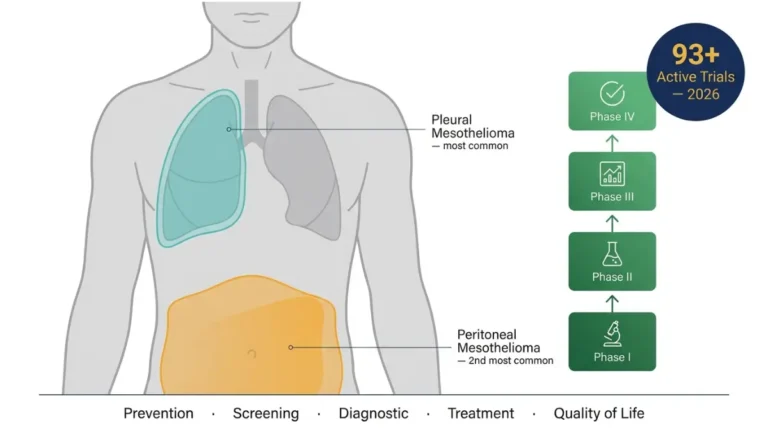
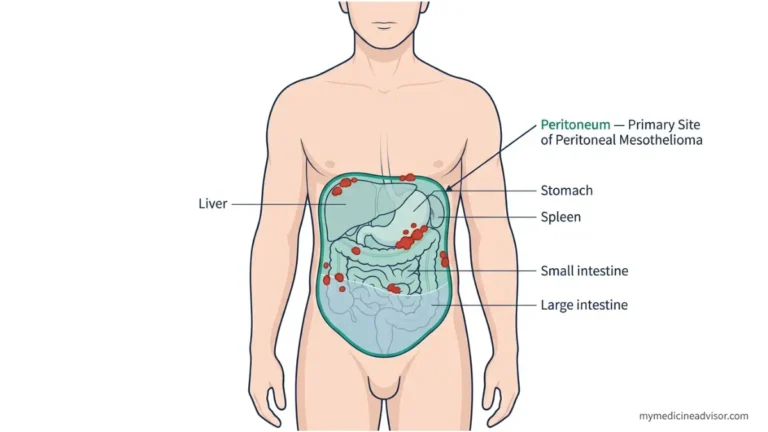
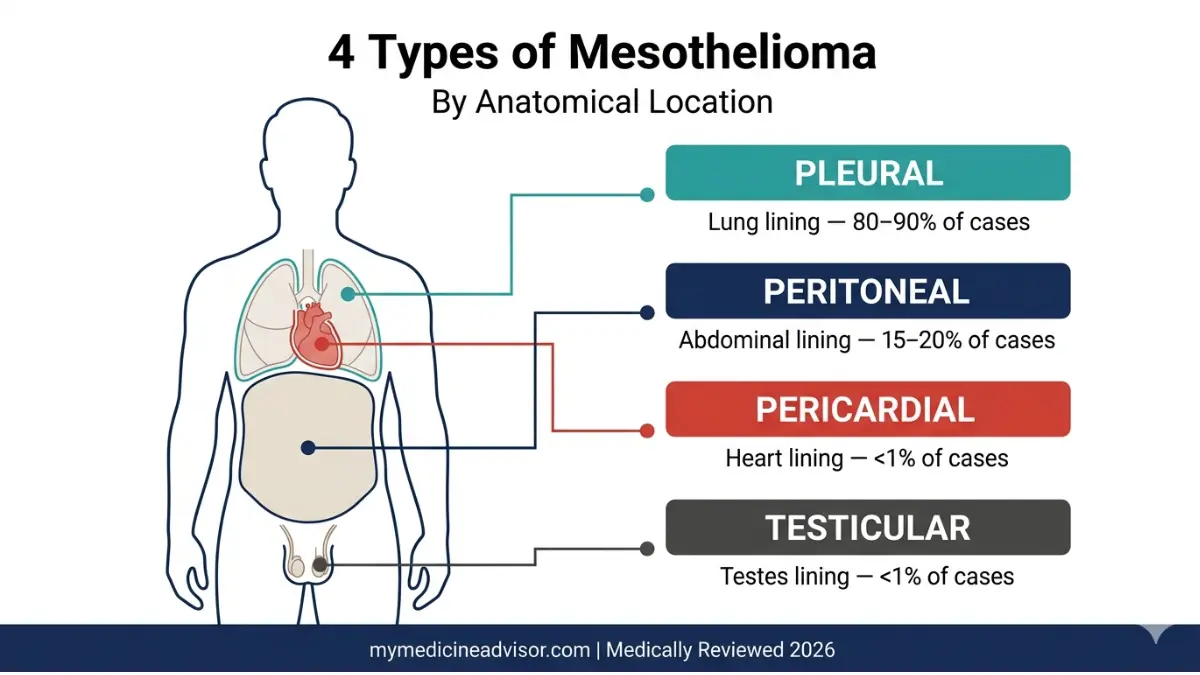
Mesothelioma is a primary cancer of the mesothelium — the thin protective membrane that lines and lubricates the body’s major internal organs. This tissue surrounds the lungs (called the pleura), the abdominal cavity (the peritoneum), the heart (the pericardium), and in rare cases, the testicles (the tunica vaginalis).
When malignant mesothelioma develops, cancer cells multiply uncontrollably within this lining, forming tumors that spread along the surface of organs rather than forming a single localized mass. This makes surgical removal extremely difficult.
Mesothelioma is not lung cancer. It does not originate in lung tissue — it originates in the lining around the lung. This distinction matters for treatment planning and prognosis. Many patients are confused about this difference when they first receive a mesothelioma diagnosis.
The 4 Types of Mesothelioma
There are four clinically recognized types, each defined by where tumors originate:
| Type | Location | % of U.S. Cases | Median Survival |
|---|---|---|---|
| Pleural mesothelioma | Lining of the lungs (pleura) | 80–90% | 12–21 months |
| Peritoneal mesothelioma | Lining of the abdomen | 15–20% | Up to 5+ years with HIPEC |
| Pericardial mesothelioma | Lining of the heart | <1% | 3–10 months |
| Testicular mesothelioma | Lining of the testes | <1% | 20–24 months |
Pleural mesothelioma is by far the most common and the most studied. It is also the most aggressive, frequently diagnosed only after the cancer has spread beyond the lung lining.
Peritoneal mesothelioma — while less common — has seen dramatically improved outcomes since the introduction of HIPEC (Hyperthermic Intraperitoneal Chemotherapy), which we cover in depth in Section 7.
How Common Is Mesothelioma in the U.S.?
- Approximately 3,000 Americans are diagnosed with mesothelioma each year
- Men over 65 account for the largest proportion of diagnoses
- About 30% of all diagnoses occur in U.S. military veterans — the highest occupational risk group
- The disease is more prevalent in states with historic industrial and shipbuilding activity: Virginia, California, Pennsylvania, Texas, and New York
Mesothelioma rates are declining in the United States as asbestos regulations tightened from the 1970s onward — but due to the 20–60 year latency period, doctors are still diagnosing cases linked to exposures from the 1970s and 1980s today.
If you are currently experiencing unexplained respiratory or abdominal symptoms — especially with any history of industrial or military work — use our Symptom Checker to document your symptoms before your medical appointment. A clear symptom timeline can accelerate diagnosis significantly.
What This Means For You
If you or a family member worked in construction, shipbuilding, the U.S. military, insulation, or manufacturing before 1990 — tell every doctor you see. Your occupational history from decades ago is directly relevant to your health today.
What Causes Mesothelioma? Asbestos Exposure Explained
The Only Confirmed Cause
Asbestos exposure is the singular, confirmed cause of mesothelioma. More than 80% of all mesothelioma cases worldwide are directly linked to asbestos. In some occupational cohorts, the link approaches 90%.
Asbestos is a naturally occurring mineral composed of microscopic silicate fibers. For most of the 20th century, it was used extensively in insulation, fireproofing, ship construction, building materials, brake linings, floor tiles, ceiling panels, and pipe coverings — precisely because it was cheap, durable, and heat-resistant.
The problem is what happens when those fibers become airborne.
How Asbestos Causes Cancer: The Cellular Mechanism
When asbestos fibers are inhaled or swallowed, they travel through the airways and lodge in the mesothelial tissue lining the lungs or abdomen. The body cannot break these fibers down.
The immune system dispatches white blood cells called macrophages to destroy the foreign particles — but the fibers are simply too long and too sharp to be fully engulfed. This process, known as “frustrated phagocytosis,” triggers chronic, sustained inflammation.
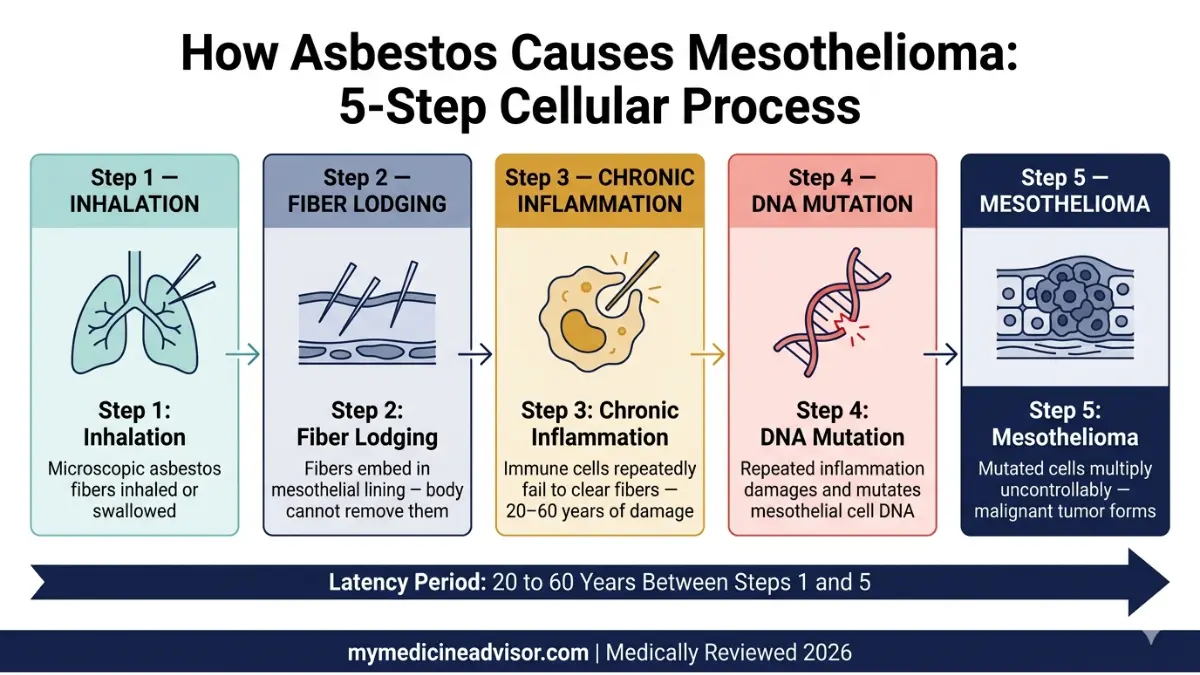
Over decades, this repeated inflammatory response:
- Damages the DNA of mesothelial cells repeatedly
- Activates oncogenes (cancer-causing genes)
- Suppresses tumor-suppressor genes, particularly BAP1
- Leads to uncontrolled cellular mutation and ultimately — malignant mesothelioma
This process explains the latency period of 20 to 60 years between asbestos exposure and mesothelioma diagnosis. The cellular damage is slow, cumulative, and silent.
The Latency Period Nobody Warns You About
This is the most clinically underappreciated aspect of mesothelioma — and the gap that competitors almost universally fail to explain with sufficient emphasis.
Most patients diagnosed today were exposed to asbestos between 1950 and 1985. A construction worker who handled asbestos insulation in 1968 may only be developing symptoms today, in 2026. A Navy veteran who served in the 1970s may be receiving their diagnosis right now.
This is why mesothelioma primarily affects people aged 65 and older — and why younger patients and their physicians may not think to connect current symptoms with occupational exposures from 40 years ago.
High-Risk Occupations
The following occupations carry the highest documented mesothelioma risk:
- Navy and military veterans (30% of all U.S. diagnoses) — engine rooms, boiler rooms, sleeping quarters were lined with asbestos
- Shipyard workers — direct asbestos handling during construction and repair
- Construction workers — insulation, drywall, floor tiles, roofing materials
- Insulation installers — direct and highest-concentration exposure
- Automotive mechanics — brake pads and clutch linings contained asbestos
- Plumbers and pipefitters — pipe insulation was almost universally asbestos-based
- Power plant workers — boilers, turbines, steam pipes
- Demolition workers — disturbing pre-1980s building materials releases fibers
- Teachers in pre-1980 school buildings — many public school ceiling tiles contained asbestos
Secondary (Household) Exposure: The Untold Story
One of the most underreported causes of mesothelioma in women is secondary asbestos exposure — also called para-occupational exposure. Wives and children of asbestos workers were exposed to fibers brought home on work clothing, in car upholstery, and on skin and hair.
Research shows that household contacts of asbestos workers have a measurable elevated risk of mesothelioma — even without any direct workplace exposure themselves. This is why a mesothelioma diagnosis in a woman with no occupational history should always prompt detailed questioning about a spouse’s or parent’s employment history.
Non-Asbestos Causes: What Else Can Trigger Mesothelioma?
While asbestos is responsible for the vast majority of cases, a small number of mesotheliomas have been linked to:
- Erionite — a naturally occurring zeolite mineral found in volcanic rock formations in parts of Turkey, Oregon, and Nevada. Regions with high environmental erionite have elevated mesothelioma rates.
- Radiation exposure — particularly therapeutic radiation to the chest (used in treating earlier cancers like Hodgkin’s lymphoma). This accounts for a very small proportion of cases.
- BAP1 gene mutations — inherited mutations in the BAP1 tumor-suppressor gene significantly increase susceptibility. The 2025 ASCO guidelines now recommend germline genetic testing for all mesothelioma patients. If you have a family history of mesothelioma or other BAP1-associated cancers, use our Genetic Risk Assessment Tool to understand your hereditary risk profile.
Does Smoking Cause Mesothelioma?
No. Smoking does not cause mesothelioma.
This is a frequent and important misconception. Decades of large-scale epidemiological research have consistently shown no causal link between smoking and mesothelioma risk.
However — and this is critical — smoking combined with asbestos exposure dramatically increases the risk of lung cancer (not mesothelioma). The relative risk of developing lung cancer is approximately 60 times higher in asbestos workers who also smoke compared to non-exposed, non-smoking individuals.
Workers with asbestos exposure should understand this distinction: their mesothelioma risk comes from the asbestos, not from tobacco use.
Geographic Context: Asbestos and Mesothelioma in the U.S.
Mesothelioma incidence in the United States is highest in:
- Virginia, Maryland, California, Pennsylvania — heavy historic shipbuilding
- Montana, Wyoming — historic asbestos mining regions (Libby, Montana is a notable exposure hotspot)
- Industrial Midwest — automotive, steel, and manufacturing industries
What This Means For You
If you worked in any of the above industries before 1990, disclose this to every physician you see — including your primary care doctor, pulmonologist, and gastroenterologist. Even a brief exposure decades ago is medically relevant. Early disclosure leads to earlier investigation, and earlier investigation saves lives.
Mesothelioma Symptoms: The Warning Signs Doctors Frequently Miss
“The most dangerous aspect of mesothelioma isn’t its aggressiveness — it’s how convincingly it pretends to be something else.”
This is the critical section that can save a life. The average delay between symptom onset and mesothelioma diagnosis is 3 to 6 months. In many patients, it exceeds a year — as in Raymond’s case above.
The reason? Mesothelioma symptoms are non-specific. They overlap almost perfectly with far more common, less serious conditions. Without a known history of asbestos exposure being communicated to the physician, mesothelioma may not even make the diagnostic shortlist.
Why Symptoms Appear Decades After Exposure
Mesothelioma has a latency period of 20–60 years. By the time a tumor is large enough to cause symptoms, it has usually been silently growing for years. In many cases, the cancer has already reached Stage 3 or Stage 4 before a patient seeks medical attention — simply because the early stages produce little to no discomfort.
This biology is what makes early awareness so powerful. Patients who know their asbestos exposure history and report it proactively have the best chance of earlier diagnosis.
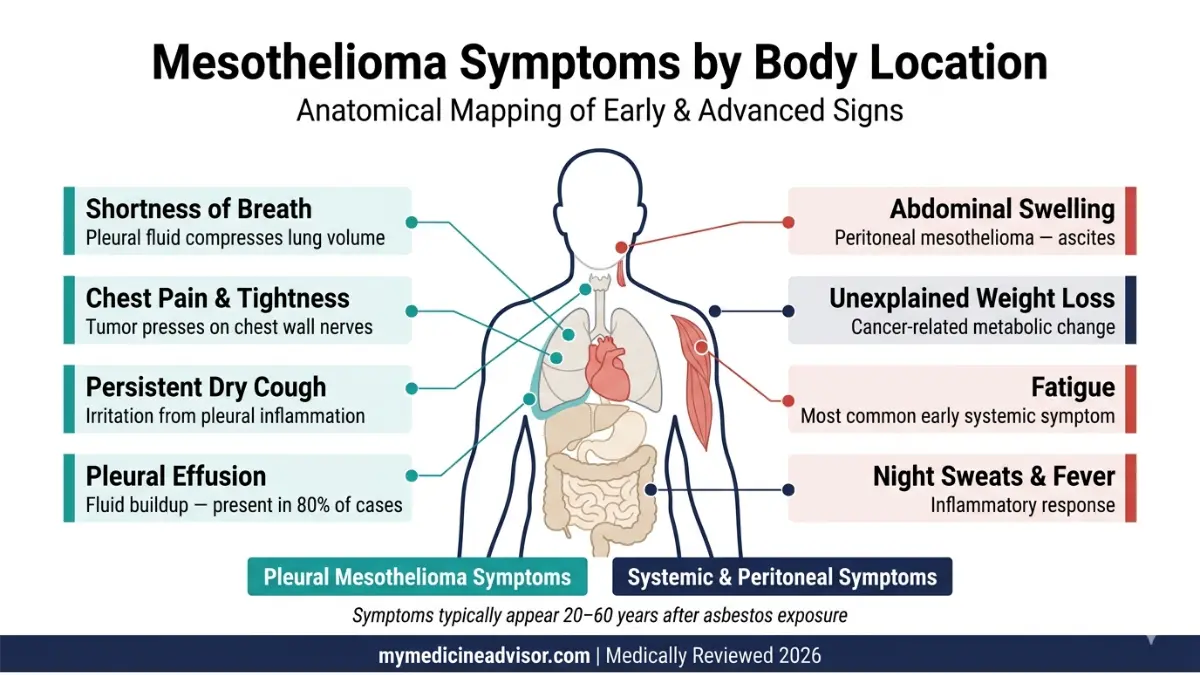
Early-Stage Symptoms (Stage 1–2)
Early mesothelioma symptoms are easy to dismiss. They are typically mild and mimic common respiratory or gastrointestinal illnesses:
- Shortness of breath (dyspnea) — often described as “getting winded more easily” or attributed to aging or deconditioning
- Dry or nonproductive cough — persistent, but rarely alarming on its own
- Chest tightness or pain — can be intermittent and mild in early stages
- Unexplained fatigue — one of the most common early symptoms across all cancer types
- Low-grade fever — frequently interpreted as a recurring mild infection
- Night sweats — often attributed to menopause or other systemic causes in women
Advanced Symptoms (Stage 3–4)
As mesothelioma progresses, symptoms become more pronounced and disabling:
- Pleural effusion — fluid accumulation around the lungs, present in approximately 80% of pleural mesothelioma patients. Causes severe difficulty breathing, especially when lying flat.
- Significant unintentional weight loss — a hallmark of advanced malignancy
- Difficulty swallowing (dysphagia) — as tumors press on the esophagus
- Severe chest or back pain — from tumor invasion of chest wall structures
- Abdominal swelling (ascites) — in peritoneal mesothelioma, fluid accumulates in the belly
- Bowel obstruction — peritoneal mesothelioma can compress intestinal structures
- Swelling of the face or arm — from superior vena cava syndrome as tumors compress blood vessels
- Hoarseness — from tumor pressure on the laryngeal nerve
Symptoms by Mesothelioma Type
| Type | Primary Symptoms | First Sign in % of Patients |
|---|---|---|
| Pleural | Chest pain, breathlessness, dry cough | Pleural effusion (80%) |
| Peritoneal | Abdominal distension, pain, nausea | Ascites (fluid) |
| Pericardial | Heart palpitations, chest pressure | Pericardial effusion |
| Testicular | Testicular mass, scrotal swelling | Painless lump |
The Misdiagnosis Crisis
This is perhaps the most important section for patients to read — and the gap that virtually no competitor covers with adequate depth.
Mesothelioma is routinely misdiagnosed as one of the following conditions before the correct diagnosis is reached:
- COPD or emphysema — especially in older, male patients with any smoking history
- Pneumonia — pleural fluid and fever prompt this diagnosis repeatedly
- Pleural effusion from heart failure — fluid around the lungs with a non-cancer explanation
- Irritable bowel syndrome (IBS) — abdominal bloating and discomfort in peritoneal cases
- Hiatal hernia — abdominal pain and reflux symptoms
- Bronchitis — persistent cough treated repeatedly without improvement
- Anxiety or panic disorder — shortness of breath without clear physical cause in younger patients
The average mesothelioma patient sees 2–3 physicians before receiving the correct diagnosis. Each misdiagnosis represents weeks or months of disease progression.
The American Lung Association’s mesothelioma symptoms and diagnosis resource confirms that mesothelioma may not cause symptoms until more advanced stages — and that symptoms overlap significantly with other pulmonary conditions.
Symptoms in Women vs. Men
Women account for approximately 20–25% of mesothelioma diagnoses — and they are frequently diagnosed later than men. Contributing factors include:
- Women’s exposure is more often secondary (household) rather than occupational, making it less likely to be disclosed to physicians
- Physicians may be less likely to consider mesothelioma in female patients
- Abdominal symptoms in women may be attributed to gynecological conditions rather than peritoneal mesothelioma
Importantly, women diagnosed with mesothelioma often have better outcomes than men — researchers believe this may be related to hormonal factors and differences in cell type distribution.
When to See a Doctor — Immediately
See your doctor urgently if you have any history of asbestos exposure AND experience any of the following:
- Unexplained shortness of breath lasting more than 2 weeks
- Persistent dry cough not responding to treatment
- Chest or abdominal pain without clear cause
- Unexplained weight loss of 10+ pounds in under 3 months
- Abdominal swelling that develops rapidly
- Night sweats with no infection present
Use our Symptom Checker to create a documented timeline of your symptoms. Bring this documentation to your physician — it provides critical context that accelerates correct diagnostic investigation.
What This Means For You
If you’ve been told you have COPD, recurring pneumonia, or unexplained pleural effusion — and you have any asbestos exposure history — ask your doctor directly: “Could this be mesothelioma?” You have the right to ask for a CT scan and specialist referral.
How Mesothelioma Is Diagnosed: Tests, Biopsies & 2026 Advances
A mesothelioma diagnosis cannot be made on symptoms or imaging alone. Diagnosis requires tissue confirmation through biopsy. This section explains every step of the diagnostic process — and what the latest 2026 advances mean for patients.
The Step-by-Step Diagnostic Pathway
Step 1: Medical history and occupational review The most important first step. Your physician must document all occupational exposures — including jobs held decades ago, military service, and any household exposure history.
Step 2: Physical examination Checking for signs of pleural effusion (decreased breath sounds), abdominal distension, or palpable masses.
Step 3: Chest X-ray Often the first imaging. May reveal pleural thickening, pleural effusion, or masses — but cannot confirm mesothelioma.
Step 4: CT scan (computed tomography) The primary imaging tool for mesothelioma. CT provides high-resolution images of the pleural lining, chest wall, and abdomen. It can identify tumor extent, lymph node involvement, and pleural thickening patterns highly characteristic of mesothelioma.
Step 5: PET scan (positron emission tomography) Used for staging — identifies areas of high metabolic activity that indicate cancer spread to lymph nodes or distant organs.
Step 6: MRI (magnetic resonance imaging) Provides superior soft-tissue contrast. Particularly useful for evaluating involvement of the diaphragm, chest wall muscles, and mediastinal structures — critical for surgical planning.
Step 7: Thoracentesis (pleural fluid drainage) When pleural effusion is present, a needle is used to drain the fluid. The fluid is analyzed for malignant cells. However — this alone is insufficient to confirm mesothelioma in most cases.
Step 8: Tissue biopsy — the definitive confirmation A tissue biopsy is the only method that can definitively diagnose mesothelioma. Biopsy can be performed via:
- Video-assisted thoracoscopic surgery (VATS) — most common; camera-guided
- CT-guided needle biopsy — less invasive; used when surgery is not appropriate
- Laparoscopy — for suspected peritoneal mesothelioma
Step 9: Immunohistochemistry (IHC) panel The biopsy sample is analyzed under microscopy and stained with molecular markers. A panel of markers (calretinin, WT1, CK5/6, mesothelin) helps distinguish mesothelioma from other cancers like lung adenocarcinoma.
Why Imaging Alone Is Never Enough
Many patients ask why a CT scan showing pleural thickening isn’t sufficient for diagnosis. The answer is critical: several other conditions can mimic mesothelioma on imaging, including reactive pleural disease, tuberculosis, metastatic cancer from other primary tumors, and benign pleural plaques from asbestos exposure. Tissue confirmation eliminates these possibilities.
Blood Biomarkers for Mesothelioma
Two blood biomarkers show promise for supporting mesothelioma diagnosis — though neither is yet sufficient for standalone diagnosis:
- Soluble mesothelin-related peptides (SMRP/Mesomark) — elevated in approximately 75% of pleural mesothelioma patients at diagnosis. Useful as a monitoring tool after diagnosis.
- Fibulin-3 — under investigation as an early detection marker. Shows higher sensitivity in early-stage disease.
Neither of these markers is currently used as a primary screening tool, but they may become standard in asbestos-exposed populations over the next decade.
2026 Breakthrough: ctDNA Liquid Biopsy
This is the most significant diagnostic advance in mesothelioma in years — and zero major competitor sites currently cover it.
Researchers at Johns Hopkins Kimmel Cancer Center published a landmark Phase 2 trial in Nature Medicine in September 2025. The study paired perioperative combination immunotherapy with a groundbreaking ultra-sensitive liquid biopsy technology that detects circulating tumor DNA (ctDNA) — microscopic fragments of cancer DNA circulating in the bloodstream.
The key finding: ctDNA detection identified residual disease and predicted treatment response in ways that CT and MRI imaging could not. Patients with undetectable ctDNA after immunotherapy survived significantly longer than those with persistent ctDNA — even when imaging appeared stable in both groups.
This technology represents the future of mesothelioma monitoring:
- Non-invasive (simple blood draw)
- Detects microscopic disease imaging misses
- Can predict relapse before tumors become visible
- May eventually enable early screening in asbestos-exposed individuals
Staging: Stage 1 Through Stage 4
Once a biopsy confirms mesothelioma, staging tests determine how far the cancer has spread. The TNM staging system is used for pleural mesothelioma:
| Stage | Cancer Spread | Median Survival | 5-Year Survival Rate |
|---|---|---|---|
| Stage 1 | Limited to one side of pleura | 21+ months | 16% |
| Stage 2 | Spread to diaphragm or lymph nodes | 19 months | 13% |
| Stage 3 | Invasion of nearby tissue/structures | 16 months | 11% |
| Stage 4 | Distant metastasis (other organs) | 12 months | 4.9% |
Important note: Nearly 40% of pleural mesothelioma diagnoses occur at Stage 4 — when the cancer has already spread widely. This is precisely why symptom awareness and early disclosure of asbestos exposure history are life-saving.
Getting a Second Opinion
A mesothelioma diagnosis should always be reviewed by a specialist with mesothelioma-specific expertise. General pathologists and community oncologists may have little experience with this rare cancer. Errors in cell type classification — particularly distinguishing epithelioid from sarcomatoid mesothelioma — directly impact treatment decisions.
The American Cancer Society’s SEER survival statistics database provides the most current population-level survival data, updated through 2025, which your oncologist should be referencing for prognosis discussions.
What This Means For You
If you have been diagnosed with mesothelioma, request your biopsy slides be reviewed by a thoracic pathologist with mesothelioma experience before finalizing your treatment plan. Cell type classification directly determines your treatment options.
Mesothelioma Survival Rates in 2026: What the Latest Data Actually Shows
Most survival statistics you’ll read online are based on data that is 5 to 10 years old. This section uses exclusively current 2025–2026 data — the most updated figures available anywhere.
How Survival Rates Work — and What They Can’t Tell You
A 5-year relative survival rate represents the percentage of patients still alive 5 years after diagnosis, compared to the general population. For example, a 15% 5-year survival rate means mesothelioma patients are 15% as likely as people without cancer to be alive at 5 years.
What survival rates cannot do:
- Predict what will happen in any individual case
- Reflect recent treatment advances (data lags by 5+ years)
- Account for your specific cell type, stage, age, fitness, or treatment center
What survival rates can do:
- Give context and realistic expectations
- Help physicians discuss likely outcomes
- Measure whether new treatments are actually improving population outcomes
2026 Survival Rate Data by Type
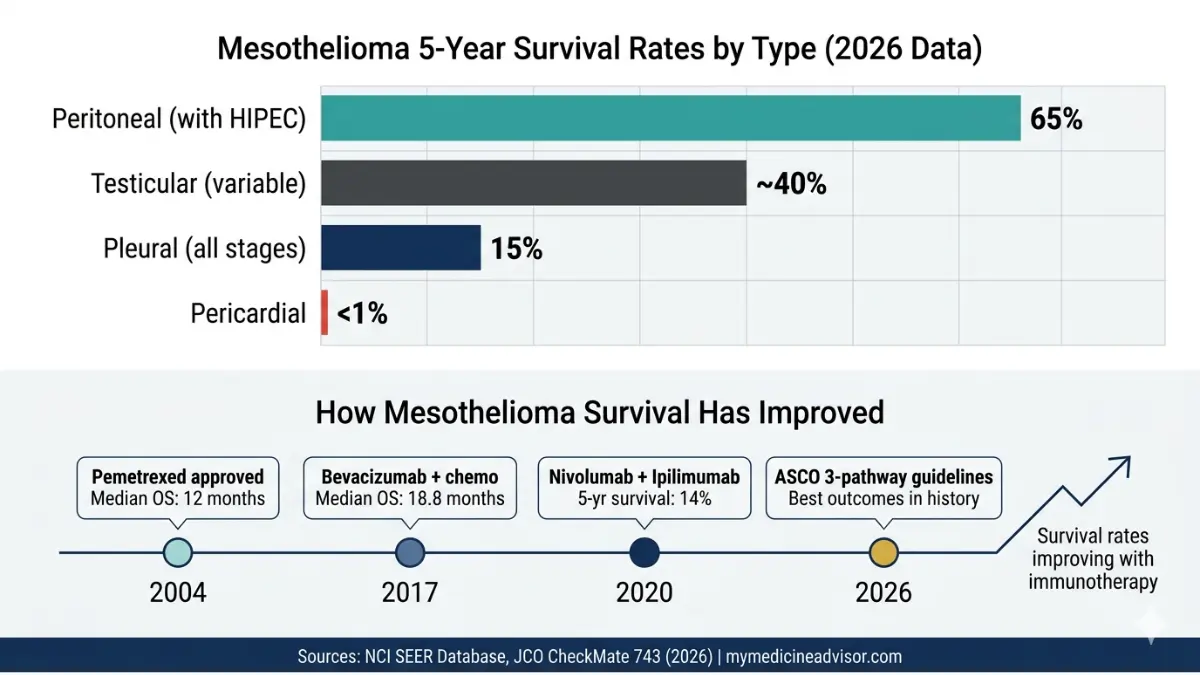
According to the most current data from the NCI’s SEER database (diagnoses through 2021, updated June 2025) and clinical trial data:
| Mesothelioma Type | 1-Year Survival | 3-Year Survival | 5-Year Survival |
|---|---|---|---|
| Pleural (all stages) | 73% | ~26% | 12–15% |
| Peritoneal (with HIPEC) | 92% | ~65% | 52–65% |
| Pericardial | ~40% | Rare | <1% |
| Testicular | ~80% | Variable | Variable |
The dramatic difference in peritoneal mesothelioma survival is attributable almost entirely to HIPEC surgery — covered in depth in Section 7.
2026 ACS SEER Data: Pleural Mesothelioma by Stage
The American Cancer Society publishes the most authoritative U.S. survival statistics, based on the SEER database with data through 2021:
| SEER Stage | 5-Year Relative Survival Rate |
|---|---|
| Localized (cancer limited to pleura) | 23% |
| Regional (spread to nearby structures/nodes) | 15% |
| Distant (spread to far organs/tissues) | 11% |
| All stages combined | 15% |
These numbers are meaningfully better than statistics published just 5 years ago — direct evidence that treatment advances are working.
Factors That Significantly Improve Survival
Not all mesothelioma diagnoses carry the same prognosis. The following factors are strongly associated with better outcomes:
1. Cell type (histology) This is the single most important prognostic factor:
- Epithelioid — best prognosis; responds best to multimodal treatment (70% of cases)
- Biphasic (mixed) — intermediate prognosis (20% of cases)
- Sarcomatoid — most aggressive; shortest median survival (10% of cases)
2. Stage at diagnosis Earlier diagnosis consistently produces better outcomes. Stage 1 patients have more than double the 5-year survival rate of Stage 4 patients.
3. Age at diagnosis Patients diagnosed under 45 have substantially better outcomes. Patients diagnosed under 65 are more likely to be surgical candidates and have greater physiologic reserve to tolerate aggressive treatment.
4. Sex Women diagnosed with mesothelioma consistently survive longer than men — approximately 2–4 months longer on median survival. The mechanism is not fully understood but may involve hormonal and immunological differences.
5. Treatment at a specialist center vs. community hospital Moffitt Cancer Center data shows their mesothelioma patients survive nearly 2.5 times longer than national averages — directly attributable to specialist surgical expertise, multimodal treatment access, and clinical trial availability.
6. Performance status (overall fitness) Patients in better overall health tolerate and respond better to aggressive treatments. This is one reason nutrition and fitness (covered in Section 8) matter clinically during treatment.
Are Survival Rates Improving?
Yes — measurably and meaningfully.
The introduction of immunotherapy as standard of care has shifted the survival curve for pleural mesothelioma. The landmark 5-year CheckMate 743 follow-up published in the Journal of Clinical Oncology in March 2026 showed that patients treated with nivolumab plus ipilimumab achieved a 5-year survival rate of 14% — compared to just 6% with chemotherapy alone. For non-epithelioid (sarcomatoid/biphasic) patients, 5-year survival jumped from 1% with chemotherapy to 12% with immunotherapy. This is the most significant improvement in mesothelioma survival data in the disease’s history.
For further reading on how radiation therapy fits into mesothelioma treatment planning, see our related article on radiation therapy options and what to expect.
Long-Term Survivors: When Statistics Don’t Define Outcomes
Three real-world cases illustrate that survival statistics are population averages — not individual destinies:
- Michael Cole — diagnosed with pleural mesothelioma in 2006. Now in his 19th year post-diagnosis after multimodal treatment including extrapleural pneumonectomy and chemotherapy.
- Tamron Little — peritoneal mesothelioma survivor who underwent HIPEC surgery. Now 10+ years post-diagnosis.
- Heather Von St. James — diagnosed in 2005 at age 36. Now in her 20th year of survival after pleurectomy/decortication and photodynamic therapy trial.
These are exceptional cases — but they are real. They demonstrate that survival statistics represent averages, not ceilings.
Life Expectancy Without Treatment
Without treatment, the average life expectancy for mesothelioma is 4 to 12 months after diagnosis. This figure underscores the urgency of pursuing specialist treatment immediately upon diagnosis. Even palliative treatment significantly extends life compared to no treatment at all.
What This Means For You
Survival rates are snapshots of past populations — not predictions for you. Your outcome depends on your specific stage, cell type, treatment center, and how quickly treatment begins. The same disease in two different patients, treated at different centers, can produce dramatically different results.
Mesothelioma Treatment Options: Surgery, Chemotherapy & Radiation
Treatment goals for mesothelioma depend fundamentally on stage and histology:
- Stages 1–2 (resectable disease): Curative intent — the goal is maximum tumor removal combined with systemic therapy
- Stages 3–4 (unresectable disease): Life-extending and palliative intent — the goal is slowing progression and managing symptoms
This distinction is one that many patients are never explicitly told by their physicians. Competitors consistently fail to communicate it clearly. It matters enormously for treatment decision-making and patient expectations.
Surgery for Mesothelioma
Surgery offers the best chance of extended survival for eligible patients — but only when performed at specialized thoracic surgery centers with mesothelioma expertise.
Three primary surgical approaches exist:
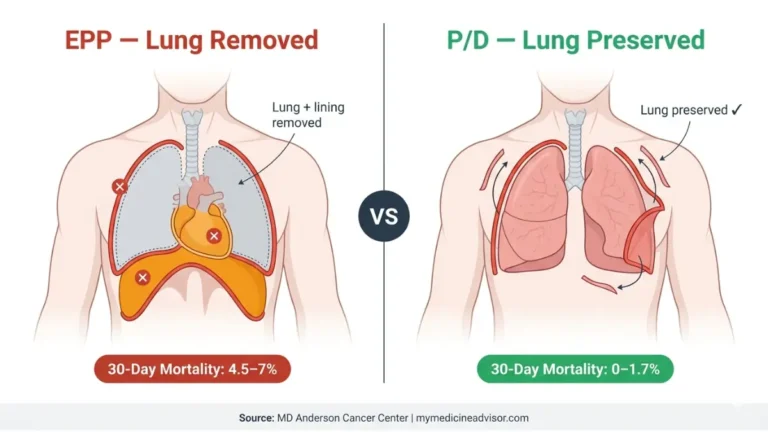
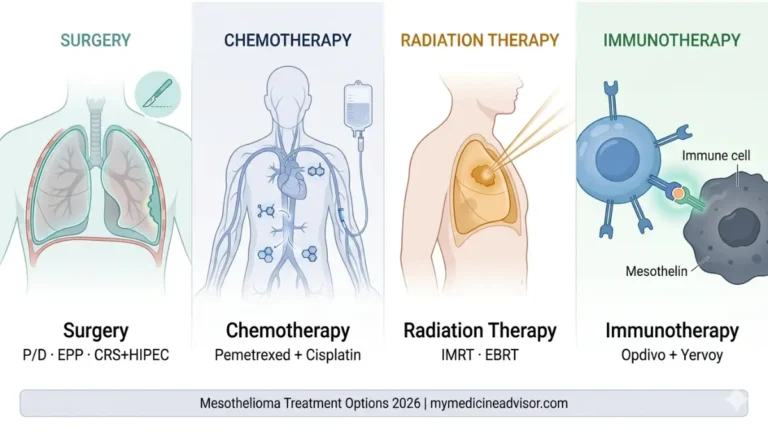
1. Pleurectomy/Decortication (P/D)
- The lung-sparing procedure
- Removes the cancerous pleural lining while preserving the lung
- Now preferred over EPP at most major centers
- Less morbidity, faster recovery
- Increasingly combined with intraoperative chemotherapy “washing” of the chest cavity
2. Extrapleural Pneumonectomy (EPP)
- Removes the entire lung, pleura, diaphragm, and pericardium on the affected side
- More aggressive; previously favored for complete cancer removal
- Now controversial following the MARS-2 trial (2021) which showed no survival advantage over chemotherapy alone in many patients
- Reserved for specific cases at high-volume centers
3. HIPEC (Hyperthermic Intraperitoneal Chemotherapy)
- Used exclusively for peritoneal mesothelioma
- Heated chemotherapy solution circulated directly into the abdominal cavity during surgery
- Has transformed peritoneal mesothelioma outcomes — 5-year survival with HIPEC can reach 52–65%
- Must be performed at highly specialized centers (MD Anderson, Moffitt, Penn Medicine)
Palliative surgical procedures can dramatically improve quality of life without removing cancer:
- Pleurodesis — seals the pleural space to prevent fluid re-accumulation
- Thoracentesis — drains pleural effusion to relieve breathing difficulty
- Paracentesis — drains abdominal fluid in peritoneal cases
- PleurX catheter placement — allows patients to drain pleural fluid at home
Chemotherapy for Mesothelioma
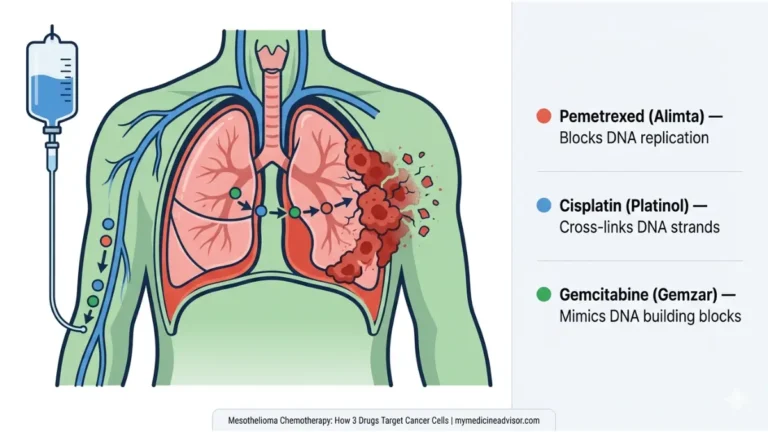
For two decades (2004–2024), standard first-line chemotherapy for mesothelioma consisted of:
- Pemetrexed (Alimta) + Cisplatin or Carboplatin
- Produces response rates of 40–45%
- Median survival improvement: 12.1 months (pemetrexed + cisplatin) vs 9.3 months (cisplatin alone)
- Addition of bevacizumab (Avastin) to this regimen further improves median overall survival to approximately 18.8 months
Chemotherapy remains a front-line option for epithelioid mesothelioma and is now also combined with immunotherapy in what is called chemoimmunotherapy — covered in Section 7.
For a detailed overview of how chemotherapy works, its side effects, and supportive care strategies, read our comprehensive chemotherapy guide.
Radiation Therapy for Mesothelioma
Radiation plays a supporting, not primary, role in mesothelioma treatment:
- Intensity-Modulated Radiation Therapy (IMRT) — used after surgery to treat residual microscopic disease, particularly after EPP
- Hemithoracic radiation — delivered to the entire hemithorax following lung removal
- Palliative radiation — used to relieve localized pain from tumor invasion of chest wall
- Prophylactic tract irradiation — prevents tumor seeding along biopsy needle tracks (used more commonly in Europe)
Radiation is rarely used as a standalone treatment but plays an important role in trimodality therapy.
Trimodality Therapy: The Combined Approach
Trimodality therapy — surgery + chemotherapy + radiation — represents the most aggressive treatment approach for eligible patients. It is reserved for Stage 1–2 patients with good performance status and epithelioid cell type.
Response to trimodality therapy varies significantly by center — again emphasizing the critical importance of treatment at specialized institutions.
Palliative Care: The Most Underemphasized Component
Nearly every competitor website treats palliative care as an afterthought. It is not.
Palliative care improves quality of life, manages pain, addresses psychological distress, and — research now shows — can actually extend survival when initiated early alongside active treatment.
Palliative care for mesothelioma patients includes:
- Pain management — opioid and non-opioid strategies for pleural pain
- Breathlessness management — oxygen therapy, opioids (for severe dyspnea), positioning
- Nutritional support — maintaining weight during treatment
- Psychological support — depression and anxiety affect 40%+ of mesothelioma patients
- Spiritual and family support — palliative care teams work with the whole family unit
Treatment Selection by Stage and Cell Type
This decision guide is something no competitor currently provides clearly:
| Cell Type | Stage 1–2 | Stage 3–4 |
|---|---|---|
| Epithelioid | Surgery + pemetrexed/cisplatin or chemo-immunotherapy | Chemotherapy or pembrolizumab + chemo |
| Sarcomatoid | Doublet immunotherapy (nivolumab + ipilimumab) | Doublet immunotherapy |
| Biphasic | Case-by-case; immunotherapy for sarcomatoid-predominant | Doublet immunotherapy preferred |
What This Means For You
Ask your oncologist two direct questions: (1) Am I a surgical candidate? (2) Which of the three 2025 ASCO-approved systemic regimens is best for my specific cell type and stage? If your oncologist cannot answer question two with confidence, seek a second opinion at a mesothelioma specialty center.
New Mesothelioma Treatments in 2026: Immunotherapy, Clinical Trials & What’s Coming
2026 marks a genuine turning point in mesothelioma history. For the first time, oncologists have three FDA-recognized systemic treatment pathways — not one. For over 15 years, pemetrexed-based chemotherapy was the only systemic option. That era is over.
How Immunotherapy Works: The Plain-English Explanation
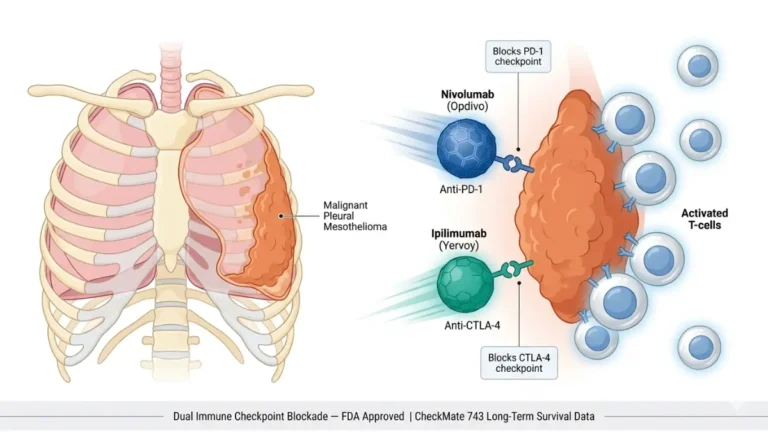
Your immune system’s T-cells are designed to find and destroy abnormal cells — including cancer cells. But cancer cells are sophisticated. They have evolved mechanisms to fool T-cells into standing down.
Cancer cells express proteins like PD-L1 that bind to “checkpoint” proteins on T-cells (PD-1 and CTLA-4), essentially flipping the T-cell “off switch.” The cancer hides in plain sight.
Immune checkpoint inhibitors are drugs that block this interaction. By removing the “off switch,” they restore T-cell activity against tumors. The cancer loses its camouflage.
This is the mechanism behind the two most important drugs in mesothelioma treatment today:
- Nivolumab (Opdivo) — blocks PD-1
- Ipilimumab (Yervoy) — blocks CTLA-4
Used together, they create a dual immune activation that has produced the most significant survival improvement in mesothelioma history.
CheckMate 743: The 5-Year Data That Changes Everything (2026)
The CheckMate 743 trial enrolled 605 patients with unresectable pleural mesothelioma. Patients received either nivolumab + ipilimumab or standard chemotherapy. The March 2026 5-year follow-up published in the Journal of Clinical Oncology produced the following results:
| Outcome | Nivolumab + Ipilimumab | Chemotherapy |
|---|---|---|
| 5-year overall survival | 14% | 6% |
| Epithelioid 5-year survival | 14% | 8% |
| Non-epithelioid 5-year survival | 12% | 1% |
| Hazard ratio (all patients) | 0.74 | — |
For patients with sarcomatoid or biphasic mesothelioma, the survival improvement with immunotherapy is extraordinary — from 1% to 12% at 5 years. This is why histologic subtyping is now critical before selecting treatment.
The FDA approved nivolumab + ipilimumab for unresectable malignant pleural mesothelioma in October 2020. The 2025 ASCO updated guidelines now recommend doublet immunotherapy as the preferred first-line regimen for non-epithelioid (sarcomatoid/biphasic) disease.
For an in-depth look at how immunotherapy works in cancer treatment broadly, our related article on how immunotherapy works provides excellent foundational context.
Three First-Line Treatment Options: 2025 ASCO Guidelines
The 2025 ASCO guidelines for malignant pleural mesothelioma now recognize three first-line systemic treatment pathways:
Option 1: Doublet Immunotherapy
- Nivolumab (Opdivo) + Ipilimumab (Yervoy)
- Best for: sarcomatoid and biphasic histology
- Median OS: 18.1 months overall; dramatically higher for non-epithelioid
Option 2: Standard Chemotherapy (with or without bevacizumab)
- Pemetrexed + cisplatin/carboplatin ± bevacizumab
- Best for: epithelioid histology, patients with autoimmune contraindications to immunotherapy
- Median OS: 12–18.8 months depending on regimen
Option 3: Chemoimmunotherapy
- Pembrolizumab (Keytruda) + pemetrexed + carboplatin
- Newest regimen; approved based on KEYNOTE-483 trial
- Best for: epithelioid histology where combination approach is preferred
- Median OS: 17.3–19.8 months
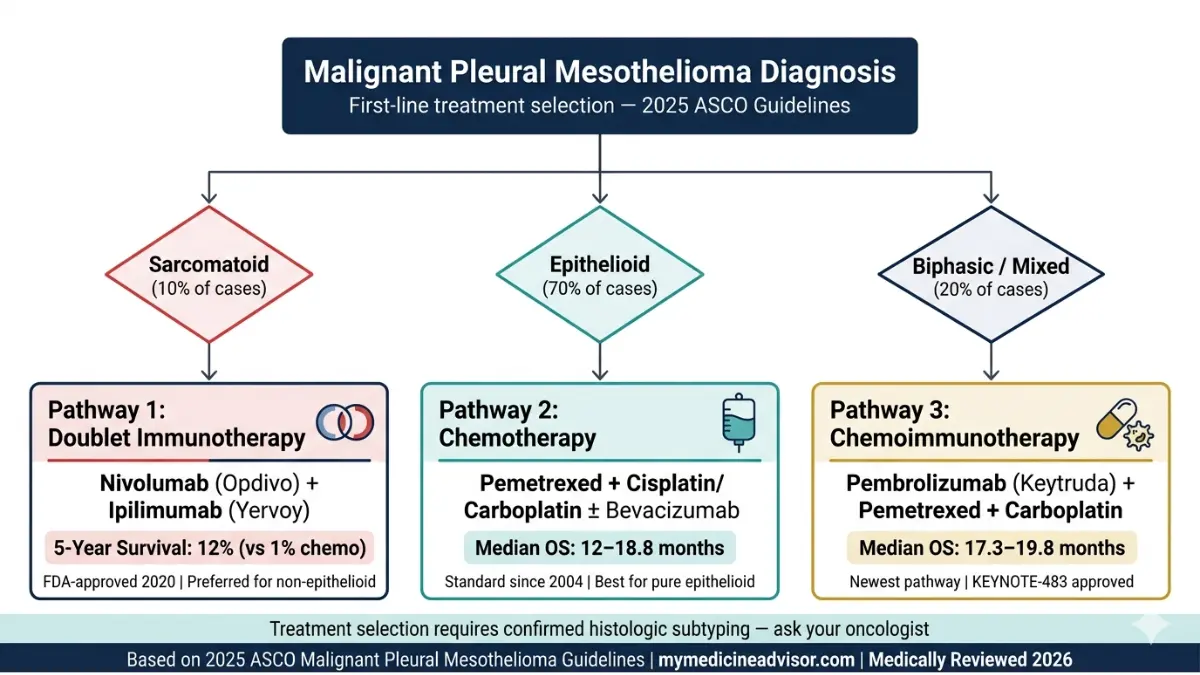
Treatment selection now requires knowing the patient’s exact histologic subtype. The ASCO 2025 guidelines explicitly state that “malignant mesothelioma not otherwise specified” is no longer an acceptable diagnostic classification for treatment planning.
Johns Hopkins Perioperative Immunotherapy Trial: Exclusive 2026 Coverage
In September 2025, researchers at the Johns Hopkins Kimmel Cancer Center published the first-ever clinical trial of perioperative (before and after surgery) combination immunotherapy in resectable mesothelioma in Nature Medicine.
Key findings:
- Patients received neoadjuvant nivolumab ± ipilimumab before surgery, followed by adjuvant nivolumab for one year
- Patients treated with the combination regimen survived a median of 28.6 months — compared to the national average of 18 months
- Nearly 36% were alive and recurrence-free at follow-up
- Over 80% of patients successfully completed surgery within the preplanned window
- The study also used ctDNA liquid biopsy to track treatment response — patients with undetectable ctDNA after neoadjuvant therapy had dramatically better outcomes
Why this matters: Immunotherapy had previously been used only for inoperable mesothelioma. This trial opens the door for immunotherapy in surgical candidates — a patient population that represents the best chance for long-term survival. This approach mirrors what has already succeeded in lung cancer and represents the next frontier in mesothelioma treatment.
BAP1 Genetic Mutation and Targeted Therapy
The 2025 ASCO updated guidelines made a landmark recommendation: germline genetic testing for BAP1 mutations should be offered to all malignant pleural mesothelioma patients.
Why BAP1 matters:
- BAP1 is a tumor-suppressor gene. Inherited mutations significantly increase susceptibility to mesothelioma, uveal melanoma, and clear cell renal cancer.
- Patients with BAP1 mutations may have different responses to immunotherapy
- Family members of patients with BAP1 mutations may benefit from surveillance
If you have been diagnosed with mesothelioma and have not had genetic testing, use our Genetic Risk Assessment Tool to understand your hereditary cancer risk profile and whether your family members may be at elevated risk.
Active Clinical Trials in 2026: What’s Coming Next
For patients who have progressed beyond first-line treatment — or who want to access cutting-edge therapies — clinical trials offer meaningful options:
1. CAR-T Cell Therapy Chimeric antigen receptor T-cell therapy is being investigated for mesothelioma using mesothelin-targeted CAR-T cells. Early Phase 1/2 data shows promising tumor reduction in patients with high mesothelin expression. Several trials are actively enrolling.
2. Anti-Mesothelin Antibody-Drug Conjugates (ADCs) Amatuximab and other anti-mesothelin agents are in active trials. ADCs deliver chemotherapy directly to cancer cells expressing mesothelin — the protein highly expressed on mesothelioma cells.
3. Mesothelioma Vaccine Research Dendritic cell-based vaccines and peptide vaccines targeting mesothelioma-specific antigens are in Phase 2 trials. These aim to prime the immune system against tumor cells rather than blocking immune checkpoints.
4. Tumor Treating Fields (TTFields) FDA-approved for glioblastoma, TTFields (Optune) is being investigated for mesothelioma. Delivers low-intensity electric fields to disrupt cancer cell division. The STELLAR trial showed improved OS with TTFields combined with chemotherapy.
8 Questions to Ask Your Oncologist in 2026
Bring this list to your next appointment:
- What is my exact histologic cell type — epithelioid, sarcomatoid, or biphasic?
- Based on my cell type and stage, which of the three ASCO 2025-approved regimens do you recommend?
- Am I eligible for surgical resection — P/D or EPP?
- Have you performed germline BAP1 genetic testing?
- Is there a mesothelioma specialty center I should consult before starting treatment?
- Am I eligible for any current clinical trials?
- What does my ctDNA level tell you about expected treatment response?
- When should palliative care be integrated into my treatment plan?
What This Means For You
The treatment landscape for mesothelioma in 2026 is fundamentally different from 2020. If you received a treatment plan before 2024 that does not include consideration of immunotherapy — specifically based on your histologic subtype — request an updated consultation with a mesothelioma specialist.
Living With Mesothelioma: Nutrition, Mental Health, Financial Support & Quality of Life
This is the section that distinguishes truly patient-centered mesothelioma resources from the clinical reference pages that dominate search results. No major competitor builds this section with meaningful depth. The patients who need this information most are also the patients who search for it most desperately — yet they routinely find nothing useful.
Nutrition During Mesothelioma Treatment
Weight loss is one of the most common and dangerous complications of mesothelioma treatment. Both the cancer itself and its treatments (chemotherapy, surgery) can dramatically suppress appetite, alter taste, cause nausea, and accelerate muscle wasting.
Why maintaining weight matters clinically:
- Patients with better nutritional status tolerate chemotherapy better
- Adequate muscle mass is required for surgical candidacy
- Immune function — critical for immunotherapy response — depends on protein intake
- Weight loss is independently associated with shorter survival in cancer patients
Evidence-based nutritional strategies during mesothelioma treatment:
- Increase protein intake — aim for 1.2–1.5g of protein per kilogram of body weight during treatment. This combats muscle wasting (cachexia). Use our Protein Intake Calculator to determine your personalized daily protein target based on your current weight and activity level.
- Eat small, frequent meals — 5–6 small meals per day is more manageable than 3 large ones during chemotherapy
- Anti-inflammatory foods — omega-3-rich foods (fatty fish, walnuts, flaxseed), colorful vegetables, and turmeric have demonstrated anti-inflammatory properties that support overall health during treatment
- Prioritize hydration — pemetrexed-based chemotherapy requires aggressive hydration to prevent kidney toxicity. Use our Water Intake Calculator to calculate your daily hydration needs during treatment
- Work with a registered oncology dietitian — the most important step. Ask your treatment center for a referral at the start of treatment.
Exercise and Physical Activity During Treatment
Counter to what many patients assume, physical activity during mesothelioma treatment is not contraindicated — and research shows it may be beneficial.
Evidence-based benefits of exercise during cancer treatment:
- Reduces cancer-related fatigue (the #1 quality-of-life complaint in mesothelioma patients)
- Preserves muscle mass during chemotherapy
- Improves mood and reduces depression/anxiety
- May improve immunotherapy response by enhancing immune cell trafficking
Safe approaches during treatment:
- Walking 20–30 minutes daily — most accessible and well-tolerated
- Light resistance training 2–3 times per week to combat muscle wasting
- Yoga and stretching for flexibility and stress management
- Guided pulmonary rehabilitation programs for patients with breathlessness
Always discuss any exercise program with your oncology team before beginning, particularly if you have pleural effusion or recent surgery.
Mental Health and the Psychological Impact of Mesothelioma
Depression and anxiety affect an estimated 40–50% of mesothelioma patients — yet these conditions are dramatically undertreated in this population.
The psychological burden of mesothelioma is uniquely severe:
- The diagnosis often comes after a lifetime of healthy living (cancer feels undeserved)
- The connection to workplace exposure can generate profound anger and grief
- The prognosis is serious and requires families to have difficult conversations
- Many patients are older, retired, and face the diagnosis without the social structures of a working life
Mental health support strategies:
- Palliative care psychology teams — most major cancer centers have integrated psychological support. Request a referral at diagnosis, not crisis.
- Support groups — the Mesothelioma Applied Research Foundation (MARF) facilitates both in-person and virtual patient/caregiver support communities
- Cognitive behavioral therapy (CBT) — has strong evidence in cancer patients for managing anxiety and depressive symptoms
- Caregiver mental health — family members and partners also need support. Caregiver burnout is common and predictable.
Sleep and Fatigue Management
Cancer-related fatigue affects virtually every mesothelioma patient — it is the most commonly reported quality-of-life issue during and after treatment.
Fatigue in mesothelioma has multiple causes:
- The cancer itself triggers inflammatory cytokines that cause fatigue
- Pleural effusion causes breathlessness that disrupts sleep
- Chemotherapy depletes red blood cells, causing anemia-related fatigue
- Psychological distress compounds physical fatigue
Evidence-based fatigue management strategies:
- Maintain consistent sleep/wake times
- Limit naps to 20–30 minutes before 3pm
- Gentle daily exercise has the strongest evidence for reducing cancer-related fatigue
- Energy conservation — prioritize high-value activities and delegate where possible
Use our Sleep Calculator to understand your optimal sleep window and help identify patterns in treatment-related fatigue.
Financial and Legal Support
Mesothelioma treatment is expensive. A full course of immunotherapy can cost $150,000–$300,000 per year without coverage. Surgical procedures at specialty centers carry significant costs. This is a real and serious barrier for many patients.
Available financial resources:
- Asbestos trust funds — Over $30 billion has been set aside in asbestos bankruptcy trust funds by former asbestos manufacturers. Mesothelioma patients and their families may be entitled to compensation regardless of whether a lawsuit is filed.
- VA benefits — Veterans diagnosed with mesothelioma are eligible for VA healthcare coverage for treatment. Given that veterans account for 30% of all mesothelioma diagnoses, this is a critical and underutilized resource.
- Medicare and Medicaid — most mesothelioma patients are Medicare-eligible due to age. Immunotherapy drugs (Opdivo, Keytruda, Yervoy) are covered under Medicare Part B or D depending on administration route.
- Drug manufacturer assistance programs — Bristol-Myers Squibb (Opdivo/Yervoy) and Merck (Keytruda) offer patient assistance programs for those who meet income criteria
- Legal compensation — mesothelioma patients have legal rights against manufacturers and employers who knowingly exposed workers to asbestos. Specialized mesothelioma attorneys typically work on contingency (no upfront cost).
Caregiver Guidance
If you are caring for a family member with mesothelioma, your needs are equally important. Caregiver burnout is not a sign of weakness — it is a predictable outcome of sustained high-intensity care without support.
Key guidance for caregivers:
- Accept help. Create a task list for friends and extended family who ask “what can I do?”
- Attend medical appointments and take notes
- Join a caregiver-specific support group (separate from patient groups)
- Speak to your own physician about your emotional health
- Know the signs of caregiver burnout: exhaustion, resentment, social withdrawal, neglecting your own health
The Mesothelioma Applied Research Foundation (MARF) at marf.org offers dedicated caregiver resources and a helpline.
What This Means For You
A mesothelioma diagnosis affects the whole person — not just the tumor. Addressing nutrition, mental health, sleep, and financial stress is not secondary to medical treatment. It is part of treatment. Patients who address all of these dimensions consistently report better quality of life and often better clinical outcomes.
Can Mesothelioma Be Prevented? Asbestos Safety & Future Outlook
Can Mesothelioma Be Cured?
As of 2026, no stage of mesothelioma is considered definitively curable by current medical standards. However, this statement requires important context:
- A meaningful proportion of Stage 1–2 patients achieve long-term remission following multimodal treatment, with some surviving 10–20+ years
- Peritoneal mesothelioma with HIPEC has 5-year survival rates approaching 65% — outcomes that functionally resemble cure in a substantial subgroup
- The definition of “curable” is shifting as immunotherapy produces durable multi-year remissions in previously terminal patients
What is true: patients treated early, with specialist care, and with current 2026 immunotherapy-inclusive regimens can expect meaningfully different outcomes than patients treated under the old chemotherapy-only paradigm.
Primary Prevention: Where Asbestos Still Hides in 2026
Despite asbestos bans and severe restrictions in the United States, asbestos is still present in millions of homes, schools, and commercial buildings built before 1980. Americans are still at risk from:
- Aging pipe insulation — in older homes and commercial buildings
- Floor tiles and adhesives — vinyl floor tiles from the 1970s frequently contained chrysotile asbestos
- Ceiling tiles — acoustic ceiling tiles in pre-1980 schools and offices
- Roof shingles — some older composition shingles
- Joint compounds and textured paints — used in wall construction
- Old vehicle brake linings — mechanic work on pre-1980s vehicles
- Imported goods — asbestos is not yet globally banned; products manufactured in Russia, China, Kazakhstan, and other nations may still contain asbestos fibers
Critical rule: Never DIY asbestos removal. Disturbing asbestos-containing materials releases fibers. All suspected asbestos abatement should be handled by licensed asbestos contractors. The EPA provides guidance on asbestos in homes and schools.
Who Should Request Occupational Health Monitoring?
There is currently no standard population-level screening program for mesothelioma. However, the following individuals should proactively discuss occupational health monitoring with their physicians:
- Anyone with documented occupational asbestos exposure
- Veterans who served aboard Navy ships, especially before 1990
- Family members of asbestos workers with documented secondary exposure
- Individuals who worked in Libby, Montana or other known high-exposure geographic areas
- Anyone with a BAP1 gene mutation
Monitoring typically includes periodic chest X-rays or low-dose CT scans and measurement of serum SMRP/mesothelin levels.
Global Mesothelioma Trends
- United States: Declining incidence as asbestos regulations enforced from 1970s onward take effect. Estimated ~2,500–3,000 new cases annually.
- United Kingdom: One of the highest per-capita mesothelioma rates in the world due to extensive naval and industrial asbestos use. Approximately 2,700 new cases per year.
- Australia: Historically high rates linked to the Wittenoom asbestos mine, the world’s largest known asbestos exposure site. Rates are slowly declining.
- Developing nations: Mesothelioma incidence is rising in countries where asbestos remains in active industrial use — including parts of Russia, India, Brazil, and China.
The WHO has called for a global asbestos ban, but as of 2026, approximately 60 countries still use chrysotile asbestos commercially.
The Future of Mesothelioma Treatment: What 2027–2030 May Bring
The next 5 years represent the most promising period in mesothelioma treatment research since pemetrexed’s 2004 approval:
- Perioperative immunotherapy as standard of care — the Johns Hopkins 2025 trial is expected to catalyze larger Phase 3 trials. If confirmed, immunotherapy before and after surgery could become the new standard for resectable mesothelioma.
- ctDNA-guided treatment decisions — liquid biopsy technology is moving from research to clinical application. Real-time tracking of tumor DNA in blood will allow oncologists to modify treatment plans before visible disease progression.
- CAR-T cell therapy — Phase 2 trials are expected to report results by 2027. Mesothelin-targeted CAR-T represents a fundamentally different therapeutic modality.
- AI-assisted early detection — machine learning algorithms trained on CT imaging patterns are being developed to detect pleural changes earlier than radiologists can. This could enable diagnosis at Stage 1 for asbestos-exposed populations undergoing screening.
- Global asbestos ban progress — increasing international momentum toward a complete global ban on asbestos production and use. Each year of exposure prevention translates to reduced mesothelioma incidence in 30–50 years.
What This Means For You
The outlook for mesothelioma is genuinely better in 2026 than it has ever been. More treatment options exist, more trials are open, and more patients are surviving longer. If you or a loved one has been diagnosed, the single most important action is immediate referral to a mesothelioma specialty center for a treatment plan that reflects 2026 evidence — not 2015 protocols.
Frequently Asked Questions About Mesothelioma
1. What is the main cause of mesothelioma?
Asbestos exposure is the only confirmed primary cause of mesothelioma. More than 80% of all cases are directly linked to inhaling or ingesting microscopic asbestos fibers, which lodge in the mesothelial tissue and cause chronic inflammation over 20 to 60 years. For more detail, see our dedicated article on what is the main cause of mesothelioma.
2. How long can you live with mesothelioma?
With treatment, median survival is 12 to 21 months for pleural mesothelioma. With modern immunotherapy, 5-year survival has reached 14%. Peritoneal mesothelioma treated with HIPEC surgery can have 5-year survival rates up to 65%. Our full article on mesothelioma life expectancy covers this in detail.
3. What are the first signs of mesothelioma?
The earliest signs are typically shortness of breath, a persistent dry cough, chest tightness, and unexplained fatigue. These symptoms appear gradually and are easily mistaken for COPD, bronchitis, or aging. Symptoms typically appear 20 to 60 years after asbestos exposure. For the complete list, see our article on 5 signs and symptoms of mesothelioma.
4. Is mesothelioma always caused by asbestos?
In over 80–90% of cases, yes. A very small number of cases may be linked to erionite mineral exposure, radiation therapy history, or inherited BAP1 gene mutations. However, even in cases where a patient cannot recall a specific asbestos exposure, the presumed cause is still asbestos — because the exposure may have been secondary or may have occurred decades before it became clinically apparent.
5. What is the survival rate for mesothelioma in 2026?
According to the most current NCI SEER data, the overall 5-year relative survival rate for pleural mesothelioma is approximately 15% across all stages — up significantly from 10% just a decade ago. With immunotherapy (nivolumab + ipilimumab), 5-year survival has reached 14% in clinical trial populations. Peritoneal mesothelioma with HIPEC surgery achieves 5-year survival of up to 65%.
6. Can mesothelioma be cured?
No stage of mesothelioma is currently considered definitively curable. However, some early-stage patients achieve long-term remission after aggressive multimodal treatment, with documented survivors at 15+ years post-diagnosis. The disease is considered treatable at all stages, with the goal shifting from curative to life-extending as stage advances.
7. What is the best treatment for mesothelioma in 2026?
The 2025 ASCO guidelines now recognize three first-line options: (1) doublet immunotherapy with nivolumab + ipilimumab — recommended for sarcomatoid/biphasic histology; (2) pemetrexed + cisplatin/carboplatin ± bevacizumab — for epithelioid cases with contraindications to immunotherapy; (3) pembrolizumab + pemetrexed + carboplatin — for epithelioid cases where chemoimmunotherapy is preferred. Treatment selection must be based on exact histologic subtype.
8. How is mesothelioma different from lung cancer?
Mesothelioma originates in the mesothelial tissue lining the lungs — not in the lung tissue itself. Lung cancer originates in bronchial epithelial cells within the lung parenchyma. They are distinct diseases with different causes, different treatments, different prognoses, and different clinical behaviors. Asbestos exposure is the primary cause of mesothelioma; smoking is the primary cause of most lung cancers.
9. Does smoking cause mesothelioma?
No. Decades of epidemiological research confirm that smoking does not cause mesothelioma. Asbestos exposure is the cause. However, smokers with asbestos exposure have an approximately 60 times higher risk of developing lung cancer than non-exposed, non-smoking individuals — a critical distinction for risk counseling.
10. What is peritoneal mesothelioma and why does it have better outcomes?
Peritoneal mesothelioma develops in the lining of the abdominal cavity (peritoneum) and accounts for 15–20% of all cases. It has dramatically better outcomes than pleural mesothelioma primarily because of HIPEC — Hyperthermic Intraperitoneal Chemotherapy — which delivers heated chemotherapy directly into the abdomen during surgery, achieving 5-year survival rates of 52–65% in eligible patients. This procedure is not available for pleural mesothelioma.
11. Are veterans at higher risk for mesothelioma?
Yes. U.S. military veterans — particularly Navy veterans — account for approximately 30% of all mesothelioma diagnoses in the United States. This stems from extensive asbestos use in military ships, barracks, vehicles, and equipment throughout the 20th century. Veterans diagnosed with mesothelioma are eligible for VA healthcare benefits and disability compensation. You can also explore end-stage mesothelioma guidance and support resources for advanced-stage patients and their families.
Related Resources on mymedicineadvisor.com:
- Immunotherapy: How It Works and What to Expect
- Chemotherapy: 2026 Guide to Side Effects and Management
- Radiation Therapy: What Patients Need to Know
- Asbestosis: Symptoms and Delayed Diagnosis
- Mesothelioma Cancer: Recovery Guide
- Symptom Checker Tool
- Genetic Risk Assessment Tool
📋 Medical Disclaimer: This article is intended for educational and informational purposes only. It does not constitute medical advice, diagnosis, or treatment recommendations. Always consult a qualified oncologist or healthcare professional for guidance specific to your medical situation. If you are experiencing symptoms described in this article, seek medical attention promptly.
Medical disclaimer
The content on MyMedicineAdvisor is provided for general informational and educational purposes only and is not a substitute for professional medical advice, diagnosis, or treatment. Health information on this website should not be used to diagnose, treat, cure, or prevent any condition without guidance from a qualified healthcare professional. Always seek the advice of your doctor, physician, or another licensed healthcare provider with any questions you may have regarding a medical condition, symptoms, medications, or treatment decisions.