On This Page – Quick Medical Summary
Robert Chen worked as a naval insulation contractor for 28 years. At 71, he developed persistent chest tightness and shortness of breath. His primary care physician treated him for pleurisy — twice. It took 11 months, 3 doctors, and 4 specific diagnostic tests before anyone said the word mesothelioma.
His story is the norm, not the exception.
According to the National Cancer Institute (NCI), mesothelioma is one of the most diagnostically challenging cancers in medicine. The good news: knowing exactly which 4 tests confirm mesothelioma — and in what sequence — can compress that 11-month timeline significantly.
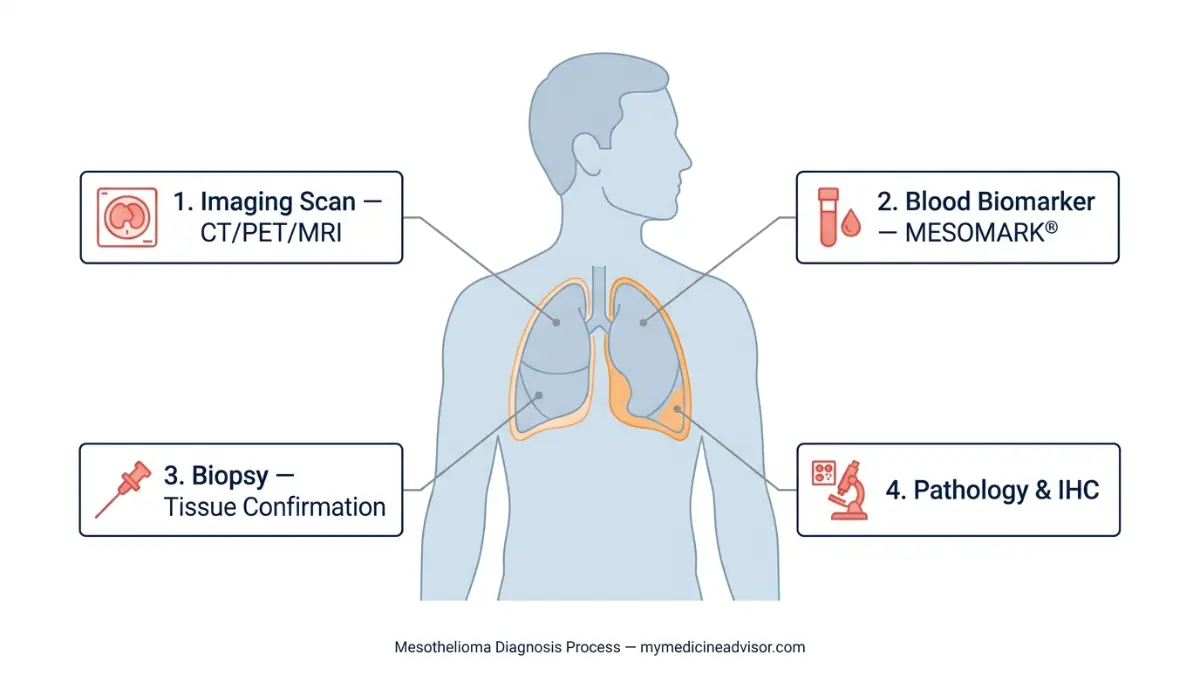
Quick Answer: Mesothelioma is diagnosed through 4 critical tests: (1) Imaging scans (CT, MRI, PET), (2) Blood biomarker tests (MESOMARK® assay), (3) Biopsy procedures (the only confirmatory test), and (4) Pathology and immunohistochemistry (the final cellular verdict). Biopsy is the gold standard. Imaging and blood tests narrow the diagnosis and guide biopsy placement.
Why Mesothelioma Is So Hard to Diagnose — And Why 30 Days Can Change Everything
Mesothelioma diagnosis is delayed, on average, 9 to 14 months after a patient first notices symptoms. This is not a failure of medicine alone — it is built into the biology of the disease.
Why diagnosis is routinely delayed:
- Mesothelioma has a latency period of 10 to 50 years after asbestos exposure
- The CDC reports only 2,669 new cases in the U.S. in 2022 — its rarity causes doctors to rule out common conditions first
- Most patients are aged 70–72 at first diagnosis, and their symptoms overlap with age-related conditions
- Shortness of breath, chest pain, and abdominal pressure are vague signals that mirror 6+ other diseases
5 Conditions That Commonly Mimic Mesothelioma
| Condition | Overlapping Symptoms | Key Difference |
|---|---|---|
| Pleurisy | Chest pain, breathing difficulty | Infection-driven, resolves with antibiotics |
| COPD | Breathlessness, cough | Tied to smoking history, not asbestos |
| Pneumonia | Fever, chest pain, fluid | Shows bacterial markers in blood |
| Heart failure | Fluid buildup, fatigue | Cardiac biomarkers confirm |
| Lung cancer | Cough, weight loss | Different cell type on biopsy |
| Irritable bowel syndrome | Abdominal pain | No pleural involvement |
Why acting fast matters: Patients diagnosed at Stage I or II have access to surgery, immunotherapy, and multimodal treatment. By Stage III or IV, surgical options are often eliminated. If you are experiencing unexplained chest or abdominal symptoms with a history of asbestos work, use our Symptom Checker to track and document your symptoms before your appointment.
If you or a family member has a known occupational history linked to asbestos, learn more about how asbestos exposure causes mesothelioma and the 10–50 year latency period that makes early suspicion so critical.
✅ What This Means For You: Do not accept a diagnosis of pleurisy or pneumonia without asking your doctor directly about your asbestos exposure history. Push for imaging within 2–4 weeks of persistent symptoms.
Critical Test #1 — Imaging Scans (X-Ray, CT, MRI & PET)
Imaging tests are always the first step in the mesothelioma diagnostic pathway. They are non-invasive, widely available, and give physicians their first real look at what is happening inside the chest or abdomen.
The 4 Imaging Tests — What Each One Does
| Test | What It Detects | Confidence Level | When It’s Used |
|---|---|---|---|
| Chest X-Ray | Pleural effusion, gross abnormalities | ★★☆☆☆ | First-line, rules out common causes |
| CT Scan | Tumor location, size, spread, pleural thickening | ★★★★☆ | Standard second step, guides biopsy |
| MRI | Soft tissue detail, chest wall invasion | ★★★☆☆ | Peritoneal/pericardial types, surgical planning |
| PET Scan | Metabolic activity, lymph node involvement, distant spread | ★★★★☆ | Staging, treatment eligibility |
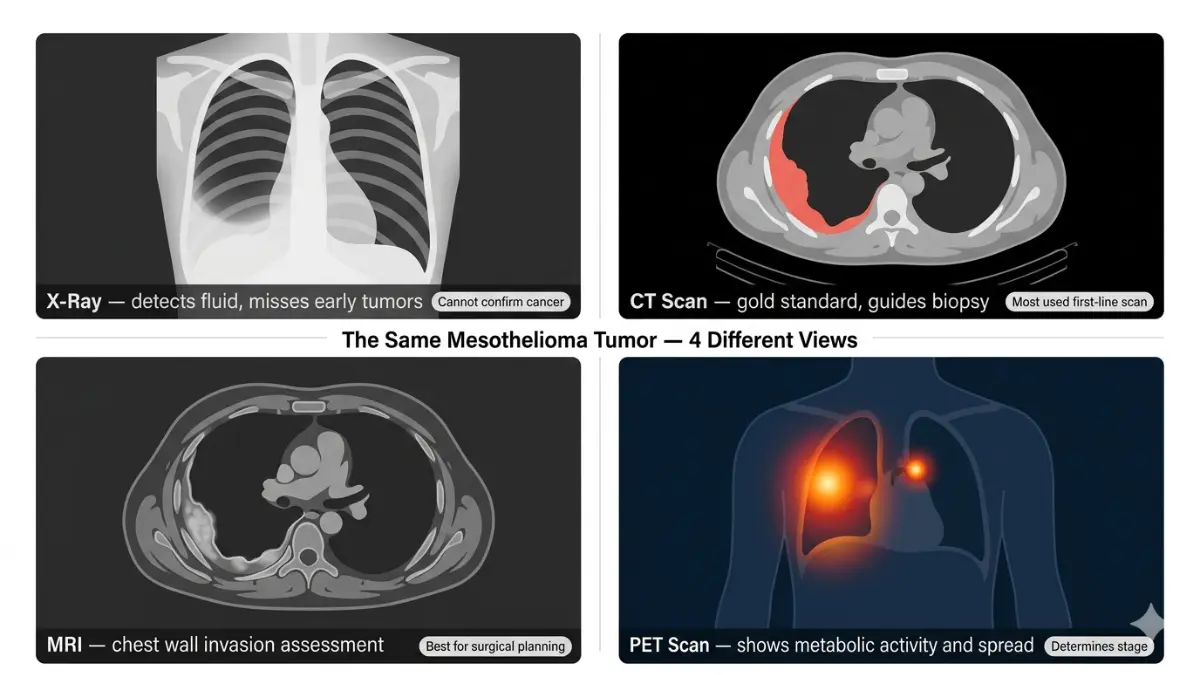
X-Ray is usually the first test ordered by a primary care doctor. It can reveal pleural effusion (fluid around the lungs) — a key early sign of pleural mesothelioma — but it cannot confirm cancer. Think of it as a red-flag detector, not a diagnostic tool.
CT Scan is the workhorse of mesothelioma diagnosis. It provides cross-sectional imaging of the chest and abdomen, identifying pleural thickening, masses, and lymph node enlargement. According to Mayo Clinic’s diagnostic pathway, CT scans are essential for guiding the selection of biopsy type and location.
MRI adds soft-tissue resolution that CT cannot match. It is particularly valuable when doctors need to assess whether mesothelioma has invaded the chest wall, diaphragm, or pericardium — information that is critical for surgical planning.
PET Scan reveals metabolic activity in the body. Mesothelioma cells consume glucose at a higher rate than normal cells. A PET scan lights up these areas, allowing oncologists to determine stage, assess spread to lymph nodes, and decide whether a patient is a surgical candidate.
2026 Note: Low-dose CT protocols are actively being studied for high-risk asbestos-exposed workers as a potential early-detection screening tool.
✅ What This Means For You: If your doctor only orders a chest X-ray after you report asbestos exposure, ask specifically for a CT scan of the chest and abdomen. A normal X-ray does not rule out mesothelioma.
Critical Test #2 — Blood Biomarker Tests (MESOMARK®, SMRP & 2026 Advances)
Blood tests cannot diagnose mesothelioma on their own — but they are powerful early-warning signals that can trigger deeper investigation when imaging alone is inconclusive.
How Mesothelioma Biomarker Testing Works
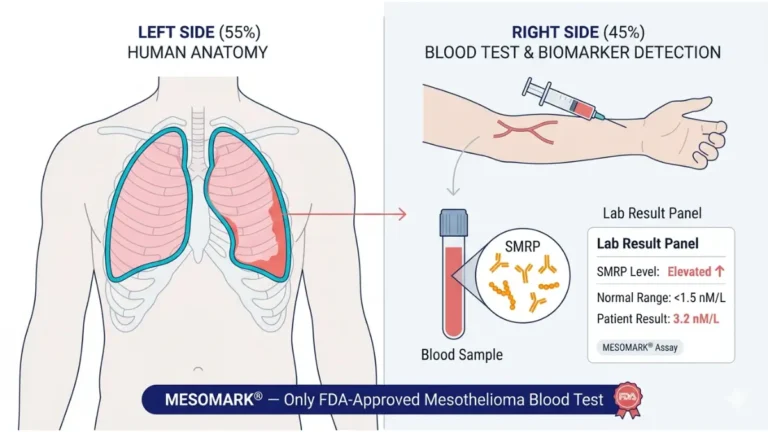
Mesothelioma cells release specific proteins into the bloodstream. Scientists have identified several of these proteins as diagnostic markers. Doctors test for elevated concentrations of these substances in a blood sample.
Key Blood Tests Used in 2026
MESOMARK® Assay (SMRP Test)
- The only FDA-approved blood test specifically for mesothelioma
- Measures soluble mesothelin-related peptides (SMRPs) — proteins elevated in mesothelioma patients
- Most accurate for epithelioid mesothelioma (60–70% of cases)
- Less reliable for sarcomatoid tumors
- Used to monitor treatment response after diagnosis, not as a standalone diagnostic
HMGB1 Protein Test
- High-mobility group box 1 protein can be elevated even in patients with asbestos exposure before cancer develops
- Potential role as a pre-cancer early-alert tool — most competitors ignore this
SOMAmer Protein Test
- Screens over 1,000 proteins simultaneously
- Studies show it correctly identified mesothelioma in 90% of known patients
- Not yet widely available, but represents the future of blood-based detection
2026 Breakthrough: Mayo Clinic researchers published a study in the Journal of Thoracic Oncology describing a whole-genome sequencing blood test targeting chromosomal rearrangements in mesothelioma cells. As noted by Mayo Clinic’s Cancer Center, this approach could dramatically improve detection rates compared to traditional single-point mutation tests.
Biomarker Test Comparison
| Test | FDA Approved | Best For | Limitation |
|---|---|---|---|
| MESOMARK® / SMRP | ✅ Yes (2007) | Epithelioid type, monitoring | Cannot confirm diagnosis |
| HMGB1 | ❌ No | Pre-cancer risk detection | Experimental |
| SOMAmer | ❌ No | High accuracy detection | Limited availability |
| ctDNA (Liquid Biopsy) | ❌ Emerging | Chromosomal rearrangement detection | Research phase |
✅ What This Means For You: Ask your oncologist about SMRP/MESOMARK testing if imaging is suspicious but inconclusive. A positive result does not confirm mesothelioma — it escalates the pathway toward biopsy.
Critical Test #3 — Mesothelioma Biopsy (The Only Confirmatory Test)
No imaging scan, no blood test, and no physical exam can confirm mesothelioma. Only a biopsy can.
This is the single most important fact in this entire article. Tissue sampling is the gold standard for mesothelioma diagnosis, as confirmed by both the NCI treatment guidelines and every major cancer center worldwide.
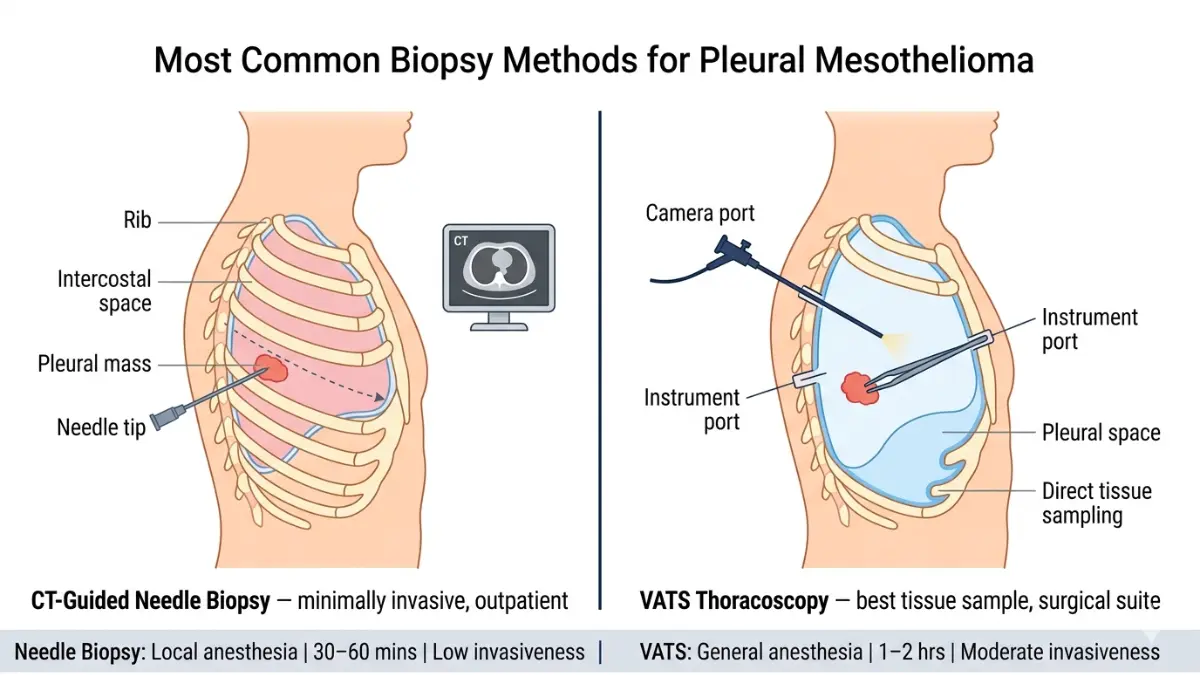
6 Types of Mesothelioma Biopsy — Explained
Most competitor articles describe only 2 to 3 biopsy types. All 6 are in active clinical use:
| Biopsy Type | How It’s Done | Best For | Invasiveness |
|---|---|---|---|
| CT-Guided Needle Biopsy | Thin needle guided by CT scan | Pleural masses, initial sampling | Low |
| Thoracentesis | Drains fluid from pleural space | Pleural effusion analysis | Low–Moderate |
| Paracentesis | Drains fluid from abdominal cavity | Peritoneal mesothelioma | Low–Moderate |
| VATS (Thoracoscopy) | Camera-assisted chest entry | Best tissue sampling, staging | Moderate |
| Laparoscopy | Camera-assisted abdominal entry | Peritoneal mesothelioma | Moderate |
| Open Surgical Biopsy | Full surgical incision | Complex cases, tumor removal | High |
Thoracoscopy (VATS) is considered the most effective method for pleural mesothelioma. It allows surgeons to see the pleura directly, take multiple samples, and drain fluid simultaneously. Learn more about what to expect from surgical results in our biopsy results timeline guide.
Why the Pathologist’s Expertise Matters Critically
Even with a good tissue sample, general pathologists can miss mesothelioma. Research suggests that up to 30% of initial mesothelioma diagnoses by non-specialist pathologists are incorrect. The cancer’s appearance under a standard microscope can be confused with lung adenocarcinoma or other metastatic carcinomas.
A mesothelioma-specialized pathologist uses immunohistochemistry (IHC) — a laboratory technique that applies antibodies to detect specific proteins in tissue — to differentiate mesothelioma from other cancers definitively. This step is covered in detail in Section 5.
Liquid Biopsy — The 2026 Emerging Frontier
Liquid biopsy analyzes circulating tumor DNA (ctDNA) from a standard blood draw. For mesothelioma, the Mayo Clinic’s chromosomal rearrangement approach represents a potential future where tissue biopsy may be supplemented — though not yet replaced — by blood-based confirmation.
If you have hereditary cancer risk factors alongside occupational asbestos exposure, our Genetic Risk Assessment Tool can help you understand and document your personal risk profile before specialist consultations.
✅ What This Means For You: Always request that your biopsy sample be reviewed by a pathologist with specific mesothelioma experience. If your diagnosis came from a general hospital, a second pathology review at a designated cancer center is not just recommended — it can be life-changing.
Critical Test #4 — Pathology & Immunohistochemistry (The Final Verdict)
After biopsy, your tissue sample travels to a pathology laboratory. What happens in that lab determines everything: whether you have mesothelioma, what type, what stage, and which treatments are available to you.
Histology vs. Cytology — What’s the Difference?
- Histology analyzes solid tissue architecture — how cancer cells are structured and organized
- Cytology analyzes individual cells from fluid samples — useful but less definitive
- For a confirmed mesothelioma diagnosis, histology from a solid tissue biopsy is the standard
Immunohistochemistry (IHC) — How It Confirms Mesothelioma
IHC uses antibodies tagged with color-producing compounds to detect specific proteins in tissue sections. Different proteins are expressed in different cancer types. Mesothelioma has a distinct IHC signature that distinguishes it from lung cancer, carcinoma, and other thoracic malignancies.
As the CDC confirms, it can be difficult to distinguish mesothelioma from other cancers — IHC is the tool that resolves that ambiguity at the molecular level.
Mesothelioma Cell Types — What They Mean for Your Treatment
| Cell Type | % of Cases | Prognosis | Key Treatment Implication |
|---|---|---|---|
| Epithelioid | 60–70% | Best | Responds to chemotherapy + immunotherapy; may be surgical |
| Sarcomatoid | 10–20% | Poorest | Limited treatment options; surgery rarely an option |
| Biphasic | 20–30% | Mixed | Depends on epithelioid-to-sarcomatoid ratio |
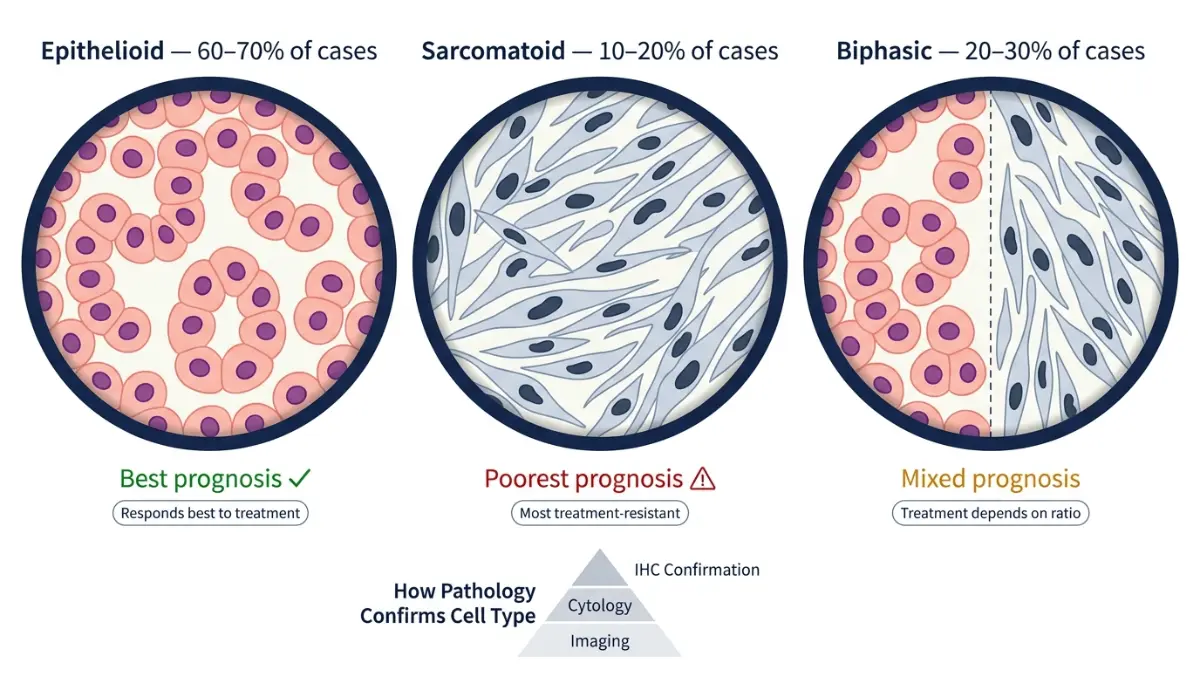
Staging (I–IV) is determined from biopsy results combined with imaging. Stage directly determines whether surgery, chemotherapy, immunotherapy, or palliative care is the primary path forward. Our guide to mesothelioma survival rates and stages breaks down stage-specific survival data in detail.
For a full walkthrough of how pathology reports are structured and decoded, see our guide to understanding pathology results step-by-step.
✅ What This Means For You: Ask your oncologist specifically: “What cell type was confirmed, and what is the epithelioid-to-sarcomatoid ratio in my biopsy?” This single answer shapes your entire treatment strategy.
After Diagnosis — Your 30-Day Action Roadmap
A mesothelioma diagnosis does not mean you are out of options. The first 30 days after confirmation are the most important for treatment access, insurance navigation, and specialist engagement.
Your 6-Stage Diagnostic Journey — Week by Week
| Timeline | Stage | What Happens |
|---|---|---|
| Week 1 | Symptoms + GP Visit | X-Ray, initial blood work ordered |
| Week 2–3 | Imaging | CT scan, possible MRI or PET |
| Week 3–4 | Blood Biomarker Testing | SMRP/MESOMARK ordered if imaging suspicious |
| Week 4–6 | Biopsy | VATS, needle, or thoracentesis |
| Week 6–8 | Pathology + IHC | Cell type confirmed, stage assigned |
| Week 8–10 | Specialist MDT Review | Treatment plan finalized |
7 Immediate Steps to Take After Confirmed Diagnosis
- Request your full pathology report — not just the summary
- Seek a second opinion from a National Cancer Institute-designated center
- Contact a mesothelioma specialist — general oncologists have limited experience with this rare cancer
- Call your insurance provider — most diagnostic tests are covered under Medicare Part B and standard health plans
- Document your asbestos exposure history — occupational records can support both treatment referrals and legal claims
- Ask about clinical trials — the NCI clinical trials database lists active mesothelioma studies accepting patients
- Assemble your care team — you need an oncologist, thoracic surgeon, pulmonologist, and palliative care specialist working together
Understanding how mesothelioma compares to other chest cancers can also help you ask better questions. Our deep-dive comparison of mesothelioma vs. lung cancer covers the key diagnostic and treatment differences.
For patients who have already received early signs and symptoms information, our article on early mesothelioma symptoms doctors miss provides critical pre-diagnosis context.
According to Mayo Clinic, patients who work with experienced multidisciplinary mesothelioma teams consistently access a broader range of treatment options and report better care coordination outcomes.
✅ What This Means For You: The 30 days after diagnosis are not a waiting period — they are a decision window. Every specialist referral, second opinion, and insurance call made now directly expands your treatment options.
⚠️ Medical Disclaimer: This article is for educational purposes only and does not constitute medical advice, diagnosis, or treatment. Always consult a qualified oncologist or mesothelioma specialist for personal medical guidance.
Frequently Asked Questions — Mesothelioma Diagnosis (2026)
1. How long does mesothelioma diagnosis take?
The full process — from first symptoms to confirmed diagnosis — typically takes 4 to 12 weeks once a specialist is involved. However, delays before specialist referral can extend this to 9–14 months in real-world cases.
2. Can a CT scan diagnose mesothelioma alone?
No. A CT scan can strongly suggest mesothelioma and guide biopsy placement, but it cannot confirm the diagnosis. Only a tissue biopsy with pathology review is definitive.
3. What is the MESOMARK blood test?
MESOMARK® is the only FDA-approved blood test for mesothelioma. It measures soluble mesothelin-related peptides (SMRPs) — proteins elevated in many mesothelioma patients. It does not confirm the disease; it triggers further testing.
4. Is a mesothelioma biopsy painful?
Most biopsy procedures (needle biopsy, thoracentesis) are performed under local anesthesia with mild sedation. VATS is done under general anesthesia. Most patients report discomfort rather than significant pain, with recovery ranging from hours to a few days.
5. Can mesothelioma be misdiagnosed as lung cancer?
Yes — and frequently. Both cancers affect the chest, share overlapping symptoms, and can appear similar on imaging. Immunohistochemistry (IHC) performed by a specialist pathologist is the definitive tool for distinguishing them. See our full comparison: mesothelioma vs. lung cancer.
6. What is the difference between pleural and peritoneal mesothelioma diagnosis?
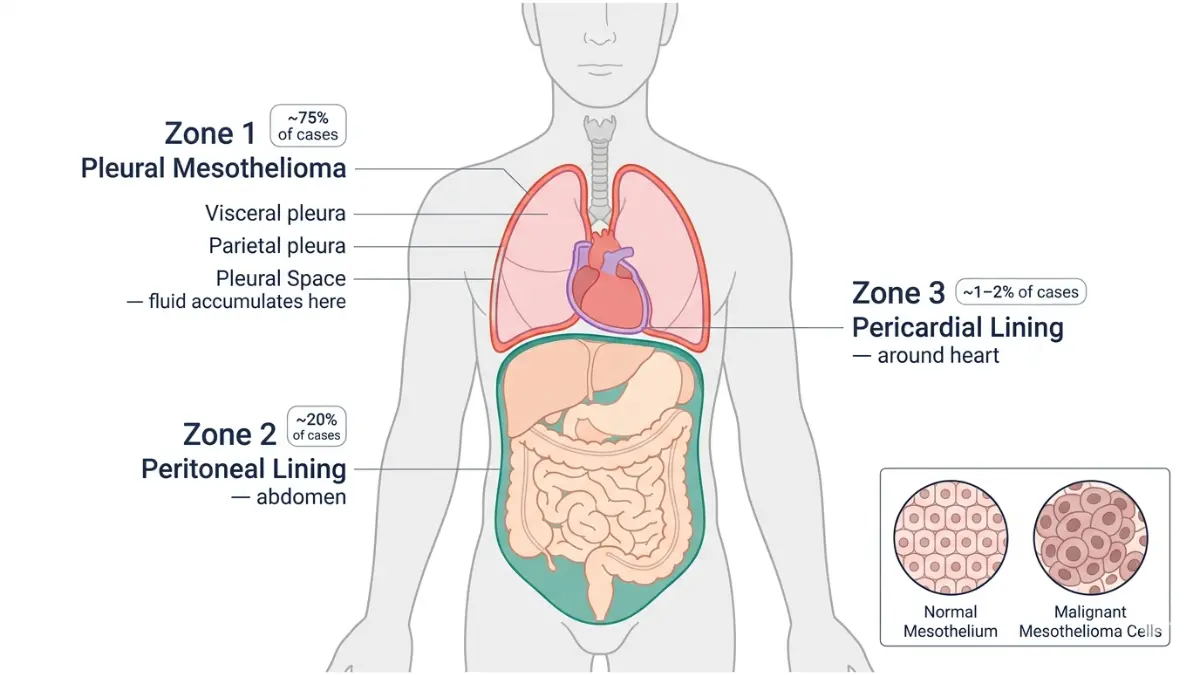
Pleural mesothelioma is diagnosed primarily via thoracentesis or VATS biopsy of the chest lining. Peritoneal mesothelioma requires paracentesis or laparoscopy targeting the abdominal lining. CT and MRI protocols also differ by location.
7. Does insurance cover mesothelioma diagnostic tests?
In most cases, yes. CT scans, biopsies, PET scans, and specialist consultations are typically covered under Medicare Part B and standard private health insurance when ordered for a documented medical indication. Always pre-authorize before procedures.
8. What is liquid biopsy in mesothelioma?
Liquid biopsy analyzes circulating tumor DNA (ctDNA) from a blood sample. Mayo Clinic researchers are leading work on detecting chromosomal rearrangements in mesothelioma via this method. It is currently in the research phase and not yet a standard clinical test.
9. At what stage is mesothelioma usually diagnosed?
Most patients — approximately 75% — are diagnosed at Stage III or Stage IV, when the cancer has already spread. This is the primary reason early suspicion and fast diagnostic escalation are so critical.
10. What is immunohistochemistry in mesothelioma?
IHC is a laboratory technique that uses antibodies to detect specific proteins in biopsy tissue. It distinguishes mesothelioma from lung cancer and other cancers by identifying a unique protein expression signature specific to mesothelioma cells.
11. Should I get a second opinion after a mesothelioma diagnosis?
Absolutely — and urgently. Research and clinical consensus indicate that general pathologists misclassify mesothelioma in a significant proportion of cases. A review at an NCI-designated cancer center or mesothelioma specialist center is strongly recommended before beginning any treatment.
For comprehensive survival data, treatment options, and stage-by-stage outcomes, read our full mesothelioma survival rates and symptoms pillar guide.
Medical disclaimer
The content on MyMedicineAdvisor is provided for general informational and educational purposes only and is not a substitute for professional medical advice, diagnosis, or treatment. Health information on this website should not be used to diagnose, treat, cure, or prevent any condition without guidance from a qualified healthcare professional. Always seek the advice of your doctor, physician, or another licensed healthcare provider with any questions you may have regarding a medical condition, symptoms, medications, or treatment decisions.