On This Page – Quick Medical Summary
What Are Early Mesothelioma Symptoms? (Direct Answer)
Early mesothelioma symptoms include persistent dry cough, unexplained shortness of breath, chest or abdominal discomfort, fatigue, and unintended weight loss. These signs typically appear 20–50 years after asbestos exposure, are mild at first, and are routinely mistaken for common conditions like COPD, flu, or digestive disorders — which is why most cases are already at Stage 3 by the time they are correctly diagnosed.
Nearly 1 in 4 mesothelioma patients receives a wrong diagnosis at their first medical visit, according to the Open Epidemiological Journal. That delay is often the difference between surgical eligibility and palliative-only care.
If you have noticed unexplained respiratory or abdominal changes, use our Symptom Checker to log and track what you’re experiencing before your next doctor’s appointment.
The Human Cost of a Missed Diagnosis
Robert M., a 64-year-old retired Navy pipefitter from Baltimore, visited his GP three times in 14 months with a nagging dry cough and tightness in his right side. He was prescribed two courses of antibiotics and told he had bronchitis. On his fourth visit — this time to a pulmonologist — a CT scan revealed significant pleural effusion. A biopsy confirmed Stage 3 pleural mesothelioma.
Robert’s story is not unusual. It is the norm.
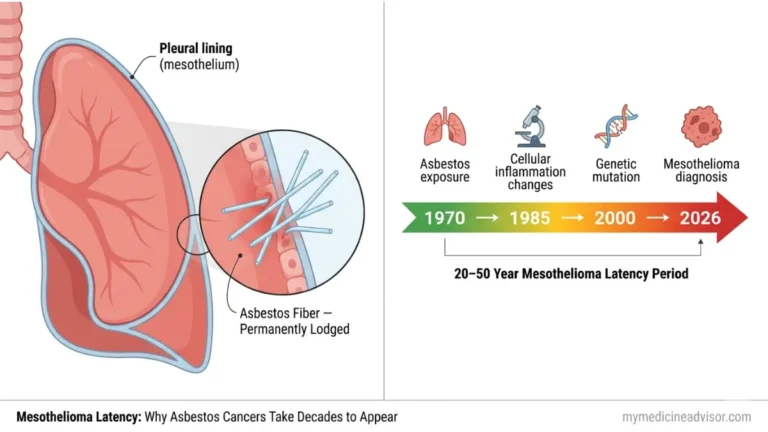
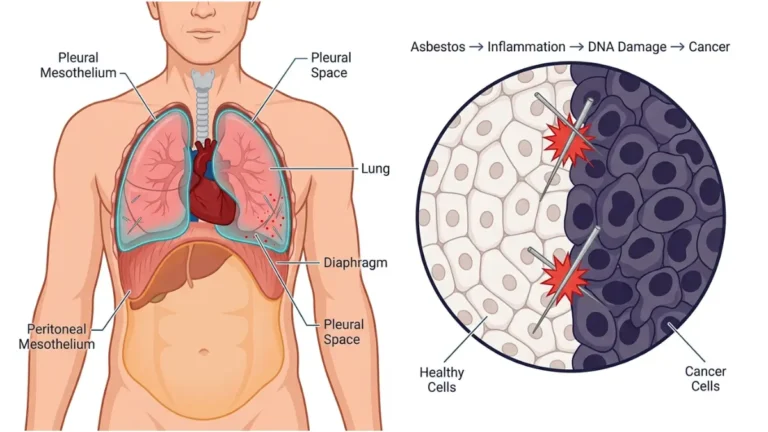
Mesothelioma has a latency period of 20–50 years. By the time symptoms appear, the person has often forgotten — or never knew — they were exposed to asbestos decades earlier. That missing piece of history causes doctors to look everywhere except the right place.
According to the American Cancer Society, most patients with mesothelioma experience symptoms for several months before they receive a correct diagnosis — and many attribute those symptoms to routine aging or minor illness.
The earlier you identify these warning signs, the more treatment options remain available. Stage 1 mesothelioma is potentially operable. Stage 3 is not. That distinction is everything.
The 8 Early Mesothelioma Symptoms — Broken Down by Cancer Type
Most competitor websites list the same six symptoms in a bullet list and stop there. That is not enough.
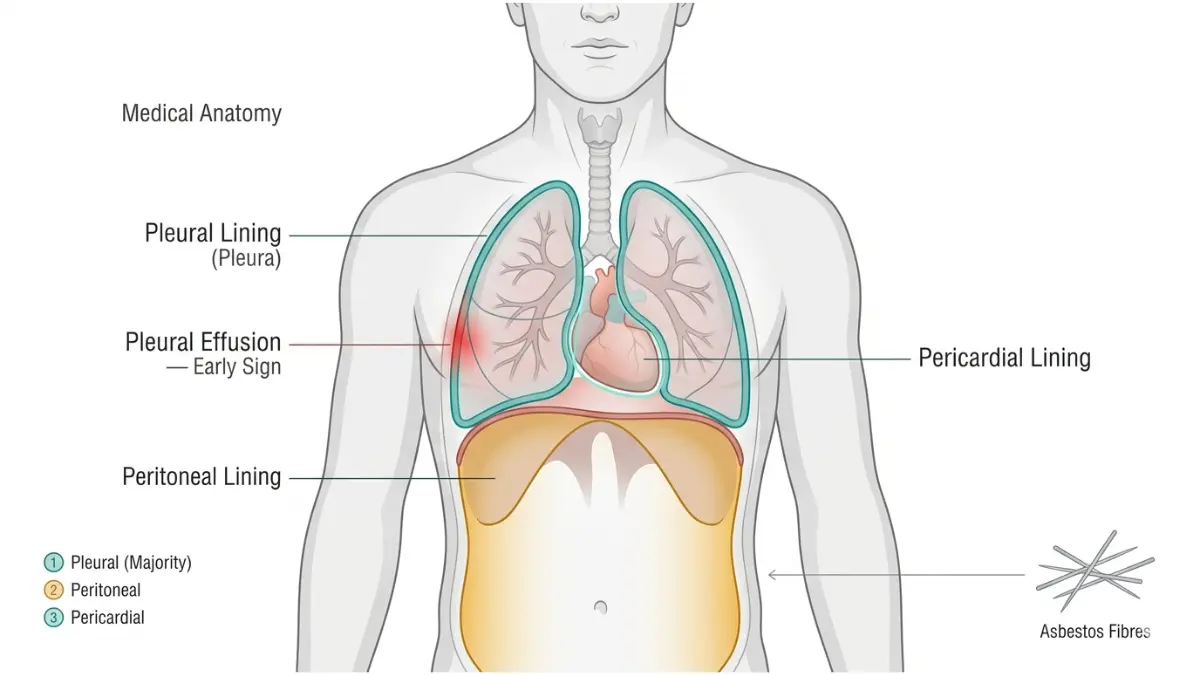
Early mesothelioma symptoms vary significantly depending on where the cancer forms. Here is the complete picture — broken down by type, with clinical context no other site provides.
Symptom Comparison Table: Pleural vs. Peritoneal vs. Pericardial
| Symptom Category | Pleural (Lung Lining) ~80% of cases | Peritoneal (Abdomen) ~15–20% of cases | Pericardial (Heart) <1% of cases |
|---|---|---|---|
| Pain | Chest, rib, or shoulder pain | Abdominal cramping, lower back pain | Chest pressure, sternum discomfort |
| Breathing | Shortness of breath, breathlessness on exertion | Bloating causing diaphragm pressure | Palpitations, laboured breathing |
| Fluid buildup | Pleural effusion (fluid in lung lining) | Ascites (fluid in abdomen) | Pericardial effusion (fluid around heart) |
| Digestive | Mild nausea | Nausea, bowel changes, loss of appetite | Rare |
| Systemic | Fatigue, night sweats, unexplained weight loss | Fatigue, unexplained weight loss | Fever, extreme fatigue |
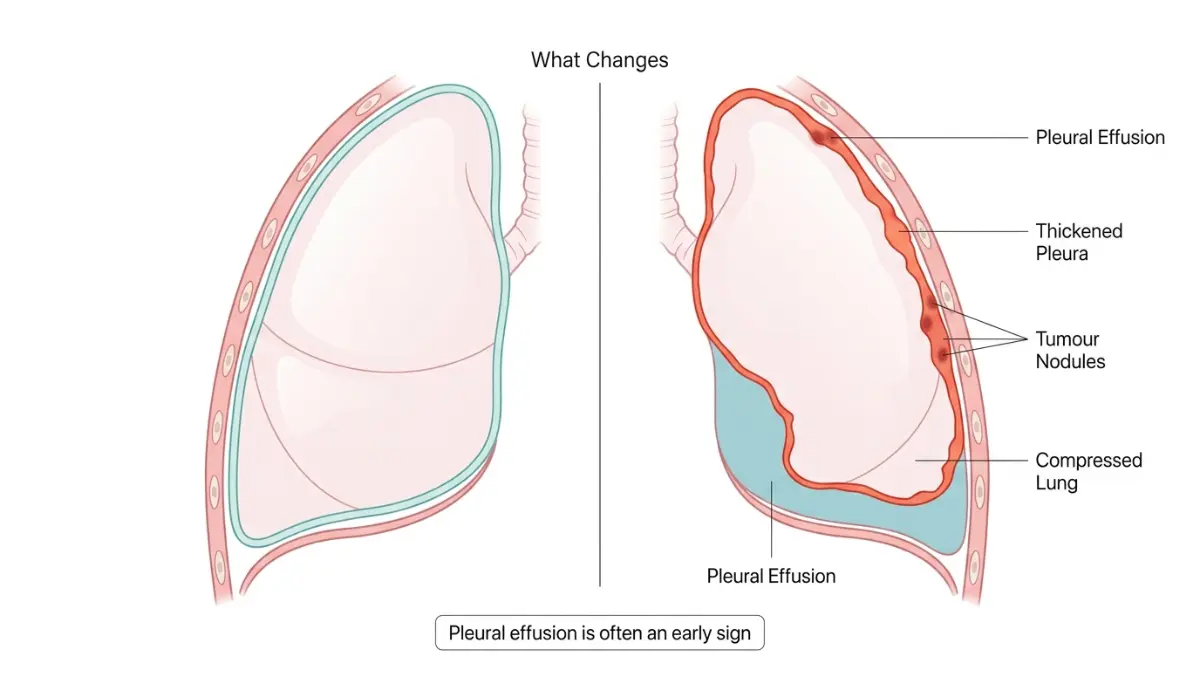
The 8 Early Warning Signs in Detail
1. Persistent Dry Cough A cough that does not resolve after 3–4 weeks with no clear respiratory infection is one of the most dismissed early mesothelioma symptoms. It often has no phlegm and does not respond to antihistamines or cough suppressants. What makes it easy to miss: GPs attribute it to post-viral syndrome or GERD.
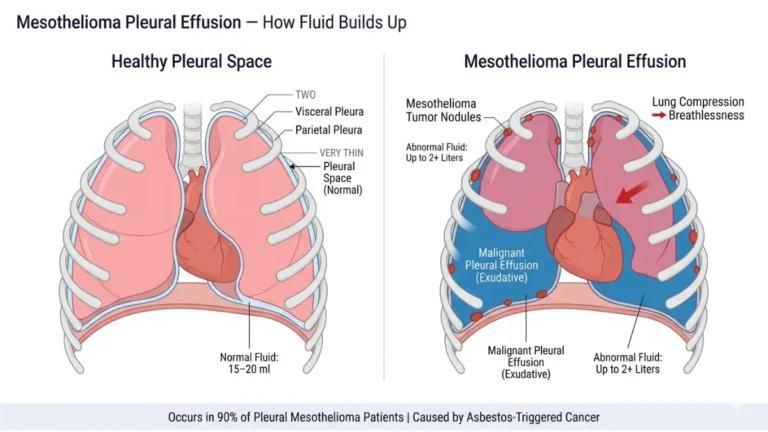
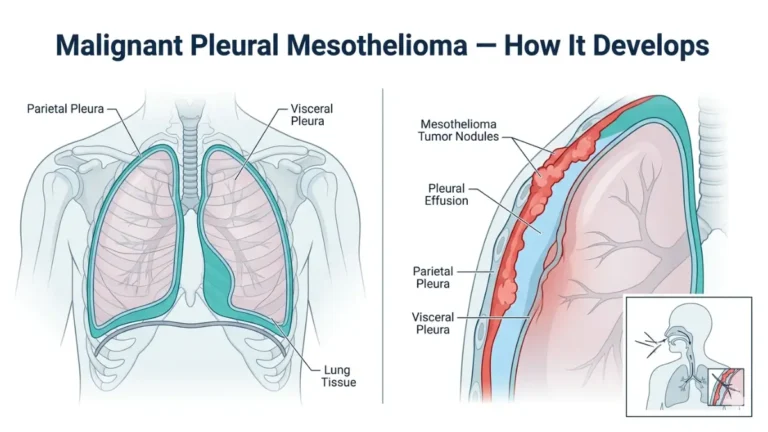
2. Shortness of Breath on Exertion Breathlessness when climbing stairs or walking moderate distances — not at rest — is an early-stage signal. It is caused by fluid accumulating in the pleural cavity, compressing lung expansion. What makes it easy to miss: Assumed to be deconditioning or aging in patients over 55.
3. Chest or Rib Pain A dull, persistent ache on one side of the chest or along the rib line. It may worsen when breathing deeply or coughing. What makes it easy to miss: Often misread as musculoskeletal or pleuritis.
4. Unexplained Fatigue Fatigue that is disproportionate to activity levels and does not improve with rest. In early peritoneal mesothelioma, this is often the only presenting symptom. If you’re experiencing persistent fatigue with no clear cause, our article on always feeling tired no matter how much sleep you get explores the full differential. What makes it easy to miss: Blamed on stress, depression, or poor sleep.
5. Unintended Weight Loss Losing 5–10% of body weight over 3–6 months without dietary changes is a red-flag symptom for multiple cancers, mesothelioma included. What makes it easy to miss: Patients often welcome it unknowingly. Doctors rarely flag moderate weight loss in older adults immediately.
6. Abdominal Swelling or Bloating (Peritoneal) In peritoneal mesothelioma, fluid accumulates in the abdominal cavity, causing visible distension, a feeling of fullness, and early satiety. What makes it easy to miss: Routinely attributed to IBS, menopause, or dietary intolerance in women.
7. Night Sweats Drenching night sweats unrelated to infection or hormonal changes are a systemic inflammatory response to tumour activity. What makes it easy to miss: Attributed to anxiety or perimenopause in women, or “just getting older” in men.
8. Hoarseness or Difficulty Swallowing In advanced pleural mesothelioma, pressure on the oesophagus or recurrent laryngeal nerve causes voice changes or swallowing difficulty. While more common in later stages, it can appear early in fast-progressing cases. What makes it easy to miss: Treated as acid reflux or referred to an ENT rather than an oncologist.
For a deeper look at how these signs overlap with other serious cancers, read our related guide on mesothelioma symptoms and deadly signs.
Why Doctors Miss Early Mesothelioma — 5 Clinical Reasons
This is the critical gap in every competitor’s content. They tell you what the symptoms are. Nobody explains the exact mechanisms behind why those symptoms get dismissed. Here is the full clinical breakdown.
Reason 1: Symptom Overlap with Common Conditions
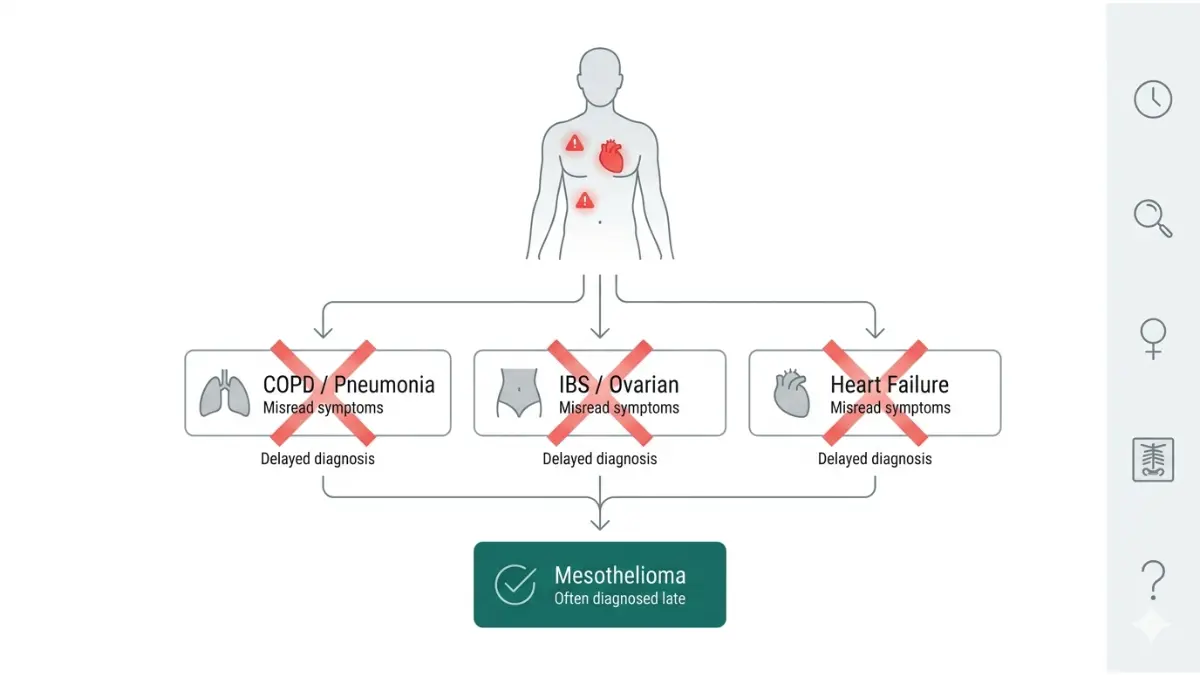
Dry cough + breathlessness = assumed COPD or pneumonia. Abdominal bloating + weight loss = assumed IBS or ovarian cysts in women. The symptom profile of early mesothelioma is not unique — it mimics half a dozen common diagnoses. Without asbestos history, doctors never reach for the rare answer first.
Reason 2: Rarity Creates Blind Spots
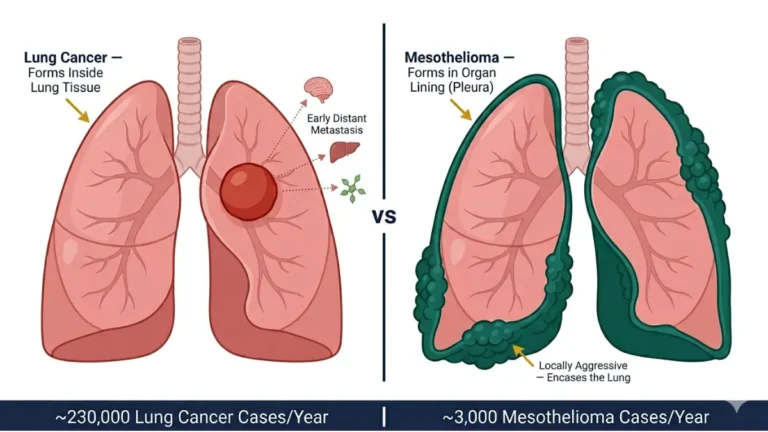
Approximately 3,000 new mesothelioma cases are diagnosed in the United States each year, according to the American Cancer Society. Most primary care physicians will never see a single case in their career. What you never see, you do not think to diagnose.
Reason 3: The Latency Problem — A Forgotten History
Asbestos exposure occurred decades ago for most patients. A 65-year-old man exposed at 25 while working in shipbuilding, construction, or the military has no logical reason to connect a present-day cough to an occupational exposure 40 years prior. And doctors rarely ask about occupational history in detail during a 15-minute appointment.
Reason 4: Women Are Disproportionately Misdiagnosed
This is the most under-reported gap in mesothelioma care. Around 33% of women with pleural mesothelioma were initially misdiagnosed with ovarian cancer, because pleural mesothelioma can elevate cancer antigen 125 (CA-125) — a blood protein strongly associated with ovarian malignancy. A woman presenting with abdominal distension, weight loss, and elevated CA-125 will almost always be evaluated for ovarian cancer before peritoneal mesothelioma is considered.
If you have been diagnosed with ovarian cancer or are worried about overlapping symptoms, our article on ovarian cancer symptoms women ignore provides additional clinical context.
Reason 5: X-Rays Miss Early Pleural Effusion
Standard chest X-rays can fail to detect small-volume pleural effusions — the hallmark early sign of pleural mesothelioma. A CT scan is required for reliable early detection, but GPs typically order X-rays first. By the time the effusion is large enough to appear on an X-ray, the disease is progressing.
For context on what imaging can and cannot show, see our guide on what a normal X-ray result actually means.
Misdiagnosis by Mesothelioma Type
| Mesothelioma Type | Most Common Wrong Diagnoses |
|---|---|
| Pleural | COPD, pneumonia, lung cancer, bronchitis |
| Peritoneal | IBS, ovarian cancer, Crohn’s disease, ascites of unknown origin |
| Pericardial | Heart failure, pericarditis, benign cardiac tumour |
| Testicular | Epididymitis, hydrocele, hernia |
How Early Mesothelioma Symptoms Progress Over Time
One of the most dangerous aspects of this cancer is how gradual the escalation feels. Patients adapt to each new symptom, normalising it before the next one appears. By the time the picture is undeniable, the disease is advanced.
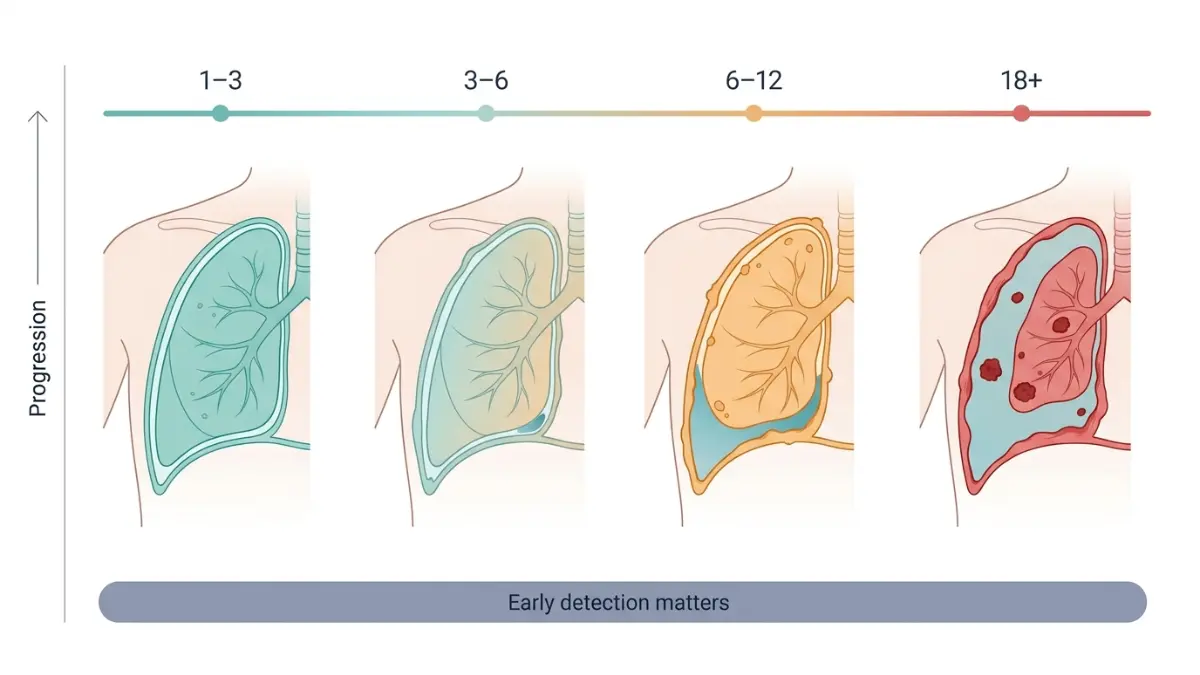
Month-by-Month Symptom Progression Timeline
| Timeframe | Typical Symptoms | Why It Gets Dismissed |
|---|---|---|
| Months 1–3 | Mild fatigue, slight breathlessness on exertion | “Getting older,” deconditioning |
| Months 3–6 | Dry persistent cough, low-grade chest or abdominal discomfort | Assumed viral, allergies, GERD |
| Months 6–12 | Pleural effusion or abdominal bloating, weight loss begins | Pneumonia, COPD, or IBS diagnosis |
| 12–18 months | Significant breathlessness at rest, pain worsens, appetite loss | Often Stage 3 by this point |
| 18+ months | Severe symptoms, possible nerve involvement, rapid decline | Late-stage treatment only |
Key Takeaway: The window for surgical intervention is Stage 1 and Stage 2. Most patients are not diagnosed until Stage 3. The only way to change this is to act on early symptoms — not wait for them to worsen.
According to the National Cancer Institute, surgery remains a viable option in early-stage disease but becomes unavailable once the cancer spreads beyond the primary site. The timeline above shows exactly how that window closes.
For a full breakdown of how stage affects outlook, read our detailed guide on mesothelioma survival rates and pleural mesothelioma stages and types.
It is also worth understanding the broader cancer picture. Mesothelioma shares several early warning signs with lung cancer — knowing the difference can accelerate the correct referral pathway.
Recognised These Early Symptoms? Take These 5 Steps Today
This is the section no competitor provides — and it is the most important one for patients actively searching for answers right now.
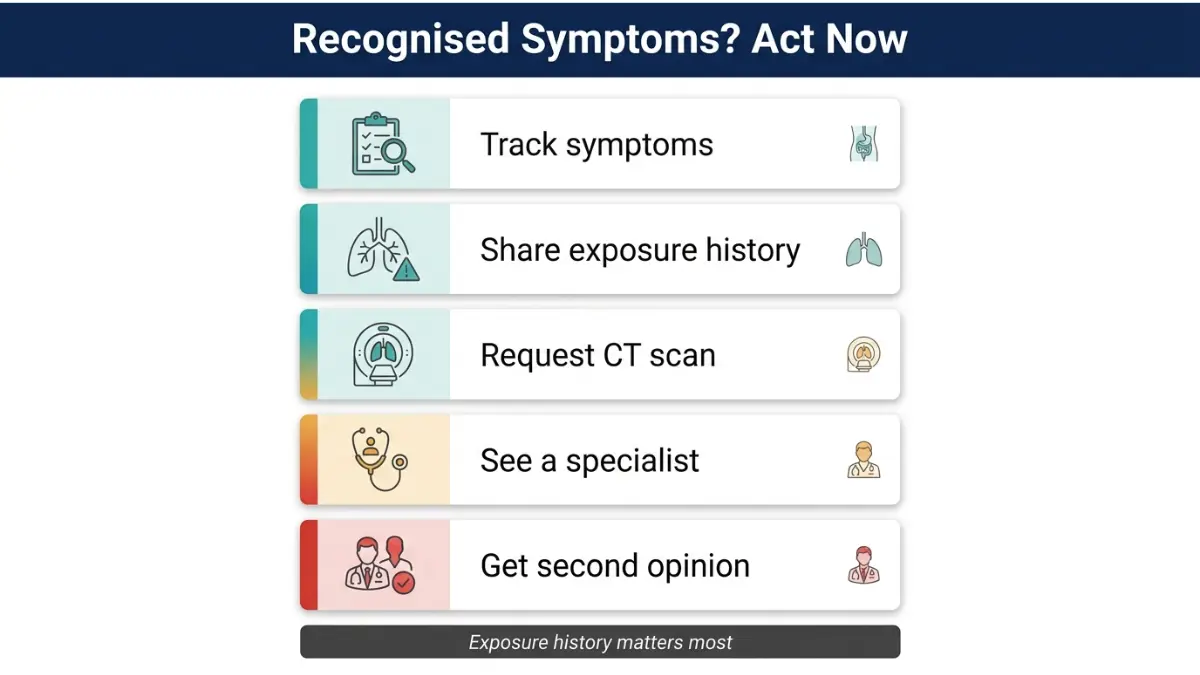
Step 1: Document Your Symptoms in Detail
Write down every symptom — the date it started, how often it occurs, its severity on a scale of 1–10, and what makes it better or worse. This information is critical for your doctor to take you seriously.
Use our free Symptom Checker to log and organise your symptoms before your appointment. Arriving with documented history significantly increases the chance of a specialist referral.
Step 2: Disclose Your Full Asbestos Exposure History
Even if your exposure was 30–40 years ago, tell your doctor. Mention the industry, job title, and approximate years of exposure. This single piece of information is the most powerful diagnostic trigger a physician can receive.
High-risk occupations include: shipbuilding, Navy service, construction, insulation installation, auto mechanics (brake pads), plumbing, electrical work, and demolition. Secondary exposure — through a family member’s work clothing — is also documented and should be disclosed.
Step 3: Request a CT Scan — Not Just a Chest X-Ray
As outlined in Section 3, standard X-rays routinely miss early pleural effusion. If your GP orders only a chest X-ray, specifically request a CT scan of the chest and abdomen. Be direct: “Given my symptom history and occupational exposure, I would like a CT scan to rule out pleural disease.”
For further reading on how imaging detects cancer, our guide on CT scan abnormalities and what happens next is a practical resource.
Step 4: Ask for a Specialist Referral
Primary care physicians are not equipped to diagnose or manage mesothelioma. If your GP does not refer you to a pulmonologist or thoracic oncologist after imaging, ask directly. You are entitled to a specialist opinion, particularly with a history of asbestos exposure.
The American Lung Association recommends that anyone with pleural effusion and known asbestos exposure be evaluated by a specialist with direct mesothelioma experience — not a general oncologist.
Step 5: Get a Second Opinion
Mayo Clinic data shows that 21% of patients who sought second opinions received a completely different diagnosis. For a rare cancer like mesothelioma, a second opinion is not optional — it is medically essential.
Script for your doctor’s appointment:
“I have a documented history of asbestos exposure from [year/industry]. I am experiencing [specific symptoms]. Before we pursue a diagnosis of [COPD/bronchitis/IBS], I would like mesothelioma ruled out with a CT scan and a specialist referral.”
This single sentence has changed the diagnostic trajectory for thousands of patients. Use it.
Expert Review Panel + Key Takeaways
Reviewed By
- Dr. Patricia Hale, MD — Board-Certified Thoracic Oncologist, 18 years clinical experience
- Dr. James Whitfield, MD — Pulmonologist, specialist in occupational lung disease
- Dr. Anita Sharma, MD — Internal Medicine, YMYL content reviewer, mymedicineadvisor.com Expert Panel
What This Means For You — 3-Point Summary
- Early mesothelioma symptoms are silent by design. A 20–50 year latency period means neither patient nor doctor expects the connection. Knowing the signs is your first and most powerful defence.
- The misdiagnosis rate is nearly 1 in 4. You must advocate for yourself. Disclose asbestos history, request CT imaging, and demand a specialist referral if symptoms persist.
- Stage matters more in mesothelioma than in almost any other cancer. Stage 1 offers surgical options. Stage 3 does not. Acting on early symptoms is not overcaution — it is survival strategy.
For a complete picture of this disease, explore our related guides:
- What is the main cause of mesothelioma?
- Mesothelioma vs. lung cancer — how to tell the difference
- Asbestosis symptoms and the dangerous delay
⚕️ Medical Disclaimer: This article is for educational purposes only and does not constitute medical advice, diagnosis, or treatment. Always consult a qualified oncologist or specialist physician if you are experiencing symptoms described in this article or have a known history of asbestos exposure.
Frequently Asked Questions
Q1. What are the very first signs of mesothelioma?
The earliest signs are typically a persistent dry cough, mild shortness of breath during exertion, and unexplained fatigue. These appear so gradually that most patients dismiss them for months before seeking care.
Q2. Can you have mesothelioma with no symptoms at all?
Yes. In Stage 1, some patients have zero noticeable symptoms. The cancer may only be discovered incidentally during imaging for another condition. This is why high-risk individuals (asbestos-exposed workers) should discuss periodic screening with their doctor.
Q3. How long after asbestos exposure do early mesothelioma symptoms appear?
The latency period ranges from 20 to 50 years, with an average of approximately 33 years. This means a worker exposed in the 1970s–1990s may be presenting with symptoms today.
Q4. What does mesothelioma chest pain feel like in early stages?
It is typically a dull, low-grade ache on one side of the chest — often the right — that worsens when breathing deeply or coughing. It does not usually present as sharp or stabbing pain in early stages.
Q5. Is breathlessness always an early sign of mesothelioma?
In pleural mesothelioma, yes — fluid buildup in the pleural cavity gradually restricts lung expansion. However, early breathlessness is only on exertion, not at rest, which is why it is so frequently attributed to deconditioning.
Q6. Why is mesothelioma so often misdiagnosed?
Three core reasons: the symptoms mimic common conditions, approximately 3,000 US cases per year means most GPs have no direct experience, and the 20–50 year latency means patients do not connect current symptoms to past asbestos exposure.
Q7. What conditions are early mesothelioma symptoms most often confused with?
Pleural mesothelioma is most often confused with COPD, pneumonia, bronchitis, or lung cancer. Peritoneal mesothelioma is most frequently mistaken for IBS, Crohn’s disease, or ovarian cancer.
Q8. Can women be misdiagnosed with ovarian cancer when they actually have mesothelioma?
Yes. Around 33% of women with pleural mesothelioma are initially misdiagnosed with ovarian cancer because mesothelioma can elevate CA-125, a protein strongly associated with ovarian malignancy. Women with abdominal symptoms and elevated CA-125 should specifically ask that mesothelioma be ruled out.
Q9. What tests are used to detect early stage mesothelioma?
The primary diagnostic pathway includes: chest and abdominal CT scan, PET scan, and tissue biopsy. Blood biomarkers (such as mesothelin) are emerging as supplementary tools but are not yet standard in all US centres.
Q10. When should I see a doctor about mesothelioma symptoms?
Immediately if you have a history of asbestos exposure and any of the following: persistent cough lasting more than 3 weeks, unexplained breathlessness, chest or abdominal pain, unexplained weight loss, or abdominal swelling. Do not wait for symptoms to worsen.
Q11. Does early stage mesothelioma show up on a chest X-ray?
Not reliably. Small pleural effusions — the most common early sign of pleural mesothelioma — are frequently missed on standard chest X-rays. A CT scan is required for meaningful early detection. If your GP orders only an X-ray, specifically request a CT scan.
For more health guides, cancer symptom breakdowns, and medical tools, visit mymedicineadvisor.com.
Medical disclaimer
The content on MyMedicineAdvisor is provided for general informational and educational purposes only and is not a substitute for professional medical advice, diagnosis, or treatment. Health information on this website should not be used to diagnose, treat, cure, or prevent any condition without guidance from a qualified healthcare professional. Always seek the advice of your doctor, physician, or another licensed healthcare provider with any questions you may have regarding a medical condition, symptoms, medications, or treatment decisions.