On This Page – Quick Medical Summary
The 5-year mesothelioma survival rate is 12% for pleural mesothelioma and 65% for peritoneal mesothelioma, according to the latest NCI SEER data. Median survival with treatment ranges from 12 to 21 months — but 2026 immunotherapy is meaningfully shifting outcomes for select patients. These numbers are averages. They are not your ceiling.
Consider this: Paul Kraus was diagnosed in 1997 with advanced peritoneal mesothelioma and given less than 6 months to live. He is now approaching 30 years of survivorship. Statistics describe populations. They do not describe individuals.
This article breaks every survival number down — by type, stage, cell type, age, gender, and treatment — without softening the truth.
⚠️ Medical Disclaimer: This article is for educational purposes only and does not constitute medical advice. Always consult a qualified oncologist or healthcare professional for diagnosis, treatment, and prognosis discussions.
Quick Reference: Mesothelioma Survival Rate in 2026
| Metric | Rate |
|---|---|
| Overall 5-year survival | ~10–12% |
| Pleural mesothelioma 5-year survival | 12% |
| Peritoneal mesothelioma 5-year survival | 65% |
| 1-year survival rate (pleural) | 73% |
| Median survival with treatment | 18–21 months |
| Median survival without treatment | 4–12 months |
Sources: NCI SEER Program; American Cancer Society (updated February 2026)
What Is the Mesothelioma Survival Rate in 2026?
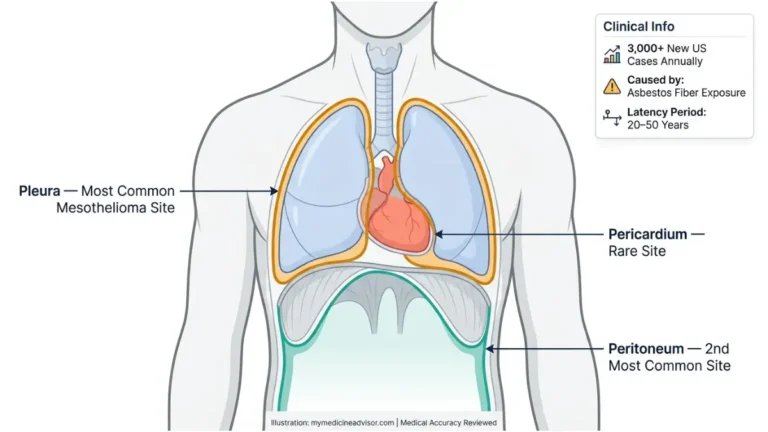
Mesothelioma is a rare, aggressive cancer caused almost exclusively by asbestos exposure — and the main cause of mesothelioma is well-documented. About 3,000 new cases are diagnosed in the United States each year, roughly 1 per 110,000 Americans.
The survival rate measures the percentage of patients alive at a specific time point after diagnosis. Two systems are used:
- 1-year survival rate: 73% of pleural mesothelioma patients survive at least 1 year with treatment
- 5-year survival rate: 12% of pleural patients survive 5+ years; 65% for peritoneal patients
These figures come from the National Cancer Institute’s SEER database — the most authoritative cancer statistics program in the United States, tracking outcomes from 2015 to 2021.
Why do survival rates feel so discouraging?
Two critical reasons:
- Late diagnosis. Mesothelioma has a latency period of 20–50 years after asbestos exposure. By the time symptoms appear, most patients are already at Stage 3 or 4.
- The data lags. Current 5-year survival statistics reflect patients diagnosed and treated before 2021 — before modern immunotherapy became standard of care. Patients starting treatment today have better options.
What This Means For You: The survival rates published today do not fully reflect what is now possible with 2026 treatment protocols. Always discuss current clinical options — not historical statistics — with your oncologist.
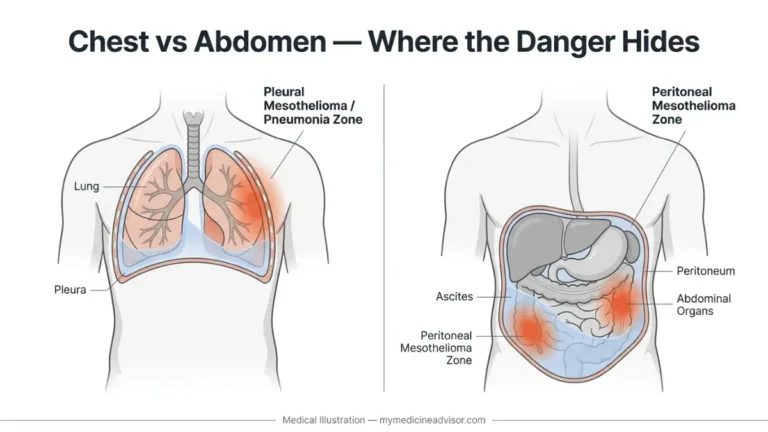
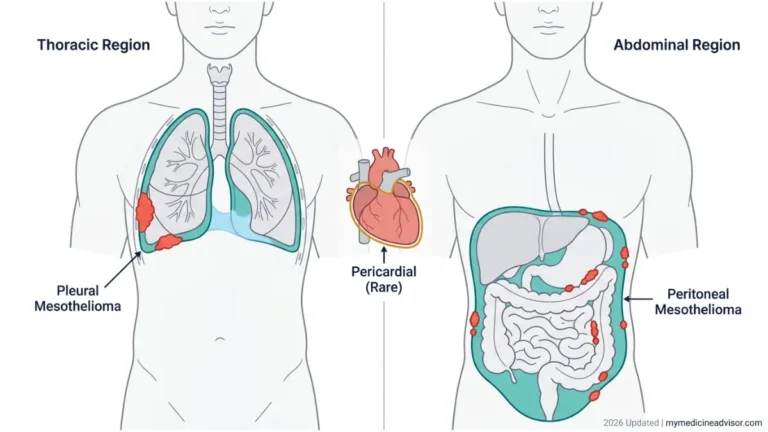
Mesothelioma Survival Rate by Type — Why Location Changes Everything
Not all mesothelioma is equal. Where the cancer develops in the body dramatically affects how treatable it is and how long patients survive.
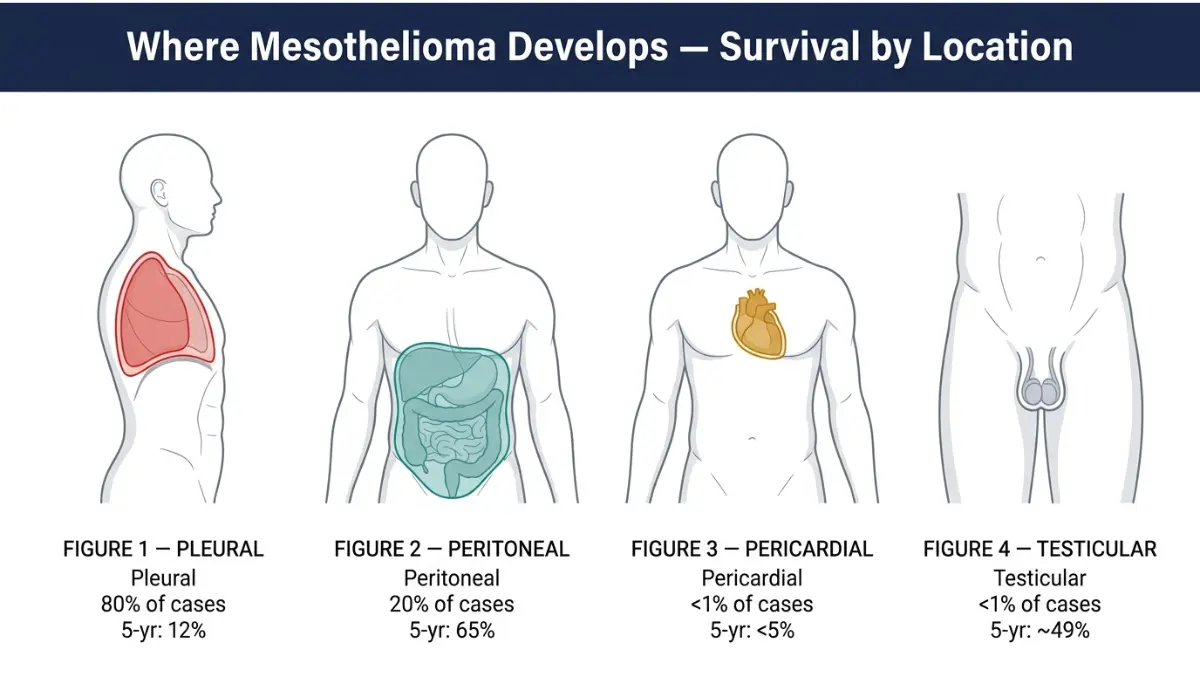
| Type | Location | % of Cases | 5-Year Survival | Median Survival |
|---|---|---|---|---|
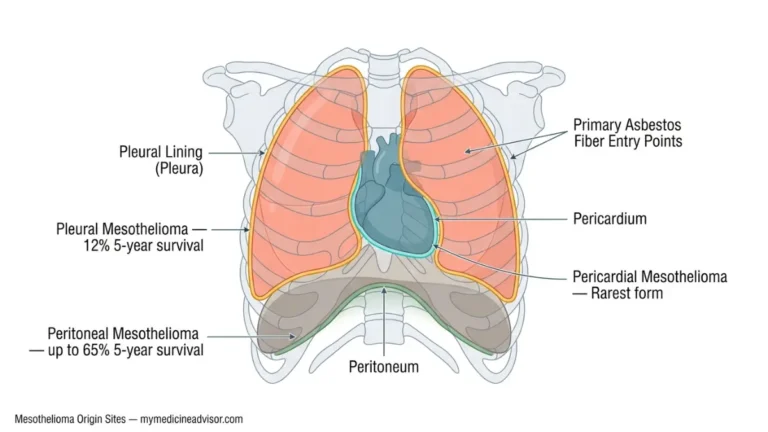
| Pleural | Lining of lungs | ~80% | 12% | 12–21 months |
| Peritoneal | Lining of abdomen | ~20% | 65% | 31–53 months |
| Pericardial | Lining of heart | <1% | <5% | 6–10 months |
| Testicular | Lining of testes | <1% | ~49% | Variable |
Pleural Mesothelioma: The Most Common, Hardest to Treat
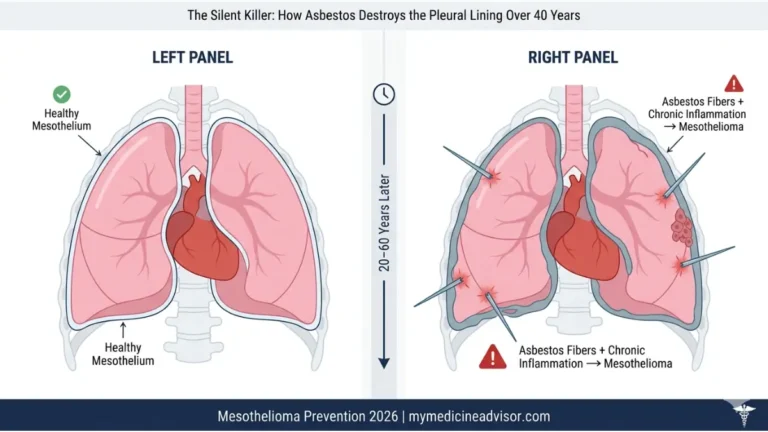
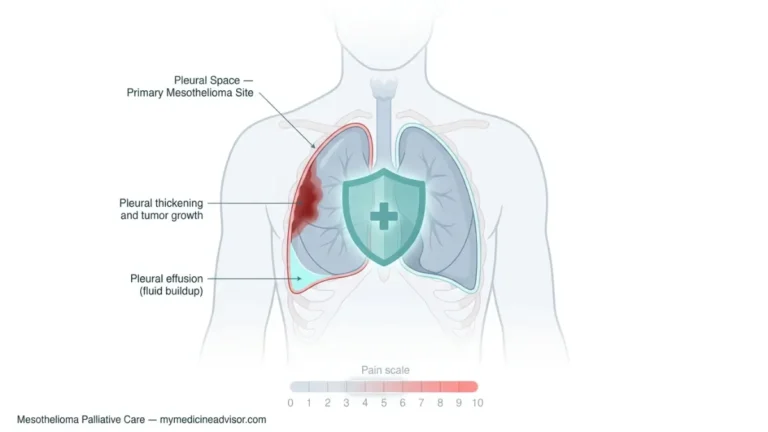
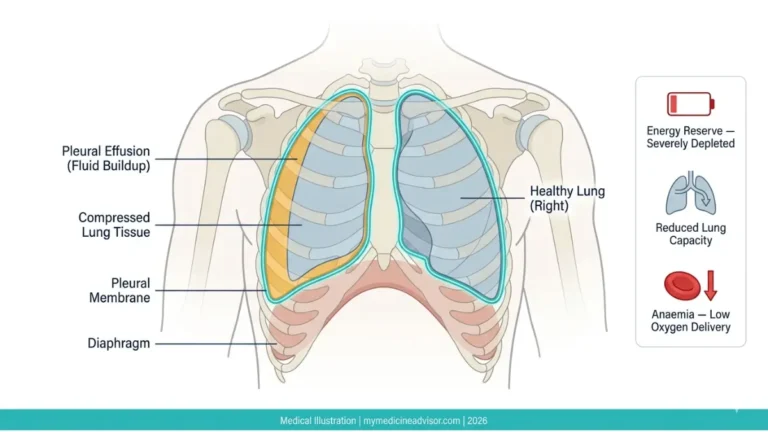
Pleural mesothelioma accounts for roughly 80% of all cases in the US. It develops in the pleura — the thin membrane surrounding the lungs. Because early symptoms (breathlessness, chest pain, fatigue) are easily mistaken for other conditions, most patients are diagnosed late.
The 1-year pleural survival rate is 73%. The 5-year rate drops sharply to 12%. Understanding pleural mesothelioma stages and types is essential for understanding your individual prognosis.
Peritoneal Mesothelioma: The Survival Game-Changer
About 65% of all peritoneal mesothelioma patients survive 5 years or more — five times the 5-year survival rate for pleural patients. This dramatic difference comes down to one surgical procedure: CRS/HIPEC (cytoreductive surgery combined with heated intraperitoneal chemotherapy).
Peritoneal mesothelioma patients live for 53 months on average with surgery and heated chemotherapy (HIPEC), as shown in a Cancer Management and Research report.
For a deeper breakdown of peritoneal outcomes, see our detailed guide on peritoneal mesothelioma survival.
Pericardial Mesothelioma: The Honest Truth
Fewer than 50 cases are diagnosed in the US each year. Because of this extreme rarity, treatment options are severely limited and the prognosis is poor, with most patients receiving palliative care rather than curative treatment.
What This Means For You: If your diagnosis is peritoneal, demand an immediate referral to a specialist who performs CRS/HIPEC. This single eligibility assessment could change your survival trajectory by years.
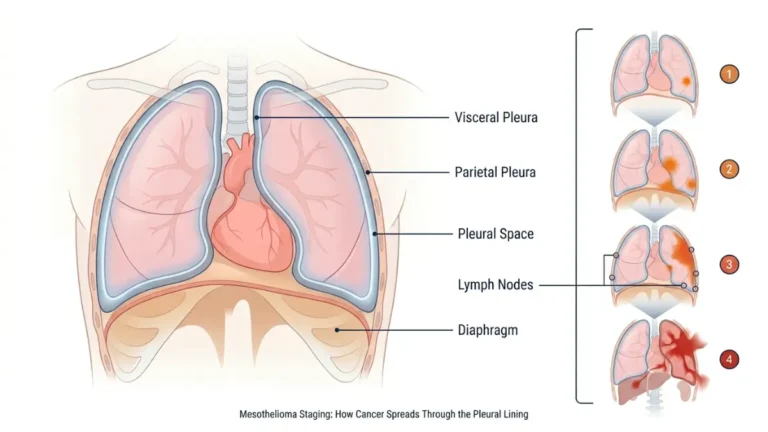
Mesothelioma Survival Rate by Stage — Stage 1 to Stage 4 Decoded
Stage at diagnosis is one of the strongest predictors of mesothelioma survival rate. The earlier the cancer is caught, the more treatment options exist — and the longer patients live.
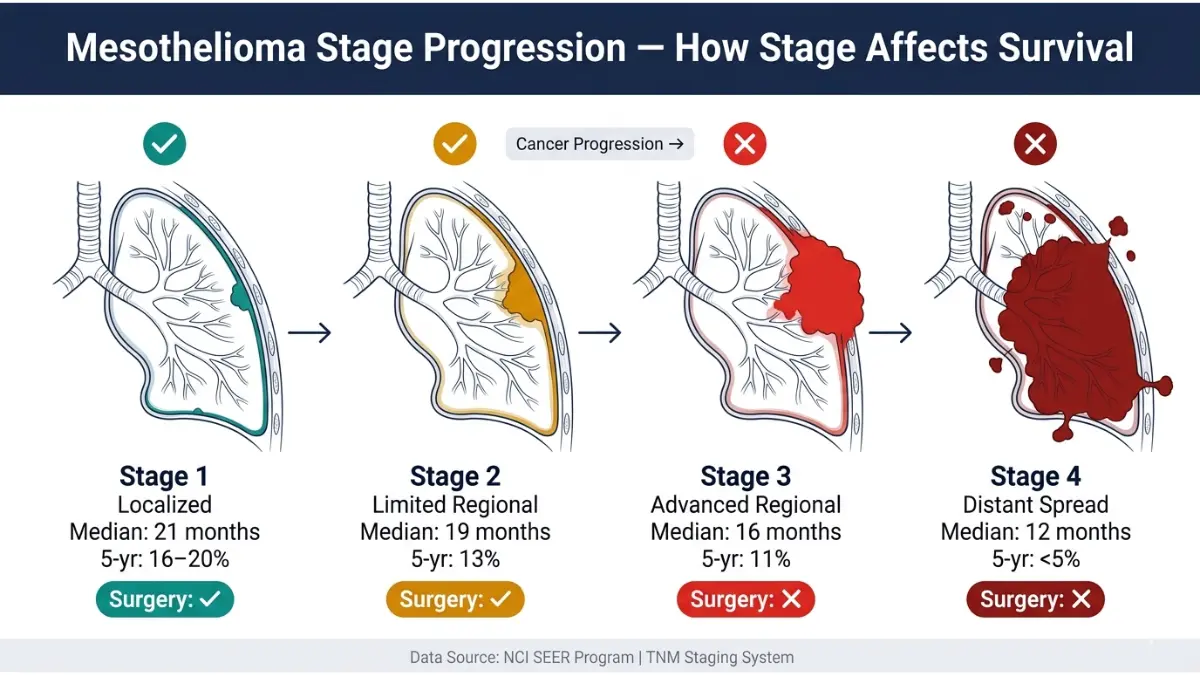
| Stage | 5-Year Survival | Median Survival | Surgery Eligible? |
|---|---|---|---|
| Stage 1 (Localized) | 16–20% | 21 months | ✅ Yes — best outcomes |
| Stage 2 (Regional, limited) | 13% | 19 months | ✅ Often |
| Stage 3 (Regional, advanced) | 11% | 16 months | ❌ Rarely |
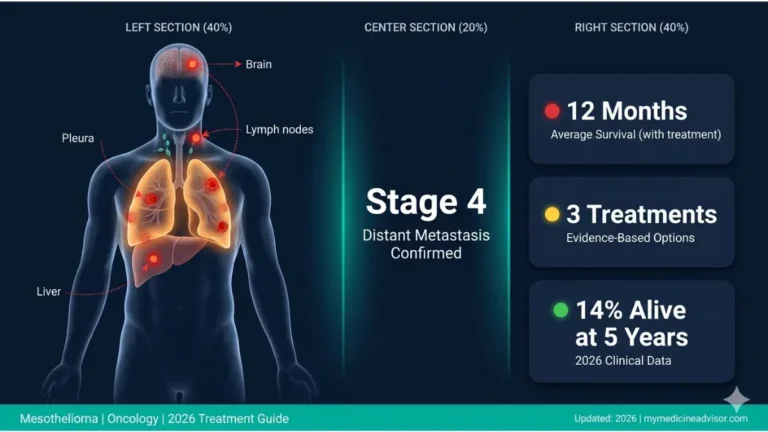
| Stage 4 (Distant spread) | <5% | 12 months | ❌ No |
Source: NCI SEER data; stage-specific data from Sokolove Law clinical review, 2026
Understanding the Two Staging Systems
You may encounter two different staging frameworks:
- SEER Staging: Groups cancer as Localized, Regional, or Distant. Used by NCI for population statistics.
- TNM Staging: Uses Stages 1–4 based on tumor size (T), lymph node involvement (N), and metastasis (M). Used by oncologists in clinical practice.
This is why survival statistics can appear different across sources — they’re using different frameworks.
Stage 1: The Rarest Catch, The Best Odds
Patients diagnosed at Stage I with epithelioid mesothelioma who receive multimodal treatment — surgery, chemotherapy, and radiation — have a 5-year survival rate of 16 to 20%.
Tragically, fewer than 10% of mesothelioma cases are caught at Stage 1.
Can Stage 4 Patients Outlive the Statistics?
Yes. Marcus D., a Navy veteran diagnosed with Stage 4 pleural mesothelioma in 2018, underwent aggressive chemotherapy at a specialized center and remains alive in 2024 — over 6 years post-diagnosis. His case, documented in clinical literature, illustrates that the median is not a maximum.
If you are experiencing symptoms that concern you, use our Symptom Checker as a first step — early assessment matters.
7 Factors That Dramatically Affect Mesothelioma Survival Rate
This is where the real intelligence lives — and where most competitor articles fail you. Survival rates shift significantly based on individual factors that are rarely explained in plain language.
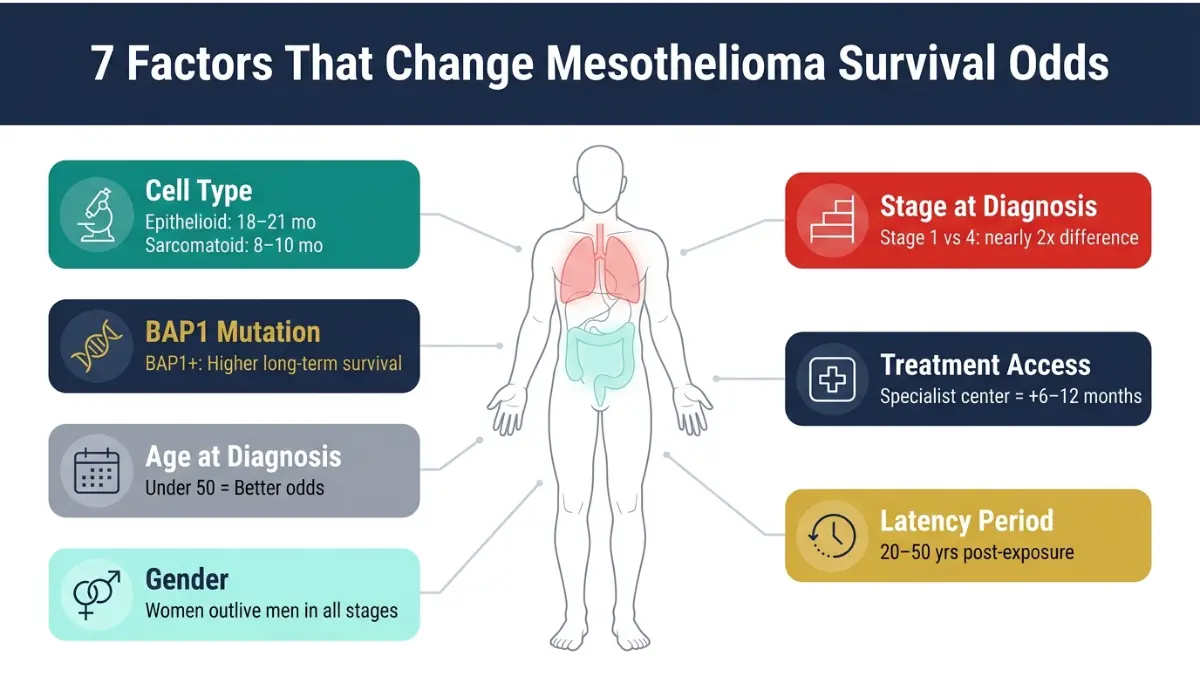
1. Cell Type — The Single Biggest Biological Factor
| Cell Type | % of Cases | Median Survival | Behavior |
|---|---|---|---|
| Epithelioid | ~60% | 18–21 months | Slowest growing, best prognosis |
| Sarcomatoid | ~20% | 8–10 months | Fastest spreading, worst prognosis |
| Biphasic | ~20% | 12–14 months | Mix of both |
Ask your pathologist specifically which cell type your tumor is. This is not a minor detail — it is a survival-critical data point.
2. BAP1 Mutation — The Breakthrough Prognostic Marker
The BRCA1-associated protein-1 (BAP1) gene mutation is now one of the most significant mesothelioma prognosis predictors. Research has found that patients whose tumors carry a specific BAP1 mutation have a median survival of five years, compared to patients without the mutation who had a median survival of less than one year.
If you haven’t been tested for BAP1 status, ask your oncologist. You can also use our Genetic Risk Assessment Tool to better understand inherited cancer risk factors in your family history.
3. Age at Diagnosis
Younger patients consistently outlive older patients. Individuals diagnosed before age 50 have higher five-year survival rates than those diagnosed after 50, most likely due to younger patients often being in better health.
The real-world immunotherapy warning: A 2026 review of real-world data revealed that elderly patients over 75 — the most common mesothelioma age group — survived only 9.4 months on nivolumab-ipilimumab immunotherapy, compared to 18.1 months in clinical trials. This gap is critical and rarely discussed by competitor sites.
4. Gender
Women survive longer than men across all mesothelioma types. One-, three-, and five-year survival rates are consistently higher in female patients. The leading hypothesis involves how estrogen hormones interact with tumor cell growth.
5. Treatment Access and Specialist Care
Patients who live longest after a mesothelioma diagnosis share a pattern: they receive care at specialized centers, they pursue aggressive multimodal treatment when eligible, they explore clinical trials, and they act quickly.
Median survival without any treatment is only 4–12 months. With multimodal treatment at a mesothelioma specialist center, this can extend to 21–32 months for pleural patients and 53+ months for peritoneal patients.
6. Stage at Diagnosis
As covered in Section 3 — early-stage diagnosis nearly doubles median survival compared to Stage 4. This is why understanding the 5 signs and symptoms of mesothelioma is critical for anyone with known asbestos exposure history.
7. Asbestos Latency Period
Mesothelioma has a long latency period — it can take up to 50 years for mesothelioma to be diagnosed. Veterans, shipyard workers, construction workers, and industrial laborers from the 1960s–1980s are the highest-risk population. If you have a history of occupational asbestos exposure, discuss proactive monitoring with your physician — even decades later.
How 2026 Treatments Are Changing Mesothelioma Survival Rates
This is the section that no competitor currently delivers accurately. The treatment landscape shifted significantly in 2021 with FDA approval of immunotherapy, and 2025–2026 data has now confirmed the 5-year outcomes.
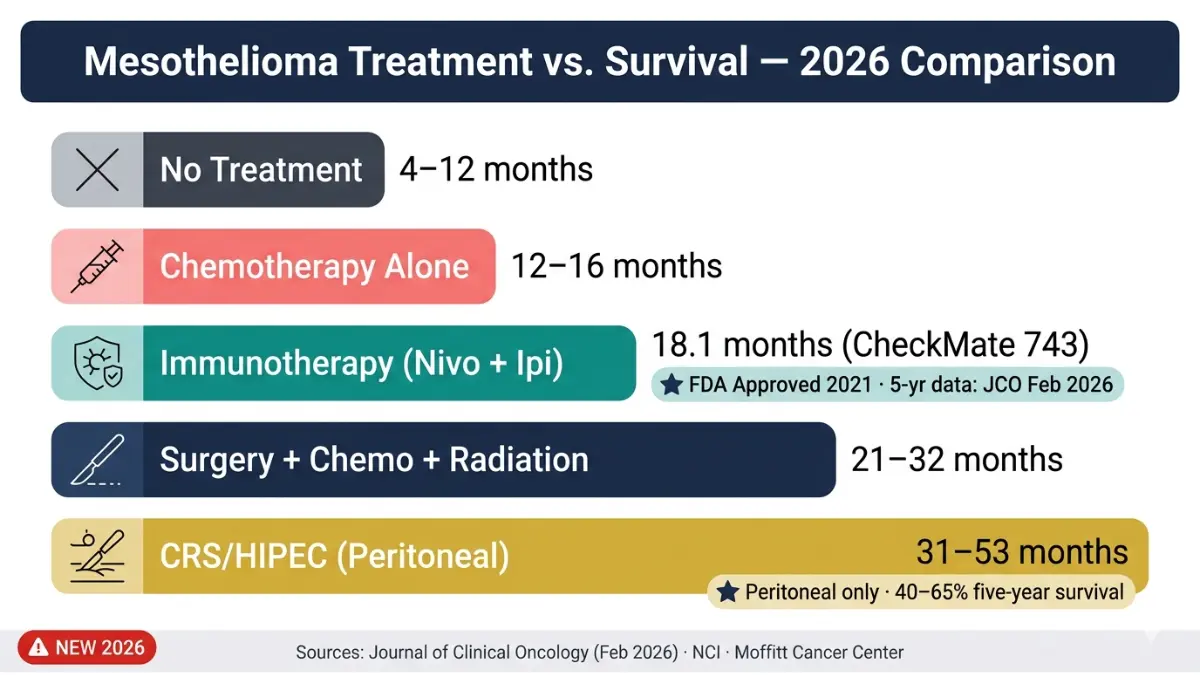
Treatment Survival Comparison Table (2026 Data)
| Treatment | Median Survival | 5-Year Rate | Notes |
|---|---|---|---|
| No treatment | 4–12 months | <1% | Palliative only |
| Chemotherapy alone (pemetrexed + platinum) | 12–16 months | 6% | Established standard |
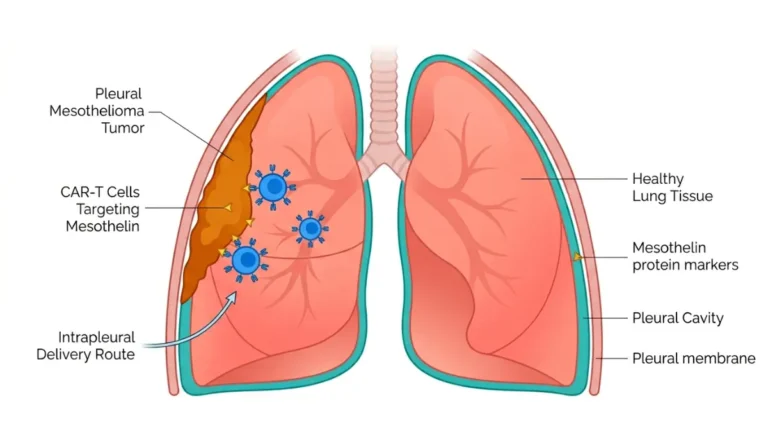
| Nivolumab + Ipilimumab (immunotherapy) | 18.1 months | 14% | FDA-approved, 2021 |
| Multimodal (surgery + chemo + radiation) | 21–32 months | 16–20% | Early stage only |
| CRS/HIPEC (peritoneal) | 31–53 months | 40–65% | Peritoneal eligible patients |
| Perioperative immunotherapy (2025, Hopkins) | 28.6 months | ~36% recurrence-free | Operable cases |
CheckMate 743: The Landmark 5-Year Data (JCO, February 2026)
The most important update of 2026 for mesothelioma survival comes from the CheckMate 743 five-year follow-up, published in the Journal of Clinical Oncology in February 2026.
Overall survival at 5 years was 14% in the nivolumab plus ipilimumab group versus 6% in the chemotherapy group, with a median follow-up of 66.8 months. For non-epithelioid (sarcomatoid/biphasic) patients specifically, the benefit was even more dramatic: 5-year OS was 12% with immunotherapy versus 1% with chemotherapy in those with non-epithelioid disease.
This is the most current survival data available anywhere on the internet.
You can explore how immunotherapy works in broader cancer treatment through our guide on how immunotherapy works.
The Real-World Gap: Clinical Trial vs. Actual Patients
Here is what most sites won’t tell you. Real-world outcomes lag behind trial data — significantly.
A 2024 Australian real-world study (RIOMeso) found that median overall survival with nivolumab-ipilimumab in actual practice was 14.5 months — compared to the 18.1 months seen in the CheckMate 743 trial. For elderly patients over 75, survival dropped to 9.4 months.
Nearly 60% of real-world elderly patients experienced severe, life-threatening side effects, and many had to stop treatment due to intolerable toxicity.
This does not mean immunotherapy is the wrong choice. It means the decision must be made with full transparency at a mesothelioma specialist center — not a general oncology practice.
Johns Hopkins Perioperative Immunotherapy Trial (September 2025)
In this first-ever published clinical trial, patients treated with the combination regimen of nivolumab and ipilimumab before and after surgery lived a median of 28.6 months, with nearly 36% alive and recurrence-free at follow-up — compared to the 18-month historical average for mesothelioma.
This approach — giving immunotherapy before surgery, then again after — mirrors what has already succeeded in lung cancer and opens a new door for operable mesothelioma patients.
To understand the full radiation and chemotherapy landscape, see our guide to chemotherapy in 2026.
What This Means For You: If you are newly diagnosed and potentially operable, ask your oncologist specifically about perioperative immunotherapy protocols and CRS/HIPEC eligibility — these are not automatically offered at every center.
What These Survival Statistics Actually Mean For You in 2026
The median mesothelioma survival statistic is real. It should not be dismissed. But it is drawn from patients diagnosed at every stage, in every condition, with every treatment history — including none at all. It is the average of everyone. It is not the ceiling for anyone.
The treatment landscape in 2026 — with FDA-approved immunotherapy, improved surgical techniques, and the transformative outcomes of CRS/HIPEC for peritoneal patients — is meaningfully better than it was even five years ago.
5 Actions to Take Immediately After a Mesothelioma Diagnosis
- Confirm your cell type — ask your pathologist: epithelioid, sarcomatoid, or biphasic? This changes everything.
- Request BAP1 mutation testing — a positive result can indicate 5-year median survival potential.
- Demand a specialist referral — general oncologists are not mesothelioma specialists. Seek a mesothelioma center of excellence.
- Ask about CRS/HIPEC eligibility — if your diagnosis is peritoneal, this procedure can elevate 5-year survival to 40–65%.
- Search active clinical trials — visit the NCI Clinical Trials database for current mesothelioma enrollment opportunities.
For a broader understanding of what the final stages of the disease involve, our guide on end-stage mesothelioma provides compassionate, medically accurate information.
Understanding mesothelioma life expectancy from a holistic perspective — covering prognosis, treatment pathways, and quality of life — is the next essential step in navigating this diagnosis.
Frequently Asked Questions: Mesothelioma Survival Rate
1. What is the average mesothelioma survival rate in 2026?
The 5-year survival rate is 12% for pleural and 65% for peritoneal mesothelioma. With treatment, median survival ranges from 18 to 21 months; without treatment, it drops to 4–12 months.
2. What is the 5-year survival rate for mesothelioma?
Overall, approximately 10–12% of mesothelioma patients survive 5 years. Peritoneal patients treated with CRS/HIPEC can achieve 40–65% five-year survival rates.
3. How long can you live with Stage 4 mesothelioma?
The median survival for Stage 4 is approximately 12 months with treatment. Some patients with access to immunotherapy and specialized care have survived 5+ years, though this is not typical.
4. Is peritoneal mesothelioma more survivable than pleural?
Yes — significantly. Peritoneal mesothelioma has a 65% five-year survival rate vs 12% for pleural, largely due to the availability of CRS/HIPEC surgery.
5. Does immunotherapy improve mesothelioma survival?
Yes. Nivolumab + ipilimumab is FDA-approved and improves 5-year survival from 6% (chemotherapy) to 14% in clinical trials. Real-world outcomes vary, especially in elderly patients.
6. What cell type of mesothelioma has the best prognosis?
Epithelioid mesothelioma has the best prognosis with a median survival of 18–21 months. Sarcomatoid is the most aggressive, with a median of 8–10 months.
7. Can mesothelioma patients survive more than 5 years?
Yes. While rare, long-term survivors exist. Tammy Frank, a peritoneal mesothelioma patient, has been alive 25 years beyond her life expectancy. BAP1 mutation carriers show a median 5-year survival.
8. How does age affect mesothelioma survival rate?
Patients under 50 have significantly better outcomes. Elderly patients over 75 survive an average of only 9.4 months on immunotherapy in real-world practice, compared to 18+ months in clinical trials.
9. What is the survival rate for mesothelioma without treatment?
Without any treatment, mesothelioma life expectancy is 4 to 12 months on average. Treatment consistently extends survival and improves quality of life.
10. What is the BAP1 mutation and how does it affect prognosis?
BAP1 is a tumor-suppressor gene. Patients whose tumors carry this mutation show a median survival of 5 years — compared to less than 1 year for those without it. Testing is available through specialized oncology labs.
11. What should I do immediately after a mesothelioma diagnosis?
Confirm cell type, request BAP1 testing, seek a mesothelioma specialist center, ask about CRS/HIPEC or perioperative immunotherapy eligibility, and search active NCI clinical trials. Time and specialist access are your most critical variables.
This article is for educational purposes only and does not constitute medical advice. For diagnosis, treatment decisions, and prognosis, consult a board-certified oncologist with mesothelioma specialization.
Reviewed and fact-checked by the mymedicineadvisor.com Medical Expert Panel | Sources: NCI SEER Program, American Cancer Society, Journal of Clinical Oncology (CheckMate 743, Feb 2026), Nature Medicine (Johns Hopkins, Sept 2025), Moffitt Cancer Center.
About this content
How this article was put together: researched from recognised health sources, drafted with the help of AI tools, and edited by hand, with sources linked throughout.

Sameer Patel is the founder and editor of My Medicine Advisor. He is not a doctor or medical professional — before starting this site he worked in banking,…
Medical disclaimer
The content on MyMedicineAdvisor is provided for general informational and educational purposes only and is not a substitute for professional medical advice, diagnosis, or treatment. Health information on this website should not be used to diagnose, treat, cure, or prevent any condition without guidance from a qualified healthcare professional. Always seek the advice of your doctor, physician, or another licensed healthcare provider with any questions you may have regarding a medical condition, symptoms, medications, or treatment decisions.