On This Page – Quick Medical Summary
Stage 4 mesothelioma is the most advanced stage of this asbestos-caused cancer. The median survival is approximately 12 months with treatment — but 2026 data from the Journal of Clinical Oncology reveals that 14% of patients treated with immunotherapy are alive at 5 years. This is not a death sentence. It is a call to act fast, ask the right questions, and access the right treatment.
James Ochoa, a retired Navy shipyard worker from Texas, was told he had 8 months to live after his Stage 4 mesothelioma diagnosis in 2020. Today, he golfs twice a week — 6 years later. Immunotherapy changed his outcome. It could change yours.
For a complete overview of how survival rates vary across all stages, read our guide on mesothelioma survival rates, symptoms, and stages.
What Is Stage 4 Mesothelioma — And What Happens Inside Your Body
How Doctors Define Stage 4 (The TNM System Explained Simply)
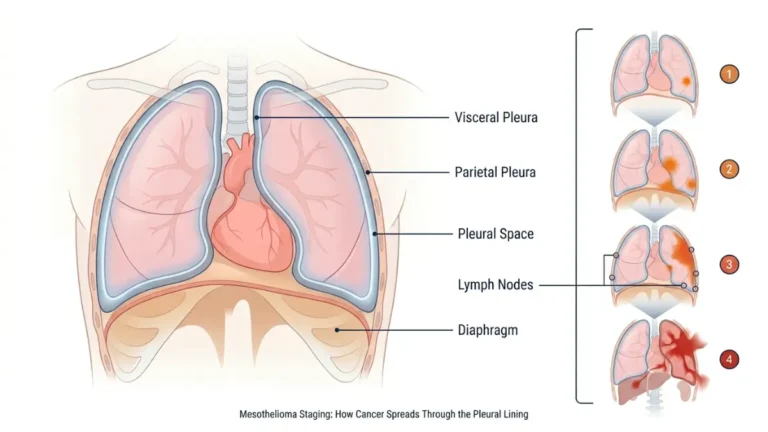
Stage 4 malignant mesothelioma is defined using the TNM staging system — developed by the International Association for the Study of Lung Cancer and accepted by the American Joint Committee on Cancer. It stands for Tumor, Node, Metastasis.
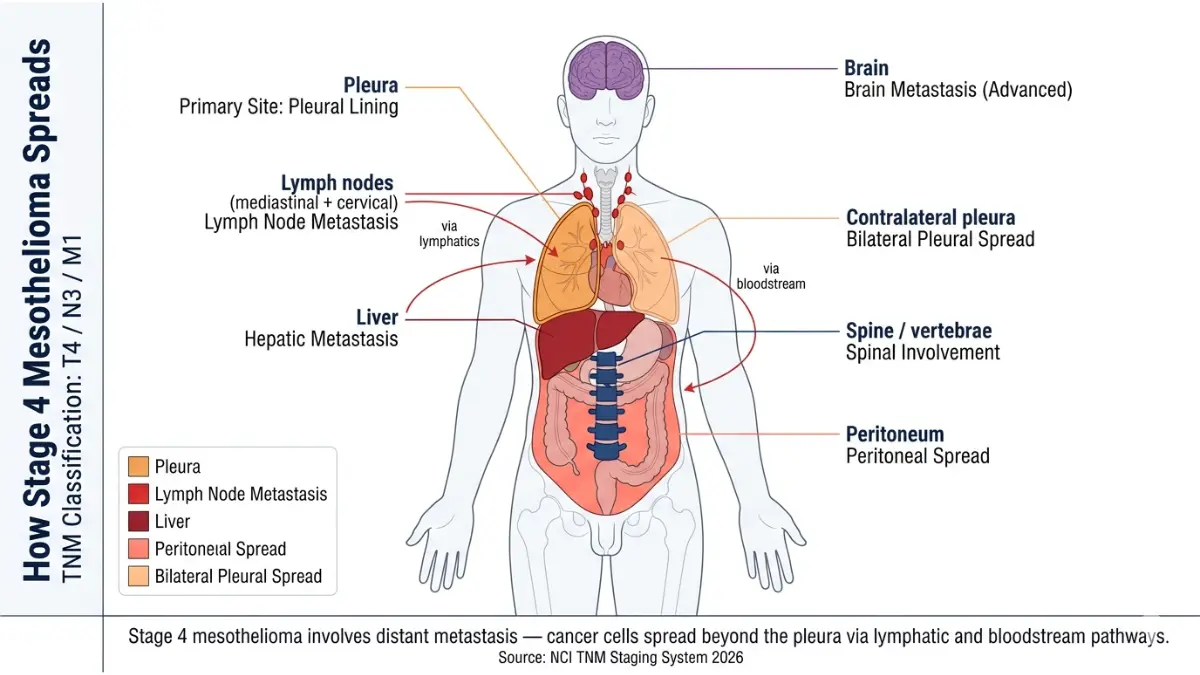
At Stage 4, distant metastasis (M1) has occurred. This means cancer cells have spread far beyond the original tumor site into other organs or distant lymph nodes. Curative surgery is generally no longer possible.
Where Does Stage 4 Mesothelioma Spread?
The cancer spreads through the lymphatic system and bloodstream. Common sites of spread include:
- Liver
- Brain and spinal cord
- Bones
- Opposite lung or pleura
- Peritoneum (abdominal lining)
- Distant lymph nodes in the neck or chest
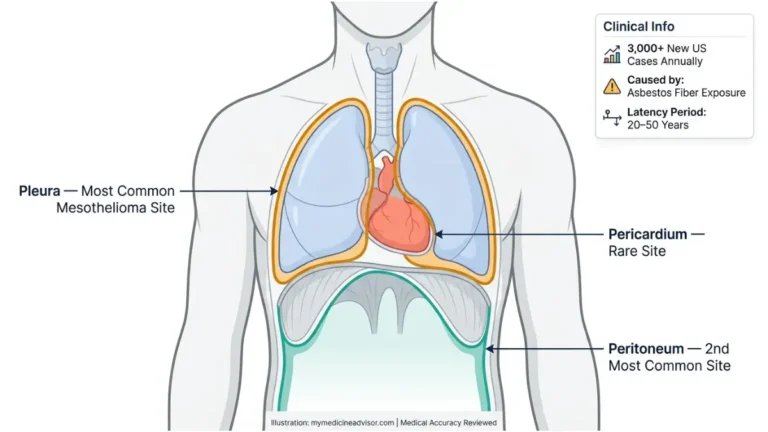
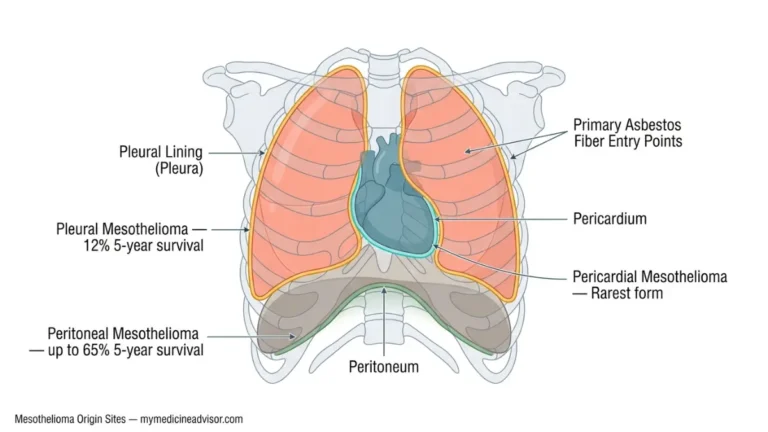
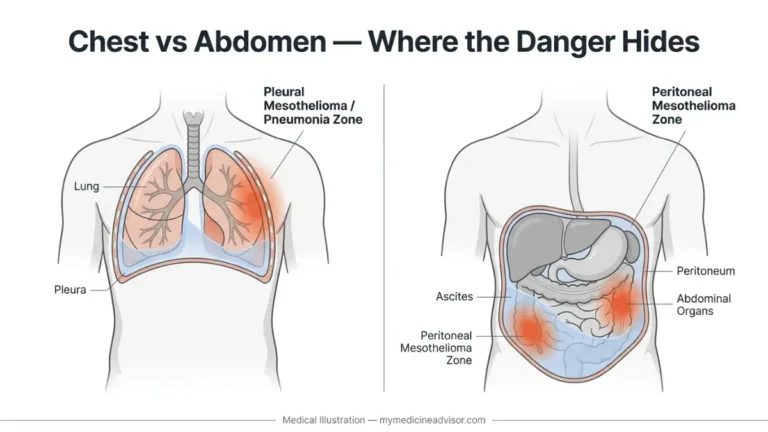
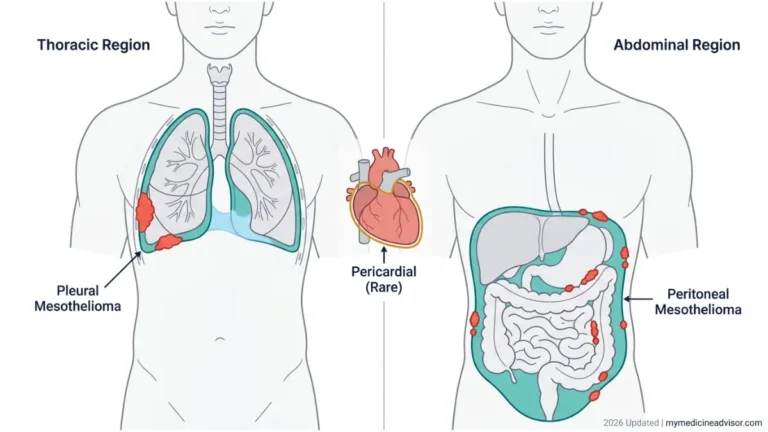
Pleural vs. Peritoneal at Stage 4 — Key Differences
| Feature | Stage 4 Pleural | Stage 4 Peritoneal |
|---|---|---|
| Origin | Lining of the lungs | Lining of the abdomen |
| Spread | Chest, liver, brain | Abdominal organs, liver |
| Staging System | TNM (4 stages) | Modified TNM (3 stages) |
| 5-Year Survival | ~7% | ~11% |
| Primary Treatment | Immunotherapy / Chemo | Chemo / Palliative care |
⚠️ Critical Fact Nobody Tells You: A 2023 study in the Journal of Thoracic Oncology found that 13.5% of patients initially diagnosed as Stage 4 were later reclassified to a lower stage after a specialist second opinion. Always get a second opinion from a dedicated mesothelioma specialist — not just a general oncologist.
If you are experiencing new or worsening symptoms, use our free Symptom Checker to log and track them before your next appointment.
For a deeper breakdown of all mesothelioma stages, see our complete mesothelioma stages survival guide.
Stage 4 Mesothelioma Symptoms — What to Watch For Right Now
Pleural Stage 4 Symptoms (Lung Lining)
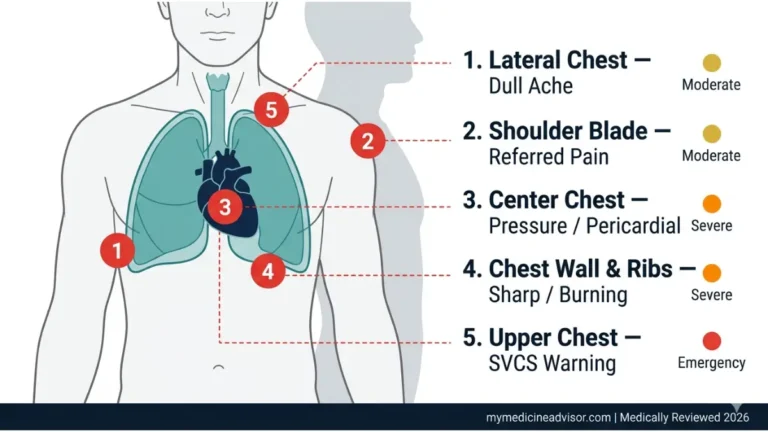
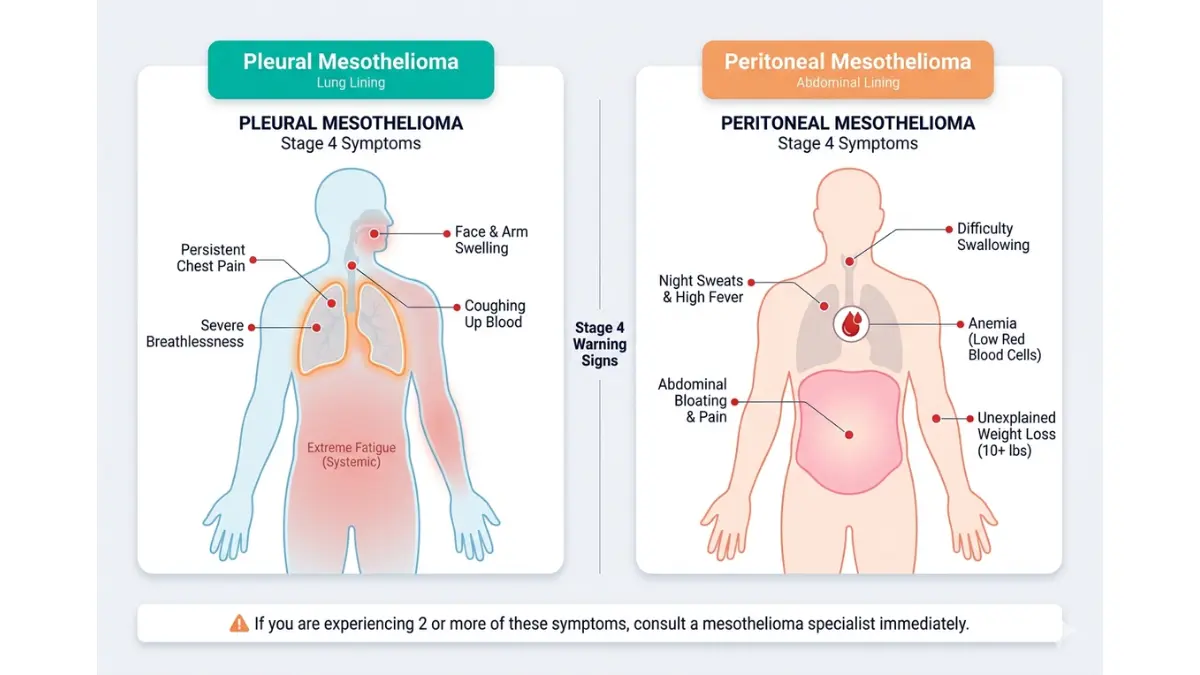
By Stage 4, pleural mesothelioma symptoms are systemic and severe. Key warning signs include:
- Persistent chest pain — often worsening at night
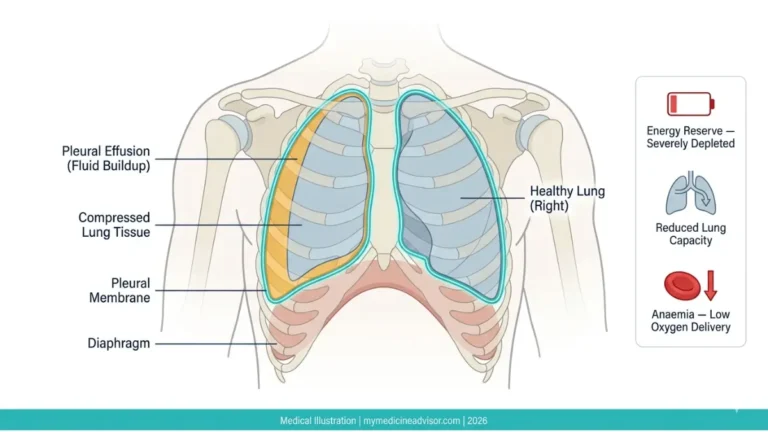
- Severe breathlessness — even at rest
- Coughing up blood (haemoptysis)
- Swelling of the face or arms (due to vena cava compression)
- Extreme fatigue — the most universally reported Stage 4 symptom
Do not ignore worsening breathlessness. Read our detailed guide on mesothelioma fatigue and breathlessness management for evidence-based relief strategies.
Peritoneal and Systemic Stage 4 Symptoms
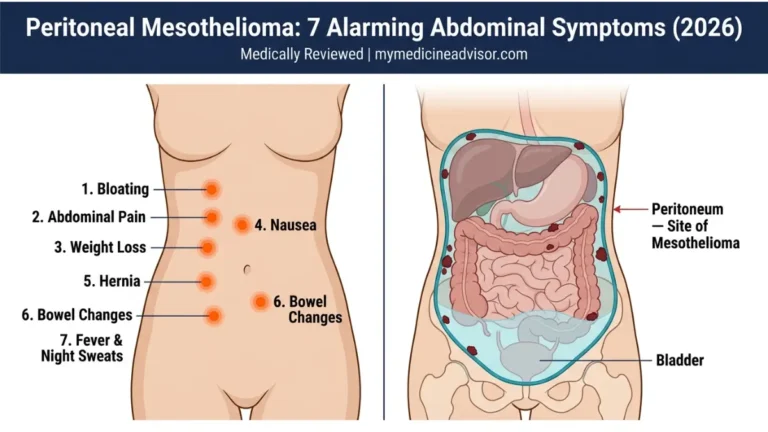
For peritoneal mesothelioma, the symptom pattern shifts to the abdomen:
- Unexplained weight loss (5–10+ lbs in weeks)
- Abdominal bloating and pain — from fluid buildup (ascites)
- High-grade fever and night sweats
- Anemia — low red blood cell count
- Difficulty swallowing (in advanced pleural cases)
| Symptom | Pleural Stage 4 | Peritoneal Stage 4 |
|---|---|---|
| Chest pain | ✅ Severe | ❌ Rare |
| Breathlessness | ✅ Primary | ❌ Rare |
| Abdominal bloating | ❌ Rare | ✅ Primary |
| Night sweats | ✅ Common | ✅ Common |
| Unexplained weight loss | ✅ Common | ✅ Severe |
| Face/arm swelling | ✅ Stage 4 marker | ❌ Rare |
For a full breakdown of warning symptoms across all stages, see our guide on deadly mesothelioma symptoms to never ignore.
The Brutal Truth — Stage 4 Mesothelioma Prognosis & Life Expectancy 2026
The Numbers — Honest, Unfiltered, Current
This is the section most sites soften. We won’t. Here is what the most current 2026 data actually shows:
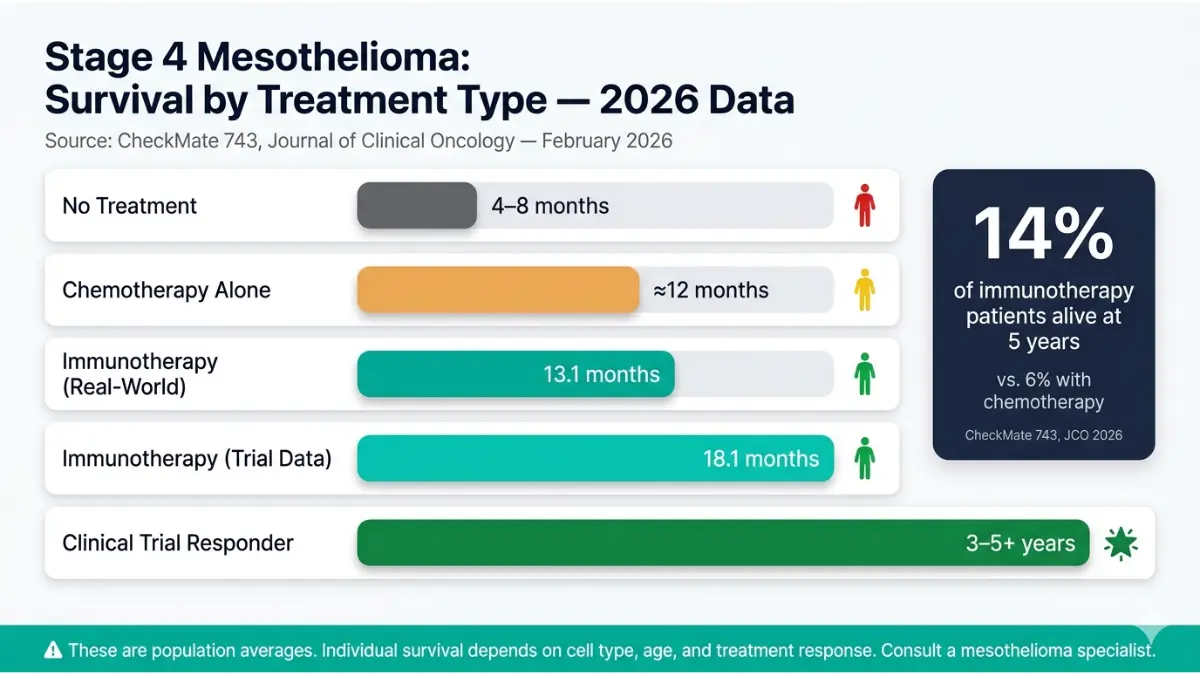
| Scenario | Median Survival |
|---|---|
| No treatment | 4–8 months |
| Chemotherapy alone | ~12 months |
| Immunotherapy (trial data) | 18.1 months |
| Immunotherapy (real-world data) | 13.1 months |
| Best-case: clinical trial responder | 3–5+ years |
| 5-year survival (immunotherapy arm) | 14% (2026 JCO data) |
Source: CheckMate 743, 5-Year Follow-Up — Journal of Clinical Oncology, February 2026
Real-World vs. Clinical Trial Data — The Gap Nobody Explains
Here is the uncomfortable truth that most competitor sites skip entirely.
In the landmark CheckMate 743 trial, immunotherapy produced 18.1 months median survival. But a real-world Australian study published on PubMed found that actual patients — older, with more comorbidities — survived 13.1 months on the same regimen.
Why the gap?
- Clinical trials select healthier, younger patients
- Real-world patients are often over 65 with comorbidities
- Nearly 60% of real-world patients experienced severe side effects
- Many stopped treatment due to toxicity
This is not to discourage treatment. It is to help patients set realistic expectations and advocate forcefully for specialist care.
Factors That Can Push Your Survival Beyond the Average
Your individual prognosis depends on more than stage alone. Factors that significantly extend life expectancy include:
- Cell type: Epithelioid responds better to treatment than sarcomatoid or biphasic
- Sex: Female patients consistently show better survival outcomes in studies
- Age and performance status: Patients under 65 with good baseline health fare better
- Early palliative care integration: Research shows patients who receive early palliative care alongside active treatment live longer than those who receive it only at end-of-life
- Specialist center treatment: Outcomes are measurably better at NCI-designated cancer centers
For a complete prognosis breakdown with survival data by type and stage, read our mesothelioma prognosis and survival rates guide.
These are averages — not sentences. Every statistic represents a population. You are an individual.
3 Evidence-Based Treatments for Stage 4 Mesothelioma in 2026
This is the section our title promises. Here are the 3 core treatments — explained clearly, compared honestly, and backed by 2026 data.
Treatment 1 — Immunotherapy: Nivolumab + Ipilimumab (The Current Gold Standard)
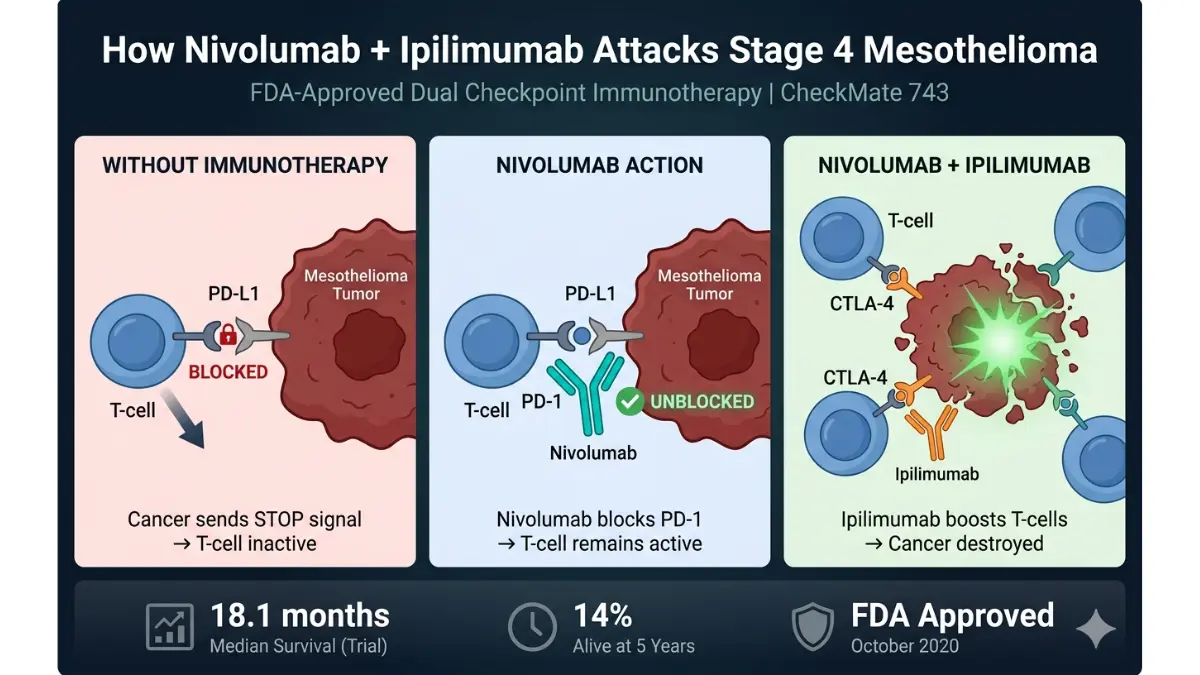
FDA approved: October 2, 2020 for unresectable malignant pleural mesothelioma.
This combination — nivolumab (Opdivo®) + ipilimumab (Yervoy®) — works by blocking proteins that cancer cells use to hide from your immune system. It essentially removes the brakes on your T-cells, allowing your own body to identify and destroy tumors.
2026 Clinical Data (CheckMate 743, 5-Year Update):
- Median overall survival: 18.1 months (vs. 14.1 months for chemotherapy)
- 5-year survival rate: 14% (vs. 6% for chemotherapy)
- Benefit is strongest in non-epithelioid (sarcomatoid and biphasic) cell types
- Nearly 1 in 3 patients still responding at 3 years — even after stopping treatment at 2 years
You can read the full FDA approval documentation for nivolumab + ipilimumab here.
Common side effects: Fatigue, rash, diarrhea, and immune-related reactions (pneumonitis, colitis, thyroid problems). Report any new symptoms immediately — early intervention prevents serious complications.
For a deep-dive into how this treatment works, see our complete guide on mesothelioma immunotherapy and nivolumab.
Treatment 2 — Chemotherapy: Pemetrexed + Cisplatin or Carboplatin
Still first-line for epithelioid Stage 4 mesothelioma — and still highly relevant in 2026.
CheckMate 743 data shows that for epithelioid cell type, chemotherapy and immunotherapy produce similar overall survival. The choice between the two depends on individual factors your oncologist will assess.
How it works: Pemetrexed (Alimta®) disrupts folate metabolism, blocking cancer cell replication. Cisplatin or carboplatin create DNA damage that triggers cancer cell death.
Typical schedule:
- Administered every 3 weeks
- Up to 6 cycles
- Often paired with bevacizumab (Avastin®) for additional benefit in some patients
What to expect: Nausea, low blood counts, fatigue, and kidney stress are the primary concerns. Folic acid and B12 supplementation before each cycle significantly reduces toxicity.
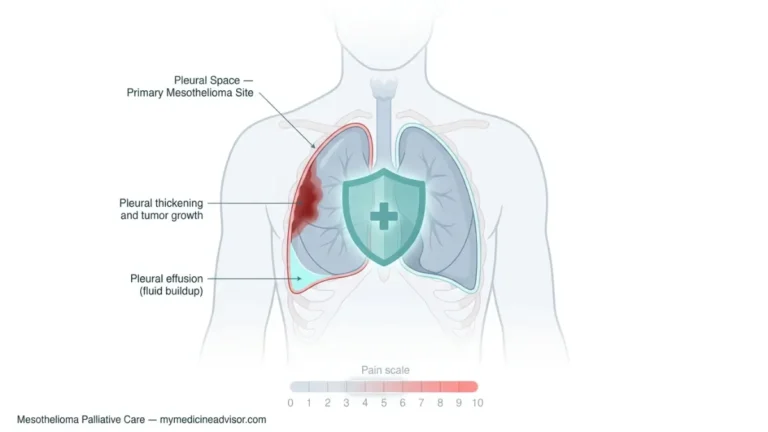
Palliative procedures are frequently used alongside chemotherapy to manage symptoms directly:
- Pleurodesis — seals the lung lining to prevent fluid re-accumulation
- Thoracentesis / Paracentesis — drains fluid from chest or abdomen to relieve pressure and breathlessness
For detailed side effect management strategies, read our guide on mesothelioma chemotherapy side effects.
Treatment 3 — Clinical Trials and Emerging Therapies
As of early 2026, there are 56+ active U.S. clinical trials enrolling Stage 4 mesothelioma patients — accessible via ClinicalTrials.gov. This is not a last resort. For many patients, it is the single best path to accessing therapies not yet available to the public.
Most promising emerging approaches in 2026:
| Trial Type | Mechanism | Status |
|---|---|---|
| Pembrolizumab + chemo | PD-1 inhibitor combo | Phase III — 17.3 months median OS |
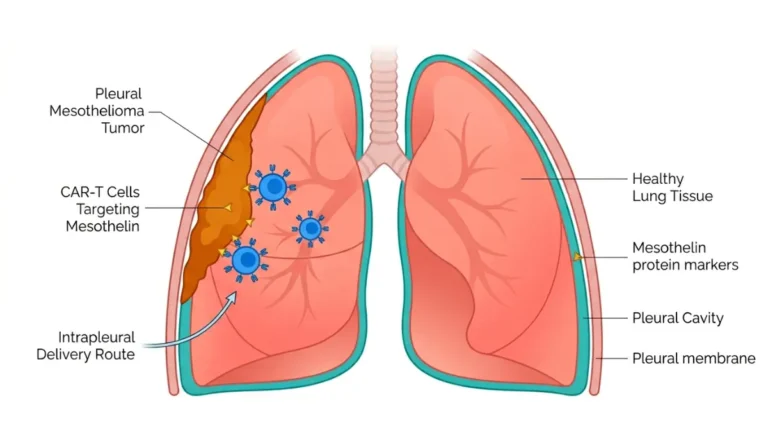
| CAR-T cell therapy | Modified T-cells targeting mesothelin | Phase I/II trials active |
| Tumor Treating Fields (TTF) | Electric fields disrupting cell division | Phase II — added to chemo regimens |
| Tremelimumab + durvalumab | Dual checkpoint blockade | Phase II ongoing |
| VEGF-targeted therapy | Anti-angiogenic approach | Studied as add-on |
How to access a clinical trial:
- Search ClinicalTrials.gov by ZIP code or state
- Ask your oncologist about trials at NCI-designated cancer centers
- Contact the Mesothelioma Applied Research Foundation at curemeso.org for patient navigator support
For the most current 2026 trial listings and eligibility guidance, see our complete mesothelioma clinical trials 2026 guide.
Master Treatment Comparison — The SERP-Killer Table:
| Treatment | Best For | Median Survival | FDA Approved | Key Side Effects |
|---|---|---|---|---|
| Nivolumab + Ipilimumab | Non-epithelioid | 18.1 months (trial) / 13.1 months (real-world) | ✅ Yes (2020) | Fatigue, immune reactions |
| Pemetrexed + Cisplatin | Epithelioid | ~12 months | ✅ Yes (2004) | Nausea, low blood counts |
| Clinical Trials | All types | Varies by trial | 🔬 Investigational | Trial-dependent |
Your 30-Day Action Plan After a Stage 4 Diagnosis
No competitor article gives you this. Most stop at listing treatments. Here is what to actually do — in the first 30 days.
Week 1–2: The Decisions That Define Your Outcome
1. Demand a mesothelioma specialist — not a general oncologist. General oncologists see mesothelioma rarely. Specialists at NCI-designated centers treat it daily. Outcomes differ significantly. Use the NCI Cancer Center Finder to locate a center near you.
2. Request a second opinion immediately. Remember: 13.5% of Stage 4 diagnoses are later reclassified to a lower stage. A second opinion costs nothing but time — and could mean more treatment options and a longer life.
3. Ask specifically about immunotherapy eligibility. Nivolumab + ipilimumab is now first-line for unresectable pleural mesothelioma. If your doctor has not mentioned it, ask directly: “Am I eligible for checkpoint immunotherapy?”
4. Request palliative care referral — today, not at the end. This is the most misunderstood step. Research from the New England Journal of Medicine proves patients who start palliative care alongside active treatment live longer and report better quality of life than those who delay it. Palliative care is not giving up. It is fighting smarter.
For a full guide to mesothelioma palliative care options, visit our mesothelioma palliative care and pain relief guide.
Week 3–4: Build the Support System That Keeps You Fighting
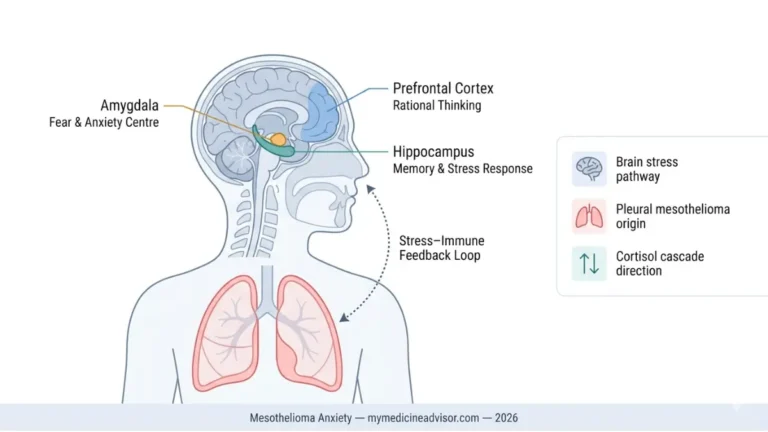
5. Get your mental health support in place. Depression and anxiety are clinically significant in Stage 4 patients and are undertreated. A mental health referral is not optional — it is part of your treatment plan. Read our guide on managing mesothelioma anxiety and reclaiming hope.
6. Explore financial assistance. Asbestos trust funds hold over $30 billion in compensation for mesothelioma patients. You do not need to file a lawsuit to access many of these funds. See our guide on mesothelioma financial aid and benefits.
7. Optimize your nutrition during treatment. Maintaining healthy body weight and protein intake during chemotherapy or immunotherapy directly affects your ability to tolerate treatment. See our mesothelioma diet and foods guide for oncology-backed nutrition advice.
8. Register on ClinicalTrials.gov. If standard treatments are limited, clinical trial enrollment can provide access to cutting-edge therapies — often at no cost to the patient.
Living With Stage 4 Mesothelioma — Quality of Life, Mental Health & Support
Managing Symptoms Day to Day
Stage 4 mesothelioma does not only attack the body — it exhausts every dimension of daily life. Here is what evidence-backed management looks like:
Pain management:
- Opioids, NSAIDs, and nerve block procedures are used in combination
- Palliative radiation can target painful tumor masses directly — reducing pressure and improving breathing without the intent to cure
Breathlessness:
- Breathing positioning techniques (leaning forward, pursed-lip breathing) provide immediate relief
- Supplemental oxygen may be prescribed for home use
- Thoracentesis or a permanent PleurX catheter drains recurring fluid buildup
Fatigue:
- Light activity (gentle walking) is paradoxically more restorative than bed rest
- Sleep quality during treatment is critical — use our free Sleep Calculator to optimize rest cycles around treatment schedules
Nutrition during treatment:
- High-protein, anti-inflammatory diet supports immune function
- Small, frequent meals manage nausea during chemotherapy cycles
- Hydration is critical — especially during cisplatin cycles, which are nephrotoxic
Mental Health, Caregiver Support & End-of-Life Planning
The psychological burden of a Stage 4 diagnosis is clinically documented. Studies show that over 40% of mesothelioma patients experience clinically significant depression or anxiety — yet fewer than 25% receive mental health support.
What helps:
- Specialist cancer counseling — ask your oncology team for a referral
- Peer support groups — the American Cancer Society connects patients with survivors
- Caregiver support programs — burnout in caregivers affects patient outcomes
End-of-life planning is not surrender — it is one of the most empowering acts a Stage 4 patient can take:
- Designate a healthcare proxy with legal authority
- Complete an Advance Directive specifying your treatment preferences
- Discuss hospice vs. home care options with your palliative care team
What 5-year survivors have in common:
- Early specialist referral (within 2 weeks of diagnosis)
- Immunotherapy or clinical trial enrollment
- Active palliative care from day one
- Strong caregiver and psychological support systems
FAQs: Stage 4 Mesothelioma
1. How long can you live with Stage 4 mesothelioma in 2026?
The median survival is approximately 12 months with treatment. However, 2026 data from the CheckMate 743 trial shows 14% of immunotherapy patients survive 5 years. Individual outcomes vary widely based on cell type, treatment, and overall health.
2. Is Stage 4 mesothelioma always terminal?
It is classified as terminal because curative treatment is not currently possible. However, “terminal” does not mean immediate. Immunotherapy and clinical trials have produced multi-year survival in a meaningful percentage of patients.
3. What is the best treatment for Stage 4 mesothelioma in 2026?
For non-epithelioid cell types, nivolumab + ipilimumab is the current gold standard. For epithelioid types, chemotherapy with pemetrexed + cisplatin remains competitive. Your specialist will determine the right choice based on your specific diagnosis.
4. Can immunotherapy cure Stage 4 mesothelioma?
No current therapy is curative at Stage 4. However, immunotherapy has produced durable, long-term remissions in a subset of patients — with 14% alive at 5 years in clinical trial data.
5. What are the final symptoms of Stage 4 mesothelioma?
In the final weeks, symptoms typically include extreme fatigue, severe breathlessness, significant weight loss, difficulty swallowing, and widespread pain. A palliative care team can manage all of these effectively.
6. What is the difference between Stage 3 and Stage 4 mesothelioma?
Stage 3 involves regional spread (nearby lymph nodes, adjacent tissues). Stage 4 involves distant metastasis — cancer cells in organs far from the original tumor. See our complete mesothelioma stages guide for full details.
7. Can you have surgery for Stage 4 mesothelioma?
Curative surgery (extrapleural pneumonectomy or pleurectomy/decortication) is generally not recommended at Stage 4 due to widespread spread. Palliative surgical procedures — pleurodesis, thoracentesis, paracentesis — are regularly used to manage symptoms.
8. Does chemotherapy work at Stage 4 mesothelioma?
Yes — particularly for epithelioid cell types. Pemetrexed + cisplatin/carboplatin remains an active regimen at Stage 4, producing approximately 12-month median survival in clinical data.
9. Are there clinical trials available for Stage 4 mesothelioma in 2026?
Yes. As of early 2026, 56+ active U.S. trials are enrolling Stage 4 patients. Search ClinicalTrials.gov by location or ask your oncologist about eligibility. Our guide on mesothelioma clinical trials 2026 covers the top options.
10. How does Stage 4 peritoneal mesothelioma differ from pleural?
Peritoneal Stage 4 affects the abdominal lining and tends to progress more slowly than pleural. It has a slightly better 5-year survival rate (~11% vs ~7%). See our detailed guide on peritoneal mesothelioma and abdominal spread.
11. What should I do first after a Stage 4 mesothelioma diagnosis?
Act within 7 days: (1) Request a mesothelioma specialist referral, (2) Seek a second opinion, (3) Ask about immunotherapy eligibility, (4) Start palliative care alongside active treatment. Your first 30 days define your trajectory.
Medical disclaimer
The content on MyMedicineAdvisor is provided for general informational and educational purposes only and is not a substitute for professional medical advice, diagnosis, or treatment. Health information on this website should not be used to diagnose, treat, cure, or prevent any condition without guidance from a qualified healthcare professional. Always seek the advice of your doctor, physician, or another licensed healthcare provider with any questions you may have regarding a medical condition, symptoms, medications, or treatment decisions.