On This Page – Quick Medical Summary
Benjamin, a 67-year-old retired Navy shipyard worker from Virginia, was diagnosed with pleural mesothelioma in early 2025. His chest pain had reached 8/10 within eight weeks of diagnosis. His oncologist referred him to a palliative care team on day one — and within two weeks, his pain score dropped to 3/10. He continued chemotherapy the entire time.
Mesothelioma palliative care is specialized medical care focused entirely on relieving pain, managing symptoms, and restoring quality of life. It is not giving up treatment. It runs alongside curative therapies — and 2026 clinical evidence confirms it may even extend survival.
According to the National Cancer Institute, palliative care addresses the whole person — not just the disease — and can be started at any stage of a serious illness, simultaneously with active cancer treatment.
What Is Mesothelioma Palliative Care? (It Is Not “Giving Up”)
The most damaging myth in mesothelioma care is that requesting palliative care signals the end of fighting. That belief causes patients to delay proven symptom relief for months — and suffer needlessly.
Palliative care is quality-of-life care, not end-of-life care.
Palliative Care vs. Hospice vs. Curative Treatment — 2026 Comparison
| Palliative Care | Hospice Care | Curative Treatment | |
|---|---|---|---|
| Goal | Symptom relief + quality of life | Comfort only, no curative intent | Cure or disease control |
| When started | Any stage, at diagnosis | Life expectancy ≤ 6 months | Early-to-mid stage |
| Run with treatment? | ✅ Yes | ❌ No | ✅ Yes |
| Duration | Entire illness trajectory | Final weeks to months | Time-limited |
| Covers psychology? | ✅ Yes | ✅ Yes | Rarely |
Palliative care may also be called comfort care, supportive care, or symptom management. Regardless of the label, the clinical goal is identical: keeping you functional, comfortable, and in control of your own care.
A landmark New England Journal of Medicine study demonstrated that cancer patients who received early palliative care lived a median of 2.7 months longer than those receiving standard oncology care alone. A 2024 PMC study on mesothelioma palliative care outcomes confirmed the same principle specifically in malignant pleural mesothelioma patients — earlier referral to palliative care was associated with reduced emergency department visits and better-controlled end-of-life outcomes.
A critical 2026 update: Early palliative integration is now a formal recommendation in ASCO (American Society of Clinical Oncology) guidelines. Your care team should offer it from day one — not after treatment options are exhausted. Begin tracking your symptoms using our comprehensive mesothelioma stages and survival guide to understand where your disease is and which palliative interventions apply to your stage.
💡 Key Takeaway: Starting palliative care early does not shorten life. The evidence strongly suggests it may extend survival — while dramatically reducing daily suffering.
7 Symptoms Mesothelioma Palliative Care Proven to Target
Mesothelioma causes one of the most severe and wide-ranging symptom clusters of any cancer. A 2021 PMC systematic review confirmed that patients with mesothelioma consistently score among the highest on the Edmonton Symptom Assessment System — with pain, breathlessness, fatigue, and anxiety being the most debilitating.
If you or someone you love is managing any of the following, our clinical article on mesothelioma survival rates and symptoms provides a complete reference on what to expect and when to escalate care.
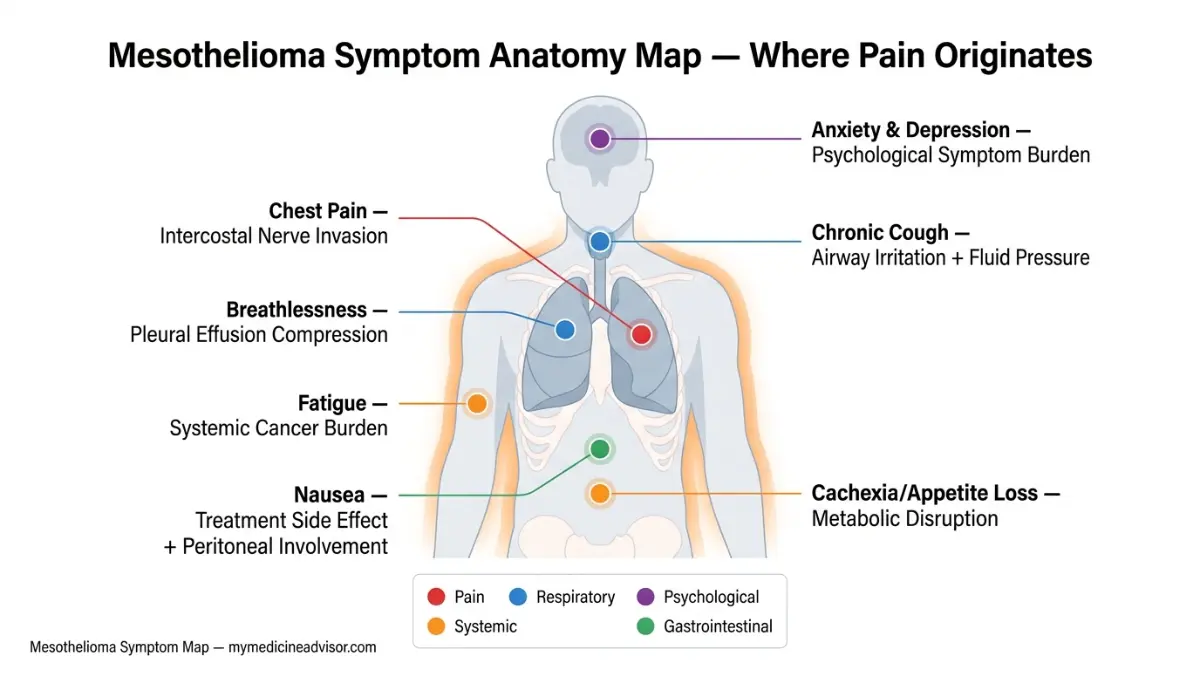
Mesothelioma Symptom-to-Palliative Treatment Map
| Symptom | Proven Palliative Intervention | Evidence Level |
|---|---|---|
| Chest / abdominal pain | WHO Analgesic Ladder opioids, nerve blocks, palliative radiation | High |
| Pleural effusion (breathlessness) | Thoracentesis, pleurodesis, indwelling pleural catheter (IPC) | High |
| Fatigue | Structured exercise therapy, nutritional support, sleep optimization | Moderate |
| Anxiety / depression | CBT, PHQ-9 screening, SSRIs, counseling | High |
| Nausea / vomiting | Anti-emetics, dietary modification, ginger supplementation | Moderate |
| Chronic cough | Respiratory therapy, low-dose opioids, supplemental oxygen | Moderate |
| Appetite loss / cachexia | Dietitian-led nutrition plan, megestrol acetate | Moderate |
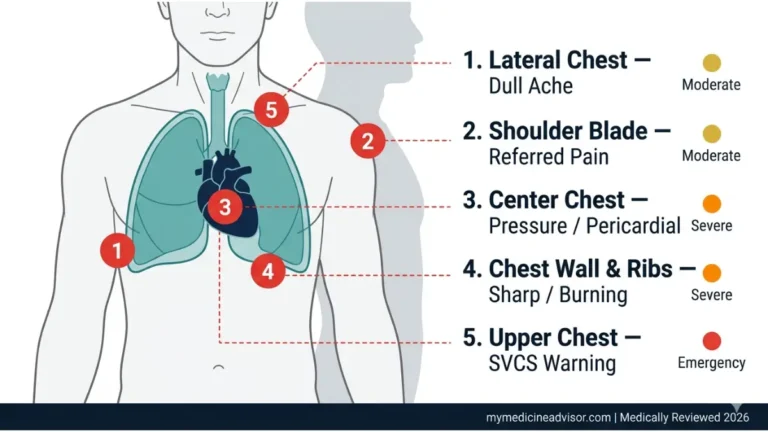
Patients managing severe mesothelioma chest pain should not wait between appointments to report worsening — early reporting to the palliative team is the single most effective action for preventing pain escalation. Our detailed guide on mesothelioma fatigue and breathlessness covers evidence-based self-management strategies for two of the most common and disabling symptoms.
💡 Key Takeaway: Every symptom on this list has a protocol-guided palliative response. Undertreated suffering is not inevitable — it is a preventable clinical failure.
The WHO 3-Step Analgesic Ladder — How Doctors Treat Mesothelioma Pain in 2026
The WHO Analgesic Ladder is the globally accepted clinical standard for cancer pain control. It has guided oncology pain management for over 30 years and remains the core framework for mesothelioma pain relief in 2026.
A comprehensive PMC pain management analysis identified the primary sources of mesothelioma-related pain as: postthoracotomy syndrome, intercostal nerve invasion by chest wall tumor, chemotherapy-induced peripheral neuropathy, and dyspnea-related respiratory distress. Each source requires a targeted palliative response.
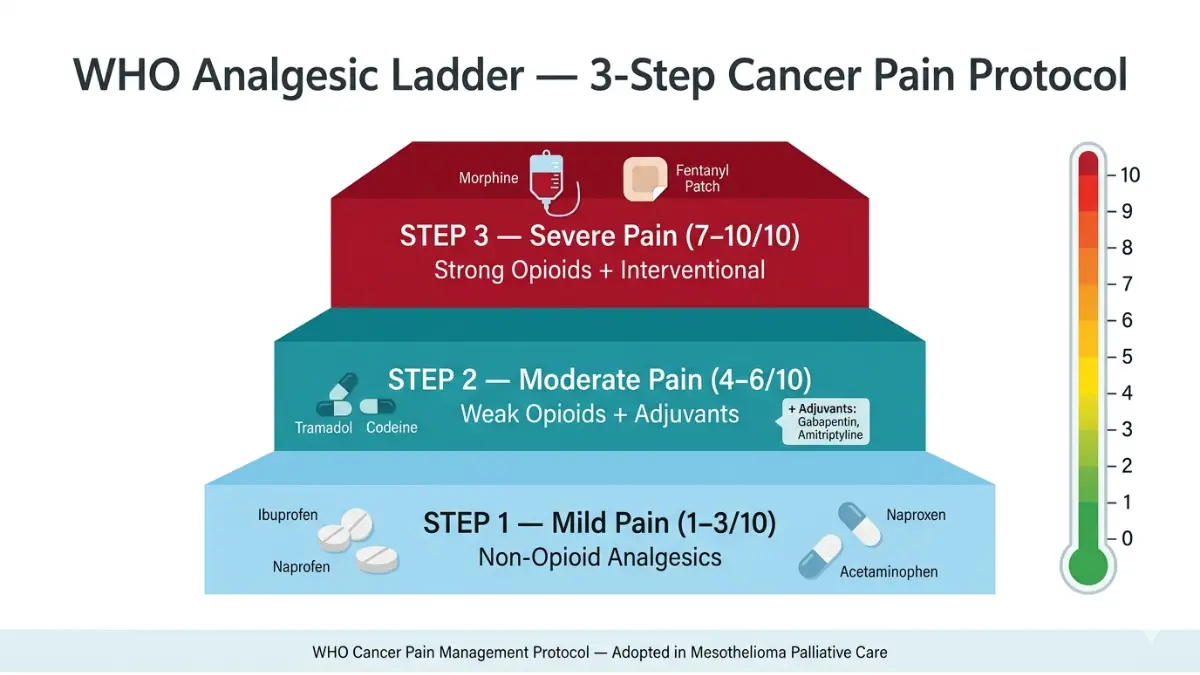
Step 1 — Mild Pain (1–3 / 10)
- Medications: NSAIDs (ibuprofen, naproxen), acetaminophen (paracetamol)
- Use case: First-line for mild localized pain and inflammation
- Limitation: Ceiling effect — dose escalation beyond the therapeutic threshold yields no additional relief
Step 2 — Moderate Pain (4–6 / 10)
- Medications: Weak opioids — tramadol or codeine — combined with Step 1 agents
- Adjuvant medications:
- Gabapentin / pregabalin — for neuropathic (burning, shooting) pain
- Corticosteroids (dexamethasone) — for inflammation and nerve compression
- Amitriptyline — for nerve pain and sleep disruption
- 2026 note: Tramadol is now preferred over codeine in most U.S. mesothelioma pain protocols due to superior tolerability and fewer metabolic interactions
Step 3 — Severe Pain (7–10 / 10)
- Medications: Strong opioids — oral sustained-release morphine (ASCO first-line), oxycodone, hydromorphone, fentanyl transdermal patch
- Routes available: Oral, transdermal, subcutaneous infusion (home use), intrathecal pump (refractory pain)
- Interventional options:
- Intercostal nerve block — targeted chest wall pain
- Epidural analgesia — broad thoracic pain coverage
- Percutaneous cervical cordotomy — for otherwise uncontrolled unilateral chest pain
Palliative Radiation for Chest Wall Pain
Palliative radiotherapy directly targeting chest wall tumor is a proven and underused mesothelioma pain management option. A PubMed clinical study on palliative care for mesothelioma confirmed that pain management is a multidisciplinary challenge requiring proficiency across pharmacology, interventional procedures, and radiotherapy — no single approach is sufficient.
Pain Diary Protocol: Track pain daily on a 0–10 scale, recording onset time, anatomical location, character (sharp, burning, aching, pressure), and severity at rest versus on movement. Use our Symptom Checker to log and monitor symptoms between palliative appointments — this data directly drives your care team’s medication titration decisions.
💡 Key Takeaway: 70–90% of advanced cancer pain can be controlled with the WHO Analgesic Ladder when applied early and adjusted proactively. Waiting until pain is 9/10 to report it is the most common — and most preventable — mistake patients make.
Your Mesothelioma Palliative Care Team — 8 Specialists Who Change Everything
Effective mesothelioma palliative care is never a one-person operation. It requires a coordinated, multidisciplinary team where each specialist targets a distinct dimension of patient suffering.
The NCI palliative care guidelines confirm that palliative specialists also serve as communication facilitators — bridging the patient, family, and oncology team to ensure that care decisions remain aligned with the patient’s stated values and goals.
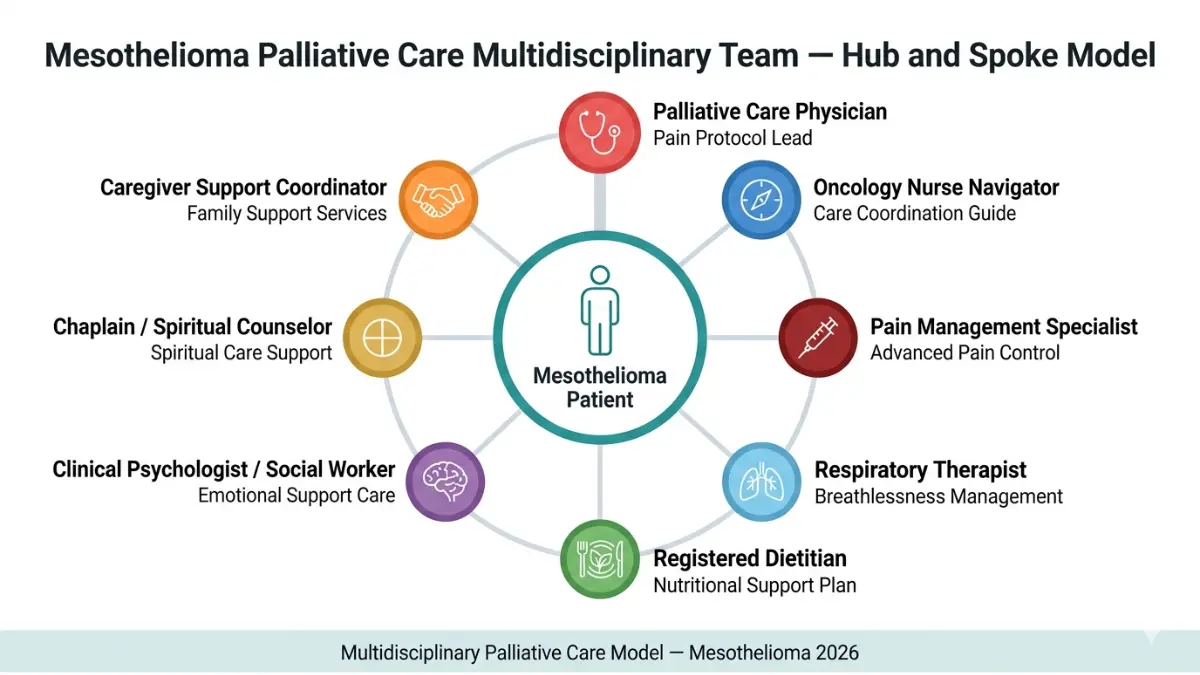
The Core 8-Specialist Palliative Team
| Specialist | What They Do for You |
|---|---|
| Palliative Care Physician | Leads the pain protocol, manages complex symptom escalation |
| Oncology Nurse Navigator | Coordinates care, patient education, daily point of contact |
| Pain Management Specialist | Performs nerve blocks, epidurals, interventional procedures |
| Respiratory Therapist | Breathing exercises, oxygen therapy, manages breathlessness |
| Registered Dietitian | Addresses cachexia, builds individualized nutrition plans |
| Clinical Psychologist / Social Worker | PHQ-9 / GAD-7 screening, CBT, grief counseling |
| Chaplain / Spiritual Counselor | Addresses existential distress, spiritual and meaning-of-life needs |
| Caregiver Support Coordinator | Family education, respite care access, advance bereavement preparation |
2026 Breakthrough: Telehealth Palliative Care Is Now Medicare-Reimbursable
This is a critical 2026 development that no major competitor has covered. Telepalliative care is now widely available and fully Medicare-reimbursable for U.S. mesothelioma patients.
- Remote symptom monitoring via wearable and app-based tools
- Virtual palliative consultations — no travel required for patients managing severe pain
- Digital pain diary integration with oncology EHR systems
- Telecounseling for psychological support from home
For patients managing the full complexity of mesothelioma treatment options — including chemotherapy, immunotherapy, and surgery — telehealth palliative access translates directly into fewer emergency department visits and faster symptom response.
💡 Action Step: Ask your oncologist today: “Can you refer me to a palliative care specialist now — not when things get harder?” Early referral is the single most impactful action you can take.
End-of-Life Planning for Mesothelioma — The Honest Guide Patients Deserve
Planning ahead is not giving up. It is the most protective and compassionate act a mesothelioma patient can take for themselves and for the people who love them.
A PMC qualitative study on mesothelioma caregiver experiences found that only 40% of patients who wanted end-of-life care planning support actually received it — leaving the majority of families facing one of the hardest transitions of their lives without any preparation.
For patients approaching end-stage mesothelioma, structured advance planning directly reduces emergency hospitalizations, prevents unwanted aggressive interventions, and maximizes time at home.
7 End-of-Life Planning Steps Every Mesothelioma Patient Needs
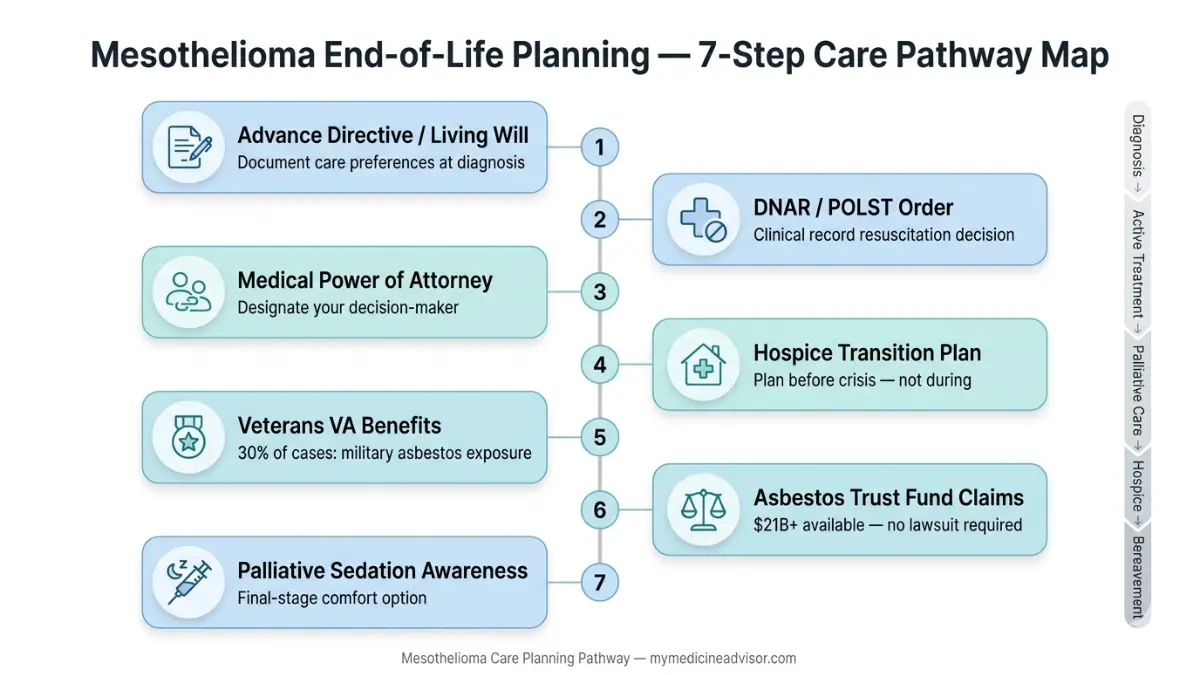
1. Advance Directive / Living Will A legally binding document stating your medical preferences if you can no longer communicate. Covers resuscitation, mechanical ventilation, and artificial nutrition decisions.
2. DNAR / POLST Order A clinical order placed directly in your medical record — different from a living will. Discuss the distinction between DNR, DNAR, and POLST (Physician Orders for Life-Sustaining Treatment) with your palliative physician.
3. Medical Power of Attorney (Healthcare Proxy) Designates a trusted individual to make medical decisions on your behalf when you cannot. Must be legally executed and provided to your care team.
4. Hospice Transition Planning Understand when the transition from palliative to hospice care is appropriate — ideally before it becomes urgent. Early hospice access, not just days-before-death admission, produces significantly better comfort outcomes.
5. VA Benefits for Veterans Over 30% of U.S. mesothelioma cases are linked to military asbestos exposure — particularly in Navy shipyard and construction roles. Veterans may qualify for VA-funded palliative care, hospice services, disability compensation, and asbestos trust fund benefits. Our clinical resource on veterans mesothelioma VA claims covers every benefit category available in 2026.
6. Asbestos Trust Fund Compensation Dozens of active asbestos bankruptcy trusts have collectively paid over $21 billion in compensation to mesothelioma patients. These funds can cover palliative medications, home care costs, and family support — without lawsuit requirements in many cases.
7. Palliative Sedation — What Patients and Families Need to Know Palliative sedation is the medically supervised reduction of consciousness in the final hours or days of life, used only when all other symptom management has failed. It is legal, ethically endorsed by every major palliative care body, and entirely distinct from euthanasia. Discuss its role in your care plan proactively rather than in a crisis moment.
💡 Key Takeaway: Patients who complete advance care planning die with fewer emergency interventions, better pain control, and significantly more time in their chosen setting — most often home.
Caregiver’s Proven Guide to Supporting Mesothelioma Palliative Care in 2026
Behind every mesothelioma patient is a caregiver — often a spouse, adult child, or close friend — absorbing an extraordinary physical and emotional burden with little clinical support of their own.
A 2025 PMC bereavement study found that bereaved caregivers of mesothelioma patients consistently reported feeling underprepared, isolated, and unsupported through one of the most psychologically demanding experiences a person can face.
Earlier research published in PubMed on mesothelioma symptom burden found that three-quarters of mesothelioma patients admitted to home palliative care had clinically significant pain — meaning the caregiver’s role in daily symptom tracking and reporting is a direct clinical responsibility, not optional.
Practical Caregiver Action Plan
Track and Report Pain Accurately
- Use a 0–10 pain scale, recorded twice daily (morning and evening)
- Document location, character (sharp / burning / aching / pressure), and duration
- Bring this written log to every palliative appointment — it is the single most valuable data source your care team has
Communicate Proactively with the Palliative Team
- Report new or worsening symptoms immediately — do not wait for the next scheduled visit
- Ask directly: “What specific symptoms should trigger an urgent call?”
- Establish one named contact person (usually the nurse navigator) for non-emergency questions
Manage Medications Safely at Home
- Never alter opioid dosing without explicit palliative team instruction
- Use our Pill Identifier to verify medications before administration — especially when multiple prescribers are involved
- Store all controlled substances in a locked container, away from children and other household members
Recognize and Address Caregiver Burnout Before It Peaks
Signs of caregiver burnout include disrupted sleep, emotional numbness, inability to concentrate, persistent physical exhaustion, and social withdrawal. These are not personal failures — they are physiological responses to sustained high-intensity caregiving.
Disrupted sleep is the earliest and most reliable burnout indicator. Caregivers averaging fewer than six hours of sleep per night show significantly impaired decision-making — a risk in medication management situations. Our Sleep Calculator can help identify sleep debt and structure a recovery schedule around caregiving demands.
Respite Care Options
- In-home respite: Qualified care workers take over at home for several hours to several days
- Adult day programs: Structured daytime care provided outside the home
- Short-term inpatient respite: Brief hospice or hospital stays specifically to give caregivers a break
Addressing Anxiety in Both Patient and Caregiver
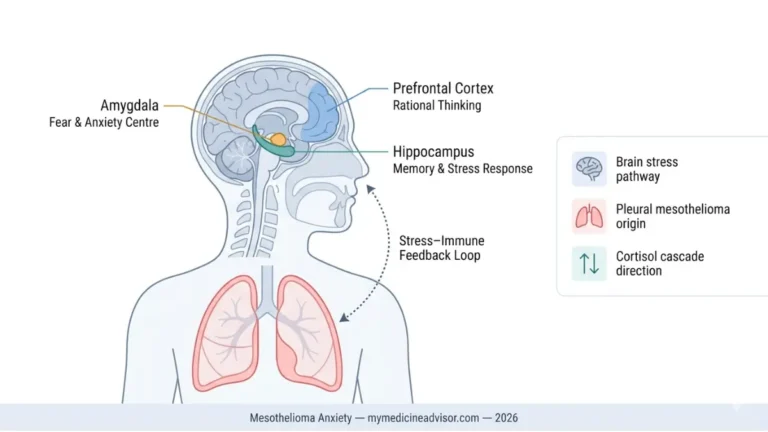
Both patients and their primary caregivers commonly develop clinically significant anxiety during mesothelioma palliative care. Our detailed resource on mesothelioma anxiety and reclaiming hope provides evidence-based psychological tools for both groups — including structured CBT strategies, breathwork protocols, and guidance on when medication is appropriate.
💡 Key Takeaway: Caregiver health is a clinical priority — not a personal matter. A caregiver who burns out cannot provide effective support. Building respite and self-care into the palliative plan from day one is as clinically important as the patient’s own pain management protocol.
FAQs: Mesothelioma Palliative Care — Answered
1. What is mesothelioma palliative care?
Mesothelioma palliative care is specialized medical support focused on relieving pain, managing symptoms, and improving quality of life. It runs alongside — not instead of — active cancer treatment and can begin at any stage after diagnosis.
2. Is palliative care the same as hospice for mesothelioma patients?
No. Palliative care runs concurrently with curative treatment at any stage. Hospice care applies only when curative intent has ended — typically when life expectancy is six months or less. The two are meaningfully different in both goal and scope.
3. When should mesothelioma patients start palliative care?
At diagnosis — not when symptoms become unmanageable. Multiple clinical studies confirm that early palliative integration improves quality of life and, in several trials, has extended survival by enabling patients to tolerate active treatment more consistently.
4. What medications are used for mesothelioma pain relief?
Treatment follows the WHO 3-Step Analgesic Ladder: NSAIDs and acetaminophen for mild pain; tramadol or codeine for moderate pain; morphine, oxycodone, or fentanyl patches for severe pain. Adjuvant medications such as gabapentin and amitriptyline address neuropathic components.
5. Can palliative care extend mesothelioma life expectancy?
Yes — in multiple studies, early palliative care has been associated with improved survival, likely because better symptom control allows patients to remain on active treatment longer and with fewer dose reductions.
6. What does mesothelioma palliative care cost?
Costs vary based on services used. Medicare Part B covers outpatient palliative consultations and symptom management. Most private insurance plans cover palliative care as part of cancer treatment. Veterans may access palliative care through the VA at no direct cost.
7. Does Medicare cover palliative care for mesothelioma?
Yes. Medicare Part B covers outpatient palliative care consultations. The Medicare Hospice Benefit covers all hospice-related services — including medications, nursing, counseling, and aide support — when a physician certifies a life expectancy of six months or less.
8. What is the WHO Analgesic Ladder for cancer pain?
A three-step pain management protocol developed by the World Health Organization. It starts with non-opioids (Step 1), escalates to mild opioids (Step 2), and advances to strong opioids (Step 3) — ensuring proportionate, evidence-based pain control at every severity level.
9. How do I find a mesothelioma palliative care specialist?
Ask your oncologist for a direct referral. The NCI Mesothelioma Treatment page provides guidance on finding specialized cancer centers with integrated palliative programs. The Center to Advance Palliative Care (CAPC) maintains a free U.S. provider directory searchable by state.
10. Can mesothelioma patients receive palliative care at home?
Yes. Home-based palliative care — including pain management, nurse visits, counseling, and medication delivery — is available in most U.S. states. Telehealth palliative consultations are now Medicare-reimbursable, making remote symptom management increasingly accessible nationwide.
11. How can family members best support a mesothelioma patient in palliative care?
Track pain scores daily and report all new symptoms promptly. Manage home medications safely and consistently. Access respite care before burnout peaks — not after. And recognize that your emotional presence is consistently ranked by mesothelioma patients as one of the most meaningful forms of relief they receive.
This article is for educational purposes only. It does not constitute medical advice, diagnosis, or treatment. Consult a licensed oncologist or palliative care specialist for guidance specific to your condition.
Medical disclaimer
The content on MyMedicineAdvisor is provided for general informational and educational purposes only and is not a substitute for professional medical advice, diagnosis, or treatment. Health information on this website should not be used to diagnose, treat, cure, or prevent any condition without guidance from a qualified healthcare professional. Always seek the advice of your doctor, physician, or another licensed healthcare provider with any questions you may have regarding a medical condition, symptoms, medications, or treatment decisions.