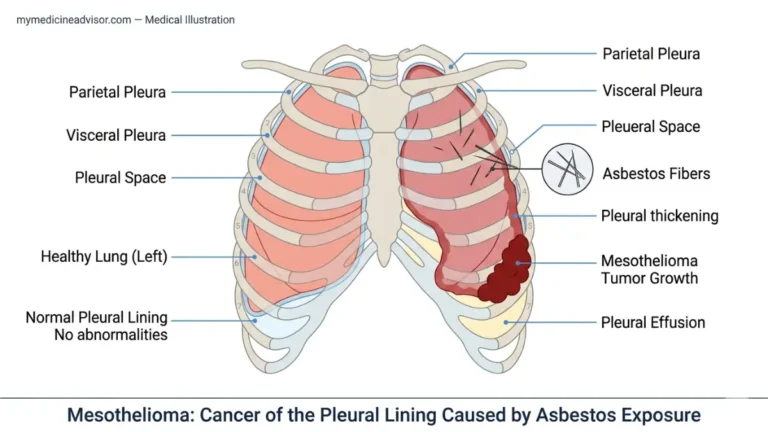
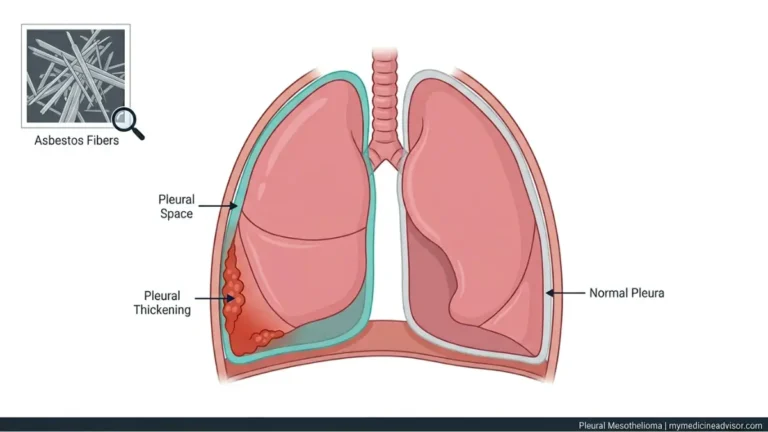
On This Page – Quick Medical Summary
In 2022, James Kowalski — a retired shipyard electrician from Baltimore — received a mesothelioma diagnosis at age 71. He had never considered legal action. Within 16 months of filing, his family secured $1.6 million in compensation without ever standing before a judge.
If you or a loved one has been diagnosed with mesothelioma, you likely have the legal right to significant financial compensation. According to the National Cancer Institute, mesothelioma is almost exclusively caused by asbestos exposure — a substance corporations knowingly used and concealed for decades. That deliberate negligence is the legal foundation of every successful asbestos claim.
This guide explains exactly how a mesothelioma lawsuit works in 2026, who qualifies, how much you can win, and why your filing window may close sooner than you expect.
Before consulting an attorney, also review our complete mesothelioma survival rates and symptoms guide for a full clinical picture of this disease.
📌 Disclaimer: This article is for educational purposes only and does not constitute legal or medical advice. Consult a qualified mesothelioma attorney and your oncologist for guidance specific to your situation.
What Is a Mesothelioma Lawsuit and Who Can File in 2026?
A mesothelioma lawsuit is a legal claim filed against manufacturers, distributors, or employers responsible for a person’s asbestos exposure. Because mesothelioma is almost entirely caused by asbestos — a substance companies knew was deadly and continued using — the law provides clear grounds for victims to seek financial compensation.
As recognized by the American Cancer Society and confirmed in thousands of court rulings, asbestos companies consistently failed their legal duty to warn workers and consumers. That failure is the cornerstone of every successful asbestos claim filed today.
Two Types of Mesothelioma Lawsuits
| Lawsuit Type | Who Files | Legal Basis |
|---|---|---|
| Personal Injury | Diagnosed patient | Asbestos exposure directly caused cancer |
| Wrongful Death | Family member or estate rep | Loved one died from mesothelioma |
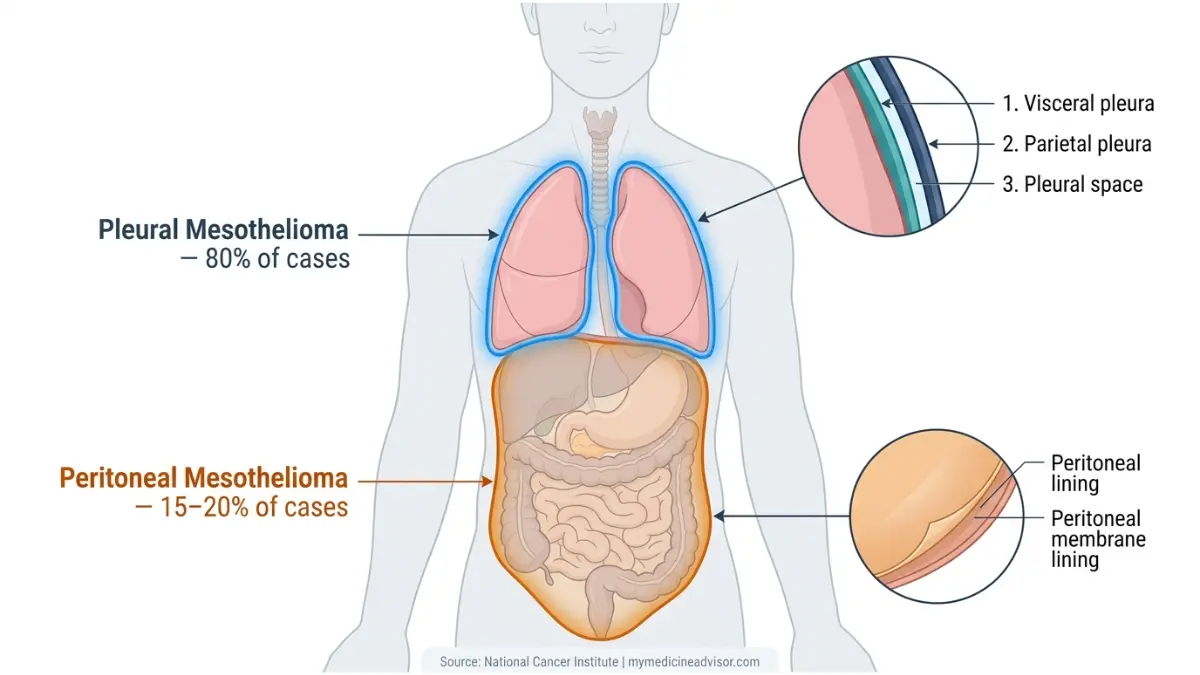
Most cases involving pleural mesothelioma — the most common form affecting the lung lining — and peritoneal mesothelioma affecting the abdomen qualify for personal injury claims. If the patient has already passed, eligible family members pursue a wrongful death claim on their behalf.
Am I Eligible? — 5-Point Checklist
Use this checklist to assess your eligibility before speaking with an attorney:
✅ You have a confirmed mesothelioma diagnosis or documented asbestos-related illness ✅ You can identify at least one source of past asbestos exposure (workplace, military service, products used) ✅ You are within your state’s statute of limitations — typically 1–3 years from diagnosis ✅ You are the diagnosed patient, a legal family member, or authorized estate representative ✅ You can provide supporting documentation — employment records, union files, or military service history
You do not need to know every company involved. A specialized asbestos attorney conducts the full exposure investigation for you.
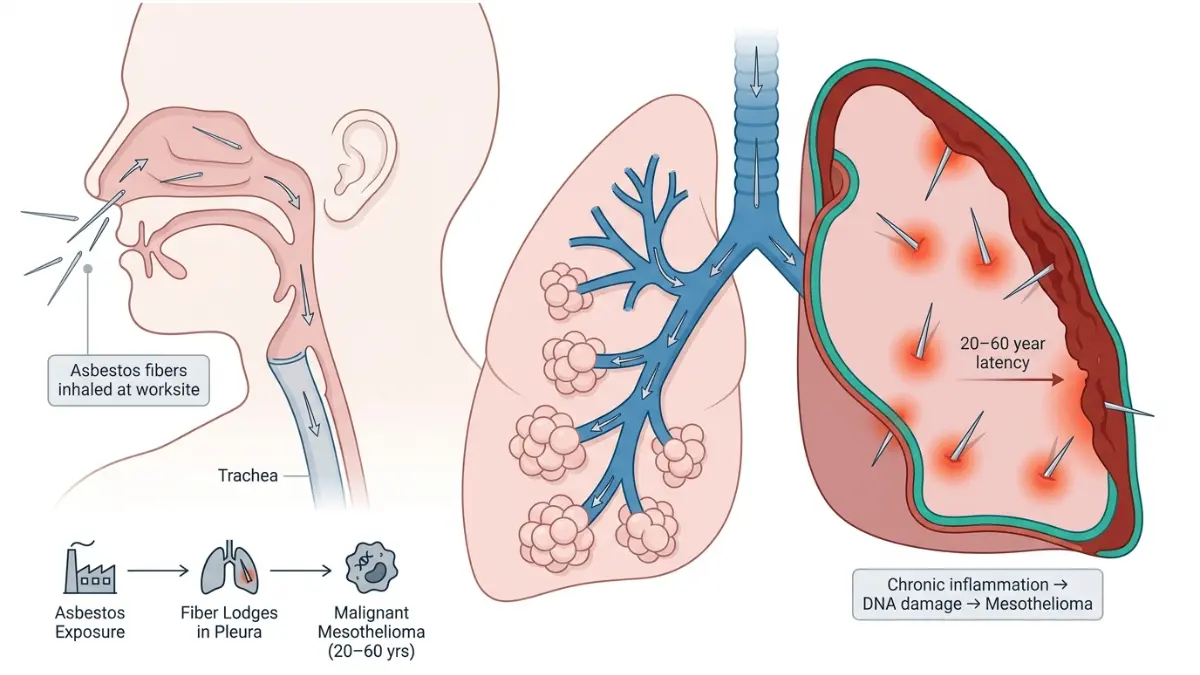
Key Takeaway: Per the Mayo Clinic, mesothelioma has a latency period of 20–60 years — meaning asbestos exposure from decades ago still qualifies for legal action today.
4 Types of Mesothelioma Compensation in 2026: Which One Pays You Most?
Most patients qualify for more than one source of compensation. Filing multiple claims simultaneously — a strategy experienced attorneys routinely deploy — can substantially increase your total recovery.
| Compensation Type | Average Payout | Timeline | Who Qualifies |
|---|---|---|---|
| Personal Injury Lawsuit | $1M – $2M | 12–18 months | Diagnosed patients |
| Wrongful Death Lawsuit | $1M – $1.5M | 12–24 months | Families of deceased patients |
| Asbestos Trust Fund | $180K – $300K per trust | 90 days or less | Anyone exposed to bankrupt company products |
| VA Benefits | $4,158+/month tax-free | Ongoing | Veterans with service-related asbestos exposure |
Asbestos Trust Funds — $30 Billion Still Available
Over 60 companies that manufactured or distributed asbestos-containing products filed for bankruptcy after facing mass litigation. Courts required each to establish dedicated compensation trust funds. As of 2026, more than $30 billion remains available across these trusts — and many claimants qualify for payouts from multiple trusts simultaneously.
Veterans and Mesothelioma — Special Compensation Rights
Veterans account for nearly 30% of all U.S. mesothelioma diagnoses. The U.S. Navy used asbestos extensively in shipbuilding through the 1970s, and Army and Air Force personnel faced similar exposures through insulation, gaskets, and brake systems. Veterans can file both a VA mesothelioma benefits claim and a civil lawsuit at the same time.
Per the U.S. Department of Veterans Affairs, veterans assigned a 100% mesothelioma disability rating receive over $4,158 per month in tax-free compensation — with no filing deadline.
Can You File Multiple Claims at Once?
Yes — and you should. Filing a personal injury lawsuit, asbestos trust fund claims, and a VA benefits application simultaneously is both legal and strongly recommended. Your mesothelioma attorney coordinates all claims in parallel to maximize total compensation.
How to File a Mesothelioma Lawsuit in 2026: 7 Steps from Diagnosis to Compensation
Most asbestos lawsuits follow a predictable, attorney-managed process. In the vast majority of cases, you do not need to appear in court, travel, or manage legal paperwork yourself.
Step 1 — Get a Confirmed Mesothelioma Diagnosis A formal, pathology-confirmed diagnosis is required before any legal action begins. If you are experiencing persistent chest pain, breathlessness, or unexplained abdominal swelling, use our Symptom Checker and seek specialist evaluation immediately.
Step 2 — Contact a Specialized Mesothelioma Attorney Standard personal injury attorneys are not equipped for asbestos litigation’s complexity. You need a firm that specializes exclusively in mesothelioma law. Most offer free case evaluations with zero upfront fees — they are paid only if you win.
Step 3 — Build Your Asbestos Exposure History Your attorney works with you to reconstruct your complete exposure history. Key sources include:
- Names of employers, job sites, and industries
- Military service records (DD-214 for veterans)
- Specific asbestos-containing products handled
- Secondary exposure history (e.g., laundering a spouse’s contaminated workwear)
Per OSHA’s asbestos occupational standards, over 75 documented industries exposed workers to dangerous asbestos levels throughout the 20th century — including shipbuilding, insulation, construction, automotive, and aerospace.
Step 4 — Identify Liable Companies and Defendants Attorney investigators cross-reference your exposure history against verified asbestos product manufacturer databases and active trust fund records. Multiple defendants are common in a single case.
Step 5 — File the Formal Legal Complaint Your attorney drafts and files the complaint, officially launching the asbestos lawsuit. The document names all defendants and establishes the full legal basis for your claim.
Step 6 — Discovery Phase Both sides exchange evidence: medical records, employment documentation, product identification, and depositions. Per the CDC’s National Institute for Occupational Safety and Health, documented occupational asbestos exposure significantly strengthens your case during discovery.
Step 7 — Settle or Go to Trial More than 95% of mesothelioma lawsuits settle before trial — often without the patient ever entering a courtroom. Once a settlement is finalized, the first compensation payments typically arrive within 90 days. Cases that proceed to trial yield substantially higher verdicts, averaging $5M–$11.4M.
Key Takeaway: The process is entirely attorney-managed. Your only responsibilities are providing your medical and work history, and giving a deposition if required — which is commonly conducted at home or via video.
Mesothelioma Lawsuit Settlements 2026: Real Numbers You Need to See
Understanding what you can financially win starts with understanding the real cost of this disease — and the real amounts courts have ordered asbestos companies to pay.
What Mesothelioma Treatment Actually Costs
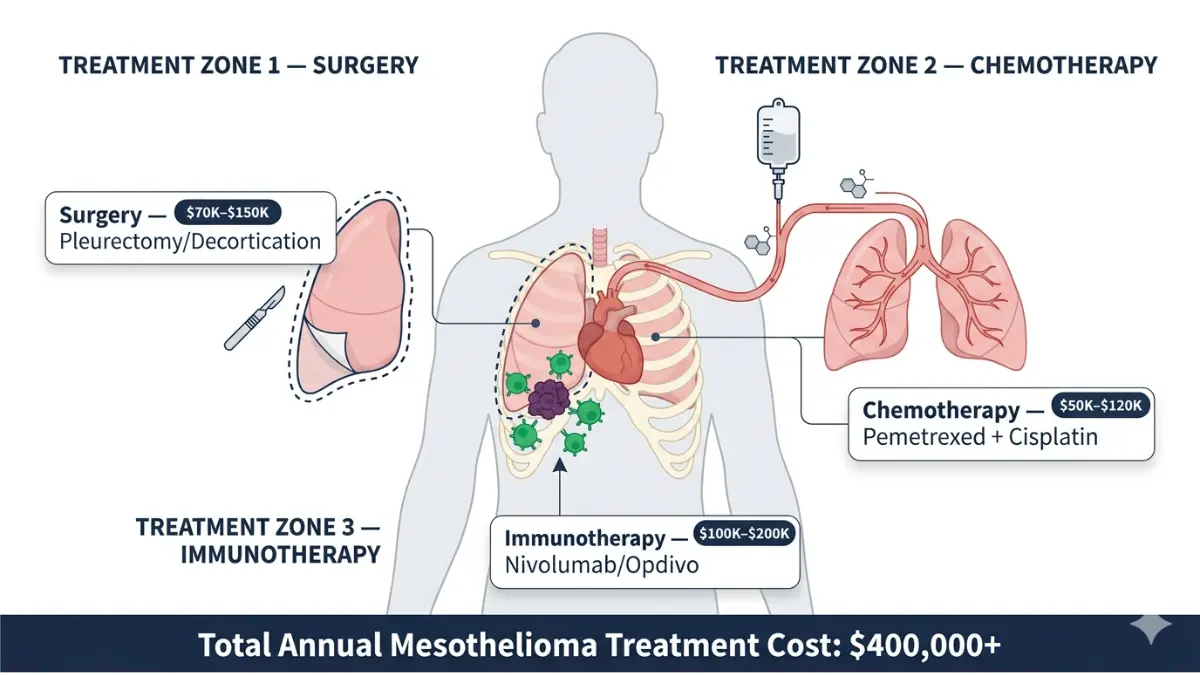
Per the NCI’s mesothelioma treatment guidelines, mesothelioma treatment is aggressive, multimodal, and extremely expensive:
| Treatment Category | Estimated Annual Cost |
|---|---|
| Chemotherapy (pemetrexed + cisplatin) | $50,000 – $120,000 |
| Immunotherapy (nivolumab) | $100,000 – $200,000 |
| Surgery (pleurectomy/decortication) | $70,000 – $150,000 |
| Diagnostic imaging and follow-up | $20,000 – $40,000 |
| Total Annual Treatment Cost | $400,000+ |
This is precisely why winning a mesothelioma lawsuit is not about financial gain. It is about covering treatment, protecting your family, and ensuring your future.
2026 Settlement and Verdict Data
- Average lawsuit settlement: $1 million – $2 million
- Average trial verdict: $5 million – $11.4 million
- Largest single recorded verdict: $250 million (Indiana steelworker, pleural mesothelioma)
- Average trust fund payout: $180,000 – $300,000 per trust
Knowing your current mesothelioma treatment options affects both your prognosis and the economic damages your attorney calculates. Understanding your disease stage also directly influences pain-and-suffering valuations in your case.
Factors That Affect Your Compensation Amount
- Stage at diagnosis — Advanced stages increase pain-and-suffering damages
- Duration and intensity of asbestos exposure — Longer, heavier exposure supports stronger causation arguments
- Number of liable defendants — More responsible companies means more potential settlements
- State jurisdiction — Some courts have historically awarded higher mesothelioma verdicts
- Lost wages and number of dependents — Drives up economic damage calculations
Mesothelioma Lawsuit Deadlines 2026: Don’t Miss Your Legal Window
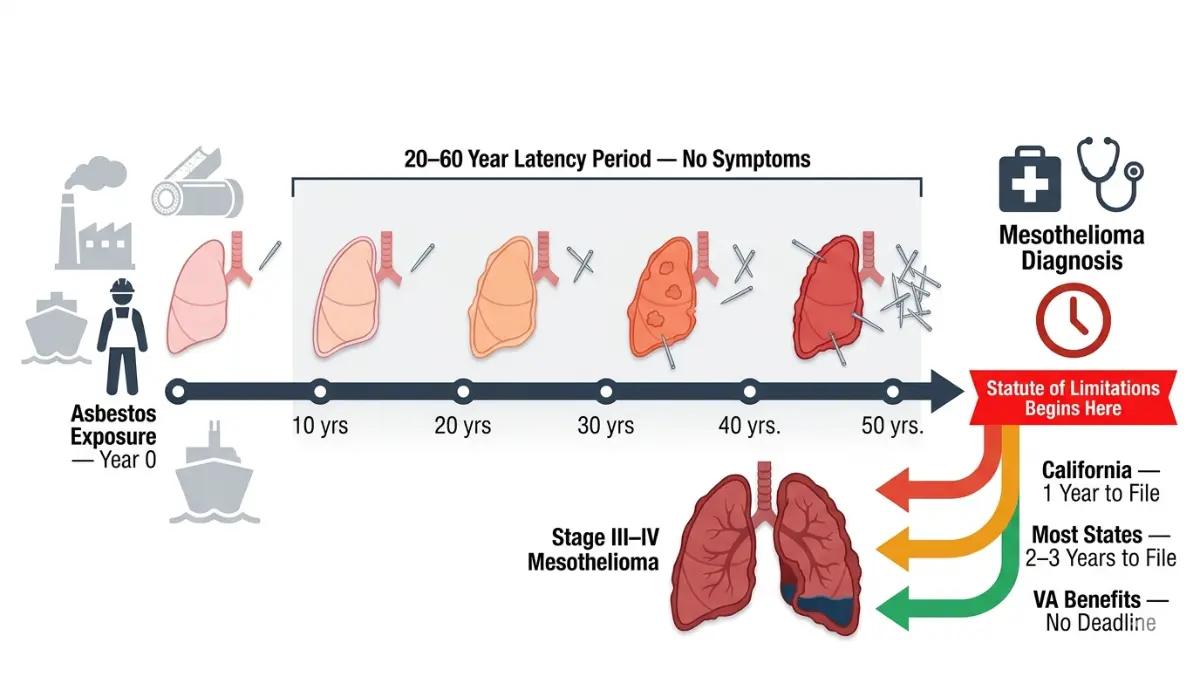
This is the most urgent section in this guide. Every U.S. state sets a legal filing deadline — called the statute of limitations — for asbestos lawsuits. Once it passes, you permanently lose your right to sue.
The Discovery Rule — Why the Clock Starts at Diagnosis, Not Exposure
Because mesothelioma has a documented latency period of 20–60 years, the law does not start the filing clock at the moment of asbestos exposure. Under the discovery rule — established by the landmark Borel v. Fibreboard (1973) ruling — the statute of limitations begins on the date of confirmed diagnosis.
Filing Deadlines by State (2026 — Top 10 States)
| State | Personal Injury | Wrongful Death |
|---|---|---|
| California | 1 year | 1 year |
| New York | 3 years | 2 years |
| Texas | 2 years | 2 years |
| Florida | 4 years | 2 years |
| Illinois | 2 years | 2 years |
| Ohio | 2 years | 2 years |
| Pennsylvania | 2 years | 2 years |
| Michigan | 3 years | 3 years |
| New Jersey | 2 years | 2 years |
| Washington | 3 years | 3 years |
⚠️ California patients have only 1 year from diagnosis. If you received your diagnosis in California, contact an attorney this week — not next month.
What If You Think It’s Too Late?
Do not give up before speaking with an attorney. Even if your state’s personal injury deadline appears to have passed, you may still:
- File in a different state where the exposure or liable companies were located (attorneys identify the most favorable jurisdiction)
- File asbestos trust fund claims — which operate under entirely separate deadlines set by individual trusts
- Claim VA benefits — which carry no filing deadline for veterans
The American Lung Association confirms that asbestos-related disease victims have multiple legal and medical support pathways available even when they initially believe they have missed their window.
Why Asbestos Companies Owe You Compensation: The Corporate Cover-Up
Filing a mesothelioma lawsuit is about more than money. It is about accountability for one of the most thoroughly documented cases of corporate negligence in American legal history.
Per the U.S. Environmental Protection Agency, asbestos is a confirmed human carcinogen — and industry records prove companies knew this for decades before the public did.
The Corporate Negligence Timeline:
- 1930s — Internal industry studies confirm asbestos causes fatal pulmonary disease; executives suppress findings
- 1973 — Borel v. Fibreboard establishes strict manufacturer liability; the modern era of asbestos litigation begins
- 1977 — Internal corporate memos surface in litigation proving executives concealed hazard data from workers and regulators
- 1982 — Johns Manville, Amatex, and UNR Industries file for bankruptcy; courts mandate establishment of asbestos compensation trusts
- 2026 — Over $30 billion in trust funds remains; approximately 4,000 new asbestos claims are filed annually, per the RAND Institute
Understanding how asbestos exposure triggers mesothelioma at the cellular level strengthens the direct causation argument at the heart of every successful lawsuit. The scientifically confirmed causal link between asbestos and mesothelioma is documented extensively in the ATSDR’s asbestos toxicological profile and supported by the RAND Institute for Civil Justice’s asbestos litigation research.
The EPA confirms there is no safe level of asbestos exposure — meaning even limited, documented workplace contact is legally significant in establishing your asbestos claim.
What This Means For You: Asbestos corporations had decades of evidence, multiple opportunities to act, and chose to protect profits instead. The law was built to compensate people in exactly your position. You have every right to use it.
Frequently Asked Questions About Mesothelioma Lawsuits
Q1: What is the average mesothelioma lawsuit settlement in 2026?
The average settlement ranges from $1 million to $2 million. Trial verdicts — which occur in fewer than 5% of cases — average $5M to $11.4M.
Q2: Who is eligible to file a mesothelioma lawsuit?
Any person with a confirmed mesothelioma diagnosis who can document past asbestos exposure. Family members may file wrongful death claims if the patient has passed away.
Q3: How long does a mesothelioma lawsuit take to settle?
Most settlements resolve within 12–18 months. Asbestos trust fund claims typically pay out within 90 days or less.
Q4: Can family members file after a loved one has died from mesothelioma?
Yes. Surviving spouses, children, or estate representatives file wrongful death claims covering medical bills, funeral costs, lost income, and loss of companionship.
Q5: What is the statute of limitations for a mesothelioma claim?
Deadlines range from 1 to 4 years by state, starting from the date of confirmed diagnosis. California’s window is just 1 year.
Q6: Can I file both a lawsuit and an asbestos trust fund claim?
Yes. Filing both simultaneously is legal, common, and recommended to maximize total compensation.
Q7: Do I need to travel to court to file a mesothelioma lawsuit?
No. Attorneys handle all filings. Depositions, when required, are routinely completed from home via video.
Q8: How do I prove asbestos exposure for my lawsuit?
Through employment records, military service files (DD-214), union documents, coworker testimony, and product identification. Your attorney’s investigative team handles this process.
Q9: Are mesothelioma lawsuit settlements taxable?
Compensation for physical injuries and medical expenses is generally not taxable under U.S. federal law. Consult a tax professional for case-specific guidance.
Q10: What is an asbestos trust fund and how much can I receive?
Trust funds were created by bankrupt asbestos companies under court order. Individual payouts average $180,000–$300,000 per trust — and many claimants qualify for multiple trusts simultaneously.
Q11: Can veterans file a mesothelioma lawsuit and still keep VA benefits?
Yes. VA disability compensation and civil lawsuit settlements are completely separate. Veterans should pursue both — simultaneously — for maximum recovery.
Article reviewed for medical and legal accuracy. Last updated: April 2026. This content is intended for educational purposes and does not constitute legal advice. Always consult a qualified mesothelioma attorney and oncologist for personalized guidance.
Medical disclaimer
The content on MyMedicineAdvisor is provided for general informational and educational purposes only and is not a substitute for professional medical advice, diagnosis, or treatment. Health information on this website should not be used to diagnose, treat, cure, or prevent any condition without guidance from a qualified healthcare professional. Always seek the advice of your doctor, physician, or another licensed healthcare provider with any questions you may have regarding a medical condition, symptoms, medications, or treatment decisions.