
On This Page – Quick Medical Summary
Mesothelioma fatigue is one of the most crushing — and most misunderstood — symptoms of this cancer. It is not ordinary tiredness. It does not resolve after a good night’s sleep. And when it combines with breathlessness, the two symptoms lock into a vicious cycle that can steal independence within weeks.
The 5 proven tips in this guide are drawn from 2026 clinical guidelines, real patient perspectives, and evidence that most competing websites completely miss.
Quick Answer: Managing mesothelioma fatigue and breathlessness requires five key strategies — energy pacing, therapeutic breathing positions, targeted medical interventions, an anti-fatigue nutrition protocol, and breaking the anxiety-breathlessness cycle. Every strategy is evidence-based and actionable today.
Why Mesothelioma Fatigue Is Not Normal Tiredness — And Why Rest Alone Won’t Fix It
What Is Cancer-Related Fatigue in Mesothelioma?
Mesothelioma fatigue is classified medically as cancer-related fatigue (CRF) — a distinct clinical condition, not a variant of ordinary exhaustion. According to the National Cancer Institute, CRF is a persistent, distressing sense of physical and mental exhaustion that is disproportionate to recent activity and cannot be relieved by rest alone.
According to the NCCN Guidelines Version 2.2026 on Cancer-Related Fatigue, up to 90% of mesothelioma patients experience significant CRF during treatment. This makes it the single most common and most disabling symptom across all disease stages.
Three Root Causes of Mesothelioma Fatigue
Understanding the biology behind your exhaustion is the first step to managing it:
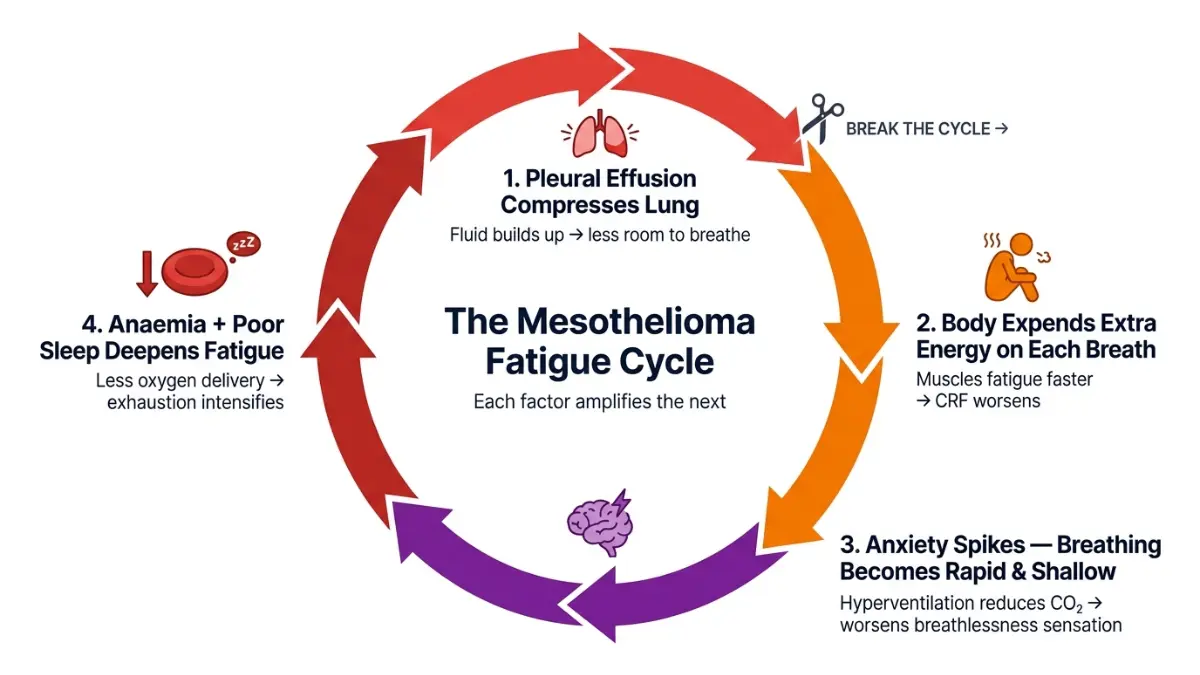
- Tumour cytokines — Mesothelioma tumours release inflammatory proteins that disrupt energy metabolism at a cellular level, causing fatigue independent of physical activity
- Anaemia — Cancer and mesothelioma chemotherapy side effects frequently reduce red blood cell count, delivering less oxygen to muscles and organs
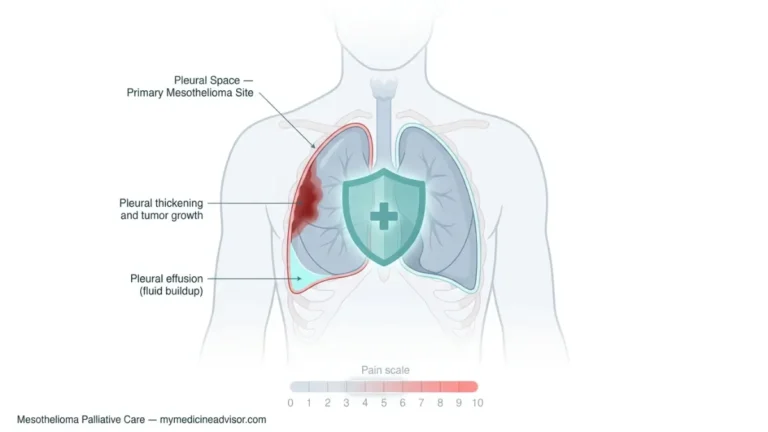
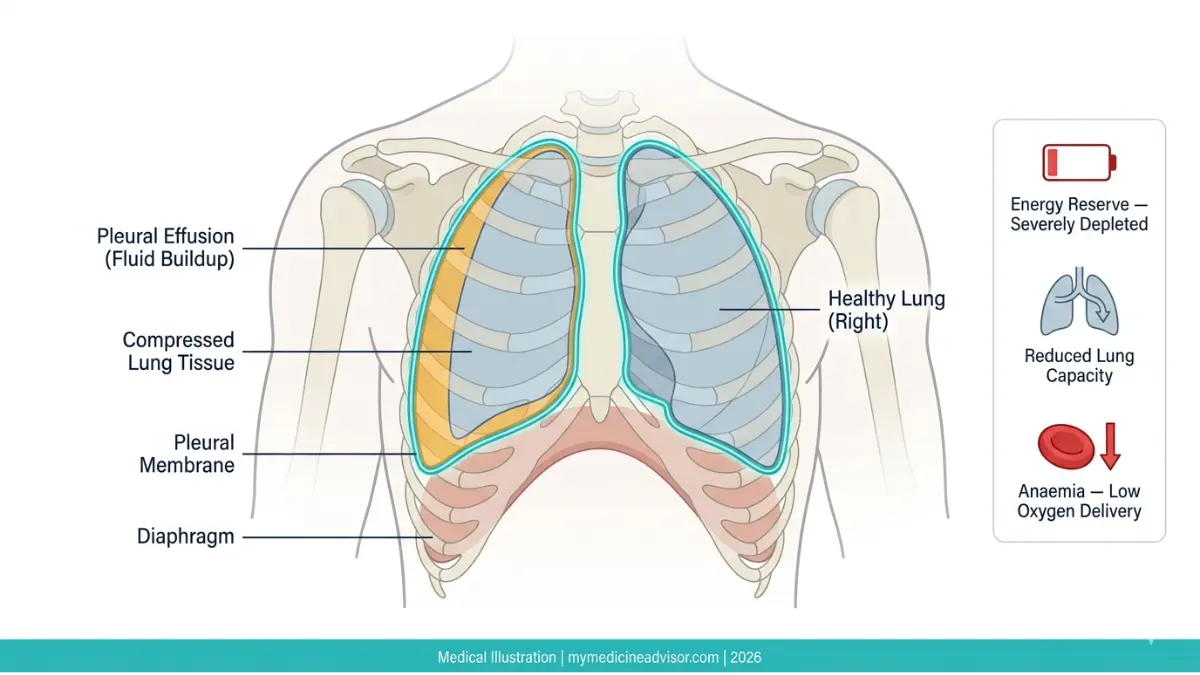
- Pleural effusion pressure — Fluid surrounding the lungs forces the body to expend extra energy on every single breath, depleting reserves rapidly throughout the day
Cancer-Related Fatigue vs. Normal Tiredness
| Feature | Normal Tiredness | Mesothelioma Fatigue (CRF) |
|---|---|---|
| Primary cause | Physical or mental exertion | Tumour biology + treatment effects |
| Relieved by sleep? | Yes | No — often worsens |
| Severity | Mild to moderate | Severe and persistent |
| Impact on daily life | Temporary limitation | Ongoing, affects all activities |
| Treatment required? | Rest only | Medical + nutritional intervention |
Key Takeaway: If your fatigue is not improving with rest, this is a clinical signal — not a personal weakness. Use our free Symptom Checker to document your fatigue patterns before your next oncology appointment so your team can act on precise data.
Tip 1 — Master Energy Pacing | Tip 2 — Breathing Positions That Work Immediately
Proven Tip 1: The Energy Pacing Method
Energy pacing means structuring your day around your natural energy peaks — not fighting through exhaustion in bursts and then collapsing. Research highlighted by Cancer Research UK confirms that structured pacing — alternating planned rest with gentle activity — significantly reduces mesothelioma fatigue severity compared to either total bed rest or unstructured exertion.
Daily Energy Pacing Schedule (Adjust to Your Personal Baseline)
| Time Block | Activity Level | Examples |
|---|---|---|
| Morning (peak energy) | Light–moderate | Showering, short walk, medical appointments |
| Mid-morning | Planned rest | 20–30 min seated rest, not full sleep |
| Midday | Light activity | Eating, gentle conversation, reading |
| Early afternoon | Rest | 20–30 min nap if needed |
| Late afternoon | Light activity | Breathing exercises, slow walk |
| Evening | Wind down | Relaxation techniques, gentle stretching |
Energy-conservation rules that make the biggest daily difference:
- Sit rather than stand for tasks like cooking and grooming
- Use grab rails, shower seats, and long-handled tools to reduce physical effort
- Delegate physically demanding tasks to family or professional carers
- Never schedule two tiring activities back to back — always insert rest between them
- Batch errands and phone calls into your peak energy window
To identify your safe gentle activity threshold without overtaxing your cardiovascular system, use our Heart Rate Zone Calculator to find the low-intensity zone that improves circulation without triggering post-exertional fatigue.
Proven Tip 2: 4 Breathing Positions That Give Immediate Breathlessness Relief
Mesothelioma breathlessness — medically called dyspnea — results from pleural effusion compressing lung tissue, tumour restriction of chest wall movement, and anaemia reducing oxygen delivery. The good news is that specific body positions reduce the work of breathing and can provide measurable relief within minutes.
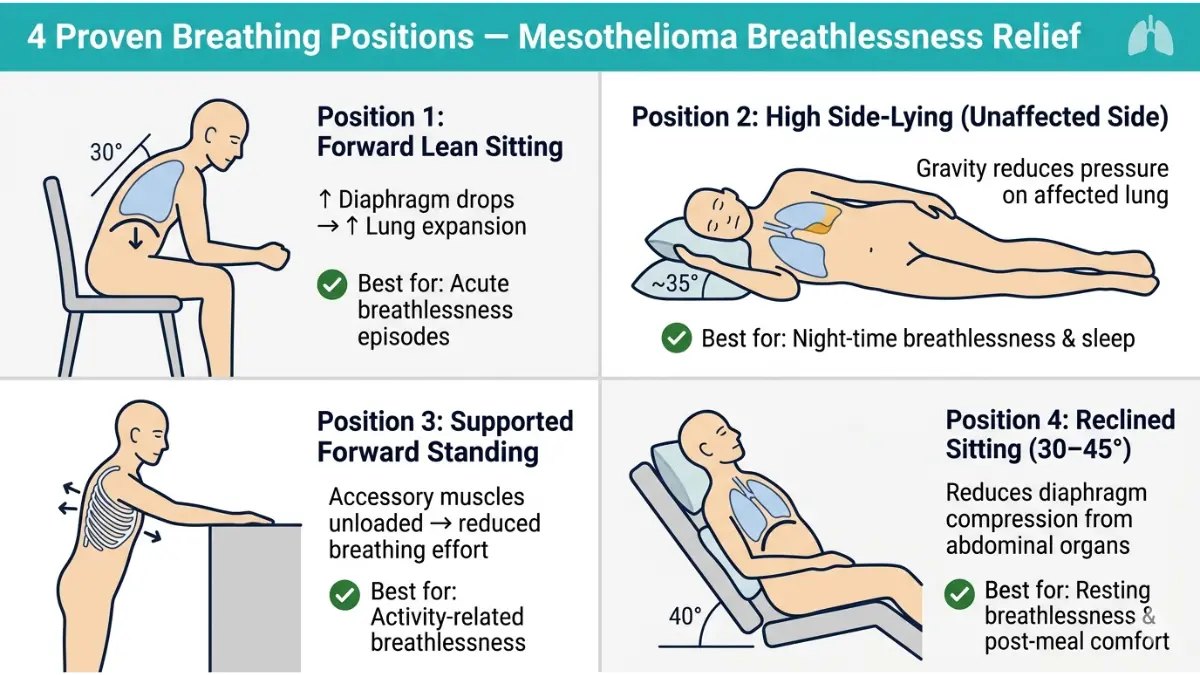
The 4 Evidence-Based Positions (recommended by Mesothelioma UK):
- Forward lean sitting — Sit upright, lean forward, rest forearms on your knees or a table. This lowers the diaphragm and maximises lung expansion with minimal muscular effort.
- High side-lying — Lie on your unaffected side, propped at 30–45° with pillows. Reduces pressure on the affected lung and improves overnight oxygen saturation.
- Upright supported standing — Stand and lean forward against a wall or windowsill, hands shoulder-width apart, arms supporting your upper body weight.
- Reclined sitting at 30–45° — Elevate your upper body using a recliner or stacked pillows. This is particularly effective for reducing night-time breathlessness.
Fan Therapy — Clinically Proven, Costs Under $10
A landmark randomised controlled trial published on PubMed (Johnson et al., 2016) found that a handheld fan directed at the face significantly reduces the sensation of breathlessness in cancer patients. Cool airflow stimulates trigeminal nerve receptors around the nose and mouth, reducing perceived air hunger independently of actual oxygen levels.
What This Means For You: Keep a small handheld fan at your bedside, in your chair, and with you when you leave the house. It is one of the most evidence-supported tools available for mesothelioma breathlessness — and it requires no prescription.
Tip 3 — Medical Treatments That Directly Relieve Mesothelioma Breathlessness
Proven Tip 3: Address the Medical Cause — Don’t Just Manage the Sensation
Breathlessness from mesothelioma has targeted medical solutions. The most critical mistake patients make is waiting until breathlessness becomes severely disabling before discussing intervention with their care team.
According to the American Lung Association, addressing pleural effusion early dramatically improves breathing capacity and directly reduces mesothelioma fatigue by lowering the energy cost of every breath. For a full explanation of how pleural effusion develops and is treated, see our guide on mesothelioma pleural effusion causes and drainage.
Medical Treatment Comparison — Breathlessness in Mesothelioma
| Treatment | Mechanism | Speed of Relief | Best Suited For |
|---|---|---|---|
| Pleural tap (thoracentesis) | Drains fluid from around lungs | Hours | Acute or first-episode breathlessness |
| Indwelling Pleural Catheter (IPC) | At-home ongoing drainage | Continuous control | Recurrent pleural effusions |
| Supplemental oxygen | Raises blood oxygen saturation | Minutes | Low SpO₂, activity-related dyspnea |
| Low-dose morphine | Reduces central perception of breathlessness | 30–60 minutes | Refractory dyspnea, advanced disease |
| Bronchodilators (inhalers) | Widens airways to ease airflow | 15–30 minutes | Airway constriction component |
Request Palliative Care Early — This Is Not Giving Up
Multiple studies confirm that patients who receive palliative care early alongside active treatment — not just at end of life — experience significantly better fatigue control, reduced breathlessness, fewer emergency admissions, and improved quality of life. Review our comprehensive guide to mesothelioma treatment options to understand how palliative care integrates with surgery, chemotherapy, and immunotherapy.
🚨 Emergency Warning: If breathlessness becomes suddenly and severely worse, your lips or fingernails turn bluish, or you develop a fever alongside breathing difficulty — call 911 immediately. Do not wait.
Tip 4 — The Nutrition Protocol That Directly Fights Mesothelioma Fatigue
Proven Tip 4: Eat Strategically to Rebuild Energy at the Cellular Level
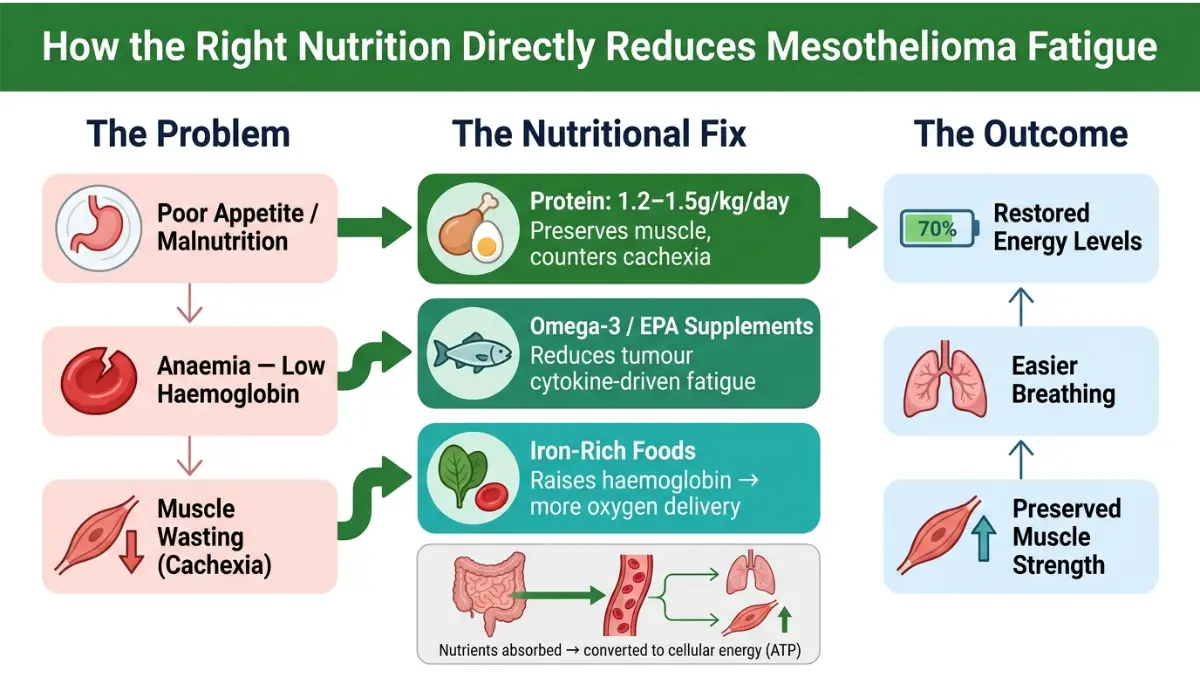
Mesothelioma fatigue has a direct nutritional component that the majority of patients and even some care teams under-address. A study published in the European Journal of Clinical Nutrition found that mesothelioma patients carry a significant risk of malnutrition — which directly worsens energy depletion, weakens immune function, and reduces the body’s ability to tolerate ongoing treatment.
The National Cancer Institute’s nutrition in cancer care guidelines confirm that targeted dietary changes are a first-line, evidence-based intervention for CRF. For a full mesothelioma-specific eating plan, see our expert guide on mesothelioma diet foods and anti-cancer nutrition.
Anti-Fatigue Nutrition Protocol for Mesothelioma Patients (2026)
| Food Category | Key Examples | Why It Fights CRF | Recommended Frequency |
|---|---|---|---|
| High-protein foods | Eggs, chicken, legumes, fish | Repairs muscle, counters cachexia | Every meal |
| Omega-3 rich foods | Salmon, mackerel, walnuts, flaxseed | Reduces tumour-driven inflammatory cytokines | 3–4× per week |
| Iron-rich foods | Lean red meat, spinach, lentils | Corrects anaemia → directly reduces fatigue | Daily |
| Complex carbohydrates | Brown rice, oats, sweet potato | Sustains energy without blood sugar crashes | Every meal |
| Hydrating foods | Soups, fruits, cucumber, broth | Prevents dehydration-driven fatigue worsening | Throughout day |
Practical nutrition rules for days when appetite fails:
- Eat small amounts every 2–3 hours rather than attempting three large meals
- Avoid large meals directly before activity — they divert blood flow to digestion and worsen fatigue
- If appetite is severely reduced, EPA-enriched oral nutritional supplements (such as Prosure) can fill critical gaps
- Ask your oncology team to test iron and haemoglobin levels — undetected anaemia is a treatable, reversible cause of fatigue
Use our Water Intake Calculator to calculate your daily hydration target, and our Protein Intake Calculator to determine your optimal daily protein intake based on your weight and activity level.
Tip 5 — Break the Anxiety-Breathlessness Cycle and Protect Your Sleep
Proven Tip 5: The Most Overlooked Driver of Mesothelioma Fatigue
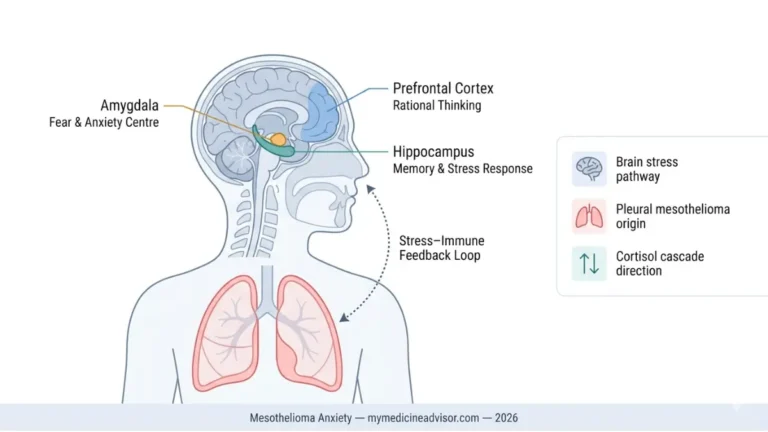
Here is the critical gap that no top-ranking competitor article explains: anxiety and breathlessness in mesothelioma patients form a self-reinforcing biological loop — and breaking it can improve both symptoms faster than almost any other intervention.
How the cycle works:
- You feel short of breath → anxiety spikes
- Anxiety triggers shallow, rapid breathing (hyperventilation)
- Hyperventilation lowers blood CO₂, which paradoxically intensifies the feeling of breathlessness
- Intensified breathlessness triggers more anxiety → the loop repeats and escalates
According to NCI guidance on cancer-related anxiety and distress, psychological distress is one of the most consistently undertreated contributors to physical symptom burden in mesothelioma — and addressing it produces measurable improvements in dyspnea and energy levels.
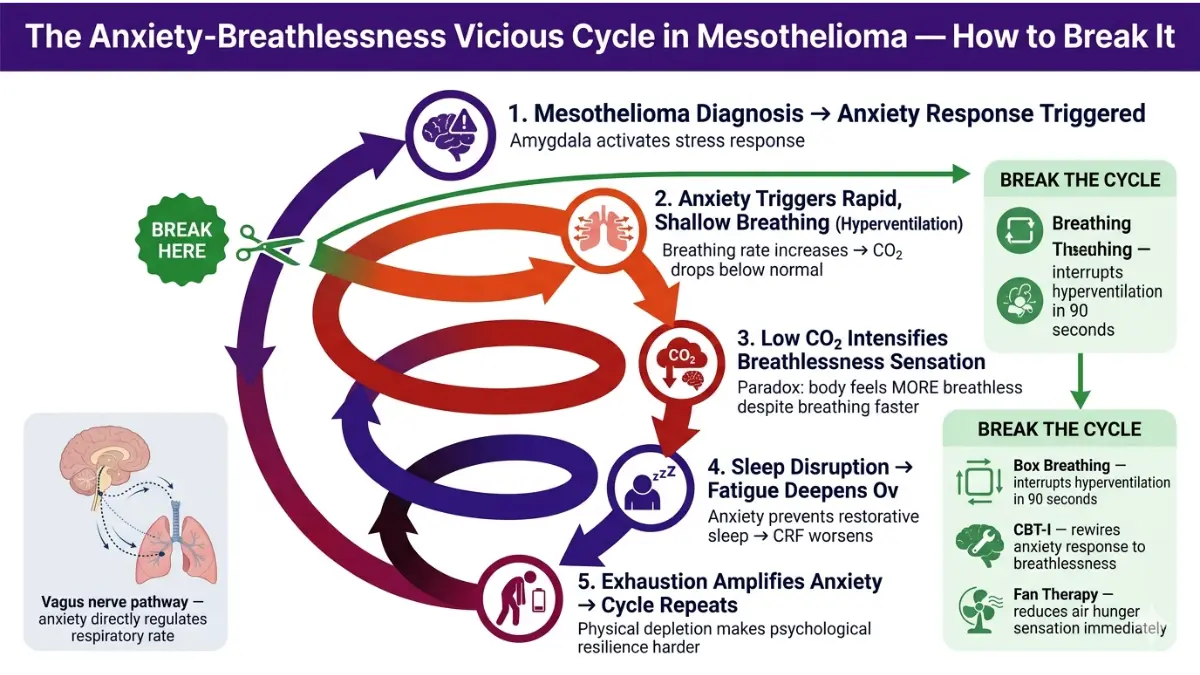
3 Evidence-Based Techniques to Break the Cycle Today
Technique 1: Box Breathing (4-4-4-4 Method)
- Inhale slowly through your nose for 4 counts
- Hold your breath for 4 counts
- Exhale fully through your mouth for 4 counts
- Hold empty for 4 counts
- Repeat 4–5 times
This activates the parasympathetic nervous system within 60–90 seconds, reducing both anxiety and the physical sensation of breathlessness simultaneously.
Technique 2: Pursed-Lip Breathing
- Inhale gently through your nose for 2 counts
- Purse your lips as if slowly blowing out a candle
- Exhale slowly and steadily for 4 counts
This technique slows the breathing rate, keeps small airways open longer during exhalation, and directly reduces dyspnea perception — particularly useful during activity.
Technique 3: CBT-I for Mesothelioma-Related Sleep Disruption
Poor sleep dramatically amplifies mesothelioma fatigue the following day. Cancer Council Australia’s clinical guidance identifies cognitive behavioural therapy for insomnia (CBT-I) as the gold-standard treatment for sleep disruption in cancer patients — more effective than sleeping medication for long-term outcomes. Our full guide to CBT-I for insomnia walks through the technique step by step.
Use our Sleep Calculator to find your optimal sleep and wake windows aligned to your natural rest cycles.
What This Means For You: Ask your palliative care team for a referral to a clinical psychologist experienced with cancer patients. This single intervention can reduce both mesothelioma fatigue and breathlessness severity within 4–6 weeks — with no side effects.
Patient Perspective — David, 67, Houston, TX: “I didn’t understand why I’d feel breathless the moment anxiety hit. Once my palliative care nurse explained the loop and taught me box breathing, I could interrupt it myself. It changed my mornings completely.”
When to Call Your Doctor — Your Mesothelioma Symptom Triage Guide
Knowing When to Escalate Is As Important As Managing Symptoms at Home
Not all mesothelioma fatigue or breathlessness is safe to manage at home. The following triage framework helps you and your caregivers identify the right response level to changes in your symptoms.
3-Tier Symptom Action Guide
| Level | Symptoms | Recommended Action |
|---|---|---|
| 🟢 Green — Manage at Home | Mild fatigue, breathlessness only during moderate exertion, stable pattern lasting several days | Apply the 5 tips in this guide; review at next scheduled appointment |
| 🟡 Amber — Call Doctor Today | New or worsening fatigue over 48 hours, breathlessness at rest or with light activity, new persistent cough | Contact your oncology or palliative care team by phone today — do not wait for your next appointment |
| 🔴 Red — Emergency 911 | Sudden severe breathlessness, blue lips or fingernails (cyanosis), fever with difficulty breathing, sharp chest pain, confusion | Call 911 immediately — do not drive yourself |
Macmillan Cancer Support’s mesothelioma symptom management guidance is explicit: patients should never hesitate to escalate concerns to their palliative care team. These specialists exist precisely to manage situations before they become emergencies.
For a complete understanding of your disease journey — including staging, prognosis, and all available treatment pathways — visit our comprehensive mesothelioma survival rates and symptoms pillar guide.
📋 Medical Disclaimer: This article is for educational purposes only and does not constitute medical advice. Always consult your oncologist, pulmonologist, or certified palliative care specialist before making any changes to your symptom management plan.
Frequently Asked Questions: Mesothelioma Fatigue & Breathlessness 2026
Q1. Why is mesothelioma fatigue so much worse than regular tiredness?
Mesothelioma fatigue (CRF) is driven by tumour-released cytokines, treatment-induced anaemia, and the continuous energy cost of laboured breathing. Unlike normal tiredness, it does not respond to rest and requires a combination of medical, nutritional, and psychological interventions.
Q2. Can mesothelioma cause extreme fatigue even in early stages?
Yes. Even in Stage 1–2, pleural fluid accumulation forces the body to work harder to breathe, and tumour biology alters cellular energy metabolism. Up to 40% of patients report significant fatigue at the time of diagnosis — before treatment even begins.
Q3. What is the best sleeping position for mesothelioma breathlessness?
The high side-lying position — lying on your unaffected side, propped at 30–45° with pillows — is the most evidence-supported overnight position. It reduces pressure on the affected lung and has been shown to improve oxygen saturation during sleep.
Q4. Does a handheld fan actually help mesothelioma breathlessness?
Yes — and this is clinically proven. A randomised controlled trial (Johnson et al., 2016, Journal of Pain and Symptom Management) found that directing cool airflow at the face significantly reduces the perception of breathlessness by stimulating trigeminal nerve receptors and reducing air hunger sensation.
Q5. How many rest periods should a mesothelioma patient plan each day?
Most palliative care specialists recommend 2–3 planned rest periods of 20–30 minutes daily. Total daytime sleep exceeding 90 minutes can disrupt night-time sleep architecture and worsen mesothelioma fatigue the following day.
Q6. Which foods directly fight mesothelioma-related fatigue?
Iron-rich foods (lean red meat, spinach, lentils) combat anaemia-driven exhaustion. Omega-3-rich foods (salmon, mackerel, walnuts) reduce inflammatory fatigue drivers. High-protein foods (eggs, chicken, legumes) prevent muscle wasting. Small, frequent meals sustain energy levels far more effectively than large ones.
Q7. Can anxiety actually make mesothelioma breathlessness physically worse?
Yes — and it is the most overlooked driver of dyspnea in mesothelioma patients. Anxiety triggers hyperventilation, which lowers blood CO₂ and intensifies the feeling of breathlessness, which increases anxiety further. Box breathing and CBT can interrupt this loop within days.
Q8. When should mesothelioma breathlessness be treated as a medical emergency?
Call 911 immediately if breathlessness becomes sudden and severe, lips or fingernails turn blue, you develop a fever alongside breathing difficulty, or you experience new sharp chest pain. These symptoms may indicate a pulmonary embolism, infection, or rapid pleural effusion and are medical emergencies.
Q9. Does palliative care improve mesothelioma fatigue specifically?
Yes — strongly. Studies confirm that early palliative care integration (at or near diagnosis, not only end of life) produces measurable improvements in fatigue severity, breathlessness control, and psychological wellbeing, while also reducing emergency admissions and hospitalisations.
Q10. What exactly is pleural effusion and how does it cause breathlessness?
Pleural effusion is an abnormal build-up of fluid between the two layers of the pleural membrane surrounding the lungs. As fluid volume increases, it physically compresses lung tissue, preventing full expansion with each breath. The result is a persistent, progressive sensation of breathlessness — even at rest in advanced cases.
Q11. Can gentle exercise genuinely help mesothelioma fatigue — or make it worse?
Counter-intuitively, short gentle walks (5–10 minutes, 2–3 times per day) improve circulation, reduce inflammatory cytokines, and reduce CRF severity in clinical studies. The key word is gentle. Overexertion reliably worsens mesothelioma fatigue. Always establish your safe activity threshold with your care team before beginning any exercise routine.
About this content
How this article was put together: researched from recognised health sources, drafted with the help of AI tools, and edited by hand, with sources linked throughout.

Sameer Patel is the founder and editor of My Medicine Advisor. He is not a doctor or medical professional — before starting this site he worked in banking,…
Medical disclaimer
The content on MyMedicineAdvisor is provided for general informational and educational purposes only and is not a substitute for professional medical advice, diagnosis, or treatment. Health information on this website should not be used to diagnose, treat, cure, or prevent any condition without guidance from a qualified healthcare professional. Always seek the advice of your doctor, physician, or another licensed healthcare provider with any questions you may have regarding a medical condition, symptoms, medications, or treatment decisions.