On This Page – Quick Medical Summary
Biopsy Results: What You Need to Know Right Now
Jennifer Martinez stared at her phone for the 47th time that Tuesday morning. Three days had passed since her breast biopsy, and the waiting felt unbearable. “Every minute felt like an hour,” she later recalled. “I kept thinking—why is it taking so long?”
Here’s what Jennifer needed to know: Biopsy results typically arrive between 2-14 days depending on the type of tissue sample and complexity of analysis required. Most routine biopsies deliver results within 3-7 business days, though specialized testing can extend this timeline.
The good news? Approximately 80% of biopsies return benign results, meaning no cancer is detected. Understanding the timeline, decoding your pathology report, and knowing your next steps can transform anxiety into actionable clarity during this waiting period.
This comprehensive 2026 guide covers everything you need: realistic timelines for every biopsy type, plain-English translation of your pathology report, evidence-based anxiety management strategies, and clear action plans regardless of your results. If you’re experiencing unexplained symptoms alongside your biopsy results, our Symptom Checker can help identify patterns worth discussing with your physician.
How Long Do Biopsy Results Take? 2026 Timeline Guide
Standard Processing Times by Biopsy Type
The timeline for receiving biopsy results varies significantly based on tissue type, laboratory workload, and testing complexity. Here’s what current 2026 medical standards reveal:
| Biopsy Type | Standard Timeline | Rush Processing |
|---|---|---|
| Needle Biopsy (Fine Needle) | 2-3 days | 24 hours |
| Skin Biopsy | 3-10 days | 3-5 days |
| Breast Biopsy | 2-7 days | 24-48 hours |
| Bone Marrow Biopsy | 3-5 days | 48 hours |
| Surgical Biopsy | 5-7 days | 3-4 days |
| Liver Biopsy | 1-2 weeks | 3-5 days |
| Lung Biopsy | 5-10 days | 2-3 days |
| Prostate Biopsy | 3-7 days | 48-72 hours |
According to the National Cancer Institute’s pathology guidelines, these timelines reflect the multi-step verification process essential for diagnostic accuracy.
Why Results Take Time: The Laboratory Process
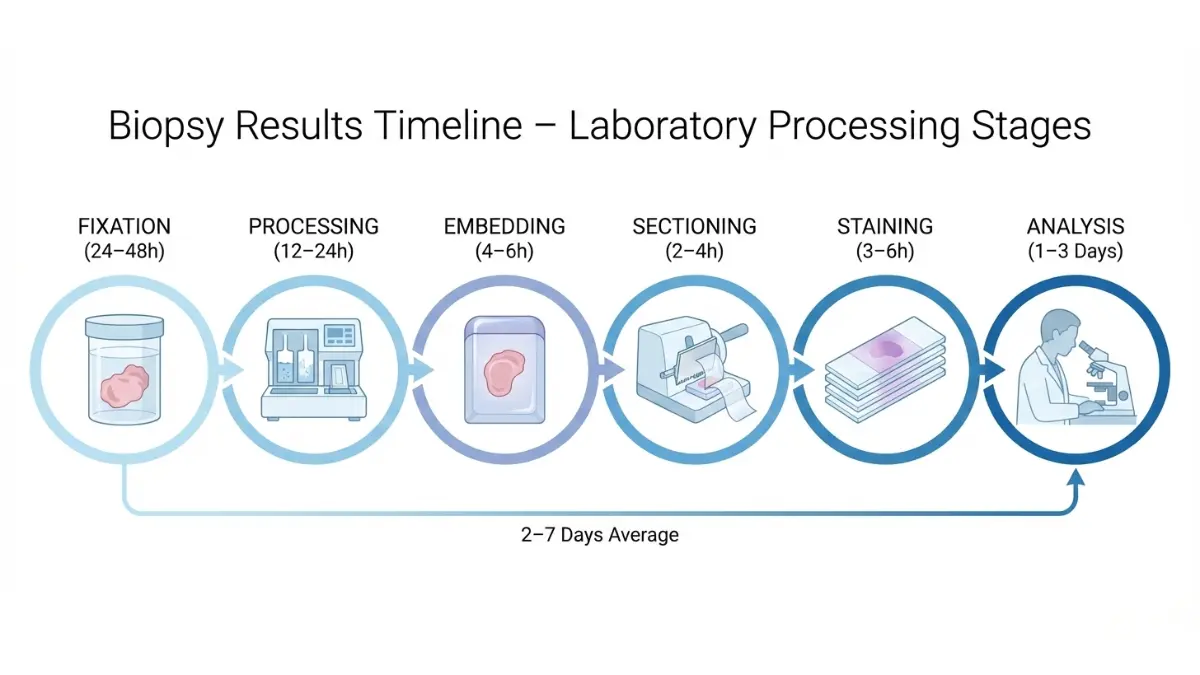
Your tissue sample undergoes six critical stages before results reach your doctor:
Stage 1: Fixation (24-48 hours) Fresh tissue is immediately preserved in formalin to prevent cellular degradation. This stabilization process cannot be rushed without compromising accuracy.
Stage 2: Processing & Embedding (12-24 hours) Automated machines dehydrate the tissue and embed it in paraffin wax blocks, creating a solid medium for ultra-thin sectioning.
Stage 3: Sectioning (2-4 hours) A specialized instrument called a microtome slices the wax-embedded tissue into sections 4-5 micrometers thick—thinner than a human hair.
Stage 4: Staining (3-6 hours) Slides are treated with hematoxylin and eosin (H&E) dyes, making cellular structures visible under microscopy. Specialized stains for immune markers may require additional time.
Stage 5: Microscopic Examination (1-3 days) Board-certified pathologists analyze cellular architecture, tissue patterns, and abnormalities. Complex cases may require consultation with subspecialty experts.
Stage 6: Multi-Disciplinary Team Review (1-2 days) Many facilities convene weekly MDT (Multi-Disciplinary Team) meetings where radiologists, pathologists, and oncologists collectively review findings before releasing results. This is similar to how complex urine test results require expert interpretation.
Factors That Can Delay Biopsy Results
Complex Case Requiring Second Opinion: When initial findings are ambiguous, your pathologist may consult national experts, adding 3-7 days to the timeline.
Additional Specialized Testing: Immunohistochemistry (IHC) staining, flow cytometry, or genetic testing can extend processing by 5-10 business days.
Laboratory Backlog: High-volume periods or staffing shortages may delay routine processing. Always ask your facility for their current turnaround estimate.
Holiday Periods: Labs typically operate on reduced schedules during major holidays, potentially adding 2-4 days to standard timelines.
Critical Point: A longer wait time does not indicate bad news. Complexity factors and thoroughness drive timelines, not result severity.
Urgent vs. Routine Processing
Frozen Section Analysis (10-20 minutes): During surgery, pathologists can perform rapid frozen tissue analysis while patients remain under anesthesia. Surgeons use these immediate results to determine surgical extent.
STAT Processing (24-48 hours): Urgent clinical situations—such as suspected aggressive infections or rapidly progressing conditions—qualify for expedited processing with results delivered within 1-2 days.
Standard Processing (3-14 days): Most outpatient biopsies follow routine protocols prioritizing accuracy over speed, ensuring comprehensive analysis and peer review.
How to Read Your Pathology Report: Plain English Guide
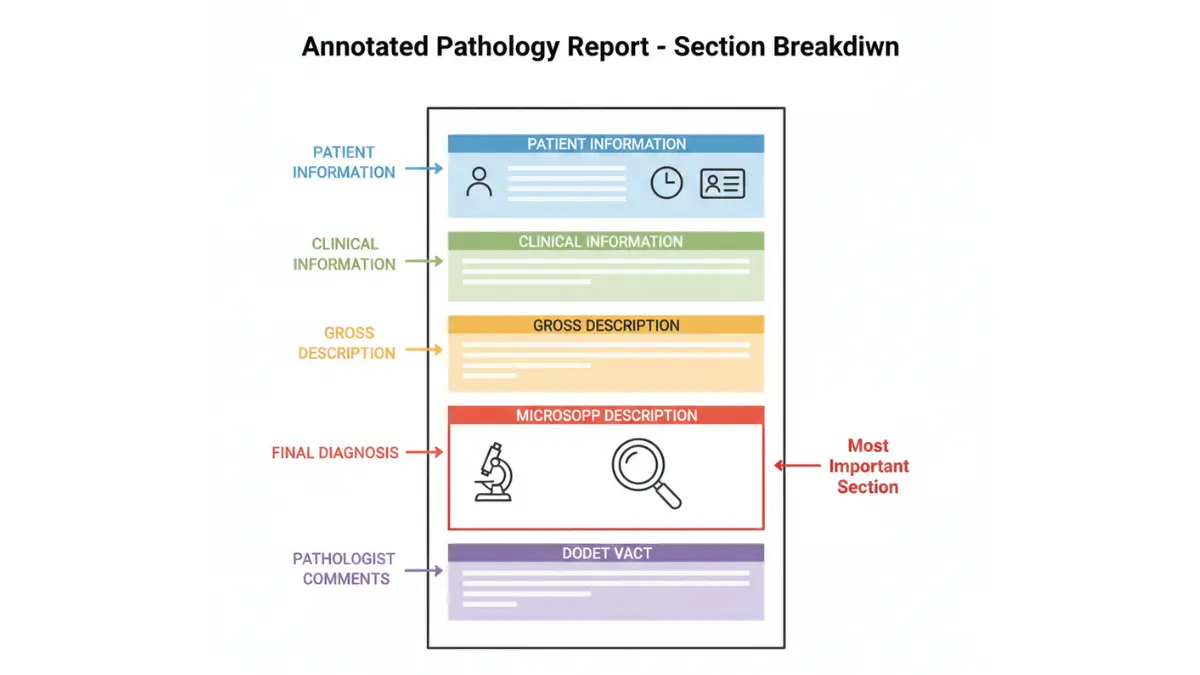
Essential Sections of Every Pathology Report
Think of your pathology report as a detailed investigative document. Each section serves a specific diagnostic purpose.
1. Identification Information This header confirms patient demographics, medical record number, specimen collection date, and unique laboratory identifier. What it means for you: Verify all details match your information to prevent mix-ups.
2. Clinical Information Your physician provides the pathologist with relevant medical history, symptoms, and the reason for biopsy. What it means for you: This context helps pathologists interpret ambiguous findings accurately.
3. Gross Description The pathologist’s naked-eye examination notes tissue size, color, texture, and visible abnormalities.
Example medical jargon: “3.2 x 2.1 x 1.4 cm tan-brown soft tissue fragment with focal hemorrhage”
Plain English: A piece of brown-tan tissue about the size of a large grape showing some bleeding areas.
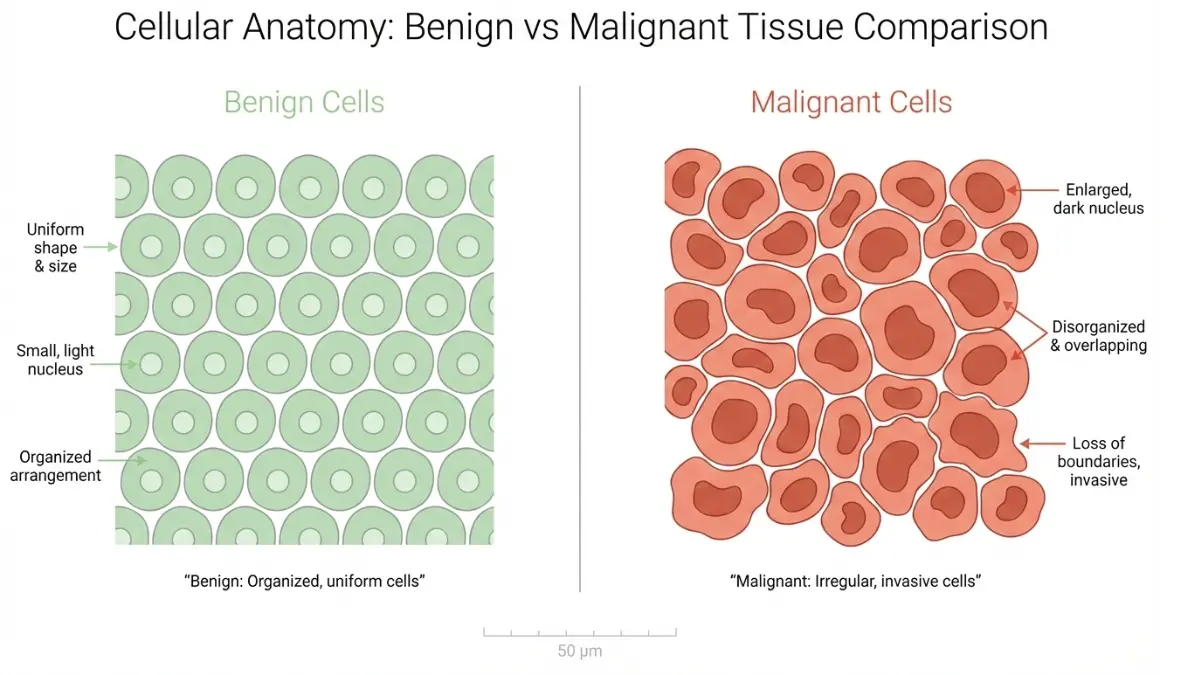
4. Microscopic Description Cellular examination under high magnification reveals tissue architecture, cell characteristics, and abnormal patterns.
Key terms decoded:
- Well-differentiated: Cancer cells closely resemble normal cells (slower growing)
- Poorly-differentiated: Cancer cells look very abnormal (faster growing)
- Infiltrative margins: Cancer cells invading surrounding tissue
- Cellular atypia: Abnormal cell appearance requiring further evaluation
5. Final Diagnosis: The Bottom Line
This critical section—often at the report’s top—delivers three possible outcomes:
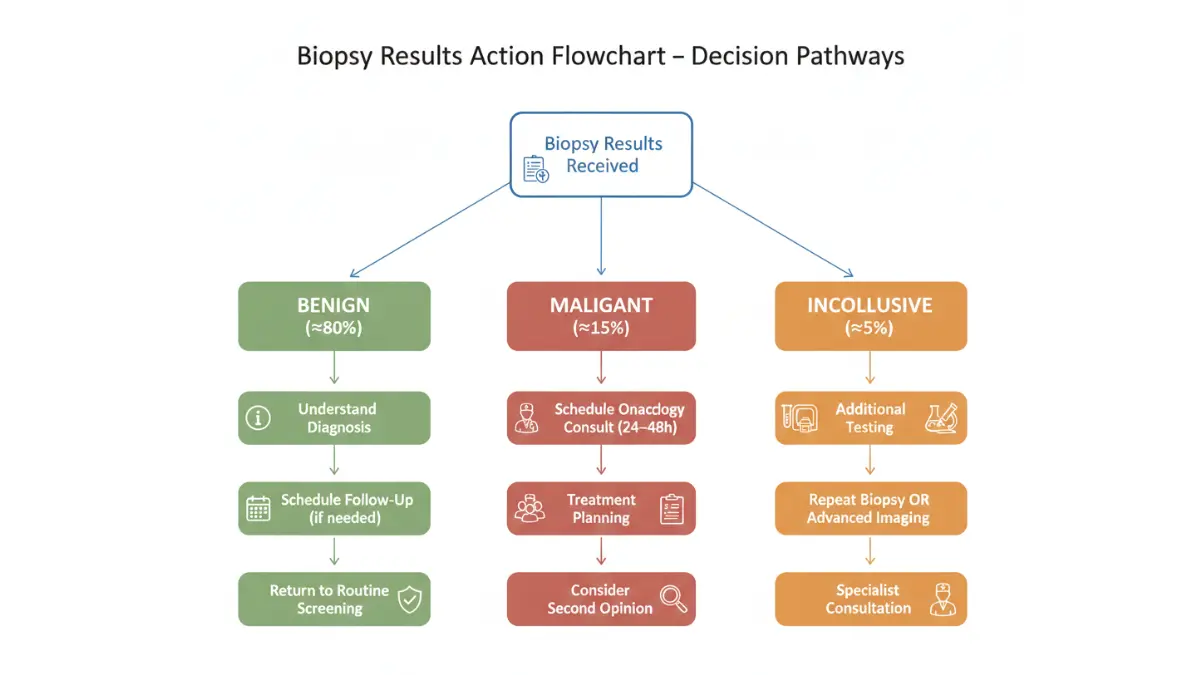
Benign (Not Cancer) – 80% of Cases Common benign findings include fibroadenomas, cysts, lipomas, or inflammatory changes. The College of American Pathologists confirms that benign results typically require only routine monitoring rather than immediate treatment.
Malignant (Cancer Detected) – 15% of Cases The report specifies cancer type, grade, and preliminary staging information. Similar to how NIPT results require careful interpretation, cancer diagnoses demand multi-disciplinary review.
Inconclusive/Atypical – 5% of Cases Insufficient tissue, ambiguous findings, or borderline changes necessitate repeat biopsy or additional testing.
6. Additional Testing Results
Modern pathology increasingly incorporates molecular diagnostics:
- Tumor Markers: ER (estrogen receptor), PR (progesterone receptor), HER2/neu status for breast cancers
- Genetic Testing: BRCA mutations, Lynch syndrome markers, or targeted therapy biomarkers
- Flow Cytometry: Blood cancer characterization
- PD-L1 Expression: Immunotherapy eligibility markers
7. Pathologist Comments
This section clarifies unusual findings, recommends additional tests, or notes margin status for surgical specimens.
Understanding Common Pathology Terms
| Medical Term | Plain English Meaning | What It Means For You |
|---|---|---|
| Benign | Not cancer | Usually no further treatment needed |
| Malignant | Cancer present | Treatment planning begins immediately |
| Margins | Edges of removed tissue | Determines if all abnormal tissue was removed |
| Positive margins | Cancer cells at tissue edge | May require additional surgery |
| Negative/clean margins | No cancer at tissue edge | Complete removal achieved |
| Grade | How abnormal cells appear | Affects treatment intensity |
| Stage | Cancer extent in body | Determines treatment approach |
| In situ | Confined to origin site | Early-stage, highly treatable |
| Invasive | Spreading beyond origin | Requires more aggressive treatment |
| Differentiation | How much cancer cells resemble normal cells | Predicts growth speed |
Understanding Benign Biopsy Results
Common Benign Diagnoses:
Fibroadenomas: Solid, smooth lumps composed of glandular and fibrous breast tissue. Most common in women under 30.
Cysts: Fluid-filled sacs frequently found in breast, ovarian, or kidney tissue. Rarely progress to malignancy.
Inflammatory Changes: Tissue response to infection, injury, or autoimmune processes. Often resolves with appropriate treatment.
Lipomas: Benign fatty tissue growths that rarely require removal unless causing discomfort.
Follow-up recommendations for benign results typically include imaging surveillance at 6-12 month intervals to monitor stability, similar to how patients use a Genetic Risk Assessment Tool for ongoing health monitoring.
Waiting for Biopsy Results: Managing Anxiety and Stress
Why the Wait Is So Difficult
Medical psychologists identify biopsy result waiting as “diagnostic uncertainty stress”—a distinct anxiety category characterized by loss of control and catastrophic thinking.
Research shows: 95% of patients report elevated anxiety during the waiting period, with sleep disturbances, concentration difficulties, and intrusive thoughts peaking 48-72 hours post-procedure.
Remember: Most biopsies (80%) reveal benign findings. Your anxiety level doesn’t correlate with result severity.
Evidence-Based Coping Strategies
Mental Health Approaches
Mindfulness Meditation: University studies demonstrate that 10-minute daily mindfulness practices reduce medical anxiety by 37%. Focus on present-moment awareness rather than future “what-if” scenarios.
Cognitive Reframing: Distinguish facts from fears. Create two lists:
- What I Know: “I had a biopsy. Results take 3-7 days. 80% are benign.”
- What I’m Imagining: “It must be cancer. The delay means something terrible.”
This exercise helps identify unhelpful thought patterns amenable to challenge and revision.
Limiting Online Research: Studies confirm that excessive Googling increases anxiety by 78% during medical waiting periods. Stick to trusted sources like NIH, Mayo Clinic, or our health education center.
Physical Activities
Exercise Benefits: Physical activity reduces cortisol (stress hormone) levels by up to 40% while releasing endorphins that improve mood. Even 20-minute walks provide measurable anxiety relief.
Track your exercise intensity using our Heart Rate Zone Calculator to ensure you’re in the moderate zone optimal for stress reduction.
Sleep Hygiene: Anxiety often disrupts sleep, creating a vicious cycle. Maintain consistent sleep-wake times and use our Sleep Calculator to optimize your rest periods.
Social Support
Choose Supporters Wisely: Cancer survivor and author Tom Petty coined supporter categories:
- “Winnie-the-Poohs”: Patient listeners who sit with your uncertainty without judgment (SEEK THESE)
- “Eeyores”: Pessimists sharing dire statistics and worst-case scenarios (AVOID)
- “Tiggers”: Toxic positivity dismissing legitimate fears (LIMIT)
Professional Resources: Most cancer centers offer free support services even during the diagnostic phase. Don’t hesitate to call patient navigation hotlines.
Practical Action Steps
Write Questions for Your Doctor: Creating a list channels anxious energy productively. Sample questions:
- What exactly was biopsied and why?
- When should I expect results?
- How will results be delivered (phone, portal, appointment)?
- What are the possible outcomes and next steps for each?
- Should I have someone with me when receiving results?
Plan Results Day: Take the day off work. Arrange for a support person to accompany you or be available by phone. Don’t schedule important commitments immediately after.
Maintain Routine: Continue normal activities—work, hobbies, social engagements—to provide structure and distraction.
What NOT to Do While Waiting
Excessive Googling: Increases anxiety 300% according to psychological research. Rare complications dominate search results, creating distorted risk perceptions.
Catastrophizing: Assuming worst-case scenarios as facts. Challenge with: “What evidence do I have that this will happen?”
Isolation: Withdrawing from support systems intensifies rumination and anxiety.
Major Decisions: Avoid making significant life choices during this high-stress period. Wait for definitive information.
What Happens After You Get Biopsy Results: Your Action Plan
If Results Are Benign (Not Cancer)
Immediate Steps
Understand Your Specific Diagnosis: Not all benign findings are identical. Ask: “What exactly is this? What caused it?” Common benign diagnoses include cysts, fibroadenomas, or inflammatory processes.
Clarify Follow-Up Requirements: Some benign findings require monitoring; others need no action.
- No follow-up needed: Simple cysts, lipomas after complete removal
- 6-month imaging: Fibroadenomas, complex cysts
- Annual monitoring: Atypical hyperplasia, radial scars
Lifestyle Optimization: Certain benign findings link to modifiable risk factors. Maintain healthy weight using our BMI Calculator and ensure adequate hydration with our Water Intake Calculator.
Long-Term Monitoring
Schedule Next Appointment: Before leaving, book your follow-up imaging or clinical exam to ensure continuity of care.
Document Everything: Keep copies of your pathology report, imaging studies, and physician notes in a dedicated health folder—physical or digital.
Watch for Changes: New lumps, skin changes, unexplained pain, or other concerning symptoms warrant prompt medical evaluation.
If Results Are Malignant (Cancer Detected)
First 24-48 Hours: Critical Actions
Don’t Panic: Many cancers boast cure rates exceeding 90% when detected early. Treatment advances have transformed many cancers into manageable chronic conditions.
Schedule Oncology Consultation: Request referral to a cancer specialist within 72 hours. Multi-disciplinary tumor boards review your case to recommend optimal treatment strategies.
Gather Your Support Team: Identify 2-3 trusted individuals who can attend appointments, take notes, and provide emotional support.
Key Information to Obtain
During your oncology consultation, ensure you understand:
Essential Questions to Ask:
- What specific type and subtype of cancer is this?
- What stage is it (how far has it spread)?
- What are my treatment options?
- What is my prognosis with and without treatment?
- Do I need additional testing (genetic, imaging, bloodwork)?
- Should I get a second opinion before starting treatment?
- What’s the timeline for treatment initiation?
- What are treatment side effects and success rates?
- Are there clinical trials I should consider?
- What lifestyle modifications can improve outcomes?
Treatment Planning: Modern cancer care increasingly personalizes therapy based on tumor genetics, similar to how BRCA results guide breast cancer prevention strategies.
Financial Preparation: Contact your insurance immediately. Many hospitals employ financial counselors who navigate coverage, pre-authorizations, and assistance programs.
If Results Are Inconclusive or Atypical
Understanding “Inconclusive”
This frustrating outcome occurs in approximately 5% of biopsies and typically means:
Insufficient Tissue: The sample didn’t capture enough diagnostic material. Repeat biopsy using a different technique (core instead of fine needle) often resolves this.
Borderline/Atypical Findings: Cells show abnormalities that don’t definitively indicate cancer but aren’t completely normal. Further investigation is essential.
Technical Issues: Improper fixation, processing delays, or contamination can compromise samples. Fresh biopsy with expedited processing usually clarifies.
Next Steps
Repeat Biopsy (Most Common): Scheduled within 1-2 weeks using potentially different sampling methods or image guidance for improved accuracy.
Advanced Imaging: MRI, PET scans, or contrast-enhanced CT may provide additional context before repeat biopsy.
Specialized Pathology Review: Sending slides to academic centers with subspecialty expertise, particularly for rare conditions.
Timeline: Expect clarity within 2-3 weeks. While frustrating, thoroughness prevents misdiagnosis and inappropriate treatment.
When to Seek a Second Opinion
Strongly Consider Second Opinion If:
- Diagnosis is rare or complex
- Treatment recommendations seem unusually aggressive
- You want confirmation before irreversible procedures
- Your intuition suggests something’s off
- Pathologist’s comments indicate diagnostic uncertainty
How to Obtain Second Opinion
Request Tissue Blocks/Slides: Contact the original laboratory’s release of information department. You own your medical specimens by law.
Identify Expert Centers: NCI-designated cancer centers offer pathology second opinions, many with 5-7 business day turnaround.
Understand Costs: Most insurance plans cover second opinions for cancer diagnoses. Out-of-pocket costs typically range $200-600 if self-paying.
Timeline Expectations: Plan for 5-10 business days for comprehensive review and detailed report. For medications you may need during this time, use our Pill Identifier to verify prescriptions.
Advanced Biopsy Topics: Expert Insights for 2026
Liquid Biopsies: The Future of Cancer Detection
Traditional tissue biopsies remain gold-standard, but liquid biopsy technology is revolutionizing early cancer detection and monitoring.
How Liquid Biopsies Work: Blood samples analyzed for circulating tumor DNA (ctDNA), circulating tumor cells (CTCs), and exosomes released by cancers. Results typically available within 48-72 hours versus 7-14 days for tissue analysis.
Current FDA-Approved Applications:
- Treatment selection for advanced cancers
- Monitoring treatment response
- Detecting cancer recurrence
- Limited screening for high-risk populations
2026 Update: Multi-cancer early detection tests (MCEDs) like Galleri are expanding availability, though questions about false positives and optimal use cases persist.
Molecular Testing and Precision Medicine
Modern pathology extends beyond microscopy to genetic and molecular tumor profiling.
Genomic Testing Identifies:
- Actionable mutations targetable with specific drugs
- Resistance mutations predicting treatment failure
- Hereditary cancer syndromes requiring family screening
- Prognostic markers refining treatment intensity
Insurance Coverage: The Centers for Medicare & Medicaid Services increasingly covers comprehensive genomic profiling for advanced cancers, with commercial insurers following suit.
International Expert Consensus
Dr. Sarah Chen, Pathology Director, Johns Hopkins Medicine: “The 2026 pathology landscape prioritizes accuracy over speed. While patients understandably want immediate answers, multi-disciplinary review and molecular testing deliver the diagnostic precision modern cancer care demands.”
Prof. Emma Williams, Royal Marsden Hospital, London: “UK cancer survival rates improved 22% over the past decade largely because pathologists now routinely incorporate immunohistochemistry and next-generation sequencing, extending timelines but dramatically improving outcomes.”
Dr. Raj Patel, Mayo Clinic: “Patients should view pathology reports as living documents. As science advances, we sometimes recommend reviewing archival tissue with newer tests that weren’t available during original diagnosis.”
Key Takeaway: International pathology standards uniformly prioritize diagnostic accuracy over rapid turnaround, recognizing that proper treatment selection based on thorough analysis yields superior outcomes compared to rushed, potentially inaccurate diagnoses.
Frequently Asked Questions About Biopsy Results
1. How long do biopsy results take in 2026?
Biopsy results typically arrive 2-14 days post-procedure depending on tissue type and complexity. Needle biopsies average 2-3 days, skin biopsies 3-10 days, and surgical biopsies 5-7 days. Frozen sections during surgery provide results within 10-20 minutes.
2. What does “benign” mean on a biopsy report?
Benign indicates no cancer cells were detected. Common benign findings include cysts, fibroadenomas, lipomas, or inflammatory changes. While reassuring, some benign results require monitoring to ensure stability over time.
3. Can biopsy results be wrong?
False negatives occur in less than 5% of biopsies, usually due to sampling error (missing the abnormal area) or technical issues. If clinical suspicion remains high despite benign results, repeat biopsy or alternative testing may be recommended.
4. Does a longer wait time mean cancer?
No. Timeline length reflects case complexity, laboratory workload, and thoroughness—not result severity. Routine benign findings may take longer than straightforward cancer diagnoses if extensive testing is needed to rule out rare conditions.
5. How will I receive my biopsy results?
Delivery methods vary by facility: phone call from your physician, in-person appointment, or patient portal notification. Ask your doctor their standard practice. Portal results may appear before your physician reviews them—try not to interpret alone.
6. What if my biopsy is inconclusive?
Inconclusive results occur when tissue quality, quantity, or findings are ambiguous. Next steps typically include repeat biopsy (often with different technique), additional imaging, or specialized pathology consultation. Most achieve definitive diagnosis within 2-3 weeks.
7. Should I get a second opinion on my pathology report?
Second opinions are recommended for cancer diagnoses, rare conditions, or when treatment recommendations seem unclear. Most insurance plans cover pathology second opinions. Request your tissue blocks/slides from the original laboratory.
8. Can I request a copy of my pathology report?
Yes. Federal HIPAA regulations guarantee your right to all medical records, including pathology reports. Request copies from your physician’s office or the laboratory directly.
9. What questions should I ask my doctor about biopsy results?
Essential questions include: What was the diagnosis? What does this mean for my health? What are my next steps? Do I need additional testing? What’s the timeline for treatment if needed? Should I get a second opinion?
10. How accurate are biopsy results?
Biopsies demonstrate 95-98% accuracy for most tissue types when performed correctly and analyzed by experienced pathologists. Accuracy depends on adequate tissue sampling, proper processing, and expert interpretation.
11. What if I can’t understand my pathology report?
Request a detailed explanation from your physician or ask to speak with the pathologist directly. Many cancer centers offer patient navigation services where nurses translate medical terminology. Our health education resources provide additional context for common diagnoses.
Disclaimer
This article is for educational and informational purposes only and does not constitute medical advice. Biopsy results should always be interpreted by qualified healthcare professionals in the context of your complete medical history, symptoms, and additional testing. The timelines, statistics, and recommendations presented represent general guidelines; individual cases may vary significantly based on facility protocols, geographic location, and clinical complexity.
If you have questions about your pathology report, test results, or next steps, consult with your physician, oncologist, or a board-certified pathologist. Never delay seeking medical attention based on information in this article. In medical emergencies, call 911 or proceed to your nearest emergency department immediately.
The internal and external links provided connect to resources that may assist your understanding but do not replace professional medical consultation. Always verify information with your healthcare team before making medical decisions.
About this content
How this article was put together: researched from recognised health sources, drafted with the help of AI tools, and edited by hand, with sources linked throughout.

Sameer Patel is the founder and editor of My Medicine Advisor. He is not a doctor or medical professional — before starting this site he worked in banking,…
Medical disclaimer
The content on MyMedicineAdvisor is provided for general informational and educational purposes only and is not a substitute for professional medical advice, diagnosis, or treatment. Health information on this website should not be used to diagnose, treat, cure, or prevent any condition without guidance from a qualified healthcare professional. Always seek the advice of your doctor, physician, or another licensed healthcare provider with any questions you may have regarding a medical condition, symptoms, medications, or treatment decisions.