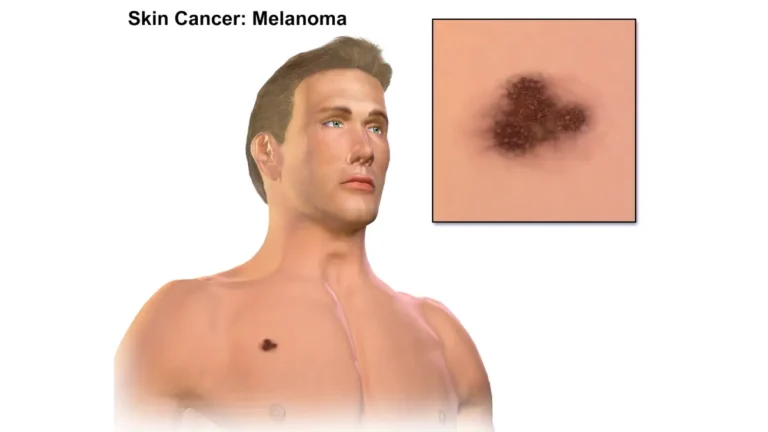
Mohs Surgery for Melanoma: The 2026 Expert Guide Most Doctors Don’t Give You
Mohs surgery is now NCCN-approved for melanoma in situ and lentigo maligna. Discover who qualifies, real recurrence data, and 2026 cost breakdown.


Sameer Patel is the founder and editor of My Medicine Advisor. He is not a doctor or medical professional — before starting this site he worked in banking, and he now researches and edits health information full-time.
He started My Medicine Advisor to make clear, well-sourced health information freely available to anyone. Every article is researched from recognised authorities such as the WHO, CDC, NIH, and NICE, drafted with the help of AI tools, and edited by hand, with sources linked so readers can check them. The calculators on the site use established, published formulas, each one named so you can look it up yourself.
My Medicine Advisor is currently a one-person operation with no clinical review panel, and the site is open about that. If you're a qualified clinician or researcher interested in reviewing content, Sameer would genuinely like to hear from you via the contact page.
Mohs surgery is now NCCN-approved for melanoma in situ and lentigo maligna. Discover who qualifies, real recurrence data, and 2026 cost breakdown.
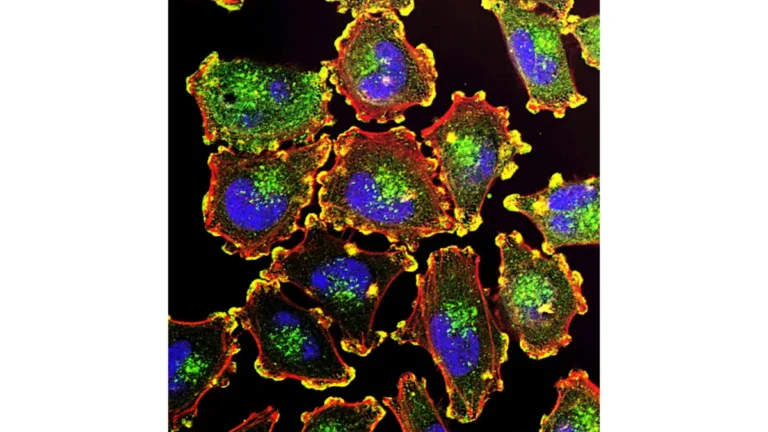
Discover 500+ open melanoma clinical trials in 2026, including mRNA vaccine and CAR-T studies. Step-by-step guide to finding trials and qualifying fast.
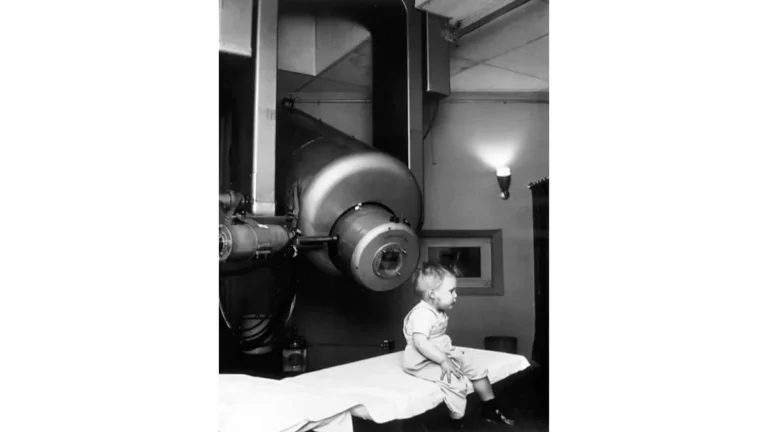
Radiation therapy for melanoma uses high-energy beams to destroy cancer cells. Covers 6 types, indications, side effects, and the 2026 immunotherapy combination breakthrough.
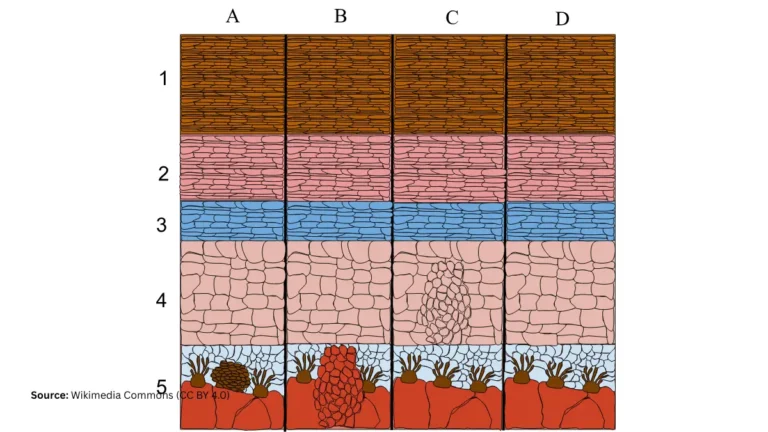
BRAF-targeted therapy uses oral precision drugs to block melanoma's mutated BRAF protein. Discover FDA-approved drugs, who qualifies, and how to manage side effects. Updated April 2026.
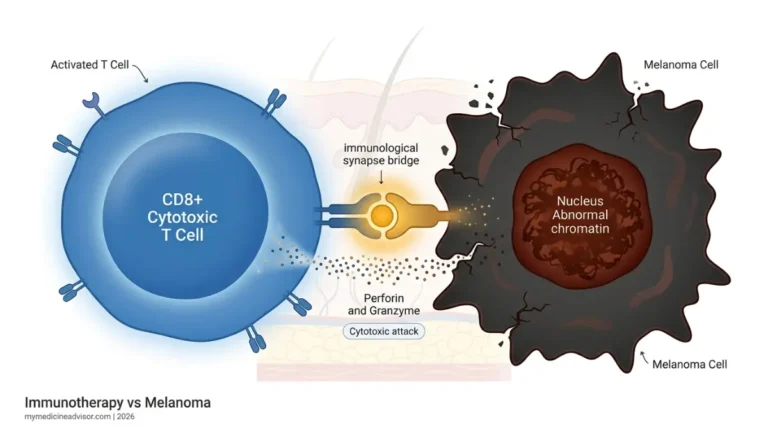
Learn how immunotherapy works against melanoma, which 5 FDA-approved drugs exist, who qualifies by stage, and what 2026 survival rates actually mean for you.
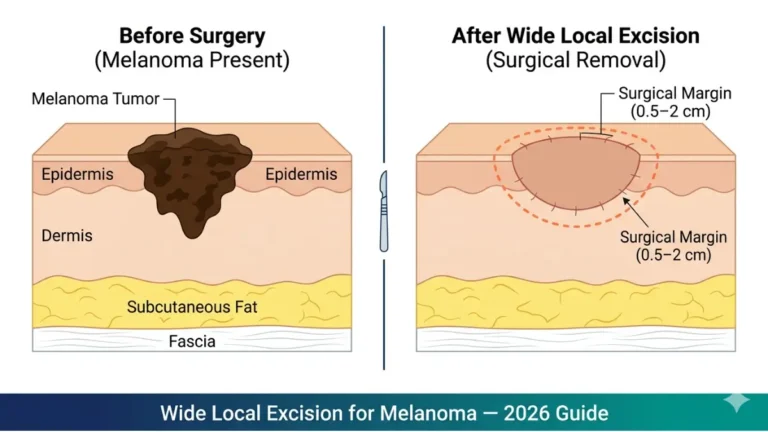
Wide local excision for melanoma removes the tumor plus a 0.5–2 cm margin. 2026 surgeon-reviewed guide covers procedure steps, recovery timeline, and scar care.
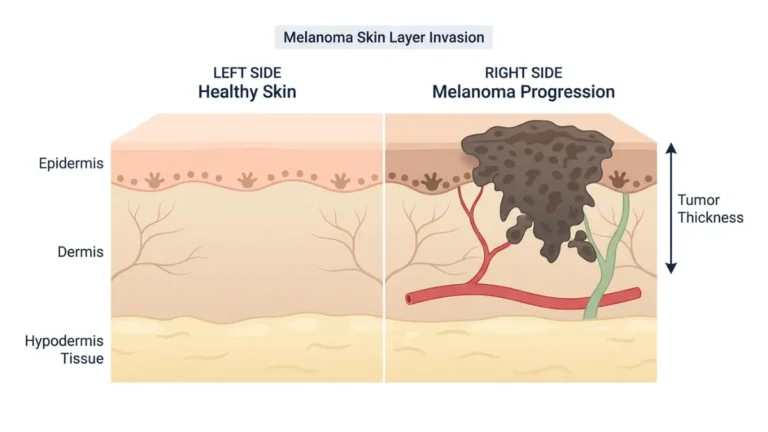
Diagnosed with melanoma in 2026? This complete guide covers every FDA-approved treatment option—surgery, immunotherapy, BRAF therapy, TIL therapy, and the breakthrough mRNA vaccine trial.
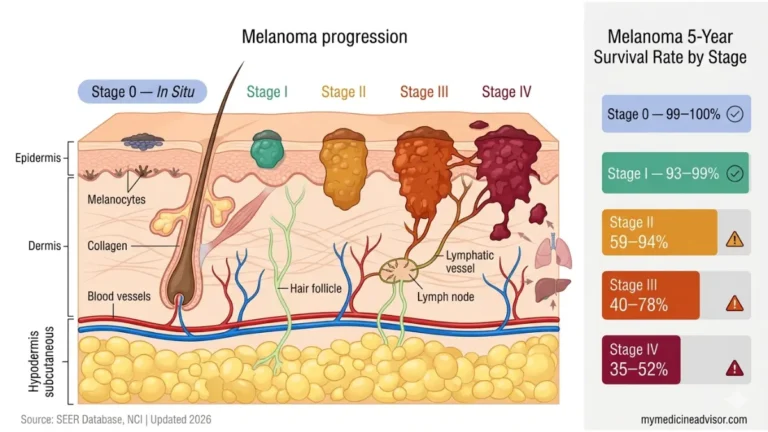
Melanoma survival rate ranges from 99% at Stage 0 to 35–52% at Stage 4 with immunotherapy. See the complete 2026 data table, stage-by-stage breakdown, and what it means for you.
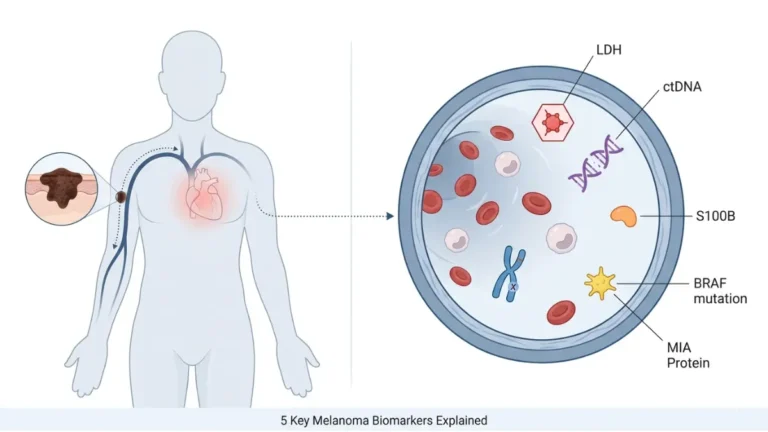
Confused by your melanoma blood test results? LDH, ctDNA, S100B, and BRAF biomarkers fully explained with a stage-by-stage guide and 2026 treatment insights.
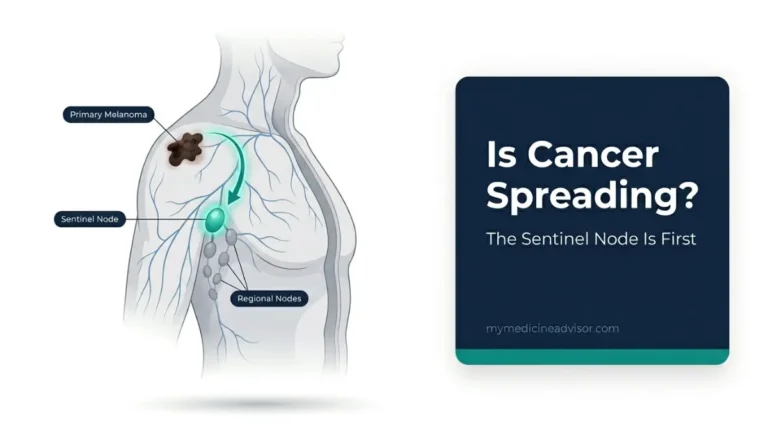
Everything you need to know about sentinel lymph node biopsy for melanoma — procedure steps, what results mean, recovery timeline, and 2026 treatment options.