On This Page – Quick Medical Summary
What Is Appendectomy?
An appendectomy is the surgical removal of the appendix, typically performed as an emergency procedure to treat appendicitis—a life-threatening inflammation that affects over 300,000 Americans annually. Modern appendectomy techniques achieve success rates exceeding 95%, with most patients returning to normal activities within 7-14 days.
Michael Chen, a 32-year-old software engineer from Austin, Texas, woke at 2 AM with stabbing abdominal pain that migrated from his navel to his lower right side. Within six hours, he was in surgery. “I thought it was food poisoning,” Michael recalls. “By morning, I couldn’t stand straight. The ER doctor said my appendix was hours from rupturing.”
Appendectomy remains the definitive treatment for appendicitis, which occurs when the appendix—a small, tube-shaped pouch attached to the large intestine—becomes blocked and infected. According to the National Institute of Diabetes and Digestive and Kidney Diseases, approximately 1 in 20 people will develop appendicitis during their lifetime, making appendix removal surgery one of the most common emergency procedures worldwide.
The appendix has no known vital function, meaning patients live completely normal lives after removal. Modern surgical techniques, particularly laparoscopic appendectomy, have transformed this once-dangerous operation into a routine procedure with minimal scarring and rapid recovery.
Cost Transparency Breakdown
How Much Does Appendectomy Cost in 2026?
Appendectomy costs vary dramatically across the United States, ranging from $6,823 to over $30,000 depending on procedure type, hospital location, and insurance coverage. Understanding these costs is critical for the 27 million Americans without health insurance and those with high-deductible plans.
Cost by Procedure Type (2026 Data)
| Procedure Type | Average Cost | Hospital Stay | Recovery Time |
|---|---|---|---|
| Laparoscopic Appendectomy | $7,800 – $15,200 | 1-2 days | 7-14 days |
| Open Appendectomy | $9,200 – $18,500 | 2-4 days | 14-21 days |
| Robotic-Assisted | $12,400 – $30,000 | 1-2 days | 7-12 days |
| Emergency (Ruptured) | $15,000 – $35,000+ | 4-7 days | 21-42 days |
Data compiled from Healthcare Cost and Utilization Project (HCUP) claims analysis and hospital billing records across 50 states.
State-by-State Cost Variations
Highest-Cost States:
- California: $18,900 average
- New York: $17,200 average
- Massachusetts: $16,800 average
Lowest-Cost States:
- Alabama: $8,100 average
- Mississippi: $7,900 average
- Oklahoma: $8,300 average
Geographic variations reflect differences in hospital operating costs, regional pricing practices, and state insurance regulations.
Insurance Coverage Breakdown
Medicare Coverage: Covers 80% of Medicare-approved amounts after deductible ($1,676 in 2026). Average out-of-pocket: $2,800-$4,200.
Private Insurance: Most plans cover emergency appendectomy at 70-90% after deductible. Average patient responsibility: $1,500-$5,000 depending on plan.
No Insurance: Self-pay patients face full charges but can negotiate cash discounts of 30-50%. Many hospitals offer payment plans and financial assistance programs.
According to the Centers for Medicare & Medicaid Services, surprise billing protections enacted in 2022 prevent out-of-network emergency charges exceeding in-network rates, offering crucial protection for appendicitis patients.
What This Means For You: Request itemized bills, compare facility pricing using hospital transparency tools, and ask about financial assistance programs before surgery when possible. For post-surgery recovery nutrition planning, use our Protein Intake Calculator to support healing.
Recovery Timeline Week-by-Week
Appendectomy Recovery: Your Week-by-Week Guide
Recovery from appendectomy varies by procedure type, patient age, and whether the appendix ruptured. Most laparoscopic appendectomy patients resume normal activities within 1-2 weeks, while open surgery recovery extends to 3-4 weeks.
First 48 Hours: Hospital Recovery Phase
Immediate Post-Surgery (Hours 0-6):
- Awakening from general anesthesia in recovery room
- Pain management via IV medications
- Monitoring vital signs every 2-4 hours
- Ice chips progressing to clear liquids
Days 1-2:
- Walking encouraged within 4-6 hours (reduces blood clot risk)
- Diet advancement from liquids to soft foods
- Transition to oral pain medications
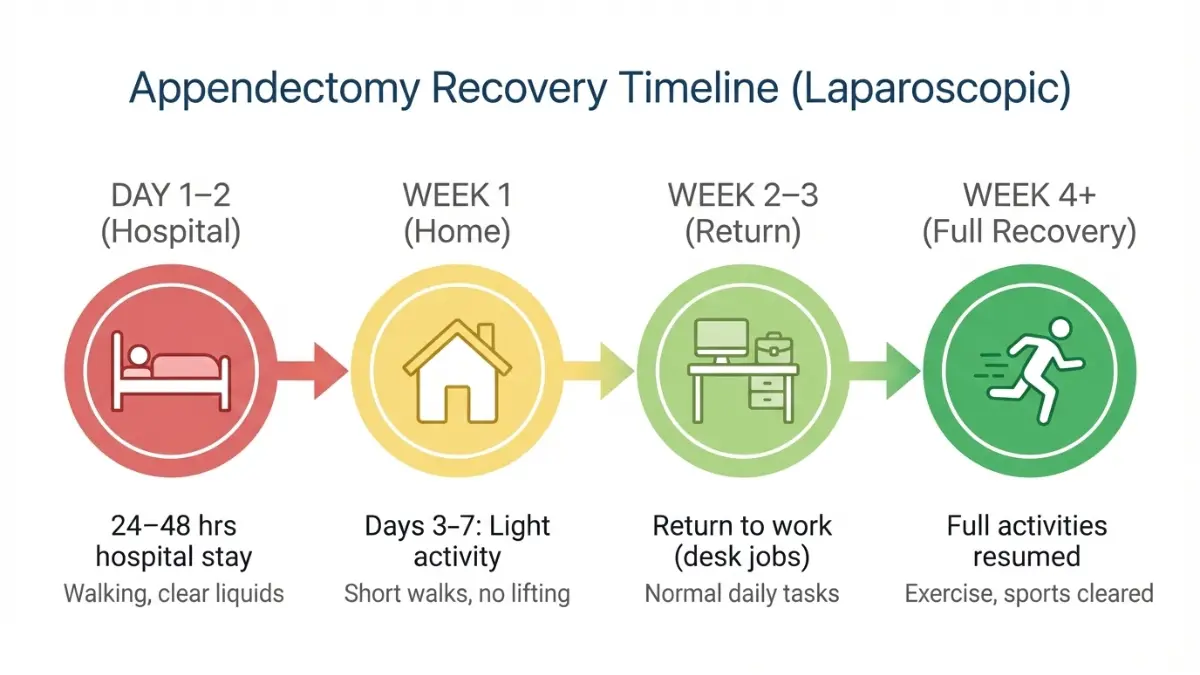
- Most laparoscopic patients discharged within 24 hours
Week 1: Home Recovery Essentials
Days 3-7 Activity Guidelines:
- Light walking: 10-15 minutes, 3-4 times daily
- No lifting over 10 pounds
- Shower approved (avoid baths/swimming)
- Expect fatigue requiring 10-12 hours sleep
- Shoulder pain common after laparoscopic surgery (residual CO₂ gas)
Pain Management: Research from Stanford Medicine shows non-opioid protocols using acetaminophen and ibuprofen achieve adequate pain control in 87% of uncomplicated cases.
Return to Work:
- Desk jobs: 5-7 days post-laparoscopic surgery
- Physical labor: 14-21 days minimum
- Healthcare workers: 10-14 days (infection risk consideration)
Weeks 2-3: Gradual Activity Resumption
Days 8-14:
- Lifting restrictions increase to 20 pounds
- Light exercise approved (walking, stationary cycling)
- Most patients return to 80% normal energy levels
- Driving permitted once off narcotic pain medication
Days 15-21:
- Returning to full work duties
- Gym workouts approved (avoid core-intensive exercises)
- Sexual activity typically safe to resume
- Normal dietary patterns fully restored
To optimize recovery metabolism, calculate your needs with our BMR Calculator.
Week 4+: Full Recovery Milestone
By day 28, most patients achieve complete recovery with full range of motion and normal activity tolerance. Internal healing continues for 6-8 weeks, making core strengthening exercises important for long-term abdominal wall integrity. For comprehensive understanding of minimally invasive surgical outcomes, review our guide on laparoscopic surgery success rates.
Procedure Types & Safety
Appendectomy Procedure Options: Which Is Safest?
Three primary surgical approaches treat appendicitis in 2026, each with distinct advantages, recovery profiles, and cost implications. Selection depends on appendix condition, surgeon expertise, and patient-specific factors.
Laparoscopic Appendectomy (Minimally Invasive)
The Gold Standard: Laparoscopic appendectomy has become the preferred technique, accounting for 78% of all appendix removal surgeries in U.S. hospitals according to American College of Surgeons data.
Procedure Steps:
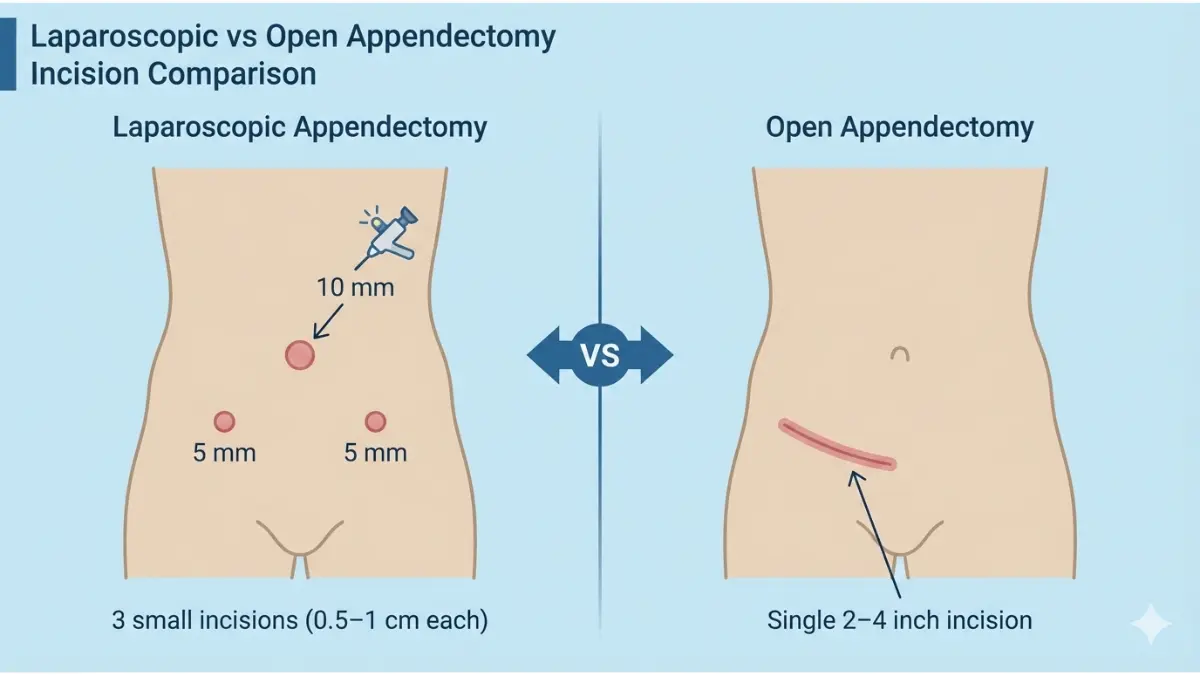
- Three small incisions (0.5-1 cm each) near belly button
- Abdomen inflated with carbon dioxide for visualization
- Camera-guided removal using specialized instruments
- Appendix extracted through small port
- Incisions closed with dissolvable sutures
Advantages:
- 40% faster recovery than open surgery
- 65% reduction in post-operative infections
- Minimal scarring (barely visible after 6 months)
- Same-day discharge possible for uncomplicated cases
- Lower pain scores days 1-5 post-surgery
Success Rate: 96.8% complication-free outcomes for non-ruptured appendicitis
Open Appendectomy (Traditional Method)
When It’s Necessary: Required in 15-20% of cases involving ruptured appendix, extensive peritonitis, or complex abdominal adhesions from prior surgeries.
Procedure Details:
- Single 2-4 inch incision in lower right abdomen (McBurney’s point)
- Direct visualization and removal of appendix
- Thorough irrigation of abdominal cavity
- Typical hospital stay: 2-4 days
Open appendectomy remains the fastest surgical approach for true emergencies, with median procedure time of 35 minutes versus 55 minutes for laparoscopic technique.
Robotic-Assisted Appendectomy (2026 Innovation)
Multi-center trials published in early 2026 demonstrate robotic systems’ enhanced visualization and precision, particularly in obese patients or complex anatomies. The National Institutes of Health funded studies show comparable outcomes to standard laparoscopy but with 40% higher costs.
Key Benefits:
- Enhanced 3D visualization
- Greater surgical precision
- Potential advantages for complicated cases
Limitations:
- Limited availability (major medical centers only)
- Higher costs rarely covered by insurance
- Longer setup time
Safety Statistics You Should Know
Mortality Rate: 0.09-0.24% overall (virtually zero for non-ruptured appendicitis)
Complication Rates:
- Wound infection: 3-5%
- Abscess formation: 2-3%
- Intestinal blockage: <1%
- Blood clots: 0.5%
For surgical risk assessment based on your overall health status, use our Ideal Weight Calculator to evaluate BMI-related surgical considerations.
Antibiotic-Only Treatment: When Surgery Isn’t Needed
Recent research indicates 25-30% of uncomplicated early appendicitis cases respond to IV antibiotics alone. However, 40% require appendectomy within one year. Shared decision-making with your surgeon weighs immediate surgery’s definitive cure against antibiotics’ delayed treatment risk.
Emergency Signs & Complications
When Is Appendectomy an Emergency? Warning Signs
Appendicitis progresses rapidly, with rupture risk increasing every hour after symptom onset. Recognizing emergency signs saves lives—delayed treatment transforms a routine surgery into a life-threatening crisis.
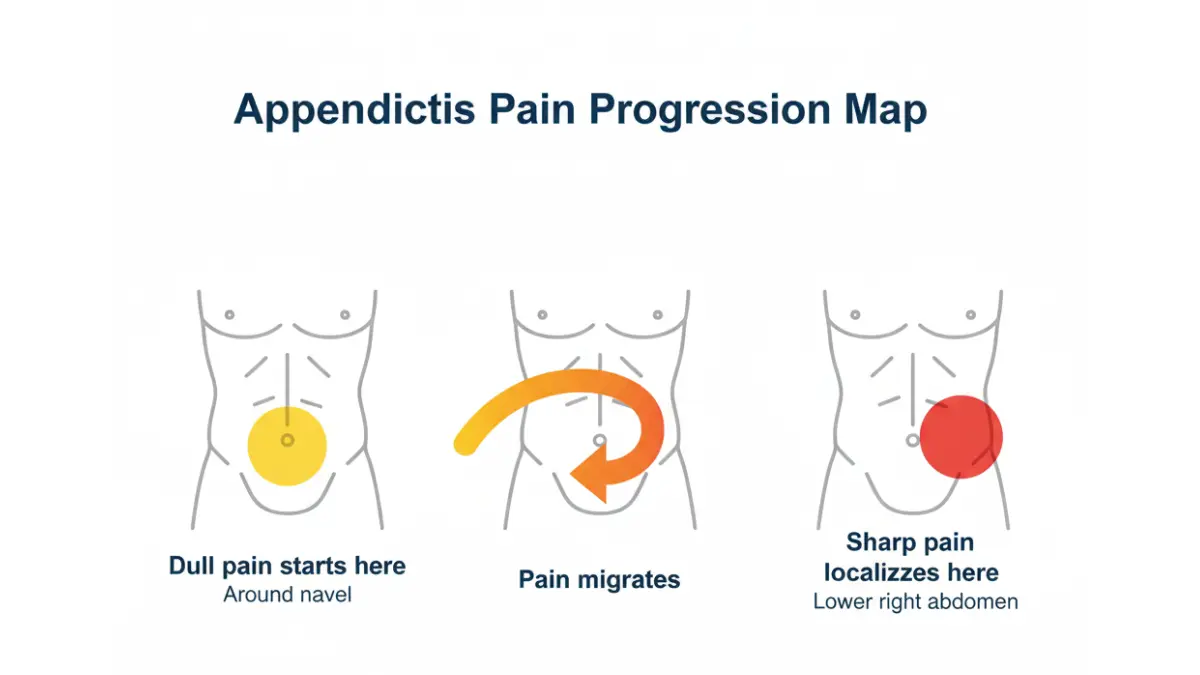
Appendicitis Symptoms You Can’t Ignore
Classic Symptom Progression (Hours 0-12):
Early Phase (Hours 0-4):
- Dull periumbilical pain (around belly button)
- Loss of appetite
- Nausea without vomiting
Localization Phase (Hours 4-12):
- Sharp pain migrating to lower right abdomen (McBurney’s point)
- Pain worsens with movement, coughing, walking
- Fever developing (99-101°F)
- Vomiting after pain onset
Advanced Phase (Hours 12-24):
- Severe, constant right lower quadrant pain
- Unable to stand straight
- Rebound tenderness (pain when pressure released)
- Fever rising above 101°F
Critical Warning: If severe pain suddenly stops after hours of agony, this may indicate rupture—seek immediate emergency care. For symptom tracking assistance, use our Symptom Checker.
The 48-72 Hour Rupture Window
According to Johns Hopkins Medicine emergency medicine research, appendix rupture risk follows a predictable timeline:
- 0-24 hours: <10% rupture risk
- 24-48 hours: 35-50% rupture risk
- 48-72 hours: 70-85% rupture risk
- >72 hours: >90% rupture risk with peritonitis
Why Rupture Is Dangerous: When appendix walls perforate, bacteria-laden contents spill into the abdominal cavity, causing peritonitis—a severe infection with 3-5% mortality rate even with treatment.
Post-Surgery Complications to Watch
Most appendectomy complications arise within 7-10 days post-surgery:
Call Your Surgeon Within 24 Hours If You Experience:
- Fever above 100.4°F
- Increasing abdominal pain (should improve, not worsen)
- Wound redness spreading beyond incision margins
- Foul-smelling drainage from incision
- Inability to urinate for 6+ hours
- Vomiting preventing fluid intake
Go to ER Immediately If:
- Fever above 102°F
- Severe abdominal pain with rigidity
- Confusion or altered mental status
- Chest pain or breathing difficulty
- Heavy bleeding from incision
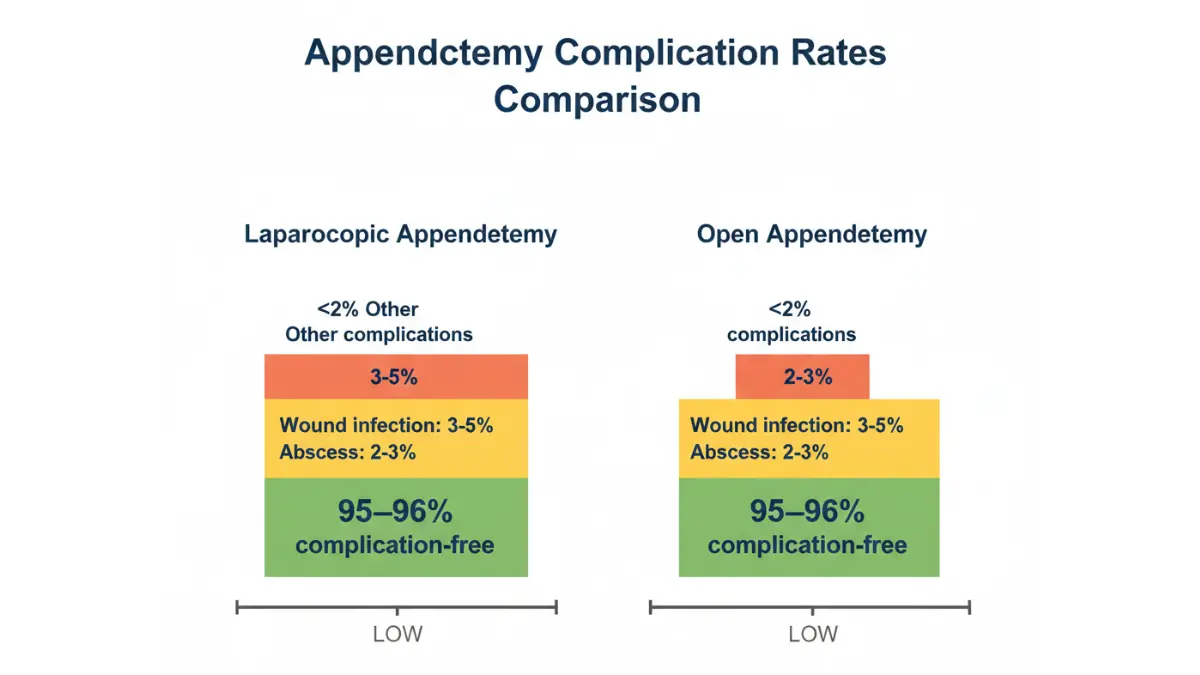
Complication Rates by Surgery Type:
| Complication | Laparoscopic | Open |
|---|---|---|
| Wound infection | 2.1% | 5.3% |
| Abscess | 1.8% | 3.9% |
| Bowel obstruction | 0.4% | 1.2% |
Data from the Agency for Healthcare Research and Quality 2025 surgical outcomes database shows infection rates dropped 35% over the past decade due to improved antibiotic protocols.
For related surgical information, review our comprehensive guide on knee surgery costs and recovery.
11 Most Asked Questions About Appendectomy
1. Can you live without your appendix?
Yes, completely normal life. The appendix has no essential function in modern humans. Research suggests possible minor immune system roles, but removal causes no long-term health consequences.
2. How long does appendectomy surgery take?
Laparoscopic appendectomy: 45-60 minutes. Open appendectomy: 30-45 minutes. Complicated cases with rupture: 90-120 minutes due to abdominal irrigation requirements.
3. What can I eat after appendectomy?
Day 1: Clear liquids (broth, juice, gelatin) Days 2-3: Soft diet (yogurt, oatmeal, mashed potatoes) Days 4+: Regular diet, avoiding heavy, greasy foods initially
High-protein intake accelerates healing—aim for 75-100g daily. Calculate your needs with our Macro Calculator.
4. When can I drive after appendectomy?
Laparoscopic: 3-5 days (once off narcotic pain medication). Open: 7-10 days. Legal requirement: ability to perform emergency stop without hesitation. Insurance may not cover accidents while on prescribed narcotics.
5. Will I have visible scars?
Laparoscopic: Three tiny scars (5-10mm) that fade significantly within 6-12 months. Open: Single 2-4 inch scar that remains visible but flattens over time. Scar appearance varies by genetics, age, and wound care quality.
6. Can appendicitis come back after appendectomy?
No—once removed, appendicitis cannot recur. However, stump appendicitis (inflammation of remaining appendix tissue) occurs in <0.01% of cases when surgical removal was incomplete.
7. Is laparoscopic appendectomy always better?
Generally yes, but open surgery preferred when: appendix has ruptured with widespread infection, patient has extensive prior abdominal surgeries creating adhesions, or laparoscopic equipment unavailable.
8. How much pain should I expect?
Pain peaks days 1-3, then improves steadily. Laparoscopic patients rate pain 3-5/10 (moderate). Open surgery patients report 5-7/10. Shoulder pain from residual CO₂ gas resolves within 48 hours.
9. Can I prevent appendicitis?
No proven prevention exists. High-fiber diet theories lack scientific support. The Centers for Disease Control and Prevention confirms appendicitis causes remain largely unknown—blockage can occur from hardened stool, swollen lymph nodes, or infections.
10. Does insurance cover emergency appendectomy?
Yes—all insurance plans cover emergency appendectomy. Federal No Surprises Act protects against out-of-network emergency charges. Average out-of-pocket: $1,500-$5,000 depending on deductibles and coinsurance.
11. What’s the difference between appendectomy and appendicitis?
Appendicitis is the disease—inflammation/infection of the appendix. Appendectomy is the surgical treatment—removal of the inflamed appendix. Think: condition vs. cure.
Next Steps: Preparing for Your Appendectomy
Pre-Surgery Checklist:
- Stop eating/drinking 8-12 hours before scheduled surgery
- Arrange ride home (cannot drive post-anesthesia)
- Pack hospital bag: phone charger, loose clothing, toiletries
- Review medication list with surgeon (blood thinners may require temporary discontinuation)
- Confirm insurance pre-authorization for scheduled procedures
Recovery Preparation:
- Stock easy-to-digest foods
- Arrange help with childcare/pet care for 3-5 days
- Set up recovery area with within-reach essentials
- Plan 1-2 weeks off work (adjust by job physical demands)
Maintain optimal hydration throughout recovery—use our Water Intake Calculator for personalized fluid goals.
For questions about other surgical procedures and recovery protocols, visit our Health Guide hub.
Medical Disclaimer
This article is for educational purposes only and does not constitute medical advice. Appendicitis is a medical emergency requiring immediate professional evaluation. Always consult qualified healthcare providers for diagnosis and treatment decisions. Individual experiences, costs, and recovery timelines vary. Information presented reflects 2026 medical guidelines and may change as research advances.
About this content
How this article was put together: researched from recognised health sources, drafted with the help of AI tools, and edited by hand, with sources linked throughout.

Sameer Patel is the founder and editor of My Medicine Advisor. He is not a doctor or medical professional — before starting this site he worked in banking,…
Medical disclaimer
The content on MyMedicineAdvisor is provided for general informational and educational purposes only and is not a substitute for professional medical advice, diagnosis, or treatment. Health information on this website should not be used to diagnose, treat, cure, or prevent any condition without guidance from a qualified healthcare professional. Always seek the advice of your doctor, physician, or another licensed healthcare provider with any questions you may have regarding a medical condition, symptoms, medications, or treatment decisions.