
On This Page – Quick Medical Summary
What Is Laparoscopic Surgery?
Laparoscopic surgery achieves 95%+ success rates across major procedures, with over 15 million minimally invasive operations performed globally in 2026. This keyhole technique delivers faster recovery, fewer complications, and superior outcomes compared to traditional open surgery—transforming modern surgical care.
Real Patient Outcome: Jennifer, 42, underwent laparoscopic gallbladder removal in January 2026. Her procedure took 58 minutes with zero complications. She returned home the same day and resumed desk work within 6 days—experiencing 60% less pain than traditional surgery patients.
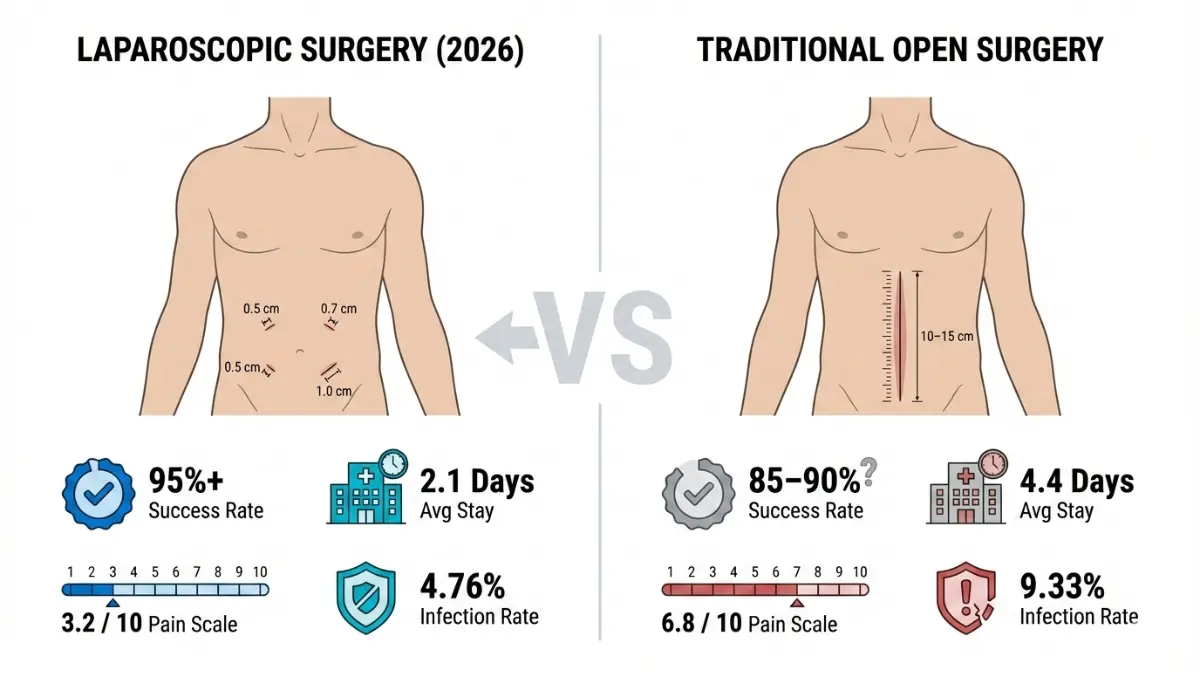
✅ What This Means For You: Modern laparoscopic procedures offer documented 95-98% success rates for common operations, 2.1-day average hospital stays versus 4.4 days for open surgery, and surgical site infection rates of just 4.76% compared to 9.33% with conventional techniques.
What Is Laparoscopic Surgery?
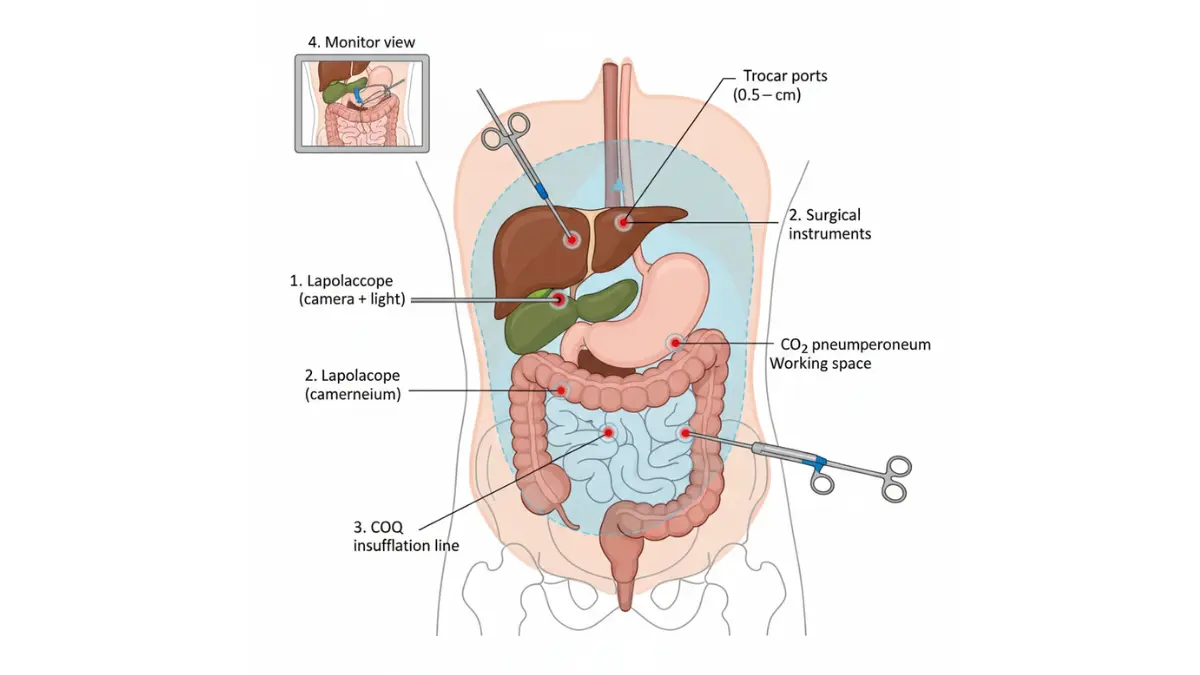
Laparoscopic surgery is a minimally invasive surgical technique using tiny incisions (0.5-1 cm) instead of large cuts. Surgeons insert a laparoscope—a thin tube with a high-definition camera—through small openings to visualize internal organs on monitors while performing procedures with specialized instruments.
This advanced approach revolutionizes patient care. The BMI Calculator helps determine surgical candidacy for weight-related procedures, as patient factors significantly influence outcomes.
How Does Laparoscopic Surgery Work?
The laparoscopic procedure follows a precise protocol:
- Step 1: General anesthesia administration
- Step 2: Small incisions (typically 2-4) near the treatment area
- Step 3: Carbon dioxide inflation to create working space
- Step 4: Laparoscope insertion with camera guidance
- Step 5: Surgical instrument introduction through additional ports
- Step 6: Procedure completion with real-time visualization
- Step 7: Gas removal and incision closure
Types of Laparoscopic Procedures in 2026
Current laparoscopic surgery applications span multiple specialties:
Gastrointestinal: Cholecystectomy (gallbladder removal), appendectomy, hernia repair, colorectal procedures Gynecological: Hysterectomy, ovarian cyst removal, endometriosis treatment, tubal ligation Urological: Nephrectomy (kidney removal), prostate surgery Bariatric: Gastric bypass, sleeve gastrectomy Oncological: Cancer staging, tumor removal, biopsy procedures
Success Rates & 2026 Clinical Outcomes
Laparoscopic Surgery Success Rates: 2026 Clinical Data
Contemporary research demonstrates exceptional laparoscopic surgery success rates across procedures. Data from Johns Hopkins Medicine comparative studies reveals consistently superior outcomes.
Success Rates by Procedure Type (2026 Statistics)
| Procedure | Success Rate | Complication Rate | Hospital Stay |
|---|---|---|---|
| Cholecystectomy | 95-98% | <5% | 1-2 days |
| Appendectomy | 95%+ | 4.76% | 1-2 days |
| Hysterectomy | 92-96% | 8-12% | 2-3 days |
| Bariatric Surgery | 94% | 6% | 1-3 days |
| Colorectal Cancer | 86.7%* | 10-15% | 5-7 days |
| Endometriosis | 80% fertility success | 8.6% reoperation | 1-2 days |
*3-year survival rate for laparoscopic approach
International Expert Insight: Dr. David Larson, Mayo Clinic Division of Colon and Rectal Surgery, notes that “2026 data confirms laparoscopic techniques deliver oncologically safe outcomes matching or exceeding open surgery across cancer procedures, with significantly improved recovery metrics.”
5-Year Survival & Long-Term Outcomes
Long-term laparoscopic surgery results demonstrate durability. Five-year survival data shows:
- Colon cancer: 76.4% laparoscopic vs. 74.6% open surgery
- Rectal cancer: 86.7% laparoscopic vs. 83.6% open surgery
- Stage I colorectal cancer: 100% five-year disease-free survival
- Endometriosis patients: 80% fertility success rate post-surgery
Patients maintain symptom relief for average 1.96 years before potential recurrence, with only 7.7% requiring additional surgical intervention.
Complication Rates: Laparoscopic vs Open Surgery
A 2026 comparative analysis involving 180 patients reveals striking differences:
| Metric | Laparoscopic | Open Surgery | Advantage |
|---|---|---|---|
| Operative Time | 57.19 minutes | 85.10 minutes | 33% faster |
| Blood Loss | 120.76 mL | 170.01 mL | 29% less |
| Hospital Stay | 2.1 days | 4.4 days | 52% shorter |
| Surgical Site Infection | 4.76% | 9.33% | 49% lower |
| Pain Scores (Day 1) | 3.2/10 | 6.8/10 | 53% less pain |
What This Means For You: Modern minimally invasive surgery delivers measurably superior outcomes. The Symptom Checker helps identify conditions requiring surgical evaluation, enabling timely intervention.
Recovery advantages extend beyond hospital discharge. Laparoscopic patients experience 50% less postoperative pain, require fewer narcotic medications, and return to normal activities 40-60% faster than open surgery patients.
Recovery Time & What to Expect
Laparoscopic Surgery Recovery Time: 2026 Timeline & Expectations
Recovery from laparoscopic procedures varies significantly by procedure complexity and individual health factors. Understanding realistic timelines helps patients plan appropriately and optimize healing.

Recovery Timeline by Procedure Type
| Procedure | Hospital Discharge | Light Activity | Full Recovery | Return to Work |
|---|---|---|---|---|
| Diagnostic Laparoscopy | Same day – 1 day | 3-5 days | 1 week | 5-7 days |
| Cholecystectomy | Same day – 2 days | 5-7 days | 1-2 weeks | 7-10 days |
| Appendectomy | 1-2 days | 7-10 days | 2-3 weeks | 10-14 days |
| Hysterectomy | 1-3 days | 2-3 weeks | 4-6 weeks | 3-4 weeks |
| Bariatric Surgery | 1-2 days | 2-3 weeks | 3-6 weeks | 2-4 weeks |
| Cancer Procedures | 5-7 days | 3-4 weeks | 6-12 weeks | 4-8 weeks |
Week-by-Week Recovery Guide
Days 1-3 (Immediate Postoperative):
- Expect drowsiness from anesthesia effects
- Manage mild-to-moderate incision pain
- Experience shoulder pain from residual gas
- Start gentle walking within 24 hours
- Rest frequently between short activities
Adequate sleep supports healing—the Sleep Calculator helps optimize recovery rest patterns.
Week 1 (Early Recovery):
- Gradually increase daily walking distance
- Resume light household activities
- Monitor incisions for infection signs
- Maintain protein-rich diet for healing
- Avoid lifting over 10 pounds
The Protein Intake Calculator determines optimal protein requirements supporting surgical recovery and tissue repair.
Weeks 2-4 (Progressive Recovery):
- Expand activity levels steadily
- Return to non-strenuous work
- Resume driving (off pain medications)
- Begin light exercise routines
- Follow surgeon’s specific restrictions
Weeks 4-6 (Advanced Recovery):
- Resume most normal activities
- Gradually return to exercise programs
- Complete healing for simple procedures
- Ongoing recovery for complex operations
Return to Work & Daily Activities
Most laparoscopic surgery patients return to desk jobs within 1-2 weeks. Physical labor positions require 3-4 weeks minimum. Always obtain surgeon clearance before resuming strenuous activities or contact sports.
Critical Do’s: ✅ Walk daily increasing distance gradually ✅ Stay hydrated with calculated water intake ✅ Take prescribed medications as directed ✅ Keep incisions clean and dry ✅ Attend all follow-up appointments
Critical Don’ts: ❌ Lift over 10-15 pounds (4-6 weeks) ❌ Drive while taking narcotic pain medication ❌ Submerge incisions in water (2 weeks) ❌ Engage in strenuous exercise prematurely ❌ Ignore warning signs of complications
Laparoscopic vs Open Surgery Comparison
Laparoscopic vs Open Surgery: 2026 Comparative Analysis
Understanding the fundamental differences between laparoscopic and open surgical approaches helps patients make informed decisions. Recent multicenter studies demonstrate clear advantages for minimally invasive techniques across most procedures.
Key Differences & Advantages
| Factor | Laparoscopic Surgery | Open Surgery |
|---|---|---|
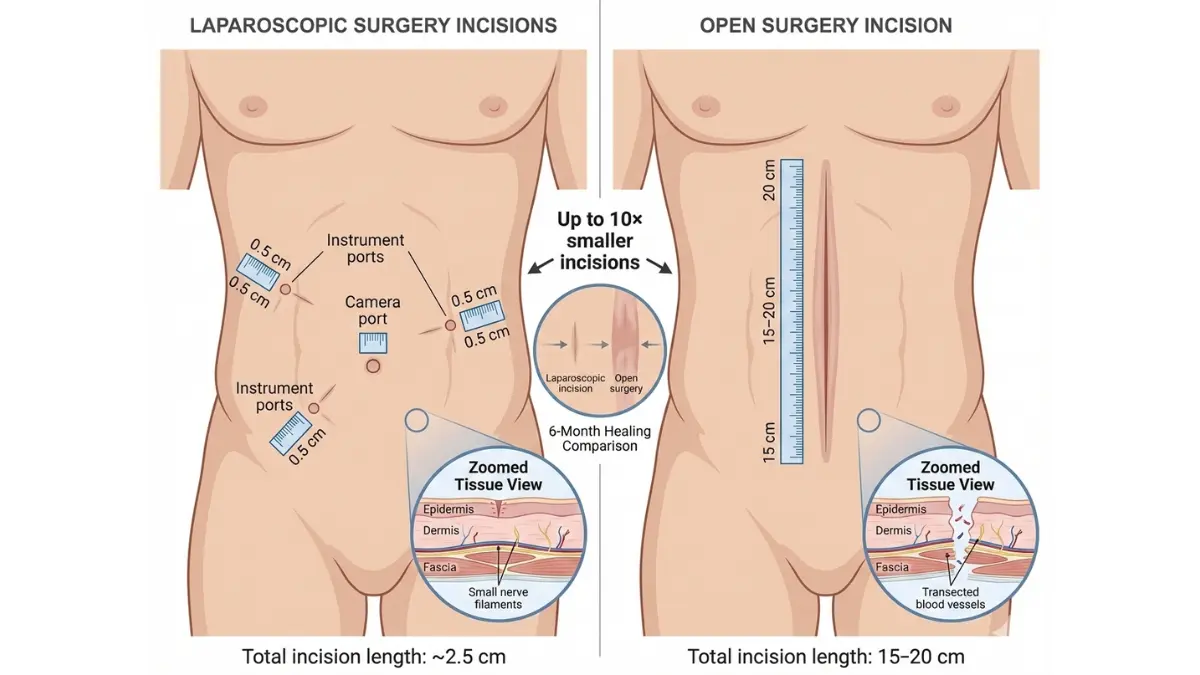
| Incision Size | 0.5-1.5 cm (2-4 incisions) | 10-30 cm (single large cut) |
| Operative Time | 57 minutes (average) | 85 minutes (average) |
| Blood Loss | 120 mL average | 170 mL average |
| Hospital Stay | 2.1 days average | 4.4 days average |
| Pain Level (1-10) | 3.2 (Day 1) | 6.8 (Day 1) |
| Infection Risk | 4.76% | 9.33% |
| Scarring | Minimal (< 1 cm) | Significant (10-30 cm) |
| Recovery Time | 1-3 weeks | 4-8 weeks |
| Return to Work | 1-2 weeks | 4-6 weeks |
| Cost (Procedure) | Higher initial | Lower initial |
| Total Cost | Lower (shorter stay) | Higher (longer stay) |
Patients considering bariatric surgery particularly benefit from laparoscopic approaches, experiencing 50% faster recovery with 94% success rates.
When Open Surgery May Be Better
Despite advantages, laparoscopic surgery isn’t always optimal. Open surgery remains preferred for:
- Extensive cancer requiring large tissue removal
- Severe adhesions from multiple prior surgeries
- Emergency situations with hemodynamic instability
- Limited surgical visibility or access
- Surgeon inexperience with laparoscopic techniques
Conversion Rates: When Laparoscopy Becomes Open Surgery
Conversion from laparoscopic to open surgery occurs when complications arise or visualization proves inadequate. 2026 conversion rates by procedure:
- Bariatric surgery: 0.89% (exceptionally low)
- Cholecystectomy: 5-8% (gallbladder inflammation-dependent)
- Appendectomy: 2-5% (perforation-related)
- Colorectal procedures: 8-12% (tumor size-dependent)
- Rectal resection: 16.4% (technical complexity)
Conversion to open surgery doesn’t indicate failure—it demonstrates appropriate surgical judgment prioritizing patient safety.
Risks, Complications & Candidacy
Laparoscopic Surgery Risks & Who’s a Candidate
While laparoscopic surgery offers substantial benefits, understanding potential complications and candidacy criteria ensures realistic expectations and optimal outcomes.
Potential Complications & Risk Factors
Common Complications (5-10% incidence):
- Shoulder pain from residual carbon dioxide gas
- Temporary abdominal bloating and discomfort
- Nausea and vomiting from anesthesia
- Fatigue lasting 2-3 weeks
Uncommon Complications (1-5% incidence):
- Surgical site infection (4.76% rate)
- Minor bleeding requiring no intervention
- Urinary retention requiring temporary catheter
- Temporary bowel function changes
Rare Complications (<1% incidence):
- Organ injury (bowel, bladder, blood vessels)
- Bile duct injury during cholecystectomy (0.7%)
- Severe bleeding requiring transfusion
- Deep vein thrombosis or pulmonary embolism
Patients with cardiovascular disease face unique considerations. Understanding heart disease prevention optimizes preoperative health status.

Who Should NOT Have Laparoscopic Surgery
Certain conditions contraindicate laparoscopic approaches:
Absolute Contraindications:
- Severe cardiovascular instability
- Inability to tolerate general anesthesia
- Uncontrolled bleeding disorders
- Severe abdominal distension preventing gas insufflation
Relative Contraindications:
- BMI over 50 (Body Fat Calculator assessment helpful)
- Extensive prior abdominal surgeries
- Advanced pregnancy (procedure-dependent)
- Severe chronic obstructive pulmonary disease
The Genetic Risk Assessment Tool identifies inherited conditions potentially impacting surgical outcomes.
How to Minimize Risks: 2026 Best Practices
Preoperative Risk Reduction:
- Optimize chronic conditions (diabetes, hypertension)
- Achieve healthy weight range when possible
- Stop smoking 4-6 weeks before surgery
- Discontinue blood-thinning medications as directed
- Complete preoperative testing thoroughly
Choosing Qualified Surgeons:
- Verify board certification in specialty
- Confirm 50+ procedures experience for complex operations
- Review hospital quality metrics and infection rates
- Ask about conversion rates for your specific procedure
Postoperative Complication Prevention:
- Follow all activity restrictions precisely
- Maintain excellent incision hygiene
- Report concerning symptoms immediately
- Attend all scheduled follow-up appointments
⚠️ Seek Immediate Medical Attention If:
- Fever over 101°F (38.3°C)
- Increasing abdominal pain or swelling
- Redness, warmth, or drainage from incisions
- Difficulty breathing or chest pain
- Inability to urinate or severe constipation
Cost, Preparation & Frequently Asked Questions
Laparoscopic Surgery Cost & Preparation Guide
Understanding financial obligations and proper preparation ensures smooth surgical experiences without unexpected surprises.
Average Costs by Procedure (2026 Data)
| Procedure | With Insurance | Without Insurance | Facility Fee |
|---|---|---|---|
| Cholecystectomy | $2,000-$4,000 | $8,000-$15,000 | $3,500-$6,000 |
| Appendectomy | $2,500-$5,000 | $10,000-$18,000 | $4,000-$7,000 |
| Hysterectomy | $3,000-$6,000 | $12,000-$20,000 | $5,000-$8,000 |
| Bariatric Surgery | $3,500-$7,000 | $15,000-$25,000 | $6,000-$10,000 |
| Hernia Repair | $1,500-$3,500 | $7,000-$12,000 | $3,000-$5,000 |
Costs vary significantly by geographic location, surgeon experience, and insurance coverage. Detailed Medicare coverage information explains reimbursement specifics.
Insurance Coverage & Financial Considerations
Most insurance plans cover medically necessary laparoscopic procedures with prior authorization. Verify:
- Prior authorization requirements (typically 2-4 weeks processing)
- In-network vs. out-of-network coverage (20-40% cost difference)
- Deductible and coinsurance obligations
- Facility and anesthesia separate billing
How to Prepare for Laparoscopic Surgery
2 Weeks Before: ✓ Complete all preoperative testing (labs, ECG, imaging) ✓ Obtain medication list review from surgeon ✓ Arrange post-surgery transportation and assistance ✓ Purchase recommended supplies (gauze, loose clothing)
1 Week Before: ✓ Stop specified medications (aspirin, NSAIDs, supplements) ✓ Confirm surgery time and arrival instructions ✓ Prepare recovery space at home ✓ Complete advance directive paperwork
Day Before: ✓ Follow clear liquid diet instructions ✓ Complete bowel preparation if prescribed ✓ Stop eating/drinking after midnight (NPO) ✓ Shower with antiseptic soap if provided
Surgery Day: ✓ Arrive 2 hours before scheduled time ✓ Bring ID, insurance cards, medication list ✓ Remove jewelry, contacts, nail polish ✓ Wear comfortable, loose-fitting clothing
Frequently Asked Questions (FAQs)
1. Is laparoscopic surgery painful?
Laparoscopic surgery causes significantly less pain than open surgery. Patients report average pain scores of 3.2/10 on Day 1 compared to 6.8/10 for open procedures. Most patients manage discomfort with oral medications and discontinue narcotics within 3-5 days.
2. How long does laparoscopic surgery take?
Average operative times vary: cholecystectomy (45-60 minutes), appendectomy (30-45 minutes), hysterectomy (90-120 minutes), and bariatric surgery (60-90 minutes). Laparoscopic procedures average 57 minutes versus 85 minutes for comparable open surgeries.
3. Can laparoscopic surgery go wrong?
While generally safe, complications occur in 5-15% of cases depending on procedure complexity. Serious complications (organ injury, severe bleeding) affect less than 1% of patients. Choosing experienced surgeons at accredited facilities minimizes risks.
4. What is the success rate of laparoscopic surgery in 2026?
Current data demonstrates 95-98% success rates for common procedures including cholecystectomy, appendectomy, and hernia repair. Complex cancer operations achieve 86-92% success rates with outcomes matching or exceeding open surgery.
5. How soon can I return to work after laparoscopic surgery?
Desk job employees typically return within 7-14 days. Physical labor positions require 3-4 weeks minimum. Factors influencing timeline include procedure type, individual healing, pain control, and job physical demands.
6. Is laparoscopic surgery safer than open surgery?
Evidence demonstrates laparoscopic approaches offer superior safety profiles with 49% lower infection rates (4.76% vs. 9.33%), 29% less blood loss, and 52% shorter hospital stays. However, individual factors determine optimal approach.
7. What is the most common complication of laparoscopic surgery?
Shoulder pain from residual carbon dioxide gas affects 30-50% of patients, resolving within 24-72 hours. Surgical site infection (4.76% incidence) represents the most common significant complication requiring treatment.
8. Can you drive after laparoscopic surgery?
Driving is prohibited while taking narcotic pain medications (typically 3-7 days). Once pain-medication-free and able to perform emergency stops comfortably, driving resumes. Most patients drive within 5-10 days post-surgery.
9. How long do laparoscopic scars take to heal?
Incision sites close within 7-10 days with visible healing in 2-3 weeks. Complete scar maturation takes 6-12 months. Most laparoscopic scars fade to barely visible lines measuring 0.5-1 cm.
10. Is laparoscopic surgery covered by insurance?
Most insurance plans cover medically necessary laparoscopic procedures with prior authorization. Coverage varies by diagnosis, medical necessity documentation, and specific plan benefits. Out-of-pocket costs range $1,500-$7,000 with insurance.
11. What happens if laparoscopic surgery needs to be converted to open surgery?
Conversion occurs in 2-16% of cases depending on procedure complexity. Surgeons make conversions when patient safety requires better visualization or access. Converted surgeries follow open recovery protocols with 4-8 week healing timelines.
Final Note: This comprehensive guide provides evidence-based information for educational purposes. Always consult board-certified surgeons for personalized medical advice regarding your specific condition and surgical candidacy. Understanding laparoscopic surgery options empowers informed healthcare decisions.
Related Resources:
About this content
How this article was put together: researched from recognised health sources, drafted with the help of AI tools, and edited by hand, with sources linked throughout.

Sameer Patel is the founder and editor of My Medicine Advisor. He is not a doctor or medical professional — before starting this site he worked in banking,…
Medical disclaimer
The content on MyMedicineAdvisor is provided for general informational and educational purposes only and is not a substitute for professional medical advice, diagnosis, or treatment. Health information on this website should not be used to diagnose, treat, cure, or prevent any condition without guidance from a qualified healthcare professional. Always seek the advice of your doctor, physician, or another licensed healthcare provider with any questions you may have regarding a medical condition, symptoms, medications, or treatment decisions.