

On This Page – Quick Medical Summary
Does diabetes affect your liver enzymes?
Yes, it can. Type 2 diabetes often travels with fatty liver, and the CDC says up to 70% of people with type 2 diabetes also have MASLD, which is fatty liver disease linked to metabolic health.
Find your situation: if your ALT was just flagged high, start with the ALT blood test guide. If your ALT is normal and you wonder whether that settles it, jump to the screening section.
Early fatty liver rarely causes symptoms, so a high result is a prompt to look further, not a verdict.
ℹ️ Medical Disclaimer: This article is general education. Decisions about diagnosis, diabetes treatment, medication changes, liver imaging or biopsy, and insurance coverage belong with your clinicians. Consult your primary care clinician, endocrinologist, or a board-certified gastroenterologist or hepatologist before acting on anything here.
Why does type 2 diabetes raise ALT?
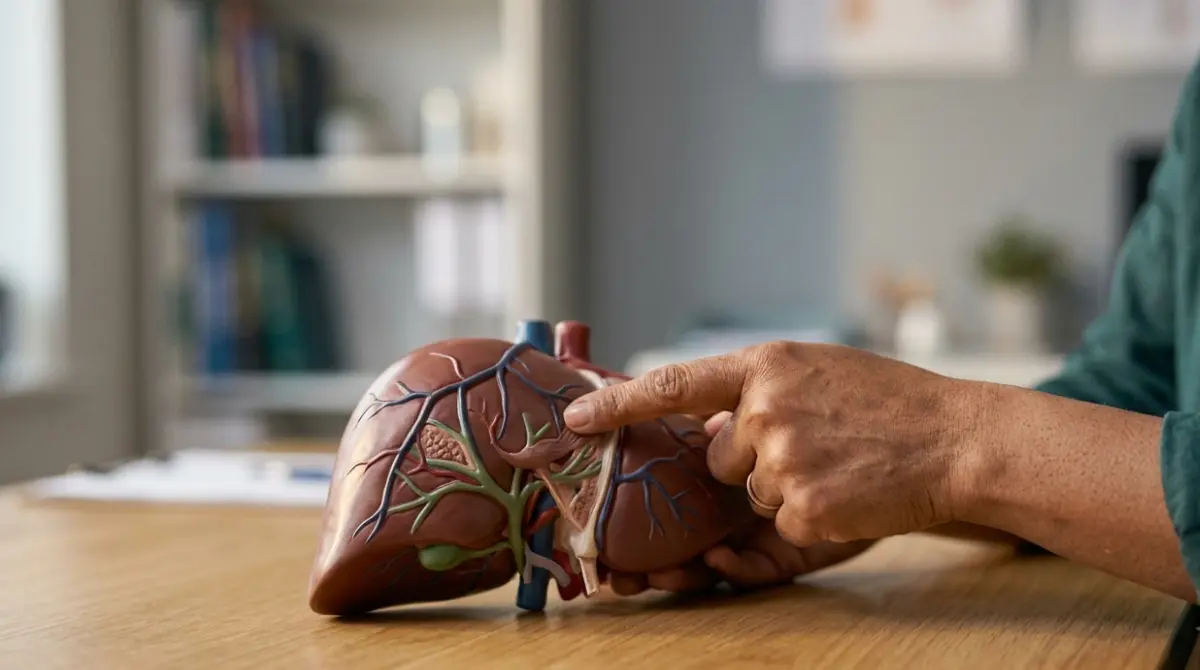
ALT is an enzyme inside liver cells that enters the blood when those cells are stressed. In type 2 diabetes, extra liver fat is a common source of that stress, as the guide to high ALT and fatty liver explains.
🔬 How It Works: When the body responds poorly to insulin, the liver can store more fat than it clears. Fat-laden liver cells become inflamed and leak ALT. A higher ALT therefore points to liver stress, not to blood sugar itself.
Some people with fatty liver go on to develop MASH, the inflamed form. The CDC says about 20% to 30% of people with MASLD also develop MASH.
How common are high liver enzymes with diabetes?
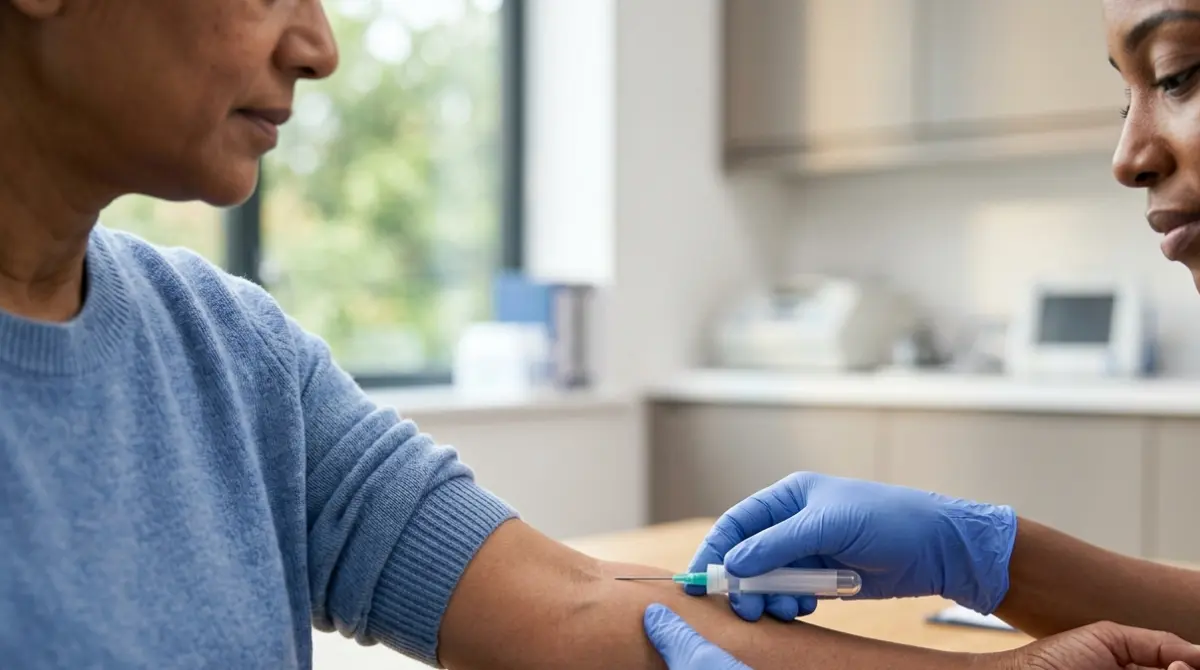
In a registry of 51,645 adults with type 2 diabetes, elevated liver enzymes appeared in 40.2% (Diabetes, Obesity and Metabolism, 2022). The same analysis found that only 8.6% of those people had a fatty liver diagnosis code, so many were not being labeled.
The abstract does not define “elevated,” and registry data cannot show cause and effect.
The link also runs the other way. A 2024 analysis of UK Biobank and NHANES data found that higher ALT and GGT tracked with higher type 2 diabetes risk, and that the increase was not a straight line. Treat ALT as one signal among several, not a prediction for any one person.
Do people with diabetes need a liver screening?
According to the American Diabetes Association’s 2025 consensus report (Diabetes Care 2025;48:1057–1082), adults with prediabetes or type 2 diabetes, especially with obesity, should be screened for liver fibrosis, which is scarring. The first step is the FIB-4 index, a score calculated from age, AST, ALT, and platelet count.
| FIB-4 score | What the ADA report says | Key Clinical Detail |
|---|---|---|
| Below 1.3 | Reliably excludes advanced fibrosis | Often no further testing needed |
| 1.3 to 2.67 | Higher risk than once thought | Liver stiffness test (elastography) advised |
| Above 2.67 | High risk of advanced fibrosis | Referral to a liver specialist |
Source: American Diabetes Association consensus report, Diabetes Care 2025;48:1057–1082.
The ADA report notes a FIB-4 below 1.3 can still miss some people at risk of MASH. Per the NIDDK diagnosis page, routine scans show fat but not scarring, and biopsy is the only test that proves NASH. For more on normal ALT with liver damage, see this FIB-4 guide.
What should you ask at your next diabetes visit?
Ask for your numbers in writing, because FIB-4 needs values you already have on routine blood work.
✅ Patient Action: At your next visit with your primary care clinician or endocrinologist, ask: “Can you calculate my FIB-4 from my latest AST, ALT, and platelet count, and what would you do at my score?”
If the score is above 1.3, ask whether elastography is the next step and which specialist, usually a gastroenterologist or hepatologist, should see you. Bring your last two ALT results so any change is visible.
Can lifestyle changes lower liver risk with diabetes?
They can help. The CDC says losing 5% to 10% of your current body weight can reduce liver fat, and it recommends at least 150 minutes of physical activity per week.
Start from where you are: the BMI Calculator gives a baseline, and how weight loss changes ALT shows what to expect. Any change to diabetes medication or activity should go through your care team first.
Which liver symptoms with diabetes shouldn’t wait?
Early liver disease is usually silent. The CDC lists loss of appetite, fatigue, yellowing of the skin or eyes, right-sided belly pain, and unexplained weight loss as symptoms to report.
⚠️ Clinical Warning: Yellow skin or eyes, or severe belly pain, need prompt medical attention, not a wait-and-see approach. Contact your clinician the same day, or seek urgent care if you cannot reach one.
✅ Patient Action: If you notice any of these, tell your primary care clinician: “I have [symptom] and type 2 diabetes. Should I have liver blood tests and an ultrasound?”
Frequently Asked Questions
1. Can diabetes cause high liver enzymes?
Yes. In one registry of 51,645 adults with type 2 diabetes, 40.2% had elevated liver enzymes, which can reflect fatty liver.
2. Does type 2 diabetes affect the liver?
Yes. The CDC says up to 70% of people with type 2 diabetes also have MASLD, fatty liver disease.
3. Can high ALT predict type 2 diabetes?
A 2024 analysis linked higher ALT to higher type 2 diabetes risk, but ALT cannot predict diabetes for one person.
4. Can you have fatty liver with diabetes and normal liver enzymes?
ALT alone is not a scarring test. The ADA report advises FIB-4 screening and notes a score below 1.3 can miss some at-risk people.
5. What is FIB-4 for diabetes?
FIB-4 is a score from age, AST, ALT, and platelets that the ADA recommends as the first liver scarring check in diabetes.
6. What FIB-4 score is concerning?
The ADA report calls scores above 2.67 high risk for advanced fibrosis. Ask your clinician what your score means.
7. How common is fatty liver in type 2 diabetes?
The CDC says up to 70% of people with type 2 diabetes also have MASLD, and 20% to 30% of MASLD develops MASH.
8. Should people with diabetes get their liver checked?
The ADA 2025 report recommends fibrosis screening for adults with prediabetes or type 2 diabetes. Ask your clinician about FIB-4.
9. What are symptoms of liver problems with diabetes?
The CDC lists fatigue, appetite loss, yellow skin or eyes, right-sided belly pain, and unexplained weight loss. Report them promptly.
10. Can weight loss help the liver in type 2 diabetes?
The CDC says losing 5% to 10% of body weight can reduce liver fat. Discuss any plan with your clinician.
11. Does high ALT mean blood sugar is out of control?
Not on its own. ALT reflects liver cell stress, so ask your clinician how your result fits with your diabetes care.
About this content
How this article was put together: researched from recognised health sources, drafted with the help of AI tools, and edited by hand, with sources linked throughout.

Sameer Patel is the founder and editor of My Medicine Advisor. He is not a doctor or medical professional — before starting this site he worked in banking,…
Medical disclaimer
The content on MyMedicineAdvisor is provided for general informational and educational purposes only and is not a substitute for professional medical advice, diagnosis, or treatment. Health information on this website should not be used to diagnose, treat, cure, or prevent any condition without guidance from a qualified healthcare professional. Always seek the advice of your doctor, physician, or another licensed healthcare provider with any questions you may have regarding a medical condition, symptoms, medications, or treatment decisions.