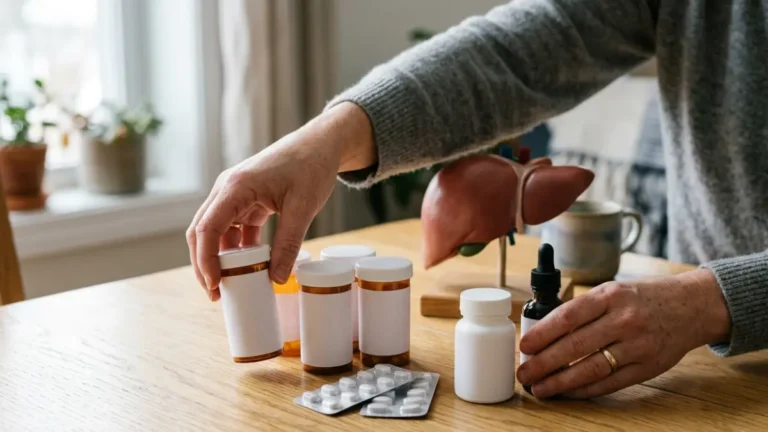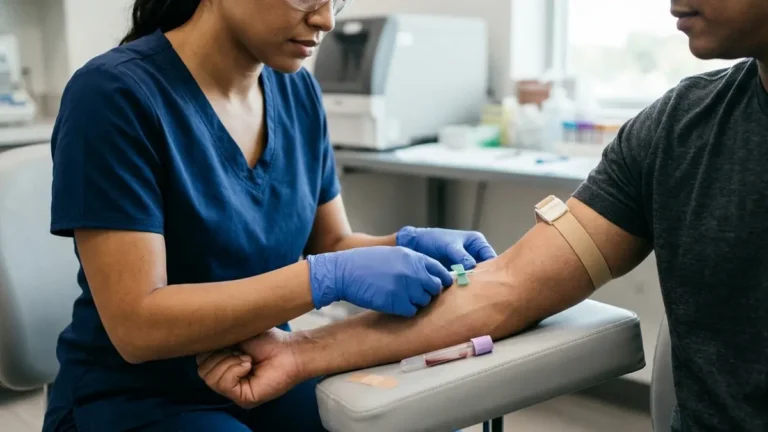

On This Page – Quick Medical Summary
Does fatty liver cause high ALT?
Yes. Fatty liver disease, now called MASLD, typically causes mild to moderate ALT elevations of about two to five times the upper limit of normal, though a normal level doesn’t exclude it.
The short answer
Most people with fatty liver feel fine. It’s often discovered through blood work or imaging ordered for something else.
Which part of this article is for you
- Just got a high ALT and a “fatty liver” note? Start with how high ALT usually gets.
- Told your ALT is normal but your liver is fatty? Go to the normal-ALT section.
- Wondering what happens next? See the sections on testing and treatment.
For the full picture of the test itself, see what your ALT number really tells you.
ℹ️ Medical Disclaimer: This article explains lab results and liver conditions for general education. It does not diagnose, recommend treatment, or guide medication or procedure decisions, and it doesn’t address insurance coverage for any drug. Before acting on an ALT result or starting any treatment, consult a board-certified gastroenterologist or hepatologist.
Why a fatty liver leaks ALT into your blood
When fat builds up in the liver and starts irritating liver cells, ALT spills into your bloodstream.
🔬 How It Works: ALT sits mostly inside liver cells, which makes it a more liver-specific injury marker than AST. When stressed cells leak it, your blood level rises. The number reflects cell irritation, not how well your liver works.
What MASLD is (and why it used to be called NAFLD)
An international hepatology consensus renamed the condition in June 2023. MASLD now means liver fat plus at least one of five cardiometabolic risk factors. That is the definition the consensus agreed on. The five are excess weight, glucose intolerance, high blood pressure, high triglycerides, and low HDL cholesterol.
Simple fatty liver vs. MASH
Simple fatty liver involves little or no inflammation and usually doesn’t progress. MASH adds inflammation and cell damage that can cause scarring. Between 2017 and 2020, MASLD affected an estimated 31.2% of US adults, about 61.9 million people.
How high does ALT get with fatty liver?
ALT levels in fatty liver usually stay mildly raised. Much higher numbers send doctors looking for other causes.
| ALT finding | What it usually suggests | Key Clinical Detail |
|---|---|---|
| Above 29–33 IU/L (men) or 19–25 IU/L (women) | Above a healthy normal | Many labs print higher “normal” ranges |
| About 2–5× the upper limit | Typical MASLD pattern | Albumin and bilirubin usually stay normal until advanced disease |
| 5–15× the upper limit | Other causes need checking | Doctors test for viral hepatitis, iron overload, and autoimmune disease |
Sources: ACG Clinical Guideline (2017); AASLD Clinical Pearl (2023).
Your lab’s “normal” vs. a healthy ALT
The American College of Gastroenterology defines a truly healthy ALT as 29–33 IU/L in men and 19–25 IU/L in women. Lab upper limits, by contrast, range from 35–79 U/L in men and 31–55 U/L in women. The ACG guideline on abnormal liver tests explains why that gap matters.
Is ALT usually higher than AST in fatty liver?
Usually yes. In fatty liver disease the AST:ALT ratio is typically below 1 unless cirrhosis is present. Learn more about what your AST to ALT ratio means.
Can you have fatty liver with a normal ALT?
Yes. A normal ALT does not rule out MASLD, and liver scarring can sit behind a result your lab calls normal.
Why normal ALT doesn’t rule out scarring
📊 Clinical Data Point: In a Scottish primary-care study, 33% of MASLD patients with advanced fibrosis or cirrhosis had ALT between 31 and 54 U/L, which the standard range would have missed. That lab’s normal range was 10–55 U/L.
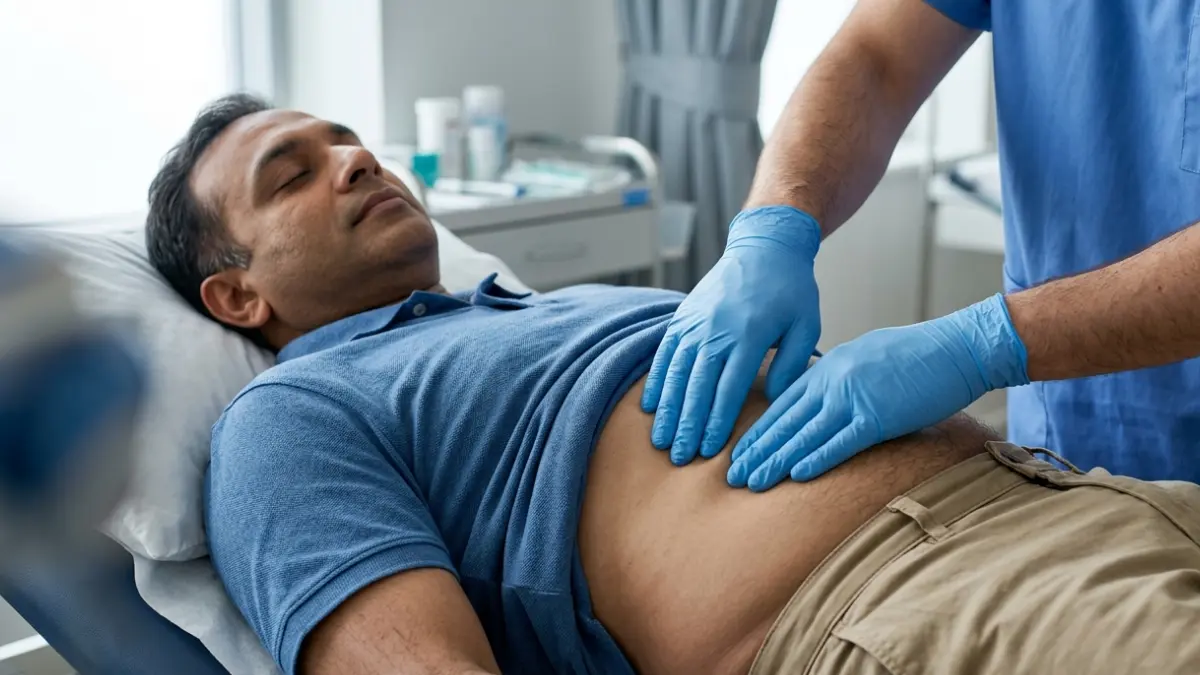
This doesn’t mean a normal ALT is a warning sign. It means ALT alone can’t answer the scarring question. Why a normal ALT can still hide liver damage covers this in depth.
Who should ask for more testing anyway
NIDDK’s overview of fatty liver disease notes that one-third to two-thirds of people with type 2 diabetes have fatty liver, as do up to 75% of people who are overweight.
✅ Patient Action: If you have type 2 diabetes or excess weight, ask your primary care physician: “Should I have a FIB-4 score even though my ALT is normal?”
What your doctor checks after a high ALT: FIB-4 and FibroScan
The next step is usually a fibrosis risk score to estimate scarring, not a biopsy.
FIB-4: the first step
ACG advises repeating the liver panel before starting a workup, to confirm it’s truly abnormal. FIB-4 then combines your age, ALT, AST, and platelet count. Its strength is ruling out advanced fibrosis.
When FibroScan or ELF comes next
A FIB-4 of 1.3 or higher calls for a second test, such as VCTE, MR elastography, or an ELF blood test.
🔬 How It Works: Transient elastography (FibroScan) measures liver stiffness in kPa to estimate scarring, and its CAP reading estimates liver fat.
When you’d see a liver specialist
Under AACE guidance, a FIB-4 of 1.3–2.67 or liver stiffness of 8–12 kPa counts as indeterminate risk. Above 2.67 or 12 kPa counts as high risk. Both warrant specialist referral.
✅ Patient Action: Ask your gastroenterologist: “What is my FIB-4, and does it put me in the range where elastography is recommended?”
Can ALT go back to normal? Weight loss and approved drugs
ALT reflects liver-cell injury, so easing that injury is the realistic route to a lower number. The strongest evidence measures the liver itself.
How much weight loss helps the liver
Losing 5–10% of body weight is associated with meaningful improvement in liver fat, inflammation, and scarring. The weight loss calculator shows what that percentage means for your body.
📊 Clinical Data Point: In a 52-week biopsy study of 293 patients, everyone who lost 10% or more of their weight improved: 90% saw steatohepatitis resolve and 45% saw fibrosis regress. For context, only 30% of participants lost at least 5%, so the effect is strong but hard to reach.
The two FDA-approved MASH drugs
Rezdiffra (resmetirom) received accelerated approval in March 2024, for use with diet and exercise in adults with noncirrhotic MASH and F2–F3 fibrosis. The FDA’s announcement on Wegovy for MASH reports that in interim results, 63% on Wegovy had MASH resolve without worse scarring, compared with 34% on placebo. Scarring improved in 37% versus 22%.
Neither drug is approved for simple fatty liver. AASLD updated its MASLD guidance in November 2025 to cover semaglutide in F2–F3 disease.
⚠️ Clinical Warning: The FDA states Wegovy should not be used by people with a personal or family history of medullary thyroid cancer or MEN2, or a known sensitivity to its ingredients.
✅ Patient Action: Ask a hepatologist: “Has my fibrosis been staged, and am I in the F2–F3 range these drugs are approved for?”
When a high ALT is more than fatty liver
A result far above the usual fatty-liver range changes what your doctor looks for.
ALT far above the fatty-liver range
For elevations of 5–15 times the upper limit, ACG recommends testing for hepatitis A, B, and C, iron studies, ceruloplasmin, alpha-1 antitrypsin, and autoimmune markers. See other causes of a very high ALT.
Symptoms that need prompt care
⚠️ Clinical Warning: Once cirrhosis develops, fluid buildup in the legs or abdomen, confusion, or bleeding can appear. Any of these needs same-day medical care.
Fatty liver also carries heart risk. Cardiovascular disease is the most common cause of death in people with fatty liver disease, so your blood pressure and cholesterol matter too.
Frequently asked questions
1. Does fatty liver cause high ALT?
Often, yes. Fatty liver (MASLD) typically raises ALT mildly to moderately, about two to five times the upper limit of normal.
2. What ALT level suggests fatty liver?
No single ALT number diagnoses fatty liver. ACG says ALT above 29–33 IU/L (men) or 19–25 (women) deserves assessment. Ask your physician about follow-up.
3. Can you have fatty liver with normal ALT?
Yes. Normal ALT doesn’t rule out fatty liver; advanced scarring can occur within lab-normal ranges. Ask about a FIB-4 score.
4. Is ALT higher than AST in fatty liver?
Usually. In fatty liver the AST-to-ALT ratio is typically below 1; a ratio above 1 can signal cirrhosis.
5. What is MASLD?
MASLD is the 2023 name for fatty liver disease: liver fat plus at least one of five cardiometabolic risk factors, such as high blood pressure.
6. Can ALT go back to normal with fatty liver?
Weight loss improves liver fat, inflammation, and scarring in fatty liver, which is the realistic route to a lower ALT. Ask your physician about targets.
7. How much weight loss helps fatty liver?
Losing 5–10% of weight improves fatty liver; in one biopsy study, 10% or more resolved steatohepatitis in 90%. Confirm targets with your physician.
8. What test checks for liver scarring?
To check fatty-liver scarring, doctors start with FIB-4; a result of 1.3 or higher usually leads to FibroScan, MR elastography, or ELF testing.
9. What is a FIB-4 score?
FIB-4 combines your age, AST, ALT, and platelet count to estimate fatty liver scarring risk; it is best at ruling out advanced fibrosis.
10. Is there medication for fatty liver?
Two drugs, Rezdiffra and Wegovy, are FDA-approved for MASH with F2–F3 fibrosis, not simple fatty liver. Ask a hepatologist whether you qualify.
11. When is a high ALT serious?
A high ALT far above the fatty-liver range, or fluid buildup, confusion, or bleeding, needs prompt medical evaluation from a liver specialist.
What to do with your ALT result next
Fatty liver usually nudges ALT up modestly. A normal ALT doesn’t give the all-clear, and meaningful weight loss can improve the liver itself.
If you have diabetes, excess weight, or a flagged ALT, the single most useful next step is asking for a FIB-4 score. That one number tells your doctor whether you need a closer look.
About this content
How this article was put together: researched from recognised health sources, drafted with the help of AI tools, and edited by hand, with sources linked throughout.

Sameer Patel is the founder and editor of My Medicine Advisor. He is not a doctor or medical professional — before starting this site he worked in banking,…
Medical disclaimer
The content on MyMedicineAdvisor is provided for general informational and educational purposes only and is not a substitute for professional medical advice, diagnosis, or treatment. Health information on this website should not be used to diagnose, treat, cure, or prevent any condition without guidance from a qualified healthcare professional. Always seek the advice of your doctor, physician, or another licensed healthcare provider with any questions you may have regarding a medical condition, symptoms, medications, or treatment decisions.