
On This Page – Quick Medical Summary
Found a glucose number that worries you? Start here
You have a number in front of you and you want to know what it means. That is answerable, and the ranges below are drawn from current national guidelines rather than rounded rules of thumb.
Before anything else: if your reading is at or above 600 mg/dL, or below 54 mg/dL, or you have a high reading together with vomiting, confusion, deep rapid breathing, or fruity-smelling breath, stop reading and seek emergency care now. Those specific thresholds are explained further down.
First, which test is your number from?
A single number means nothing without knowing which test produced it. A fasting plasma glucose, a two-hour value from an oral glucose tolerance test, a random draw, an A1C percentage, and a continuous-monitor reading are interpreted against four different sets of criteria.
Check your lab report for the test name before comparing your number to any chart.
Route yourself: newly flagged, diagnosed, pregnant, or caregiver
- You just got flagged — a fasting result near 110, or an A1C around 6.0 — and nobody has explained it: the master chart and the confirmation rule are what you need.
- You already have a diagnosis and read a meter or sensor daily: skip to the target ranges and time-in-range sections.
- You are pregnant and failed a glucose challenge: the pregnancy section explains why a failed screen is not a diagnosis.
- You are a caregiver or parent reading someone else’s number: the children-and-older-adults section, then the red flags.
ℹ️ Medical Disclaimer: This article covers diabetes and prediabetes diagnosis, interpretation of laboratory values (fasting plasma glucose, oral glucose tolerance testing, random glucose, A1C, estimated average glucose, and continuous glucose monitoring data), gestational diabetes screening, glucose interpretation in children and older adults, recognition and self-treatment of hypoglycemia, recognition of diabetic ketoacidosis and hyperosmolar hyperglycemic state, and medication and insulin decisions.
Every threshold here reflects current published clinical guidelines and is educational only. It cannot diagnose you, and it cannot tell you whether your insulin, metformin, or any other medication should change. Your own numbers depend on your medical history, pregnancy status, age, kidney function, hemoglobin variants, and other medications. Consult a board-certified physician — primary care, endocrinology, or obstetrics as relevant — before acting on anything in this article.
What is a normal blood sugar level?
For an adult without diabetes, a normal fasting plasma glucose is below 100 mg/dL (5.6 mmol/L), and a normal value two hours into a glucose tolerance test is below 140 mg/dL (7.8 mmol/L), per the American Diabetes Association Standards of Care in Diabetes—2026.
Normal fasting blood sugar (70–99 mg/dL)
The upper bound is the one guidelines actually define: the ADA sets normal fasting glucose at anything below 100 mg/dL, with 100 to 125 mg/dL classified as impaired fasting glucose.
The lower bound is a different kind of number. Below 70 mg/dL is the recognized hypoglycemia alert value, not a “normal range” floor — which is why most reference charts show 70 to 99 as the everyday normal band. Our explainer on what a fasting blood sugar in the 70–100 range actually means goes deeper on borderline readings.
Normal after eating (under 140 mg/dL)
Two hours after a standardized 75-gram glucose load, under 140 mg/dL is normal. Real meals are not standardized loads, so a home reading after dinner is not directly comparable to an OGTT value.
Why one reading isn’t a diagnosis
Absent unequivocal hyperglycemia, the ADA requires two abnormal results before diabetes is diagnosed — either two different tests, or the same test repeated. The NIH’s overview of diabetes blood tests describes the same expectation.
Glucose levels chart: normal, prediabetes, and diabetes
Here is every standard test in one place, with the cut points that decide which category a result falls into.
Fasting, OGTT, and random glucose ranges
| Test | Normal | Prediabetes | Diabetes | Key clinical detail |
|---|---|---|---|---|
| Fasting plasma glucose | Below 100 mg/dL | 100–125 mg/dL (5.6–6.9 mmol/L) | 126 mg/dL or above (7.0 mmol/L) | Fasting means no caloric intake for at least 8 hours |
| 2-hour plasma glucose, 75-g OGTT | Below 140 mg/dL | 140–199 mg/dL (7.8–11.0 mmol/L) | 200 mg/dL or above (11.1 mmol/L) | Requires at least 150 g carbohydrate daily for 3 days beforehand |
| Random plasma glucose | — | — | 200 mg/dL or above with classic symptoms or a hyperglycemic crisis | The only single-value criterion that stands alone |
| A1C | Below 5.7% | 5.7–6.4% (39–47 mmol/mol) | 6.5% or above (48 mmol/mol) | Must use an NGSP-certified assay |
Source: ADA Standards of Care in Diabetes—2026, Section 2 (Diagnosis and Classification of Diabetes).
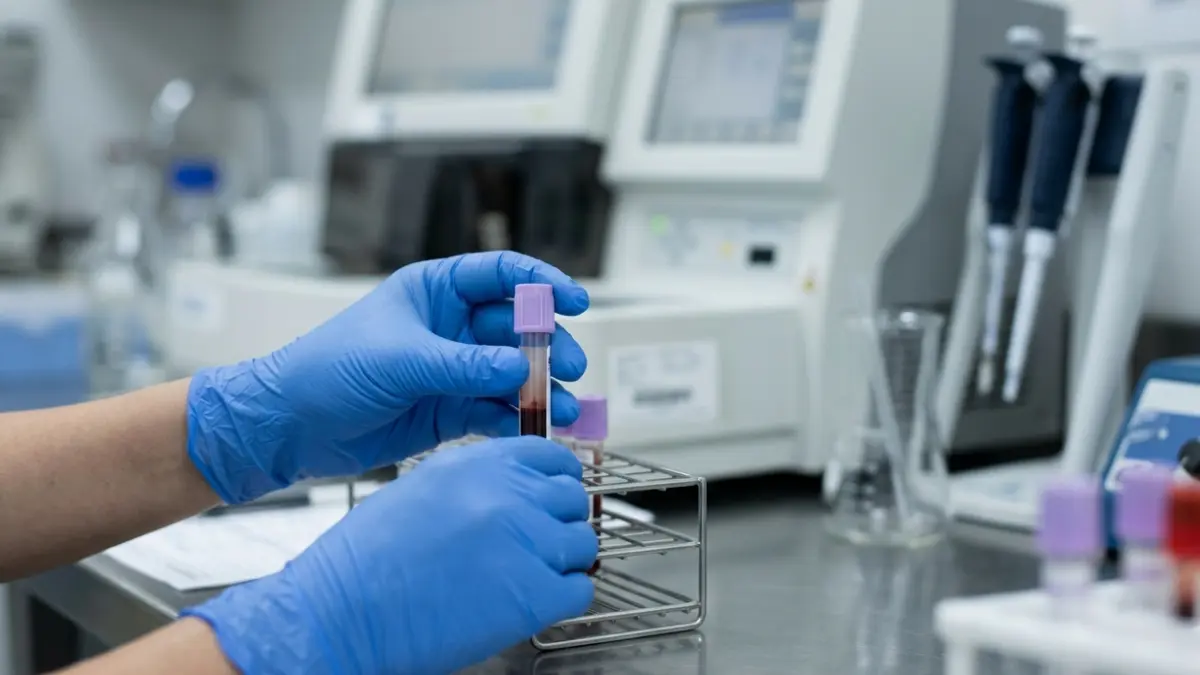
A1C ranges and what they mean
The prediabetes band in the middle column is a risk category, not a disease. Risk runs continuously across it — nothing biological changes between 5.69% and 5.71%.
The three tests do not identify identical groups of people, which is why fasting glucose and A1C answer different questions and an OGTT is sometimes ordered instead.
How the tests can disagree
Guidelines themselves disagree about where prediabetes begins, and you deserve to know that rather than be handed one number as settled fact.
📊 Clinical Data Point: The ADA defines impaired fasting glucose as 100–125 mg/dL. The World Health Organization and several other diabetes organizations set the lower limit at 110 mg/dL (6.1 mmol/L) instead. The ADA itself endorsed 110 in 1997 and moved to 100 in 2003, so that the diabetes risk carried by impaired fasting glucose would be comparable to the risk carried by impaired glucose tolerance. — Source: ADA Standards of Care in Diabetes—2026, Section 2.
A fasting result of 105 mg/dL is therefore prediabetes under US criteria and normal under WHO criteria. That is a genuine international disagreement, not a lab error.
✅ Patient Action: Ask your primary care physician: “Should this result be confirmed with a repeat test or a second, different test — and when is that scheduled?” The CDC’s national diabetes data sets the population context for what follows.
What your A1C means (and your average glucose)
A1C reports the share of your hemoglobin carrying attached glucose, which reflects roughly the previous two to three months rather than a single moment.
🔬 How It Works: Glucose in your bloodstream attaches to hemoglobin inside red blood cells, and once attached it stays there for the life of that cell. Because red cells circulate for about three months, the percentage of glycated hemoglobin averages out your blood sugar across that window. That is why no fasting is required — and why anything that changes red-cell lifespan changes the result.
A1C ranges: normal, prediabetes, diabetes
Below 5.7% is normal, 5.7% to 6.4% is prediabetes, and 6.5% or above meets the diagnostic threshold. For most nonpregnant adults already diagnosed, the ADA sets a treatment goal of below 7%.
A1C to average glucose (eAG) chart
| A1C | Estimated average glucose | Key clinical detail |
|---|---|---|
| 6% | 126 mg/dL | Just above the diagnostic fasting cut point |
| 6.5% | 140 mg/dL | Diagnostic threshold for diabetes |
| 7% | 154 mg/dL | Standard adult treatment goal |
| 8% | 183 mg/dL | Commonly used less-stringent goal |
| 9% | 212 mg/dL | |
| 10% | 240 mg/dL |
Source: eAG (mg/dL) = 28.7 × A1C − 46.7, from Nathan DM et al., Translating the A1C Assay Into Estimated Average Glucose Values, Diabetes Care 2008;31(8):1473–1478.
📊 Clinical Data Point: That equation came from 507 participants — 268 with type 1 diabetes, 159 with type 2, and 80 without diabetes — across 10 international centers, each contributing roughly 2,700 glucose values over three months. The regression produced R² = 0.84 (P < 0.0001). — Source: Nathan et al., Diabetes Care 2008. The ADA and the American Association for Clinical Chemistry judged the correlation strong enough (r = 0.92) to justify reporting eAG alongside A1C. — Source: ADA Standards of Care in Diabetes—2026, Section 6.
Read eAG as an estimate, not a match. An R² of 0.84 leaves real scatter, and the ADAG cohort was 83% non-Hispanic White. The full A1C-to-average-blood-sugar conversion covers intermediate values.
When A1C can mislead
Hemoglobin variants, conditions affecting red-cell turnover, anemia, pregnancy, and kidney disease can all distort an A1C. Several conditions push an A1C falsely high without any change in actual glucose. Where A1C cannot be interpreted, the ADA notes fructosamine or glycated albumin as alternatives.
✅ Patient Action: Ask your primary care physician: “Is my A1C reliable given my other conditions — and should we confirm it with a glucose-based test?”
Reading a CGM: what time in range means
Continuous glucose monitoring replaces a single number with a distribution, and the metric that matters most is how much of the day you spend inside the target band.

Target range 70–180 mg/dL
For most nonpregnant adults, the target range is 70 to 180 mg/dL, adopted by the ADA from the 2019 International Consensus on Time in Range.
Time in range goal (over 70%)
📊 Clinical Data Point: ADA Recommendation 6.3b sets a goal time in range above 70% for many nonpregnant adults using CGM — roughly 17 hours of a 24-hour day. Retrospective data suggest that a 70% time-in-range corresponds to an A1C of approximately 7%. — Source: ADA Standards of Care in Diabetes—2026, Section 6.
Two people with the same A1C can have very different distributions, which is one reason time in range and A1C are not interchangeable.
Time below range and safety
ADA Recommendation 6.3c sets a goal of under 4% of time below 70 mg/dL — or under 1% for older adults — and under 1% of time below 54 mg/dL. Time below range is the safety metric; a high time-in-range achieved through frequent lows is not good control.
✅ Patient Action: Ask your diabetes care team: “What is my personal time-in-range target, and is my time below 54 mg/dL under 1%?”
Blood sugar in pregnancy and gestational diabetes
Gestational diabetes screening uses different thresholds from every other test on this page, and which set applies depends on which method your practice uses.
One-step (IADPSG) screening numbers
A 75-gram OGTT with plasma glucose measured fasting and at one and two hours. Diagnosis is made when any one value is met or exceeded: fasting 92 mg/dL (5.1 mmol/L), one hour 180 mg/dL (10.0 mmol/L), two hours 153 mg/dL (8.5 mmol/L).
Two-step (Carpenter-Coustan) screening numbers
Step one is a non-fasting 50-gram glucose challenge; a one-hour value at or above 130, 135, or 140 mg/dL — practices differ on which cut point they use — sends you to step two. Step two is a fasting 100-gram, three-hour OGTT, and diagnosis requires at least two of these four values: fasting 95, one hour 180, two hours 155, three hours 140 mg/dL.
A positive screen on step one is not a diagnosis. Most people who fail the 50-gram challenge do not have gestational diabetes.
🩺 Physician Note: The ADA Standards of Care recognize both the one-step and two-step strategies as acceptable, while ACOG recommends the two-step approach. There is no settled consensus between them, so the numbers your obstetric practice quotes will depend on the method it has adopted — which is worth asking about directly rather than assuming.
Target glucose during pregnancy
📊 Clinical Data Point: ADA Recommendation 15.8 sets pregnancy glucose goals at fasting plasma glucose below 95 mg/dL (5.3 mmol/L) and either one-hour postprandial below 140 mg/dL (7.8 mmol/L) or two-hour postprandial below 120 mg/dL (6.7 mmol/L). — Source: ADA Standards of Care in Diabetes—2026, Section 15. The ADA also notes that increased red blood cell turnover in pregnancy shifts A1C, which is part of why A1C is interpreted differently during pregnancy.
✅ Patient Action: Ask your obstetric provider: “Which screening method are you using — one-step or two-step — and what were my exact values at each time point?”
Blood sugar targets for children and older adults
Age changes treatment targets. It does not change diagnostic thresholds — and that distinction is where most published “blood sugar by age” charts go wrong.
Why “normal by age” is mostly a myth
The ADA’s diagnostic cut points in the master table above are not age-adjusted. A fasting glucose of 126 mg/dL means the same thing at 25 and at 75.
What genuinely varies by age is the treatment target for someone who already has diabetes. Charts that present those targets as age-specific “normal ranges” invite a healthy 70-year-old to conclude their normal result is abnormal.
Children and teens with type 1 diabetes
Pediatric goals are individualized rather than fixed, balancing glycemic outcomes against hypoglycemia risk in a developing child. The ADA states directly that the ideal time-in-range goal for children remains uncertain and that further study is needed.
The specific pediatric A1C target has shifted across guideline editions and organizations [figure pending source verification — editor or clinical reviewer to confirm the exact ADA 2026 Section 14 pediatric A1C target before publish]. Our guide to A1C goals in children covers how those goals are set.
Older adults: less stringent, safer targets
The ADA sets older-adult goals by health status rather than by age alone — a goal near below 7.0–7.5% for those who are healthy with intact function, and a less stringent goal such as below 8.0% where health is complex. CGM goals shift too: the ADA’s time-below-70 mg/dL target tightens to under 1% for older adults, because a fall caused by a low is more dangerous than a modestly higher average. A1C targets for older adults explains the reasoning.
✅ Patient Action: Ask a pediatric endocrinologist or a geriatric-aware primary care physician: “What individualized A1C and time-in-range target fits this person’s age and health status?”
When is a blood sugar level dangerous?
Low is dangerous faster than high. Any reading below 54 mg/dL (3.0 mmol/L) is clinically significant hypoglycemia regardless of whether you feel symptoms, and any severe episode requiring another person’s help is an emergency at any glucose value.
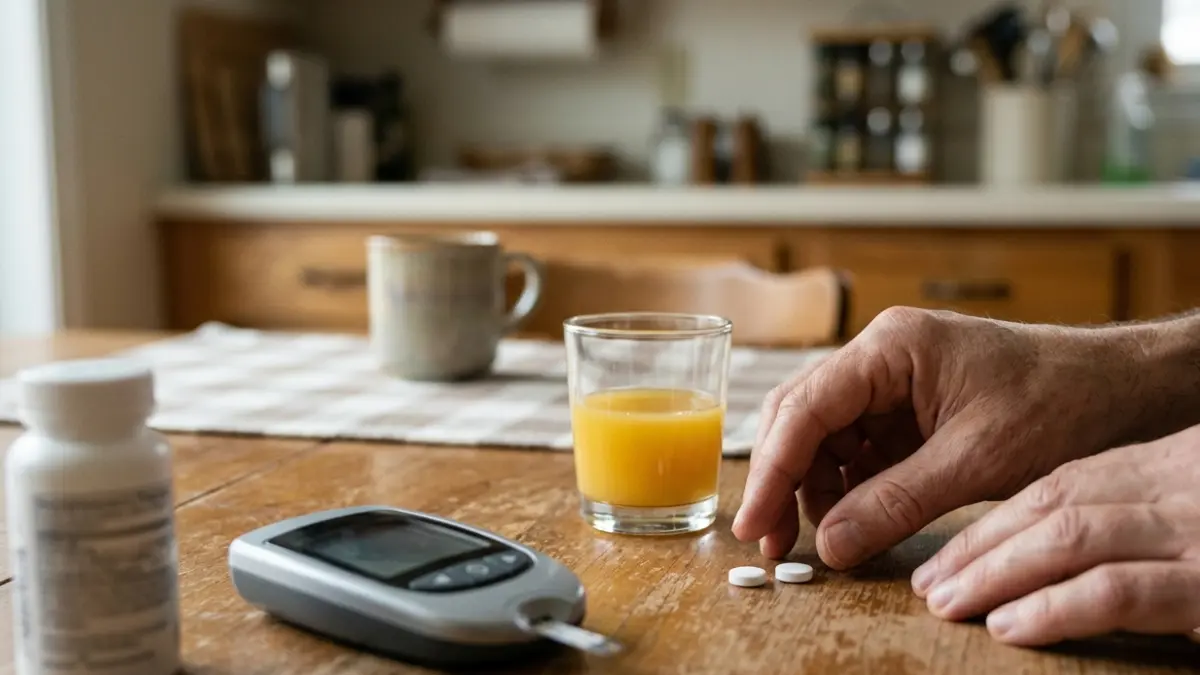
Dangerously low (hypoglycemia levels 1–3)
| Level | Definition | Key clinical detail |
|---|---|---|
| Level 1 | Below 70 mg/dL and at or above 54 mg/dL (3.9–3.0 mmol/L) | The glucose alert value — act now |
| Level 2 | Below 54 mg/dL (3.0 mmol/L) | Clinically significant regardless of symptoms |
| Level 3 | Severe event: altered mental or physical status requiring assistance from another person | Defined by the event, not by a glucose number |
Source: ADA Standards of Care in Diabetes—2026, Section 6.
Standard treatment for a conscious person with a Level 1 or 2 low is 15 grams of fast-acting carbohydrate, then a recheck 15 minutes later, repeating if still low.
Dangerously high (DKA and HHS)
⚠️ Clinical Warning: The glucose criterion for diabetic ketoacidosis was lowered in 2024. DKA is no longer defined by a glucose above 250 mg/dL — the current criteria are a glucose of 200 mg/dL or above or a prior history of diabetes, plus ketosis (beta-hydroxybutyrate at or above 3.0 mmol/L, or urine ketones at 2+ or higher), plus metabolic acidosis (pH below 7.3 and/or bicarbonate below 18 mmol/L). Pregnant individuals can present with euglycemic DKA at a glucose below 200 mg/dL. A normal-looking glucose does not rule out DKA. — Source: Hyperglycemic Crises in Adults With Diabetes: A Consensus Report, Diabetes Care 2024;47(8):1257–1275; ADA Standards of Care in Diabetes—2026, Section 6.
Hyperosmolar hyperglycemic state is defined by a plasma glucose of 600 mg/dL (33.3 mmol/L) or above, with hyperosmolality, minimal ketones, and no significant acidosis.
When to call 911 vs your doctor
- Call 911 now: unresponsive, seizing, or unable to swallow; a severe low needing another person’s help; vomiting with a high reading; deep rapid breathing or fruity-smelling breath; confusion with a very high reading.
- Call your clinician today: repeated readings below 70 mg/dL, or sustained readings above 250 mg/dL with ketones you can test at home.
- Raise it at your next visit: an isolated out-of-range reading with no symptoms.
How common are prediabetes and diabetes?
An abnormal result puts you in very large company, and knowing the scale makes the number less frightening without making it less serious.
Diabetes and prediabetes in the U.S.
📊 Clinical Data Point: 40.1 million people in the United States — 12.0% of the population — had diagnosed or undiagnosed diabetes as of 2023, including 29.1 million with diagnosed diabetes. An estimated 27.6% of adults with diabetes, about 11.0 million people, are undiagnosed. — Source: CDC National Diabetes Statistics Report, January 2026 (2023 data).
Why so many go undiagnosed
📊 Clinical Data Point: 115.2 million American adults — more than 2 in 5 — have prediabetes, and 8 in 10 adults with prediabetes do not know they have it. — Source: CDC, Diabetes: A U.S. Report Card, March 2026.
A note on sourcing: older CDC figures — 38.4 million with diabetes and 97.6 million adults with prediabetes, drawn from 2021 data — still circulate widely on health sites. The figures above are the newer 2023-data estimates. Prediabetes carries no reliable symptoms, which is why what clinicians check next in the 5.7–6.4% band matters more than waiting to feel unwell.
How to test your blood sugar the right way
Timing and technique determine whether your number means anything, and most confusing home readings come from a mismatch between the two.
Fasting vs after-meal timing
- For a fasting reading, take no caloric intake for at least 8 hours beforehand — water is fine.
- For an after-meal reading, measure 1 to 2 hours from the first bite, not from when you finished eating; that window generally captures the peak.
- Record what you ate and when, so an out-of-range value can be interpreted rather than guessed at.
Meter accuracy and technique
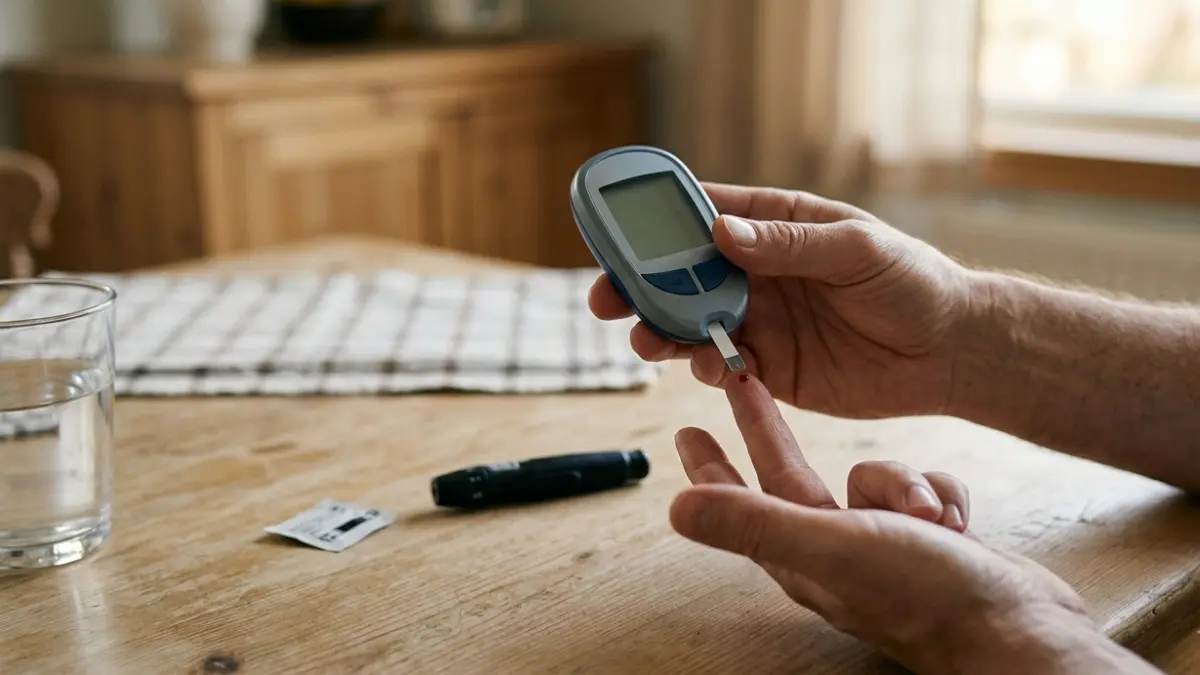
Use an FDA-cleared meter with unexpired strips, wash and dry your hands before lancing, and discard the first drop if your hands were recently handled food. If your report uses different units from your meter, our blood sugar converter moves between mg/dL and mmol/L.
Disclosure: some links on this site are affiliate links and we may earn a commission. Meter and strip listings are general product information, not a clinical recommendation.
Your result is abnormal — what should you do next?
An abnormal result starts a process; it does not end one. The next step is almost always confirmation, not conclusion.
One high reading vs a pattern
Absent unequivocal hyperglycemia, the ADA requires two abnormal results — the same test repeated, or two different tests, which may be drawn from the same sample. Our guide to confirmatory testing covers what that second test usually is.
When to book vs when to rush
Emergency thresholds are in the red-flags section above. Everything short of those is an appointment, not an emergency — but it is an appointment worth making promptly rather than at your next physical.
Questions to ask your doctor
- Which test produced this number, and what were the exact values?
- Is this being confirmed, with what test, and when?
- Do any of my medications or conditions affect how this result should be read?
- What target is right for me specifically?
✅ Patient Action: Ask your primary care physician: “Do I need a confirmatory test, and how soon should it be done?” Download our free Questions for Your Doctor + Blood Sugar Log to bring written numbers and questions to that appointment.
Blood sugar questions people ask most
1. What is a normal blood glucose level?
A normal blood glucose level for an adult without diabetes is below 100 mg/dL fasting and below 140 mg/dL two hours into a glucose tolerance test, per the ADA Standards of Care in Diabetes—2026. Below 70 mg/dL is the recognized hypoglycemia alert value. Discuss your specific results with your physician before drawing conclusions.
2. What is a normal fasting blood sugar?
A normal fasting blood sugar is below 100 mg/dL (5.6 mmol/L). Fasting means no caloric intake for at least 8 hours. Values of 100–125 mg/dL fall in the prediabetes range as impaired fasting glucose, and 126 mg/dL or above meets the diabetes threshold on confirmation. Ask your clinician whether your result needs a confirmatory test.
3. Is 140 blood sugar normal after eating?
On a standardized 75-gram glucose tolerance test, a two-hour value below 140 mg/dL is normal, so 140 sits exactly at the boundary and falls into the impaired glucose tolerance range of 140–199 mg/dL. A home reading after a real meal is not directly comparable. Bring the exact test type to your physician.
4. What is a normal blood sugar 2 hours after eating?
Two hours into a 75-gram oral glucose tolerance test, below 140 mg/dL is normal. For adults already diagnosed with diabetes, the ADA treatment goal is a peak postprandial glucose below 180 mg/dL, measured 1–2 hours from the start of the meal. Your personal target should be set with your care team.
5. What blood sugar level indicates prediabetes?
Prediabetes is a fasting plasma glucose of 100–125 mg/dL, a two-hour OGTT value of 140–199 mg/dL, or an A1C of 5.7–6.4%. The WHO and several other organizations set the fasting lower limit at 110 mg/dL instead, so criteria differ internationally. Ask your clinician which criteria your lab applied.
6. What blood sugar level indicates diabetes?
Diabetes is indicated by a fasting plasma glucose of 126 mg/dL or above, a two-hour OGTT value of 200 mg/dL or above, an A1C of 6.5% or above, or a random glucose of 200 mg/dL or above with classic symptoms. Absent unequivocal hyperglycemia, two abnormal results are required. Only a physician can diagnose you.
7. What is the difference between blood sugar and A1C?
Blood sugar is your glucose level at one moment; A1C is the percentage of hemoglobin carrying attached glucose, reflecting roughly two to three months. Because red blood cells live about three months, A1C averages out daily swings. The ADA reports estimated average glucose alongside A1C using the formula 28.7 × A1C − 46.7.
8. What is a normal HbA1c level?
A normal HbA1c is below 5.7% (39 mmol/mol) on an NGSP-certified assay. Prediabetes is 5.7–6.4%, and 6.5% or above meets the diagnostic threshold for diabetes. Hemoglobin variants, anemia, pregnancy, and kidney disease can all distort the result. Ask your physician whether your A1C is reliable given your other conditions.
9. What level of blood sugar is dangerous?
Below 54 mg/dL is clinically significant hypoglycemia regardless of symptoms, and any episode requiring another person’s help is severe at any glucose value. On the high side, a glucose of 200 mg/dL or above with ketosis and acidosis meets DKA criteria, and 600 mg/dL or above suggests hyperosmolar hyperglycemic state. Both are emergencies requiring immediate care.
10. Is blood sugar 300 an emergency?
A reading of 300 mg/dL alone is not automatically an emergency, but it exceeds the 200 mg/dL glucose criterion used in the 2024 DKA definition, which also requires ketosis and acidosis to be present. With vomiting, confusion, deep rapid breathing, or fruity-smelling breath, seek emergency care immediately. Contact your clinician the same day for sustained readings at this level.
11. What is a dangerous A1C level?
A1C reflects a months-long average, so it does not identify an acute emergency the way a single glucose value can. An A1C of 6.5% or above meets the diagnostic threshold; the standard adult treatment goal is below 7%, corresponding to an estimated average glucose of 154 mg/dL. An A1C of 10% corresponds to roughly 240 mg/dL. Discuss your target with your physician.
12. How do I convert blood sugar between mg/dL and mmol/L?
US labs report mg/dL and most other countries report mmol/L. The key thresholds convert as follows: 100 mg/dL is 5.6 mmol/L, 126 mg/dL is 7.0 mmol/L, 140 mg/dL is 7.8 mmol/L, and 200 mg/dL is 11.1 mmol/L. Our blood sugar converter handles intermediate values.
13. What is the normal blood sugar range for older adults?
Diagnostic thresholds are not age-adjusted, so a normal fasting glucose is below 100 mg/dL at any age. What changes with age is the treatment target for people who already have diabetes: the ADA sets goals by health status, with a time-below-70 mg/dL target tightened to under 1%. Ask a geriatric-aware physician about individualized targets.
14. What is a normal blood sugar during pregnancy?
For pregnancy, the ADA sets goals of fasting plasma glucose below 95 mg/dL and either one-hour postprandial below 140 mg/dL or two-hour postprandial below 120 mg/dL. Screening thresholds differ from treatment targets and depend on whether your practice uses the one-step or two-step method. Ask your obstetric provider which method applies to you.
15. What is a normal blood sugar for someone without diabetes?
Someone without diabetes typically runs below 100 mg/dL fasting and below 140 mg/dL two hours into a glucose tolerance test, with 70 mg/dL as the low-end alert value. These are the same thresholds used diagnostically, applied at any adult age. A single out-of-range reading does not establish a diagnosis — confirm with your physician.
Your number is a starting point, not a verdict
If you arrived here holding a result that scared you, the most useful thing to know is that a single number rarely settles anything — and that the process from here is confirmation, context, and a conversation.
The one thing to do before your next appointment
Write down your exact values, which test produced each one, and the dates. Then ask one question: “Is this result being confirmed, with which test, and when?” That single question moves you from waiting to knowing.
Three places to go next: what a fasting result in the 70–100 range means, our A1C chart and what each band decides, and, if screening is the open question, who should be screened before age 35. Our Questions for Your Doctor + Blood Sugar Log is free to download and designed to be handed across a desk.
About this content
How this article was put together: researched from recognised health sources, drafted with the help of AI tools, and edited by hand, with sources linked throughout.

Sameer Patel is the founder and editor of My Medicine Advisor. He is not a doctor or medical professional — before starting this site he worked in banking,…
Medical disclaimer
The content on MyMedicineAdvisor is provided for general informational and educational purposes only and is not a substitute for professional medical advice, diagnosis, or treatment. Health information on this website should not be used to diagnose, treat, cure, or prevent any condition without guidance from a qualified healthcare professional. Always seek the advice of your doctor, physician, or another licensed healthcare provider with any questions you may have regarding a medical condition, symptoms, medications, or treatment decisions.