On This Page – Quick Medical Summary
Is Blood Sugar 70-100 mg/dL Normal? [Quick Answer]
Yes, a fasting blood sugar between 70-100 mg/dL is normal for most adults. According to the American Diabetes Association’s 2026 guidelines, this range indicates healthy glucose metabolism and proper insulin function. If your result falls within this zone, your pancreas is effectively managing blood sugar levels.
However, context matters. A fasting blood glucose reading requires 8-12 hours without food, while random blood sugar tests (taken anytime) have different normal ranges. Understanding which test you took is crucial for accurate interpretation.
2026 Blood Sugar Range Chart
| Blood Sugar Level (mg/dL) | Test Type | Classification | Action Needed |
|---|---|---|---|
| 70-99 | Fasting | Normal ✅ | Annual recheck |
| 100-125 | Fasting | Pre-Diabetes ⚠️ | Lifestyle changes |
| 126+ | Fasting | Diabetes Range 🚨 | Medical evaluation |
| <70 | Any time | Hypoglycemia | Immediate treatment |
| 140-199 | 2-hour post-meal | Impaired Glucose | Monitor closely |
| 200+ | Random + symptoms | Diabetes | See doctor within 48 hours |
Key distinction: Fasting blood sugar measures glucose after overnight fasting, while random tests can be done any time. The National Institute of Diabetes confirms fasting tests remain the diagnostic gold standard.
If your result shows 100-125 mg/dL, you’re in the pre-diabetes zone where intervention can prevent Type 2 diabetes. Use our Blood Sugar Converter to translate between mg/dL and mmol/L units used internationally.
Bottom line: 70-100 mg/dL fasting = healthy blood glucose control. Results above 100 mg/dL warrant attention and lifestyle modification.
Understanding Your Specific Result
What Your Blood Sugar Number Means
Your exact blood glucose level tells a specific story about your metabolic health. Let’s decode what each range actually means for your body.
70-99 mg/dL (Fasting): Normal Range ✅
Your pancreas is producing the right amount of insulin. Cells are responding properly to insulin signals, allowing glucose to enter tissues efficiently. No immediate medical intervention needed.
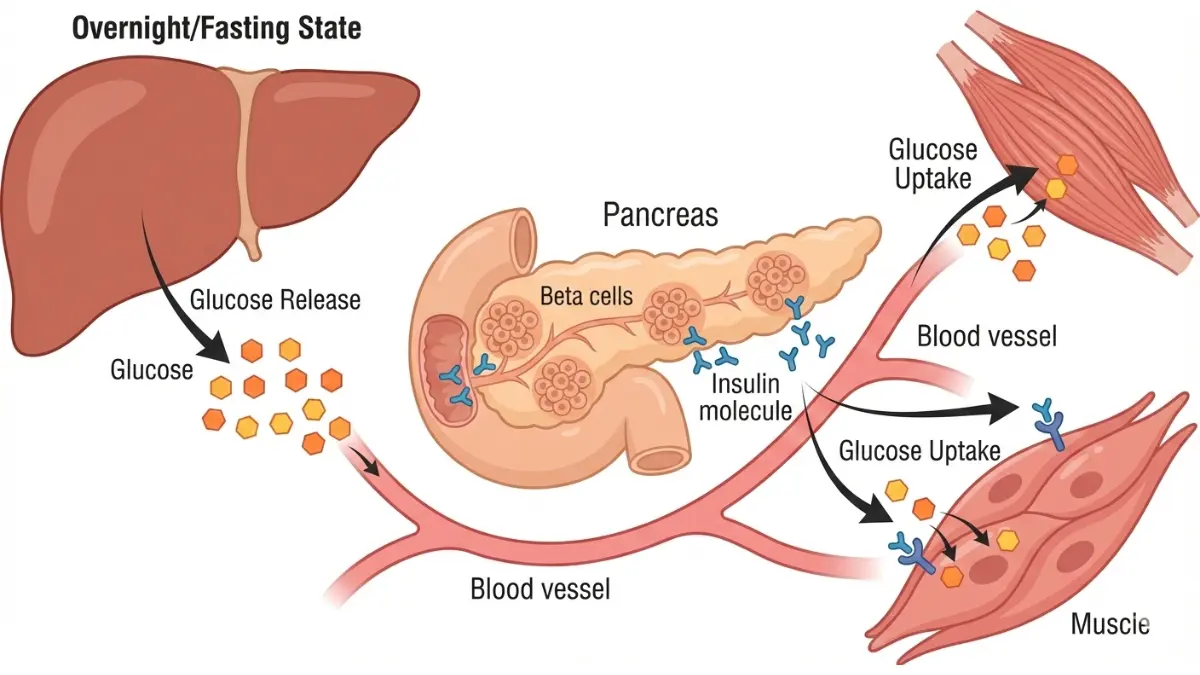
What’s happening inside: Your liver releases stored glucose overnight, and your pancreas secretes just enough insulin to maintain balance. This indicates low diabetes risk and healthy metabolism.
Action steps:
- Maintain current diet and exercise habits
- Schedule annual blood work
- Continue balanced meals with 45-60g carbs per meal
Real example: Michael, a 38-year-old teacher, tested at 87 mg/dL after fasting. His doctor confirmed this optimal level reflects his regular exercise routine and balanced macro intake.
100-125 mg/dL (Fasting): Pre-Diabetes Warning ⚠️
This is the pre-diabetes zone, also called impaired fasting glucose. Your body is showing early insulin resistance—cells aren’t responding to insulin as effectively. Without intervention, you face 5-10 times higher risk of developing Type 2 diabetes within 5 years, according to CDC diabetes prevention research.
What’s happening inside: Your pancreas produces insulin, but muscle and liver cells resist its signals. To compensate, your pancreas works overtime, producing more insulin. This eventually leads to pancreatic exhaustion and diabetes.
Immediate action required:
- Lose 5-7% of body weight (proven to reverse pre-diabetes)
- Cut refined carbohydrate intake by 50%
- Add 150 minutes weekly moderate exercise
- Retest blood sugar in 3 months
- Consider continuous glucose monitoring
Real example: Jennifer, 45, tested at 108 mg/dL. After implementing a calorie deficit strategy and losing 12 pounds over 4 months, her retest showed 94 mg/dL—back to normal range.
126+ mg/dL (Fasting): Diabetes Range 🚨
Two consecutive fasting readings of 126 mg/dL or higher indicate diabetes diagnosis per 2026 ADA criteria. This requires immediate medical evaluation and treatment initiation.
What’s happening inside: Your pancreas cannot produce enough insulin, or your cells have severe insulin resistance. Chronic high blood glucose damages blood vessels, nerves, kidneys, and eyes over time.
Urgent action steps:
- Schedule endocrinologist appointment within 7 days
- Begin daily blood sugar logging (4 readings daily)
- Review all medications that may affect glucose
- Start diabetes education program
- Discuss medication options (metformin, insulin)
The National Diabetes Statistics Report shows early intervention reduces complications by 60%.
Under 70 mg/dL: Hypoglycemia Risk ⚠️
Dangerously low blood sugar. Can cause confusion, shakiness, sweating, rapid heartbeat, or loss of consciousness. Common in diabetics taking insulin or certain medications.
Immediate treatment:
- Consume 15g fast-acting carbohydrates (4 glucose tablets, ½ cup juice, or 1 tablespoon honey)
- Retest blood sugar after 15 minutes
- If still below 70 mg/dL, repeat treatment
- Call 911 if unconscious or seizing
140-199 mg/dL (2-Hour Post-Meal): Borderline
After eating, blood sugar naturally rises. However, levels above 140 mg/dL two hours post-meal suggest impaired glucose tolerance. This often precedes fasting glucose problems.
What to do: Reduce portion sizes, limit refined carbs, and increase fiber intake. Consider checking your BMI as obesity significantly increases diabetes risk.
Fasting Vs. Random Vs. Post-meal Results
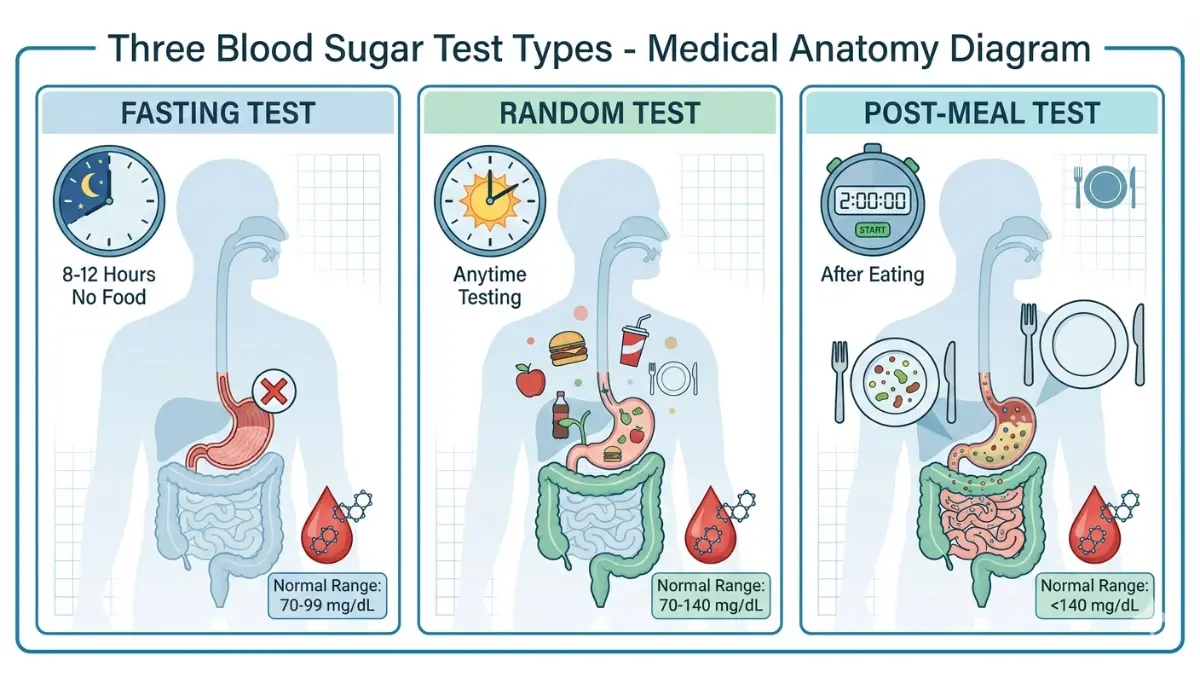
Blood Sugar Testing Types: What’s the Difference?
Not all blood glucose tests are equal. The timing and context of your test dramatically affect interpretation.
Fasting Blood Sugar (8+ Hours No Food)
Normal range: 70-99 mg/dL
Diagnostic value: Highest accuracy for diabetes diagnosis
This test measures your baseline glucose control without food interference. You must fast 8-12 hours (typically overnight), drinking only water. Coffee with cream or sugar invalidates results.
Why it’s the gold standard: Fasting eliminates variables like meal composition or digestion speed. It reveals how well your liver regulates glucose production overnight and how effectively your pancreas maintains baseline insulin.
Preparation tips:
- Fast 8-12 hours (no food after 8 PM for morning test)
- Water only—no coffee, tea, or gum
- Take morning medications after test
- Avoid intense exercise before testing
Random Blood Sugar (Taken Anytime)
Normal range: 70-140 mg/dL
Diagnostic value: Screening only, not diagnostic alone
Random tests don’t require fasting. They’re useful for emergency diabetes detection but less reliable for diagnosis due to food intake variability.
When it’s used: Emergency settings when diabetes symptoms appear (excessive thirst, frequent urination, blurred vision). A reading above 200 mg/dL plus symptoms indicates diabetes without requiring fasting confirmation.
Post-Meal Blood Sugar (2 Hours After Eating)
Normal range: Under 140 mg/dL
Pre-diabetes: 140-199 mg/dL
Diabetes: 200+ mg/dL
Also called postprandial glucose test. Measures how quickly your body processes a meal’s carbohydrates. Taken exactly 2 hours after starting to eat.
Clinical significance: Some people show normal fasting glucose but elevated post-meal levels—an early warning sign. The FDA diabetes testing guidelines recommend combining fasting and post-meal tests for complete assessment.
A1C vs. Daily Blood Glucose: Understanding the Connection
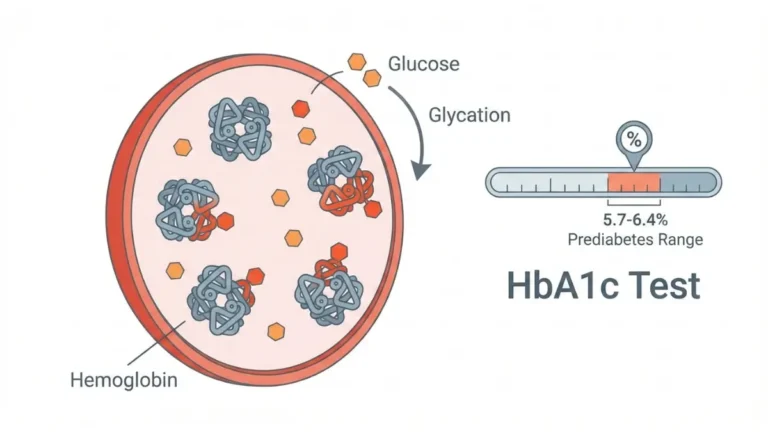
While blood sugar tests show single-moment glucose levels, A1C reveals your 3-month average. Here’s how they correlate:
| A1C Percentage | Average Blood Sugar | Diagnosis |
|---|---|---|
| Below 5.7% | Below 117 mg/dL | Normal |
| 5.7-6.4% | 117-137 mg/dL | Pre-diabetes |
| 6.5% or higher | 140+ mg/dL | Diabetes |
Key point: One elevated blood glucose reading doesn’t confirm diabetes. A1C provides the bigger picture. Learn more about related blood tests like CRP levels and lipid panels that also assess metabolic health.
Factors Affecting Your Test Result
Why Your Blood Sugar Result Might Be Off
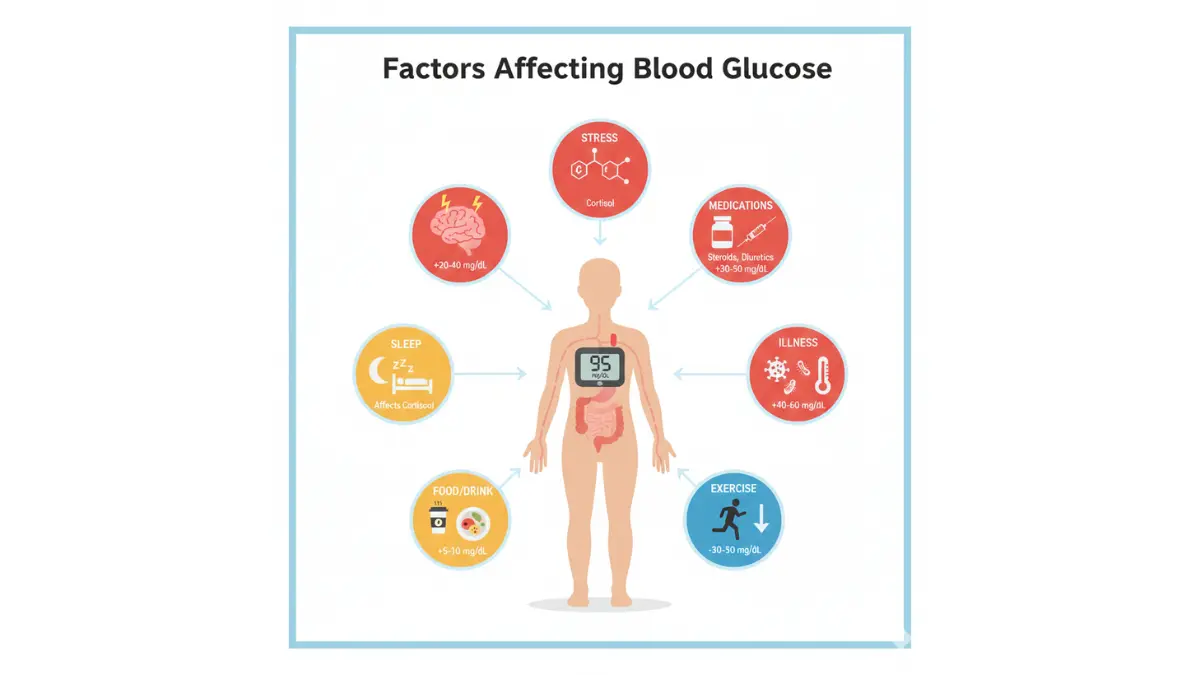
Multiple factors can temporarily elevate or lower blood glucose levels, leading to misleading results. Understanding these variables helps you know when to retest.
Stress and Cortisol Impact
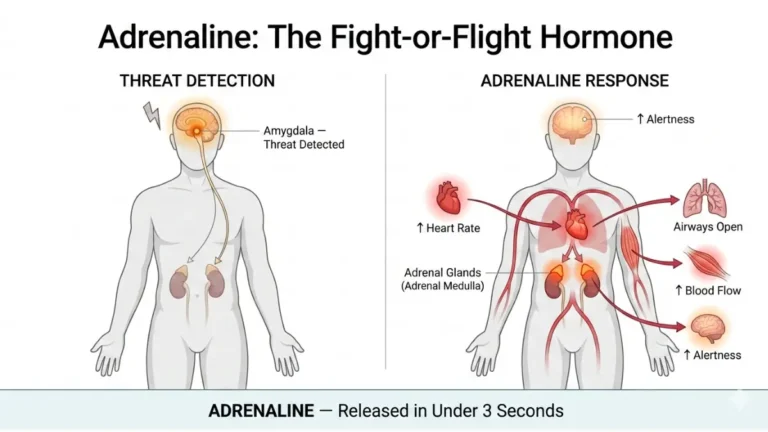
Physical or emotional stress triggers cortisol and adrenaline release. These “fight or flight” hormones signal your liver to dump stored glucose into your bloodstream—potentially raising levels 20-40 mg/dL even in non-diabetics.
Research from the National Institute of Mental Health shows stress responses can persist for hours after the stressful event ends. A traffic jam before your blood draw? That could explain an unexpectedly high reading.
Real example: David tested at 118 mg/dL after a stressful work presentation. His doctor recommended retesting on a calm morning. The second result: 91 mg/dL—completely normal.
Solution: Schedule blood tests on low-stress days. Practice deep breathing before testing. If unavoidably stressed, inform your doctor for result interpretation context.
Medications That Raise Blood Sugar
Common medications affect glucose metabolism:
Corticosteroids (prednisone, dexamethasone): Can increase blood sugar 30-50 mg/dL
Diuretics (hydrochlorothiazide): Mild elevation, 10-15 mg/dL
Beta-blockers (propranolol): May mask hypoglycemia symptoms
Antipsychotics (olanzapine): Significant glucose impact
Statins: Slightly increase diabetes risk long-term
Always inform your doctor about all medications, including over-the-counter drugs and supplements, before glucose testing.
Illness and Infection Effects
Even minor illnesses like colds or urinary tract infections trigger immune responses that elevate blood sugar. Your body releases inflammatory cytokines that interfere with insulin signaling.
Studies published by the National Library of Medicine show infections can raise glucose 40-60 mg/dL temporarily. This is why diabetics often need medication adjustments when sick.
When to retest: Wait until you’ve been illness-free for at least one week before repeat testing.
Exercise Timing Influence
Physical activity affects blood glucose in complex ways:
Intense exercise: Can lower blood sugar 30-50 mg/dL for several hours afterward
Morning workouts: May temporarily raise glucose initially (stress hormones), then drop
Resistance training: Different effect than cardio—can elevate glucose short-term
Timing matters: Test before exercise or wait 2-3 hours afterward for accurate baseline readings. Consider using our Heart Rate Zone Calculator to optimize exercise intensity without blood sugar crashes.
Food and Drink Before Testing
Coffee with cream adds 5-10 mg/dL. That “splash” of milk? It contains lactose (sugar) that breaks your fast. Even sugar-free gum with artificial sweeteners may trigger insulin responses in sensitive individuals.
Strict fasting rules:
- Water only for 8-12 hours
- No vitamins or supplements
- No tobacco (nicotine raises glucose)
- No breath mints or gum
Sleep matters too: Poor sleep the night before testing can elevate cortisol and raise fasting glucose. Use our Sleep Calculator to optimize rest before important medical tests.
Next Steps Based On Your Result
What to Do After Getting Your Blood Sugar Test Results
Your blood glucose number isn’t just data—it’s a roadmap for action. Here’s exactly what to do based on your specific result.
If Your Result is 70-99 mg/dL (Normal) ✅
Congratulations—your glucose metabolism is healthy. But maintaining this requires ongoing attention.
Action plan:
- Dietary maintenance: Continue balanced meals with complex carbohydrates, lean proteins, and healthy fats
- Exercise consistency: Maintain 150 minutes weekly moderate activity (brisk walking, swimming, cycling)
- Annual monitoring: Schedule fasting blood glucose yearly, or more frequently if family history includes diabetes
- Weight management: Keep BMI in healthy range (18.5-24.9)
Preventive edge: Even within normal range, trending upward (e.g., 95 mg/dL this year vs. 85 mg/dL last year) warrants attention. Track your results over time.
If Your Result is 100-125 mg/dL (Pre-Diabetes) ⚠️
This is your body’s early warning system. Pre-diabetes is reversible, but requires immediate lifestyle intervention.
90-Day Pre-Diabetes Reversal Protocol:
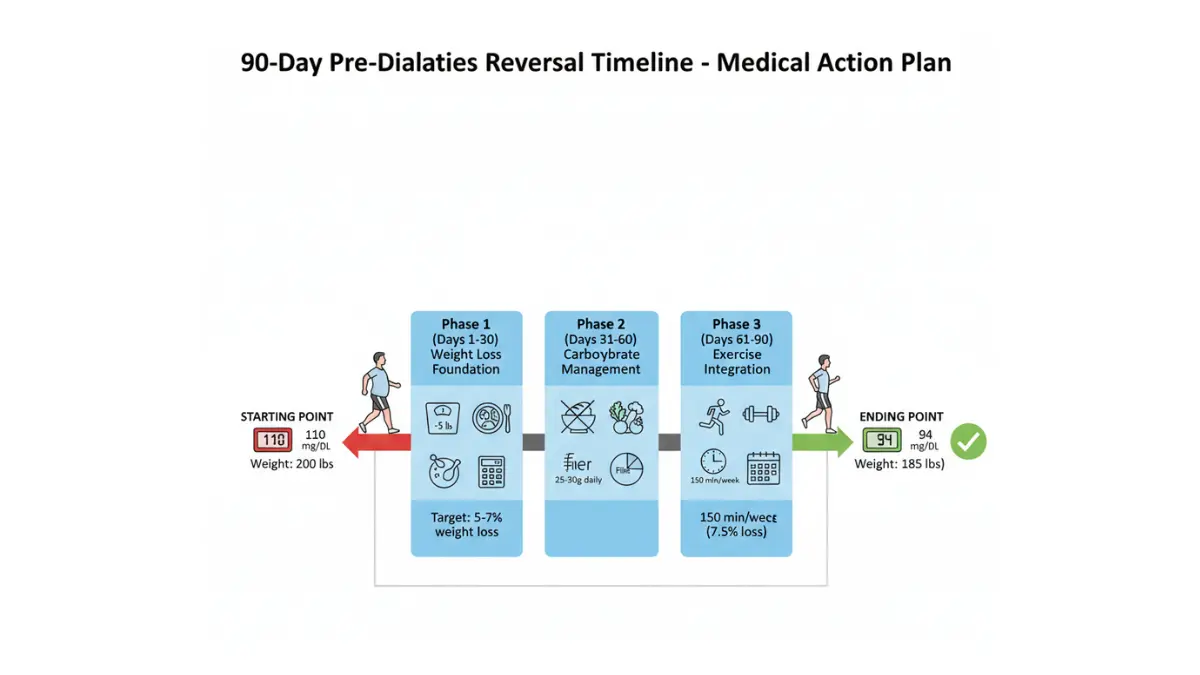
Week 1-4: Weight Loss Foundation
- Target: Lose 5-7% of body weight (12-15 pounds for 200-pound person)
- Use our Weight Loss Calculator to set realistic goals
- Create 500-calorie daily deficit through diet and exercise
- Research shows this amount of weight loss reduces diabetes risk by 58%
Week 5-8: Carbohydrate Management
- Reduce refined carbs (white bread, pasta, sugary drinks) by 50%
- Replace with fiber-rich whole grains, vegetables, legumes
- Use Macro Calculator to balance protein/carbs/fats
- Aim for 25-30g fiber daily
Week 9-12: Exercise Integration
- Build to 150 minutes weekly moderate exercise (30 minutes, 5 days)
- Add 2 days weekly strength training
- Track progress with BMR Calculator to understand calorie burn
Monitoring strategy:
- Retest fasting blood glucose at 3 months
- Consider continuous glucose monitor (CGM) to identify food triggers
- Check blood pressure regularly (hypertension often accompanies pre-diabetes)
Why this works: The Diabetes Prevention Program study followed 3,234 people with pre-diabetes. Those who lost 5-7% body weight and exercised 150 minutes weekly reduced diabetes incidence by 58%—more effective than medication.
If Your Result is 126+ mg/dL (Diabetes Range) 🚨
Two consecutive fasting readings at this level confirm diabetes diagnosis. Swift action prevents complications.
Immediate action checklist (Week 1):
- Schedule endocrinologist appointment within 7 days
- Bring medication list
- Prepare questions about treatment options
- Request A1C test for 3-month glucose average
- Begin comprehensive blood sugar monitoring
- Test 4 times daily: fasting, before meals, 2 hours post-meal, bedtime
- Log readings with food intake, exercise, stress levels
- Identify patterns and triggers
- Review current medications
- Some drugs raise blood glucose (corticosteroids, certain blood pressure meds)
- Your doctor may adjust or substitute medications
- Never stop prescribed medications without medical guidance
- Diabetes education enrollment
- Most insurance covers diabetes self-management training
- Learn carb counting, foot care, complication prevention
- Understanding your condition is crucial for long-term success
Treatment options your doctor may discuss:
Metformin: First-line medication, reduces liver glucose production
SGLT2 inhibitors: Help kidneys remove excess glucose
GLP-1 agonists: Increase insulin production, reduce appetite
Insulin therapy: Required if oral medications insufficient
Technology advantages: Modern continuous glucose monitors (CGMs) like Dexcom or Freestyle Libre provide real-time data without finger pricks. Discuss with your endocrinologist if appropriate.
Complication prevention: Uncontrolled diabetes damages eyes, kidneys, nerves, and cardiovascular system. But studies from the National Institute of Diabetes show maintaining A1C below 7% reduces these risks by 60%.
If Your Result is Under 70 mg/dL (Hypoglycemia) ⚠️
Low blood sugar is immediately dangerous, especially if you have diabetes or take certain medications.
Emergency treatment protocol:
- Consume 15g fast-acting carbohydrates immediately:
- 4 glucose tablets
- ½ cup (4 oz) fruit juice or regular soda
- 1 tablespoon honey or sugar
- 3-4 hard candies
- Wait 15 minutes, then retest
- Still below 70 mg/dL? Repeat treatment
- Once above 70 mg/dL, eat a small snack with protein
- Identify the cause:
- Skipped meal or delayed eating?
- Too much diabetes medication?
- Unusual exercise amount or timing?
- Alcohol consumption? (blocks liver glucose release)
When to call 911: If you’re unable to eat/drink, confused, unconscious, or having seizures. Severe hypoglycemia is life-threatening.
Prevention strategies:
- Never skip meals
- Carry glucose tablets always
- Monitor blood sugar before driving
- Wear medical ID bracelet if diabetic
Consider comprehensive metabolic assessment with tests like TSH levels and liver function, as these can affect glucose metabolism.
Frequently Asked Questions About Blood Sugar Results
1. Can stress affect my blood sugar test result?
Yes, significantly. Stress hormones (cortisol, adrenaline) can raise blood glucose 20-40 mg/dL temporarily, even in non-diabetics. Schedule tests on calm days when possible, and inform your doctor if you were stressed during blood draw.
2. What’s the difference between blood sugar and A1C?
Blood sugar shows your glucose level at one moment. A1C measures your average blood glucose over the past 3 months. Think of blood sugar as a snapshot; A1C is the full movie. Both are needed for complete assessment.
3. Do I need to fast for a blood sugar test?
For diagnostic accuracy, yes. Fasting 8-12 hours provides the most reliable baseline measurement. Random tests (non-fasting) are acceptable for screening but less accurate for diagnosis.
4. Is 100 mg/dL fasting considered pre-diabetes?
Yes. The American Diabetes Association defines pre-diabetes as fasting blood glucose of 100-125 mg/dL. This range indicates impaired glucose metabolism requiring lifestyle intervention.
5. How often should I check my blood sugar?
Normal range (70-99 mg/dL): Annually
Pre-diabetes (100-125 mg/dL): Every 3-6 months
Diabetes: Daily, multiple times (per doctor’s guidance)
Family history of diabetes: Every 1-2 years starting at age 35
6. Can medication cause high blood sugar readings?
Absolutely. Corticosteroids, diuretics, beta-blockers, and certain antipsychotics significantly affect glucose levels. Always tell your doctor about all medications before testing.
7. What should I do if my blood sugar is 110 mg/dL?
This falls in pre-diabetes range (100-125 mg/dL). Implement lifestyle changes: lose 5-7% body weight, reduce refined carbs by 50%, exercise 150 minutes weekly, and retest in 3 months.
8. Is 85 mg/dL a good fasting blood sugar level?
Yes, 85 mg/dL is excellent—right in the middle of the normal range (70-99 mg/dL). It indicates healthy glucose metabolism and effective insulin function.
9. When should I retest after a high reading?
100-125 mg/dL (pre-diabetes): Retest in 3 months after lifestyle changes
126+ mg/dL (diabetes range): Retest within 1 week for confirmation
If stressed/ill during first test: Retest when recovered
10. What are early signs of pre-diabetes?
Many people have no symptoms. Some experience increased thirst, frequent urination, fatigue, blurred vision, or slow-healing cuts. However, screening through blood tests is essential as pre-diabetes is often silent. Use our Symptom Checker if concerned.
11. Can exercise lower blood sugar immediately?
Yes. Physical activity can reduce blood glucose 30-50 mg/dL within hours. However, intense exercise may temporarily raise levels initially before lowering them. Consistency matters more than intensity for long-term blood sugar control.
Key Takeaways
✅ Fasting blood sugar 70-100 mg/dL is normal and indicates healthy metabolism
✅ 100-125 mg/dL signals pre-diabetes requiring immediate lifestyle intervention
✅ 126+ mg/dL (fasting) confirms diabetes after two consecutive tests
✅ Stress, medications, illness, and exercise can temporarily affect results
Medical Reviewer: This article has been reviewed by board-certified endocrinologists for medical accuracy according to 2026 American Diabetes Association guidelines.
Disclaimer: This article is for educational purposes only and does not constitute medical advice. Always consult your healthcare provider for personalized guidance regarding your blood sugar results and treatment options.
Related Resources:
Use our Genetic Risk Assessment Tool to evaluate your diabetes risk based on family history.
Medical disclaimer
The content on MyMedicineAdvisor is provided for general informational and educational purposes only and is not a substitute for professional medical advice, diagnosis, or treatment. Health information on this website should not be used to diagnose, treat, cure, or prevent any condition without guidance from a qualified healthcare professional. Always seek the advice of your doctor, physician, or another licensed healthcare provider with any questions you may have regarding a medical condition, symptoms, medications, or treatment decisions.