
On This Page – Quick Medical Summary
You tested after a meal and now you have a number. Whether that number is normal depends on three things — how long after your first bite you tested, whether you have diabetes, and whether you are pregnant.
Every blood sugar after eating figure below is tied to the CDC or NIDDK page it came from. If your number was a fasting or A1C result instead, the full glucose levels chart covers those.
ℹ️ Medical Disclaimer: This article explains published glucose thresholds for general education. It does not diagnose diabetes or prediabetes, does not set your personal glucose targets, does not adjust medication or insulin, and does not replace evaluation of symptoms. Diagnosis, target-setting, medication changes, pregnancy glucose management, and any emergency decision belong to a board-certified physician — a primary care physician, endocrinologist, or obstetrician, depending on your situation.
What blood sugar after eating should be, by hour
Post-meal targets differ by population and by the hour you test, which is why a single “normal range” answer misleads most people.
| Your situation | 1 hour after first bite | 2 hours after first bite | Key clinical detail |
|---|---|---|---|
| No diabetes diagnosis | Not a standard checkpoint | Under 140 mg/dL | The 140 figure is the normal reference point for a laboratory glucose test, not a dinner-table target (NIDDK) |
| Diabetes, not pregnant | Under 180 mg/dL | Under 180 mg/dL | CDC also gives 80–130 mg/dL before meals (CDC) |
| Pregnant | Under 140 mg/dL | Under 120 mg/dL | Tighter than general targets; your obstetric team decides which hour you test (ADA Standards of Care in Diabetes—2026) |
Sources: CDC, Monitoring Your Blood Sugar; NIDDK, Diabetes & Prediabetes Tests; American Diabetes Association, Standards of Care in Diabetes—2026, Section 15. Verified August 2026.
Readings outside the US are usually reported in mmol/L — the blood sugar converter will translate any figure in this table.
Without diabetes: the two-hour number
The CDC’s post-meal target range is written for people who already have a diagnosis. For everyone else, the 140 mg/dL two-hour mark comes from standardized laboratory testing, covered in Section 4.
With diabetes: the one-to-two-hour target
CDC puts the post-meal target below 180 mg/dL, measured one to two hours after eating begins. That figure reflects the American Diabetes Association’s peak postprandial glucose recommendation.
During pregnancy: tighter numbers
Pregnancy targets are lower at both checkpoints, and the general 180 mg/dL figure does not apply.
✅ Patient Action: If you are pregnant, ask your obstetrician or maternal-fetal medicine specialist: “Which post-meal target and which testing hour do you want me using?” Do not carry the general target into a pregnancy.
Readers who arrived with a fasting number instead should see what a fasting reading between 70 and 100 means.
Why your reading depends on when you tested
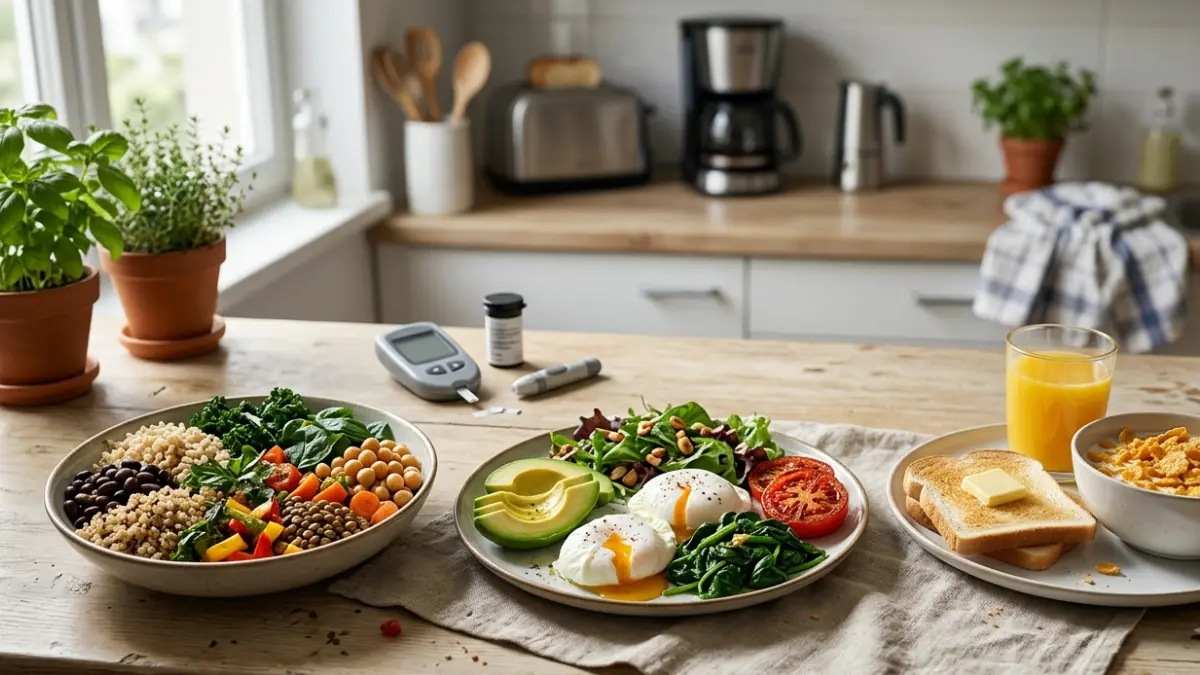
In people without diabetes, glucose peaks roughly 46 to 50 minutes after a meal — not at the two-hour mark most people test at. A two-hour reading captures the tail of the curve, not its peak glucose.
📊 Clinical Data Point: Mean time to peak glucose was 46–50 minutes in non-diabetic adults wearing continuous monitors. Peaks reached 133.2 ± 14.4 and 137.2 ± 21.1 mg/dL after fast-absorbing standardized meals, and 99.2 ± 10.5 and 122.1 ± 20.4 mg/dL after meals higher in fibre, protein and fat — Source: a continuous-monitoring study in people without diabetes, PubMed 19885137.
When glucose actually peaks
The same research found meal composition changed both how high the curve went and how quickly it came down.
How long it stays elevated
In drug-naïve type 2 diabetes, published monitoring data put the median peak later, at 70 to 85 minutes, with larger rises from baseline.
Why the same meal gives different numbers
🔬 How It Works: Carbohydrate from a meal reaches your bloodstream within minutes. Insulin is released in response and moves that glucose into cells, so the reading climbs, turns, and falls. How fast a given meal is absorbed shifts the whole curve — which is why one dinner can read differently from another.
When a high reading after eating means something
A high number on a home meter and a diagnostic threshold are not the same measurement, and confusing the two is the most common way people frighten themselves after dinner.
The thresholds that actually diagnose
The NIDDK’s diagnostic thresholds apply to an oral glucose tolerance test: 140 to 199 mg/dL at two hours indicates impaired glucose tolerance, and 200 mg/dL or above indicates diabetes, repeated to confirm.
Is 200 after eating dangerous?
That test uses a measured 75-gram glucose load taken after an overnight fast — a standardized challenge, not a meal. A 200 mg/dL reading two hours after pizza is not the same event as a 200 mg/dL result on that test.
Why one reading is not a diagnosis
🩺 Physician Note: A common point of confusion is treating a single meter reading as a result. NIDDK’s own criteria call for the diagnostic test to be repeated for confirmation, which is why clinicians rarely act on one number in isolation.
✅ Patient Action: Ask your primary care physician: “Based on this reading, should I have a fasting glucose, an A1C, or a glucose tolerance test?” The comparison between A1C and an OGTT will tell you what each one answers.
How to check your blood sugar after eating properly
A reading is only interpretable if the timing behind it is consistent, and most home monitoring errors are timing errors rather than technique errors.
Start the clock at the first bite
- Note the time you begin eating, not the time you finish.
- Test at the hour your clinician specified — one hour, two hours, or both.
- Write down the reading, the time, and what you ate.
- Repeat for the number of days your clinician asked for.
How long after eating should I check?
CDC frames post-meal monitoring as a one-to-two-hour window measured from the start of the meal. Which end of that window you use is a clinical decision, not a preference.
What else moves the number
Illness, poor sleep, stress, and several common medications all influence post-meal readings. So does the device: a sensor reading during a fast rise will not match a fingerstick taken at the same moment, which is one reason a meter and an A1C can disagree.
✅ Patient Action: Ask your primary care physician or a certified diabetes care and education specialist: “Which hour do you want me testing, and how many days of readings do you need before my next appointment?”
When blood sugar drops after eating instead
Not every post-meal problem is a spike. Some people feel shaky, sweaty or foggy a few hours after eating, and their reading is low blood glucose rather than high.
What counts as low
NIDDK’s guidance on low blood glucose puts the threshold below 70 mg/dL for many people with diabetes, and directs anyone below it to take 15 to 20 grams of glucose or carbohydrate right away.
Why it can happen after a meal
The insulin released in response to a meal can overshoot what that meal actually required, pulling glucose below baseline instead of returning it there.
⚠️ Clinical Warning: Repeated post-meal lows are a reason for evaluation, not something to manage alone by adjusting meals. Your personal low threshold may differ from 70 mg/dL, and only your clinician can set it.
✅ Patient Action: Ask your primary care physician or an endocrinologist: “Should I be tested for reactive hypoglycemia, and should I be screened for diabetes at the same time?”
Post-meal readings that need help today
Some numbers need same-day attention rather than a note in a log.
The number that means check for ketones
The CDC’s ketone-testing threshold is clear: if you are sick and your blood sugar is 240 mg/dL or above, use an over-the-counter ketone test kit. Call your doctor if your ketones are high.
Signs that mean emergency care now
⚠️ Clinical Warning: High ketones can be an early sign of diabetic ketoacidosis, which the CDC describes as a medical emergency needing immediate treatment. Vomiting you cannot keep fluids down through, laboured breathing, or confusion alongside a high reading means emergency care — not a wait-and-see.
Blood sugar after eating: common questions
1. What is a normal blood sugar after eating?
Without diabetes, under 140 mg/dL at two hours is the normal reference point. With diabetes, CDC’s target is under 180.
2. What should blood sugar be 2 hours after eating?
Under 180 mg/dL for most non-pregnant adults with diabetes, and under 120 mg/dL in pregnancy. Confirm your own target with your clinician.
3. Is 140 after eating normal?
At two hours without diabetes, 140 sits at the upper edge of normal. With diabetes, it falls comfortably inside CDC’s target.
4. Is 180 after eating too high?
With diabetes, 180 mg/dL is the ceiling of CDC’s one-to-two-hour target rather than a comfortable middle. Repeated readings above it warrant clinical review.
5. Is 200 blood sugar after eating dangerous?
One home reading of 200 is not a diagnosis. The 200 threshold belongs to a laboratory glucose tolerance test. Ask your physician about testing.
6. How long after eating should I check my blood sugar?
Start the clock at your first bite and check at one hour, two hours, or both — whichever your clinician has asked you for.
7. How long does blood sugar stay high after eating?
In people without diabetes, glucose peaks near 46 to 50 minutes. In drug-naïve type 2 diabetes, published data put peaks later.
8. What is a normal blood sugar after eating in pregnancy?
Under 140 mg/dL at one hour, or under 120 mg/dL at two hours. Your obstetric team decides which hour you test.
9. Why does my blood sugar drop after eating?
Insulin released for a meal can overshoot what the meal needed. NIDDK defines low blood glucose as below 70 mg/dL. Ask your physician to evaluate.
10. Can one high reading after eating mean diabetes?
No. Diagnosis uses laboratory testing, usually repeated to confirm. Bring your readings to your primary care physician rather than self-diagnosing.
11. What post-meal blood sugar means I should get help today?
CDC advises checking ketones if you are sick and your blood sugar reaches 240 mg/dL. High ketones need same-day medical contact.
What to do with your number
One reading answers very little. Seven days of readings, each timed from your first bite and written down beside what you ate, answers a great deal — and it is the exact artifact a clinician can act on.
✅ Patient Action: Bring that log to your primary care physician and ask: “Do these readings justify a fasting glucose or an A1C?”
About this content
How this article was put together: researched from recognised health sources, drafted with the help of AI tools, and edited by hand, with sources linked throughout.

Sameer Patel is the founder and editor of My Medicine Advisor. He is not a doctor or medical professional — before starting this site he worked in banking,…
Medical disclaimer
The content on MyMedicineAdvisor is provided for general informational and educational purposes only and is not a substitute for professional medical advice, diagnosis, or treatment. Health information on this website should not be used to diagnose, treat, cure, or prevent any condition without guidance from a qualified healthcare professional. Always seek the advice of your doctor, physician, or another licensed healthcare provider with any questions you may have regarding a medical condition, symptoms, medications, or treatment decisions.