
On This Page – Quick Medical Summary
The short answer, and who each device is for
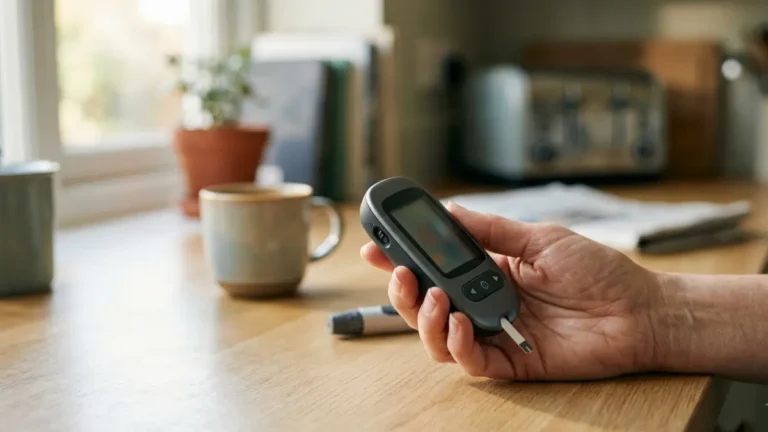
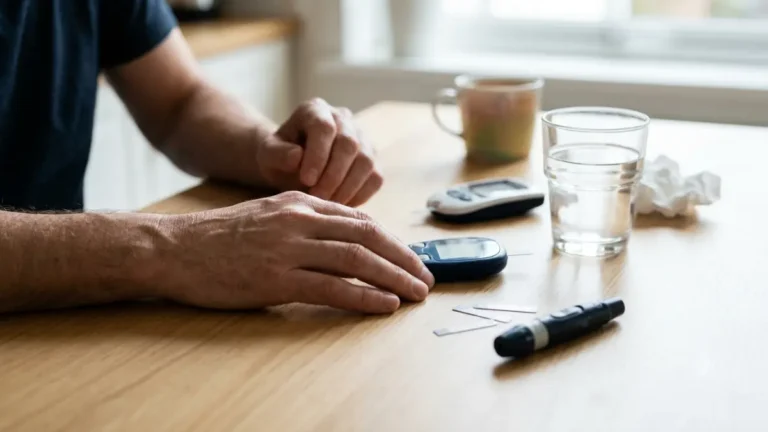
For one reading at one moment, a correctly performed finger stick is the closer number, because it samples glucose directly from capillary blood. A continuous glucose monitor reads interstitial fluid instead, so it trails your blood by minutes. Neither device is a laboratory reference; both are measured against one.
Which one is more accurate?
Neither, overall. The meter is closer for a single point in time. The sensor is better at direction, speed, and the overnight patterns that testing would miss.
Which situation are you in?
- Your two numbers disagree and a decision is pending — go to “Your CGM and meter disagree.”
- You started a sensor within the last two weeks — go to the finger-stick technique section.
- You started a new medicine or supplement — go to the interference section.
- Your symptoms don’t match either number — go straight to the safety section.
If you are still working out what the numbers themselves mean, the full glucose levels chart covers the ranges both devices are judged against.
ℹ️ Medical Disclaimer: This article explains how two glucose-measurement technologies work and where each is reliable. It does not diagnose diabetes, set glucose targets, or direct insulin dosing, medication changes, or hypoglycemia treatment. Device labeling differs by model and generation, so confirm anything specific to your sensor or meter against its current instructions for use. Bring monitoring and dosing decisions to a board-certified endocrinologist or a certified diabetes care and education specialist.
Blood vs interstitial fluid: what each device measures
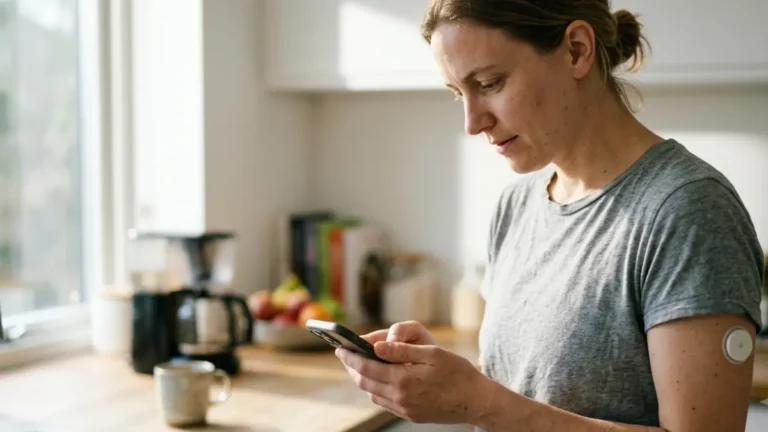
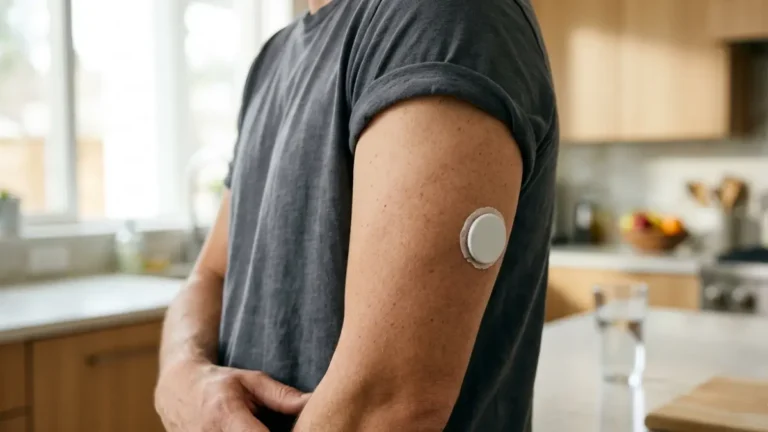
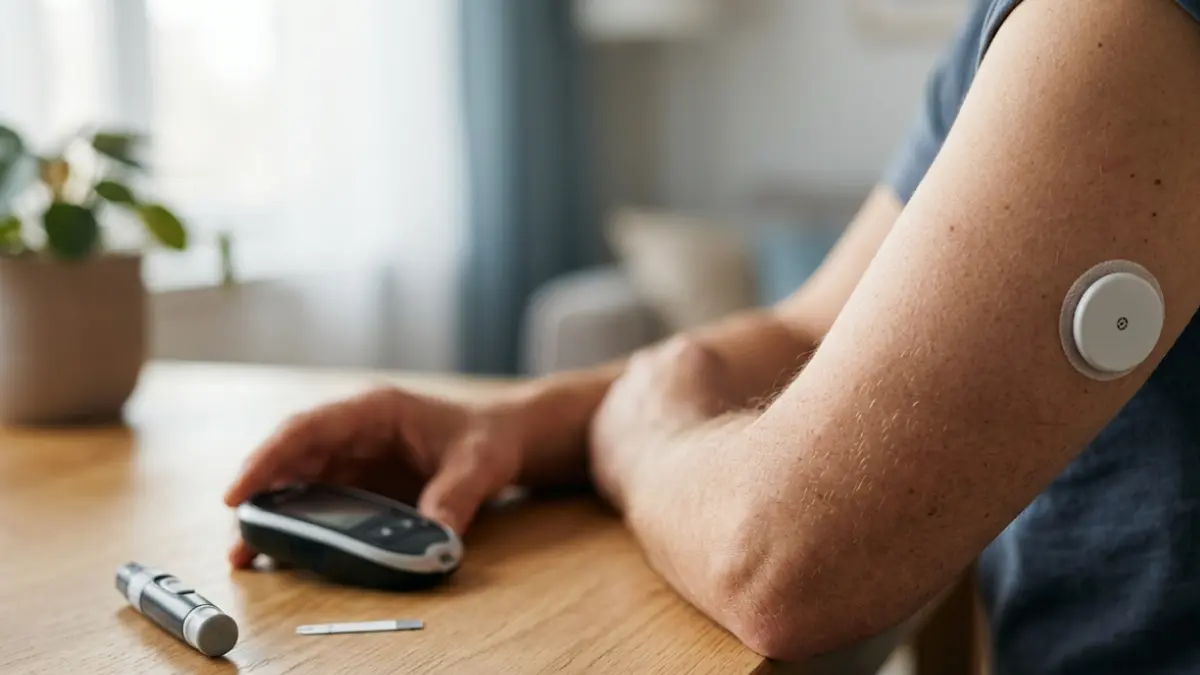
The gap between your two numbers is usually a working system, not a broken one. A meter measures capillary blood drawn from your fingertip. A sensor measures interstitial fluid, the thin layer surrounding the cells just under your skin.
Why the two numbers are not measuring the same thing
Glucose has to cross out of your bloodstream and into that fluid before a sensor can detect it. That crossing takes time.
🔬 How It Works: A sensor filament sits in interstitial fluid, where an enzyme reacts with glucose and produces a tiny electrical current proportional to the concentration. Glucose reaches that fluid from plasma in roughly five to six minutes in healthy adults, measured directly with tracer and microdialysis techniques. What appears on your screen lags a little further, because sensor chemistry and smoothing algorithms add their own delay.
When the gap gets biggest
Abbott’s own labeling names the conditions: differences between sensor and finger-stick readings show up during rapid change, such as after eating, after dosing insulin, or during exercise. When glucose is flat, the two numbers converge.
What the accuracy numbers actually say
Most people assume the meter is truth and the sensor is the approximation. Regulators do not treat either that way. Both are permitted a wide margin, and knowing how wide reframes almost every disagreement you will see.
| Device | What the standard requires | Key clinical detail |
|---|---|---|
| Home blood glucose meter (OTC) | 95% of results within ±15% of reference; 99% within ±20% | A meter reading 100 mg/dL may legitimately sit between 85 and 115 |
| Integrated CGM (iCGM), adults | Above 70% of readings 70–180 mg/dL within ±15%; above 87% of all readings within ±20% | Below 70 mg/dL, above 85% must fall within ±15 mg/dL |
| Both | Compared against a laboratory analyzer, not against each other | Two devices can disagree and both still meet their standard |
Sources: FDA guidance on self-monitoring blood glucose test systems for over-the-counter use; iCGM special controls, 21 CFR 862.1355, verified August 2026.
What MARD means, and why you cannot rank devices with it
Mean absolute relative difference is the average percentage gap between a sensor and a laboratory comparator.
📊 Clinical Data Point: The Dexcom G7 reported an overall MARD of 8.2% for arm-placed sensors across 316 participants and 77,774 matched pairs — Source: Garg et al., Diabetes Technology & Therapeutics, 2022.
Figures from different manufacturers’ own validation studies are not directly comparable, because study populations, glucose ranges and reference methods differ. Treat single-digit MARD as evidence a device is good, not as a leaderboard position. Readings here are in mg/dL; you can convert between mg/dL and mmol/L if your results come in the other unit.
Your CGM and meter disagree — which one do you act on?
The answer depends on what is happening to your glucose, not on which device is better built.
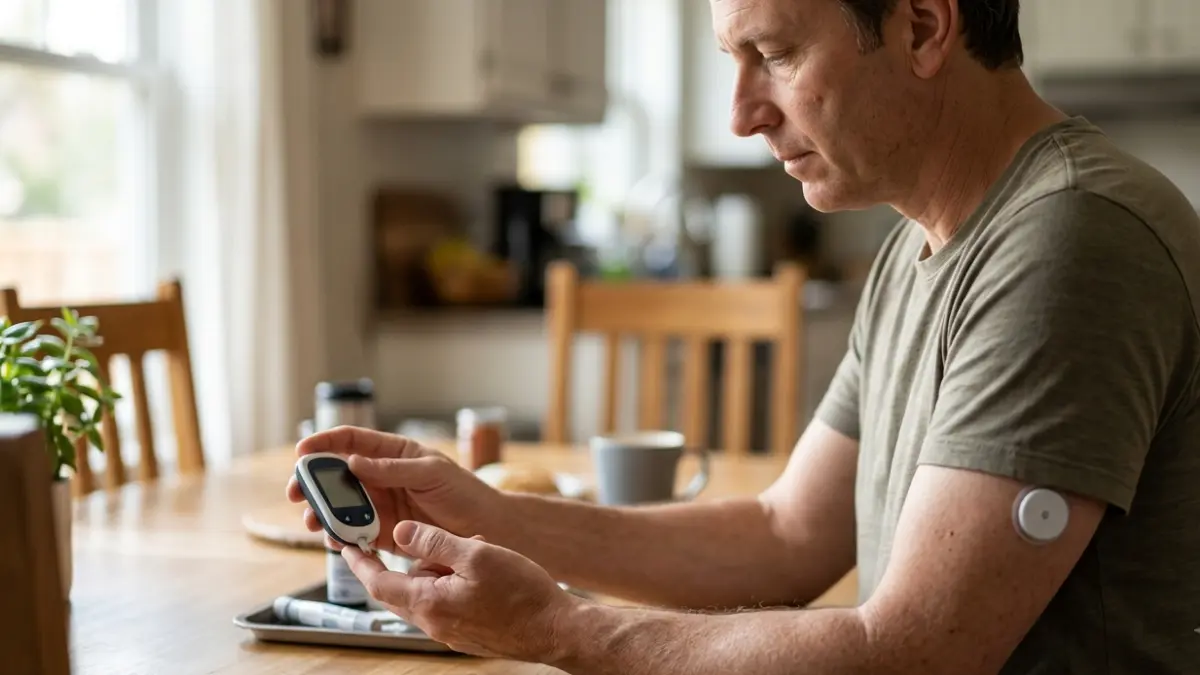
When to confirm with a meter
- Your symptoms do not match what the screen says.
- Your glucose is changing quickly — after a meal, after insulin, during or after exercise.
- Your sensor is in its warm-up window or its first day of wear.
- Your reading would trigger a decision you cannot easily undo.
When the sensor is the better guide
For direction, rate of change, and overnight patterns, the sensor sees what intermittent testing cannot. A single meter value tells you nothing about where you are heading.
🩺 Physician Note: The ADA’s Standards of Care in Diabetes—2026 continues to advise that people using CGM keep meter access for situations where readings do not match symptoms or expectations, including sensor warm-up and supply gaps. In hospital, confirmatory point-of-care glucose is used for insulin dosing and hypoglycemia assessment under institutional protocol.
Mismatches between measurement methods are common enough to have their own patterns — the same question comes up when your A1c doesn’t match your meter.
✅ Patient Action: Ask your endocrinologist or diabetes care and education specialist: “Given my regimen, at what point should I stop acting on my sensor and dose from a meter instead?”
How to get a finger stick reading you can trust
A confirmation test is only worth doing if the technique is right, and the most common error inflates the result.
Wash first, and why alcohol wipes are not enough
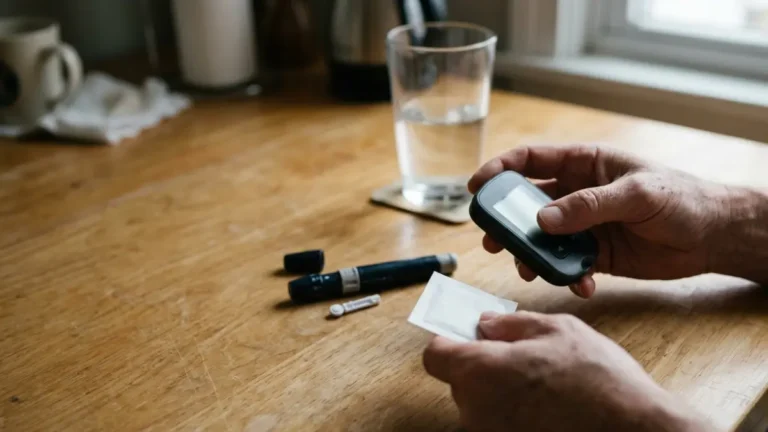
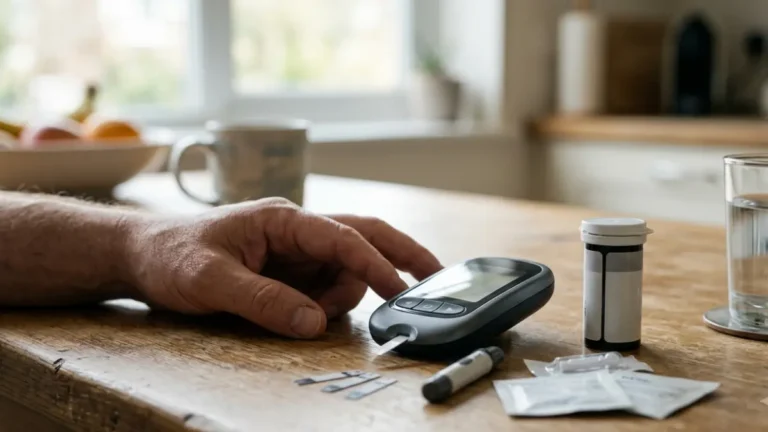
- Wash your hands with soap and water, then dry them fully.
- Use a fresh lancet and a test strip within its expiry date.
- Let a full drop form rather than squeezing the fingertip hard.
- Apply the drop to the strip immediately.
In published testing, handling fruit before a finger stick raised readings substantially when hands were not washed — and rubbing the finger with an alcohol swab did not fix it, while washing with tap water did.
Do you need to calibrate your CGM?
Current Dexcom and FreeStyle Libre sensors ship factory-calibrated and do not require routine finger-stick calibration. Entering a contaminated or badly timed value can push a sensor away from a true low. Follow the instructions that came with your specific sensor.
Medicines and situations that skew a sensor reading
Some sensor errors have a cause you can look up rather than guess at. Two are documented in device labeling, and both push readings in the same direction — upward.
Medicines named in device labeling
Acetaminophen: Dexcom’s labeling states that G6 and G7 readings remain usable for treatment decisions at standard doses, and that higher-than-maximum intake may make readings look higher than they are. Hydroxyurea, used in some cancer and sickle cell treatment, is flagged more strongly — Dexcom directs users not to make treatment decisions from G7 readings while taking it.
Vitamin C: Abbott’s labeling states that more than 500 mg of ascorbic acid per day may falsely raise FreeStyle Libre 3 sensor readings. Multivitamins and cold remedies can reach that on their own, as documented in the FDA’s review of the sensor.
⚠️ Clinical Warning: Every interference listed above biases readings upward, which means the risk is not a wrong number — it is a real low that never triggers an alert. If you take any of these, confirm suspicious readings with a meter and raise it with the clinician who prescribed them.
Compression lows and the first-day effect
Lying on a sensor can compress the tissue around it and produce a falsely low reading that recovers once you move. If you bought your sensor without a prescription, note that over-the-counter CGMs are not designed to alert you to problematic hypoglycemia.
When a mismatch is a safety problem, not a data problem
Everything above is about measurement. This section overrides it.
Treat what you feel, not what the screen says
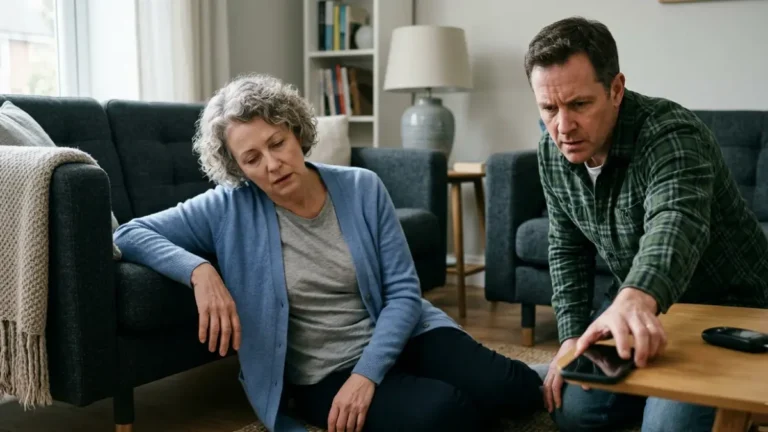
If you have symptoms of a low and your sensor says you are fine, the symptoms carry more weight than the display. Confirm with a meter and follow the plan your care team gave you. Knowing what a low actually feels like matters more here than any accuracy figure.
When to contact your care team
Call if readings and symptoms keep diverging, if a sensor repeatedly disagrees with confirmed meter values, or if you cannot resolve a low. Severe symptoms are an emergency call, not a troubleshooting exercise.
✅ Patient Action: Ask your diabetes care team to write down your plan for the specific case where your sensor and your symptoms disagree, before it happens at 2am.
Common questions about CGM and finger stick accuracy
1. Is a CGM more accurate than a finger stick?
Neither wins overall. A finger stick is closer for one moment; a CGM is better at direction and overnight patterns.
2. Why is my CGM reading different from my finger stick?
They sample different fluids. Your sensor reads interstitial fluid, which trails capillary blood, especially after meals, insulin, or exercise.
3. How far off can a CGM reading be?
FDA rules require above 87% of readings within ±20% of reference, so individual readings can differ noticeably from a meter.
4. Do I still need a finger stick if I have a CGM?
Yes, keep a meter. ADA’s 2026 standards advise confirming when readings don’t match symptoms. Ask your care team what applies to you.
5. Which is more accurate when my blood sugar is dropping fast?
The finger stick. Sensors trail blood glucose during rapid change, so a falling sensor number may already be behind reality.
6. How long does a CGM lag behind blood glucose?
Glucose takes about five to six minutes to move from plasma into interstitial fluid, and the displayed sensor lag is longer still.
7. Why does my CGM read low when I sleep on it?
Lying on a sensor compresses the tissue around it and can produce a falsely low reading that recovers after you move.
8. Can acetaminophen affect my CGM reading?
Dexcom’s labeling says G6 and G7 readings stay usable at standard doses; higher intake may read falsely high. Confirm with your pharmacist.
9. Does vitamin C affect a FreeStyle Libre sensor?
Abbott’s labeling states more than 500 mg daily may falsely raise Libre 3 readings. Check supplement labels with your pharmacist.
10. Do I have to wash my hands before a finger stick?
Yes. Fruit residue on unwashed fingers raised readings in testing, and an alcohol swab alone did not remove it.
11. Should I calibrate my CGM with a finger stick?
Current Dexcom and Libre sensors ship factory-calibrated and don’t require routine calibration. Follow your device’s instructions and ask your care team.
What to do with both numbers
Use the meter for the point and the sensor for the direction, and stop asking which one is lying. Most disagreements you will see are two compliant devices sampling two different fluids. Bring the pattern, not a single reading, to your endocrinologist or diabetes care and education specialist. MedlinePlus has a step-by-step guide to using a self-test meter if you want to check your technique.
About this content
How this article was put together: researched from recognised health sources, drafted with the help of AI tools, and edited by hand, with sources linked throughout.

Sameer Patel is the founder and editor of My Medicine Advisor. He is not a doctor or medical professional — before starting this site he worked in banking,…
Medical disclaimer
The content on MyMedicineAdvisor is provided for general informational and educational purposes only and is not a substitute for professional medical advice, diagnosis, or treatment. Health information on this website should not be used to diagnose, treat, cure, or prevent any condition without guidance from a qualified healthcare professional. Always seek the advice of your doctor, physician, or another licensed healthcare provider with any questions you may have regarding a medical condition, symptoms, medications, or treatment decisions.