
On This Page – Quick Medical Summary
Can a smartwatch measure blood sugar on its own?
No. No smartwatch or smart ring sold today measures blood sugar without piercing the skin, and the FDA has cleared none of them to do it.
Buying one? The cleared alternatives are below. Already wearing one and trusting its numbers? What to do now is further down. Seen glucose on someone else’s watch face? That is explained too.
About 40.1 million people in the US live with diabetes, so the demand is real. The technology is not, and what your glucose numbers mean still depends on a reliable reading.
ℹ️ Medical Disclaimer: This article explains how blood glucose devices are regulated in the United States. It does not diagnose diabetes, recommend a device, set glucose targets or guide medication decisions. Before changing how you monitor your blood sugar, consult a board-certified endocrinologist or your primary care clinician.
What the FDA warning actually says
On February 21, 2024 the FDA published a warning on these devices, and it still stands.
Which devices the warning covers
All of them. The safety communication covers any smartwatch or smart ring claiming to measure blood glucose without piercing the skin, regardless of brand. The agency described products from dozens of companies sold under many names.
Why an inaccurate reading is dangerous
⚠️ Clinical Warning: The FDA states that inaccurate readings can lead to the wrong dose of insulin, sulfonylureas or other glucose-lowering medication. That can cause dangerously low blood glucose, which the agency notes may progress to confusion, coma or death within hours.
Why a wrist sensor cannot read your glucose yet
Regulators have not cleared these devices because the measurement itself has not been shown to work.
What the sensor on your wrist actually measures
🔬 How It Works: The green light on the back of a watch is an optical sensor. It reads how much light your skin absorbs as blood volume changes with each heartbeat, which is how it estimates heart rate. Glucose produces no signal it can isolate.
What happens when these devices are tested
📊 Clinical Data Point: Across 1,223 samples compared with a laboratory method, 18.5% of readings from a light-based non-invasive monitor met the ISO 15197:2013 accuracy standard, against a 95% requirement. Source: Mondal et al., Indian Journal of Endocrinology and Metabolism, 2024.
It also read high: a median of 188 mg/dL against a laboratory median of 135 mg/dL.
What your smartwatch can actually show about glucose
If you have seen someone check glucose on a watch face, they were reading a sensor worn elsewhere on the body.
Your watch as a screen for a sensor you already wear
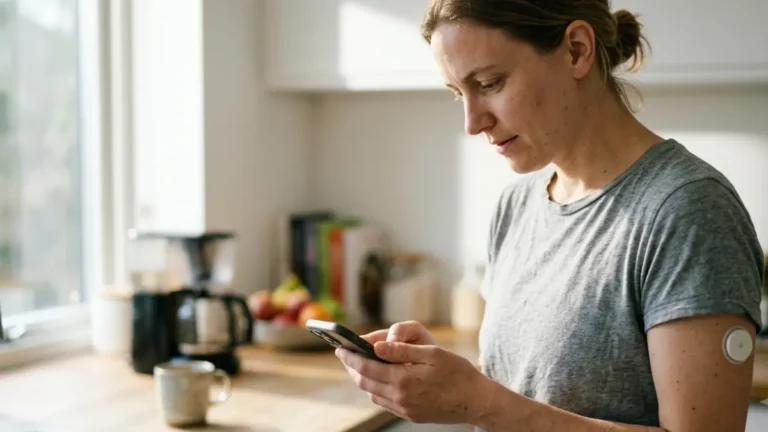
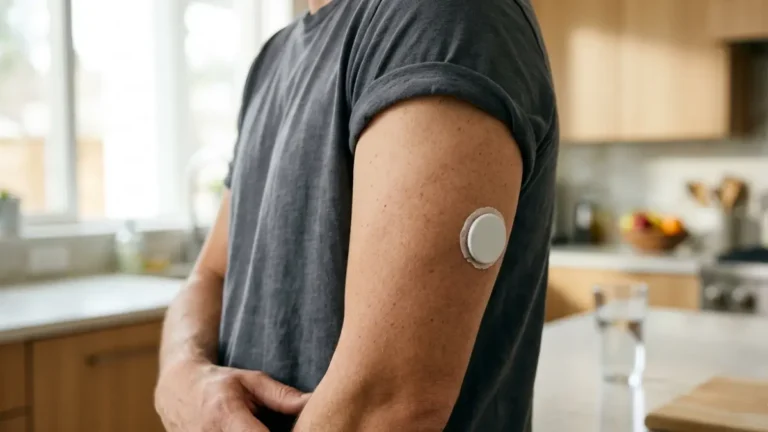
A continuous glucose monitor puts a thin filament under the skin and sends its reading to a phone or watch. The FDA’s warning excludes apps displaying data from an authorized skin-piercing device. The watch is a screen, not a sensor.
Weighing the options? Here is how CGM readings differ from fingerstick results.
What a watch tracks that is not glucose
Steps, sleep and heart rate are real measurements, and each relates to glucose control. None is a glucose reading.
FDA-cleared ways to check your blood sugar instead
Three kinds of glucose device are cleared in the United States, and all three cross the skin:
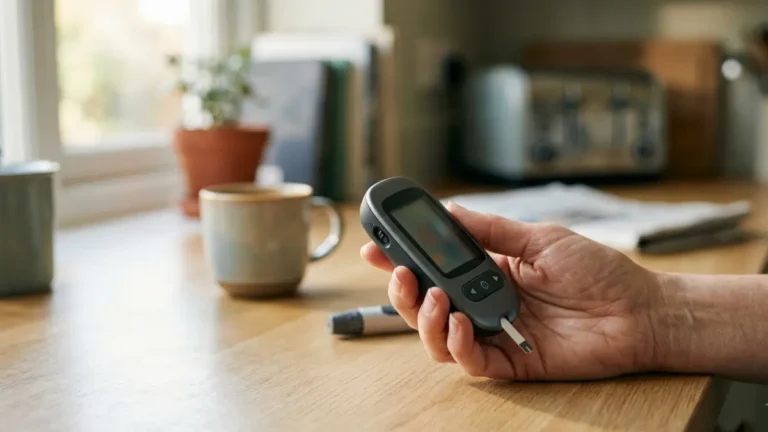
- Fingerstick meters, which test a drop of blood
- Prescription continuous glucose monitors
- Over-the-counter continuous glucose monitors
Meters and prescription CGMs
A meter with test strips is the cheapest cleared option. Prescription CGMs remain the standard for people using insulin.
CGMs sold without a prescription
In March 2024 the FDA cleared the first over-the-counter CGM for people 18 and older not using insulin, later extending it to children aged two and up. It cannot alert users to low blood sugar. Two more followed in June 2024, compared in this guide to buying a CGM without a prescription.
In August 2026 the FDA authorized the first wearable tracking glucose and ketones together. It still measures beneath the skin. The newest cleared device on the market went under the skin too.
✅ Patient Action: Ask your clinician or endocrinologist: “Is a meter or a CGM the better fit for how I manage my blood sugar, and which does my plan cover?”
How to spot a fake blood sugar watch before buying
Brand names on these listings change constantly, so learn the pattern instead of the names.
The claim that disqualifies a device instantly
Any product promising a glucose reading with no prick and no sensor is not cleared. That claim alone rules it out, whatever the reviews say.
How to check a device’s status yourself
- Find the FDA clearance number on the listing or packaging.
- Look that number up in the FDA’s public device databases.
- Check the cleared use covers glucose measurement, not general wellness.
- If no number exists, treat the device as unreviewed.
The same discipline applies to cleared products, in this glucose meter buying checklist.
What to do if you have been using one already
Plenty of people bought one in good faith, and finding out now beats finding out later.
Stop using the readings for decisions
Do not adjust food, activity or medication based on numbers from an unauthorized device. Until you have a cleared reading, watch for symptoms of low blood sugar rather than a number on your wrist.
How to report a device that gave wrong numbers
The FDA asks the public to report problems with unauthorized devices through its MedWatch form. It also advises clinicians to help patients choose a cleared monitor.
Smartwatch blood sugar questions, answered
1. Can a smartwatch measure blood sugar without a finger prick?
No. No smartwatch measures blood sugar without piercing the skin, and the FDA has cleared none.
2. Has the FDA approved any smartwatch for blood sugar?
No. The FDA has not authorized, cleared or approved any smartwatch or ring to measure glucose.
3. Can an Apple Watch check blood sugar?
No mainstream smartwatch measures glucose itself. It displays readings from an authorized sensor worn under the skin.
4. Do smart rings measure glucose better than watches?
No. The FDA warning covers rings and watches equally, regardless of brand or sensing method claimed.
5. What if someone doses insulin from a smartwatch reading?
An inaccurate reading can cause a wrong dose and dangerously low glucose. Discuss dosing with your clinician.
6. Which glucose monitors are FDA-cleared?
Fingerstick meters, prescription CGMs and over-the-counter CGMs. All pierce the skin. Ask your clinician which fits.
7. Can you buy a CGM without a prescription?
Yes. The FDA cleared the first over-the-counter CGM in March 2024. Confirm suitability with your clinician.
8. Do over-the-counter CGMs pierce the skin?
Yes. A thin filament sits under the skin, measuring glucose in surrounding fluid rather than from the surface.
9. How accurate are non-invasive glucose watches?
In one 2024 hospital evaluation, 18.5% of a light-based monitor’s readings met the ISO accuracy standard.
10. Why does the FDA warning apply to every brand?
Because no non-invasive method measures glucose reliably, the agency wrote one warning covering every brand.
11. Will a no-prick glucose watch ever arrive?
Possibly, but nothing is authorized today. Every FDA-cleared glucose device still measures through the skin.
The short version
No smartwatch or smart ring is cleared to measure blood sugar, and the FDA’s position covers every brand. What is cleared still crosses the skin, from a fingerstick meter to the glucose and ketone sensor authorized in August 2026.
About this content
How this article was put together: researched from recognised health sources, drafted with the help of AI tools, and edited by hand, with sources linked throughout.

Sameer Patel is the founder and editor of My Medicine Advisor. He is not a doctor or medical professional — before starting this site he worked in banking,…
Medical disclaimer
The content on MyMedicineAdvisor is provided for general informational and educational purposes only and is not a substitute for professional medical advice, diagnosis, or treatment. Health information on this website should not be used to diagnose, treat, cure, or prevent any condition without guidance from a qualified healthcare professional. Always seek the advice of your doctor, physician, or another licensed healthcare provider with any questions you may have regarding a medical condition, symptoms, medications, or treatment decisions.