
On This Page – Quick Medical Summary
A continuous glucose monitor costs $49 to $99 a month over the counter. Prescription sensors run $150 to $570 at pharmacy cash prices before discounts.
Three readers land here, and a different number matters to each:
- No prescription. The over-the-counter rows below are your prices.
- Prescription, no coverage. Retail cash is rarely what you must pay; start at the savings section.
- Undecided. Read the meter and evidence sections first.
About 40 million Americans have diabetes, and 115.2 million adults have prediabetes. Most have no CGM coverage.
ℹ️ Medical Disclaimer: This article explains device pricing, coverage rules and monitoring options as general education. It does not diagnose, select a device, adjust medication, or determine what a plan pays. Consult a board-certified endocrinologist or your primary care physician before buying a monitor or changing how you manage blood sugar.
What each glucose monitor costs per month in cash
Over-the-counter and prescription prices side by side
Two numbers decide what you pay: the cash price, and the price after a program you may already qualify for.
| Device | How you buy it | Cash, 30 days | After discount | Key clinical detail |
|---|---|---|---|---|
| Abbott Lingo | Over the counter | $89 for two 14-day sensors; $49 for one | $249 per 12 weeks | Wellness device, not diabetes management |
| Dexcom Stelo | Over the counter | $99 for two 15-day sensors | $89 monthly subscription | Adults, plus children 2+ off insulin |
| Abbott Libre Rio | Over the counter | No published US retail price | — | For type 2 diabetes without insulin |
| FreeStyle Libre 3 Plus | Prescription | $236–$241 | $151–$162 with a card; $75 or less on the copay program | Phone replaces the reader |
| Dexcom G7 | Prescription | $490–$572 | $174–$185 with a coupon | Receiver (~$429) optional |
| Meter and strips | Over the counter | ~$11 at two tests daily | — | Strips ~18 cents; meter ~$20 |
Prices checked 28 August 2026 against manufacturer and pharmacy sources; they vary by pharmacy and change often.
What the sticker price leaves out
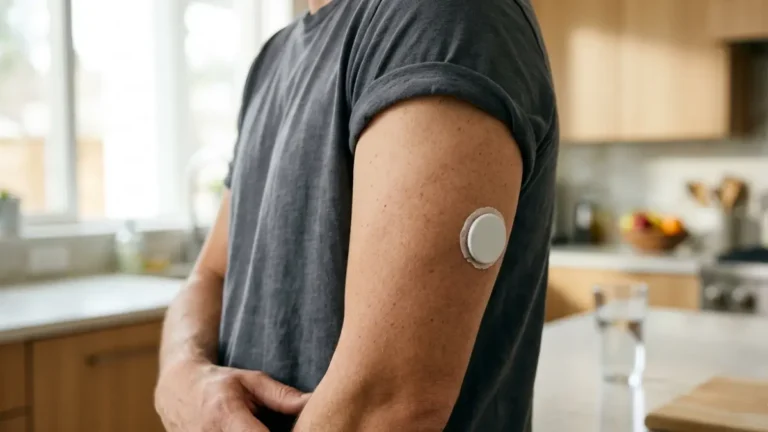
Labeling states about 20% of Stelo sensors may not last 15 days, and 22.9% of Lingo biosensors may not reach 14 days. See our breakdown of the three OTC sensors.
Can you use the cheaper over-the-counter sensor?
They are not a budget edition of the prescription device; they are cleared for a narrower group.
Who they are cleared for
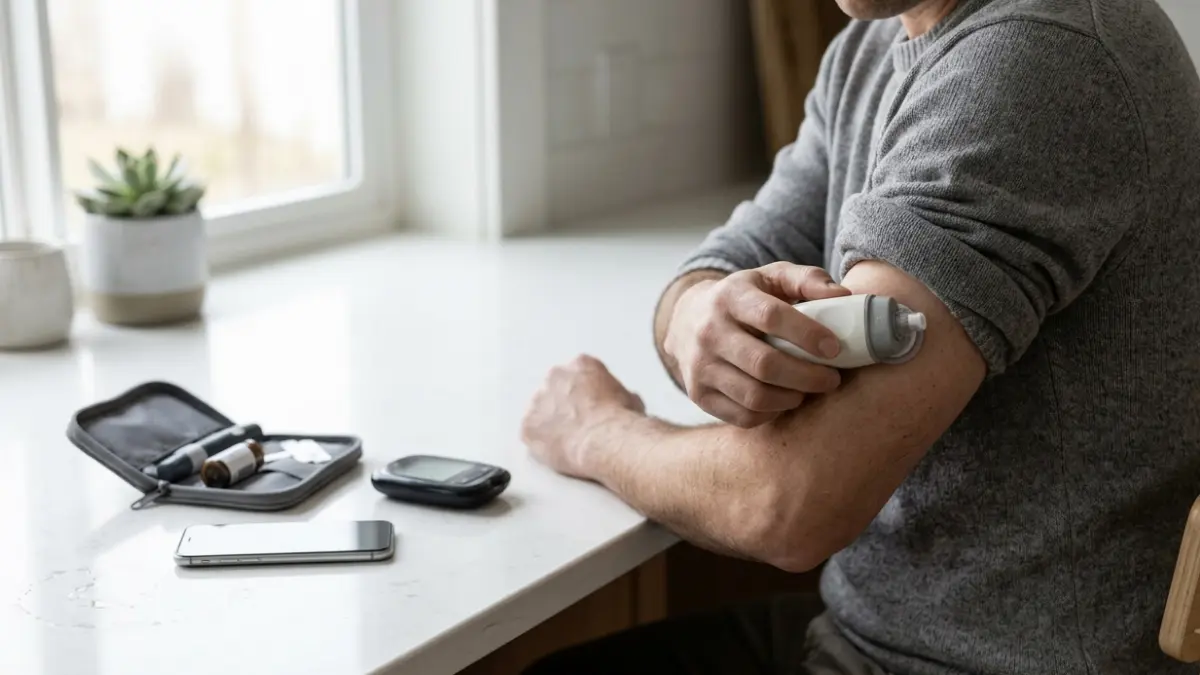
The FDA cleared the first over-the-counter CGM in March 2024 for adults 18 and older not using insulin, including people managing type 2 diabetes with oral medication, and in June 2026 cleared one for children aged 2 and older under adult supervision.
Who still needs the prescription version
⚠️ Clinical Warning: Over-the-counter sensors are not for people with problematic hypoglycemia, because they are not designed to alert you when blood sugar falls dangerously low. They are also not for people on dialysis.
✅ Patient Action: Ask your primary care physician or endocrinologist: “Given my medications, is an over-the-counter sensor appropriate, or do I need one that alarms for lows?”
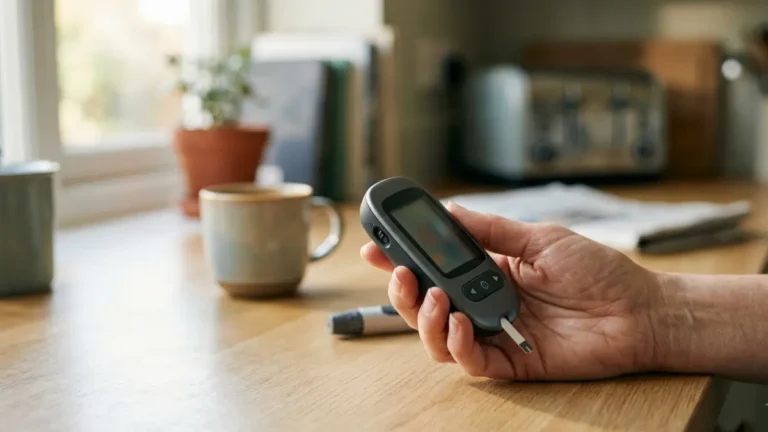
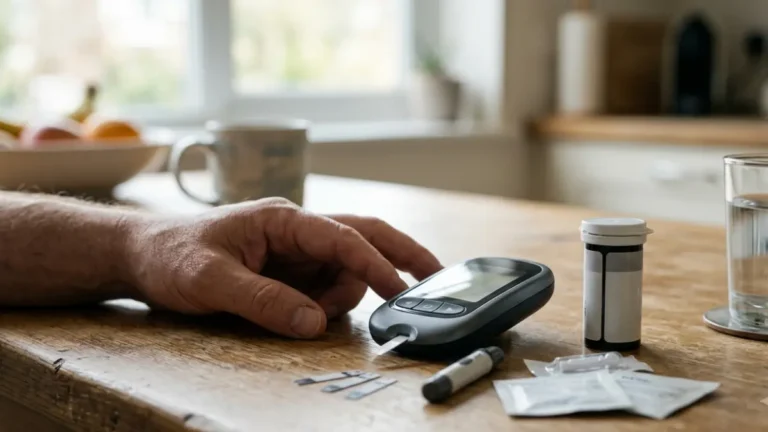
The cheapest way to track glucose is still a meter and strips
What a meter and strips cost
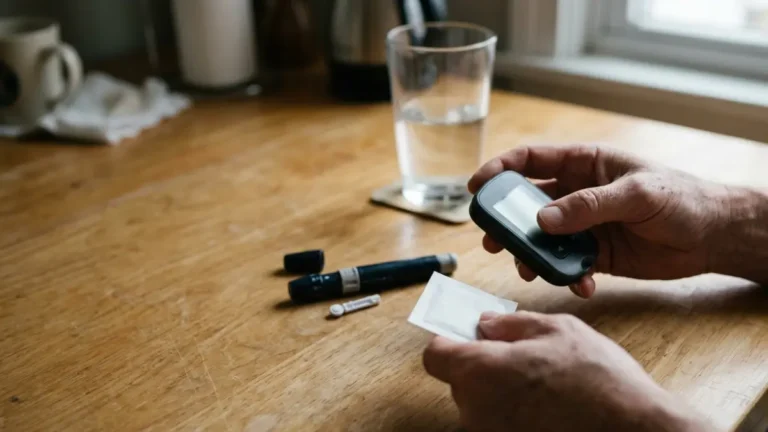
Store-brand test strips run about 18 cents each, or $18 per 100. Testing twice daily costs near $11 a month, plus $20 once for the meter. Our checklist for choosing a basic meter covers what matters at that price.
When fingersticks are enough
📊 Clinical Data Point: Medicare Part B covers monitors, strips and lancets for people with diabetes even when they do not use insulin — up to 100 strips every three months. Source: CMS, Medicare Coverage of Diabetes Supplies, February 2026.
An A1c gives a three-month average with no device purchase, which is what many non-insulin decisions rest on.
Five ways to cut the price before you buy
Manufacturer savings programs
Dexcom’s pharmacy savings program cuts more than half off its monthly cash price, usable 12 times a year but not alongside insurance. Abbott’s copay program brings eligible insured and uninsured buyers to $75 or less for two sensors, and excludes anyone on Medicare or Medicaid. Dexcom also runs income-based assistance; confirm it is open first.
Discount cards, pharmacy shopping and HSA funds
A discount card brings two Libre 3 Plus sensors to $151–$162 and also cannot be combined with insurance. Cash prices differ between pharmacies, so ask two or three. Sensors and strips are commonly listed as HSA or FSA eligible.
Medicare’s two qualifying pathways
Part B covers a CGM when it is prescribed per its FDA indications and you either use insulin or have documented problematic hypoglycemia, with a clinician visit within six months of ordering.
✅ Patient Action: If either pathway fits, ask your prescriber: “Can you document my insulin use or hypoglycemia history so the device qualifies?”
Is a CGM worth the money if you’re not on insulin?
What the trials actually show
A 2025 review of the randomized evidence in non-insulin-treated type 2 diabetes found smaller, less consistent A1c improvements than in insulin users, with some trials showing no advantage over structured fingerstick testing plus education.
Where the benefit is clearest
Non-insulin groups still showed gains in time in range and glucose variability even where A1c barely moved.
🩺 Physician Note: A sensor answers a question rather than replacing a routine. Two weeks of wear to learn how meals affect you is a different purchase from indefinite monitoring, and costs far less.
Whether monitoring earns its price depends partly on overall risk; check where your weight-related risk sits and take it to the appointment.
Where a cheap sensor can cost you more
No alarm for lows
An over-the-counter sensor will display a low number. It will not wake you for one.
Never change medication from a reading alone
FDA guidance is explicit that users and caregivers should consult their provider before any medication adjustment based on a device’s output.
Sensors that fail early, plans that renew
Roughly one in five sensors may not reach full wear time. Stelo sales are final, and Lingo’s 12-week plan auto-renews.
⚠️ Clinical Warning: Sensors read interstitial fluid, not blood, so values lag when glucose moves fast. If a reading does not match how you feel, confirm with a fingerstick before acting — the two differ by design, not by fault.
Common questions about CGM costs without insurance
1. How much does a CGM cost without insurance?
Over-the-counter CGM cost without insurance runs $49–$99 monthly; prescription sensors run $150–$570 at cash prices.
2. What is the cheapest CGM without insurance?
Abbott’s Lingo starts near $49 for one 14-day sensor; Dexcom’s Stelo two-pack is about $99.
3. Can you buy a CGM without a prescription?
Yes. The FDA cleared the first over-the-counter CGM in March 2024, and they now sell directly to consumers.
4. Does Medicare cover a CGM?
Part B covers CGMs for insulin-treated people or those with documented problematic hypoglycemia, plus a clinician visit within six months.
5. Are over-the-counter CGMs covered by insurance?
Generally no. Retail sensors sit outside Medicare’s durable medical equipment benefit, so you pay full price.
6. How much is Dexcom G7 without insurance?
Retail cash runs $490–$570 per 30-day supply; the manufacturer’s pharmacy program cuts more than half off.
7. How much is FreeStyle Libre 3 without insurance?
About $236–$241 for two sensors, a 30-day supply; the copay program brings eligible buyers to $75 or less.
8. Is a CGM cheaper than test strips?
No. Store-brand strips cost about 18 cents each, so testing twice daily runs near $11 monthly.
9. Do over-the-counter CGMs alert you to low blood sugar?
No. The FDA states they are not for people with problematic hypoglycemia because they cannot alert you.
10. Can I use an HSA or FSA to pay for a CGM?
Sensors and strips are commonly listed as HSA or FSA eligible; confirm with your plan administrator.
11. Is a CGM worth the money if you’re not on insulin?
Trial evidence is mixed for non-insulin type 2 diabetes, with smaller benefits than in insulin users. Ask your clinician.
What to do next
No prescription? Buy one month over the counter rather than a subscription. Have one? Run the manufacturer program before paying retail. Undecided? Start with a $20 meter, an appointment, and what your glucose numbers actually mean.
About this content
How this article was put together: researched from recognised health sources, drafted with the help of AI tools, and edited by hand, with sources linked throughout.

Sameer Patel is the founder and editor of My Medicine Advisor. He is not a doctor or medical professional — before starting this site he worked in banking,…
Medical disclaimer
The content on MyMedicineAdvisor is provided for general informational and educational purposes only and is not a substitute for professional medical advice, diagnosis, or treatment. Health information on this website should not be used to diagnose, treat, cure, or prevent any condition without guidance from a qualified healthcare professional. Always seek the advice of your doctor, physician, or another licensed healthcare provider with any questions you may have regarding a medical condition, symptoms, medications, or treatment decisions.