
On This Page – Quick Medical Summary
You ate lunch. Two hours later you are shaky, sweating, and your heart is racing. It has happened enough times now to be frightening.
Reactive hypoglycemia means low blood sugar after eating — but having symptoms after eating and having a documented low are two different things, and that distinction decides everything that follows.
Symptoms starting one to three hours after meals, with weight-loss surgery in your history? Section six. Starting more than five hours after eating? Section four. Trying to work out whether your home meter reading counts as proof? Section three answers that first.
ℹ️ Medical Disclaimer: This article is patient education, not a diagnosis, treatment plan, or medication recommendation. Blood glucose thresholds, diagnostic testing, prescription decisions, and post-surgical management must be made by a licensed clinician who has examined you and reviewed your results. If you have recurring symptoms after eating, bring them to a board-certified endocrinologist or your primary care clinician before changing your diet, your medications, or your monitoring routine.
What happens to your blood sugar after you eat
Every meal containing carbohydrate raises blood glucose, and your pancreas answers by releasing insulin to move that glucose out of the bloodstream and into cells.

Why insulin can overshoot
In reactive hypoglycemia, the insulin response and the glucose absorption fall out of step. Glucose is cleared faster than it arrives, and the level keeps falling past normal instead of settling.
🔬 How It Works: Think of insulin as a response to a signal that has already passed. Your pancreas reads the rising glucose from your meal and releases insulin to match it. If that insulin arrives late, or in larger amounts than the meal required, glucose keeps dropping after the meal’s contribution is spent.
Can this happen if you don’t have diabetes?
Yes — though hypoglycemia is genuinely uncommon in people without diabetes. Outside diabetes, low blood sugar has other recognized causes of low blood sugar in people without diabetes, including alcohol, an insulin-producing tumor, hormone deficiencies, and severe organ failure.
What blood sugar level actually counts as low
Reactive hypoglycemia is confirmed by three findings together, not by one number: symptoms consistent with low blood sugar, a lab-measured plasma glucose below 55 mg/dL at that moment, and those symptoms resolving once glucose is raised. Clinicians call this Whipple’s triad.
The three things that have to happen together
Any one of the three alone proves nothing. Symptoms without a documented low are common and have many explanations. A low reading without symptoms may simply be measurement error.
📊 Clinical Data Point: Symptomatic hypoglycemia is diagnosed using Whipple’s triad — symptoms, a plasma glucose under 55 mg/dL (3.0 mmol/L), and resolution once glucose rises. Source: Endotext, Hypoglycemia, NIH National Library of Medicine, updated November 2025. Use our blood sugar converter if your results are reported in mmol/L.
Why your meter reading isn’t the answer
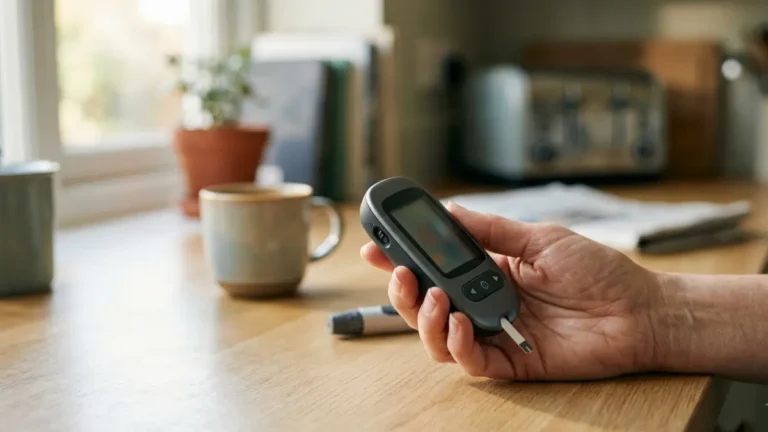
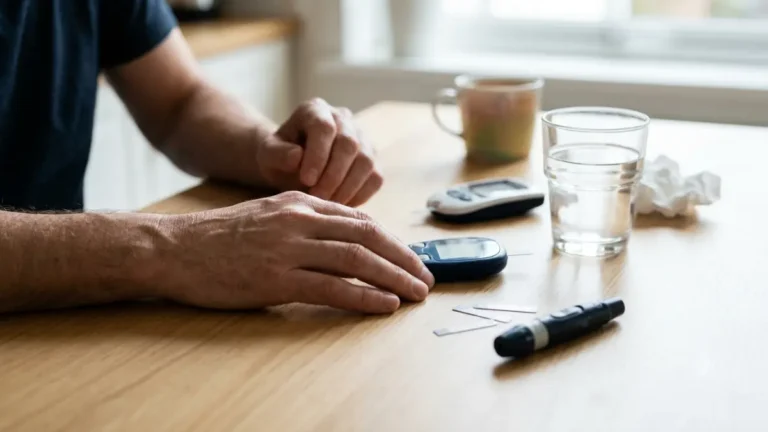
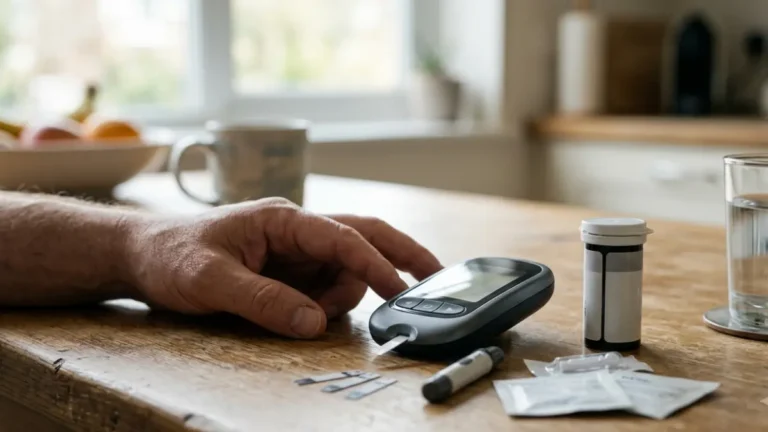
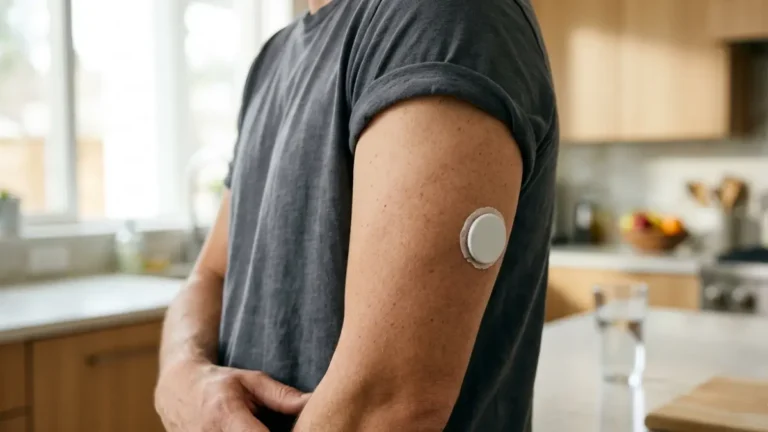
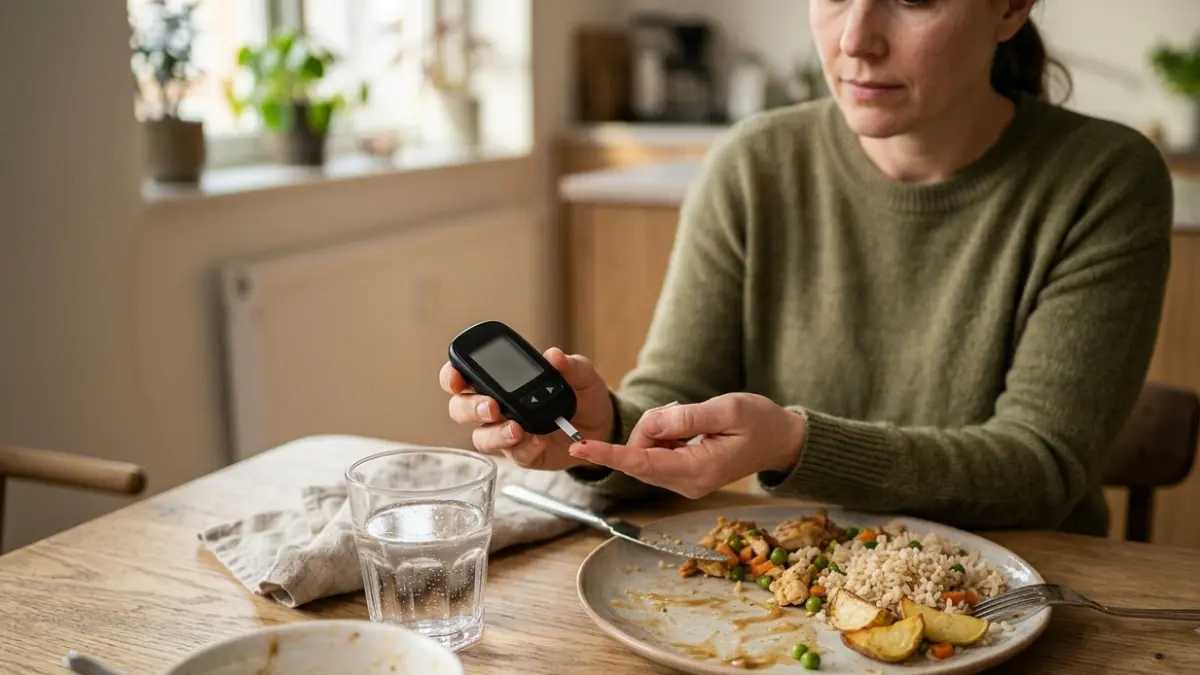
This is where most articles mislead you. Fingerstick meters and continuous glucose monitors should not be used to diagnose hypoglycemia, because their accuracy is poorest at exactly the low values in question — a point our guide to CGM versus fingerstick accuracy covers in detail.
They remain useful for something else: spotting the pattern and the trigger. A meter reading of 66 during symptoms is a reason to pursue a venous lab draw, not a diagnosis on its own.
Mild symptoms versus the ones that matter more
Adrenergic symptoms — sweating, tremor, palpitations, hunger, anxiety — tend to appear below roughly 55 mg/dL. Neuroglycopenic symptoms such as confusion, changes in vision or speech, and lethargy appear lower still, below roughly 48 to 50 mg/dL.
The 70 mg/dL figure you have read elsewhere is the alert value for people with diabetes. It is not the threshold that defines a hypoglycemic disorder in someone without one.
✅ Patient Action: Ask your primary care clinician or endocrinologist this specific question: “Can I get a venous plasma glucose drawn while I am actually having symptoms?” That single draw is worth more than months of meter readings.
How long after eating your symptoms start — and why it matters
The clock is diagnostic information. Reactive hypoglycemia describes a glucose fall two to five hours after a high-carbohydrate meal, and where your symptoms land inside — or outside — that window changes what is investigated.
Early (2–3 hours) and late (3–5 hours)
| Symptom timing | What it points toward | Key clinical detail |
|---|---|---|
| 1–3 hours | Post-bariatric hypoglycemia | Only relevant with prior stomach or weight-loss surgery |
| 2–3 hours | Early postprandial hypoglycemia | The classic reactive pattern |
| 3–5 hours | Late postprandial hypoglycemia | Still within the postprandial window |
| More than 5 hours | Fasting hypoglycemia | A different differential and a different workup |
Sources: StatPearls, Glucose Tolerance Test (NIH, updated September 2025); Endotext, Hypoglycemia (NIH, updated November 2025).
More than 5 hours after eating
Symptoms appearing more than five hours after a meal, or overnight, are classified as fasting rather than postprandial hypoglycemia. That group includes rarer causes such as an insulin-producing tumor, which is why the pattern belongs with a clinician rather than a search engine. Our guide to what normally happens to blood sugar after eating shows the comparison curve.
The Endocrine Society’s guideline on adult hypoglycemic disorders recommends evaluating hypoglycemia only where that triad has been documented — which is why the timing log matters before the testing does.
How reactive hypoglycemia is actually diagnosed
Diagnosis follows a specific order:
- Document symptoms, timing, and what was eaten across several episodes.
- Get a venous blood draw during a symptomatic episode — the strongest available evidence.
- If spontaneous episodes cannot be captured, a mixed meal test may be performed.
- Interpret insulin, C-peptide, and proinsulin alongside glucose to identify the cause.
The mixed meal test
You eat a meal resembling the one that provokes your symptoms, with samples taken before the meal and every 30 minutes for five hours. Worth knowing honestly: this diagnostic test is not well standardized between centers.
Why not a glucose tolerance test?
Because it is the wrong instrument. The five-hour oral glucose tolerance test is generally not recommended for diagnosing reactive hypoglycemia due to the risk of false-positive results — a distinction our oral glucose tolerance test timeline sets out.
🩺 Editor’s Note: A common point of confusion is assuming any glucose test can answer this question. Current guidance separates the tests by purpose — a glucose tolerance test screens for diabetes, while confirming a hypoglycemic disorder requires capturing glucose while symptoms are actually present.
Low blood sugar after eating following bariatric surgery
Post-bariatric hypoglycemia is the best-characterized form of this condition, and it behaves differently from the general pattern.
How it differs from early dumping syndrome
Early dumping occurs within an hour of eating and produces gastrointestinal and vasomotor symptoms. Post-bariatric hypoglycemia comes later and reflects an excessive insulin response.
When symptoms usually start
📊 Clinical Data Point: Post-bariatric hypoglycemia symptoms typically occur one to three hours after meals and usually appear more than a year after bariatric surgery. Reported frequency varies by how it is measured: up to about one third of post-surgical patients reported hypoglycemia symptoms during mixed meal challenges, while glucose tolerance testing detected roughly 9% to 33%. Source: Cleveland Clinic Journal of Medicine, 2025;92(2):103.
Published criteria require neuroglycopenic symptoms one to three hours after meals, at least six to twelve months after surgery, with a documented venous glucose below 54 mg/dL and no low after a prolonged fast (Journal of Clinical Endocrinology & Metabolism, 2018;103(8):2815). Treatment options exist and are chosen by a specialist.
When low blood sugar after eating needs urgent attention
Most episodes people describe are mild. A smaller number are not, and the line between them is worth knowing before you need it.
Signs that need help now
⚠️ Clinical Warning: Confusion, changes in vision or speech, seizure, or loss of consciousness are neuroglycopenic signs of severely low glucose. Severe hypoglycemia — an episode you cannot treat yourself — can cause coma or death and requires emergency care immediately, not a meter check first.
Treating an episode
NIDDK’s guidance on treating low blood glucose is written for people with diabetes: 15 to 20 grams of glucose or carbohydrate, recheck after 15 minutes, repeat if still low.
If you do not have diabetes and this keeps happening, treating each episode is not the goal. The cause needs identifying.
✅ Patient Action: Ask an endocrinologist: “My symptoms start about [X] hours after eating and have happened [X] times. What would you need documented to evaluate this properly?”
Reactive hypoglycemia: common questions
1. What is reactive hypoglycemia?
Reactive hypoglycemia is low blood sugar occurring within five hours of eating, most often two to five hours after a high-carbohydrate meal.
2. How long after eating does reactive hypoglycemia happen?
Usually two to five hours. Early episodes fall at two to three hours, late episodes at three to five hours.
3. What blood sugar level counts as reactive hypoglycemia?
A lab-measured plasma glucose below 55 mg/dL, alongside symptoms that resolve once glucose rises. The 70 mg/dL figure applies to diabetes.
4. Can you have reactive hypoglycemia without diabetes?
Yes, though hypoglycemia is uncommon without diabetes. Recognized causes include alcohol, hormone deficiencies, an insulin-producing tumor, and previous stomach surgery.
5. Does a home glucose meter reading prove reactive hypoglycemia?
No. Meters and CGMs are not accurate enough at low readings to diagnose reactive hypoglycemia, though they usefully reveal patterns.
6. Is a glucose tolerance test used to diagnose reactive hypoglycemia?
The five-hour oral glucose tolerance test is generally not recommended for diagnosing reactive hypoglycemia because it produces false-positive results.
7. What test confirms reactive hypoglycemia?
Glucose drawn during a symptomatic episode, or a mixed meal test using your trigger meal. Ask an endocrinologist which applies.
8. What if my symptoms start more than five hours after eating?
That is fasting rather than reactive hypoglycemia, and points toward different causes. Ask an endocrinologist to evaluate that pattern.
9. Can gastric bypass surgery cause low blood sugar after eating?
Yes. Post-bariatric hypoglycemia typically causes symptoms one to three hours after meals, usually appearing more than a year after surgery.
10. Is reactive hypoglycemia dangerous?
Most episodes are mild, but severely low glucose can cause loss of consciousness or seizure and needs emergency treatment.
11. What kind of doctor treats reactive hypoglycemia?
An endocrinologist evaluates reactive hypoglycemia. After bariatric surgery, your surgical team may be involved as well.
What to do next
Log the next two weeks: what you ate, when symptoms started, how long they lasted, and any reading you took.
Then take that log to a clinician and ask for one thing — a plasma glucose measured while you are having symptoms. That single documented number is what turns a frightening pattern into an answerable clinical question.
About this content
How this article was put together: researched from recognised health sources, drafted with the help of AI tools, and edited by hand, with sources linked throughout.

Sameer Patel is the founder and editor of My Medicine Advisor. He is not a doctor or medical professional — before starting this site he worked in banking,…
Medical disclaimer
The content on MyMedicineAdvisor is provided for general informational and educational purposes only and is not a substitute for professional medical advice, diagnosis, or treatment. Health information on this website should not be used to diagnose, treat, cure, or prevent any condition without guidance from a qualified healthcare professional. Always seek the advice of your doctor, physician, or another licensed healthcare provider with any questions you may have regarding a medical condition, symptoms, medications, or treatment decisions.