
On This Page – Quick Medical Summary
Quick Answer: The most effective balding treatments in 2026 are minoxidil and finasteride — FDA-approved, clinically proven, and widely available. Used together, they stop hair loss in up to 88% of men. But there are now newer options, including 2026 pipeline drugs and regenerative therapies, that competitors aren’t telling you about yet.
Brooks, a 32-year-old software engineer from Austin, Texas, noticed his hairline shifting in his late twenties. By 31, he had a visible bald spot at his crown. He tried three different shampoos and two “miracle serums” before a dermatologist finally told him the truth: he had Stage 3 male pattern baldness, and only one category of treatments would actually stop it. Within eight months of starting the right balding treatment, his hair loss stabilized — and some regrowth followed.
Most people in Brooks’s position lose 18 months searching for answers that don’t exist. This article gives you the answers in one place.
📊 2026 Stat: Up to 85% of men and 50% of women will experience significant hair loss in their lifetime. The global hair loss treatment market is projected to hit $12.3 billion by the end of 2026.
What Causes Balding? The Science Most Articles Skip
What Is Balding — Exactly?
Balding refers to excessive, progressive hair loss from the scalp. The medical term is androgenetic alopecia (AGA), and it accounts for 95% of all permanent hair loss cases in men, according to the American Hair Loss Association.
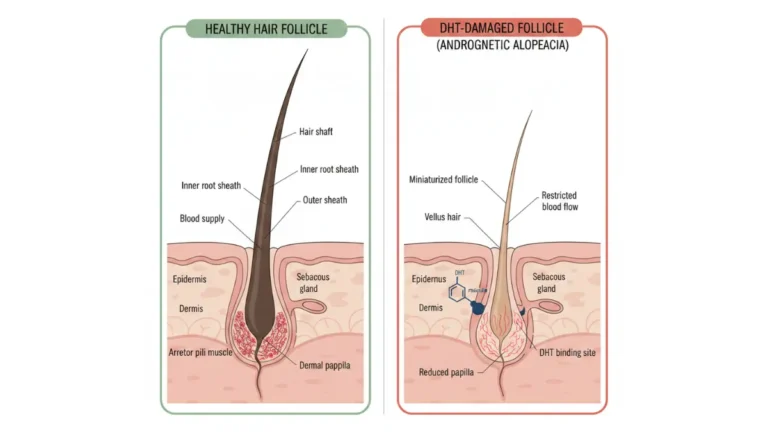
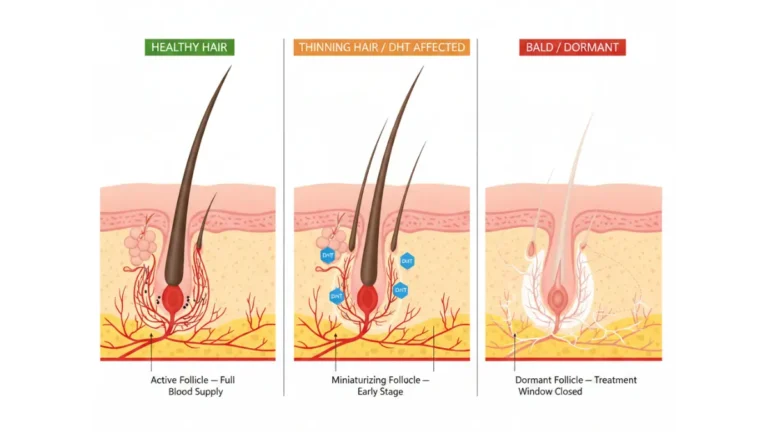
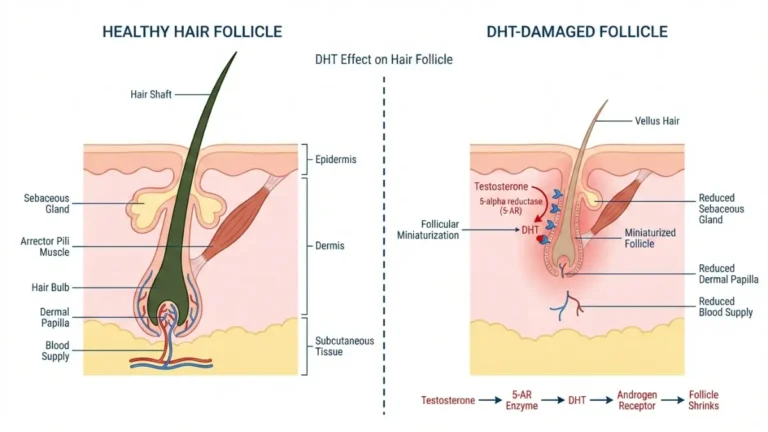
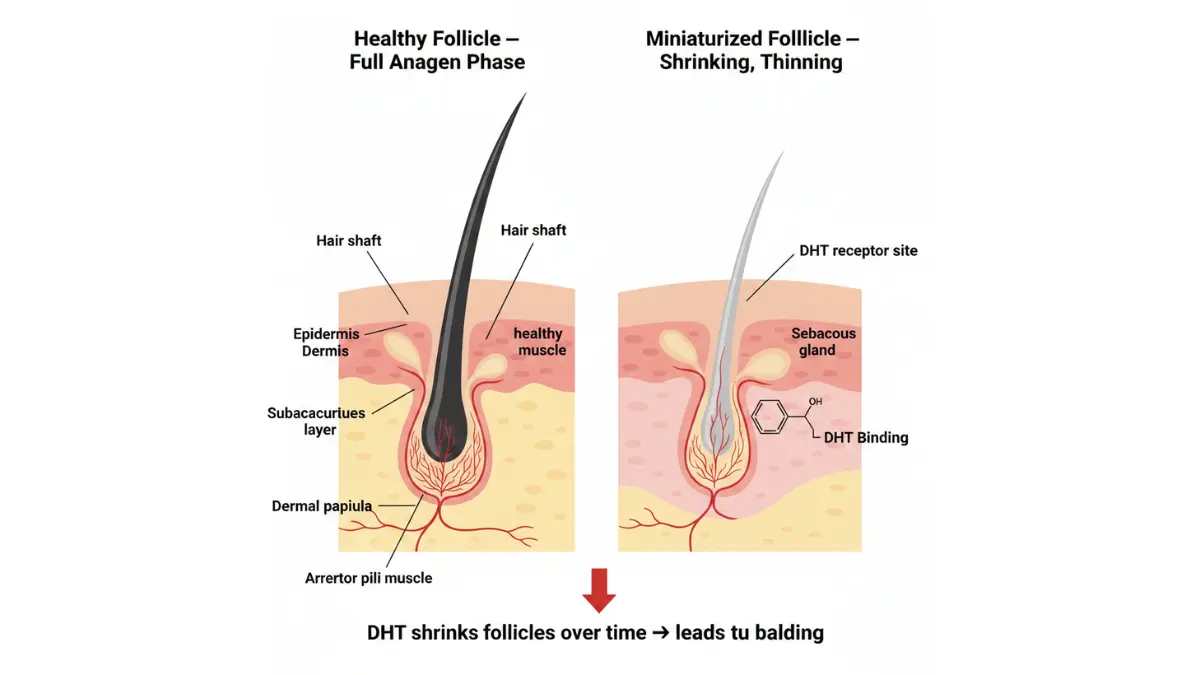
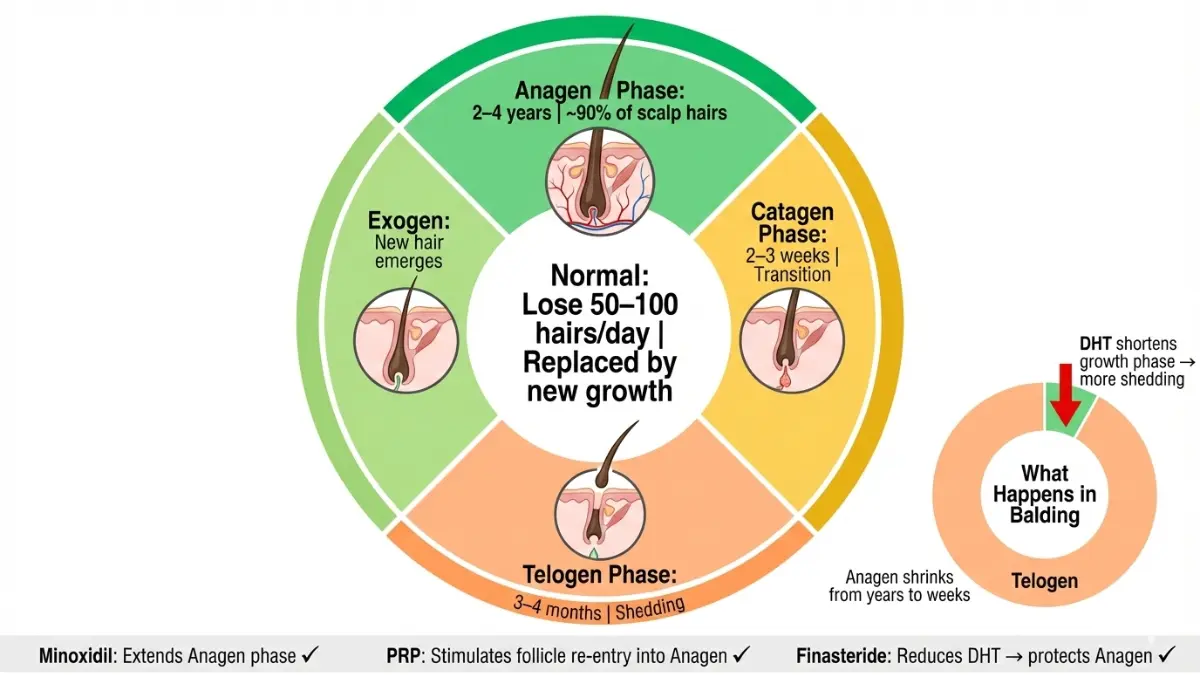
The root cause is a hormone called DHT (dihydrotestosterone) — a byproduct of testosterone. DHT binds to receptors in genetically sensitive hair follicles and causes them to shrink over time. As follicles miniaturize, they produce thinner, shorter hairs — until they stop producing hair entirely.
The key biological facts:
- DHT shortens the anagen (growth) phase of hair from 2–4 years to weeks
- Follicles that have been dormant for years are unlikely to recover
- Early treatment is the single biggest factor in how much hair you save
Types of Balding: Which One Do You Have?
| Type | Who It Affects | Pattern | Treatable? |
|---|---|---|---|
| Male Pattern Baldness (AGA) | Men | Receding hairline, crown thinning | Yes |
| Female Pattern Baldness (FPHL) | Women | Diffuse thinning at part/crown | Yes |
| Alopecia Areata | Both | Patchy, sudden loss | Yes (JAK inhibitors) |
| Telogen Effluvium | Both | Sudden shedding after stress/illness | Often reverses |
| Traction Alopecia | Both | Hairline recession from tight styles | Yes if caught early |
Want to understand if your family history puts you at higher risk? Use our Genetic Risk Assessment Tool to assess your hereditary likelihood of pattern baldness.
The Norwood Scale: Where Are You?
The Norwood Scale is the standard classification for male pattern baldness. Knowing your stage determines which balding treatment is most appropriate for you.
| Norwood Stage | What You See | Recommended Action |
|---|---|---|
| Stage 1–2 | Minimal recession at temples | Start minoxidil + finasteride now |
| Stage 3–4 | Visible hairline recession, early crown thinning | Medication + consider PRP |
| Stage 5–6 | Significant loss, connected bald areas | Medication + hair transplant evaluation |
| Stage 7 | Only side/back fringe remains | Hair transplant + ongoing medication |
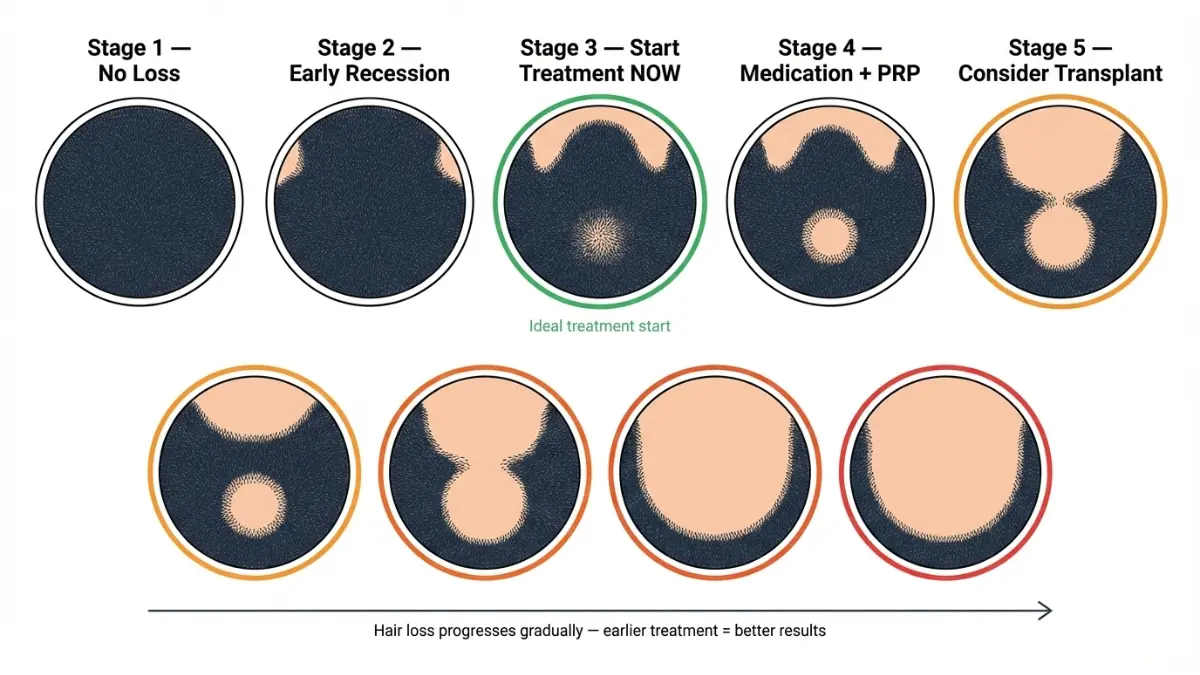
The earlier you start balding treatment, the better your outcome. Follicles that have been inactive for more than a few years are extremely difficult to reactivate with current therapies.
FDA-Approved Balding Treatments That Doctors Recommend in 2026
These are the only two treatments formally approved by the FDA for pattern hair loss — and for good reason. Decades of clinical data back them up.
Minoxidil: The First-Line Balding Treatment
Minoxidil (brand name: Rogaine) was the first hair loss medication approved by the FDA for over-the-counter use. It is approved for both men and women.
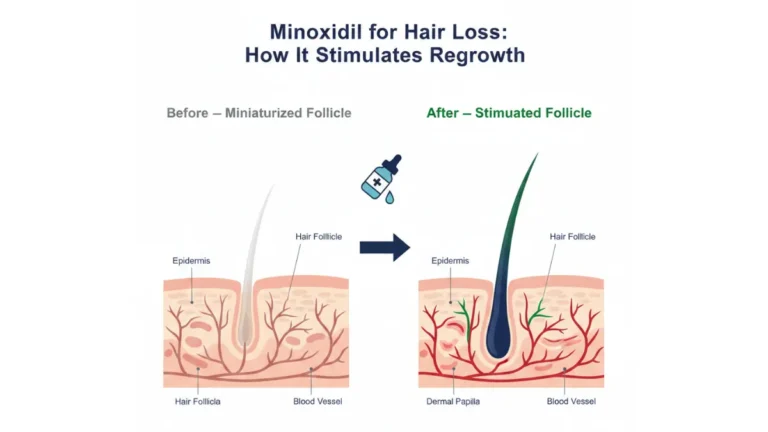
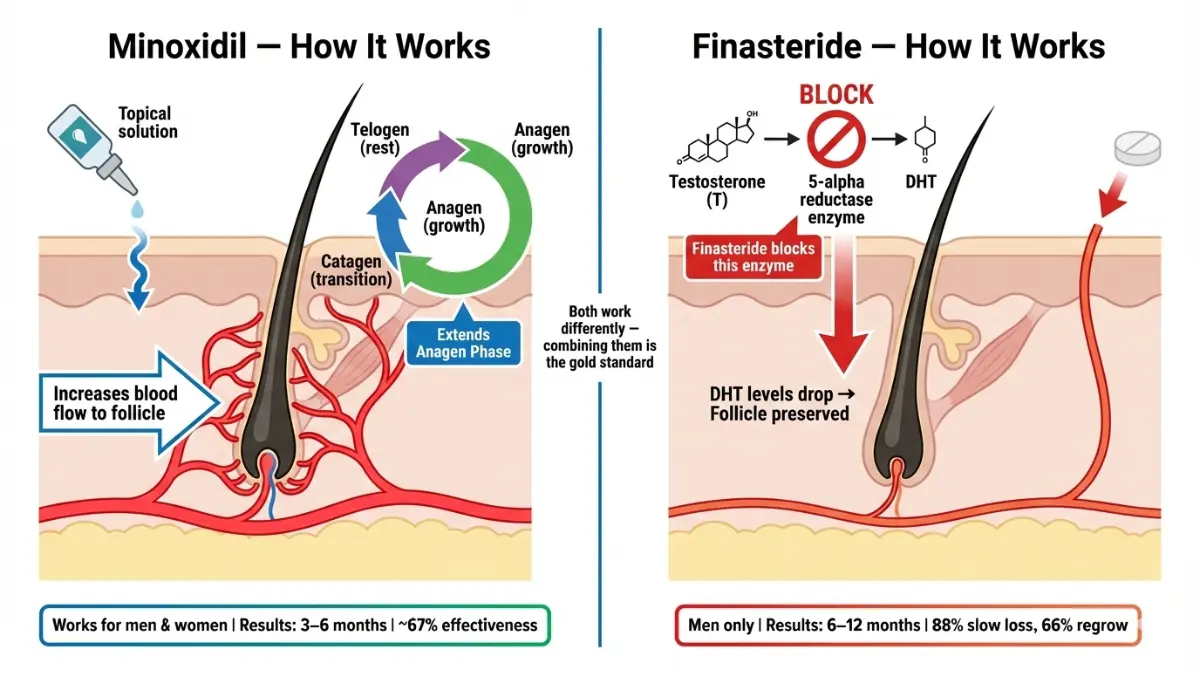
How it works: Minoxidil widens blood vessels in the scalp and extends the anagen (growth) phase of the hair cycle. It also partially reverses follicle miniaturization.
What the evidence says:
- Works for approximately 2 in 3 men (67%)
- Topical 5% is more effective than 2% in men
- Oral minoxidil (2.5–5mg daily) has shown higher efficacy than topical in 2025–2026 clinical comparisons
- Must be used continuously — stopping causes reversal of any gains
For a deeper breakdown of how minoxidil works and which formulation is right for you, read our complete minoxidil guide.
Finasteride: The Gold Standard for Men
Finasteride (brand name: Propecia) is a prescription pill that blocks the enzyme responsible for converting testosterone into DHT.
What the evidence says:
- Slows or stops hair loss in approximately 88% of men, according to the American Academy of Dermatology
- Stimulates visible regrowth in approximately 66% of men
- Results take 6–12 months to become apparent
- Requires ongoing use — stopping may cause renewed shedding within months
⚠️ Important 2025 Warning: A commentary published in October 2025 raised concerns that the FDA has not sufficiently investigated links between finasteride and mental health side effects including depression. If you are using or considering finasteride, discuss this with your physician. Learn more about DHT blockers and what doctors reveal about their risks and benefits.
Note: Finasteride is not approved for women and is contraindicated in pregnancy.
Balding Treatment for Women: The Options Healthline Missed
Female pattern hair loss (FPHL) affects 1 in 3 women in their lifetime — yet most competitor articles dedicate fewer than 200 words to women’s balding treatment. Here’s the full picture.
Options for women:
- Minoxidil 5% — the only FDA-approved topical treatment for FPHL; our dedicated guide for women using minoxidil covers dosing, timing, and side effects
- Spironolactone — off-label anti-androgen that reduces androgen production; commonly prescribed by US dermatologists for FPHL
- Hormone therapy — for post-menopausal women, estrogen/progesterone therapy may slow hair thinning
- Low-Level Laser Therapy (LLLT) — FDA-cleared devices for home use show moderate benefit
Full Treatment Comparison Table
| Treatment | Who It’s For | Effectiveness | Monthly Cost (USA) | Timeline |
|---|---|---|---|---|
| Minoxidil (topical 5%) | Men & Women | ~67% | $15–$30 OTC | 3–6 months |
| Oral Minoxidil | Men & Women | Higher than topical | $20–$50 Rx | 3–6 months |
| Finasteride | Men only | 88% slow loss | $20–$50 Rx | 6–12 months |
| Dutasteride (off-label) | Men | Stronger than finasteride | $30–$80 Rx | 6–12 months |
| Spironolactone | Women (off-label) | Moderate | $10–$30 Rx | 6+ months |
| LLLT Devices | Both | Moderate adjunct | $200–$600 device | 3–6 months |
New Balding Treatments in 2026 — What’s Coming and What Works Now
This is where every competitor article falls short. Here’s the 2026 pipeline no one else is explaining clearly.
PP405: Time Magazine’s Best Invention of 2025
PP405 is a topical balding treatment developed by Pelage Pharmaceuticals. It works by targeting hair follicle stem cells directly — reactivating dormant follicles without affecting DHT levels.
Phase 2 clinical trial results (2025):
- 31% of men with higher-degree hair loss showed hair density increases of more than 20%
- Phase 3 trials are scheduled to begin in 2026
- Non-hormonal mechanism makes it a candidate for both men and women
PP405 is not yet commercially available, but it represents the most significant development in the balding treatment pipeline in years.
Clascoterone: A Topical DHT Blocker for Women
Clascoterone, developed by Cosmo Pharmaceuticals, is a topical anti-androgen that works directly at the hair follicle — without the systemic hormonal effects of oral medications. Cosmo plans to submit for FDA and EU approval in spring 2026.
This is particularly promising for women with androgenetic alopecia who cannot use finasteride.
JAK Inhibitors: Approved for Alopecia Areata
The FDA has approved three JAK inhibitors for severe alopecia areata — a separate autoimmune hair loss condition. These include baricitinib, deuruxolitinib, and ritlecitinib, as detailed in the AAD’s alopecia areata treatment guidelines.
Important distinction: JAK inhibitors are approved for alopecia areata, not androgenetic alopecia (pattern baldness). Research into their use for AGA is ongoing in 2026.
PRP Therapy: The Best Non-Surgical Option Today
Platelet-Rich Plasma (PRP) therapy involves drawing the patient’s own blood, concentrating the growth factors, and injecting them into the scalp. It has the strongest evidence base among all regenerative balding treatments currently available.
Best suited for: Early-to-moderate hair loss (Norwood Stages 2–4). Not effective in fully bald areas where follicles are gone.
Results timeline: Most patients see improvement after 3–6 monthly sessions, with maintenance every 6–12 months.
For a detailed breakdown of what patients actually experience, read our PRP therapy results guide.
Evidence Strength Pyramid for Balding Treatments
🏆 STRONGEST CLINICAL EVIDENCE
FDA-Approved: Minoxidil + Finasteride
────────────────────────────────
Strong Evidence: PRP, Dutasteride (off-label), LLLT
────────────────────────────────
Emerging Evidence: JAK Inhibitors (AGA use), Exosomes
────────────────────────────────
Pipeline (Not Yet Available): PP405, Clascoterone
⚗️ EXPERIMENTAL / AWAITING APPROVAL
For a comprehensive view of all 2026 hair loss treatment options, visit our hair loss treatments 2026 guide.
Hair Transplants — The Surgical Balding Treatment
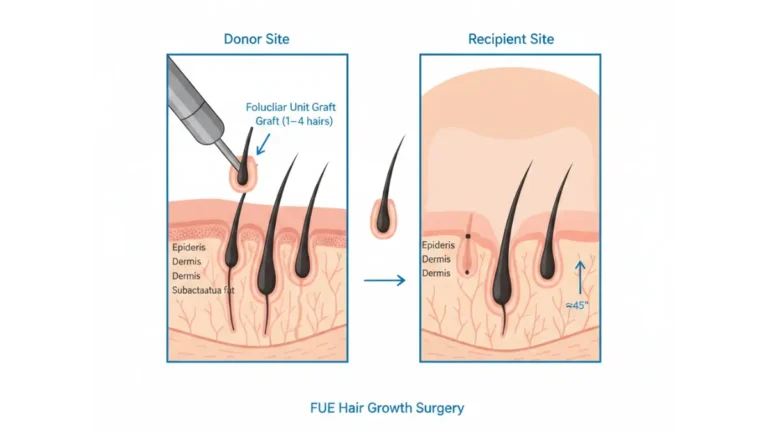
A hair transplant moves permanent, DHT-resistant hair follicles from the back and sides of the scalp to balding areas. In 2026, it remains the only treatment that creates permanent hair density in affected areas.
FUE vs. FUT: What Surgeons Recommend in 2026
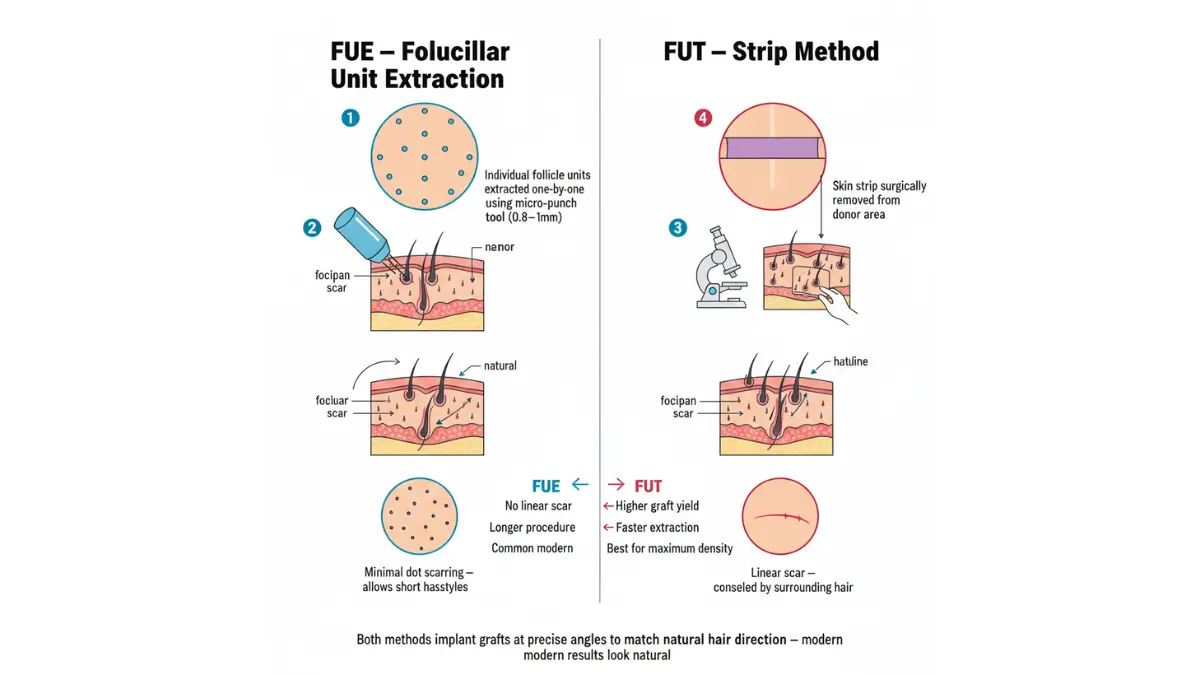
FUE (Follicular Unit Extraction) accounted for 87.3% of all hair transplant procedures performed in 2025 — and for good reason.
| Factor | FUE | FUT (Strip Method) |
|---|---|---|
| Scarring | Minimal dot scars | Linear scar at donor site |
| Recovery time | 7–14 days | 10–21 days |
| Ability to wear short hair | Yes | Limited (conceals scar) |
| Graft quantity per session | Moderate | High |
| Cost (USA) | $6,000–$15,000 | $4,000–$10,000 |
| Best for | Most patients | Maximum density in one session |
Who Is a Candidate for Hair Transplant Surgery?
Good candidates:
- Norwood Stage 3 or higher with stable pattern loss
- Adequate donor hair at the back/sides of the scalp
- Over 25 years old (younger patients may continue losing hair)
- Realistic expectations about outcomes
Not good candidates:
- Diffuse hair loss across the entire scalp (insufficient donor supply)
- Active, rapidly progressing hair loss without medical stabilization
- Certain autoimmune hair loss conditions
The Gold Standard Combination Protocol (2026)
Surgeons and dermatologists now broadly agree that the best long-term outcomes come from combining approaches:
- Stabilize with medication (finasteride/minoxidil) first
- Restore density with hair transplant for advanced cases
- Optimize regrowth with PRP before and after transplant
- Maintain with ongoing medication post-transplant
AI-guided robotic systems in 2026 have also improved graft placement precision and natural hairline design significantly compared to earlier methods.
Lifestyle Changes That Support Balding Treatment
No lifestyle change will stop genetic hair loss on its own — but these factors can dramatically slow the process and support treatment outcomes.
Nutrition and Hair Loss: What the Research Shows
According to a landmark review published in Dermatology Practical & Conceptual (PMC), dietary deficiencies in iron, vitamin D, zinc, and B vitamins are directly linked to accelerated hair loss.
Key nutritional factors:
- Iron deficiency — the most common nutritional cause of hair shedding in women. Low ferritin levels are strongly associated with telogen effluvium
- Vitamin D — deficiency is linked to AGA and alopecia areata. Get tested before supplementing; excess vitamin D does not accelerate regrowth
- Zinc — deficiency causes telogen effluvium and brittle hair. However, excess zinc can cause hair loss
- Biotin — extremely popular in supplements but evidence shows biotin supplementation only benefits those with confirmed deficiency, not healthy individuals
Poor body composition is also linked to elevated DHT production. You can check your metrics using our BMI Calculator and Body Fat Calculator.
Stress, Sleep, and Hair Loss
Stress is a real hair loss trigger. High cortisol causes hair follicles to enter the telogen (resting/shedding) phase prematurely — a condition called telogen effluvium. A 2025 data analysis of over 1 million hair loss cases showed that high stress increased the odds of sudden hair shedding by approximately 1.5x.
Poor sleep compounds this. Elevated cortisol from sleep deprivation further disrupts the hair cycle. Use our Sleep Calculator to find your optimal sleep schedule and improve recovery naturally.
Foods to Avoid in 2026
A 2025 research review confirmed that sugary drinks and alcohol are associated with significantly accelerated hair loss. The mechanism involves systemic inflammation and potential disruption of androgen pathways.
Practical dietary tips:
- Prioritize lean protein — hair is made of keratin, which requires adequate protein intake. Track your needs with our Protein Intake Calculator
- Get screened for iron and vitamin D deficiency before starting supplements
- Avoid crash diets — caloric restriction triggers telogen effluvium
- Limit processed sugars and alcohol
Scalp Massage: Small But Real Evidence
A 2016 study published in Eplasty found that standardized scalp massage (4 minutes daily for 24 weeks) increased hair thickness compared to controls. It’s not a standalone balding treatment, but it’s free and supports circulation.
Which Balding Treatment Is Right for You?
Choosing the right balding treatment depends on your hair loss type, stage, gender, budget, and health history.
The 2026 Decision Framework
| Your Situation | First Step | Second Step |
|---|---|---|
| Early thinning, male (Norwood 1–2) | Minoxidil + Finasteride | Monitor monthly; add PRP if needed |
| Moderate loss, male (Norwood 3–4) | Finasteride + Minoxidil | PRP therapy (3–6 sessions) |
| Advanced loss, male (Norwood 5–7) | Medication to stabilize | Consult hair transplant surgeon |
| Female pattern hair loss (early) | Minoxidil 5% + Spironolactone (Rx) | Dermatologist evaluation |
| Alopecia areata | JAK inhibitor (Rx) | Dermatologist-led immunotherapy |
| Post-stress shedding (telogen effluvium) | Identify and address trigger | Nutritional repletion; usually self-resolves |
| Post-chemotherapy hair loss | Minoxidil + nutritional support | Consult oncology team first |
3-Step Action Plan: Start Today
Step 1 — Confirm your diagnosis. See a board-certified dermatologist. Don’t assume it’s pattern baldness — other conditions mimic AGA and require different treatment. Use our Symptom Checker to document your symptoms before your appointment.
Step 2 — Start an FDA-approved treatment immediately. The single most important thing you can do is begin treatment early. Every month of delay allows more follicles to miniaturize permanently.
Step 3 — Combine and optimize. Monotherapy (one treatment alone) rarely delivers the best results. The gold standard in 2026 is a combination protocol tailored to your Norwood stage — medication plus regenerative support, with transplant considered when appropriate.
If you’re concerned your hair loss might be connected to an underlying condition, also review our guide on whether hair loss is reversible.
⚠️ Medical Disclaimer: This article is for educational purposes only and does not constitute medical advice. Balding treatment should always be discussed with a licensed healthcare provider, particularly for prescription medications. Individual results vary based on cause, stage, and health history.
Frequently Asked Questions About Balding Treatment
1. Can balding be reversed completely?
In early stages (Norwood 1–3), significant hair regrowth is possible with treatment. Advanced hair loss can be improved but not fully reversed with current therapies. The earlier you start, the better the outcome.
2. How long does balding treatment take to show results?
Minoxidil takes 3–6 months to show visible results. Finasteride takes 6–12 months. PRP therapy results are typically visible after 3 monthly sessions. Patience is essential — most people stop too early.
3. What is the most effective balding treatment for men in 2026?
The combination of oral minoxidil and finasteride remains the most effective non-surgical balding treatment for men. For advanced cases, adding PRP and eventually a hair transplant delivers superior outcomes.
4. Is there a balding treatment that works for women?
Yes. Minoxidil 5% is FDA-approved for female pattern hair loss. Spironolactone is widely prescribed off-label. PRP and LLLT are also effective adjuncts for women.
5. Does minoxidil regrow lost hair, or just stop further loss?
Both — but regrowth is partial and limited. Minoxidil primarily extends the growth phase and slows miniaturization. It can regrow some lost hair, but cannot restore a fully bald area where follicles have died.
6. What are the side effects of finasteride for balding?
Common side effects are rare but include decreased libido, erectile dysfunction, and — based on a 2025 warning — potential links to depression. These effects reverse in most men after stopping the medication.
7. Is PP405 available for balding treatment yet?
No. PP405 is currently in Phase 3 clinical trials (beginning 2026). It is not yet commercially available in the USA or any market. Phase 3 data should emerge by 2027–2028.
8. How much does balding treatment cost per month in the USA?
Generic minoxidil: $15–$30/month. Generic finasteride: $20–$50/month. PRP therapy: $500–$1,500/session. Hair transplants: $6,000–$15,000 total. Costs vary by provider and region.
9. Can you use multiple balding treatments at the same time?
Yes — and this is recommended. Minoxidil and finasteride together outperform either alone. Adding PRP or LLLT on top of medication is the current gold standard combination approach in 2026.
10. Does diet affect balding?
Diet influences the rate of hair loss but cannot cause or cure genetic pattern baldness. Iron, vitamin D, and protein deficiencies accelerate shedding. Fixing deficiencies supports your balding treatment outcomes.
11. At what Norwood stage should you start balding treatment?
The moment you notice recession or thinning — typically Norwood Stage 2. The earlier you start, the more hair you preserve. Waiting until Stage 4 or 5 significantly narrows your treatment options.
Sources: American Academy of Dermatology (AAD) | National Institutes of Health / PMC | Healthline Medical Review | Pelage Pharmaceuticals PP405 Phase 2 Data | Dermatology Practical & Conceptual | FDA.gov
For more expert health guidance, explore our Health Tips library.
About this content
How this article was put together: researched from recognised health sources, drafted with the help of AI tools, and edited by hand, with sources linked throughout.

Sameer Patel is the founder and editor of My Medicine Advisor. He is not a doctor or medical professional — before starting this site he worked in banking,…
Medical disclaimer
The content on MyMedicineAdvisor is provided for general informational and educational purposes only and is not a substitute for professional medical advice, diagnosis, or treatment. Health information on this website should not be used to diagnose, treat, cure, or prevent any condition without guidance from a qualified healthcare professional. Always seek the advice of your doctor, physician, or another licensed healthcare provider with any questions you may have regarding a medical condition, symptoms, medications, or treatment decisions.