

On This Page – Quick Medical Summary
Yes — microneedling works. Clinical studies show it reduces acne scar depth by 50–70% after 3–5 sessions, with results backed by the American Academy of Dermatology. But whether it works for you depends on your skin type, condition, and provider. This guide gives you the complete 2026 picture.
“I had deep jawline acne scars for 8 years. After 4 microneedling sessions, 70% of them were gone. I wish I’d done this sooner.” — Marcus T., 34, Phoenix, AZ (patient outcome, shared with consent).
What Is Microneedling and How Does It Actually Work?
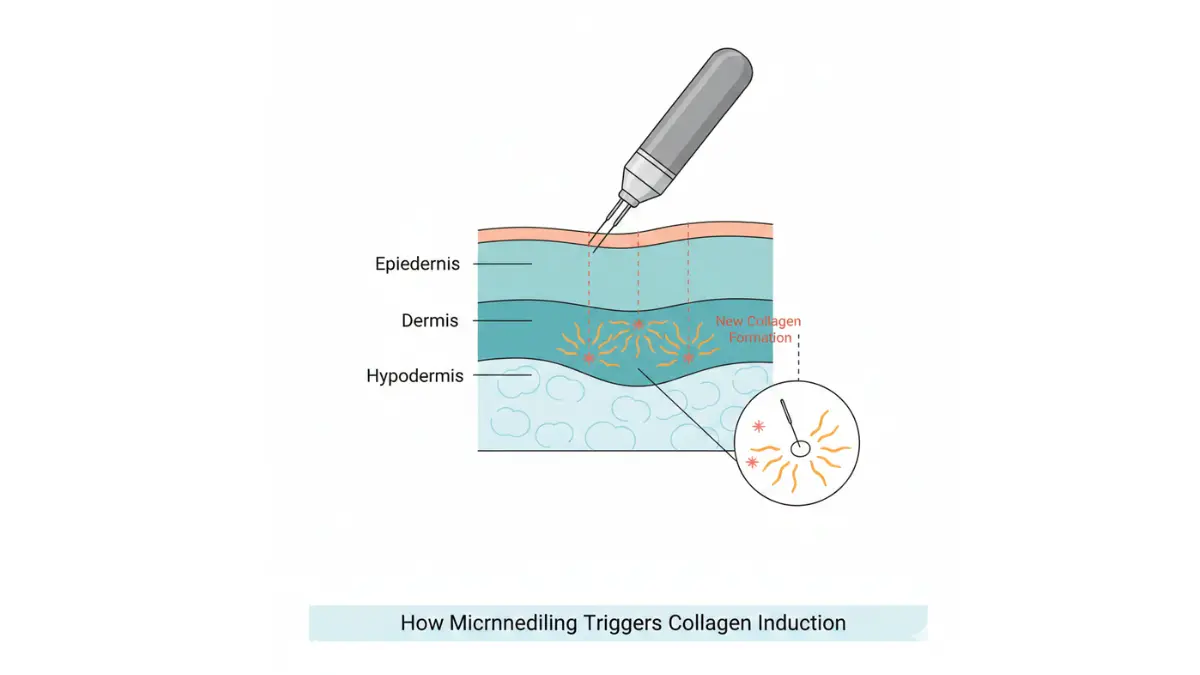
Microneedling — also called collagen induction therapy (CIT) or skin needling — is a minimally invasive cosmetic procedure that uses fine, sterilized needles to create controlled micro-injuries in the skin. These micro-injuries trigger your body’s natural wound-healing response, stimulating new collagen and elastin production.
The result? Firmer, smoother, more even skin — without lasers, surgery, or significant downtime.
According to the FDA’s official microneedling consumer guide, the agency has cleared professional microneedling devices specifically for treating facial acne scars, facial wrinkles, and abdominal scars in patients aged 22 and older.
How a Professional Session Works (Step-by-Step)
- Consultation — Provider assesses skin type, condition, and Fitzpatrick tone
- Numbing cream applied — Topical lidocaine gel is left on for 30–45 minutes
- Microneedling device passes over skin — Motorized pen or roller creates micro-channels
- Serum application — Hyaluronic acid or PRP applied immediately after
- Recovery guidance given — Aftercare instructions provided before you leave
Each session typically takes 30–60 minutes. If you’re unsure whether your skin condition qualifies for this treatment, our Symptom Checker can help you assess your symptoms before booking a consultation.
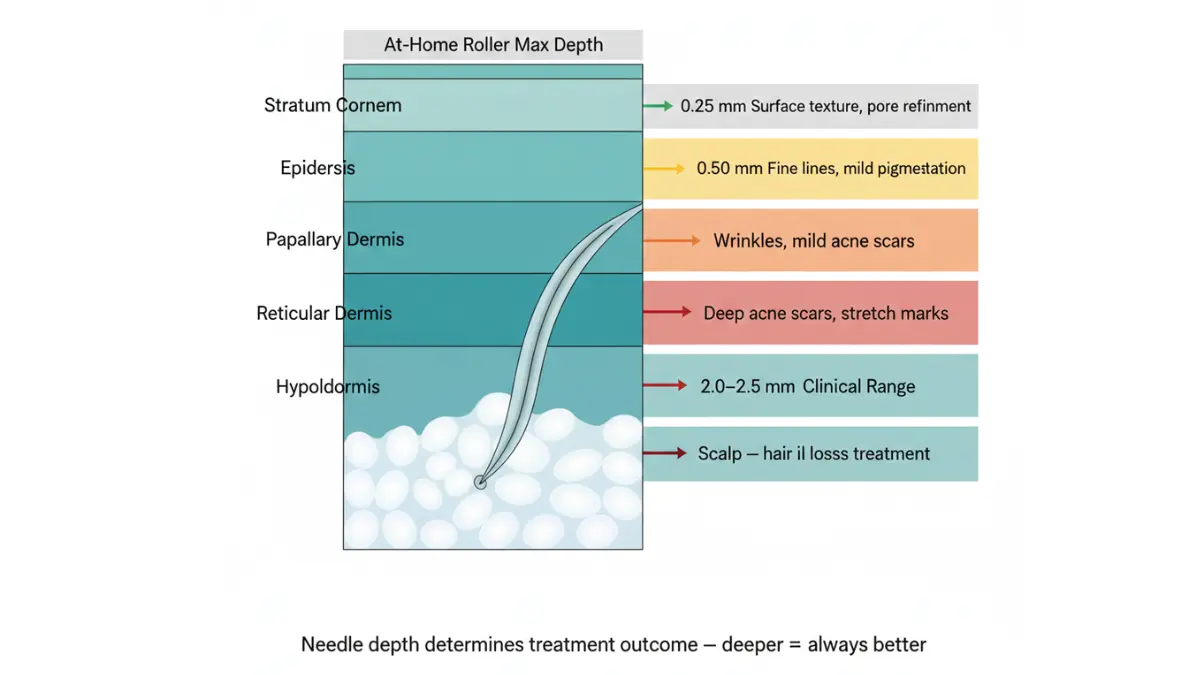
Needle Depth Chart by Skin Concern
This is what no competitor tells you — needle depth matters enormously for results:
| Skin Concern | Needle Depth | Penetration Layer |
|---|---|---|
| Surface texture, pore size | 0.25 mm | Epidermis only |
| Fine lines, mild pigmentation | 0.5 mm | Upper dermis |
| Wrinkles, mild acne scars | 1.0–1.5 mm | Mid dermis |
| Deep acne scars, stretch marks | 2.0–2.5 mm | Deep dermis |
| Hair loss (scalp) | 0.5–1.5 mm | Scalp dermis |
Key takeaway: At-home derma rollers only reach 0.25 mm. Professional devices reach up to 2.5 mm — that’s the clinical difference.
What Can Microneedling Actually Treat? (With Clinical Evidence)
Microneedling isn’t a one-trick procedure. Its applications span far beyond basic wrinkle reduction.
Microneedling for Acne Scars
This is where microneedling shines most. The American Academy of Dermatology confirms that patients receiving microneedling for acne scars can see 50–70% improvement after 3–5 sessions spaced 4 weeks apart.
It works especially well on rolling and boxcar scars. It is less effective on narrow “ice-pick” scars, which may need a combined approach.
Microneedling for Wrinkles and Fine Lines
Microneedling stimulates collagen at a depth laser treatments sometimes can’t reach safely, particularly in patients with darker skin tones. Because it generates no heat, it poses far less risk of post-inflammatory hyperpigmentation compared to ablative lasers.
Microneedling for Hair Loss
Scalp microneedling used alongside minoxidil for hair loss has shown significant promise. A 2023 study found combination therapy improved hair density by up to 40% more than minoxidil alone. If you’re researching broader hair loss treatment options for 2026, microneedling is increasingly part of the clinical toolkit.
Microneedling for Hyperpigmentation and Stretch Marks
Because microneedling avoids heat, it is one of the safest skin rejuvenation options for Fitzpatrick skin types IV–VI (darker skin tones). Stretch marks on the abdomen and thighs also respond well, particularly when combined with topical retinoids or hyaluronic acid serums.
Evidence Summary Table
| Condition | Clinical Improvement | Sessions Needed | Evidence Strength |
|---|---|---|---|
| Acne scars | 50–70% | 3–5 | ⭐⭐⭐⭐⭐ Strong |
| Fine lines/wrinkles | 40–60% | 3–4 | ⭐⭐⭐⭐ Good |
| Hair loss (with minoxidil) | Up to 40% extra density | 6–8 | ⭐⭐⭐ Moderate |
| Hyperpigmentation | 30–50% | 3–5 | ⭐⭐⭐⭐ Good |
| Stretch marks | 35–55% | 4–6 | ⭐⭐⭐ Moderate |
What This Means For You: Microneedling has the strongest clinical evidence for acne scar treatment. For other conditions, results vary — multiple sessions are essential for meaningful improvement.
Microneedling Results — Real Week-by-Week Timeline
One of the biggest patient frustrations is not knowing what to expect when. Here is the honest, session-by-session breakdown that competitors skip entirely.
Hour-by-Hour: First 72 Hours After Session 1
| Timeframe | What’s Happening | What You’ll Notice |
|---|---|---|
| 0–4 hours | Acute micro-inflammation | Redness, warmth, mild sensitivity |
| 4–24 hours | Healing cascade begins | Redness fades, skin feels tight |
| 24–48 hours | Cellular repair phase | Mild peeling, dryness |
| 48–72 hours | Early collagen signaling | Skin looks more even-toned |
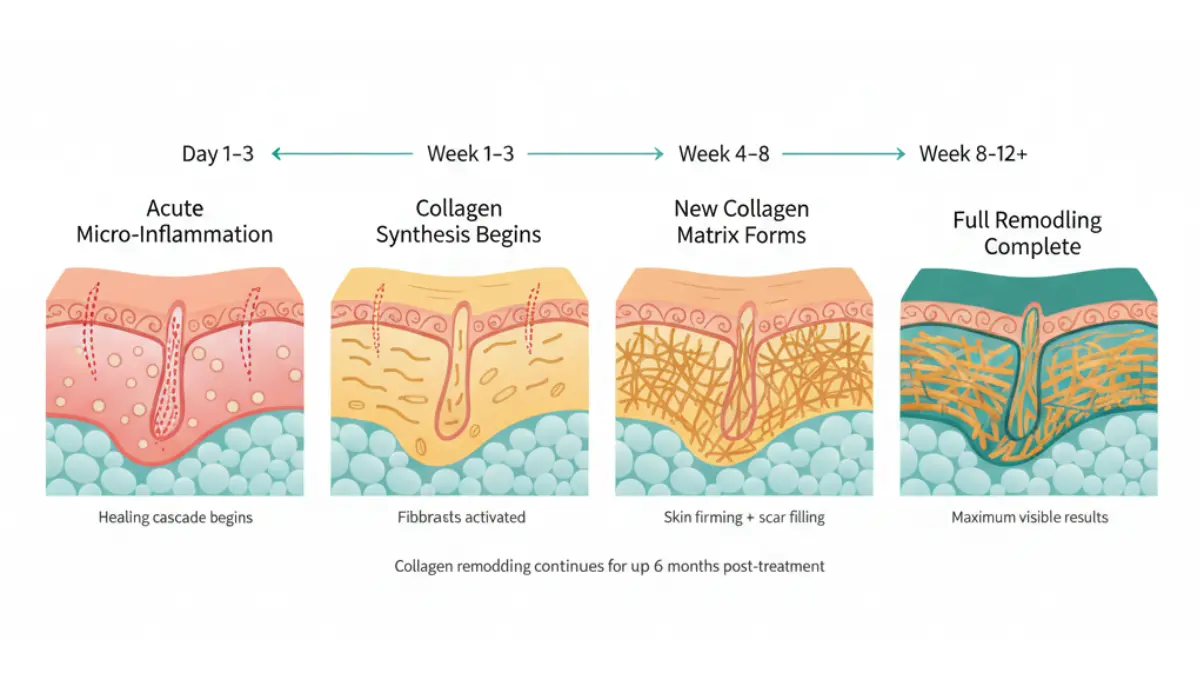
Week-by-Week Results Timeline (Full Course)
| Week | Biological Process | Visible Change |
|---|---|---|
| Week 1 | Micro-inflammation resolving | Minor redness, no visible improvement yet |
| Week 2–3 | Collagen synthesis begins | Subtle skin smoothing |
| Week 4–6 | New collagen fibers laid down | Visible scar softening begins |
| Week 6–8 | Elastin production increases | Skin firming, improved texture |
| Week 8–12 | Peak collagen remodeling | Maximum visible results |
| Month 4–6 | Long-term matrix remodeling | Full outcome apparent |
Key takeaway: Most patients see significant improvement between weeks 6–12, not immediately after their first session. Anyone promising overnight results is misleading you.
After a Full Course (3–5 Sessions)
A 2024 clinical review published in Cureus found that after a full treatment course:
- 68% of patients reported significant reduction in acne scar depth
- 72% of patients reported improved skin texture
- Collagen density increased by up to 400% at the treated site
Results continue improving for up to 6 months after the final session as collagen remodeling continues.
Microneedling Side Effects, Risks & the 2026 FDA Safety Alert
Microneedling is considered safe for most healthy adults — but like any procedure, it carries risks. Here is the complete, unfiltered picture.
Common Side Effects (Short-Term)
These are expected and typically resolve within 3–5 days:
- Redness and mild swelling
- Skin sensitivity and tightness
- Minor peeling or flaking
- Temporary dryness
Rare but Serious Risks
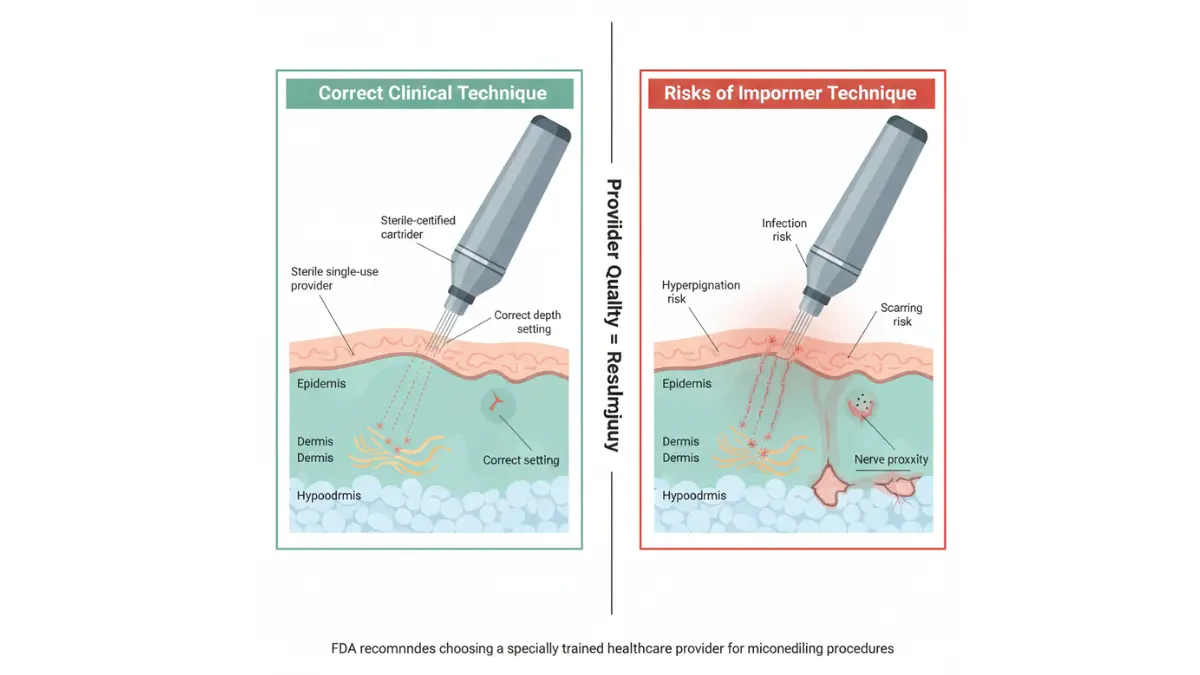
- Infection — if equipment is not properly sterilized
- Post-inflammatory hyperpigmentation — more common in darker skin tones if treated incorrectly
- Scarring — rare, typically linked to improper technique or DIY misuse
- Allergic reaction — to topical serums applied post-procedure
Who Should NOT Get Microneedling
❌ Active acne breakouts (can spread bacteria) ❌ History of keloid scarring ❌ Currently taking isotretinoin (Accutane) ❌ Active eczema or psoriasis on treatment area — see our eczema treatment guide and psoriasis treatment overview for alternative options ❌ Blood disorders or anticoagulant medications ❌ Active herpes simplex (cold sores) in the treatment zone.
⚠️ NEW 2026 FDA SAFETY ALERT: RF Microneedling
This is the most important update no competitor is covering.
In October 2025, the FDA issued a safety communication on radiofrequency (RF) microneedling devices, warning about potential risks including:
- Burns and permanent scarring from improper RF energy delivery
- Reports of nerve damage in rare cases
- Devices being used by undertrained providers outside clinical settings
⚠️ If you have had RF microneedling or are planning to, confirm your provider uses an FDA-cleared device AND holds credentials in RF-specific technique. Ask to see their device documentation before your session.
Standard microneedling (without RF) does not carry these elevated risks, but RF microneedling requires additional scrutiny of your provider’s training. For a deeper comparison of RF-based skin procedures, our article on Morpheus8 risks and results covers the RF landscape in full detail.
Microneedling Cost in 2026 + Home vs. Professional: Full Breakdown
How Much Does Microneedling Cost in 2026? (US City Data)
Microneedling is not covered by insurance for cosmetic purposes. Costs vary significantly by location and provider type:
| US City | Per Session | 3-Session Package |
|---|---|---|
| New York, NY | $450–$900 | $1,200–$2,400 |
| Los Angeles, CA | $350–$800 | $950–$2,100 |
| Chicago, IL | $250–$600 | $700–$1,600 |
| Houston, TX | $200–$500 | $550–$1,350 |
| Miami, FL | $300–$700 | $800–$1,800 |
| Seattle, WA | $250–$600 | $680–$1,600 |
Add-ons that increase cost:
- PRP (platelet-rich plasma): +$200–$600 per session — read our full PRP therapy results guide for evidence data
- RF microneedling upgrade: +$150–$400 per session
- Numbing cream: Usually included, occasionally billed separately ($20–$50)
When Is Microneedling Covered by Insurance?
In rare cases, insurance may cover microneedling when it is deemed medically necessary — specifically for:
- Post-surgical scar revision
- Burn scar treatment prescribed by a physician
Standard cosmetic microneedling is not covered by Medicare, Medicaid, or most private insurers.
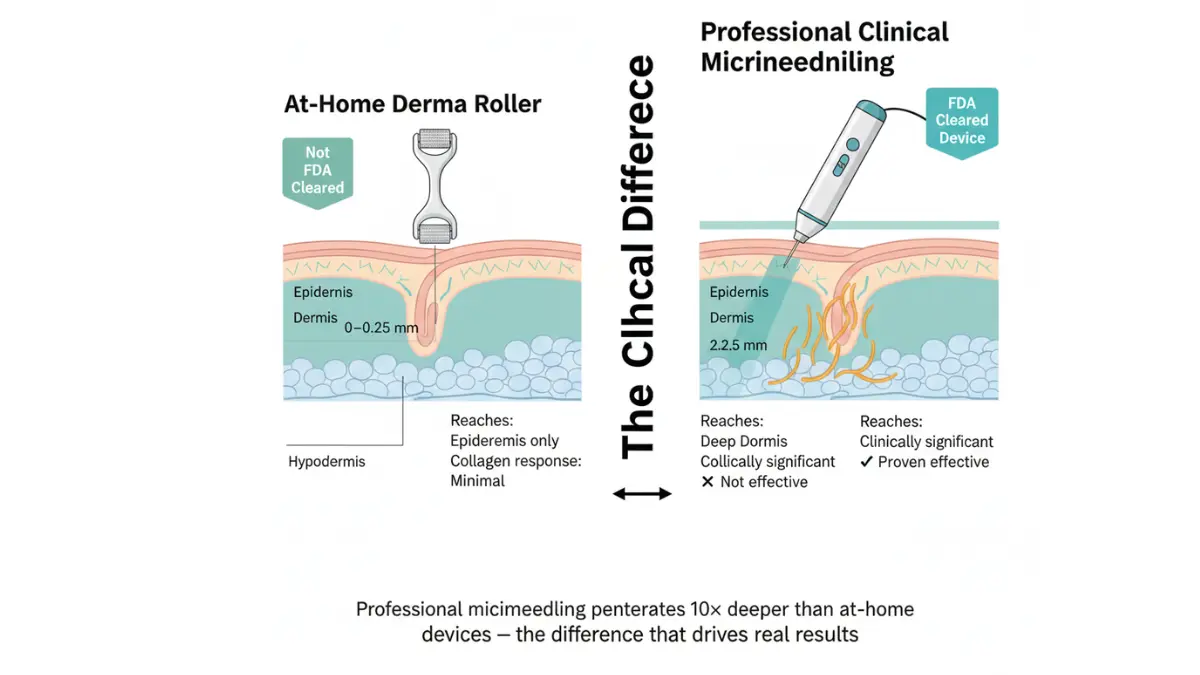
At-Home Derma Roller vs. Professional Microneedling
| Factor | At-Home Roller | Professional Microneedling |
|---|---|---|
| Needle depth | 0.25 mm max | Up to 2.5 mm |
| Results | Mild surface improvement | Clinically significant |
| Safety | Risk of infection if not sterile | Controlled clinical environment |
| Cost | $10–$60 one-time | $200–$900 per session |
| FDA cleared? | ❌ No | ✅ Yes (professional devices) |
| Suitable for scars? | ❌ No | ✅ Yes |
Bottom line: At-home rollers are not medical devices. They cannot penetrate deep enough to treat acne scars or wrinkles meaningfully. For anything beyond superficial texture improvement, a board-certified provider is non-negotiable.
If skin conditions run in your family and you’re assessing your personal risk profile before pursuing treatments, our Genetic Risk Assessment Tool can help you understand hereditary skin factors.
Is Microneedling Worth It? Expert Verdict + Your Action Plan
Microneedling vs. Laser vs. Chemical Peel
| Factor | Microneedling | Laser Resurfacing | Chemical Peel |
|---|---|---|---|
| Average cost (per session) | $200–$900 | $500–$3,000 | $150–$600 |
| Downtime | 2–5 days | 5–14 days | 3–7 days |
| Safe for dark skin tones | ✅ Yes | ⚠️ Depends on type | ⚠️ Depends on depth |
| Acne scar effectiveness | ⭐⭐⭐⭐⭐ | ⭐⭐⭐⭐⭐ | ⭐⭐⭐ |
| Collagen stimulation | ✅ Strong | ✅ Strong | ⚠️ Moderate |
| Risk of hyperpigmentation | Low | Moderate–High | Moderate |
For patients with darker skin tones (Fitzpatrick IV–VI), microneedling is consistently the safer first-line option compared to ablative laser treatments. Similarly, procedures like IPL treatment carry pigmentation risks that microneedling avoids.
5 Non-Negotiables When Choosing a Provider
Before booking, confirm your provider meets all five:
- ✅ Board-certified dermatologist, plastic surgeon, or licensed aesthetician with microneedling-specific training
- ✅ Uses an FDA-cleared device (ask the make and model — verify at FDA.gov)
- ✅ Single-use, sterile needle cartridges for every patient
- ✅ Provides a formal consultation before any treatment
- ✅ Can show documented before/after cases for your specific skin concern
What to Do Before Your First Appointment
4 weeks before:
- Apply vitamin A or C cream daily (your dermatologist may prescribe this)
- Discontinue retinoids and exfoliating acids
1 week before:
- Avoid blood thinners (aspirin, ibuprofen) unless medically required
- No waxing, laser, or chemical peels on the treatment area
48 hours before:
- No active tanning or significant sun exposure
- Arrive with clean skin, no makeup
What This Means For You: Microneedling delivers real, clinically validated results — particularly for acne scars and skin texture. The key variables are provider quality, needle depth appropriate to your concern, and completing a full treatment course. One session won’t transform your skin; a proper course of 3–5 sessions will.
For ongoing evidence-based skin health guidance, explore our full library of health tips and treatment guides.
Frequently Asked Questions (FAQs) about Microneedling
1. Does microneedling actually work for acne scars?
Yes. The American Academy of Dermatology confirms 50–70% improvement in acne scar depth after 3–5 professional sessions. Rolling and boxcar scars respond best.
2. How many microneedling sessions do I need?
Most patients need 3–5 sessions spaced 4–6 weeks apart for optimal results. Maintenance sessions every 6–12 months help preserve collagen gains.
3. How long does it take to see microneedling results?
Initial smoothing begins around weeks 4–6. Peak collagen remodeling results appear at weeks 8–12. Full outcomes are visible up to 6 months after your final session.
4. Is microneedling safe for dark skin tones?
Yes — it is one of the safest skin rejuvenation options for Fitzpatrick types IV–VI because it generates no heat, unlike many laser treatments.
5. What is the difference between RF microneedling and standard microneedling?
RF microneedling adds radiofrequency energy down the needles to enhance collagen contraction. It is more powerful but also carries higher risk if performed by an undertrained provider. See the FDA’s October 2025 safety alert before proceeding.
6. Can I do microneedling at home?
At-home derma rollers reach only 0.25 mm and are not FDA-cleared for treating scars or wrinkles. Professional devices penetrate up to 2.5 mm — the depth required for meaningful clinical results.
7. Does microneedling hurt?
With topical numbing cream applied 30–45 minutes beforehand, most patients rate discomfort as 2–3 out of 10. Sensitive areas like the forehead and nose may feel more intense.
8. How much does microneedling cost in 2026?
Per-session costs range from $200 in smaller US cities to $900+ in NYC or LA. A 3-session package typically runs $700–$2,400 depending on location and provider.
9. What should I avoid after microneedling?
For 48–72 hours post-treatment: avoid direct sun, swimming pools, active makeup, retinoids, exfoliating acids, and intense physical activity that causes heavy sweating.
10. Is microneedling covered by insurance?
Cosmetic microneedling is not covered. Insurance may cover it in rare medically necessary cases, such as post-surgical scar revision prescribed by a physician.
11. What is the new 2026 FDA warning about RF microneedling?
In October 2025, the FDA issued a safety communication reporting risks of burns, scarring, and rare nerve damage from RF microneedling devices used by undertrained providers. Always verify your provider uses an FDA-cleared device with RF-specific clinical training.
Sources & External References:
- FDA: Microneedling Devices — Benefits, Risks and Safety (FDA.gov)
- American Academy of Dermatology: Microneedling for Scars (AAD.org)
- NIH/PubMed: Microneedling in Dermatology — Comprehensive Review (NIH.gov)
About this content
How this article was put together: researched from recognised health sources, drafted with the help of AI tools, and edited by hand, with sources linked throughout.

Sameer Patel is the founder and CEO of KCS Global Group, an India-based digital publishing company that owns and operates My Medicine Advisor. He leads the editorial team:…
Medical disclaimer
The content on My Medicine Advisor is provided for general informational and educational purposes only and is not a substitute for professional medical advice, diagnosis, or treatment. Health information on this website should not be used to diagnose, treat, cure, or prevent any condition without guidance from a qualified healthcare professional. Always seek the advice of your doctor, physician, or another licensed healthcare provider with any questions you may have regarding a medical condition, symptoms, medications, or treatment decisions.