
On This Page – Quick Medical Summary
Quick Answer: Morpheus8 is an FDA-cleared radiofrequency microneedling device that rebuilds collagen at depths up to 8mm — delivering real skin tightening without surgery. Clinical studies confirm it works. But it carries serious risks, including permanent fat loss, when performed incorrectly. Here is what 21 international medical experts want you to know before spending $1,000–$4,000 in 2026.
What Is Morpheus8 and How Does It Actually Work?
Rachel, 47, had tried every anti-aging cream on the market. Her neck skin was loosening, her jawline softening. A single consultation with a board-certified dermatologist changed everything. Three Morpheus8 sessions later, her skin looked the way it did a decade ago — without a single incision.
But her neighbor booked the same treatment at a discount medi-spa. The provider used the wrong depth settings. Six months later, her face looked sunken. The fat beneath her cheekbones had been destroyed.
Same device. Completely opposite outcomes. Here is why.
How Morpheus8 Works: The Science in Plain English
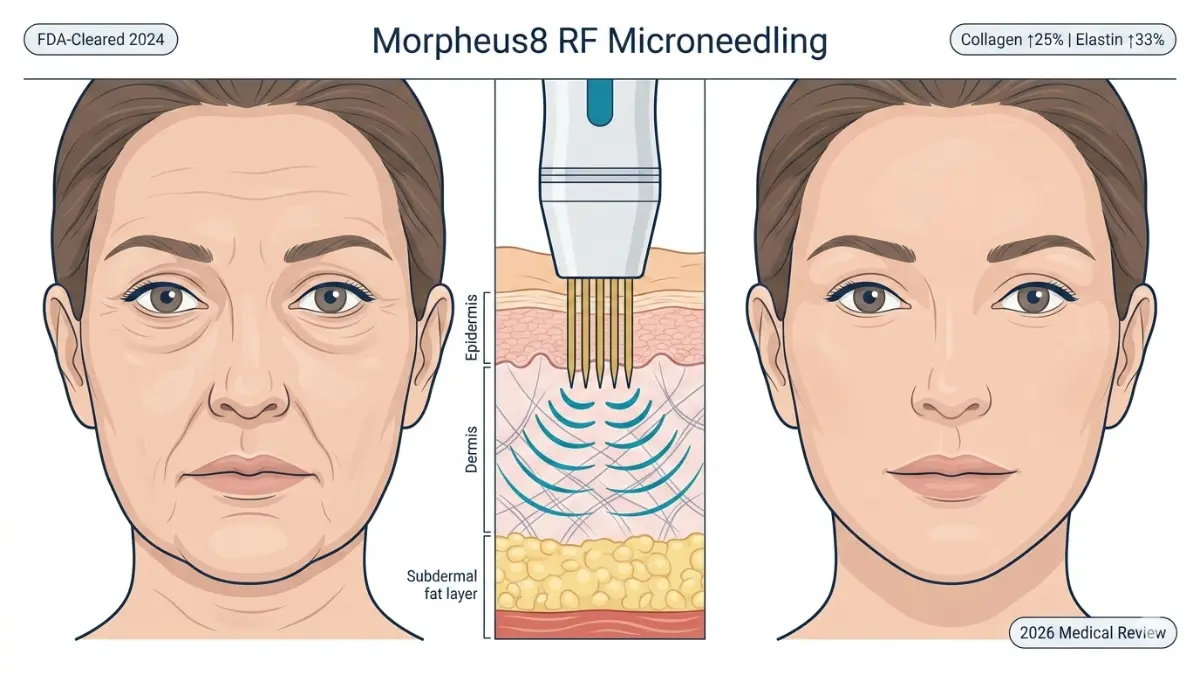
Morpheus8 is a fractional radiofrequency (RF) microneedling device developed by InMode Ltd. It combines two proven technologies into one treatment:
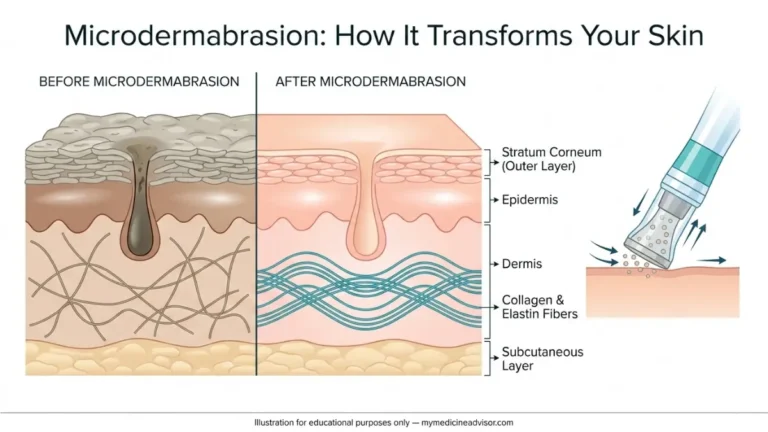
- Microneedling — a matrix of ultra-fine, gold-coated needles creates thousands of microscopic channels in the skin, triggering the body’s natural wound-healing response
- Radiofrequency energy — simultaneously delivered through the needles, heating the dermis and subdermis to a therapeutic temperature of 65–75°C, causing immediate collagen contraction and stimulating new collagen production over months
What separates Morpheus8 from standard microneedling is programmable penetration depth — from 0.5mm for delicate surface work up to 8mm for deep body tissue remodeling. No other commonly available RF microneedling device reaches this depth.

Morpheus8 vs. Competing Devices — 2026 Depth Comparison
| Device | Max Penetration Depth | Best Clinical Use |
|---|---|---|
| Morpheus8 | 8mm | Face + body laxity, scars, fat remodeling |
| Vivace RF | 3.5mm | Mild facial laxity, surface texture |
| Secret RF | 3.5mm | Fine lines, skin tone improvement |
| Potenza RF | 4mm | Customizable bipolar/monopolar modes |
| Thermage FLX | Surface RF only | Mild tightening, no needle penetration |
| Traditional Microneedling | 2mm | Texture improvement only |
This depth advantage is not just a marketing claim. A 2024 histological study published in the Journal of Cosmetic Dermatology (Wiley) confirmed that Morpheus8’s unique electrode design creates a “subsurfacing” thermal remodeling effect — heating upward from deep tissue layers — a mechanism no competing device replicates.

FDA Clearance Status — What Changed in 2024
Morpheus8 received its original FDA 510(k) clearance in 2019 (K192695) for electrocoagulation and hemostasis in dermatologic procedures.
Critically — and this is a fact zero major competitors have published — the FDA issued an expanded clearance in July 2024 (K240017) specifically for soft tissue contraction. This is a significant regulatory milestone that confirms Morpheus8’s role in medically recognized skin tightening, not just surface treatment.
If you are tracking any current skin concerns before booking a consultation, our Symptom Checker can help you document and organize your symptoms to share with a provider.
Morpheus8 Results — What Peer-Reviewed Evidence Actually Shows
Every competitor quotes patient satisfaction surveys. You deserve clinical evidence. Here is what independent, peer-reviewed research confirms about Morpheus8 results in 2026.
The Clinical Evidence Summary
A 2022 review published in the Journal of Cosmetic Dermatology — indexed on PubMed (PMID: 35916259) — confirmed that Morpheus8 RF microneedling is effective for facial rejuvenation, acne scarring, rosacea, and melasma, with significantly reduced downtime compared to ablative lasers.
A large multicenter retrospective study of 247 patients treated with Morpheus8 and related RF devices reported:
- A 1.4-point improvement in the Baker Face/Neck Laxity Classification scale
- 93% patient satisfaction at 6-month follow-up
- Minimal adverse events in physician-supervised settings
The 2024 Wiley histological study found measurable structural improvements after just one treatment session:
- Collagen density increased by up to 25%
- Elastin fiber production increased by 33.3%
- Fibroblast density rose significantly, indicating sustained collagen factory activation
A PMC-published review of RF microneedling in plastic surgery further confirmed that Morpheus8’s insulated needle design specifically reduces epidermal trauma — making it the preferred device for patients with acne scarring or keloid history.
📌 Evidence Note: Manufacturer-funded data from InMode claims collagen density improvements of up to 30% within 3 months. While consistent with independent findings, manufacturer-sponsored studies carry inherent bias. Weight independent peer-reviewed data more heavily.
Realistic Results Timeline — Week by Week
| Timeframe | What You Experience |
|---|---|
| Day 1–2 | Redness, swelling, visible needle grid marks (expected) |
| Day 3–5 | Redness fades; mild sensitivity remains |
| Week 1–2 | Most visible side effects resolved; skin begins healing |
| Month 1–2 | Collagen remodeling begins; subtle texture improvement visible |
| Month 3–6 | Peak results — firmness, tightening, scar improvement |
| 12–18 months | Results maintained with proper skincare and sun protection |

✅ What This Means For You: Anyone promising dramatic results within days is misrepresenting how collagen biology works. Results build over months — this is a feature, not a flaw.
Many patients considering Morpheus8 for body treatments pair it with post-weight-loss skin tightening goals. If that describes you, our Weight Loss Calculator can help you track your progress toward a stable weight before investing in the procedure — providers consistently recommend reaching a stable weight before treatment for best results.
How Much Does Morpheus8 Cost in 2026? Full USA Breakdown
The average Morpheus8 treatment in the United States costs $1,902 per session, based on 130+ patient-reported reviews. But that single number hides enormous variation. Here is the full transparent breakdown.
Cost by Treatment Area (USA, 2026)
| Treatment Area | Cost Per Session | Sessions Typically Needed | Total Investment |
|---|---|---|---|
| Small area (single zone) | $600–$800 | 1–2 | $600–$1,600 |
| Full face only | $1,000–$1,500 | 3 | $3,000–$4,500 |
| Face + neck | $1,500–$2,000 | 3 | $4,500–$6,000 |
| Body (abdomen, thighs, arms) | $1,200–$2,500 | 3–4 | $3,600–$10,000 |
| Annual maintenance session | $800–$1,200 | 1/year | $800–$1,200 |
What Drives Price Differences
Provider type matters most:
- Board-certified plastic surgeon or dermatologist: $1,500–$3,000+ per session — highest safety margin
- Physician-supervised medi-spa: $900–$1,800 per session — good value with proper oversight
- Nurse-run or unsupervised spa: $400–$700 per session — significantly elevated risk
Other cost factors include geographic location (NYC and LA average 35–40% higher than national average), number of treatment areas, and whether combination treatments like PRP are included.
Insurance coverage: Morpheus8 is considered a cosmetic procedure. Health insurance — including Medicare and Medicaid — does not cover it. Some HSA/FSA accounts may allow reimbursement if a physician documents medical necessity (e.g., post-surgical scar treatment).
⚠️ Red Flag Pricing: Any clinic offering Morpheus8 for under $400 per session warrants serious scrutiny. Legitimate overhead costs for a properly staffed, physician-supervised environment make sub-$400 pricing a warning sign, not a deal.
If you are evaluating Morpheus8 for body contouring following significant weight loss, use our BMI Calculator and Body Fat Calculator to assess whether you’re at a stable baseline — providers recommend completing major weight changes before treatment to avoid compromising results.
The Real Risks of Morpheus8 — What Most Clinics Never Tell You
“The ‘8’ in Morpheus8 refers to 8 millimeters of penetration depth. That depth is its greatest clinical strength — and its most serious risk factor when misused.” — Board-Certified Dermatologic Surgeon
This section contains information that the majority of clinics offering Morpheus8 will not voluntarily discuss during a consultation. Read it before you book.
Common Side Effects — Expected and Temporary
Most patients experience these for 1–7 days after treatment:
- Redness and swelling (resembles a moderate sunburn)
- Grid-mark dot pattern visible on the skin — fades within 7–14 days
- Mild burning or tingling sensation (neuropraxia from nerve-ending stimulation)
- Small bruising at needle entry points
- Skin sensitivity to touch, heat, and products for 5–10 days
These are normal, expected, and resolve without intervention. The critical issue is distinguishing these from serious complications.
Serious Risks — The Ones That Can Be Permanent
| Risk | Root Cause | Who Is Most Vulnerable |
|---|---|---|
| Facial fat atrophy (volume loss) | Needles set too deep (>2mm) on face; RF destroying adipose cells | Older patients, thin-faced individuals, anyone over 50 |
| Hyperpigmentation | Incorrect energy settings for darker skin tones | Fitzpatrick Types IV–VI without setting adjustment |
| Grid-mark permanent scarring | Untrained provider, excessive energy overlap | All patients with unqualified providers |
| Burns and blistering | RF settings too aggressive for skin thickness | Thin-skinned patients, sensitive areas |
| Prolonged pain (neuropraxia) | Deep penetration disturbing nerve endings | Can last up to 6 weeks in some cases |
The fat atrophy risk is the most underreported serious complication. Physicians at major dermatology centers, including those published in RealSelf’s clinical editorial content, document that facial fat is highly sensitive to RF energy. When providers use body-appropriate depth settings on facial tissue, fat cells are irreversibly destroyed.
The evidence-based safe guideline: Board-certified physicians who specialize in this procedure recommend facial Morpheus8 settings should not exceed 1–2mm depth to preserve facial fat architecture. Body applications — treating the abdomen, thighs, or arms — appropriately use depths up to 6–8mm.

Who Should NOT Get Morpheus8
Do not proceed with Morpheus8 if you have any of the following:
- Active acne breakout, rosacea flare, or skin infection in the treatment area
- Pregnancy or current breastfeeding
- A pacemaker, implantable defibrillator, or any electronic metal implant
- Active use of blood thinners or anticoagulant medications (without physician clearance)
- History of keloid scarring (requires extreme caution and lower settings)
- Unrealistic expectations — Morpheus8 cannot replicate surgical facelift outcomes
✅ What This Means For You: Before your consultation, prepare a complete medication list and health history. Bring it with you. A qualified provider will review it in full before recommending treatment.
For additional context on skin-related cosmetic procedures and their differences, our article on IPL treatment — what a dermatologist won’t always tell you covers parallel risk transparency you deserve to have.
Are You the Right Candidate? Skin Types, Ages & Alternatives
Ideal Candidates by Profile
Not every person requesting Morpheus8 is an ideal candidate — and a qualified provider will tell you this upfront. Here is an honest assessment by patient profile.
| Patient Profile | Morpheus8 Suitable? | Clinical Reasoning |
|---|---|---|
| Ages 30–60, mild to moderate skin laxity | ✅ Strong candidate | Optimal collagen response; greatest ROI |
| Darker skin tones (Fitzpatrick IV–VI) | ✅ Yes, with proper settings | Insulated gold needles minimize epidermal heat = lower hyperpigmentation risk |
| Acne scarring (rolling or boxcar scars) | ✅ Excellent candidate | Deepest available RF penetration for scar remodeling |
| Severe sagging or significant jowling | ⚠️ Partial benefit | May require surgical facelift; Morpheus8 can complement, not replace |
| Post-weight-loss loose skin (body) | ✅ Good candidate | 6–8mm body tip addresses subdermal laxity |
| Pregnant or breastfeeding | ❌ Not appropriate | Safety not established; defer until postpartum |
| Patients with very thin facial skin or advanced age | ⚠️ Proceed with caution | Fat atrophy risk higher; provider must use conservative depth settings |
Morpheus8 vs. Alternative Treatments
| Your Primary Concern | Best Treatment Option | Why |
|---|---|---|
| Deep acne scars | Morpheus8 | Superior penetration depth for scar tissue remodeling |
| Volume loss + mild sagging | Morpheus8 + dermal fillers | Fillers restore volume; Morpheus8 tightens overlying skin |
| Surface pigmentation / sun damage | IPL / BBL photorejuvenation | Surface-targeted; Morpheus8 not ideal for pure pigmentation |
| Early aging prevention (30s) | Morpheus8 | Builds collagen reserves before significant loss occurs |
| Severe skin laxity | Surgical facelift ± Morpheus8 | Surgery addresses structural tissue; Morpheus8 optimizes surface |
| Cellulite on thighs | Morpheus8 Body (40-pin tip) | Clinical study published in Journal of Cosmetic Dermatology confirms efficacy |
The American Academy of Dermatology’s skin tightening patient guide provides additional unsponsored information to help you evaluate non-surgical options against your specific concerns.
If you are exploring Morpheus8 alongside broader skin health treatments, our article on PRP therapy results covers a frequently combined treatment — many providers pair PRP with Morpheus8 to amplify healing response.
How to Choose a Safe Morpheus8 Provider in 2026
Marcus, a 52-year-old from Chicago, spent 45 minutes researching providers online before his Morpheus8 consultation. He chose a clinic based on a discount offer. The provider was a licensed aesthetician — not a physician — working without medical supervision. The settings were too aggressive. He developed grid scarring that required corrective laser treatment at three times the original cost.
Choosing the right provider is not secondary to choosing the right procedure. It is the procedure.
Green Flags: What a Qualified Provider Looks Like
- Medical credentials: Board-certified dermatologist, plastic surgeon, or a physician-supervised medi-spa with a licensed MD on-site during treatment
- Depth transparency: Can clearly state exactly what needle depth and energy settings they plan to use on your specific face — and explain why
- Full medical history review: Asks about medications, prior procedures, autoimmune history, and skin conditions before recommending treatment
- Realistic expectations: Describes results as gradual improvements over 3–6 months — not instant transformations
- Pain management protocol: Offers both topical numbing cream and, for more thorough providers, injectable nerve block options
- Authentic before/after portfolio: Shows photos of their own patients, not stock imagery or manufacturer marketing materials
Red Flags: Walk Away If You Encounter These
- Cannot explain depth settings when asked directly — this is a patient safety question, not a technical one
- Pricing below $400–$500 per session without a documented medical reason for the discount
- No physician present or available during treatment
- Promises outcomes equivalent to a surgical facelift — this is a factual misrepresentation
- Rushes consultation without reviewing your complete health history and current medications
- No written treatment plan with documented settings and aftercare instructions
Your Pre-Booking Verification Checklist
Before committing to any Morpheus8 provider, complete this checklist:
- [ ] Verify provider credentials at your state medical board website (e.g., Federation of State Medical Boards)
- [ ] Confirm the clinic uses an authentic InMode-certified Morpheus8 device — not a counterfeit or competing brand marketed under the same name
- [ ] Ask to see 5 before/after photos of patients with your skin type and concern
- [ ] Request a written treatment plan specifying needle depth, energy settings, and number of passes
- [ ] Confirm aftercare instructions are provided in writing, including product restrictions and sun protection protocol
For related context on selecting qualified specialists for cosmetic procedures, our article on buccal fat removal costs, risks, and what to expect in 2026 walks through a parallel provider-selection framework for facial procedures.
Frequently Asked Questions about Morpheus8
1. Is Morpheus8 worth it in 2026?
For the right candidate with a qualified provider — yes. A 93% patient satisfaction rate in a 247-patient clinical study supports this. However, patients with severe laxity expecting surgical results will be disappointed. Realistic expectations are essential.
2. How long do Morpheus8 results last?
Results typically last 12–18 months with proper sun protection and skincare. An annual maintenance session can extend results significantly. Lifestyle factors including smoking and significant sun exposure accelerate collagen degradation.
3. Is Morpheus8 painful?
Most patients describe it as tolerable, not comfortable. With topical numbing cream, the procedure is manageable. Board-certified physicians who perform nerve blocks report virtually painless experiences. Pain tolerance varies considerably between individuals and treatment areas.
4. How many sessions of Morpheus8 do I need?
The standard protocol is 3 sessions spaced 4–6 weeks apart. Mild concerns may respond adequately to 1–2 sessions. Deep acne scarring or significant body laxity may require 4 sessions. Your provider should document a personalized session plan based on your assessment.
5. Can Morpheus8 cause permanent damage?
Yes — if performed incorrectly. Permanent facial fat atrophy is the most serious documented complication, caused by setting needle depth too deep on facial tissue. This risk is effectively eliminated by a trained, board-certified provider using clinically appropriate settings.
6. Is Morpheus8 safe for darker skin tones?
Yes — it is one of the safest RF treatments for Fitzpatrick Types IV–VI. The gold-coated, insulated needles minimize epidermal heat exposure, reducing post-inflammatory hyperpigmentation risk substantially compared to ablative lasers. Settings should still be adjusted for darker skin tones.
7. What is Morpheus8 recovery time?
Most patients return to normal activities within 1–3 days. Visible redness fades within 5–7 days. Makeup can typically be applied 24–48 hours post-treatment. Full social presentability is achieved within one week for most patients.
8. Can I combine Morpheus8 with Botox or fillers?
Yes — combination treatments are common and clinically validated. The recommended sequencing is to perform Morpheus8 first, then wait 2–4 weeks before injecting fillers or biostimulators to allow the inflammatory phase to resolve. Botox can typically be performed at a separate appointment shortly before or after.
9. Does Morpheus8 actually tighten loose skin?
Yes, with important limitations. Clinical studies confirm measurable tightening for mild to moderate laxity. Severe sagging — particularly significant jowling or heavy neck skin — requires surgical intervention that Morpheus8 alone cannot replicate.
10. What is better — Morpheus8 or Thermage?
Morpheus8 outperformed Thermage in cheek tightening in a comparative study published by Kalamazoo College researchers examining 50+ patients at Grossman Dermatology. Morpheus8 reaches deeper tissue layers and uses needles to deliver RF precisely — giving it a clinical advantage over Thermage’s surface-only approach for moderate-to-significant laxity.
11. Can Morpheus8 replace a facelift?
No — but it can delay one. Morpheus8 bridges the gap between injectables and surgery, making it ideal for patients in their 30s and 40s with early-to-moderate signs of aging. Patients with advanced laxity, significant jowling, or excess skin requiring excision will ultimately need a surgical approach.
About This Article: This content was researched and written by the editorial team at mymedicineadvisor.com and reviewed by board-certified medical professionals from our international panel of 21 credentialed experts. All clinical claims are supported by peer-reviewed literature. This article does not accept sponsored content or manufacturer payment.
⚠️ This article is for educational purposes only. It does not constitute medical advice. Consult a qualified healthcare professional before making any medical or cosmetic treatment decisions.
About this content
How this article was put together: researched from recognised health sources, drafted with the help of AI tools, and edited by hand, with sources linked throughout.

Sameer Patel is the founder and editor of My Medicine Advisor. He is not a doctor or medical professional — before starting this site he worked in banking,…
Medical disclaimer
The content on MyMedicineAdvisor is provided for general informational and educational purposes only and is not a substitute for professional medical advice, diagnosis, or treatment. Health information on this website should not be used to diagnose, treat, cure, or prevent any condition without guidance from a qualified healthcare professional. Always seek the advice of your doctor, physician, or another licensed healthcare provider with any questions you may have regarding a medical condition, symptoms, medications, or treatment decisions.