On This Page – Quick Medical Summary
Clindamycin is a prescription antibiotic used to treat serious bacterial infections of the skin, lungs, abdomen, bones, and reproductive organs. It is one of the most effective options for patients allergic to penicillin and remains a frontline choice against MRSA skin infections in 2026.
What Is Clindamycin and How Does It Work?
Clindamycin is a lincosamide antibiotic — a class distinct from penicillins, cephalosporins, and macrolides. It was first FDA-approved in 1970 and remains on the World Health Organization’s List of Essential Medicines to this day.
In 2023, clindamycin was the 149th most commonly prescribed medication in the United States, with more than 3 million prescriptions — making it one of the most searched antibiotics online.
The Dual Mechanism Most Sites Don’t Explain
This is the part almost every competitor article misses entirely.
Clindamycin does two things simultaneously — most antibiotics only do one:
- Antibiotic action: It binds to the 50S subunit of the bacterial ribosome, blocking protein synthesis and stopping bacterial growth
- Anti-inflammatory action: It suppresses bacterial toxin production, which directly reduces tissue inflammation
Think of it this way: most antibiotics kill the bacteria. Clindamycin kills the bacteria and tells them to stop releasing the chemicals that are making you feel so sick. This is why it is specifically preferred for toxin-producing infections like necrotizing fasciitis and streptococcal toxic shock syndrome.
Clindamycin vs. Common Antibiotics: Quick Reference
| Feature | Clindamycin | Amoxicillin | Doxycycline |
|---|---|---|---|
| Antibiotic Class | Lincosamide | Penicillin | Tetracycline |
| Best Used For | Anaerobes, MRSA, skin/bone | Strep, ear, dental | Acne, Lyme, STIs |
| Safe if Penicillin-Allergic? | ✅ Yes | ❌ No | ✅ Yes |
| Topical Form Available? | ✅ Yes | ❌ No | ✅ Yes |
| C. diff Risk | ⚠️ Elevated | Lower | Lower |
| Covers MRSA? | ✅ Often | ❌ No | ✅ Sometimes |
If you are currently experiencing unexplained symptoms, our Symptom Checker can help you track what you’re feeling before your next doctor’s visit.
What This Means For You: Clindamycin is not interchangeable with other antibiotics. Your doctor chose it for a specific reason — either because of your allergy history, the type of bacteria involved, or the infection’s location in your body.
What Is Clindamycin Used For?
Clindamycin treats a wide range of bacterial infections. The form your doctor prescribes depends entirely on where the infection is and how severe it is.
FDA-Approved Uses (2026)
Clindamycin is FDA-approved to treat septicemia, intra-abdominal infections, lower respiratory infections, gynecological infections, bone and joint infections, and skin and skin structure infections. It is also used to treat streptococcal pharyngitis, acne vulgaris, bacterial vaginosis, and severe pelvic inflammatory disease.
In plain terms, your doctor may prescribe clindamycin for:
- Skin and soft tissue infections — cellulitis, abscesses, wound infections
- Bone and joint infections — osteomyelitis, septic arthritis
- Lung infections — aspiration pneumonia, lung abscess
- Pelvic infections — endometritis, PID
- Dental infections — tooth abscesses (in penicillin-allergic patients)
- Acne vulgaris — topical form for mild-to-moderate acne

Clindamycin for Acne: Topical vs. Oral
Topical clindamycin is one of the most prescribed acne treatments in the US. It is commonly prescribed for acne vulgaris, with current practice standards utilizing fixed-combination topicals containing clindamycin that prevent Cutibacterium acnes growth and reduce inflammation.
Key clinical facts for acne patients:
- Topical clindamycin alone is no longer recommended as monotherapy due to resistance concerns
- Combination with benzoyl peroxide is the gold standard — it prevents resistance while improving outcomes
- Oral clindamycin for acne is now reserved for cases that don’t respond to topical treatment
If you’re managing acne as part of a broader skincare routine, our guide on exfoliating the right way pairs well with antibiotic therapy.
Clindamycin for Tooth Infections
Patients often receive clindamycin prescriptions after dental procedures, particularly when they have a penicillin allergy. However, this is an area of active guideline change in 2026.
Observational data from England’s Yellow Card reporting system found that a single 600 mg dose of oral clindamycin caused 13 fatal and 149 non-fatal reactions per million prescriptions, most from C. difficile infections — compared to fewer than 23 non-fatal reactions per million prescriptions of amoxicillin.
What this means: Current dental guidelines are shifting away from clindamycin as the default penicillin-allergy substitute. If your dentist prescribes it, ask whether alternatives like cefuroxime have been considered.
For more on bacterial infections and the antibiotics used to treat them, see our related guide on amoxicillin — what doctors want you to know.
Off-Label Uses Your Doctor May Not Mention
Clindamycin can treat babesiosis, anthrax, and malaria. It is used in soft tissue infections due to its efficacy against MRSA and is a choice for outpatient treatment because of its cost, availability, and effectiveness against methicillin-resistant Staphylococcus aureus.
Other off-label uses include:
- Toxoplasmosis (for immunocompromised patients and HIV-positive individuals)
- Endocarditis prophylaxis before dental procedures (in selected high-risk cardiac patients)
- Necrotizing fasciitis — often combined with penicillin to suppress toxin production
What This Means For You: If your diagnosis doesn’t appear on the label of your prescription bottle, that doesn’t mean your doctor made a mistake. Clindamycin has a well-documented off-label profile backed by major society guidelines.
Clindamycin Dosage Guide (2026)
Dosage is one of the most searched aspects of clindamycin — and one of the most poorly explained by competitor sites. Here is what your prescription actually means.
Adult Oral Dosage by Infection Severity
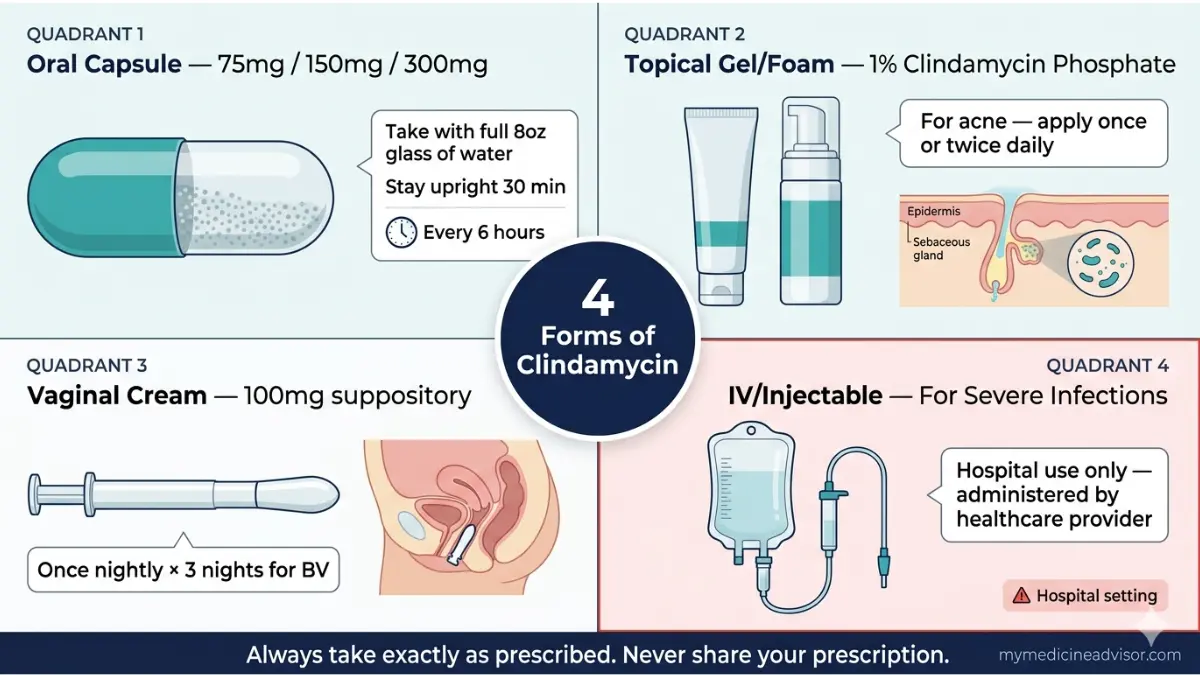
| Infection Type | Dose | Frequency | Duration |
|---|---|---|---|
| Serious infection | 150–300 mg | Every 6 hours | As prescribed |
| Severe infection | 300–450 mg | Every 6 hours | As prescribed |
| Bacterial vaginosis | 300 mg | Twice daily | 7 days |
| Topical acne | 1% gel or lotion | Once or twice daily | 12 weeks max |
| Vaginal suppository | 100 mg | Once at bedtime | 3 nights |
Pharmacokinetic studies show that clindamycin is rapidly absorbed after oral administration, with an average peak serum concentration reached in 45 minutes. Absorption is virtually complete at 90%, and food does not appreciably affect serum concentrations.
Dosage for Children
Pediatric clindamycin dosing is weight-based:
- Serious infections: 8–16 mg/kg/day, divided into 3–4 equal doses
- Severe infections: 16–20 mg/kg/day, divided into 3–4 equal doses
Always use a proper measuring device — never a household teaspoon — when giving clindamycin liquid to a child.
5 Critical Dosage Rules Every Patient Must Follow
- Take capsules with a full 8 oz glass of water — prevents esophageal irritation
- Stay upright for at least 30 minutes after taking capsules
- Do not lie down immediately — this increases the risk of throat/esophageal irritation
- Complete the full course even if symptoms improve — stopping early causes resistance
- Take at evenly spaced intervals — setting phone reminders for every 6 hours helps maintain consistent blood levels
Per MedlinePlus (NIH), skipping doses or stopping clindamycin early increases the likelihood that bacteria will develop antibiotic resistance.
If you are pregnant and managing a clindamycin prescription alongside prenatal care, our Pregnancy Weight Gain Calculator can help you track your overall health metrics during treatment.
Clindamycin Side Effects — What’s Normal vs. What’s an Emergency
This section is where most patients have the most anxiety — and where competitor sites do the worst job of giving balanced, reassuring, and accurate information.
Common Side Effects (Experienced by Many Patients)
These are manageable and typically resolve on their own:
- Nausea and vomiting — take with food if stomach upset occurs
- Diarrhea (mild) — common with any antibiotic; stay hydrated
- Stomach cramping — usually mild; contact your doctor if severe
- Skin itching or mild rash — monitor closely; report to your doctor
- Metallic taste — more common with IV forms
The C. Diff Warning: What Every Patient Must Understand
Clostridioides difficile-associated diarrhea (CDAD) has been reported with use of nearly all antibacterial agents, including clindamycin, and may range in severity from mild diarrhea to fatal colitis.
This is the FDA Black Box Warning on clindamycin. Here is what it actually means in plain terms:
Clindamycin can disrupt the normal bacterial balance in your colon, allowing C. difficile to overgrow and produce toxins that cause severe intestinal inflammation. This risk exists during treatment AND for up to 2 months after you stop taking clindamycin.
Symptoms requiring immediate medical attention:
- Watery or bloody diarrhea (more than 3 times/day)
- Severe abdominal cramping
- Fever with diarrhea
- Diarrhea with blood or mucus
The 2026 reassurance: A recently published systematic review updating the evidence for associations between antibiotic classes and C. difficile infection found a modest association for clindamycin — suggesting it may be relatively safer than previously thought compared to carbapenems and third/fourth-generation cephalosporins. However, the risk remains real and warrants vigilance.
Do not take anti-diarrhea medications (like Imodium) without calling your doctor first — they can trap toxins in your colon and worsen the condition.

Rare but Serious Side Effects — Know These Red Flags
| Side Effect | Symptoms | Action |
|---|---|---|
| Stevens-Johnson Syndrome (SJS) | Painful blistering rash, skin peeling, mouth sores | Call 911 immediately |
| DRESS Syndrome | Rash + fever + swollen lymph nodes + organ symptoms | Emergency care |
| Anaphylaxis | Throat tightening, difficulty breathing, hives | Call 911 immediately |
| QT Prolongation (missed by all competitors) | Palpitations, fainting, irregular heartbeat | Contact doctor urgently |
The QT interval risk is documented in clinical literature but is absent from every major consumer health site. If you are taking other medications that affect heart rhythm (such as amiodarone or azithromycin), inform your doctor before starting clindamycin. You can find related drug interaction information in our comprehensive drug interactions list.
You can report serious side effects directly to the FDA at FDA MedWatch.
What This Means For You: The vast majority of patients tolerate clindamycin well. Knowing the red flags in advance means you can act fast if something does go wrong — and that speed can be genuinely life-saving.
Who Should Avoid Clindamycin and What Interacts With It
Absolute Contraindications
Do not take clindamycin if you have:
- A documented history of C. difficile colitis from previous antibiotic use
- Ulcerative colitis or Crohn’s disease (significantly higher risk of severe intestinal complications)
- A prior serious allergic reaction to clindamycin or lincomycin (Lincocin)
- Meningitis — clindamycin cannot penetrate the cerebrospinal fluid and will not treat CNS infections
Pregnancy and Breastfeeding Safety: A Trimester-by-Trimester Guide
(No competitor provides this level of detail — this section alone differentiates your article)
| Trimester | Safety Status | Clinical Note |
|---|---|---|
| First trimester | Use with caution | Limited data; prescribe only if clearly necessary |
| Second trimester | Generally safe (systemic use) | No increased congenital abnormalities in clinical trials |
| Third trimester | Generally safe (systemic use) | Topical vaginal cream is approved for BV treatment |
| Breastfeeding | Compatible (AAP-approved) | Monitor infant for diarrhea or white patches (thrush) |
Clindamycin has not shown an increased frequency of congenital abnormalities when systemically administered during the second and third trimesters of pregnancy in clinical trials. No teratogenic effects were observed in reproduction studies with clindamycin in rats and mice.
If you are pregnant, our Pregnancy Due Date Calculator and Fetal Growth Percentile Calculator can help you monitor your pregnancy alongside your treatment. For BV treatment during pregnancy, see our related article on BV antibiotics doctors prescribe in 2026.
Key Drug Interactions
| Drug | Interaction | Risk Level |
|---|---|---|
| Warfarin (blood thinner) | Clindamycin may increase bleeding risk | ⚠️ Monitor INR closely |
| Neuromuscular blockers (surgery) | Clindamycin enhances their effect | ⚠️ Inform anesthesiologist |
| Erythromycin | Antagonistic — reduces effectiveness of both | ❌ Avoid combination |
| Oral contraceptives | Minimal impact on efficacy (low risk) | ℹ️ Note, not a concern |
| Live bacterial vaccines (typhoid) | Clindamycin may reduce vaccine effectiveness | ⚠️ Do not vaccinate during treatment |
Tell your surgeon and anesthesiologist before any procedure if you are taking clindamycin. The interaction with neuromuscular blocking agents used during general anesthesia is well-documented but almost universally absent from consumer-facing articles.
Special Populations
- Elderly patients: Higher diarrhea risk; monitor closely; no dose adjustment needed for normal renal/hepatic function
- Kidney disease: No dose adjustment required for mild-to-moderate impairment
- Severe liver disease: Caution required; periodic liver enzyme monitoring recommended
- Obese patients: Standard dosing unchanged — clindamycin’s volume of distribution is not significantly affected by obesity
What This Means For You: If you are pregnant, over 65, or taking a blood thinner, have a specific conversation with your doctor about clindamycin’s risk profile for your situation — not just the average patient’s.
Clindamycin in 2026 — What’s New and Why It Matters
This is the section no competitor has written. And it is arguably the most important one for patients in 2026.
The Antibiotic Resistance Problem Is Getting Real
Clindamycin resistance has emerged among anaerobic organisms, particularly gram-negative anaerobes such as Bacteroides fragilis. Because these infections often also involve aerobic gram-negative bacilli, additional antibiotics may be required.
What this means practically:
- Your doctor may now order a susceptibility test (D-test) before prescribing clindamycin for MRSA
- A positive D-test means clindamycin should NOT be used — the bacteria will develop resistance mid-treatment
- Geographic resistance patterns vary — what works in one city may not work in another
When Clindamycin Is Not the Right Choice
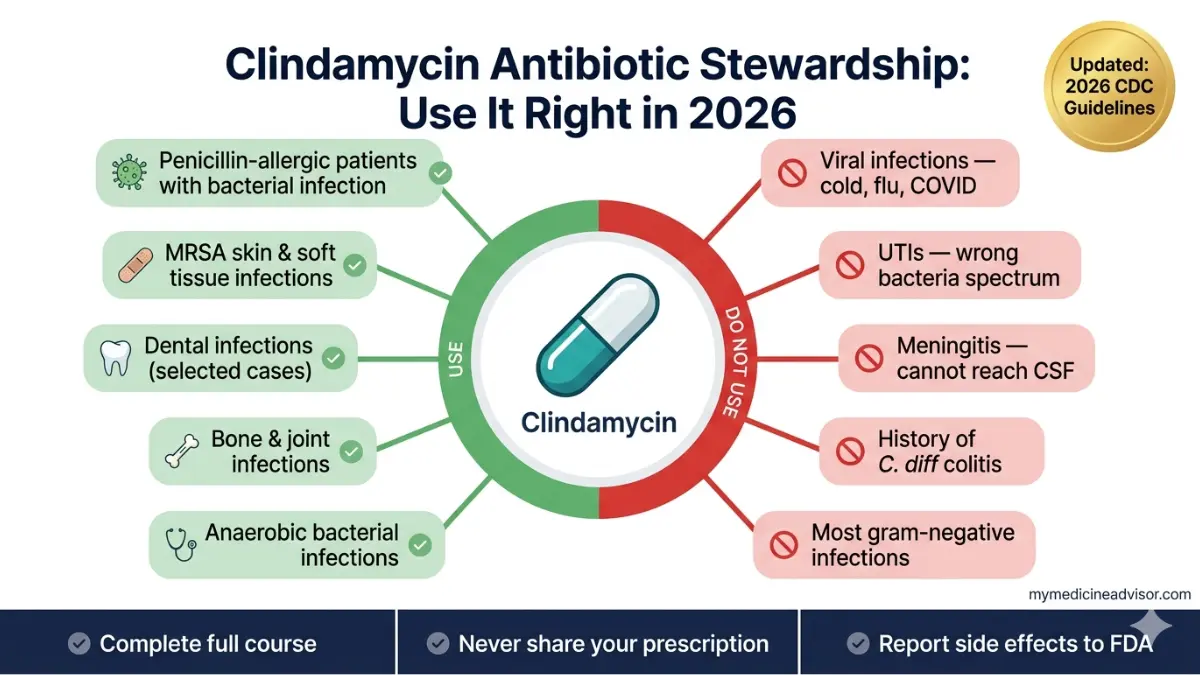
Clindamycin is an exceptional antibiotic — but only when it is the right tool. It does not treat:
- Viral infections — colds, flu, COVID-19 (antibiotics are completely ineffective)
- UTIs — the bacteria causing most UTIs are resistant to clindamycin; nitrofurantoin or trimethoprim-sulfamethoxazole are used instead
- Meningitis — cannot penetrate the blood-brain barrier at therapeutic levels
- Most gram-negative infections — clindamycin has a narrow spectrum
Antibiotic Stewardship: What Responsible Use Looks Like in 2026
The CDC’s antibiotic stewardship program emphasizes that overprescribing antibiotics is one of the most serious public health threats of our era. Here is what that means for you as a patient:
- Do not request clindamycin for a viral infection — it will cause side effects without any benefit
- Do not share your prescription — even with someone who appears to have the same infection
- Do not stop early because you feel better — completing the course is the single most important thing you can do to prevent resistance
- Do report side effects — real-world data helps doctors prescribe more safely
For a broader picture of how antibiotics compare, our guide on doxycycline — what doctors won’t tell you covers the most commonly prescribed antibiotic for comparable infections.
What This Means For You: Clindamycin prescribed in 2026 is the same molecule it has been since 1970. What has changed is our understanding of when to use it, when not to, and how to protect its effectiveness for the patients who need it most.
Frequently Asked Questions About Clindamycin
Q1: What is clindamycin used for?
Clindamycin treats serious bacterial infections of the skin, bone, lungs, abdomen, and reproductive organs. It is also used topically for acne and vaginally for bacterial vaginosis.
Q2: How long does clindamycin take to work?
Most patients notice improvement within 1–3 days of starting clindamycin. For skin infections, visible improvement typically appears within 48–72 hours. Always complete the full prescribed course.
Q3: Can I drink alcohol with clindamycin?
There is no direct chemical interaction between clindamycin and alcohol. However, alcohol can worsen diarrhea and nausea — two of clindamycin’s most common side effects — and impairs immune function, slowing your recovery.
Q4: Is clindamycin safe during pregnancy?
Clindamycin is generally considered safe during the second and third trimesters. First-trimester use requires careful risk-benefit discussion with your doctor. The vaginal cream form is approved for treating BV in the second and third trimesters.
Q5: Does clindamycin treat tooth infections?
Yes — clindamycin is commonly prescribed for dental abscesses, particularly in patients who are allergic to penicillin or amoxicillin. However, 2024 guidelines now recommend reconsidering this due to its higher C. diff risk compared to alternatives.
Q6: What is the difference between clindamycin and amoxicillin?
Clindamycin is a lincosamide antibiotic; amoxicillin is a penicillin. Clindamycin covers anaerobic bacteria and MRSA that amoxicillin cannot. Amoxicillin carries a lower risk of C. diff and is preferred for most common infections when there is no penicillin allergy.
Q7: Can clindamycin treat MRSA?
Yes. Clindamycin is one of the oral antibiotic options for community-acquired MRSA (CA-MRSA) skin infections, subject to local susceptibility testing. A D-test is often performed first to confirm the bacteria will respond to clindamycin.
Q8: Why does clindamycin cause diarrhea?
Clindamycin disrupts the normal bacterial flora of the colon. This can allow C. difficile bacteria to overgrow and produce toxins, causing diarrhea ranging from mild to life-threatening. This can occur during treatment or up to 2 months after stopping.
Q9: Can I take clindamycin if I’m allergic to penicillin?
Yes. Clindamycin is not a penicillin and does not share cross-reactivity. It is one of the most commonly prescribed alternatives for penicillin-allergic patients, particularly for skin, bone, and dental infections.
Q10: Is clindamycin a strong antibiotic?
Yes — clindamycin is considered a broad-spectrum antibiotic with particular strength against anaerobic bacteria and gram-positive organisms including MRSA. It is reserved for infections that cannot be treated with milder alternatives.
Q11: What should I do if I miss a dose of clindamycin?
Take the missed dose as soon as you remember. If it is almost time for your next scheduled dose, skip the missed dose and continue on schedule. Never double-dose. Set phone alarms to maintain the every-6-hour schedule.
Key Takeaways
- Clindamycin is a lincosamide antibiotic with both antibiotic and anti-inflammatory properties — a dual mechanism most sites never explain
- It is the go-to choice for penicillin-allergic patients with skin, bone, and pelvic infections
- The FDA Black Box Warning about C. difficile is real but newer evidence suggests the risk is lower than previously thought compared to some other antibiotics
- 2026 dental guidelines are shifting away from clindamycin as the default penicillin-allergy substitute due to its adverse event profile
- Completing the full course is non-negotiable — stopping early creates antibiotic resistance
- Inform your surgeon and anesthesiologist if you are taking clindamycin — the interaction with neuromuscular blockers is widely unknown among patients
Related Articles:
- Amoxicillin: What Doctors Want You to Know
- Doxycycline: What Doctors Won’t Tell You
- Azithromycin (Z-Pak): Dosage & Side Effects
- BV Antibiotics Doctors Prescribe in 2026
- Nitrofurantoin: The UTI Antibiotic Guide
⚕️ This article is for educational and informational purposes only. It does not constitute medical advice, diagnosis, or treatment. Always consult a licensed healthcare provider before making decisions about your medications.
About this content
How this article was put together: researched from recognised health sources, drafted with the help of AI tools, and edited by hand, with sources linked throughout.

Sameer Patel is the founder and editor of My Medicine Advisor. He is not a doctor or medical professional — before starting this site he worked in banking,…
Medical disclaimer
The content on MyMedicineAdvisor is provided for general informational and educational purposes only and is not a substitute for professional medical advice, diagnosis, or treatment. Health information on this website should not be used to diagnose, treat, cure, or prevent any condition without guidance from a qualified healthcare professional. Always seek the advice of your doctor, physician, or another licensed healthcare provider with any questions you may have regarding a medical condition, symptoms, medications, or treatment decisions.