Which TSH Reference Range Is the Right One for You
TSH reference ranges differ because assay platforms can vary by up to 50%, and each lab picks its own reference population. Neither report is wrong.


Sameer Patel is the founder and editor of My Medicine Advisor. He is not a doctor or medical professional — before starting this site he worked in banking, and he now researches and edits health information full-time.
He started My Medicine Advisor to make clear, well-sourced health information freely available to anyone. Every article is researched from recognised authorities such as the WHO, CDC, NIH, and NICE, drafted with the help of AI tools, and edited by hand, with sources linked so readers can check them. The calculators on the site use established, published formulas, each one named so you can look it up yourself.
My Medicine Advisor is currently a one-person operation with no clinical review panel, and the site is open about that. If you're a qualified clinician or researcher interested in reviewing content, Sameer would genuinely like to hear from you via the contact page.
TSH reference ranges differ because assay platforms can vary by up to 50%, and each lab picks its own reference population. Neither report is wrong.
A subclinical hypothyroidism TSH of 5 or 6 is not overt disease. Treatment is standard at 10; below it, a repeat test comes before a prescription.

A low TSH usually points to an overactive thyroid, which affects about 1 in 100 Americans aged 12 and older. The rest of your report decides which kind.

A high TSH is one of the most common flagged results on a routine panel — nearly 5 in 100 Americans aged 12 and older have an underactive thyroid.
TSH levels by age are not one range. Under current intervals, subclinical hypothyroidism is found in 2.4% of people in their twenties and 5.9% past 70.

CGM without diabetes has a blind spot: both leading over-the-counter sensors stop reporting numbers past their limits and show a label instead.
High blood sugar damages the body years before you feel it. UKPDS found each 1% drop in average A1C tracked with 37% fewer microvascular complications.
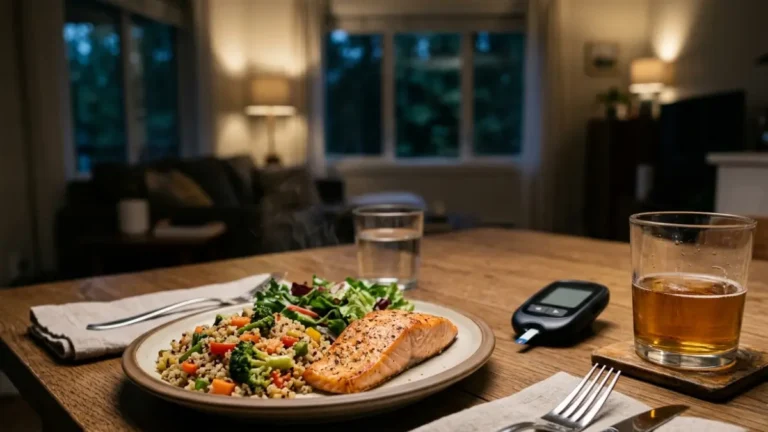
Alcohol and blood sugar move in two directions on a night out: up first from carbs, then down for hours. Published sources disagree on how many.

Diabetes rates by state disagree across sources for the same state and year. CDC itself publishes 11.3% crude and 10.1% age-adjusted for 2021. Here's why.
Prediabetes statistics moved this year: CDC's count rose from 97.6 million to 115.2 million US adults. Most pages still cite the older figure.