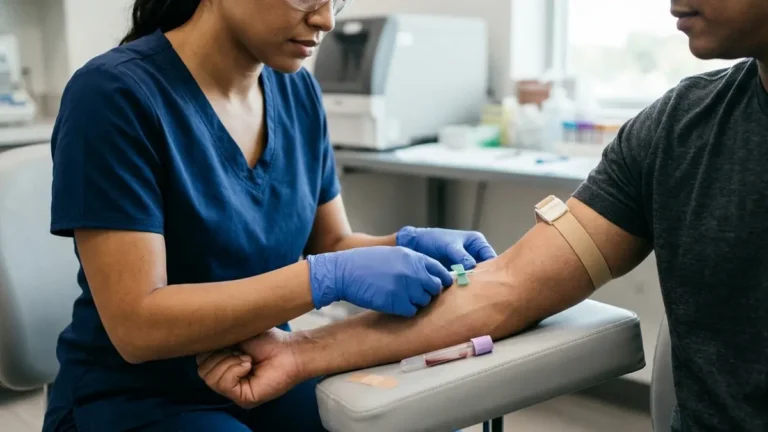
Know Your ALT Normal Range When Labs and Experts Disagree
Your ALT normal range depends on who sets it: labs often print up to 36–40 U/L, while a 2002 study found healthy limits of 30 (men) and 19 (women).


Sameer Patel is the founder and editor of My Medicine Advisor. He is not a doctor or medical professional — before starting this site he worked in banking, and he now researches and edits health information full-time.
He started My Medicine Advisor to make clear, well-sourced health information freely available to anyone. Every article is researched from recognised authorities such as the WHO, CDC, NIH, and NICE, drafted with the help of AI tools, and edited by hand, with sources linked so readers can check them. The calculators on the site use established, published formulas, each one named so you can look it up yourself.
My Medicine Advisor is currently a one-person operation with no clinical review panel, and the site is open about that. If you're a qualified clinician or researcher interested in reviewing content, Sameer would genuinely like to hear from you via the contact page.
Your ALT normal range depends on who sets it: labs often print up to 36–40 U/L, while a 2002 study found healthy limits of 30 (men) and 19 (women).

ALT blood test flagged high? One weightlifting session raised ALT for 7+ days in a study, one of several causes to rule out first.

A borderline TSH is confirmed on a second test before treatment — guidelines repeat it
at two to three months. Here's what to ask in between.

Undiagnosed thyroid disease statistics get quoted everywhere. NHANES III tested 17,353 people and found 4.6% with hypothyroidism, mostly subclinical.

Reading a thyroid panel starts with TSH, not the value flagged in red. Free T4 comes next, and the range that decides your result is your own lab's.
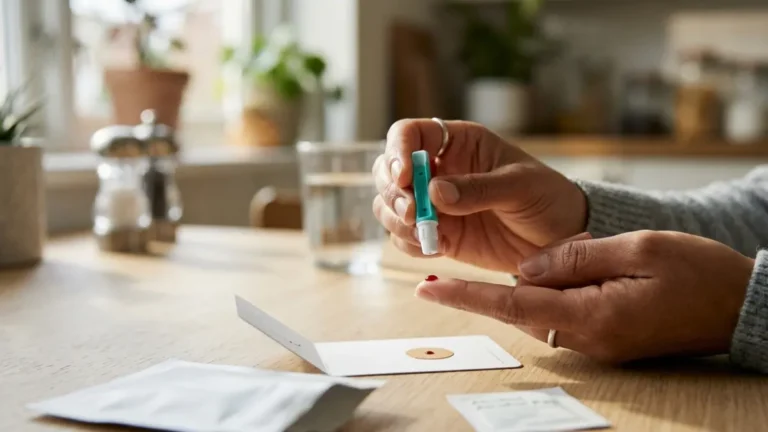
At-home thyroid test accuracy splits in two: mail-in kits analyzed by a lab track vein-draw TSH closely, while rapid strip tests read at home do not.
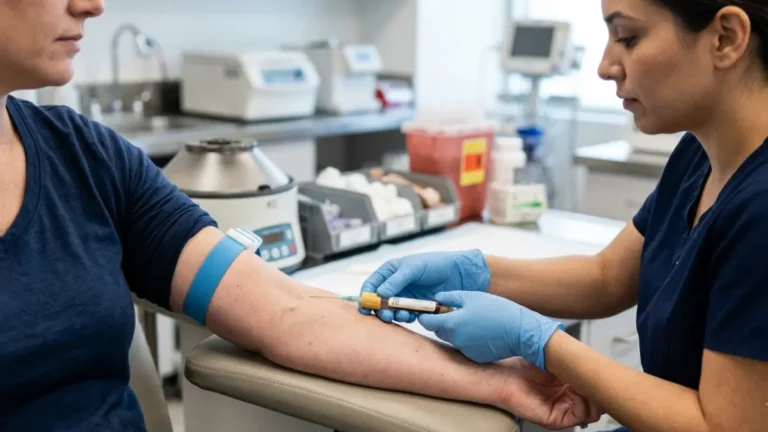
TSH test cost depends on one code: CPT 84443. Uninsured patients can request a
written estimate first, and dispute bills $400 over it.
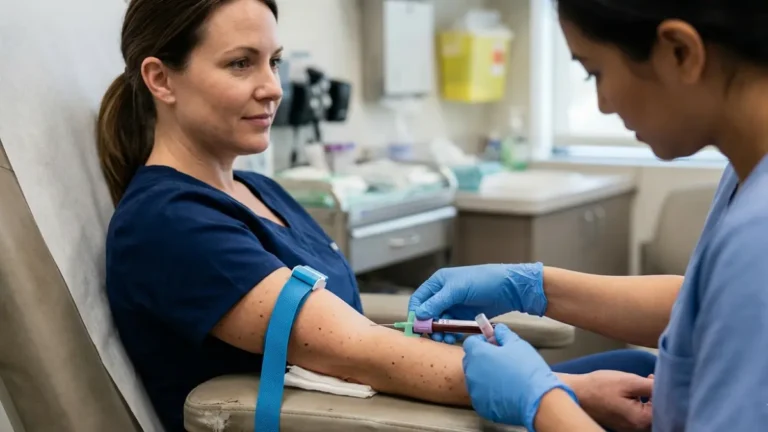
TPO antibodies and TSH answer different questions — one measures function, the other cause. NHANES III found 11.3% of US adults carry them. See the grid.
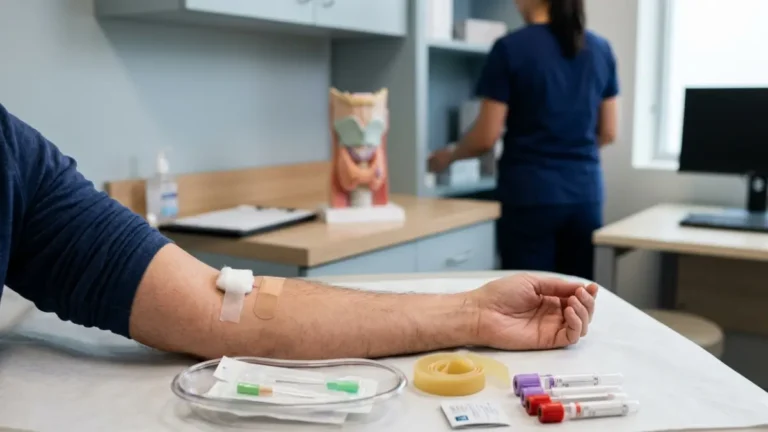
High TSH causes are not all thyroid. Assay interference affects an estimated 0.05% to 6% of samples, depending on the platform used.
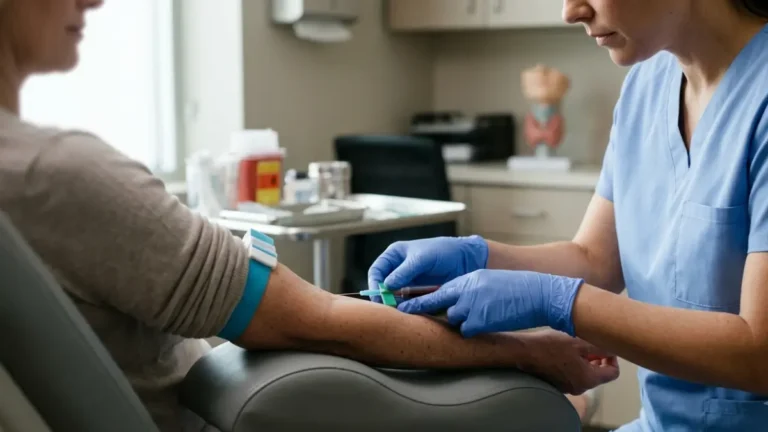
TSH retest timing isn't one number. A borderline high result is usually repeated in 2–3 months, and many return to normal on their own.