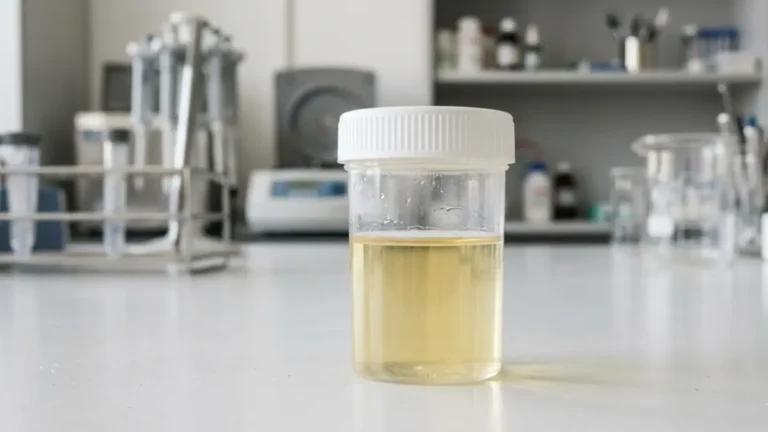
Your glucose in urine result, and the clear next step
Glucose in urine points most people straight to diabetes. That kidney threshold, quoted as 180 mg/dL, is reported from 54 to 300 in diabetes.


Sameer Patel is the founder and editor of My Medicine Advisor. He is not a doctor or medical professional — before starting this site he worked in banking, and he now researches and edits health information full-time.
He started My Medicine Advisor to make clear, well-sourced health information freely available to anyone. Every article is researched from recognised authorities such as the WHO, CDC, NIH, and NICE, drafted with the help of AI tools, and edited by hand, with sources linked so readers can check them. The calculators on the site use established, published formulas, each one named so you can look it up yourself.
My Medicine Advisor is currently a one-person operation with no clinical review panel, and the site is open about that. If you're a qualified clinician or researcher interested in reviewing content, Sameer would genuinely like to hear from you via the contact page.
Glucose in urine points most people straight to diabetes. That kidney threshold, quoted as 180 mg/dL, is reported from 54 to 300 in diabetes.
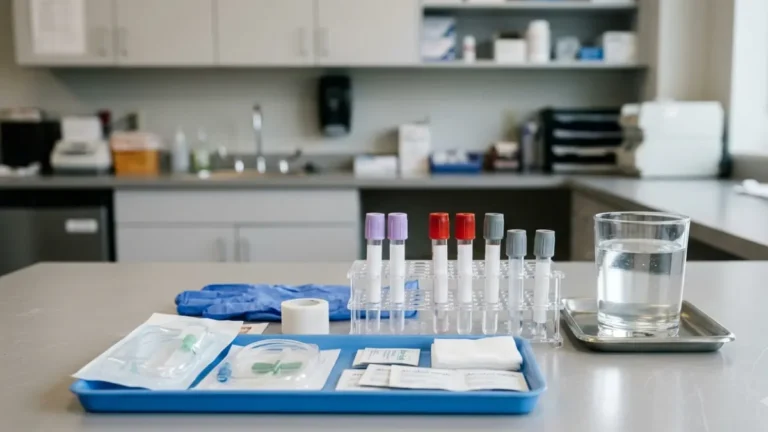
The oral glucose tolerance test measures two hours of your body clearing a 75g sugar load — and roughly 20% of results come back non-diagnostic.
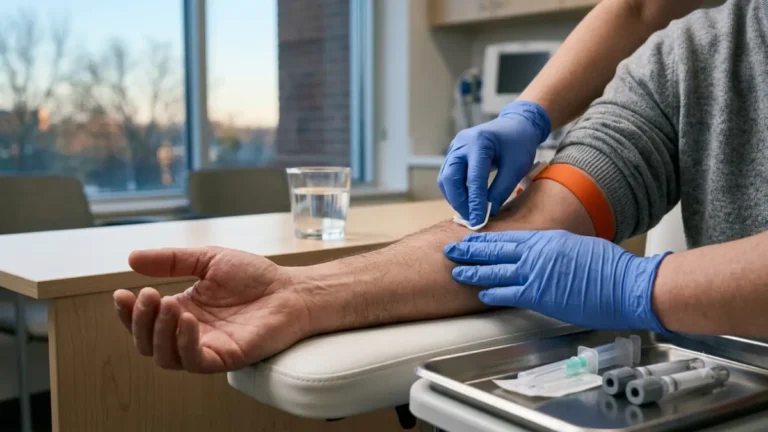
Fasting before a glucose test means at least 8 hours, water only. But two of the five common glucose tests require it — the other three don't.
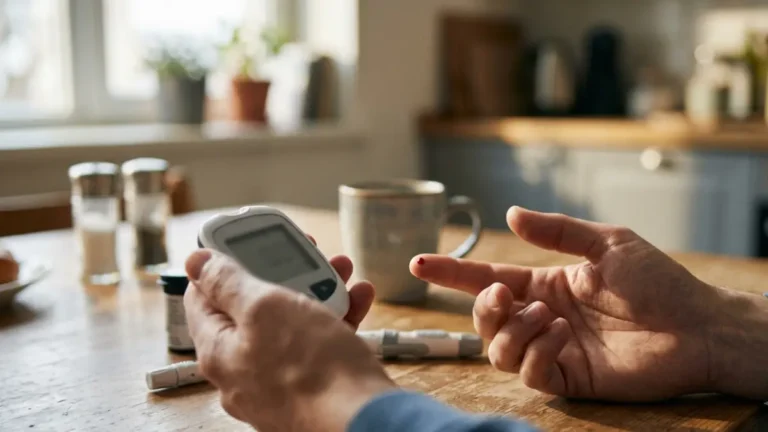
High blood sugar without diabetes usually has a plain explanation — and one of the six is simply how your test was taken. Fruit residue alone can skew it.

Low blood sugar symptoms follow a sequence: adrenaline first, then the brain running short of fuel. That order is why confusion is the more serious sign.

High blood sugar symptoms get blamed on work, screens, antibiotics. Meanwhile 27.6% of US adults with diabetes don't know they have it.
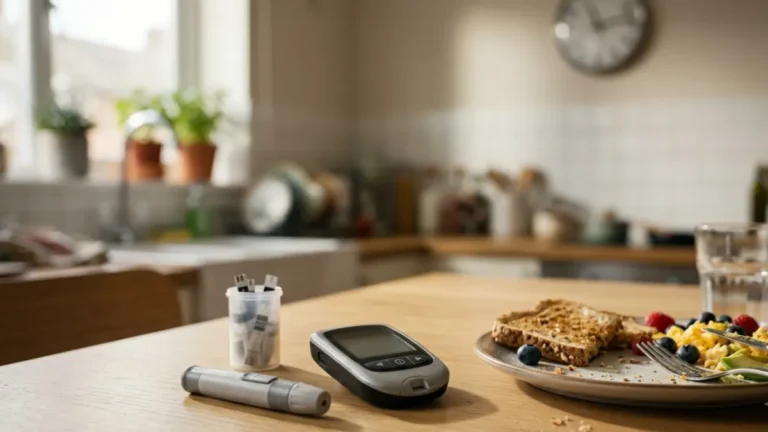
Blood sugar after eating has no single normal. CDC puts the post-meal target under 180 mg/dL with diabetes — the figure without one comes from a lab
test.

A fasting glucose of 126 is the result people most hope was a lab error. The 2026 Standards of Care say the common error runs the other way.
A fasting glucose of 100-125 mg/dL is prediabetes. The CDC now counts 115.2 million US adults with it — and eight in ten don't know they have it.
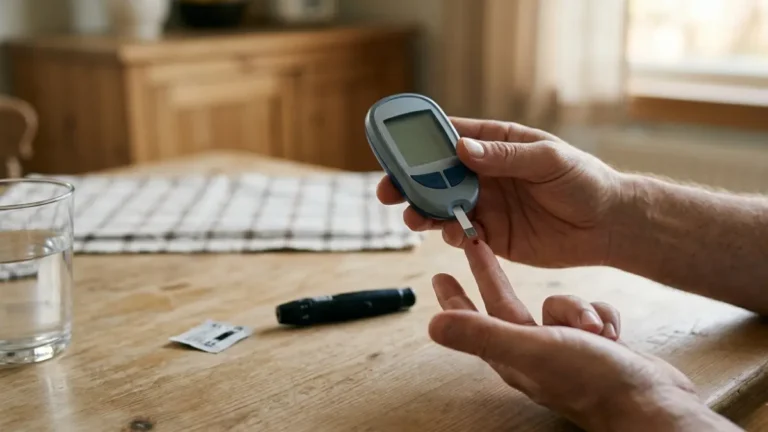
Glucose levels chart confusion is usually one thing: 126 mg/dL flags diabetes on a fasting test, but the same call needs 200 mg/dL on a two-hour OGTT.