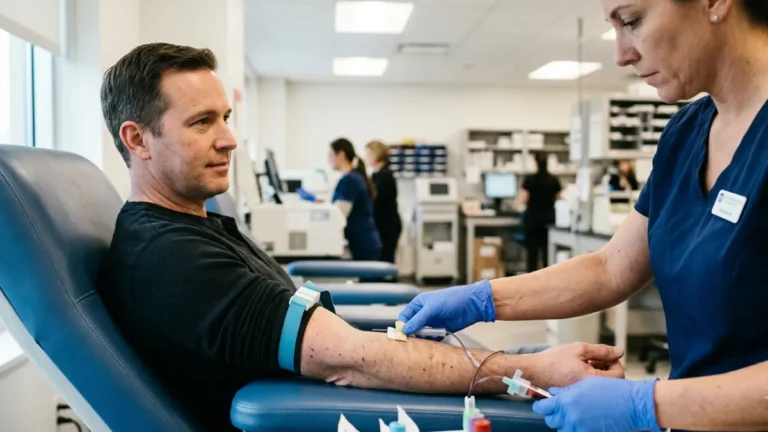
The Fructosamine Test Measures Weeks, Not Months
A fructosamine test can be thrown off by a vitamin C supplement — major laboratories ask patients to hold it for 24 hours first.


Sameer Patel is the founder and editor of My Medicine Advisor. He is not a doctor or medical professional — before starting this site he worked in banking, and he now researches and edits health information full-time.
He started My Medicine Advisor to make clear, well-sourced health information freely available to anyone. Every article is researched from recognised authorities such as the WHO, CDC, NIH, and NICE, drafted with the help of AI tools, and edited by hand, with sources linked so readers can check them. The calculators on the site use established, published formulas, each one named so you can look it up yourself.
My Medicine Advisor is currently a one-person operation with no clinical review panel, and the site is open about that. If you're a qualified clinician or researcher interested in reviewing content, Sameer would genuinely like to hear from you via the contact page.
A fructosamine test can be thrown off by a vitamin C supplement — major laboratories ask patients to hold it for 24 hours first.

A1C or OGTT: pregnancy and a short list of blood conditions turn the choice into a rule.
Outside those, the A1C is usually what arrives.

A false high A1C has two possible inputs, and only one is your blood sugar. Which anemia you have decides which way the number actually moved.

Sickle cell trait and A1C: the method is usually not the problem. A normal result is, and
closing that gap takes one extra question at your next visit.

Very high A1C is the guideline's own phrase for a result above 10% - the point where insulin should be considered, not a separate severe tier.

How fast an A1C can drop starts with red blood cells: they live about 120 days, so the three-month window is a rounded convention, not a hard edge.

A1C test cost has no national price. If a self-pay bill lands $400 or more above your written good faith estimate, a federal process decides what you owe.

A1C screening age moved to 35 at both guideline bodies, the task force in 2021 and the ADA in 2022. An estimated 12 to 14 million more adults qualify.

A1C confirmatory testing has one rule worth knowing: when two tests disagree, the one above the line is repeated, and the diagnosis is made on that.

How often an A1C is repeated is not capped at four a year: Medicare's own rule allows
more when medical necessity is documented.