
On This Page – Quick Medical Summary
Routine screening ends at 75 for most people

Routine colorectal screening stops at 75 in both major US guidelines. From 76 to 85, another colonoscopy becomes a case-by-case choice, and for people whose earlier screening was normal, the added benefit is small.
Screening at those ages carries a grade C from the US Preventive Services Task Force, meaning doctors offer it selectively after weighing your general health, your screening history and what you prefer. The test itself, from prep to the report, is covered in colonoscopy prep, cost and results.
2 national guidelines and where they draw the line
Neither guideline screens everyone over 75 by default. The American Cancer Society (ACS) kept its age limits in a 2026 update: screening through 75 for healthy people expected to live more than 10 years, an individual decision from 76 to 85, and no screening after 85.
| Guideline | Through age 75 | Ages 76–85 | What the decision weighs |
|---|---|---|---|
| USPSTF, 2021 | Screen all adults 45–75 | Offer selectively (grade C); small net benefit if already screened | General health, prior screening, preferences |
| ACS, 2026 | Screen if life expectancy tops 10 years | Individual decision | Preferences, life expectancy, health status, prior screening |
Sources: USPSTF 2021 recommendation; ACS 2026 guideline update.
Will you live long enough to benefit?

Ten years is the benchmark built into the ACS guideline. The newest US life tables show where the average person stands against it.
| Age | Average years left, all adults | Men | Women |
|---|---|---|---|
| 75 | 12.5 | 11.6 | 13.2 |
| 80 | 9.4 | 8.6 | 9.9 |
| 85 | 6.7 | 6.1 | 7.1 |
Source: CDC National Center for Health Statistics, United States Life Tables, 2024.
The average 75-year-old is still past the 10-year mark. By 80, men and women both average just under it, and by 85 they fall roughly 3 to 4 years short.
Ask your doctor whether your health puts you above or below the average for your age, since that estimate shapes the rest of the decision. Averages blend healthy people with people who have serious illness, so your own outlook can sit well higher or lower.
Past 75, the benefit shrinks while the risks grow
A Harvard-led observational study of 1,355,692 Medicare beneficiaries aged 70 to 79 compared people who had a screening colonoscopy with similar people who did not. Over 8 years, colorectal cancer was diagnosed in 2.84% of screened 75- to 79-year-olds and 2.97% of those not screened, a gap small enough that chance could explain it (García-Albéniz and colleagues, Annals of Internal Medicine). At 70 to 74 the gap was wider: 2.19% against 2.62%.
Harms rose with age. The colonoscopy group had 10.3 extra adverse events per 1,000 people within 30 days at ages 75 to 79, close to double the 5.6 per 1,000 at 70 to 74. That is about 1 extra problem per 100 people screened, so most come through the month without one; colonoscopy complications and how often they happen breaks them down by type.
Get emergency care now if: in the days after a colonoscopy you have chest pain, severe pain or cramping in your belly, vomiting that will not stop or vomiting blood, black or tarry stools, or heavy red blood in your stool. Call 911.
When does a colonoscopy after 75 still make sense?
People who have never had any colorectal screening are the clearest exception. The task force notes that adults never screened are more likely to benefit, so a first colonoscopy at 77 is a different conversation from a fourth.
Previous polyps change the picture too. A colonoscopy booked because of earlier polyps is surveillance, timed by what those polyps showed under the microscope, and stopping it is a separate decision.
Symptoms take the question out of screening altogether. The USPSTF guideline covers only adults at average risk with no symptoms, so its age limits do not apply to blood in the stool; symptoms that call for a colonoscopy lists the signs that need a visit now, at any age.
Ask your doctor whether your next colonoscopy would count as screening, surveillance or diagnostic, because the age guidance covers only the first.
Stool test or colonoscopy if you keep screening
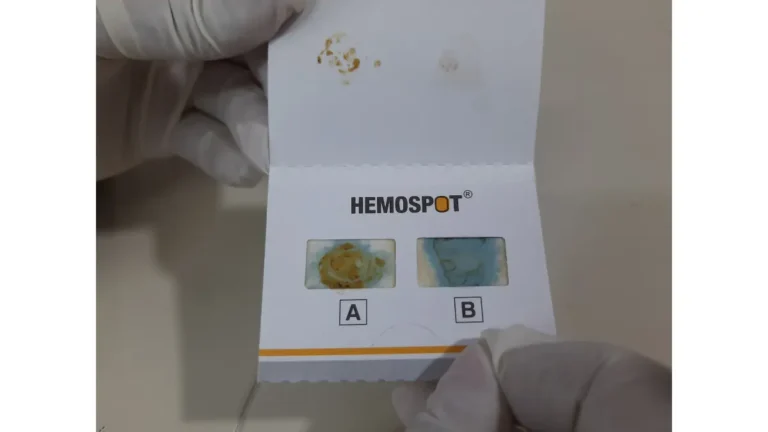
A stool test makes sense only if you would go on to the colonoscopy that a positive result leads to. A fecal immunochemical test (FIT), done at home once a year, is on the USPSTF list of options and needs no bowel prep; how FIT compares with colonoscopy covers accuracy and follow-up. Blood-based tests are not preferred in the 2026 ACS update, which reserves them for people who decline or never complete the preferred tests.
What Medicare pays after age 75
Medicare sets no upper age limit for screening colonoscopy (same Medicare study). Part B covers it once every 120 months if you are not at high risk and every 24 months if you are (Medicare.gov). With a provider who accepts assignment, the screening costs nothing, but if a polyp or other tissue is removed you pay 15% of the Medicare-approved amount, with no Part B deductible.
A follow-up colonoscopy after a positive Medicare-covered stool or blood test is also covered as screening. When a screening colonoscopy stops being free walks through the rest of the bill.
Take these questions to your next checkup
Write down the date and result of your last colonoscopy before the visit, since both shape the advice you get.
- Am I at average risk, or do my family history or past polyps change that?
- Does my health put me above or below 10 more years of life expectancy?
- Would a yearly FIT suit me better than another colonoscopy?
- If a polyp is removed, what would my share of the bill be at this facility?
When a parent is the one deciding, helping a parent through colonoscopy prep covers the days before the test.
Found this helpful? See more of our guides on Google.
Want to see our guides first on Google?
Found this helpful? See more of our guides on Google.
About this content
How this article was put together: researched from recognised health sources, drafted with the help of AI tools, and edited by hand, with sources linked throughout.

Dr. Pooja Sahu, MBBS, is a medical reviewer for MyMedicineAdvisor. She is a clinical physician whose experience includes serving as a Junior Resident in Nephrology at Dr. Ram…
Medical disclaimer
The content on My Medicine Advisor is provided for general informational and educational purposes only and is not a substitute for professional medical advice, diagnosis, or treatment. Health information on this website should not be used to diagnose, treat, cure, or prevent any condition without guidance from a qualified healthcare professional. Always seek the advice of your doctor, physician, or another licensed healthcare provider with any questions you may have regarding a medical condition, symptoms, medications, or treatment decisions.