
On This Page – Quick Medical Summary
Most people join a lung cancer clinical trial through their oncologist, but you can also search on your own and contact a trial team directly (NCI’s steps to find a clinical trial). The route is much the same at every center: gather your records, search more than one trial list and speak with the trial coordinator, then move through pre-screening, consent and screening tests before any treatment starts.
Where you get care changes how likely you are to be offered a trial. An analysis of 2013 to 2017 data from about 1,200 Commission on Cancer programs, which together see more than 70% of US cancer cases, found that about 7 in 100 adults with cancer joined a treatment trial. At NCI-designated comprehensive cancer centers the figure was about 22 in 100. At community programs it was about 4 in 100, so if your clinic runs few trials, look at a larger center too.
Start before your first treatment if you can
Some treatment trials accept only people who haven’t been treated yet, because they’re testing a better first treatment. Others want people whose cancer has grown after earlier treatment. Once surgery, chemotherapy, radiation or another therapy begins, the set of trials that fits you changes. That’s why NCI suggests thinking about trials right after diagnosis, before treatment starts.
Trials aren’t reserved for advanced cancer or for people who have run out of options. People at any stage can join if they meet a study’s requirements, and some trials enroll people whose standard treatment has stopped working.
Note: Ask your oncologist how long you can safely take to decide. Looking for a trial should not delay treatment you need now.
Five records every trial coordinator asks for

Eligibility criteria decide who can join a trial. They usually cover the type and stage of cancer, past treatment, specific changes in the tumor, age, medical history and current health. Your records let a coordinator check these in one conversation, and NCI’s free Cancer Details Checklist covers the same ground.
| Record | What it tells the research team | Where to get it |
|---|---|---|
| Biopsy pathology report | Non-small cell or small cell lung cancer, and the subtype, since eligibility often depends on the exact type | Your oncologist’s office or the hospital pathology department |
| Staging and recent imaging reports | The stage, and where the cancer has spread | The radiology department or your patient portal |
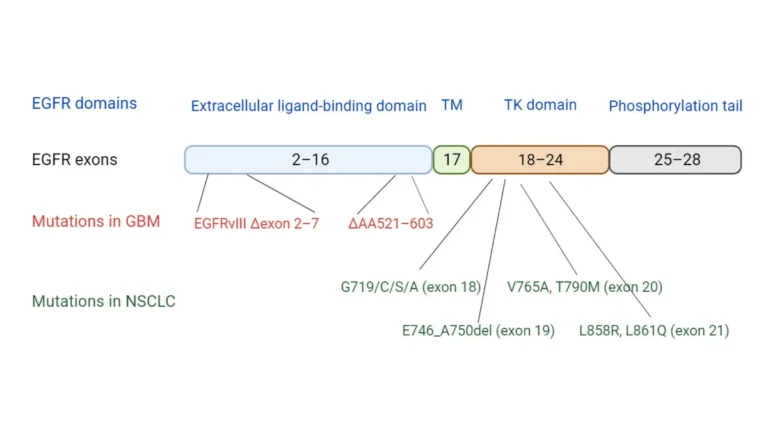
| Biomarker test report | Tumor markers such as EGFR, ALK, KRAS or PD-L1 that decide whether a targeted-therapy trial fits | Your oncologist, or the testing lab’s report |
| Treatment history with drug names and dates | Some trials exclude anyone already treated; others require a specific earlier treatment | Your oncologist’s notes or your pharmacy record |
| Recent blood tests, other conditions and current medicines | Your current health, which trials use to judge whether the study treatment is safe for you | Your patient portal or primary care office |
Source: eligibility examples from NCI’s steps to find a clinical trial.
Get printed or downloadable copies of each report before you start calling. If you’re unsure which type you have, the differences between non-small cell and small cell lung cancer are set out separately, as is how lung cancer staging works.
The biomarker report deserves a second look. If your tumor was never tested, or was tested for only a few genes, ask your oncologist whether broader tumor genetic testing should come before your search. When a biopsy left too little tissue, a liquid biopsy that looks for tumor DNA in blood can sometimes fill the gaps.
Where to search, and what each list misses

No single list contains every cancer trial, NCI warns, so search at least two. NCI’s own search covers trials it funds plus others at NCI-designated cancer centers. ClinicalTrials.gov, run by the National Library of Medicine, adds trials from drug and biotech companies that may not appear on NCI’s list. Cancer center websites post their own studies, and some of those are missing from both.
Trial-matching websites need more care. Some are paid by drug companies to list trials or find patients. Others may not be updated often, or may ask you to register before showing contact details. Lung cancer advocacy groups also run trial-finding services.
For a free search done for you, call NCI’s Cancer Information Service at 1-800-4-CANCER (1-800-422-6237) and choose option 2. Take the list it gives you to your oncologist to check against your records.
One lung-specific trial is worth knowing by name. Lung-MAP (NCT03851445), run by the SWOG Cancer Research Network, is for adults with stage 4 or recurrent non-small cell lung cancer who have already been treated. It profiles the tumor’s genes, then offers a sub-study matched to the biomarker found, or a separate sub-study when nothing matches. Its sites include many community hospitals as well as large cancer centers.
What happens on the first call to a trial team?
The trial coordinator is the person to ask for when you call the number on a listing; you don’t need the lead researcher at this stage. Coordinators answer questions from patients and their doctors and judge whether you’re likely to qualify. The final decision usually comes after you meet a doctor on the trial team, and if the medical questions feel hard to answer, your oncologist’s office can make the call for you.
Most trials then move through three stages:
- Pre-screening, where a research nurse or coordinator explains the trial’s goals, the drug being tested and its known side effects, how many visits it takes, what support it offers and how insurance works.
- Informed consent, where the team walks you through the full study plan, called the protocol, and gives you a consent form to read. Signing doesn’t lock you in, and you can leave the study at any time.
- Screening, a closer review of your history plus any tests the trial requires. Some people are found ineligible here, even after an encouraging first call.
In a randomized trial, a computer usually assigns your group, and neither you nor your doctor chooses it.
Who pays for what in a lung cancer trial
Trial costs fall into two groups. Patient care costs are the ones you would have anyway, such as doctor visits, standard cancer treatment, lab tests and scans, and insurance often covers them. Research costs exist only because of the study, such as the study drug and research-only tests or scans, and the sponsor often covers those (how NCI splits trial costs). Because “often” applies to both, ask the coordinator which costs fall to you before you sign.
| Your coverage | Routine care costs during a trial | What to check |
|---|---|---|
| Private health plan | The Affordable Care Act requires most private insurers to cover routine patient costs in approved trials, subject to the plan’s out-of-network rules | Whether pre-authorization is needed, and a letter saying so if it isn’t |
| Original Medicare | Covers routine patient costs in qualifying trials | Your usual Part B deductible and coinsurance may still apply |
| Medicare Advantage | You switch to Original Medicare coverage for the trial, and your plan must pay back the difference in cost-sharing | Call the plan before you start |
| Medicaid | Covers routine patient care costs; the CLINICAL TREATMENT Act has required this for life-threatening conditions, including cancer, since January 1, 2022 | Eligibility rules differ by state |
| TRICARE | Reimburses medical costs of NCI-sponsored cancer treatment and prevention trials | Whether your trial is NCI-sponsored |
| VA health care | Eligible veterans can join NCI-sponsored trials at VA medical centers | Your VA oncologist can check |
| No insurance | Some NCI-supported trials run through NCORP sites, which serve people with low incomes | Ask your clinic about NCORP studies |
Sources: NCI on paying for clinical trials and ASCO on insurance coverage of clinical trials.
Give your insurer the target start date the coordinator suggests, so a slow coverage decision doesn’t hold up treatment. If a claim is denied, the plan’s billing office can explain how to appeal. Travel, lodging, meals, parking and child or elder care sit outside both cost groups, and some trials help pay for them.
Will you get a placebo?
Rarely. Most cancer treatment trials compare a new treatment against the standard one. Placebos mainly appear when no standard treatment exists, or in designs where one group gets standard treatment plus the new drug and the other gets standard treatment plus a placebo. You’ll be told beforehand, and the consent form will cover it.
The trial’s phase says more about what you’re agreeing to.
| Phase | Typical size | What it tests |
|---|---|---|
| 1 | About 15–30 people | A safe dose and its side effects |
| 2 | About 50–100 people | Whether the treatment works against the cancer, such as shrinking tumors or slowing growth |
| 3 | 100 to several thousand people | The new treatment against the current standard, with people assigned to each by chance |
Source: NCI on how clinical trials work.
Before a trial opens, an institutional review board checks that it is well designed and ethical, and the board reviews it again every year. Many phase 3 trials also have an independent data and safety monitoring board, and either group can stop a trial early if people in it are being harmed.
Take these records to your next oncology visit
Bring the five records from the table and put one direct question to your oncologist: “Based on my cancer type, stage and biomarker results, is there an open trial I should consider, here or at another center?” When a trial looks promising, settle these questions with the trial team before you sign:
- What is the trial trying to do: cure the cancer, slow it, ease symptoms or test safety?
- What does the comparison group receive, and is there a placebo?
- How often are visits, where are they, and does the sponsor help with travel?
- Which costs go to me or my insurance, and which does the sponsor pay?
- How will my own oncologist be kept informed?
- If the treatment helps, can I keep receiving it after the trial ends?
If nothing fits right now, raise trials again whenever your treatment changes, because studies such as Lung-MAP are built for people whose cancer has grown on earlier treatment. A second opinion at an NCI-designated center can turn up trials a smaller clinic doesn’t run. When you can’t enroll at all, the FDA’s expanded access pathway sometimes lets people with serious illness receive an investigational drug outside a trial, though your doctor and the drug company both have to agree. Palliative care for lung cancer can run alongside any of these to manage symptoms, and the wider picture of the disease starts with what lung cancer is and how it’s treated.
Two questions people often ask
Are you paid for taking part in a trial?
Some trials reimburse your time or help with travel and lodging, but many don’t. The coordinator should explain what support the trial offers during pre-screening.
Keeping your own oncologist during a trial
Often you can. Many people keep seeing their regular care team alongside the researchers, so ask how your oncologist will be kept informed while you’re enrolled.
Want to see our guides first on Google?
Found this helpful? See more of our guides on Google.
About this content
How this article was put together: researched from recognised health sources, drafted with the help of AI tools, and edited by hand, with sources linked throughout.

Dr. Pooja Sahu, MBBS, is a medical reviewer for MyMedicineAdvisor. She is a clinical physician whose experience includes serving as a Junior Resident in Nephrology at Dr. Ram…
Medical disclaimer
The content on My Medicine Advisor is provided for general informational and educational purposes only and is not a substitute for professional medical advice, diagnosis, or treatment. Health information on this website should not be used to diagnose, treat, cure, or prevent any condition without guidance from a qualified healthcare professional. Always seek the advice of your doctor, physician, or another licensed healthcare provider with any questions you may have regarding a medical condition, symptoms, medications, or treatment decisions.