
On This Page – Quick Medical Summary
If you or someone you love is about to start chemotherapy for pancreatic cancer, the fear underneath every question is usually the same: how sick is this going to make me? That fear is reasonable, and you deserve a straight answer instead of vague reassurance.
Here’s how to use this guide. If you’re newly diagnosed and haven’t had your first infusion, start with what causes side effects and how common each one really is. If you’re already in active treatment, move ahead to managing day-to-day symptoms and the two effects people worry about most — nerve changes and low blood counts. If you’re a caregiver, the section on emergency warning signs and how to advocate for dose changes is written with you in mind.
The great majority of chemo side effects are expected, and most are managed with supportive care rather than endured in silence. A few are genuinely urgent, and this guide makes that line clear — with verified numbers and one fever rule you should never ignore. For the bigger picture, our complete guide to pancreatic cancer signs, stages, and treatment covers diagnosis through recovery.
ℹ️ Medical Disclaimer: This article is educational. It does not diagnose any condition, recommend a specific chemotherapy regimen, prescribe or adjust any medication, or replace your oncology team’s judgment. Decisions about treatment, dose changes, supportive medicines, and emergency care belong with a board-certified medical oncologist who knows your full history. If you have an urgent symptom such as a fever during chemotherapy, contact your cancer care team or seek emergency care immediately.
Why pancreatic cancer chemo causes side effects
Chemotherapy for pancreatic cancer works by killing cells that divide quickly — exactly what cancer cells do. The catch is that several kinds of healthy cells divide quickly too, and chemo can’t fully tell them apart.
How chemo affects healthy cells too
🔬 How It Works: Chemo travels through the whole body and strikes fast-growing healthy cells alongside the cancer — mainly the bone marrow (where blood cells are made), the lining of the digestive tract, and the hair follicles. That one mechanism explains most of what patients feel: low blood counts, nausea and mouth sores, diarrhea, and hair loss all trace back to it.
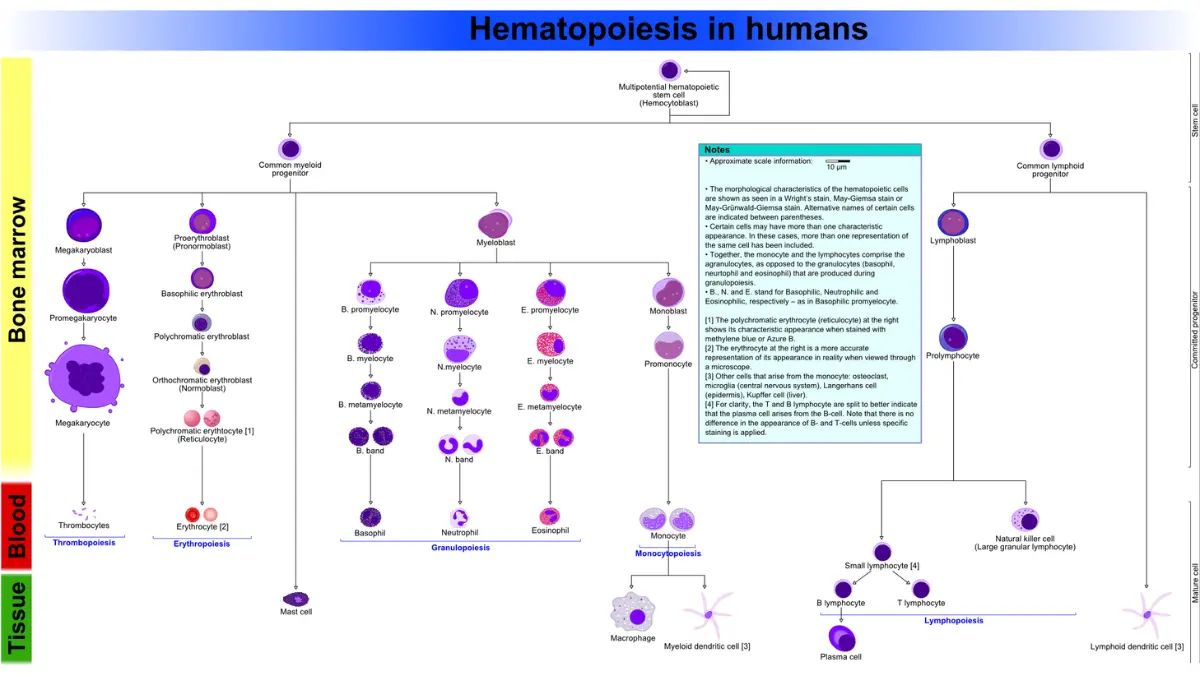
Adapted from Wikimedia Commons Hematopoiesis (human) diagram en.png, licensed under Creative Commons Attribution-Share Alike 3.0 Unported license.
The three main regimens and what each is known for
Three first-line regimens are used most often for advanced pancreatic cancer, and the one you’re on shapes which side effects are most likely.
- FOLFIRINOX combines four drugs (fluorouracil, leucovorin, irinotecan, and oxaliplatin) and tends to cause more low blood counts and diarrhea.
- Gemcitabine plus nab-paclitaxel is often better tolerated overall but is known for fatigue, hair loss, and nerve symptoms.
- NALIRIFOX — liposomal irinotecan with fluorouracil, leucovorin, and oxaliplatin — became the newest first-line option with the FDA’s February 2024 approval, and diarrhea is one of its more prominent effects.
Which regimen fits depends on your overall health, not the cancer alone. See where chemo sits in the larger plan in our overview of pancreatic cancer treatment options.
✅ Patient Action: Ask your medical oncologist which regimen you’re receiving and the main reason it was chosen for you — fitness, treatment goals, and likely tolerability all factor in.
Adapted from Wikimedia Commons Complete neuron cell diagram en.svg, licensed under Public Domain.
How common are pancreatic cancer chemo side effects?
The most common pancreatic cancer chemo side effects are fatigue, nausea, diarrhea, low blood counts, nerve changes (numbness and tingling), and hair loss — though how often each appears depends heavily on your regimen.
It helps to separate “common” from “severe.” Most people get milder (grade 1–2) versions of these effects. The percentages below are for the severe (grade 3–4) versions reported in each regimen’s main trial, which is why they look lower than your everyday experience might suggest.
The most common side effects, ranked
- Fatigue — the most common effect across all regimens
- Nausea and vomiting — usually preventable with medicine
- Low blood counts (especially low white cells)
- Diarrhea — most prominent with FOLFIRINOX and NALIRIFOX
- Nerve changes (peripheral neuropathy)
- Hair loss — most common with gemcitabine plus nab-paclitaxel
Side-effect frequency by regimen
| Side effect | FOLFIRINOX (severe) | Gemcitabine + nab-paclitaxel (severe) | NALIRIFOX (severe) | Key clinical detail |
|---|---|---|---|---|
| Low white cells (neutropenia) | 45.7% | 38% | 14.1% | Raises infection risk; tracked with blood tests |
| Diarrhea | 12.7% | 6% | 20.3% | Main risk is dehydration; report early |
| Nerve changes (neuropathy) | 9.0% | 17% | Oxaliplatin-related* | Often improves but can persist |
| Fatigue | 23.6% | 17% | Common (all grades)* | Most common effect overall |
| Hair loss (alopecia)** | 11.4% | ~50% | Less prominent* | Almost always reversible after treatment |
| Fever + low counts (febrile neutropenia) | 5.4% | 3% | Linked to neutropenia | A medical emergency — see below |
Verified sources: FOLFIRINOX figures — New England Journal of Medicine (Conroy et al.), 2011; gemcitabine + nab-paclitaxel — New England Journal of Medicine (Von Hoff et al.), 2013; NALIRIFOX — U.S. FDA approval and the NAPOLI-3 trial (The Lancet), 2023–2024. *Cells marked this way were not reported as a top severe event for that regimen in trial data, so no precise figure is shown rather than an invented one. **Hair-loss figures are all-grade/grade 2, since alopecia is rarely graded severe.
📊 Clinical Data Point: Severe (grade 3–4) low white-cell counts occurred in 45.7% of patients on FOLFIRINOX — the most common serious side effect of that regimen. — Source: New England Journal of Medicine (Conroy et al.), 2011.
These figures come from trials enrolling relatively fit patients, so your personal risk also depends on your dose, age, and overall health. For a closer look at how the two longest-used regimens compare, see our breakdown of FOLFIRINOX versus gemcitabine-based chemotherapy.
How to manage common pancreatic cancer chemo side effects
Most effects can be reduced with supportive care your team plans before treatment even starts — you don’t have to wait until you feel awful to act.
Nausea and vomiting
Anti-nausea medicine is given before chemo because nausea is far easier to prevent than to stop once it begins. For regimens likely to cause significant nausea, guidelines support combining several antiemetic drug classes — typically an NK1 blocker, a 5-HT3 blocker, a steroid, and olanzapine. Nausea from chemo usually lasts 24–48 hours but can linger a few days, so report anything that breaks through your medicine; the National Cancer Institute’s guidance on nausea and vomiting covers the practical timing.
Fatigue
📊 Clinical Data Point: More than 80% of people experience fatigue during chemotherapy or radiation. — Source: National Cancer Institute.
Fatigue is the most common effect, and it often has fixable contributors — anemia, poor sleep, dehydration, and not eating enough. Gentle, regular activity such as short walks is one of the few things shown to help, and treating the underlying causes matters as much as rest. The NCI’s overview of cancer-related fatigue lists the contributors worth checking.
Diarrhea
Diarrhea is common — especially with FOLFIRINOX and NALIRIFOX — and the main risks are dehydration and electrolyte loss. Stay ahead on fluids and tell your team early, because they can prescribe medication and adjust your regimen.
Hair loss, appetite, and mouth soreness
Hair loss is common with gemcitabine plus nab-paclitaxel and is almost always reversible once treatment ends. Appetite loss and mouth soreness are common too; soft, higher-protein foods help, and our protein intake calculator can help you set a daily target. If weight is dropping, our guide to appetite loss and weight change in pancreatic cancer goes deeper.
🛒 Disclosed recommendation: Soft cotton caps or head coverings can add comfort during hair loss.
Nerve changes and low blood counts: what to know
Two effects worry people more than the rest — nerve changes and low blood counts. Both are manageable, and knowing what’s normal helps you separate it from what’s urgent.
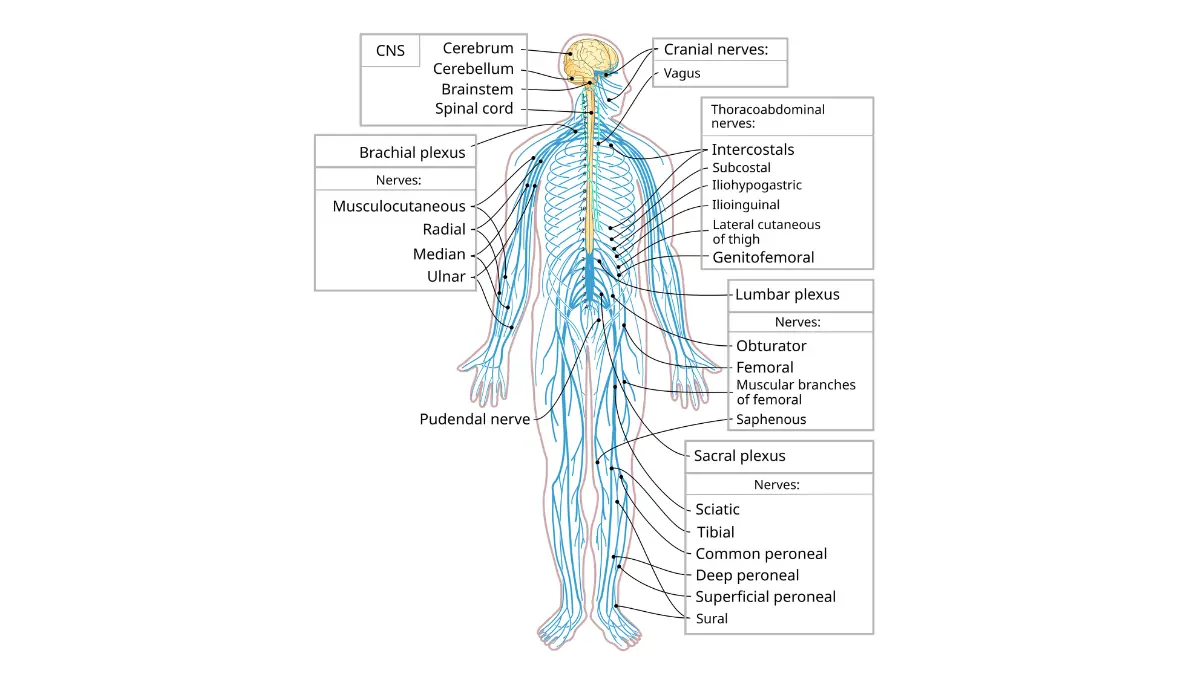
Adapted from Wikimedia Commons 202106 Peripheral nervous system.svg, licensed under Creative Commons Attribution 4.0 International license.
Peripheral neuropathy (numbness and tingling)
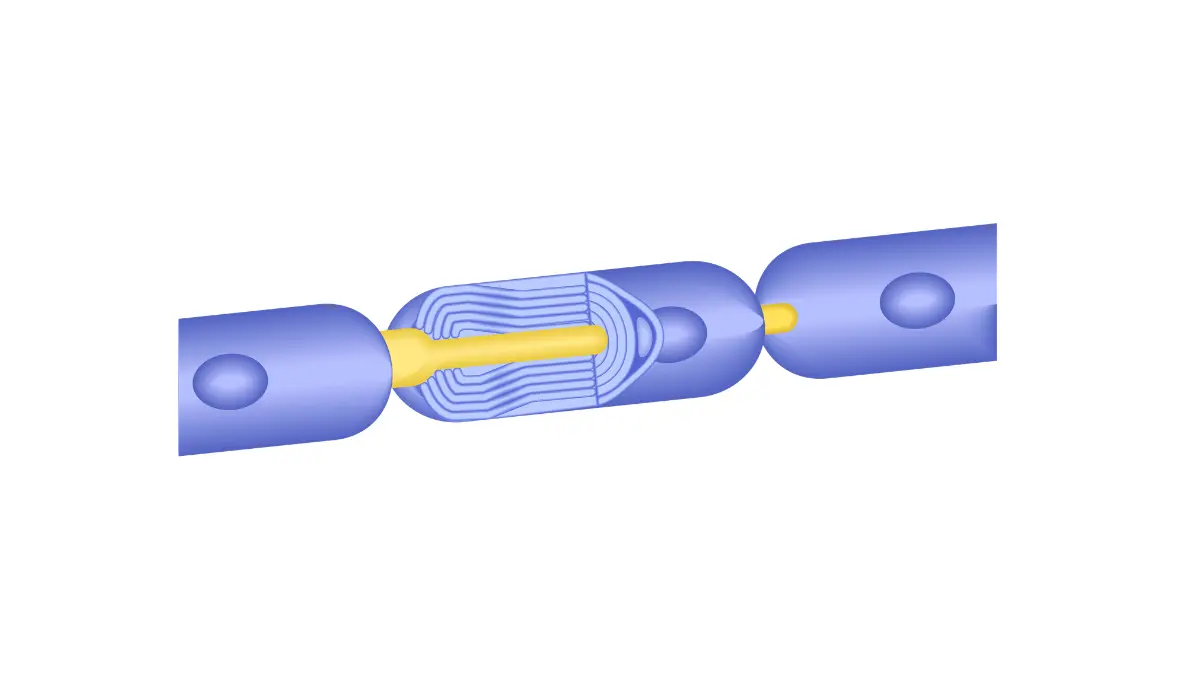
Peripheral neuropathy — tingling, numbness, or sensitivity in the hands and feet — comes mainly from oxaliplatin (in FOLFIRINOX and NALIRIFOX) and nab-paclitaxel. The honest answer to “does it go away?” is that it often improves after treatment but can be long-lasting, so report it early. In the gemcitabine plus nab-paclitaxel trial, severe neuropathy eased to mild or resolved within about a month for many patients, and many resumed treatment at a lower dose.
🩺 Physician Note: Current ASCO guidance is clear on a point patients often get wrong — no supplement or medication is proven to prevent chemo-induced neuropathy. For neuropathy that is already painful, duloxetine is the only medication with guideline support, and its benefit is modest. The most effective tool is adjusting the chemo dose, which your oncologist manages.
Low blood counts and growth-factor support
Chemo lowers white cells, red cells, and platelets because it slows the bone marrow. Low white cells (neutropenia) is the most common serious effect and raises infection risk; your team tracks it with blood tests, and the lowest point usually falls about 5–10 days after a dose. To prevent it, doctors may use a white-cell growth factor such as filgrastim or pegfilgrastim, and may lower your dose — a normal, protective adjustment, not a failure. The American Cancer Society’s overview of chemotherapy side effects explains what low counts mean day to day.
✅ Patient Action: If numbness or tingling begins, tell your oncologist at your next visit rather than waiting — ask directly whether a dose adjustment is appropriate, since early action helps limit lasting nerve damage.
When a chemo side effect is an emergency
Most side effects are handled at home or at routine visits — but a few mean you call your team right away or go to the emergency room. The most important one is fever.
Fever: the number that means call immediately
⚠️ Clinical Warning: During chemotherapy, a temperature of 100.4°F (38°C) that lasts an hour or more — or a single reading of 101°F (38.3°C) — is a medical emergency. Call your cancer care team immediately or go to the ER, even if you otherwise feel okay.
Adapted from Wikimedia Commons Immune Cells (NIH BioArt 253).png, licensed under Public Domain.
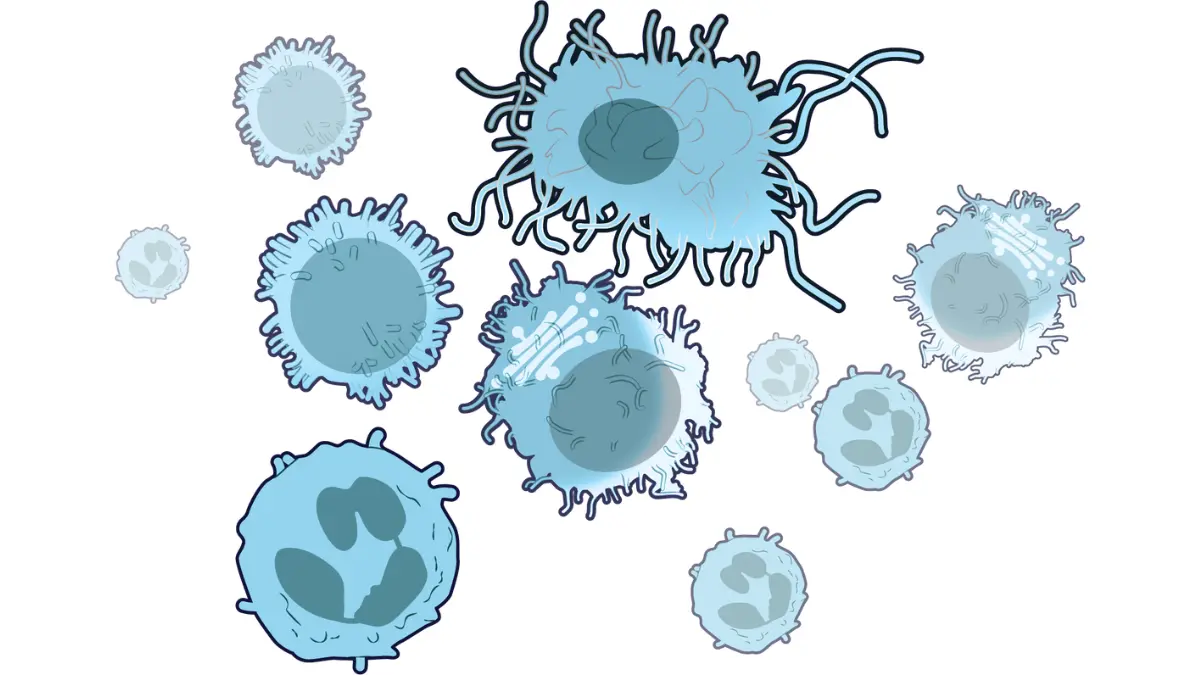
When chemo lowers your white cells, your body can’t mount its normal response to infection, so a fever may be the only warning sign of something dangerous. This combination — fever plus low white cells — is called febrile neutropenia, and it needs antibiotics quickly, with a goal of starting within about an hour. The risk peaks around the white-cell low point, roughly 5–10 days after a dose, so keep a working thermometer at home and your team’s after-hours number close. The NCI’s guidance on treatment side effects reinforces which signs warrant a call.
🛒 Disclosed recommendation: A reliable digital thermometer is worth keeping on hand to catch the threshold above. This is a product suggestion, not clinical advice; we may earn a commission.
Other emergency signs
Call your team promptly — don’t wait — for any of these:
- Shaking chills, even without a measured fever
- Vomiting or diarrhea that won’t stop, or signs of dehydration such as dizziness or very little urine
- Unusual bleeding or bruising
- Chest pain, trouble breathing, or swelling of the face or throat
Staying hydrated lowers the risk from diarrhea and vomiting; our water intake calculator can help set a daily goal, though it’s no substitute for medical care when symptoms are severe.
✅ Patient Action: Before your next cycle, ask your oncology team for the exact temperature at which they want to be called and the after-hours number to use — thresholds can vary slightly by clinic.
Balancing side effects and benefit with your care team
Side effects are weighed against what treatment is doing for you — and that balance is something you help manage, not just endure.
Dose changes are a tool, not a setback
If side effects become hard to live with, your team can lower the dose, delay a cycle, add supportive medicine, or switch approaches. Needing one of these is common and protective: it keeps you on effective treatment rather than signaling that treatment has stopped working. In the FOLFIRINOX trial, patients actually reported better quality of life over time than those on gemcitabine, despite more side effects — evidence that benefit and tolerability can be balanced.
Questions to ask your oncologist
Bring specific questions to your visits:
- Which side effects are most likely on my regimen, and at what point would you adjust my dose?
- Is a white-cell growth factor right for me?
- If neuropathy starts, what’s the plan?
✅ Patient Action: Keep a simple daily log of your symptoms and their severity and bring it to each appointment — it gives your oncologist the detail needed to fine-tune your care.
Frequently asked questions
1. What are the most common side effects of pancreatic cancer chemo?
The most common pancreatic cancer chemo side effects are fatigue, nausea, diarrhea, low blood counts, nerve changes, and hair loss. How often each appears depends on your regimen — FOLFIRINOX causes more low counts and diarrhea, while gemcitabine plus nab-paclitaxel is linked more to fatigue, hair loss, and neuropathy. Your oncologist can say which are most likely for you.
2. How long do chemo side effects last?
Many pancreatic cancer chemo side effects ease between cycles and improve within weeks of finishing treatment. Nausea typically lasts 24–48 hours after a session, hair regrows once chemo ends, and fatigue may take a month or more to lift. Nerve changes can last longer. Tell your care team about any effect that persists.
3. Which pancreatic cancer chemo has the worst side effects?
There’s no single “worst” regimen — they differ in profile. FOLFIRINOX tends to cause more severe low blood counts and diarrhea, while gemcitabine plus nab-paclitaxel causes more fatigue, hair loss, and neuropathy. NALIRIFOX is linked to prominent diarrhea but fewer low counts. The right choice depends on your health and goals, so weigh the trade-offs with your oncologist.
4. Does pancreatic cancer chemo cause hair loss?
Hair loss is common with gemcitabine plus nab-paclitaxel, occurring in about half of patients, and can happen with FOLFIRINOX too. The encouraging part is that it is almost always reversible — hair typically regrows after chemo ends. Soft head coverings can add comfort meanwhile. Ask your care team what to expect with your specific regimen.
5. How do you manage nausea from pancreatic cancer chemo?
Nausea is managed mainly by preventing it: anti-nausea medicine is given before chemo because it’s easier to stop early. Guidelines support combining several antiemetic classes for regimens likely to cause significant nausea. Small, bland meals and staying hydrated help too. Report nausea that breaks through your medication so your team can adjust it.
6. What is chemo-induced peripheral neuropathy and does it go away?
Peripheral neuropathy is numbness, tingling, or sensitivity in the hands and feet, caused mainly by oxaliplatin and nab-paclitaxel. It often improves after treatment but can be long-lasting. No supplement prevents it; for painful neuropathy, duloxetine is the only medication with guideline support, and dose adjustment is the most effective tool. Report symptoms early to your oncologist.
7. When should I call my doctor about chemo side effects?
Call immediately or go to the ER if you have a fever of 100.4°F (38°C) for an hour or more, or a single reading of 101°F (38.3°C), during chemo — this can signal a dangerous infection. Also call promptly for shaking chills, uncontrolled vomiting or diarrhea, unusual bleeding, or trouble breathing. Confirm your team’s exact fever threshold in advance.
8. Can chemo side effects be prevented?
Some can be reduced substantially. Anti-nausea medicines prevent much of the nausea, and white-cell growth factors lower the risk of low counts and infection. Neuropathy, however, has no proven prevention. Many effects are also eased by dose adjustments your team makes. Ask your oncologist which preventive steps apply to your regimen.
9. What helps with fatigue during pancreatic cancer chemo?
Fatigue affects more than 80% of people during chemo, and gentle, regular activity such as short walks is one of the few things shown to help. Treating contributors matters too — anemia, poor sleep, dehydration, and not eating enough all worsen it. Rest alone often isn’t enough. Tell your team if fatigue limits your daily activities.
10. Will my chemo dose be reduced because of side effects?
Possibly, and that’s normal. If side effects become hard to tolerate, your oncologist may lower the dose, delay a cycle, or add supportive medicine — adjustments that keep you on effective treatment, not signs of failure. Many patients keep benefiting at a reduced dose. Discuss your specific thresholds for adjustment with your care team.
11. Is diarrhea normal during pancreatic cancer chemo and what helps?
Diarrhea is common, especially with FOLFIRINOX and NALIRIFOX, and the main concern is dehydration. Staying ahead on fluids and reporting it early helps, because your team can prescribe medication and adjust your regimen. Severe or persistent diarrhea, or signs of dehydration, warrant a prompt call. Ask your oncologist what anti-diarrheal plan is right for you.
The takeaway
Chemotherapy for pancreatic cancer causes real side effects, but the great majority are expected and manageable — prevented or eased with supportive care your team plans in advance, not endured alone. Fatigue, nausea, diarrhea, and hair loss are common and usually improve; nerve changes and low blood counts are watched closely and adjusted for. The one rule to carry with you: a fever of 100.4°F (38°C) during chemo is an emergency, so keep a thermometer nearby and your team’s number close. Bring a written list of your side effects to every appointment — it’s the simplest way to help your oncologist keep your treatment both effective and livable.
About this content
How this article was put together: researched from recognised health sources, drafted with the help of AI tools, and edited by hand, with sources linked throughout.

Sameer Patel is the founder and editor of My Medicine Advisor. He is not a doctor or medical professional — before starting this site he worked in banking,…
Medical disclaimer
The content on MyMedicineAdvisor is provided for general informational and educational purposes only and is not a substitute for professional medical advice, diagnosis, or treatment. Health information on this website should not be used to diagnose, treat, cure, or prevent any condition without guidance from a qualified healthcare professional. Always seek the advice of your doctor, physician, or another licensed healthcare provider with any questions you may have regarding a medical condition, symptoms, medications, or treatment decisions.