
On This Page – Quick Medical Summary
A pancreatic cancer diagnosis moves fast, and the search for options moves with it — which is why many people arrive here looking for a clinical trial. Where you are in that journey decides what you need first.
Here’s where to start based on your situation:
- Recently diagnosed: begin with what a trial is and why it may belong in the conversation now, not later.
- Already in treatment: the sections on finding trials, biomarker testing, and eligibility will matter most.
- A caregiver searching for someone you love: the step-by-step search and the questions to ask are built for you.
- Still awaiting a diagnosis: it first helps to understand how pancreatic cancer is diagnosed.
The numbers explain the urgency. About 67,530 Americans are diagnosed each year and the five-year survival rate is 13%, though survival improves substantially when the cancer is found before it spreads. Trials are one of the few routes to treatments that are not yet standard.
📊 Clinical Data Point: An estimated 67,530 new pancreatic cancer diagnoses and 52,740 deaths are projected in the United States in 2026, with an overall five-year relative survival rate of 13%. — Source: American Cancer Society, Cancer Facts & Figures 2026 / SEER.
ℹ️ Medical Disclaimer: This article is general education, not medical advice. It touches diagnosis, treatment, investigational drugs, clinical trial participation, and insurance — none of which it can tailor to you. Decisions about trials, biomarker testing, and treatment belong with your medical oncology team, who can confirm what is appropriate for your specific diagnosis, stage, and health.
What a pancreatic cancer clinical trial really is
A clinical trial is a research study that tests whether a new treatment, drug combination, or diagnostic approach is safe and works better than what is available today. In pancreatic cancer, trials carry unusual weight: because standard options can be limited, a trial is often where the most promising new therapies appear first.
Not a last resort
Many people picture a trial as a final gamble after everything else fails. Major cancer organizations frame it differently — a trial is worth considering at diagnosis and at each treatment decision, not only at the end. People who take part in research also tend to have better outcomes overall.
Will I just get a placebo?
This fear stops people who could benefit. In cancer treatment trials, a placebo is rarely used alone — participants typically receive either the new treatment or the current standard treatment options, and often the new treatment is added on top of standard care. You are not left untreated.
🩺 Physician Note: Guidance from leading cancer organizations consistently encourages discussing a trial early — at diagnosis and at every treatment decision — rather than treating it as a last option.
The four phases, and what each means for you
Trials are organized into phases, and each phase answers a different question. Knowing which phase a trial is in tells you what to expect before you enroll.
| Phase | Size (people) | Main goal | What it means for you |
|---|---|---|---|
| Phase 1 | ~15–30 | Is it safe? Find the highest tolerable dose and the side effects | Earliest access; closest monitoring; benefit is not yet proven |
| Phase 2 | ~50–100 | Does it work against the cancer? | An early efficacy signal; safety still studied |
| Phase 3 | 100 to several thousand | Is it better than standard care? (randomized) | Compared head-to-head with current treatment |
| Phase 4 | Large, varied | Long-term safety after approval | The treatment is already FDA-approved and available |
Source: National Cancer Institute, “How Clinical Trials Work.”
Phases 1 and 2: is it safe, and does it work?
Early-phase trials focus on safety, dosing, and the first signals that a treatment affects the cancer. You can read more about how the four trial phases work at the National Cancer Institute. Some studies combine stages as Phase 1/2 or 2/3, so a single trial may span more than one phase.
Phases 3 and 4: better than today’s standard?
A Phase 3 trial randomly assigns participants to the new treatment or the current standard, which is how researchers prove a real difference. Phase 4 studies happen after FDA approval to track long-term results in larger, more varied groups.
✅ Patient Action: When you find a trial, ask your medical oncologist which phase it is, and whether an early-phase (1 or 2) or later-phase (3) study fits your stage and prior treatment.
How to find pancreatic cancer clinical trials
Finding a clinical trial you qualify for takes a few targeted steps, and you do not have to do it alone.
- Start with a pancreatic-specific search. The Pancreatic Cancer Action Network (PanCAN) maintains the most complete database of US pancreatic cancer trials, and its Patient Services case managers will run a personalized search for you at no cost.
- Check the national registries. The NCI’s list of pancreatic cancer trials and the NCI clinical trials search let you filter by stage, treatment history, and location; ClinicalTrials.gov lists studies for all conditions.
- Bring the results to your oncologist. A listing tells you a study exists — your oncology team confirms whether you actually qualify and can refer you.
- Ask about biomarker testing first (covered next), since many trials now require it.
A registry entry is a starting point, not a verdict on eligibility. The criteria are detailed, and a trial coordinator and your oncologist read them against your specific case.
📊 Clinical Data Point: Only about 4.5% of pancreatic cancer patients enroll in a clinical trial, even though participation is linked to better outcomes. — Source: Pancreatic Cancer Action Network.
✅ Patient Action: Before your next oncology appointment, use PanCAN’s Clinical Trial Finder or call its Patient Services line to generate a personalized list, then ask your oncologist to review the matches with you.
Why biomarker testing opens trial doors
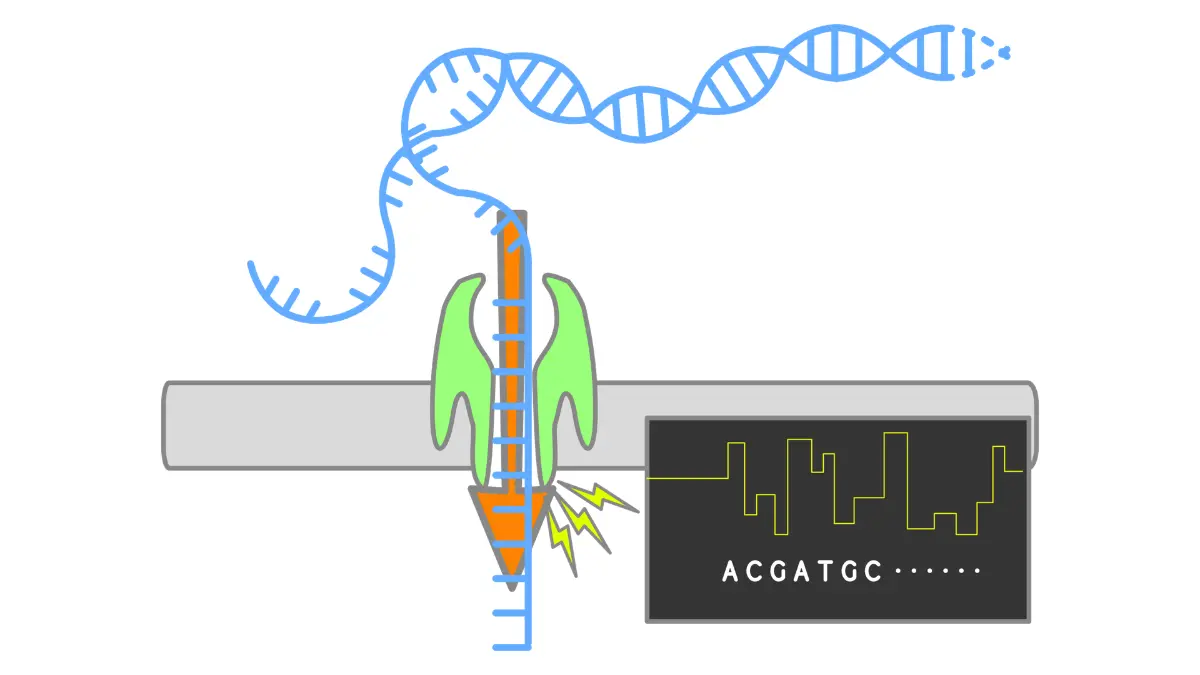
Modern pancreatic cancer trials increasingly match patients to treatments based on the tumor’s molecular profile, so biomarker testing has become the entry key.
🔬 How It Works: Biomarker testing examines a sample of your tumor — or sometimes your blood — for specific mutations. The most common in pancreatic cancer is a KRAS mutation, a faulty signal that keeps cancer cells dividing, most often the version called KRAS G12D. Newer drugs that target the KRAS mutation are designed to switch that signal off.
📊 Clinical Data Point: More than 90% of pancreatic ductal adenocarcinomas carry a KRAS mutation. — Source: peer-reviewed oncology literature (Cancer Biology & Medicine), 2025.
What KRAS, BRCA, and MSI-H mean
A handful of markers shape today’s options. A BRCA alteration can signal a weakness in the tumor’s DNA repair that a PARP inhibitor may exploit. Microsatellite instability (MSI-H) identifies a smaller group for whom immunotherapy may help, and KRAS status can open targeted trials, including studies of experimental mRNA cancer vaccines.
What a “negative” result does and doesn’t mean
A result that finds no matched target is not a dead end. It usually means there is no standard targeted drug for you right now — chemotherapy still works, and a trial may still fit. If you have a family history, you may also want to assess your inherited cancer risk.
⚠️ Clinical Warning: Do not delay starting standard treatment while you wait for biomarker results. Cancer organizations advise beginning recommended care on schedule and folding in trial or targeted options as results return — testing should support your plan, not stall it.
✅ Patient Action: Ask your oncologist whether your tumor has had molecular testing for KRAS, BRCA, and microsatellite status, and whether any result opens a trial. PanCAN’s Know Your Tumor program offers free testing for eligible patients.
Eligibility and who pays for a trial
Two questions decide whether a trial is realistic: do you qualify, and what will it cost you?
Who qualifies: inclusion and exclusion criteria
Every trial sets criteria for who can join, based on cancer type, the stage of your cancer, prior treatments, organ function, and overall health. These rules protect participants and keep results meaningful. They are specific, so your oncology team and the trial coordinator confirm your fit rather than a checklist online.
Who pays: insurance, Medicare, and the sponsor
For approved trials, the costs split in a predictable way. Under the Affordable Care Act, most health plans must cover the routine patient care costs — the visits, scans, and labs you would receive anyway — and cannot drop you for joining. The trial sponsor typically provides the investigational drug itself, plus any tests done only for the study, at no charge.
Public programs help too. Medicaid covers routine trial costs (as of January 2022), and Medicare and TRICARE may cover care in qualifying trials. Coverage still varies by plan, so confirm the specifics before you enroll.
📊 Clinical Data Point: The Affordable Care Act requires most insurers to cover the routine patient care costs of an approved clinical trial, and the study sponsor usually provides the experimental treatment at no cost. — Source: National Cancer Institute and American Cancer Society.
✅ Patient Action: Ask the trial coordinator and your insurer two specific questions — which costs my plan covers as routine care, and which costs the sponsor pays — and request the answer in writing before enrolling. See what insurance is required to cover at the NCI.
Weighing the decision and protecting yourself
Joining a clinical trial is a real decision with real trade-offs, and you hold more control than you may think.
Your rights: informed consent and leaving anytime
Before you enroll, the team must walk you through informed consent — the trial’s purpose, what is involved, and its known risks and possible benefits — in plain language. Every approved trial is overseen by an independent review board that exists to protect participants. You can ask questions at any point, and you can leave the trial at any time, for any reason, without losing your regular care.
Questions to ask before you enroll
A few questions cut through the uncertainty: What is this trial testing, and which phase is it? What are the likely side effects, and how will they be watched? Who covers which costs, and what happens to my care if I leave?
⚠️ Clinical Warning: An investigational treatment can cause side effects that are not yet fully known, and benefit is never guaranteed. Weigh this honestly with your oncologist, and report any new or worsening symptoms during a trial right away.
✅ Patient Action: Bring a written list of these questions — and a second person to take notes — to your trial discussion.
Pancreatic cancer clinical trials: common questions
1. What is a pancreatic cancer clinical trial?
A pancreatic cancer clinical trial is a research study testing whether a new treatment, drug combination, or diagnostic method is safe and more effective than current care. Trials run in phases and offer access to therapies not yet widely available. Because standard options can be limited, they are often where the most promising new pancreatic cancer treatments appear first.
2. Are pancreatic cancer clinical trials a last resort?
No. Major cancer organizations recommend considering a pancreatic cancer clinical trial at diagnosis and at every treatment decision, not only after standard options run out. People who join research tend to have better outcomes. A trial can run alongside or instead of standard care, depending on the study. Ask your medical oncologist whether one fits your situation now.
3. How do I find pancreatic cancer clinical trials?
Start with a pancreatic-specific search through the Pancreatic Cancer Action Network, whose case managers run free personalized searches. The NCI clinical trials search and ClinicalTrials.gov also let you filter by stage, treatment history, and location. Then bring matches to your oncology team, who confirm eligibility and can refer you.
4. What are the phases of a pancreatic cancer clinical trial?
Trials run in four phases. Phase 1 (about 15–30 people) tests safety and dosing; Phase 2 (about 50–100) tests whether the treatment works; Phase 3 (100 to several thousand) compares it with standard care using randomization; Phase 4 follows long-term safety after FDA approval. Each phase of a pancreatic cancer clinical trial answers a different question.
5. Do I need biomarker testing to join a pancreatic cancer clinical trial?
Often, yes. Many pancreatic cancer clinical trials now match patients by tumor mutations, so biomarker testing is the entry key. More than 90% of pancreatic tumors carry a KRAS mutation, and markers like BRCA and MSI-H can open specific trials. A negative result still leaves chemotherapy and other trials. Ask your oncologist whether your tumor has been tested.
6. Who pays for a pancreatic cancer clinical trial?
For approved trials, the Affordable Care Act requires most insurers to cover routine patient care costs, and they cannot drop you for joining. The sponsor usually provides the experimental drug and study-only tests at no cost. Medicaid (since 2022), Medicare, and TRICARE may cover qualifying trials. Confirm specifics with your insurer and the trial coordinator before enrolling.
7. Will I get a placebo in a pancreatic cancer clinical trial?
A placebo used alone is rare in cancer treatment trials. In most pancreatic cancer clinical trials, participants receive either the new treatment or the current standard of care, and often the new treatment is added to standard care. You are not left untreated. The consent form explains exactly how a particular trial assigns treatment.
8. What is the KRAS mutation and why does it matter for trials?
KRAS is a faulty signal that drives most pancreatic tumors to keep growing, present in over 90% of cases, most often as KRAS G12D. New targeted drugs aim to switch it off, and several are being studied in pancreatic cancer clinical trials. Your KRAS status can determine eligibility. Ask your oncologist whether testing has been done.
9. Can I leave a pancreatic cancer clinical trial after joining?
Yes. Participation is voluntary, and you can leave a pancreatic cancer clinical trial at any time, for any reason, without losing your regular medical care. Informed consent and an independent review board protect you throughout. If you are considering leaving, tell the trial team so your treatment can be transitioned safely.
10. How many pancreatic cancer patients join clinical trials?
Only about 4.5% of pancreatic cancer patients enroll in a clinical trial, even though participation is linked to better outcomes. Low enrollment limits options and slows research. Searching early — at diagnosis and at each treatment decision — improves the odds of finding a pancreatic cancer clinical trial that fits before options narrow.
11. Should I consider a trial if I’ve already started treatment?
Yes. Pancreatic cancer clinical trials exist for many points in the journey, including after first-line treatment or when a therapy stops working. Some studies specifically enroll previously treated patients, and earlier biomarker results can help match you. Ask your medical oncologist whether a trial is an option for your current stage and treatment history.
Your next step
A pancreatic cancer diagnosis narrows the ground under you, and looking into trials is one way to widen it again. The path is concrete: run a pancreatic-specific trial search, ask about biomarker testing, and bring what you find to your oncology team. None of it has to happen alone — case managers and your care team are there to help you weigh real options. For the larger picture, start with our guide to understanding pancreatic cancer from first signs to treatment.
About this content
How this article was put together: researched from recognised health sources, drafted with the help of AI tools, and edited by hand, with sources linked throughout.

Sameer Patel is the founder and editor of My Medicine Advisor. He is not a doctor or medical professional — before starting this site he worked in banking,…
Medical disclaimer
The content on MyMedicineAdvisor is provided for general informational and educational purposes only and is not a substitute for professional medical advice, diagnosis, or treatment. Health information on this website should not be used to diagnose, treat, cure, or prevent any condition without guidance from a qualified healthcare professional. Always seek the advice of your doctor, physician, or another licensed healthcare provider with any questions you may have regarding a medical condition, symptoms, medications, or treatment decisions.