


On This Page – Quick Medical Summary
Got a high ALT result? Start here
You opened your lab portal, saw ALT flagged “H,” and your doctor hasn’t called yet. That’s one of the most common reasons people land on this page, and in most cases the next steps are measured, not urgent.
Find your situation below and jump to what matters most:
- Your result is only slightly high and you feel fine. Start with what counts as normal and how high is too high.
- Your result is very high, or you feel unwell (yellow skin or eyes, confusion, unusual bleeding). Go straight to when high ALT is an emergency.
- You take medications or supplements, or you drink alcohol. See medications, supplements, and alcohol.
- You’ve been told you have fatty liver. See what lowers ALT.
- You’re helping a parent or partner. The questions-to-ask section is built for you. For the waiting period itself, our guide on what to do while you wait for blood test results can help.
ℹ️ Medical Disclaimer: This article covers the interpretation of lab results, diagnostic follow-up testing, medication and supplement effects on the liver, alcohol use, weight-loss interventions, prescription therapies for fatty liver disease, emergency symptoms, and liver test findings in pregnancy. It is for education only. What your ALT result means depends on your lab’s reference range, your other liver tests, your medications, your alcohol use, and your medical history. Review your results with your primary care clinician, gastroenterologist, or hepatologist before acting on anything here. If you have emergency symptoms, call 911.
What ALT is and what the test measures
ALT (alanine aminotransferase) is an enzyme concentrated in your liver cells. When those cells are injured, ALT leaks into your blood, and the test measures how much is there.
Why ALT leaks into your blood
🔬 How It Works: Think of liver cells as small containers holding ALT. When the cells are healthy, very little ALT escapes. When they’re inflamed or damaged, injury to the liver releases ALT into the blood, so your blood level rises.
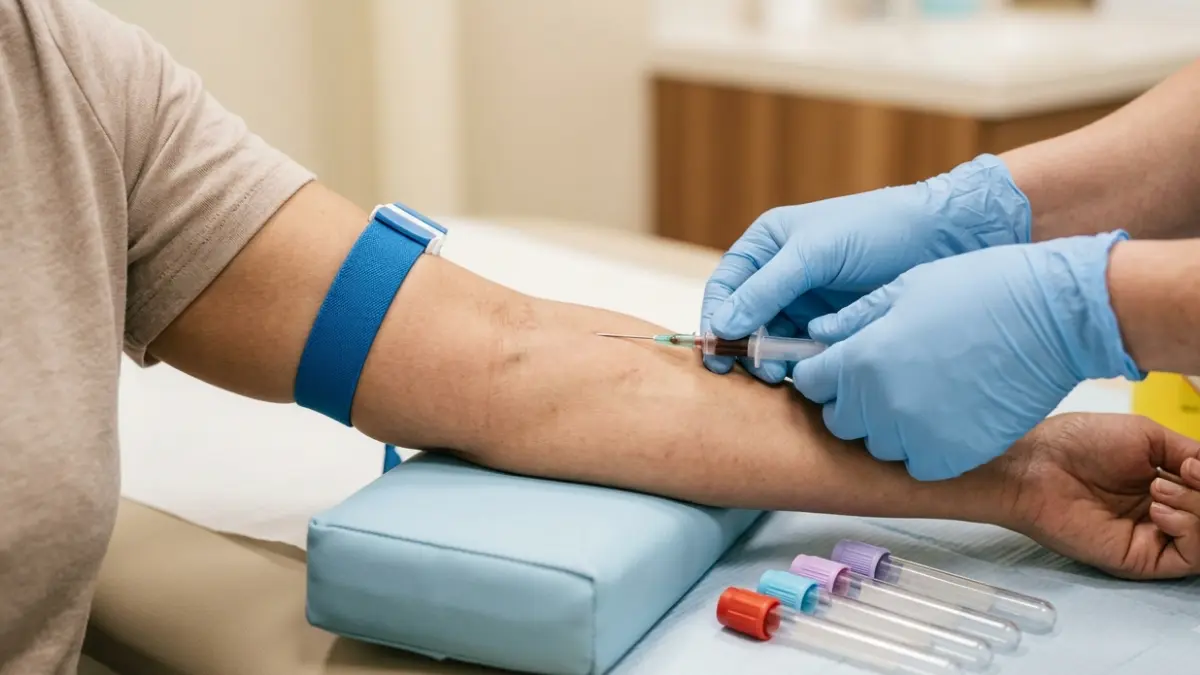
ALT is a marker of liver-cell injury. It does not measure how well your liver is working. It is usually ordered alongside AST, ALP, and bilirubin to diagnose and monitor liver disease. If you have the whole panel in front of you, our guide to reading a full liver function test report walks through each marker.
ALT’s other name: SGPT
Older lab reports may say SGPT instead of ALT. MedlinePlus lists SGPT (serum glutamate pyruvate transaminase), alanine transaminase, and alanine aminotransferase as names for the same test.
What is a normal ALT level?
A normal ALT depends on which standard you use. The National Library of Medicine’s encyclopedia lists 4 to 36 U/L as normal and notes that ranges vary somewhat between labs. However, the American College of Gastroenterology (ACG) defines a truly healthy ALT as 29–33 IU/L for men and 19–25 IU/L for women, and recommends that doctors assess levels above this.
Why your lab’s range may differ from guidelines
Lab ranges come from the local populations each lab tests. Those populations include people with undiagnosed fatty liver, which can push the “normal” ceiling up. One of the ACG guideline’s authors noted that because upper limits vary by institution, clinicians may not follow up an ALT of 70 IU/L that falls inside a lab’s normal range, even though that level is associated with higher liver-related mortality.
The debate isn’t settled. Some laboratory medicine experts argue that reference limits are not the same as clinical decision thresholds, and that applying the ACG cutoffs rigidly could cause overdiagnosis and unnecessary follow-up testing.
🩺 Editor’s Note: The ACG guideline also notes that ALT rises in a linear relationship with body mass index (BMI), which physicians should take into account. Your weight is part of how your result is interpreted.
Normal ALT for men vs. women
The ACG healthy ceilings differ by sex: up to about 33 IU/L for men and 25 IU/L for women. The guideline authors cite a study of 6,835 blood donors with normal viral tests and BMI under 24.9, which proposed a true upper limit of 30 IU/L for men and 19 IU/L for women.
What a low ALT result means
A low ALT is rarely the focus of follow-up. MedlinePlus describes abnormal ALT results only in terms of increased levels.
How high is too high? Reading your ALT number
How concerning a result is depends on how far above the upper limit of normal (ULN) it sits. The ACG classifies AST and ALT elevations as borderline (under 2× ULN), mild (2–5× ULN), moderate (5–15× ULN), severe (over 15× ULN), and massive (over 10,000 IU/L).
| Tier | Multiple of ULN | Key Clinical Detail | Typical next step |
|---|---|---|---|
| Borderline | Under 2× | Seen in many liver and non-liver conditions | History, repeat testing, common causes |
| Mild | 2–5× | Overlaps with borderline causes | Evaluation for fatty liver, viral hepatitis, iron overload, medications |
| Moderate | 5–15× | Adds acute viral hepatitis to the list | Testing for hepatitis A, B, and C plus the causes above |
| Severe | Over 15× | Acute injury patterns more likely | Also assess acetaminophen toxicity and ischemic (“shock”) liver |
| Massive | Over 10,000 IU/L | Acute, serious injury | Urgent medical evaluation |
Source: Kwo PY, Cohen SM, Lim JK. ACG Clinical Guideline: Evaluation of Abnormal Liver Chemistries. Am J Gastroenterol. 2017;112:18–35.
Borderline and mild elevations
To find your tier, divide your ALT by your lab’s upper limit. For example, an ALT of 72 with a lab ULN of 36 is 2× ULN, which falls at the low end of the mild tier.
The ACG notes that borderline and mild elevations appear in a wide range of liver-related and non-liver-related conditions. This is where most flagged results land.
Moderate and severe elevations
At 5–15× ULN, the ACG recommends also testing for acute hepatitis A, B, and C. Above 15× ULN, or with ALT over 10,000 IU/L, the evaluation should also check for acetaminophen toxicity and shock liver.
Why one result isn’t a diagnosis
The ACG recommends repeating the lab panel, or doing a clarifying test, to confirm a result is truly abnormal before starting a full evaluation. A single flagged number starts a conversation. It does not diagnose anything.
✅ Patient Action: Write down your ALT value and your lab’s upper limit, then work out the multiple. Ask your primary care clinician: “Which tier is my result in, and are we repeating it before other tests?”
What causes high ALT? The most common reasons
Most elevated ALT results trace back to a short list of common causes, led by fatty liver disease.
Fatty liver disease (MASLD)
Metabolic dysfunction-associated steatotic liver disease (MASLD), formerly nonalcoholic fatty liver disease (NAFLD), is fat buildup in the liver in people with at least one cardiometabolic risk factor such as obesity, type 2 diabetes, abnormal blood lipids, or high blood pressure. It is the most common cause of chronic liver disease.
The name changed partly because “fatty” was considered stigmatizing and was replaced with “steatotic”. If you have several metabolic risk factors, our guide to the warning signs of metabolic syndrome explains how they connect.
Viral hepatitis B and C
Hepatitis B and C can raise ALT for years without symptoms. About 75%–85% of people with hepatitis C have no symptoms, and nearly one in three don’t know they’re infected. More than half of people with hepatitis B are also unaware of their infection. Our article on why hepatitis B often causes no symptoms covers what to watch for.
Less common causes worth ruling out
For minimal elevations, the ACG recommends a history and exam, stopping liver-toxic medicines and all alcohol, and checking for hemochromatosis, fatty liver, and viral hepatitis. If those are normal, the next step is evaluation for autoimmune liver disease, Wilson’s disease, and alpha-1 antitrypsin deficiency.
MedlinePlus also lists mononucleosis, pancreatitis, reduced blood flow to the liver, and liver tumors among possible causes. For a closer look at each cause, see our deep dive on what a high ALT result can mean.

Can medications, supplements, or alcohol raise ALT?
Yes. Medicines, herbal products, and alcohol are among the first things your clinician will review.
Common medications linked to ALT changes
LiverTox, an NIH database, covers liver injury caused by prescription drugs, nonprescription drugs, herbal products, and dietary supplements. You can look up a specific product in the NIH LiverTox database of drug-related liver injury. Drug-induced liver injury can be severe, but it usually reverses once the causative agent is stopped. That decision belongs to your prescriber.
⚠️ Clinical Warning: Never stop a prescribed medication on your own because of an ALT result. Some medicines are dangerous to stop suddenly, and the drug may not be the cause. Some prescriptions already come with scheduled blood monitoring; our guide explains why some medications need routine blood-test monitoring.
Statins and liver enzymes
If you take a statin, the FDA’s position may reassure you. In 2012 the FDA removed the need for routine periodic liver enzyme monitoring from statin labels, recommending testing before starting a statin and afterward only as clinically indicated. The agency concluded that serious liver injury from statins is rare and unpredictable. Read the FDA’s statin safety labeling update for the full reasoning.
Herbal supplements and alcohol
Supplements marketed as natural are not automatically safe for the liver; LiverTox tracks them alongside medications. For alcohol, the ACG says men drinking more than 210 grams a week and women more than 140 grams a week who have an AST higher than their ALT should be considered at risk for alcohol-associated liver disease and counseled to stop drinking.

✅ Patient Action: Bring a full list of everything you take, including supplements, to your pharmacist or prescriber. Ask: “Could any of these be affecting my ALT, and is it safe to change anything?”
ALT vs. AST: what the two numbers tell you together
ALT and AST are usually reported together, and the relationship between them gives clues about the cause.
Why AST is less liver-specific
AST is found mainly in the liver but also in the heart, muscles, and other tissues. That’s why a high AST with a normal ALT can point away from the liver. Our guide to how ALT, AST, and bilirubin read together shows the common patterns.
What the AST/ALT ratio can suggest
The ACG defines hepatocellular injury as AST and ALT rising out of proportion to alkaline phosphatase. Cholestatic injury is the reverse: alkaline phosphatase rising out of proportion to AST and ALT. An AST higher than ALT in someone who drinks heavily is the pattern the ACG flags for alcohol-associated disease. These ratios are clues, not diagnoses.
Could exercise or timing have raised your ALT?
Sometimes a high ALT reflects what you did the week before the blood draw.
Hard workouts before your blood draw
In a 2008 study, fifteen healthy men who were used to moderate activity but not weightlifting did a one-hour weightlifting session. Their AST, ALT, and several muscle markers rose significantly and stayed elevated for at least 7 days. ALT stayed high longest, likely because its half-life (about 47 hours) is longer than AST’s (about 17 hours).
Recent illness and other short-term factors
Recent infections such as mononucleosis can raise ALT. Tell your clinician about any recent illness or unusually intense exercise, since it may change whether they simply repeat the test first.
✅ Patient Action: Ask your primary care clinician: “Should I avoid heavy exercise for a week before my repeat test?”
What happens after a high ALT result?
The workup usually follows a predictable, stepwise order.
- Confirm the result. The ACG recommends repeating the panel or doing a clarifying test first.
- Review medications, supplements, and alcohol. This happens alongside a history and physical exam.
- Screen for hepatitis B and C. The CDC recommends that all adults 18 and older be screened for hepatitis B at least once, using a triple panel test, and that all adults be tested for hepatitis C at least once, except in settings where infection is very rare (under 0.1%).
- Check other causes. This can include iron studies and, when fatty liver is suspected, imaging.
- Score fibrosis risk if fatty liver is likely. See the FIB-4 section below.
Repeat testing and your history
Expect questions about alcohol, medications, supplements, exercise, and recent illness. Your answers often decide which tests come next.
Hepatitis and blood tests for other causes
If you’ve never had hepatitis screening, this is a natural time to get it. The CDC’s hepatitis C testing recommendations explain who should be tested and how often. When results come back, our guide explains what your hepatitis panel results mean.
Ultrasound and fibrosis scoring
The AASLD recommends that people suspected of having fatty liver get a risk assessment aimed at identifying those unlikely to have advanced fibrosis. A FIB-4 index below 1.3 indicates low risk, and those patients can be managed in primary care.
When high ALT is an emergency
Most high ALT results can wait for a scheduled visit. A few situations cannot.
Symptoms that need same-day care
The ACG says a person with acute hepatitis who has a prolonged clotting time (elevated prothrombin time) and/or confusion from liver dysfunction (encephalopathy) needs immediate referral to a liver specialist. In everyday terms, the warning signs are:
- new confusion or unusual sleepiness
- easy bleeding or bruising
- yellowing of the skin or eyes
Any of these together with a high ALT means getting care today. If someone is confused or hard to wake, call 911. For a closer look at bilirubin, the marker behind yellowing, see our guide to which lab values are treated as critical.

If you may have taken too much acetaminophen
⚠️ Clinical Warning: Acetaminophen poisoning is the most common cause of acute liver failure in the United States, and about half of these poisonings are unintentional, often because people take several acetaminophen-containing products without realizing it. The antidote works best when given within the first 8 hours after an acute overdose. If you suspect an overdose, call Poison Help at 1-800-222-1222 now, or call 911 if the person is unconscious or has trouble breathing.
The Poison Help line connects you to your local poison center from anywhere in the United States, and the call is free and confidential.
High ALT during pregnancy
If you’re pregnant, tell your obstetric clinician about any abnormal liver test promptly rather than waiting for your next routine visit.
✅ Patient Action: If you have symptoms together with a high ALT, don’t wait for a callback. Go to urgent care or the emergency department, and ask: “Could this be acute liver injury, and do I need a clotting test today?”
Can you have liver disease with a normal ALT?
Yes. A normal ALT is reassuring, but it doesn’t rule out liver disease.
Why ALT can look normal in advanced disease
The American Association of Clinical Endocrinology’s guideline (co-sponsored by AASLD) notes that liver enzyme levels can be unreliable and are normal in many people with fatty liver disease, so they should not be used alone to diagnose it.
How FIB-4 fills the gap
FIB-4 combines your age, AST, ALT, and platelet count into a single risk score. Under the AASLD’s 2023 guidance, high-risk people, including those with type 2 diabetes, medically complicated obesity, or a family history of cirrhosis, should be screened for advanced fibrosis. A FIB-4 above 1.3 can be followed by a FibroScan (vibration-controlled transient elastography).
✅ Patient Action: If you have type 2 diabetes or obesity, ask your primary care clinician: “Can you calculate my FIB-4 score, even though my ALT is normal?”
How to lower ALT: what the evidence supports
The most effective way to lower ALT is to treat its cause. For fatty liver, weight loss has the strongest evidence.
Weight loss and fatty liver
According to the American Gastroenterological Association, in people with steatohepatitis, losing at least 5% of body weight can reduce liver fat, at least 7% can lead to steatohepatitis resolution, and at least 10% can halt or reverse fibrosis.
📊 Clinical Data Point: Weight-loss thresholds for fatty liver improvement: ≥5% (liver fat), ≥7% (inflammation resolution), ≥10% (fibrosis regression or stability). Source: American Gastroenterological Association clinical practice update on lifestyle modification in NAFLD, 2023 (verified).
To turn those percentages into a personal target, check where you stand with our BMI calculator, then map a realistic pace with the weight loss calculator.
Alcohol and medication review
Stopping alcohol and reviewing liver-toxic medications with your prescriber are the first steps the ACG lists for mild elevations.
Prescription options for MASH
Two FDA-approved treatments now exist for a specific stage of fatty liver disease. In March 2024 the FDA granted accelerated approval to resmetirom (Rezdiffra), used with diet and exercise, for adults with noncirrhotic MASH and moderate to advanced liver fibrosis (stages F2–F3). In August 2025 the FDA added this same indication to semaglutide 2.4 mg (Wegovy), for adults with noncirrhotic MASH and F2–F3 fibrosis, alongside a reduced-calorie diet and more physical activity.
These medications are for people whose disease stage a specialist has confirmed. They are not general-purpose ways to lower ALT.
✅ Patient Action: If you’ve been told you have fatty liver with scarring, ask a hepatologist: “Is my fibrosis stage F2 or F3, and am I a candidate for an FDA-approved MASH treatment, or is lifestyle change enough for now?”
Questions to ask your doctor about your ALT
Walking in with specific questions gets you a clearer plan in less time.
Questions about your result
- What upper limit of normal are you using for my ALT, and how many times above it am I?
- Which ACG severity tier does my result fall into?
- Should we repeat the test before ordering anything else?
- Could exercise, a recent illness, or a new medication explain it?
Questions about next steps
- Have I been screened for hepatitis B and C?
- Do I need iron studies or an ultrasound?
- Should my FIB-4 score be calculated?
- When should we retest, and at what result would you refer me to a hepatologist?
To keep track of your numbers over time, download our free ALT Result Tracker + Questions for Your Doctor printable.
ALT blood test FAQs
1. Is an ALT of 60 high?
Yes, by most standards. An ALT of 60 is above the MedlinePlus normal range of 4 to 36 U/L. It is also above the American College of Gastroenterology’s healthy limits of 29–33 IU/L for men and 19–25 IU/L for women. Depending on your lab’s upper limit, it usually falls in the borderline-to-mild tier. Ask your primary care clinician whether to repeat the test first.
2. Is an ALT of 100 serious?
An ALT of 100 is roughly 3 to 4 times most upper limits, which the ACG classifies as a mild elevation (2–5× ULN). It deserves follow-up but is rarely an emergency on its own. Evaluation usually includes medications, alcohol, fatty liver, and viral hepatitis. Ask your clinician what they will test first and when you should be retested.
3. Can high ALT go back to normal?
Often, yes. It depends on the cause. Drug-induced liver injury usually reverses once the causative drug is stopped, according to NIH’s LiverTox. Temporary causes such as intense exercise also resolve. For fatty liver, weight loss of 5% or more reduces liver fat. Ask your clinician what is driving your result before assuming it will settle on its own.
4. Do I need to fast before an ALT test?
For an ALT test alone, MedlinePlus says no special preparation is needed. ALT is often drawn as part of a larger panel, and other tests in that panel may have their own fasting rules. If your order includes other tests, check the instructions from the lab or ordering clinician. It’s also worth avoiding heavy weightlifting in the days before the draw, since it can raise ALT.
5. Can exercise raise ALT?
Yes. In a 2008 study, healthy men who weren’t used to weightlifting did a one-hour weightlifting session. Their ALT and AST rose significantly and stayed high for at least 7 days. ALT stayed elevated longest because of its roughly 47-hour half-life. Tell your clinician about recent intense workouts before interpreting a high result.
6. Can statins raise ALT?
Statins can cause mild changes in liver enzymes. However, in 2012 the FDA concluded that serious statin-related liver injury is rare and unpredictable. It removed routine periodic liver enzyme monitoring from statin labels, recommending testing before starting and only as clinically indicated afterward. Don’t stop a statin without talking to your prescriber about your ALT result.
7. Does alcohol raise ALT?
Alcohol can injure liver cells and raise liver enzymes. The ACG says men drinking over 210 grams a week and women over 140 grams a week who have AST higher than ALT should be considered at risk for alcohol-associated liver disease. They should also be counseled to stop drinking. Discuss your drinking honestly with your clinician so the result is interpreted correctly.
8. What ALT level indicates fatty liver?
No single ALT level confirms or rules out fatty liver. Fatty liver (MASLD) is the most common cause of chronic liver disease, but liver enzymes can be normal in many people who have it. That’s why guidelines use risk factors, imaging, and FIB-4 scoring rather than ALT alone. Ask your clinician whether your FIB-4 score should be calculated.
9. What does a low ALT mean?
A low ALT is rarely a clinical concern. MedlinePlus describes abnormal ALT results only in terms of increased levels, and its normal range starts at 4 U/L. If your result is flagged low, ask the clinician who ordered it whether it changes anything. In most cases, follow-up focuses on elevated results, not low ones.
10. Is normal ALT different for men and women?
Yes. The American College of Gastroenterology defines a truly healthy ALT as 29–33 IU/L for men and 19–25 IU/L for women. These limits are lower than many lab reference ranges, which may not separate by sex. The guideline recommends assessing levels above these ceilings. Ask your clinician which limit applies to you.
11. What is the difference between ALT and AST?
Both are enzymes that rise when liver cells are injured. ALT is concentrated in the liver, while AST is also found in the heart, muscles, and other tissues. So an AST higher than ALT can point to muscle injury or alcohol-related liver disease. Clinicians read the two together rather than relying on either number alone.
12. What tests come after a high ALT?
The ACG recommends first repeating the test to confirm it’s truly abnormal. Next steps usually include reviewing medications and alcohol, and screening for hepatitis B and C; the CDC recommends every adult be screened at least once. Clinicians may also check iron levels, order imaging, and calculate a FIB-4 score. Ask your clinician which tests you need and in what order.
13. When is high ALT an emergency?
Get same-day care if a high ALT comes with confusion, easy bleeding or bruising, or yellowing skin or eyes. The ACG says acute hepatitis with a prolonged clotting time or confusion needs immediate referral to a liver specialist. For a possible acetaminophen overdose, call Poison Help at 1-800-222-1222. Call 911 if the person is unconscious or has trouble breathing.
14. Can you have liver disease with a normal ALT?
Yes. Guidelines note that liver enzymes can be normal in many people with fatty liver disease, so ALT alone can’t rule it out. For people at high risk, such as those with type 2 diabetes or obesity, the AASLD recommends screening for advanced fibrosis. This starts with a FIB-4 score, followed by a FibroScan if the score is above 1.3.
15. How can I lower my ALT?
Treat the cause. For fatty liver, the American Gastroenterological Association reports that losing at least 5% of body weight reduces liver fat. Losing 7% or more can resolve inflammation, and 10% or more can halt or reverse scarring. Stopping alcohol and reviewing liver-toxic medications also help. Ask your clinician which of these steps apply to your result.
Your next step after an ALT result
If you’re reading this while waiting on a callback, you now know more than most people do at this stage. That includes the tier your number falls in, the likely causes, and the few symptoms that can’t wait.
What to do before your next appointment
Next, read how ALT fits the rest of your panel in our full guide to CMP results. If testing has started, see what your hepatitis panel results mean and our look at how ALT, AST, and bilirubin work together. Download the ALT Result Tracker to record each result, the lab’s upper limit, and your medications.
Before your appointment, write down your ALT value, your lab’s upper limit, and every medication and supplement you take. Then ask your clinician: “What tier is this, and what is our plan to find the cause?”
About this content
How this article was put together: researched from recognised health sources, drafted with the help of AI tools, and edited by hand, with sources linked throughout.

Sameer Patel is the founder and editor of My Medicine Advisor. He is not a doctor or medical professional — before starting this site he worked in banking,…
Medical disclaimer
The content on MyMedicineAdvisor is provided for general informational and educational purposes only and is not a substitute for professional medical advice, diagnosis, or treatment. Health information on this website should not be used to diagnose, treat, cure, or prevent any condition without guidance from a qualified healthcare professional. Always seek the advice of your doctor, physician, or another licensed healthcare provider with any questions you may have regarding a medical condition, symptoms, medications, or treatment decisions.