
On This Page – Quick Medical Summary
What Is a Hepatitis Panel? (Your 60-Second Answer)
Marcus received his hepatitis panel results at 3 PM on a Tuesday. His hands shook as he read “positive” next to one of the tests. Within minutes, panic set in—was his liver damaged? Could he infect his family? He needed answers immediately, not in three days when his doctor’s appointment was scheduled.
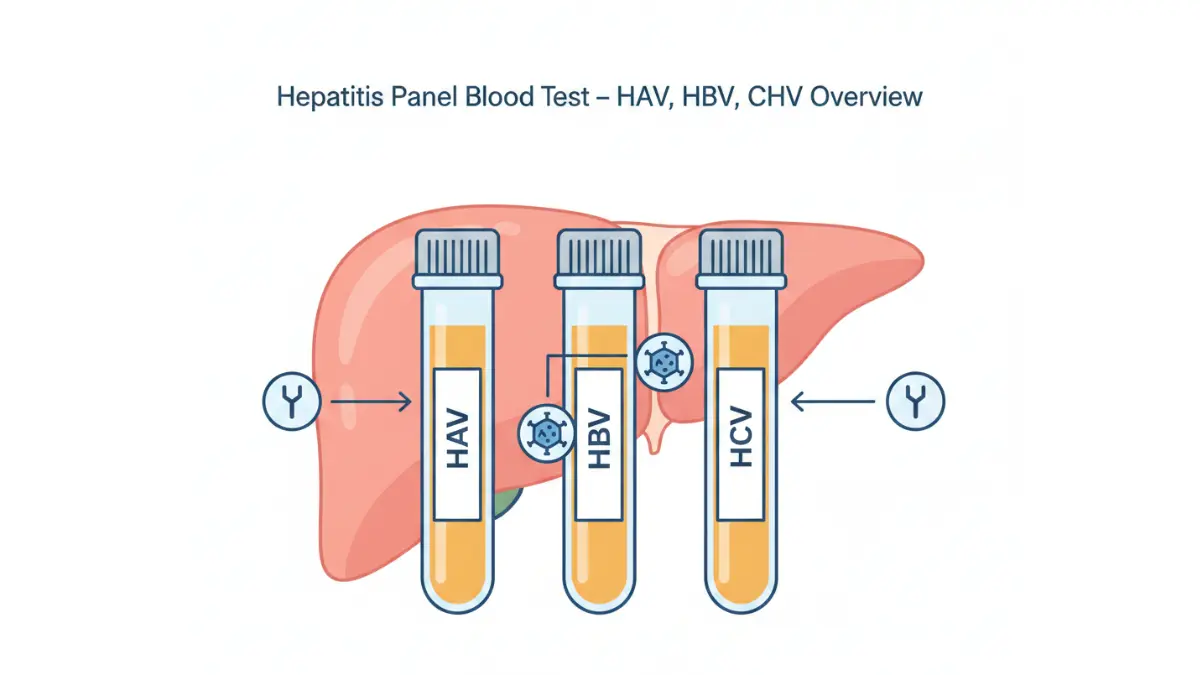
A hepatitis panel is a blood test that screens for three viral infections—Hepatitis A, B, and C—using antigens and antibodies to determine if you have a current infection, past exposure, or immunity from vaccination. Most panels deliver results within 24-72 hours and cost between $45-$250 depending on your insurance coverage.
The test detects specific markers in your blood. Antigens signal active viral hepatitis infection, while antibodies indicate your immune system has encountered the virus before—either through past infection or vaccination. According to the Centers for Disease Control and Prevention, approximately 50-70% of people with acute hepatitis show no symptoms, making screening critical for early detection.
What This Means For You: Understanding your hepatitis results empowers you to take immediate action. Unlike liver function tests that measure enzyme levels, a hepatitis panel identifies the specific viral cause of liver inflammation. If you’re experiencing unexplained fatigue, jaundice, or abdominal pain, this comprehensive screening provides clarity within minutes of reading your lab report.
The three hepatitis types affect your body differently. Hepatitis A typically resolves on its own, Hepatitis B can become chronic in 5-10% of adult cases, and Hepatitis C leads to chronic infection in 75-85% of cases without treatment.
Reading Your Hepatitis Panel Results: The Complete Guide
Understanding Antigens vs. Antibodies
Your hepatitis panel measures two critical markers that tell completely different stories about your infection status.
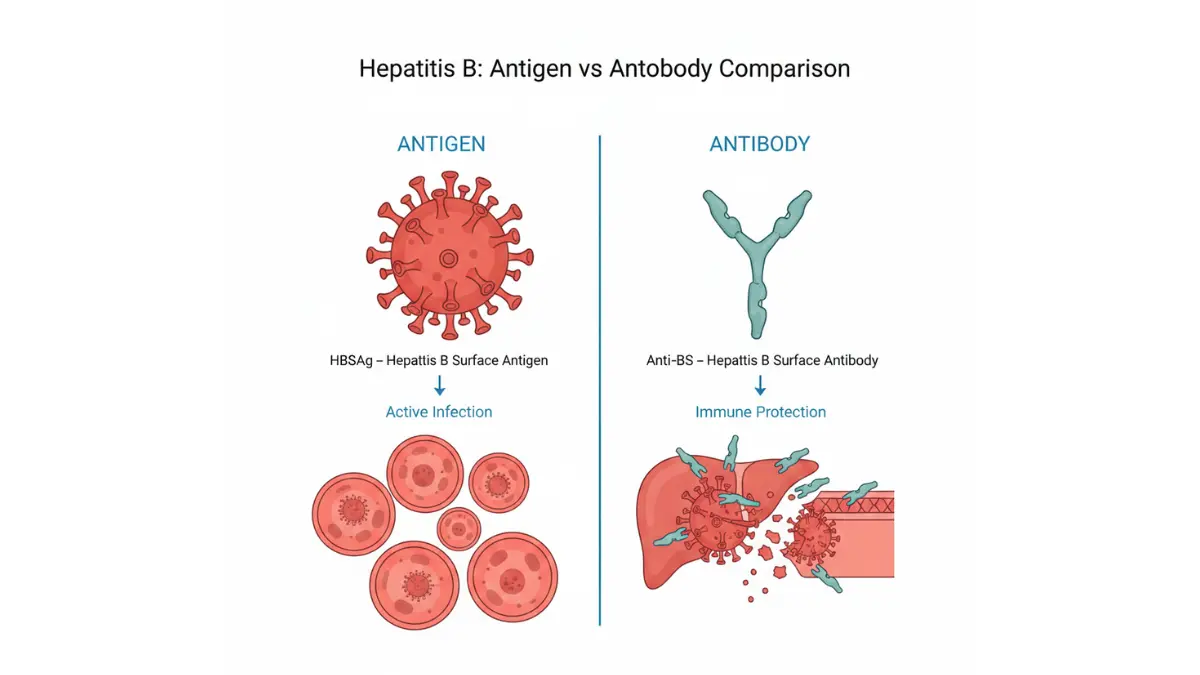
Antigens are proteins from the actual hepatitis virus circulating in your bloodstream right now. When your lab report shows a positive hepatitis surface antigen (HBsAg for Hepatitis B), it means the virus is actively replicating in your liver cells. You’re currently infected and potentially contagious to others through blood or body fluid exposure.
Antibodies are your immune system’s defense proteins created to fight the virus. Positive antibody results (Anti-HAV, Anti-HBs, Anti-HCV) can indicate three scenarios: past infection that cleared, current infection being fought by your immune system, or immunity gained through vaccination. The timing and type of antibody determines which scenario applies to you.
This distinction matters enormously. A positive antigen requires immediate medical follow-up, while certain positive antibodies actually signal protection against future infection.
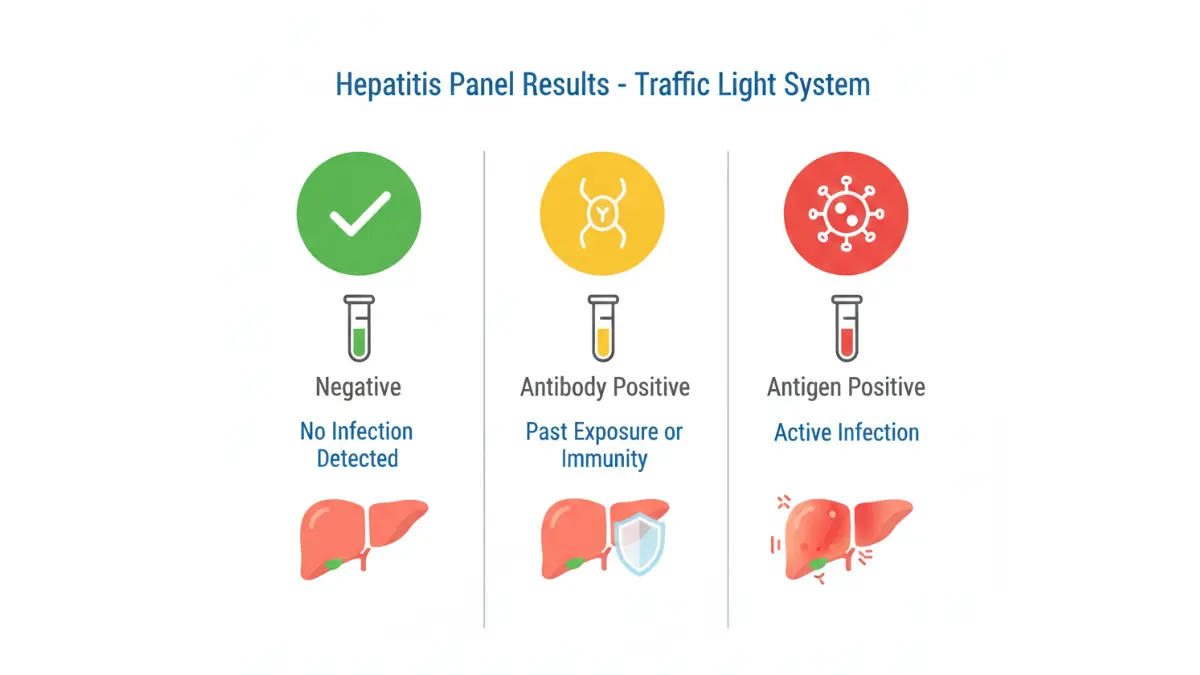
The Traffic Light System (Green/Yellow/Red Results)
🟢 GREEN (Negative/Normal): No hepatitis antigens or antibodies detected. You’re not currently infected and haven’t been exposed to these viruses. However, this also means you lack immunity—vaccination may be recommended, especially for Hepatitis B at birth protection programs.
🟡 YELLOW (Antibody Positive Only): You have antibodies but no antigens. This typically indicates past exposure with successful immune clearance, or vaccination immunity. Your doctor may order follow-up testing to confirm which scenario applies. Use our Symptom Checker if you’re experiencing any concerning signs despite negative antigen results.
🔴 RED (Antigen Positive): Active viral hepatitis infection detected. Requires immediate gastroenterologist referral and additional testing to determine acute versus chronic status. The National Institute of Diabetes and Digestive and Kidney Diseases recommends viral load testing within 1-2 weeks of antigen-positive results.
Common Result Combinations Explained
Scenario 1: All Negative
- What it means: No current infection, no past exposure, no immunity
- Next step: Discuss Hepatitis A and B vaccination with your doctor
- Retest timing: Not needed unless exposed to virus
Scenario 2: Anti-HBs Positive, All Others Negative
- What it means: Hepatitis B vaccination immunity
- Next step: No action needed; you’re protected against HBV
- Retest timing: Antibody levels decline over time; recheck if high-risk exposure occurs
Scenario 3: Anti-HCV Positive
- What it means: Hepatitis C exposure (cannot distinguish past vs. current)
- Next step: HCV RNA viral load test required immediately
- Critical note: 25% spontaneously clear the virus; RNA test determines if treatment needed
Scenario 4: HBsAg Positive + Anti-HBc IgM Positive
- What it means: Acute (new) Hepatitis B infection
- Next step: Liver enzyme monitoring, avoid alcohol, household contact screening
- Retest timing: Every 3 months for first year to assess if becoming chronic
Real lab reports from Quest Diagnostics and LabCorp display these markers with reference ranges. Your report might show “Reactive,” “Non-Reactive,” or numerical values with cutoff thresholds. Any result above the cutoff is considered positive and triggers reflex testing—automatic follow-up tests your lab runs without requiring another blood draw.
Breaking Down Each Hepatitis Type
Hepatitis A: What Your HAV Results Mean
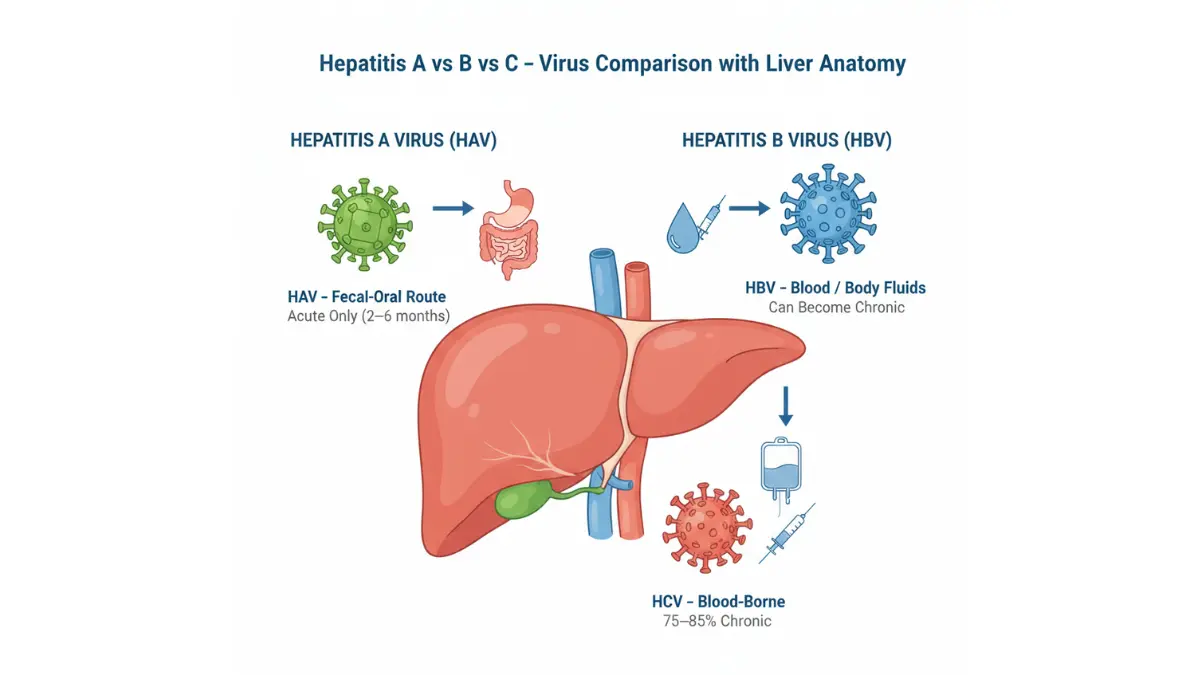
Hepatitis A virus (HAV) spreads through contaminated food, water, or close contact with infected individuals. The CDC’s hepatitis surveillance data shows HAV outbreaks spiked 294% between 2016-2018, primarily among homeless populations and drug users sharing non-sterile equipment.
IgM Anti-HAV (Acute Marker): Positive results indicate current or recent infection within the past 6 months. This antibody appears 3-4 weeks after exposure and disappears by month 6. If you test positive for IgM Anti-HAV, you’re experiencing acute hepatitis A right now—your liver enzymes are likely elevated, and you may feel fatigued or nauseous.
Total Anti-HAV (IgG – Lifetime Marker): Remains positive forever after infection or vaccination. This provides lifelong immunity. A positive total antibody with negative IgM means past infection or vaccination—you’re protected and cannot contract Hepatitis A again.
Window Period: HAV takes 15-50 days (average 28 days) between exposure and detectable IgM antibodies. Testing too early yields false negatives.
Hepatitis B: Decoding HBsAg, Anti-HBs, Anti-HBc
Hepatitis B complexity trips up even experienced clinicians. Three key markers paint a complete picture, and similar to how HIV test results require careful interpretation, HBV results demand context.
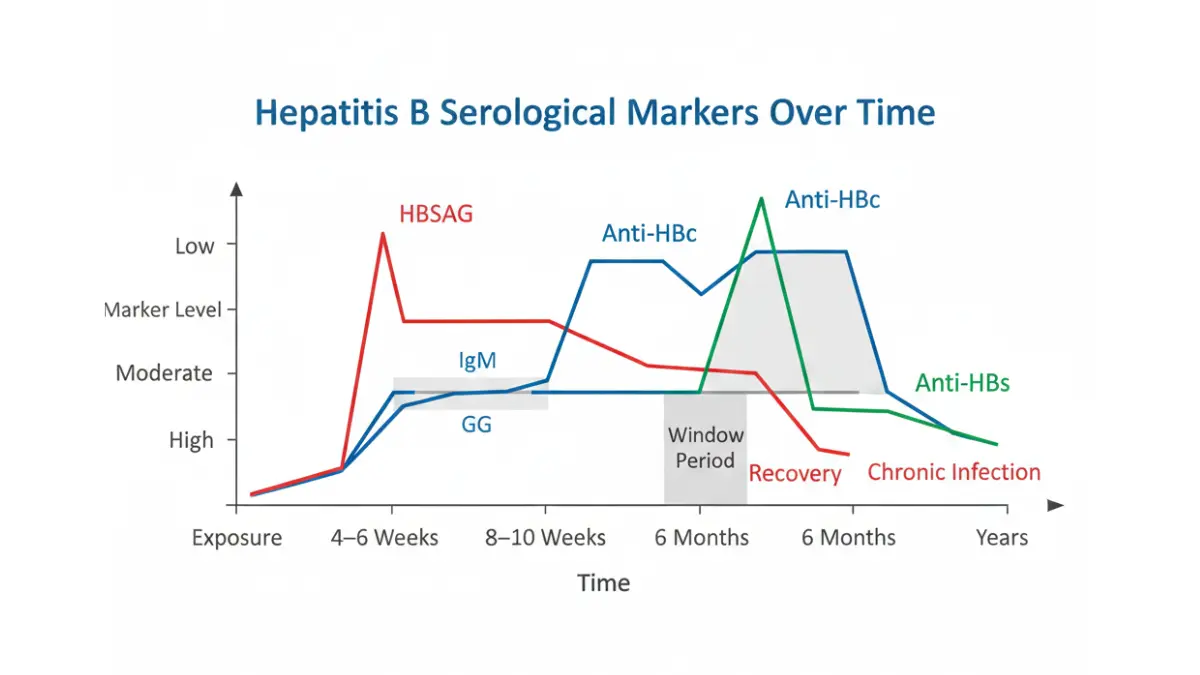
HBsAg (Hepatitis B Surface Antigen): The definitive marker of active infection. Appears 1-9 weeks post-exposure (average 4 weeks). If HBsAg stays positive beyond 6 months, you’ve developed chronic Hepatitis B. According to Stanford Medicine guidelines, chronic HBV affects 862,000-2.4 million Americans, many undiagnosed.
Anti-HBs (Surface Antibody): The protective antibody generated after infection clears or vaccination. This is your immunity shield. Levels above 10 mIU/mL indicate protection. Healthcare workers and immunocompromised patients should verify anti-HBs levels remain adequate—they can wane over decades, especially in individuals with metabolic syndrome affecting immune function.
Anti-HBc (Core Antibody – Total and IgM): This marker confuses patients most. Anti-HBc appears during acute infection and persists for life, regardless of whether you cleared the virus or it became chronic.
- IgM Anti-HBc: Signals new acute infection (within 6 months)
- Total Anti-HBc: Indicates any past or present HBV exposure
Critical insight: Total Anti-HBc positive + HBsAg negative + Anti-HBs negative creates diagnostic confusion. This “isolated core antibody” pattern could mean: distant resolved infection with waned surface antibodies, false positive result, or low-level chronic infection. The Mayo Clinic’s hepatitis B testing algorithm recommends HBV DNA testing to resolve this ambiguity.
2026 Update: New fourth-generation assays can detect HBsAg within 18 days post-vaccination, causing temporary false positives. Retesting 4-6 weeks later clarifies true infection status.
Hepatitis C: Understanding HCV Antibody Results
Hepatitis C differs dramatically from A and B. No vaccine exists, and antibody presence doesn’t confirm immunity—you can get reinfected multiple times.
Anti-HCV (HCV Antibody): Detects within 4-10 weeks post-exposure. A positive result means you’ve encountered HCV at some point, but crucially, it cannot distinguish between:
- Current active infection requiring treatment
- Past infection that spontaneously cleared (happens in 15-25% of cases)
Essential Follow-Up: HCV RNA Viral Load Every positive Anti-HCV result triggers automatic reflex testing to HCV RNA quantitative PCR. This second test determines if live virus is replicating in your liver right now. An “undetectable” or negative RNA means you cleared the virus—you’re not infected but remain antibody-positive for life. Blood banks will permanently defer you from donation despite being virus-free.
Detected RNA requires HCV genotype testing (genotypes 1-6) because 2026 direct-acting antiviral medications show varying effectiveness by genotype. Treatment duration ranges from 8-12 weeks with cure rates exceeding 95%.
Vaccination Status vs. Active Infection (The Confusion Killer)
Patients constantly ask: “Does my positive test mean I have hepatitis or just vaccine immunity?”
Hepatitis A: Total Anti-HAV positive alone = immunity (vaccination or past infection). IgM Anti-HAV positive = current acute infection.
Hepatitis B: Anti-HBs positive alone (without HBsAg or Anti-HBc) = vaccination immunity only. This is the desired result after the 3-dose vaccine schedule completion.
Hepatitis C: No vaccination exists. Any positive antibody demands RNA confirmation testing—never assume immunity with HCV.
Biotin Interference Alert: High-dose biotin supplements (>5mg daily) can cause false-positive or false-negative results in newer chemiluminescent immunoassays. The FDA issued warnings about this interference affecting hepatitis panels. Stop biotin 72 hours before testing.
Our Genetic Risk Assessment Tool can help identify hereditary factors that might affect your hepatitis susceptibility, particularly relevant for Hepatitis B chronic progression.
Your Next Steps Based on Test Results
Negative Results: What They Really Mean
Complete negative hepatitis panel results provide temporary reassurance but not permanent protection. You’re susceptible to all three viruses and should discuss vaccination, especially if you work in healthcare, travel internationally, or have liver disease risk factors requiring extra protection.
Immediate Actions for Negative Results:
- Schedule Hepatitis A and B vaccination series (no HCV vaccine available)
- Implement preventive measures: hand hygiene after bathroom use, safe food preparation, avoid sharing razors or toothbrushes
- Retest only if exposed to confirmed hepatitis case or develop symptoms
Negative results remain valid indefinitely unless exposure occurs. The Hepatitis B vaccine provides protection for at least 30 years in immunocompetent adults, though antibody levels may decline below detectable thresholds while cellular immunity persists.
Positive Results: Your 24-Hour Action Plan
Hour 1-4: Contact Your Doctor Call your healthcare provider’s office immediately—don’t wait for them to call you. Many clinics take 3-5 business days to review non-critical labs. Request same-day or next-day appointment for antigen-positive results.
Hour 4-12: Prevent Transmission Until you meet with your doctor:
- Avoid sexual contact (Hepatitis B and C spread through body fluids)
- Don’t share personal items that might have blood on them
- Inform household members and intimate partners about potential exposure
- Cover any cuts or wounds thoroughly
Hour 12-24: Gather Information Prepare questions for your medical appointment: When was I exposed? Is this acute or chronic? What’s my viral load? Do I need liver imaging? Understanding treatment options early reduces anxiety—conditions similar to receiving abnormal ultrasound findings require timely specialist consultation.
2026 Insurance Coverage Update: The Affordable Care Act mandates coverage for Hepatitis B and C screening without copays for high-risk individuals. Hepatitis C treatment medications (ledipasvir/sofosbuvir, glecaprevir/pibrentasvir) now have FDA-approved generics costing $22,000-$26,000 for full course—down from $94,000 in 2014. Patient assistance programs through pharmaceutical manufacturers cover 100% of out-of-pocket costs for uninsured or underinsured patients.
Indeterminate Results: The Window Period Problem
Indeterminate results occur when initial screening tests show borderline reactivity that can’t be confirmed by supplemental testing. This happens in three scenarios:
Scenario 1: Too Early Testing You tested during the window period—the gap between viral exposure and detectable antibody production. HAV requires 15-50 days, HBV needs 30-60 days, and HCV takes 45-70 days on average before antibodies appear.
Scenario 2: Resolving Acute Infection Your immune system is actively clearing the virus. Antigen levels are dropping while antibody levels are rising, creating conflicting results. This is actually positive news—your body is winning the fight.
Scenario 3: Laboratory Variability Different testing platforms have varying sensitivity thresholds. Samples near the cutoff value may test positive on one platform and negative on another. Similar to how coagulation test results require careful interpretation, hepatitis results near decision thresholds need confirmation.
When to Retest (2026 Medical Guidelines)
Hepatitis A IgM Positive: Retest unnecessary—acute HAV resolves in 99% of cases within 2-6 months. Monitor liver enzymes monthly until normalized.
Hepatitis B HBsAg Positive: Retest every 3 months for first year. If HBsAg remains positive at 6 months, you’ve developed chronic HBV requiring lifelong monitoring and possible antiviral therapy.
Hepatitis C Anti-HCV Positive with Negative RNA: Retest HCV RNA at 3 and 6 months to confirm sustained viral clearance. Some patients show transient viremia that eventually clears.
Indeterminate Results: Retest 4-8 weeks after initial test. Use our Sleep Calculator to optimize immune function during the retesting interval—adequate sleep significantly impacts antiviral antibody production.
Cost Transparency by State (2026):
- Hepatitis panel without insurance: $185-$450
- With insurance: $15-$75 copay
- Federally Qualified Health Centers (FQHCs): Sliding scale $0-$100 based on income
- Public health departments: Often free for at-risk populations
Real Patients, Real Results: What The Numbers Revealed
Case Study 1: False Positive Panic (And How to Avoid It)
Jennifer, a 34-year-old teacher, received a positive Hepatitis B surface antigen result during routine employment screening. Her doctor’s office left a voicemail: “Your hepatitis test came back abnormal—please call immediately.” She spent a sleepless weekend convinced her liver was failing before learning the truth.
Jennifer had received her Hepatitis B vaccination series just three weeks before testing. The CDC’s updated hepatitis B guidelines warn that 0.5-2% of people show transient HBsAg positivity within 30 days of vaccination—not true infection, but vaccine-related antigen detection in newer ultra-sensitive assays.
What This Means For You: Always inform your doctor about recent vaccinations before hepatitis testing. If you test positive within 30 days of HBV vaccination, request repeat testing 4-6 weeks later rather than assuming active infection.
Case Study 2: Vaccination Confusion Resolved
David’s pre-surgical screening showed “Anti-HBc positive, HBsAg negative, Anti-HBs negative”—the confusing isolated core antibody pattern. His surgeon canceled elective knee surgery, fearing occult chronic Hepatitis B could reactivate under anesthesia stress.
Further testing revealed HBV DNA was undetectable. David had contracted Hepatitis B during college 20 years ago, successfully cleared it, but his surface antibodies had waned below detectable levels over time. His actual infection status: immune from past exposure, not chronically infected, and safe for surgery.
Dr. Sarah Chen, hepatologist at Johns Hopkins, explains: “Isolated anti-HBc creates diagnostic confusion because we can’t determine infection status without HBV DNA testing. Approximately 5-15% of the US population shows this pattern—most are safely immune individuals with declining antibody levels, not occult infections.”
Similar to how healthcare providers must interpret CBC blood test results in clinical context, hepatitis B markers require synthesizing multiple data points rather than relying on single values.
Case Study 3: Window Period Retesting Success
Rachel tested negative for Hepatitis C despite known exposure through accidental needlestick injury six weeks prior. She assumed she’d dodged infection. However, her occupational health physician ordered repeat testing at 12 weeks post-exposure—standard protocol for window period concerns.
The second test revealed positive Anti-HCV with detectable HCV RNA. Rachel had been infected but tested during the early window period before antibodies developed. Early detection allowed immediate treatment initiation, achieving sustained virologic response (cure) after just 8 weeks of ledipasvir/sofosbuvir therapy.
What This Means For You: Known exposure always requires serial testing at 6, 12, and 24 weeks regardless of initial negative results. Window periods are real and can delay diagnosis by 2-3 months.
Global Expert Panel: 2026 Hepatitis Screening Updates
The World Health Organization’s 2026 hepatitis elimination strategy prioritizes universal screening over risk-based approaches. Dr. Marc Bulterys, WHO Global Hepatitis Program, states: “Risk-based screening missed 50% of chronic Hepatitis B cases in the US. Universal adult screening at age 18 dramatically improves detection and links patients to care before liver damage progresses.”
New recommendations include one-time Hepatitis C screening for all adults age 18-79, expanding from previous age 45+ guidance. This change reflects rising HCV rates among millennials due to the opioid epidemic.
Our Water Intake Calculator supports liver health during hepatitis recovery—adequate hydration optimizes hepatic blood flow and toxin clearance.
11 Most Asked Questions About Hepatitis Panel Results
1. Can you have hepatitis without symptoms?
Yes—this is extremely common. The National Institutes of Health reports that 50-70% of acute Hepatitis B cases and up to 80% of Hepatitis C cases show no symptoms initially. Silent hepatitis progresses silently for years, causing liver scarring before detection. This is why screening matters even when you feel perfectly healthy, similar to how routine colonoscopy results detect problems before symptoms appear.
2. What’s the difference between hepatitis A, B, and C?
Hepatitis A: Spread through contaminated food/water. Acute infection only—never chronic. Vaccine available.
Hepatitis B: Transmitted through blood and body fluids. Can become chronic in 5-10% of adult infections. Vaccine available.
Hepatitis C: Blood-borne transmission primarily from injection drug use. Becomes chronic in 75-85% of cases. No vaccine, but 95%+ curable with antivirals.
3. Does a positive antibody test mean I’m contagious?
Not necessarily. Positive antibodies without antigens typically indicate immunity, not active infection. You’re only contagious when viral antigens (HBsAg for Hepatitis B, HCV RNA for Hepatitis C) are present. Antibody-positive, antigen-negative results usually mean past cleared infection or vaccination immunity.
4. Can vaccines cause a positive hepatitis test?
Yes for Hepatitis B—Anti-HBs antibodies appear after vaccination, which is the desired immune response. Newer assays may also transiently detect HBsAg within 18 days of HBV vaccination. Hepatitis A vaccination produces total Anti-HAV antibodies. These are appropriate positive results, not infections.
5. What is the window period for hepatitis testing?
Hepatitis A: 15-50 days (average 28 days) between exposure and detectable IgM antibodies
Hepatitis B: 30-60 days for HBsAg detection, up to 90 days for antibody development
Hepatitis C: 45-70 days for Anti-HCV antibodies, though HCV RNA can be detected earlier at 1-2 weeks
Testing too early produces false negatives. Always retest if high-risk exposure occurred recently.
6. Why did my doctor order a “reflex test”?
Reflex testing means your initial screening triggered automatic follow-up tests using the same blood sample. For example, positive Anti-HCV reflexes to HCV RNA quantitative testing. Positive HBsAg might reflex to HBV DNA viral load. This saves you from additional blood draws and speeds diagnosis. Labs perform reflex tests based on standardized algorithms without requiring separate physician orders.
7. Can biotin supplements affect my hepatitis results?
Absolutely. High-dose biotin (≥5mg daily) interferes with biotin-streptavidin immunoassay platforms used for hepatitis testing, potentially causing false-positive or false-negative results. Stop all biotin supplements 72 hours before testing. Inform your lab if you’ve taken biotin recently—they can use non-biotin-based testing methods. This is similar to how certain supplements can interfere with thyroid test results.
8. How long does it take to get hepatitis panel results?
Most labs complete hepatitis panels within 24-72 hours. Reflex testing (HCV RNA, HBV DNA) adds 3-5 additional days. Rapid hepatitis tests provide results in 20-30 minutes but require confirmation with standard laboratory testing if positive. Your doctor typically receives results 1-3 business days after blood draw.
9. Do I need to fast before a hepatitis panel?
No fasting required. Hepatitis panels test for viral antigens and antibodies unaffected by food intake. However, if your doctor ordered comprehensive metabolic panel or liver function tests simultaneously, fasting may be requested for those components. Always clarify with your ordering physician.
10. Can hepatitis go away on its own?
Hepatitis A: Almost always resolves spontaneously within 2-6 months. Treatment focuses on symptom management.
Hepatitis B: Adult-acquired acute HBV clears in 90-95% of cases. Chronic HBV (remaining 5-10%) requires lifelong monitoring but may not always need treatment.
Hepatitis C: 15-25% spontaneously clear HCV within 6 months of acute infection. The remaining 75-85% develop chronic HCV requiring antiviral treatment for cure.
11. When should I see a liver specialist?
Consult a hepatologist or gastroenterologist if:
– Any hepatitis antigen tests positive (HBsAg, HCV RNA detected)
– Liver enzyme levels exceed 2x normal range
– HBsAg remains positive beyond 6 months (chronic HBV)
– Imaging shows liver abnormalities
– You have cirrhosis risk factors: diabetes, obesity, excessive alcohol use
Early specialist involvement prevents progression to cirrhosis and liver cancer. Use our BMI Calculator to assess obesity-related liver disease risk.
Quick Reference Summary Table
| Test | Positive Result Meaning | Action Required |
|---|---|---|
| Anti-HAV IgM | Acute Hepatitis A infection | Symptom management, avoid alcohol, recheck liver enzymes in 4 weeks |
| Total Anti-HAV | Past HAV or vaccination | No action—you’re immune |
| HBsAg | Active HBV infection | Immediate hepatologist referral, viral load testing, household screening |
| Anti-HBs | HBV immunity (vaccination or past infection) | No action—you’re protected |
| Anti-HBc Total | HBV exposure at some point | Requires HBsAg and Anti-HBs context to interpret |
| Anti-HCV | HCV exposure | Automatic reflex to HCV RNA—critical follow-up test |
| HCV RNA Detected | Active Hepatitis C infection | Hepatologist referral for genotype testing and treatment |
| HCV RNA Undetected | Cleared HCV—not currently infected | No treatment needed; remain antibody-positive lifelong |
Key Takeaways
✓ Antigens indicate active infection; antibodies indicate immunity or past exposure
✓ Window periods of 4-12 weeks can cause false negative results after exposure
✓ Hepatitis C antibody positivity always requires HCV RNA confirmation
✓ Vaccination produces appropriate positive antibody results—not infections
✓ Biotin supplements must be stopped 72 hours before testing to prevent interference
For additional support in managing your overall health during hepatitis diagnosis or treatment, explore our Intermittent Fasting Calculator to optimize liver recovery through time-restricted eating patterns shown to reduce hepatic inflammation.
Final Medical Disclaimer: This article provides educational information about hepatitis panel interpretation. It does not replace professional medical advice, diagnosis, or treatment. Always seek the advice of qualified healthcare providers with questions regarding your specific test results and health conditions. Never disregard professional medical advice or delay seeking it because of information you read here.
About this content
How this article was put together: researched from recognised health sources, drafted with the help of AI tools, and edited by hand, with sources linked throughout.

Sameer Patel is the founder and editor of My Medicine Advisor. He is not a doctor or medical professional — before starting this site he worked in banking,…
Medical disclaimer
The content on MyMedicineAdvisor is provided for general informational and educational purposes only and is not a substitute for professional medical advice, diagnosis, or treatment. Health information on this website should not be used to diagnose, treat, cure, or prevent any condition without guidance from a qualified healthcare professional. Always seek the advice of your doctor, physician, or another licensed healthcare provider with any questions you may have regarding a medical condition, symptoms, medications, or treatment decisions.