What Is Vitamin D Deficiency? Why Are 1 Billion People at Risk in 2025?
Vitamin D deficiency occurs when serum 25-hydroxyvitamin D levels fall below 30 nmol/L (12 ng/mL), affecting approximately 1 billion people worldwide and creating a silent global health crisis that threatens bone integrity, immune function, and overall wellness across all demographics. This fat-soluble nutrient is essential for calcium absorption, bone metabolism, and numerous physiological processes that maintain health throughout the lifespan.
Updated December 2025: Recent epidemiological research confirms that vitamin D deficiency remains one of the most prevalent nutritional deficiencies globally, with nearly 50% of some populations experiencing insufficiency and 15.7% facing severe deficiency. The highest rates occur among elderly adults, individuals with obesity, nursing home residents, hospitalized patients, and people with darker skin pigmentation or limited sun exposure.
Real Patient Impact
Consider Sarah, a 42-year-old marketing professional who spent months struggling with unexplained fatigue and persistent muscle weakness. After visiting multiple specialists and undergoing various tests, a simple blood test revealed her vitamin D levels were critically low at 18 ng/mL. Within weeks of starting supplementation and addressing her indoor lifestyle, her energy returned and muscle pain diminished significantly. This scenario repeats daily across medical practices worldwide, highlighting how often vitamin D deficiency symptoms in adults go unrecognized.
Who Is Most at Risk?
| Risk Group | Prevalence Rate | Primary Cause |
|---|---|---|
| Elderly adults (65+) | 61% (U.S.) to 96% (India) | Reduced skin synthesis, limited sun exposure |
| Individuals with obesity | 35% higher risk | Sequestration in subcutaneous fat |
| Dark-skinned populations | 17.5% (non-Hispanic Blacks) | Melanin reduces vitamin D synthesis |
| Nursing home residents | 50-60% | Institutionalization, limited outdoor access |
| Pregnant/breastfeeding women | Varies by region | Increased demands, inadequate intake |
| Chronic kidney disease patients | 85-99% | Impaired 1α-hydroxylase activation |
Understanding your vitamin D status through testing with a 25 hydroxyvitamin d test is the critical first step toward prevention and treatment. For personalized health insights, explore our BMI Calculator to assess overall health risks that may intersect with vitamin D deficiency.
What This Means For You: If you experience chronic fatigue, bone pain, or muscle weakness, request a vitamin D blood test from your healthcare provider. Early detection prevents complications including osteoporosis, fractures, and immune dysfunction.
Recognizing Vitamin D Deficiency – Symptoms, Signs, and Real Patient Stories
Major Vitamin D Deficiency Symptoms in Adults, Women, and More
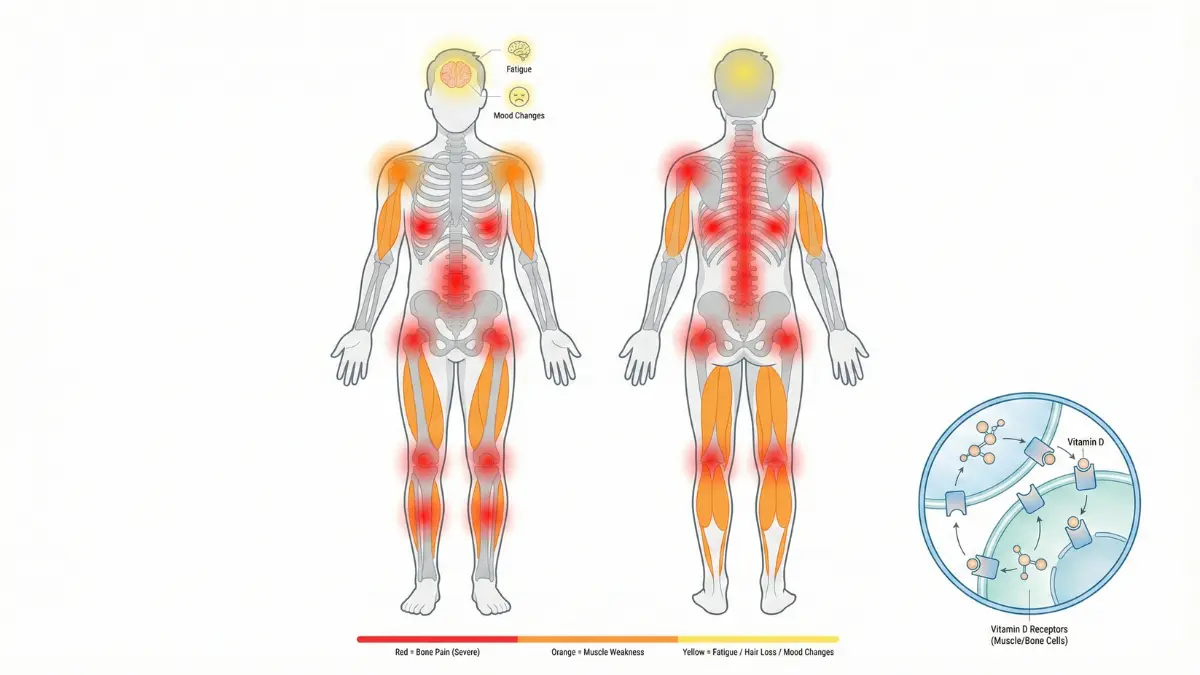
The first warning signs of low vitamin D often manifest as persistent fatigue, muscle weakness, and unexplained bone pain that many patients and physicians initially attribute to aging, stress, or overwork. Research from 2025 demonstrates a strong inverse correlation between serum 25-hydroxyvitamin D levels and fatigue severity, with deficient individuals scoring significantly higher on Fatigue Severity Scale assessments compared to those with adequate vitamin D status.
Common Vitamin D Deficiency Symptoms
General Symptoms Affecting All Adults:
- Vitamin D deficiency fatigue – Chronic exhaustion unrelieved by rest, affecting daily functioning and quality of life
- Vitamin D deficiency bone pain – Particularly in the lower back, ribs, and weight-bearing joints due to impaired calcium absorption
- Vitamin D deficiency muscle weakness – Especially proximal muscle groups (thighs, shoulders), increasing fall risk and reducing grip strength by up to 40% in severe cases
- Frequent infections and slower wound healing due to compromised immune function
- Mood changes including anxiety and vitamin D deficiency depression, linked to the nutrient’s role in neurotransmitter synthesis
Vitamin D Deficiency Symptoms in Women:
- Increased severity of premenstrual symptoms and menstrual irregularities
- Higher risk during pregnancy and breastfeeding, affecting both maternal and fetal bone health
- Postmenopausal bone loss acceleration, with deficient women experiencing 2-3 times higher fracture rates
- Vitamin D deficiency hair loss – Studies link low levels to alopecia areata and non-scarring hair loss patterns, with synthetic vitamin D application showing significant regrowth after 12 weeks
Vitamin D Deficiency Symptoms in Adults by Age Group:
- Young adults (18-40): Chronic fatigue, muscle pain, difficulty concentrating, and mood disturbances often misdiagnosed as fibromyalgia
- Middle-aged adults (40-65): Joint stiffness, reduced exercise tolerance, and early osteopenia detected on bone density scans
- Elderly (65+): Severe muscle weakness, increased fall risk, cognitive decline, and higher infection susceptibility
Evidence Strength for Key Symptoms
| Symptom | Prevalence in Deficient Patients | Evidence Level | Mechanism |
|---|---|---|---|
| Fatigue | 60-75% | Strong (Level A) | Impaired cellular energy metabolism, mitochondrial dysfunction |
| Muscle weakness | 40-60% | Strong (Level A) | Reduced type II muscle fiber development, calcium handling defects |
| Bone pain | 35-50% | Moderate (Level B) | Osteomalacia, impaired bone mineralization |
| Depression | 25-40% | Moderate (Level B) | Altered neurotransmitter synthesis, VDR expression in brain tissue |
| Hair loss | 15-30% | Emerging (Level C) | Disrupted hair follicle cycling, stem cell regulation |
Understanding these symptoms can guide timely diagnosis through appropriate vitamin D testing and prevent progression to severe complications.
Real Patient Stories: The Hidden Impact
Case 1 – Maria’s Journey with Muscle Weakness
Maria, a 52-year-old teacher from Boston, spent eight months visiting specialists for progressive muscle weakness that made climbing stairs exhausting and lifting grocery bags nearly impossible. Her vitamin D blood test revealed critically low levels at 14 ng/mL, accompanied by elevated creatine kinase indicating muscle damage. Within one month of starting high-dose vitamin D3 supplementation and increasing dietary calcium intake, Maria regained the ability to rise from chairs without assistance and walk without limping. Her experience mirrors thousands of patients whose musculoskeletal symptoms improve dramatically once vitamin D deficiency treatment begins.
Case 2 – James and Chronic Fatigue
James, a 38-year-old software engineer, struggled with debilitating fatigue despite sleeping 9-10 hours nightly. His BMI Calculator results showed healthy weight, but persistent exhaustion forced him to reduce work hours. A comprehensive metabolic panel including vitamin D testing revealed levels at 19 ng/mL. Research shows that correcting hypovitaminosis D leads to significant improvement in unexplained fatigue and musculoskeletal pain, as vitamin D receptors expressed in muscle and nerve tissues play crucial roles in cellular energy metabolism.
Key Takeaways
Most Important Warning Signs:
- Persistent fatigue lasting more than 3 months despite adequate sleep
- Proximal muscle weakness affecting shoulders, hips, and thighs
- Chronic bone or joint pain, particularly lower back pain
- Mood changes including depression or anxiety without clear triggers
- Frequent infections or prolonged illness recovery
If you experience two or more of these signs of vitamin D deficiency, request a 25 hydroxyvitamin D test from healthcare providers as routine screening identifies deficiency before severe complications develop. Our Symptom Checker can help you track patterns and prepare for medical consultations.
What This Means For You: Early recognition of vitamin D deficiency symptoms enables prompt intervention, preventing irreversible bone loss, fractures, and chronic pain conditions. Most patients experience noticeable symptom improvement within 4-8 weeks of appropriate supplementation and lifestyle modifications.
Causes and Risk Factors – Why So Many Are Affected
What Causes Vitamin D Deficiency? The Hidden Factors
Vitamin D deficiency arises primarily from inadequate sunlight exposure, poor dietary intake, and impaired absorption, creating a perfect storm that affects nearly 1 billion people globally despite widespread awareness. Modern lifestyles amplify these issues, with urbanization reducing outdoor time and dietary shifts limiting natural sources, leading to widespread low vitamin D even in sunny regions.
Primary Causes of Vitamin D Deficiency
Limited Sunlight Exposure (Vitamin D from Sunlight):
- Insufficient UVB radiation penetration due to indoor lifestyles, clothing coverage, or sunscreen use blocks 95-99% of cutaneous synthesis
- Vitamin D deficiency in winter worsens in northern latitudes where sunlight intensity drops below synthesis thresholds for 4-6 months annually
- Institutionalized individuals and night-shift workers face 2-3x higher deficiency rates from chronic lack of sun exposure
Dietary Insufficiency (Lack of Vitamin D):
- Few foods naturally contain vitamin D; reliance on unfortified diets leads to chronic shortfall
- Vegan/vegetarian patterns increase risk by 40-60% without supplementation or fortified alternatives
- Malabsorption conditions like celiac disease, Crohn’s, or post-bariatric surgery impair uptake by 50-70%
Physiological and Genetic Factors:
- Aging reduces skin’s 7-dehydrocholesterol conversion efficiency by 75% after age 70
- Vitamin D deficiency dark skin occurs because higher melanin content decreases synthesis by 90% compared to lighter skin
- Obesity sequesters vitamin D in fat tissue, lowering circulating levels proportional to BMI
High-Risk Groups and Global Patterns
| Risk Group | Key Cause | Prevalence | Regional Hotspot |
|---|---|---|---|
| Elderly (65+) | Reduced skin synthesis + limited sun | 50-96% | India, Europe, nursing homes |
| Obese individuals (BMI >30) | Fat sequestration | 35% higher risk | U.S., Middle East |
| Dark-skinned populations | Melanin barrier | 17-82% | Africa, South Asia |
| Pregnant/breastfeeding women | Increased fetal demands | 40-80% | Middle East, India |
| Breastfed infants | No fortification | 10-50% without supplements | Global |
| Chronic kidney/liver disease | Impaired activation | 85-99% | Dialysis patients worldwide |
These patterns reveal vitamin D deficiency in elderly, vitamin D deficiency in pregnancy, and vitamin D deficiency in breastfed babies as priority intervention areas, particularly in regions with high baseline prevalence.

Modern Contributors to Widespread Deficiency
Urbanization confines 80% of populations to indoor environments, while daily sunscreen application – even SPF 15 – blocks most vitamin D production. Genetic polymorphisms in vitamin D receptor (VDR) genes affect 10-20% of populations, reducing binding efficiency and raising deficiency risk independently of exposure. Combined with rising obesity rates (affecting 1 in 8 people globally), these factors explain persistent high rates despite fortification programs.
Assessing personal risk starts with understanding lifestyle factors alongside tools like our Protein Intake Calculator for dietary optimization or BMR Calculator to evaluate metabolic influences on nutrient needs. The National Institutes of Health details how environmental and genetic interactions drive individual susceptibility.
What This Means For You: Track sun exposure (15-20 minutes midday, arms/legs exposed), prioritize fortified foods, and screen high-risk family members. Those with obesity, darker skin, or limited outdoor access benefit most from proactive vitamin D blood test monitoring to prevent progression.
Diagnosis – Testing, Levels, and How To Check Your Status
How Is Vitamin D Deficiency Diagnosed? Blood Tests and What Results Mean
Diagnosing vitamin D deficiency primarily depends on measuring serum levels of 25-hydroxyvitamin D (25[OH]D), the major circulating form that reflects vitamin D status from sun exposure, diet, and supplements. A single blood test can accurately quantify your vitamin D levels, guiding clinicians to tailor treatment and prevention strategies effectively.
Understanding Vitamin D Blood Tests
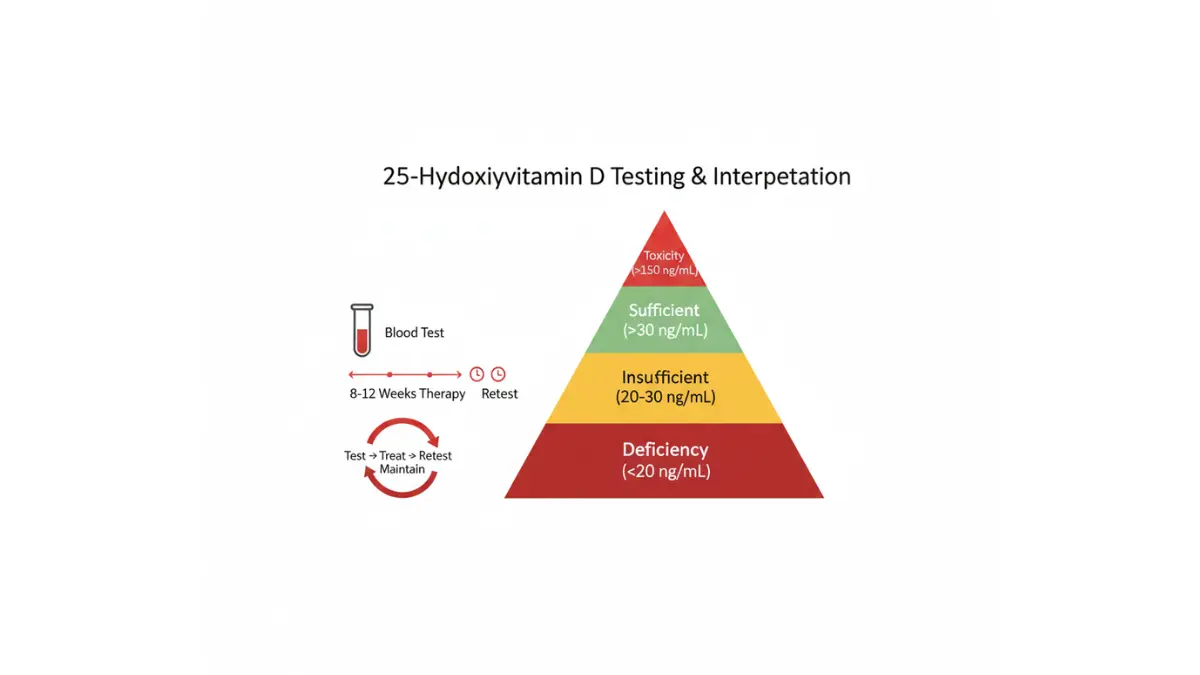
The 25 hydroxyvitamin d test is the gold standard for assessing vitamin D status. According to the National Institutes of Health, serum levels are categorized as follows:
- Deficiency: < 20 ng/mL (< 50 nmol/L)
- Insufficiency: 20-30 ng/mL (50-75 nmol/L)
- Sufficiency: > 30 ng/mL (> 75 nmol/L)
- Potential Toxicity: > 150 ng/mL (> 375 nmol/L)
Maintaining normal vitamin D levels is crucial to prevent bone disorders such as rickets, osteomalacia, and osteoporosis, as well as support immune, muscle, and neurological health.
When and How to Check Vitamin D Levels
People at increased risk—including the elderly, people with dark skin, pregnant women, individuals with chronic diseases, or those with limited sun exposure—should regularly undergo vitamin D testing. The test is a straightforward blood draw processed in outpatient labs, and results typically return within a few days.
For those interested in assessing their risk at home before testing, tools like our Symptom Checker can guide awareness of deficiency signs.
Interpreting Test Results with Clinical Context
| Serum Level (ng/mL) | Meaning | Recommended Action |
|---|---|---|
| < 12 | Severe deficiency (high risk for rickets/osteomalacia) | Immediate high-dose supplementation, clinical monitoring |
| 12 – 20 | Deficiency (insufficient for bone health) | Supplementation with 800-2,000 IU vitamin D daily, retesting in 3 months |
| 20 – 30 | Insufficiency | Moderate supplementation, optimize sun exposure and diet |
| > 30 | Sufficient | Maintain with diet, lifestyle, or low-dose supplements |
| > 150 | Toxicity warning | Urgent medical evaluation and cessation of supplements |
Evidence shows repetitive testing should be done 8-12 weeks after initiating therapy to ensure serum levels have normalized and to adjust dosing accordingly.
Practical Tips for Patients
- Testing is covered by most health insurances for high-risk populations.
- Vitamin D blood test results should be interpreted alongside calcium levels and kidney function to avoid misdiagnosis or complications.
- Routine screening is recommended for infants, pregnant women, elderly adults, and people with chronic illnesses per guidelines from organizations such as the American Academy of Pediatrics and Endocrine Society.
- For a quick health overview complementing vitamin D status, explore the BMI Calculator and associated nutrition tools on our site.
What This Means For You: Understanding your vitamin D level through a simple blood test is the cornerstone of preventing serious health issues related to deficiency. If you belong to any risk group or experience symptoms, discussing testing with your healthcare provider is essential.
Treatment & Prevention – What Works, Dosage, and Action Steps
How To Treat and Prevent Vitamin D Deficiency: Proven Options
Treatment of vitamin D deficiency focuses on replenishing serum levels to above 30 ng/mL (75 nmol/L) and maintaining them through targeted supplementation, dietary improvement, and sensible sun exposure. Clinical guidelines strongly recommend cholecalciferol (vitamin D3) as the preferred supplemental form due to superior efficacy and longer half-life compared to ergocalciferol (vitamin D2).
Evidence-Based Treatment Protocols
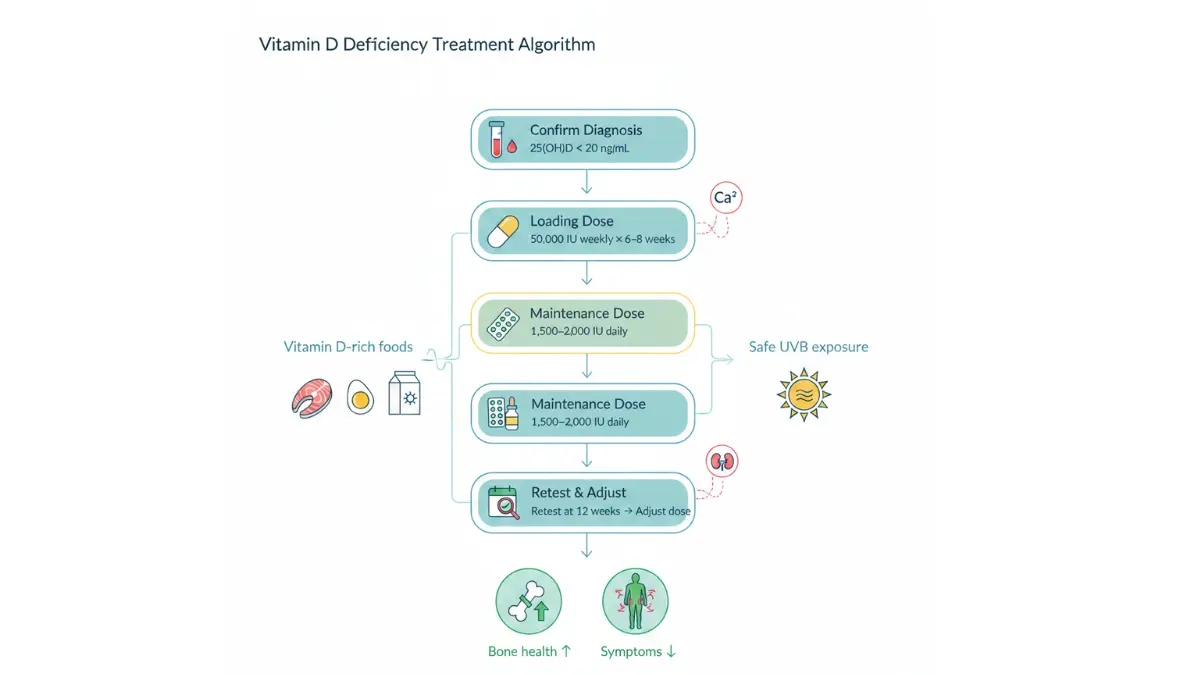
For adults with deficiency (serum levels < 20 ng/mL), effective regimens include:
- High-dose vitamin D3 supplementation: 50,000 IU once weekly for 6-8 weeks
- Alternatively, 6,000 IU daily for 8 weeks to achieve serum 25(OH)D levels > 30 ng/mL
- Follow-up maintenance dosing: 1,500 to 2,000 IU daily to sustain optimal levels
Patients with malabsorption syndromes, obesity, or on medications affecting vitamin D metabolism may require two to three times higher doses (up to 10,000 IU daily) during therapy. Clinical monitoring with repeat testing after 8-12 weeks ensures effective repletion without toxicity risk.
Dietary Sources of Vitamin D
Fortifying your diet with foods high in vitamin D complements supplementation. Key sources include:
- Fatty fish like salmon and mackerel (richest natural source)
- Egg yolks, fortified dairy, and plant-based milk alternatives
- Mushrooms exposed to UV light
A balanced meal incorporating these foods helps maintain normal vitamin D levels alongside supplementation. Our detailed Protein Intake Calculator and BMI Calculator can help optimize nutritional status holistically.
How to Increase Vitamin D Naturally
- Sunlight exposure: Aim for 10-30 minutes several times a week with exposed arms and legs between 10 a.m. and 3 p.m., adjusting for skin tone and geographic location
- Avoid overuse of sunscreen on small skin areas during these exposures to maximize natural synthesis
- Address lifestyle factors limiting outdoor time
Supplementation and Dosage Guidelines
| Patient Group | Loading Dose | Maintenance Dose |
|---|---|---|
| Adults with deficiency | 50,000 IU weekly for 6-8 weeks | 1,500–2,000 IU daily |
| Children (1-18 years) | 2,000 IU daily for 6 weeks or 50,000 IU weekly for 6 weeks | 600–1,000 IU daily |
| Pregnant/Breastfeeding | Individualized per risk; often 1,000–2,000 IU daily | Same as loading dose or as advised |
| Obese or malabsorption | 6,000–10,000 IU daily for repletion | 3,000–6,000 IU daily |
High-dose regimens like 50,000 IU weekly should be monitored carefully to avoid toxicity, which though rare, may cause hypercalcemia and kidney damage. Supplementation with vitamin D3 in adherence to NIH guidelines ensures optimal safety and efficacy.
Addressing Special Populations
- Elderly adults: Require higher maintenance doses (2,000–4,000 IU daily) due to decreased skin synthesis and dietary inadequacies
- Pregnant women: Close monitoring and supplementation reduce risks of preeclampsia, low birth weight, and neonatal deficiency
- Breastfed infants: Should receive 400 IU daily supplementation until weaning onto adequate vitamin D-containing foods
What This Means For You
Combining supplementation, diet enrichment with vitamin D foods, and responsible sun exposure offers a comprehensive approach to treating and preventing deficiency. Regular serum testing after initial treatment ensures maintenance within safe, therapeutic ranges. Explore tools like our Symptom Checker to monitor your vitamin D-related symptoms and support your healthcare journey.
Research, Global Expert Consensus, and Future Directions
What Research Says – Latest Findings, Gaps, and Expert Guidance
Vitamin D deficiency prevention and treatment strategies currently reflect a global consensus emphasizing individualized supplementation tailored to age, weight, geographic location, and lifestyle, supported by decades of rigorous research. Recent guidelines recommend cholecalciferol (vitamin D3) as the first choice, with dosages adjusted for risk groups such as older adults, pregnant women, and those with limited sun exposure.
Global Expert Panels and Recent Insights
International expert panels including the Endocrine Society and the Institute of Medicine advise minimum serum 25-hydroxyvitamin D levels of 30 ng/mL for optimal health outcomes. These panels highlight:
- The importance of preventing deficiency through a combination of dietary intake, sensible sun exposure, and supplementation.
- Recognition that certain populations (e.g., darker skin pigmentation, elderly, chronic illness) require higher supplementation for sufficiency.
- Evidence prioritizing vitamin D’s role beyond bone health, including immunomodulation, cardiometabolic benefits, and potential mood regulation.
Research Transparency and Evidence Strength
Visual evidence pyramids from recent meta-analyses rank vitamin D benefits for bone health and fracture reduction as ‘high confidence’ outcomes, while benefits in depression and chronic fatigue remain emerging with moderate confidence. Gaps remain in understanding dosing for non-skeletal benefits and long-term effects in diverse ethnic groups, creating avenues for ongoing clinical trials.
Future Directions & Patient Empowerment
Emerging experimental treatments and routinized vitamin D status tracking may become standard in holistic health monitoring globally. Public health initiatives continue to push fortification and supplementation policies to reduce deficiency prevalence in at-risk populations.
For patient-centric empowerment, multicenter studies reinforce that combining thorough diagnosis, adherence to treatment protocols, lifestyle guidance, and periodic monitoring—supported by accessible tools like our Symptom Checker—is critical for sustained vitamin D sufficiency and improved quality of life.
Frequently Asked Questions about vitamin D deficiency
1. What is vitamin D deficiency?
Vitamin D deficiency occurs when the body has insufficient vitamin D levels to maintain bone and overall health, leading to weakened bones, muscle weakness, and increased risk of fractures.
2. What are the common symptoms of vitamin D deficiency?
Symptoms include fatigue, bone pain, muscle weakness, hair loss, depression, and frequent infections. Severe deficiency can cause rickets in children and osteomalacia in adults.
3. Who is most at risk of vitamin D deficiency?
At-risk groups include older adults, people with dark skin, those with limited sun exposure, pregnant women, breastfed infants, obese individuals, and people with malabsorption conditions.
4. How is vitamin D deficiency diagnosed?
5. What causes vitamin D deficiency?
Causes include inadequate sun exposure, poor dietary intake, impaired absorption, certain medical conditions, and some medications.
6. What happens if vitamin D levels are low?
7. How much vitamin D should I take daily?
8. Can you get too much vitamin D?
Yes, excessive supplementation can cause toxicity, leading to symptoms like nausea, kidney damage, and hypercalcemia, but sun exposure does not cause toxicity.
9. How can I increase my vitamin D naturally?
Get moderate sun exposure (10-30 minutes several times a week), eat vitamin D rich foods (salmon, egg yolks, fortified milk), and consider supplements if needed.
10. What is the treatment for vitamin D deficiency?
Treatment involves vitamin D3 supplements, dietary changes, sun exposure, and medical monitoring to restore and maintain adequate levels.
11. Should I get tested for vitamin D deficiency?
Testing is recommended if you have symptoms or belong to a risk group like the elderly, pregnant women, or those with limited sun exposure.
About this content
How this article was put together: researched from recognised health sources, drafted with the help of AI tools, and edited by hand, with sources linked throughout.

Sameer Patel is the founder and editor of My Medicine Advisor. He is not a doctor or medical professional — before starting this site he worked in banking,…
Medical disclaimer
The content on MyMedicineAdvisor is provided for general informational and educational purposes only and is not a substitute for professional medical advice, diagnosis, or treatment. Health information on this website should not be used to diagnose, treat, cure, or prevent any condition without guidance from a qualified healthcare professional. Always seek the advice of your doctor, physician, or another licensed healthcare provider with any questions you may have regarding a medical condition, symptoms, medications, or treatment decisions.