On This Page – Quick Medical Summary
James, 41, had spent four years cycling through every drugstore eczema cream he could find. Nothing worked for more than two weeks. Then his dermatologist prescribed a nonsteroidal cream approved by the FDA in late 2024 — and within three weeks, his flares were gone.
His story is not unusual. Millions of Americans live with eczema, and most are using the wrong cream.
The short answer: The best eczema cream combines ceramides and colloidal oatmeal for mild cases, while moderate-to-severe eczema requires prescription options like Zoryve or Opzelura. This guide covers both — with a dermatologist-graded breakdown you will not find anywhere else.
Why Most Eczema Creams Fail — And What Actually Works
The Skin Barrier Problem No One Explains
Most people think eczema is just dry skin. It is not. Eczema, clinically known as atopic dermatitis, is a chronic inflammatory condition rooted in a dysfunctional skin barrier.
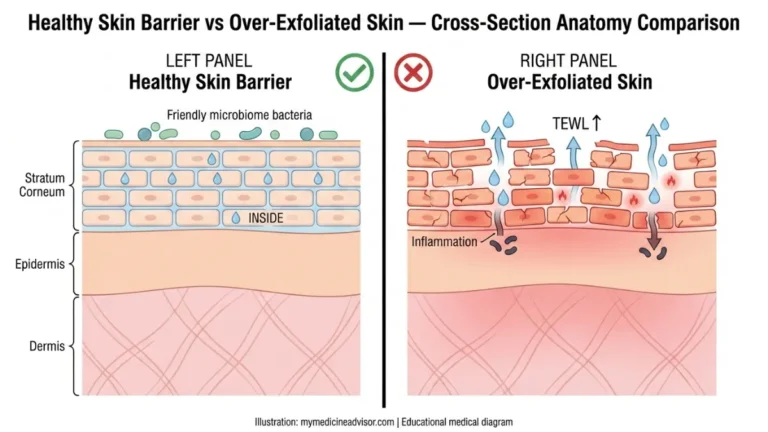
In healthy skin, ceramide lipids form a tight seal between cells, locking in moisture and keeping allergens out. In people with eczema, this barrier is structurally deficient. Moisture escapes. Irritants get in. The immune system overreacts — triggering the relentless itch-scratch cycle.
This is why a standard drugstore lotion will never fix eczema. It does not address barrier repair at the cellular level.
Key Takeaway: If your eczema cream does not contain barrier-repairing ingredients like ceramides or petrolatum, it is treating the symptom — not the cause.
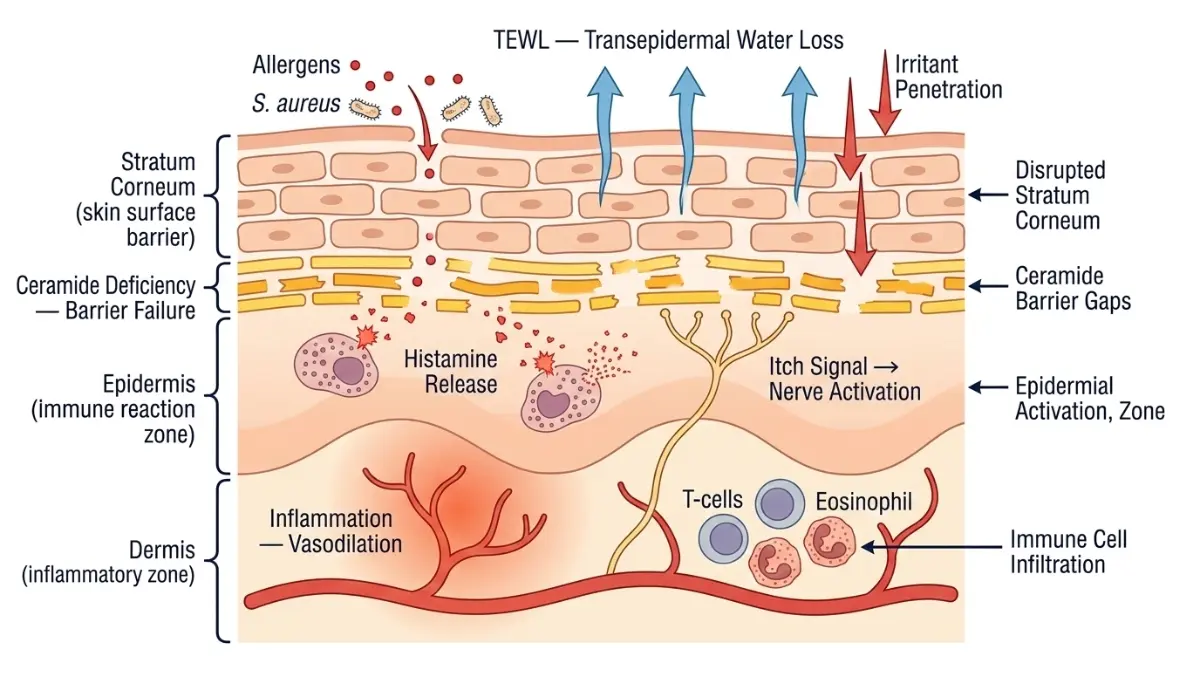
The 3 Non-Negotiables in Every Effective Eczema Cream
According to the National Eczema Association’s moisturizer guidance, every effective eczema cream must do three things:
- Repair the lipid barrier — ceramides, petrolatum, or shea butter
- Reduce active inflammation — corticosteroids or next-generation nonsteroidal actives
- Seal moisture for 24+ hours — hyaluronic acid, glycerin, or occlusives
If your current eczema cream is missing any one of these, that is likely why it is not working.
Best OTC Eczema Creams — Dermatologist Ranked 2026
Quick Reference: Top OTC Eczema Creams at a Glance
| Cream | Best For | Star Ingredient | NEA Seal |
|---|---|---|---|
| CeraVe Moisturizing Cream | Adults, daily barrier repair | 3 Ceramides + Hyaluronic Acid | ✅ |
| Aveeno Eczema Therapy | All ages, itch relief | Colloidal Oatmeal + Ceramide | ✅ |
| Eucerin Eczema Relief | Babies 3m+, active flare | Ceramide-3 + Colloidal Oatmeal | ✅ |
| Vanicream Moisturizing Cream | Allergy-prone, sensitive skin | Dye-free, fragrance-free base | ✅ |
| Cortizone-10 Max Strength | Acute itch and flare-up | 1% Hydrocortisone | ✅ |
Best Eczema Cream for Adults
CeraVe Moisturizing Cream is the gold standard recommended by US dermatologists. It delivers three essential ceramides that directly replace the lipid deficiency driving atopic dermatitis.
Apply it using the 3-Minute Rule — within 180 seconds of stepping out of the shower. This traps residual moisture and maximises skin barrier absorption.
If you are managing eczema alongside other inflammatory conditions, tracking your overall health with our Symptom Checker can help you identify connected triggers before your next dermatologist visit.
Best Eczema Cream for Babies and Toddlers
Baby skin is 30% thinner than adult skin and far more permeable. This makes the wrong cream far more dangerous on infants than on adults.
Look exclusively for steroid-free, fragrance-free formulations with the NEA Seal of Acceptance. In 2025, the Environmental Working Group launched a verified eczema product category requiring full ingredient disclosure and non-steroid active ingredients — a new gold standard for families.
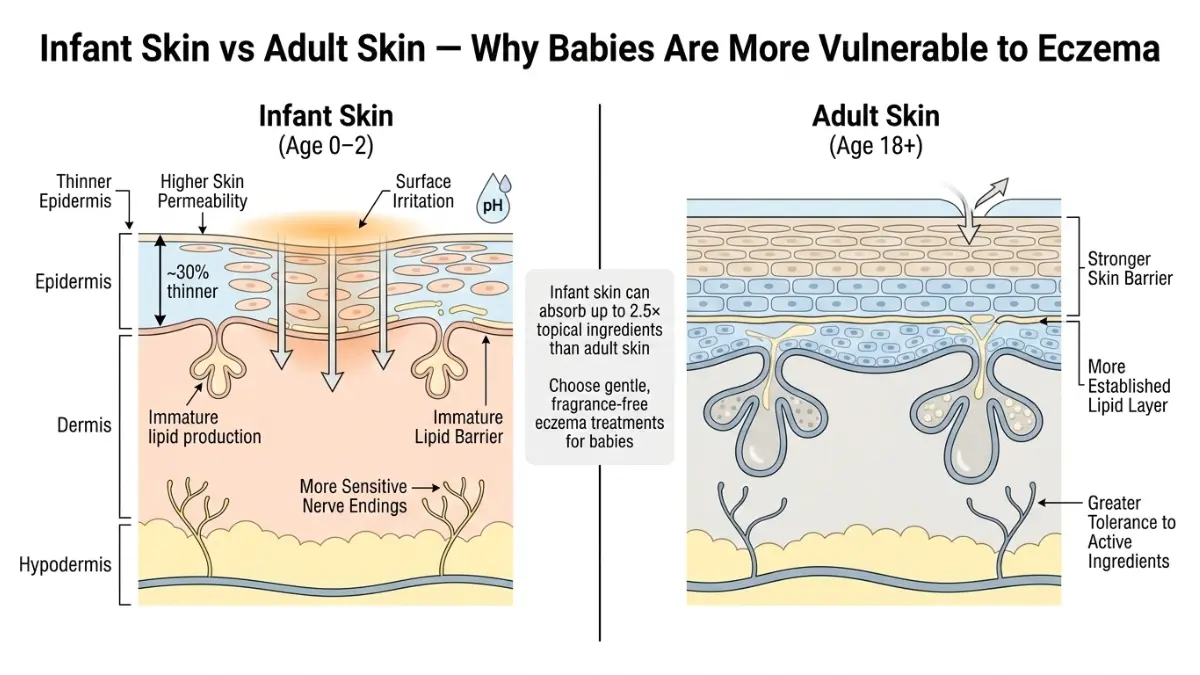
Eucerin Eczema Relief Body Cream is safe from 3 months and has been shown in clinical data to keep 4 out of 5 children flare-free for 6 months with daily use.
Always consult your pediatrician before introducing any new topical product to a child under 2 years old.
Best Eczema Cream for Face and Eyelids
Facial skin is more sensitive and highly reactive. Standard body creams are often too thick and comedogenic for the face.
For daily facial use, choose a lightweight non-comedogenic ceramide cream. For the eyelid area — one of the most common eczema zones that almost no competitors cover — only use ophthalmic-safe products specifically labeled for periocular use. Standard hydrocortisone creams are not safe for repeated eyelid application.
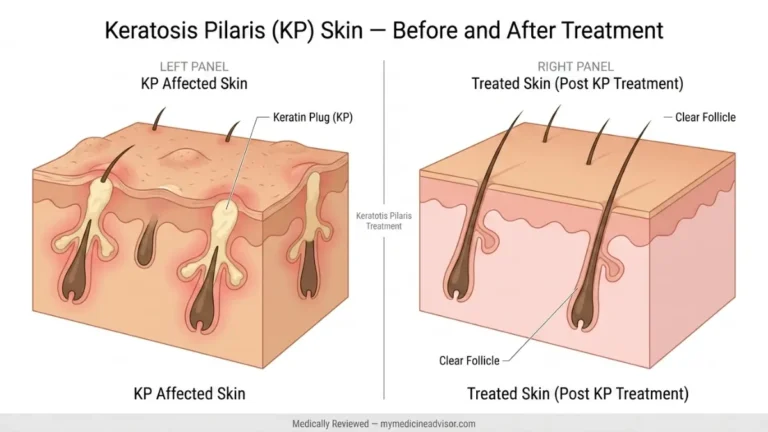
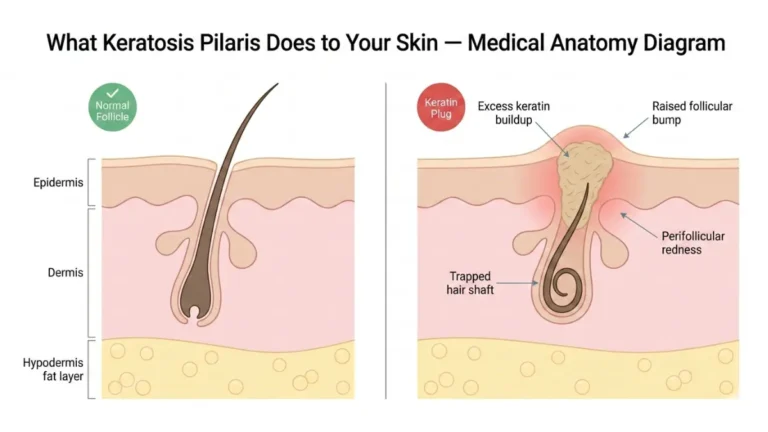
Our guide on skin conditions like keratosis pilaris treatment covers similar barrier-disruption conditions affecting facial and body skin.
Best Steroid-Free OTC Option
For users avoiding steroids due to long-term use concerns, the combination of colloidal oatmeal + ceramide + petrolatum provides the strongest steroid-free barrier repair available over the counter.
Aveeno and Eucerin both carry NEA-accepted formulas in this category.
Prescription Eczema Creams — 2026 FDA-Approved Breakthrough Guide
This is the section every competitor has left blank. Not a single top-ranking article in 2026 covers what dermatologists are actually prescribing now.
The 2024–2026 FDA-Approved Prescription Cream Landscape
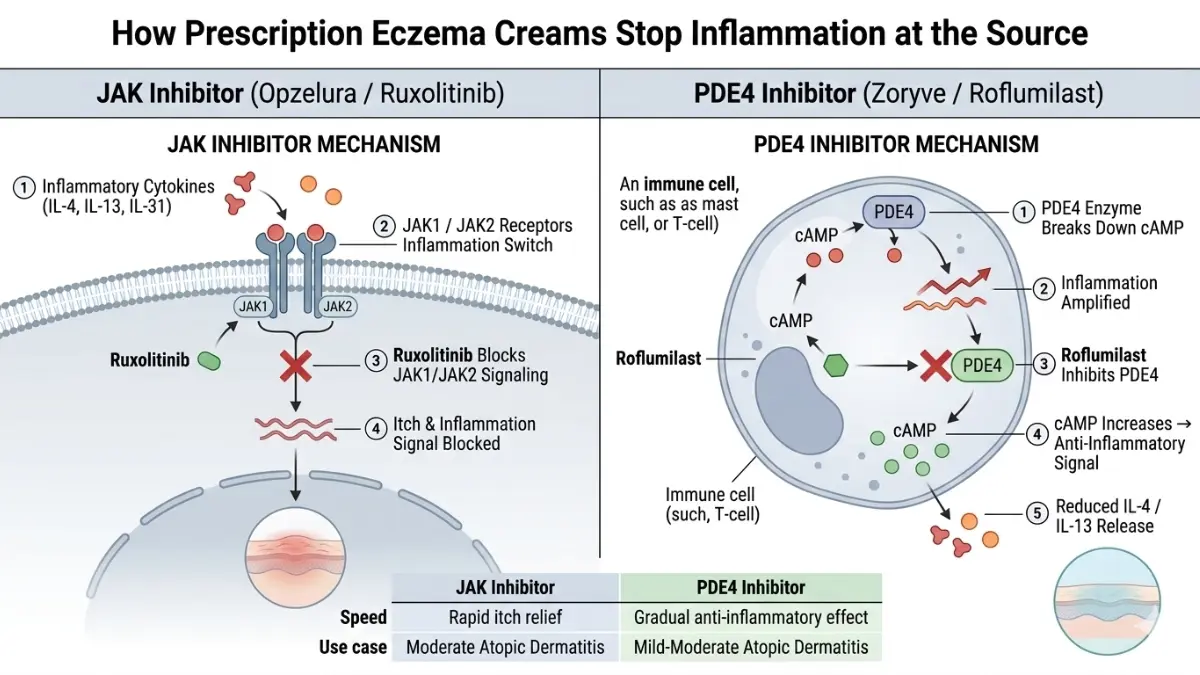
The eczema treatment landscape transformed dramatically in 2024. According to the National Eczema Association’s 2024 treatment roundup, the FDA approved four new eczema treatments within a single calendar year — a historic milestone.
| Drug (Brand) | Mechanism | Approved Age | Key Advantage |
|---|---|---|---|
| Ruxolitinib (Opzelura) | JAK1/JAK2 inhibitor | 2+ years | Itch relief documented within 15 minutes |
| Roflumilast 0.15% (Zoryve) | PDE4 inhibitor | 6+ years | Non-steroidal, FDA approved July 2024 |
| Tapinarof 1% (Vtama) | AHR agonist | 2+ years | FDA approved December 2024 |
| Crisaborole (Eucrisa) | PDE4 inhibitor | 2+ months | Established nonsteroidal option |
Phase 3 clinical data on Opzelura (ruxolitinib cream) showed itch reduction as early as 15 minutes post-application in patients with moderate atopic dermatitis who had previously failed topical corticosteroids.
The American Academy of Dermatology’s 2025 updated guidelines now include strong recommendations for both tapinarof cream and roflumilast cream as front-line options for adults and children.
OTC vs Prescription Eczema Cream — Clinical Decision Framework
| Severity | Characteristics | Recommended Action |
|---|---|---|
| Mild | Small, localized patches, responds to moisturizer | OTC ceramide or colloidal oatmeal cream |
| Moderate | Spreading, sleep disruption, daily itch | Dermatologist assessment, consider prescription |
| Severe | Widespread, infected, quality of life impact | Prescription required — may need biologics |
If you are unsure where your symptoms fall, use our Symptom Checker to document your flare frequency, sleep disruption, and affected zones before your appointment.
Steroid Eczema Creams — Safe Use and Exit Strategy
Topical corticosteroids remain the most widely prescribed first-line treatment for eczema flares in the US. Used correctly, they are highly effective and safe.
Safe use principles:
- Use the lowest effective potency for your zone (face = mild; body = moderate; thick skin = potent)
- Never use continuously for more than 2–4 weeks without medical review
- Taper gradually — do not stop abruptly on large body areas
Steroid rebound — where eczema worsens dramatically after stopping steroids — is a real clinical phenomenon, especially with high-potency formulas applied to the face. This is why dermatologists now prefer rotating patients to nonsteroidal creams like Eucrisa or Zoryve after initial flare control.
Our in-depth article on eczema treatment options covers the full treatment pathway from OTC through to biologics.
Eczema Cream Ingredients — The Dermatologist’s Checklist
Power Ingredients That Heal Eczema Skin
| ✅ Seek These | Why It Works |
|---|---|
| Ceramides (1, 3, 6-II) | Replaces deficient skin lipids, restores barrier structure |
| Colloidal oatmeal | FDA-approved skin protectant with anti-inflammatory properties |
| Petrolatum | Strongest occlusive available — reduces transepidermal water loss by up to 98% |
| Niacinamide (Vitamin B3) | Reduces redness, strengthens barrier, calms inflammatory response |
| Hyaluronic acid | Humectant — draws moisture into deeper skin layers |
| Glycerin | Relieves dry eczema skin without the stinging that alcohol-based products cause |
Ingredients That Trigger Eczema Flares — Never Use These
This is one of the most common mistakes eczema patients make. A cream marketed as “natural” or “gentle” can still cause severe flares if it contains:
- Fragrance (synthetic OR natural botanical) — the #1 eczema trigger in topical products
- Lanolin — a common allergen in eczema-prone skin despite being “natural”
- Formaldehyde releasers — preservatives like DMDM hydantoin found in many lotions
- Ethanol or isopropyl alcohol — strips the barrier, worsens dryness
- Parabens — potential sensitizers in damaged skin
Key Takeaway: The word “natural” on an eczema cream label means nothing clinically. Always check the full ingredients list.
Hydration from the inside out also matters. Research consistently shows that systemic dehydration worsens skin barrier function. Tracking your daily fluid intake with our Water Intake Calculator is a simple step that supports your skin alongside topical treatment.
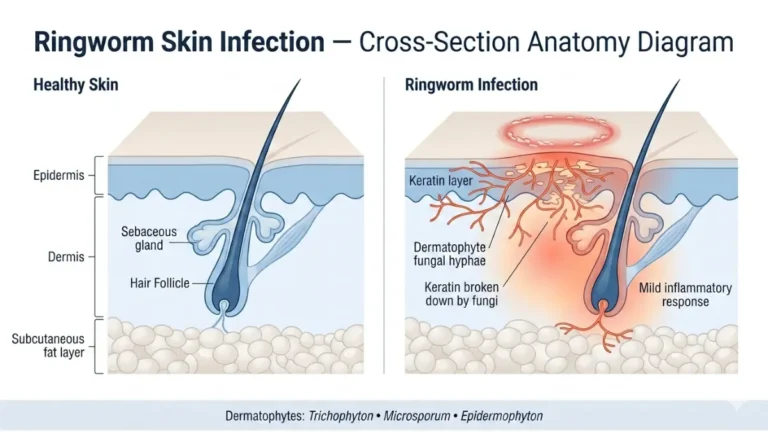
If you are dealing with related skin barrier conditions, our guides on psoriasis treatment and ringworm treatment may also be relevant reading.
How to Apply Eczema Cream — The Clinical Step-by-Step Protocol
Most patients apply eczema cream incorrectly. Proper technique can double its effectiveness.
The 3-Minute Rule — What Most People Miss
The skin is most permeable immediately after bathing. Waiting longer than 3 minutes allows the moisture to evaporate, and the cream seals in air rather than water.
Step-by-step clinical protocol:
- Shower or bathe in lukewarm water — hot water strips the barrier
- Limit bath time to 10 minutes maximum
- Pat skin dry with a soft towel — never rub
- Apply your eczema cream within 3 minutes of stepping out
- Layer thinner products first (lotion), then thicker creams, then ointments on worst patches
- For hands and feet overnight: apply heavy ointment and wear cotton gloves or socks to lock it in
How Much Cream to Use — The Fingertip Unit Guide
Underapplication is the single most common reason eczema creams fail. Most patients apply 30–40% less than the therapeutic dose.
Fingertip Unit (FTU) = the amount squeezed from the tip of your finger to the first knuckle.
| Body Zone | FTUs Needed (Adults) |
|---|---|
| One hand (both sides) | 1 FTU |
| One arm | 3 FTUs |
| Face and neck | 2.5 FTUs |
| One leg | 6 FTUs |
| Torso (front or back) | 7 FTUs |
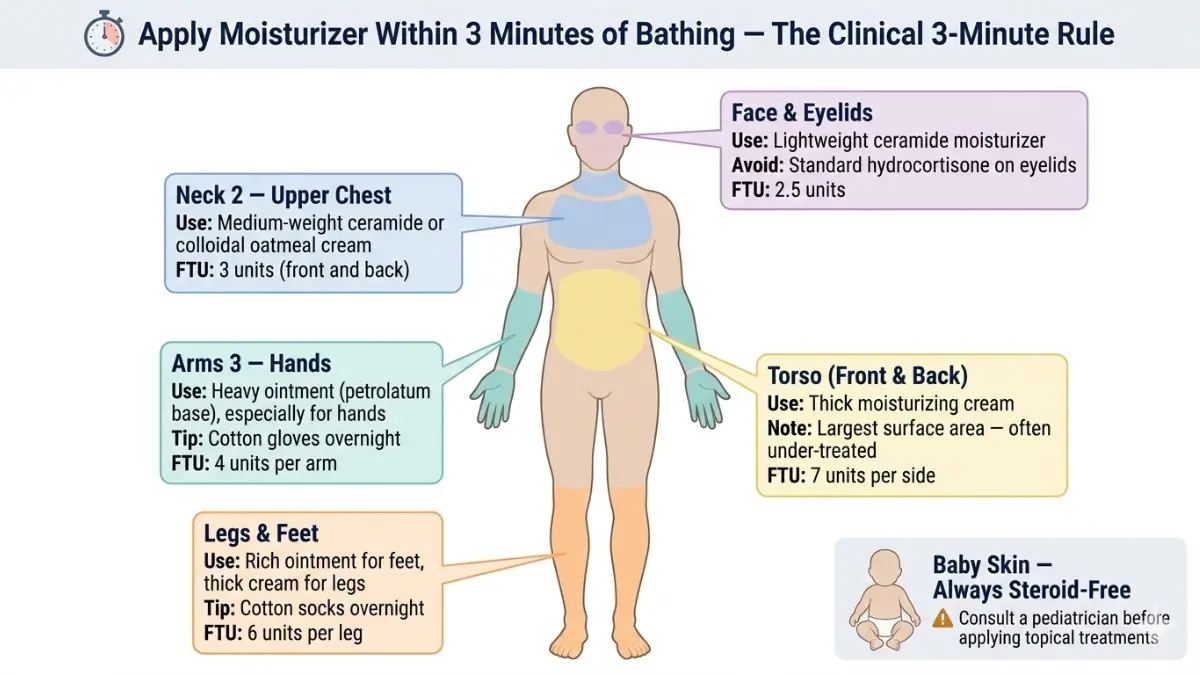
Zone-Specific Application Tips
| Zone | Best Texture | Key Consideration |
|---|---|---|
| Face | Light ceramide cream | Non-comedogenic only; avoid eyes unless ophthalmic-safe |
| Eyelids | Ophthalmic-specific formula | Standard hydrocortisone is unsafe here |
| Hands | Heavy ointment + overnight cotton gloves | Highest friction — needs maximum protection |
| Body | Thick cream or ointment | Do not under-apply — use FTU chart above |
| Baby | Steroid-free, NEA-accepted | Consult pediatrician first |
When Eczema Cream Stops Working — The 2026 Treatment Ladder
Topical creams are highly effective for mild-to-moderate eczema. But sometimes the condition escalates, and the cream stops being enough.
Signs You Need to Escalate Treatment
See a dermatologist if your eczema cream is no longer controlling symptoms AND you experience:
- Flares not resolving within 2 weeks of consistent cream use
- Eczema spreading to new body zones
- Sleep disruption from itching 3 or more nights per week
- Signs of skin infection — yellow crusting, weeping, warmth, or fever
- Mental health impact — anxiety or depression linked to chronic skin flares
The 2026 Eczema Treatment Ladder — Beyond Topical Cream
| Step | Treatment | Notes |
|---|---|---|
| 1 | OTC ceramide + colloidal oatmeal cream | First-line for all mild eczema |
| 2 | Prescription nonsteroidal cream (Zoryve, Vtama, Eucrisa) | For persistent mild-moderate AD |
| 3 | Topical corticosteroids (short-term, supervised) | For acute flare control |
| 4 | JAK inhibitor cream (Opzelura) | Moderate AD failing other topicals |
| 5 | Biologics (dupilumab, lebrikizumab, nemolizumab) | Moderate-severe AD unresponsive to topicals |
The American Academy of Dermatology’s 2025 updated guidelines now carry strong recommendations for lebrikizumab and nemolizumab as biologic options for adults with moderate-to-severe atopic dermatitis.
The 2026–2027 Microbiome Frontier: What’s Coming
One of the most exciting developments in eczema treatment is not a cream at all. According to NIAID-funded research, clinical trials are currently underway testing Staphylococcus hominis A9 — a bacterium found on healthy human skin — as a topical therapy for eczema. Early data is promising.
Microbiome-targeted eczema creams that seed beneficial bacteria on the skin are expected to reach clinical availability within 2–3 years.
For patients with eczema driven by immune dysregulation, our article on immunotherapy and how it works provides important context on the immune mechanisms involved.
Frequently Asked Questions About Eczema Cream
1. What is the best eczema cream that actually works in 2026?
For mild-to-moderate eczema, CeraVe Moisturizing Cream and Aveeno Eczema Therapy are the top OTC picks. For persistent or moderate eczema, prescription options like Zoryve (roflumilast) or Opzelura (ruxolitinib) are now FDA-approved and dermatologist-recommended.
2. What eczema cream do dermatologists recommend most?
Dermatologists most commonly recommend ceramide-based creams (CeraVe, Vanicream) for daily maintenance and escalate to nonsteroidal prescriptions for active inflammation that fails OTC treatment.
3. Is steroid cream safe for long-term eczema treatment?
No. Topical corticosteroids should not be used continuously for more than 2–4 weeks without medical supervision. Long-term use risks skin thinning, stretch marks, and rebound flares upon stopping.
4. What is the fastest-acting eczema cream available?
Opzelura (ruxolitinib cream), a JAK inhibitor, has shown itch relief within 15 minutes of application in clinical trials — the fastest onset of any approved topical eczema treatment.
5. What is the best eczema cream for babies?
Eucerin Eczema Relief Body Cream (safe from 3 months) and NEA-accepted steroid-free formulas are the top picks. Always consult a pediatrician before starting any new topical product on an infant.
6. Can I use eczema cream on my face every day?
Yes, but only use non-comedogenic, fragrance-free ceramide creams designed for the face. Avoid standard body hydrocortisone on facial skin, and never use regular steroids on the eyelid area.
7. What ingredients in eczema cream should I avoid?
Avoid fragrance (synthetic and natural), lanolin, alcohol, formaldehyde releasers, and parabens. These are the most common eczema-triggering ingredients found in products marketed as “gentle.”
8. What is the difference between OTC and prescription eczema cream?
OTC creams (ceramides, colloidal oatmeal, 1% hydrocortisone) manage mild symptoms and maintain the barrier. Prescription creams contain stronger anti-inflammatory actives (PDE4 inhibitors, JAK inhibitors) for moderate-to-severe atopic dermatitis.
9. Does eczema cream cure eczema permanently?
No eczema cream cures the condition. Eczema is a chronic condition that can be controlled and put into long-term remission with the right treatment protocol — but it requires ongoing management.
10. How long does eczema cream take to work?
OTC ceramide creams show hydration improvement within 24–48 hours. Anti-inflammatory prescription creams typically reduce visible inflammation within 1–2 weeks of consistent use.
11. Is natural eczema cream as effective as medicated cream?
For mild eczema, natural ingredients like colloidal oatmeal and petrolatum are clinically effective. For moderate-to-severe eczema, they are not a substitute for prescription treatment. Natural does not automatically mean safe — many natural botanical ingredients are potent allergens.
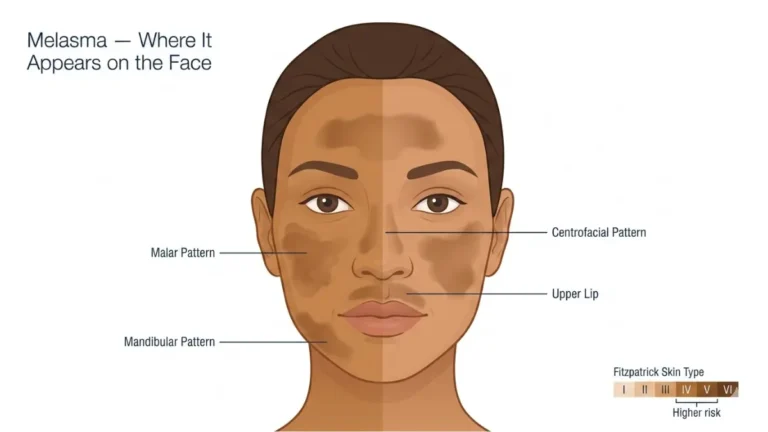
For more skin health guidance, visit our Health Tips hub or explore related topics including melasma causes and treatment and skin cancer warning signs.
About this content
How this article was put together: researched from recognised health sources, drafted with the help of AI tools, and edited by hand, with sources linked throughout.

Sameer Patel is the founder and editor of My Medicine Advisor. He is not a doctor or medical professional — before starting this site he worked in banking,…
Medical disclaimer
The content on MyMedicineAdvisor is provided for general informational and educational purposes only and is not a substitute for professional medical advice, diagnosis, or treatment. Health information on this website should not be used to diagnose, treat, cure, or prevent any condition without guidance from a qualified healthcare professional. Always seek the advice of your doctor, physician, or another licensed healthcare provider with any questions you may have regarding a medical condition, symptoms, medications, or treatment decisions.