
On This Page – Quick Medical Summary
Ozempic face is the gaunt, hollowed, prematurely aged appearance that develops when GLP-1 medications like Ozempic (semaglutide) cause rapid facial fat and collagen loss faster than your skin can adapt. Unlike natural aging, it strikes three facial structures simultaneously — fat pads, collagen fibers, and skin cell receptors — making it age you measurably faster. Here is the science, who it hits hardest, and exactly how to fix it.
What Is Ozempic Face? The Real Science Competitors Won’t Explain
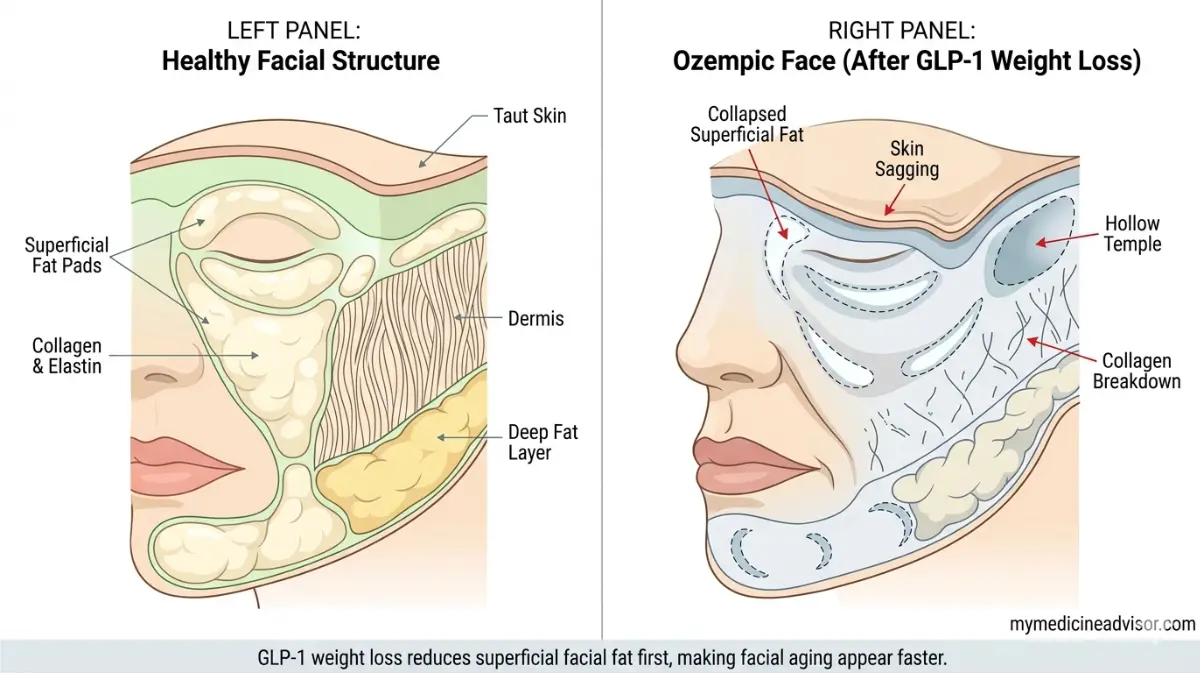
Ozempic face is not an official medical diagnosis. The term was coined by New York dermatologist Dr. Paul Jarrod Frank to describe a constellation of facial changes he was consistently seeing in his GLP-1 patients: sunken cheeks, hollow temples, deepened nasolabial folds, jowling, and a prematurely aged overall appearance.
What makes Ozempic face distinct — and more alarming than standard weight-loss aging — is where the fat is lost first.
The 5 Visible Signs of Ozempic Face
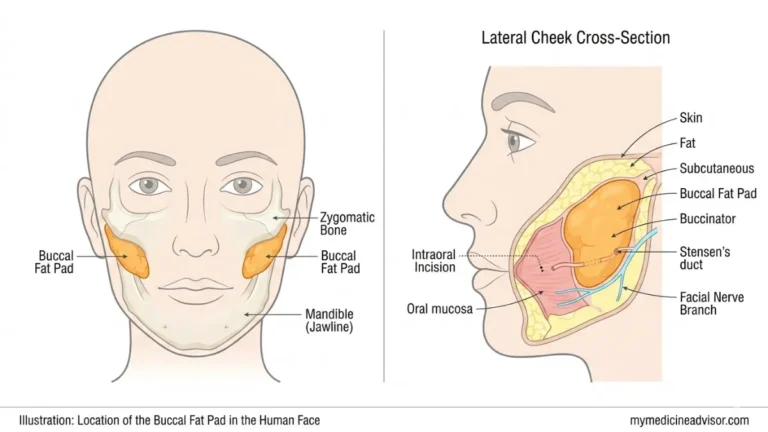
- Sunken, hollow cheeks — the midface loses volume rapidly, creating a gaunt shadow effect
- Hollow temples and eye area — the periorbital fat pad shrinks, making eyes look sunken and tired
- Deepened nasolabial folds — smile lines deepen suddenly, adding visible years overnight
- Jowling and jawline softening — loss of submandibular fat causes the lower face to sag
- Thin lips and increased wrinkles — reduced skin elasticity accelerates line formation throughout the face
Natural Aging vs. Ozempic Face: A Critical Difference
This is what Healthline, WebMD, and Cleveland Clinic all miss in their articles. Natural aging depletes deep facial fat compartments gradually over decades. Ozempic face depletes the superficial fat compartments first — and does it rapidly.
| Feature | Natural Aging | Ozempic Face |
|---|---|---|
| Primary fat layer affected | Deep compartments | Superficial compartments (most visible) |
| Speed of change | Decades | Weeks to months |
| Collagen impact | Gradual, 1%/year | Accelerated (oxidative mechanism) |
| Reversibility | Partial with treatment | Partial; rarely self-reverses |
| Skin adaptation time | Years | Little to none |
A 2025 study from Vanderbilt University confirmed this, finding approximately 9% midface volume loss for every 10 kg of total body weight lost — a rate the skin simply cannot accommodate on its own.
📌 What This Means For You: If your face changed faster than you expected after starting semaglutide, the superficial fat compartment is the reason — and that is actually more treatable than natural aging loss. You are not alone, and you are not stuck this way.
The 3 Biological Reasons Ozempic Ages Your Face Faster
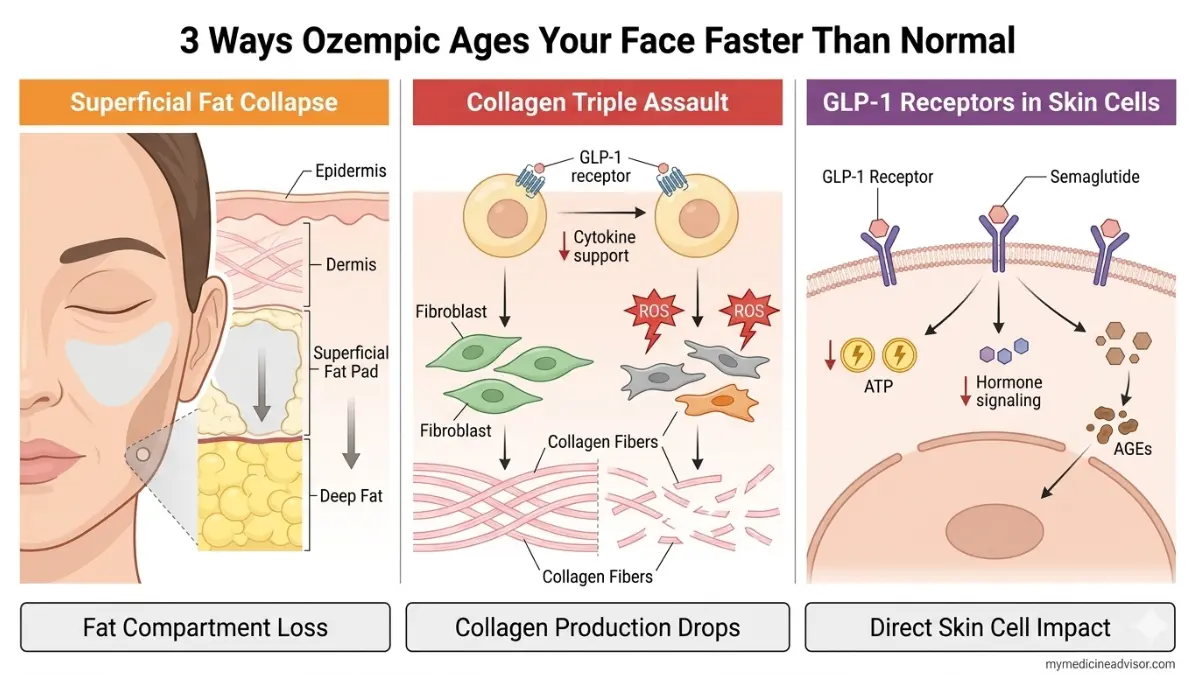
This is the section no major health publisher has fully explained. Ozempic face is not simply “losing weight from your face.” There are three distinct biological mechanisms firing at the same time — and understanding them changes how you treat it.
Reason 1: Rapid Superficial Fat Compartment Collapse
Research published in the National Institutes of Health database (PMC) documents that patients experiencing significant GLP-1-driven weight loss show a 41.8% reduction in the superficial temporal fat pad and a 69.9% decrease in cheek fat volume within an average of just 9.4 months.
These superficial fat pads are the structural scaffolding of a youthful face. When they collapse faster than skin can retract, the result is a dramatic, aged appearance that looks nothing like someone who simply lost weight through diet.
The speed is the defining problem. The faster the loss, the less time the skin has to remodel, leaving loose, unsupported tissue draped over a dramatically reduced underlying structure.
Reason 2: The Triple Collagen Assault
GLP-1 receptor agonists like semaglutide do not just remove fat. According to a 2025 study from the National and Kapodistrian University of Athens, published in Endocrine journal, GLP-1 drugs act directly on adipose-derived stem cells (ADSCs) — the same cells that produce protective cytokines keeping your skin firm.
When GLP-1 receptors on these stem cells are stimulated:
- Protective cytokine production drops, triggering oxidative damage to skin fibroblasts
- ATP production in ADSCs decreases, leading to cell death (apoptosis)
- Estrogen production from dermal white adipose tissue falls, reducing fibroblast signaling to produce collagen
The result is a triple assault on the collagen-production machinery. Add this to the baseline collagen decline of roughly 1% per year after age 30 — and up to 30% in the first 5 years post-menopause — and the deficit becomes severe for many patients.
Reason 3: GLP-1 Receptors Are Found in Skin Cells — And Nobody Is Talking About It
The mechanism most absent from competitor content is this: GLP-1 receptors exist directly in skin cells. This means semaglutide does not only act through fat loss. It directly interacts with the biology of skin, affecting collagen, elastin, and cellular repair pathways at the tissue level.
GLP-1 drugs can also interact with advanced glycation end products (AGEs), which are compounds linked to accelerated skin aging. This pathway is entirely separate from fat loss — and it means even patients losing weight slowly may experience some degree of skin aging that goes beyond what their weight loss alone would cause.
📌 Key Takeaway: Ozempic face is not just about losing fat. It simultaneously attacks collagen production, kills skin-supporting stem cells, and interacts directly with skin cell receptors. This three-pronged mechanism is why it ages your face measurably faster than natural weight loss alone.
Who Gets Ozempic Face? Your Personal Risk Score
Not every person on semaglutide will develop pronounced Ozempic face. But certain factors make it dramatically more likely. Use this evidence-based risk matrix to assess your personal risk level.

Ozempic Face Personal Risk Score Matrix
| Risk Factor | Points | Clinical Basis |
|---|---|---|
| Age 40 or older | +3 | Baseline collagen already declining; lower skin reserve |
| Post-menopausal female | +3 | Up to 30% collagen loss in first 5 post-menopausal years |
| Weight loss exceeding 10% of body weight | +3 | Vanderbilt 2025: 9% midface volume loss per 10 kg lost |
| Rapid weight loss rate (>2 lbs/week) | +2 | Skin has insufficient time to contract and remodel |
| Low protein intake (<1.2 g/kg/day) | +2 | Accelerates lean muscle loss, compounding hollowing |
| Thin baseline facial fat | +2 | Less structural reserve before hollowing becomes visible |
| Family history of early skin aging | +1 | Genetic collagen density influences outcomes |
Your Score:
- 0–4: Low risk — standard preventive measures apply
- 5–9: Moderate risk — begin proactive protocol before significant weight loss
- 10+: High risk — consult a dermatologist before starting GLP-1 therapy
Does Everyone Get Ozempic Face?
No — but the risk is more widespread than most patients are told. Research shows that 25–40% of total weight lost on GLP-1 drugs is lean muscle mass, not fat. This muscle loss directly affects the facial muscles that support skin architecture, compounding the hollowing caused by fat pad depletion.
Younger patients with strong baseline skin elasticity and high collagen density are significantly less affected. However, anyone losing more than 10% of their body weight rapidly is at meaningful risk regardless of age.
If you are tracking your weight loss pace, use our Weight Loss Calculator to monitor your rate weekly — keeping loss below 1–2 lbs/week is the single most protective strategy you can implement without any intervention.
How to Prevent Ozempic Face — The 3-Phase Protocol
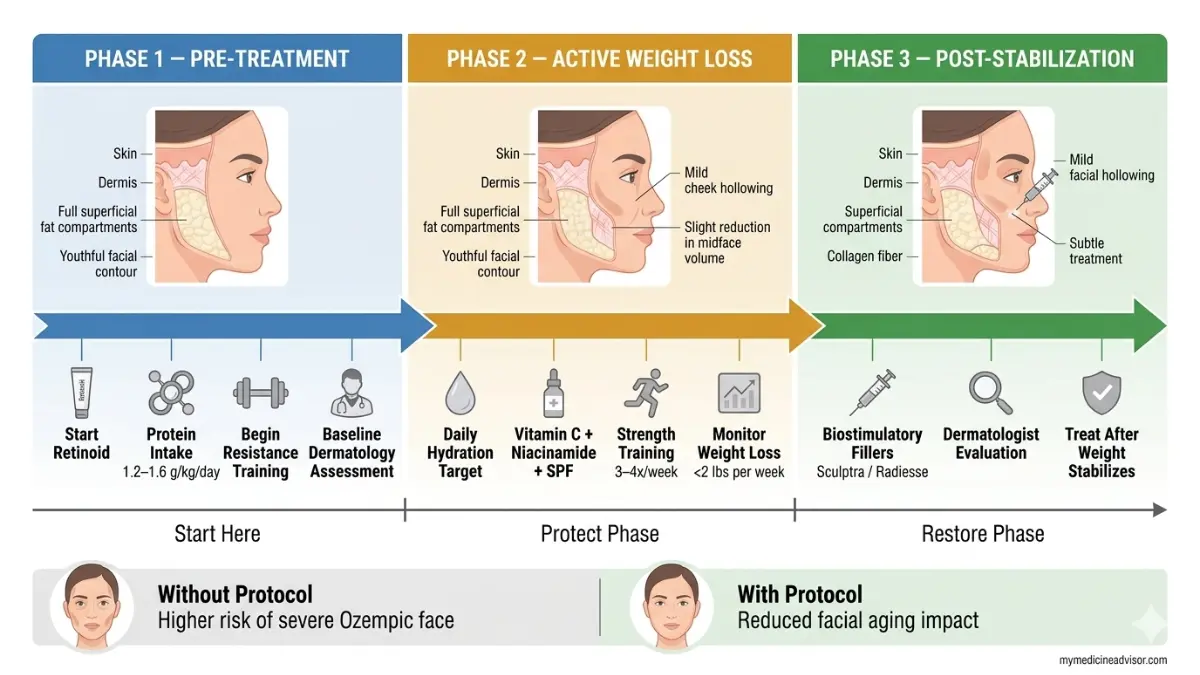
Prevention is dramatically more powerful than treatment. The goal is to protect your facial scaffolding before it collapses — not reconstruct it afterward at far greater cost and effort. The following protocol is built from 2025–2026 international dermatology and plastic surgery consensus data.
Phase 1 — Before You Start Losing (Pre-Weight Loss Actions)
Begin these steps before your first dose of semaglutide or as early in treatment as possible:
- Schedule a baseline facial dermatology assessment — photograph and map current fat pad distribution
- Calculate your protein target using our Protein Intake Calculator — research supports 1.2–1.6 g/kg/day to protect lean mass
- Discuss slow-dose titration with your prescriber — a lower dose slows weight loss rate and reduces facial change severity
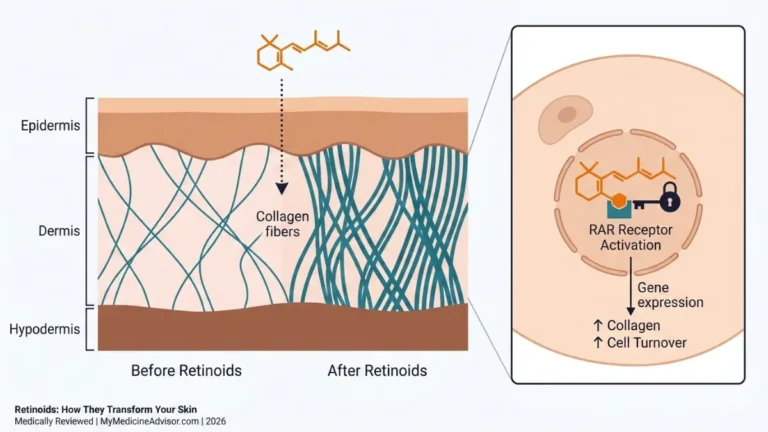
- Start a retinoid — the American Academy of Dermatology confirms that retinoids stimulate collagen production and improve skin’s structural integrity, making them a first-line protective agent
- Begin resistance training 3 days per week — proven to reduce lean mass loss from 40% down to under 20% of total weight lost
If you are already taking Ozempic and haven’t started any of these steps, begin today. Early intervention remains far more effective than waiting for visible changes.
Phase 2 — During Active Weight Loss
- Monitor weekly pace — use our Calorie Deficit Calculator to keep your deficit moderate and your loss rate sustainable
- Hydration is non-negotiable — use our Water Intake Calculator to calculate your daily target; dehydration directly worsens skin laxity
- Daily skincare stack: Retinoid (night) + Vitamin C (morning) + Niacinamide + SPF 30+ sunscreen
- Hydrolyzed collagen supplements — clinical data shows improvements in skin hydration and elasticity with consistent supplementation
- Resistance training 3–4x/week — prioritize compound movements that preserve facial muscle architecture indirectly through systemic muscle mass preservation
Our in-depth retinoids guide explains exactly which retinoid strengths to use at each stage of your Ozempic journey.
Phase 3 — After Weight Stabilizes
- Formally evaluate facial changes with a board-certified dermatologist or plastic surgeon
- International expert consensus (2025): Begin biostimulatory fillers (Sculptra/Radiesse) before hyaluronic acid fillers when 5–10% body fat loss is anticipated — they produce more durable, natural-looking restoration
- Discuss timing — treatments started after weight stabilization produce far more predictable outcomes than treatments during active loss
📌 What This Means For You: Starting Phase 1 before you begin Ozempic could mean the difference between needing $4,000 in corrective procedures — or needing nothing at all.
How to Fix Ozempic Face — Full 2026 Treatment Guide
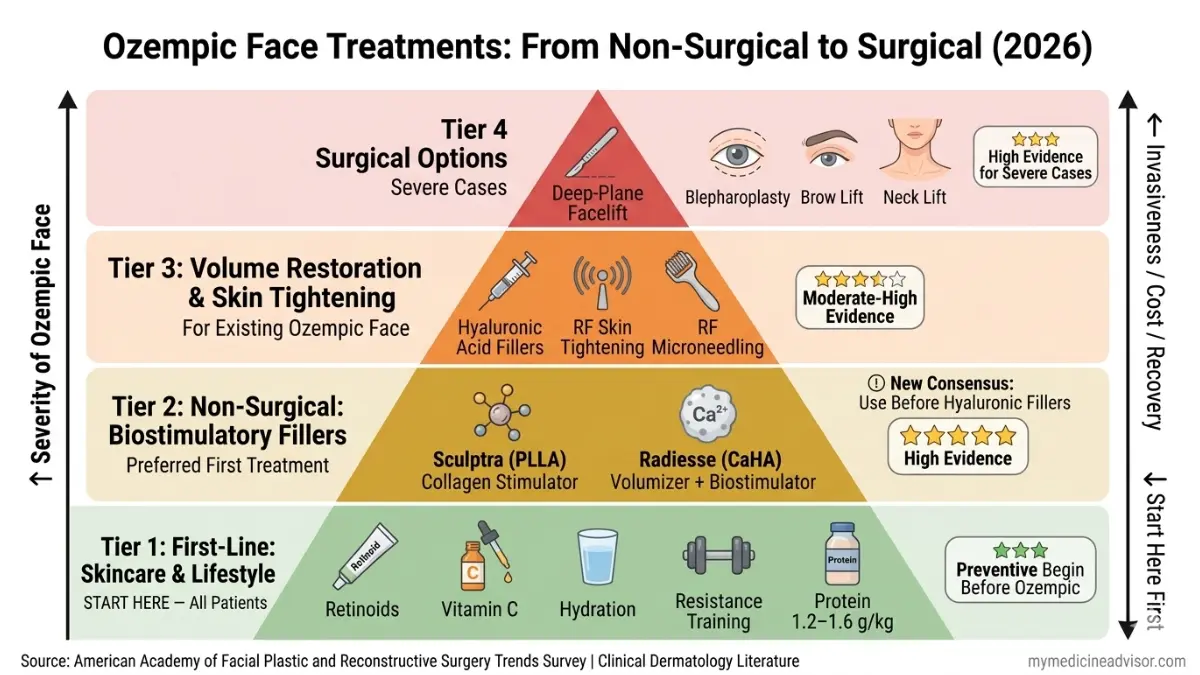
If Ozempic face has already appeared, here is the full clinical picture of what works — from skincare to surgery — ranked by evidence strength and cost.
Non-Surgical Treatments (First-Line, Most Common)
| Treatment | What It Does | Timeline | USA Cost Range | Evidence Level |
|---|---|---|---|---|
| Sculptra (Poly-L-Lactic Acid) | Stimulates collagen production from within | 3–6 months | $3,000–$5,000 | ⭐⭐⭐⭐⭐ High |
| Radiesse (Calcium Hydroxylapatite) | Volumizes + biostimulates tissue | 2–4 months | $1,200–$2,500 | ⭐⭐⭐⭐ High |
| Hyaluronic Acid Fillers (Juvederm Voluma, Restylane Lyft) | Immediately restores volume in cheeks and temples | Immediate | $1,500–$4,000 | ⭐⭐⭐⭐ High |
| Subdermal Bipolar Radiofrequency (BodyTite) | Skin tightening + collagen stimulation | 3–6 months | $1,500–$3,500 | ⭐⭐⭐ Moderate — 87%+ patient satisfaction at 12 months (PMC 2025 clinical series) |
| RF Microneedling | Stimulates collagen, reduces laxity | 2–4 months | $1,000–$2,500 | ⭐⭐⭐ Moderate |
| Autologous Fat Grafting | Uses your own body fat for permanent volume | 3–6 months to settle | $4,000–$8,000 | ⭐⭐⭐ Moderate |
A peer-reviewed 2025 clinical series published on PubMed/PMC followed 24 patients treated with subdermal bipolar radiofrequency for Ozempic face over 12 months — the majority reported satisfaction scores of 8 or higher out of 10, with results confirmed by blinded expert evaluation.
The American Academy of Facial Plastic and Reconstructive Surgery reported a 50% increase in fat grafting procedures in the past year directly linked to the rise of GLP-1 medication use.
Surgical Treatments (Advanced Cases)
For patients with severe or persistent skin laxity that does not respond to non-surgical approaches:
- Deep-plane facelift — gold standard for advanced jowling and facial sagging
- Blepharoplasty (eyelid lift) — specifically addresses the periorbital hollowing of Ozempic face; see our detailed blepharoplasty cost guide for what to expect financially
- Brow lift — corrects temporal hollowing that gives the tired, deflated look
- Neck lift — addresses skin laxity extending beyond the jawline
Does Ozempic Face Go Away on Its Own?
No — not reliably. If you stop Ozempic and regain weight, partial reversal is possible as fat pads reform. However, skin that has lost elasticity and collagen does not self-repair to its prior state. Younger patients with high baseline skin elasticity may see gradual improvement; older patients, particularly post-menopausal women, are unlikely to see significant natural reversal.
The semaglutide prescribing information, available on the FDA’s official database, does not list facial aging among approved indications — meaning cosmetic effects remain an off-label concern requiring individualized management.
Real Patient Perspective + What Doctors Agree On
A Real Clinical Case: Maria, 54, Type 2 Diabetes
Maria began Ozempic in December 2024 after a Type 2 Diabetes diagnosis. She was slightly overweight before starting and generally satisfied with her appearance. Within three months of treatment, she noticed significant changes: deepened labiomental lines, nasolabial folds more visible, and an overall “tired, older” look she described as distressing.
Maria’s clinical case — documented in the 2025 PMC study on bipolar radiofrequency treatment — showed significant improvement after a single subdermal RF session, with skin appearing more nourished and structurally supported, and wrinkle depth visibly reduced. Her metabolic outcomes from Ozempic remained positive throughout.
Her experience reflects what dermatologists across the USA are increasingly seeing: the metabolic benefits of GLP-1 medications are real and significant, but so is the aesthetic cost for many patients — and early intervention changes outcomes dramatically.
Should You Stop Ozempic Because of Facial Changes?
In almost every case — no. Stopping Ozempic risks:
- Metabolic rebound — most patients regain the majority of weight lost
- Loss of cardiovascular and glycemic benefits — well-documented and clinically significant
- Inconsistent facial improvement — fat may return, but collagen and elastin do not fully regenerate
Work with your prescriber to reduce the dose titration rate and consult a dermatologist or plastic surgeon proactively. Use our BMR Calculator and Ideal Weight Calculator to build a sustainable weight management plan that balances metabolic goals with cosmetic outcomes.
For related reading on cosmetic procedures and their real outcomes, see our dermaplaning guide, microneedling 2026 review, and Morpheus8 honest review — all directly relevant to skin tightening options for GLP-1 patients.
The 5 Key Takeaways Every Ozempic User Needs to Know
- Ozempic face is real and clinically documented — it is not vanity, and it is not rare
- Three mechanisms are responsible, not one: superficial fat collapse + oxidative collagen damage + direct GLP-1 skin receptor action
- Prevention is dramatically more effective than treatment — begin Phase 1 protocol before significant weight loss
- Biostimulatory fillers (Sculptra, Radiesse) are now the preferred first-line treatment over hyaluronic acid fillers, per 2025 international consensus
- Slowing your weight loss rate is the single most accessible defense — use our Weight Loss Calculator to track your pace weekly
Frequently Asked Questions About Ozempic Face
Q1. What is Ozempic face?
Ozempic face is the gaunt, hollowed, and prematurely aged facial appearance caused by rapid fat and collagen loss during GLP-1 medication use. It is not an official medical term but is widely used by dermatologists.
Q2. Does everyone get Ozempic face?
No. But anyone losing more than 10% of their body weight rapidly is at significant risk. Age, skin elasticity, protein intake, and dose titration speed are the key variables.
Q3. Does Ozempic face go away on its own?
Rarely. Partial reversal may occur if weight is regained. Lost collagen and skin elasticity do not meaningfully self-repair without medical intervention.
Q4. How do I fix Ozempic face?
Treatment ranges from biostimulatory fillers (Sculptra, Radiesse) and radiofrequency skin tightening to surgical facelifts and blepharoplasty, depending on severity. Early intervention produces the best outcomes.
Q5. Can I prevent Ozempic face before it starts?
Yes. A 3-phase prevention protocol involving retinoids, protein optimization, resistance training, and slower weight loss rate significantly reduces risk — especially if started before significant weight loss begins.
Q6. Is semaglutide face the same as Ozempic face?
Yes — semaglutide face, Wegovy face, Mounjaro face, and Zepbound face all refer to the same phenomenon. Any GLP-1 receptor agonist causing rapid weight loss can produce identical facial changes.
Q7. How much weight loss triggers Ozempic face?
Noticeable facial changes typically begin after losing approximately 10% of body weight. Research confirms approximately 9% midface volume loss per additional 10 kg lost.
Q8. Are dermal fillers safe for Ozempic face?
Yes, when administered by a qualified, board-certified injector. Biostimulatory fillers (Sculptra, Radiesse) are now preferred over hyaluronic acid for proactive, longer-lasting treatment.
Q9. Does stopping Ozempic reverse facial aging?
Stopping may allow weight regain and partial fat pad restoration. However, collagen and elastin lost during rapid weight loss do not fully return without active treatment.
Q10. Why does Ozempic face age you faster than normal weight loss?
Because Ozempic simultaneously depletes superficial facial fat pads, damages collagen via oxidative stress on skin fibroblasts, and directly activates GLP-1 receptors in skin cells — three mechanisms at once rather than one.
Q11. Which skincare ingredients help with Ozempic face?
Retinoids (collagen stimulation), vitamin C (antioxidant protection), niacinamide (barrier support), and hydrolyzed collagen supplements are the evidence-supported first-line topical options. All work best started before visible changes appear.
About this content
How this article was put together: researched from recognised health sources, drafted with the help of AI tools, and edited by hand, with sources linked throughout.

Sameer Patel is the founder and editor of My Medicine Advisor. He is not a doctor or medical professional — before starting this site he worked in banking,…
Medical disclaimer
The content on MyMedicineAdvisor is provided for general informational and educational purposes only and is not a substitute for professional medical advice, diagnosis, or treatment. Health information on this website should not be used to diagnose, treat, cure, or prevent any condition without guidance from a qualified healthcare professional. Always seek the advice of your doctor, physician, or another licensed healthcare provider with any questions you may have regarding a medical condition, symptoms, medications, or treatment decisions.