On This Page – Quick Medical Summary
Maya had been battling dull, uneven skin for years. She’d tried serums, chemical peels, and expensive facials — nothing stuck. Then her esthetician mentioned dermaplaning. One 30-minute session later, her makeup glided on like never before. Her skin glowed for three weeks straight.
What Maya didn’t know? Her dermatologist had never mentioned it. Not because it doesn’t work — but because it’s one of the most underutilized, least-discussed facial exfoliation treatments in mainstream medicine.
Dermaplaning is a non-invasive cosmetic procedure in which a sterile surgical scalpel is used to gently remove the outermost layer of dead skin cells and fine vellus hair (“peach fuzz”) from the face, revealing smoother, brighter, and more radiant skin — with zero downtime.
Here’s what makes it explode right now: dermaplaning has racked up 3.8 billion views on TikTok, the global dermaplaning tools market reached $1.19 billion in 2024, and it’s growing at a 7.3% CAGR through 2033. Yet most guides — including your dermatologist’s brochure — leave out the most critical details.
This guide gives you all of it: the science, the safety rules your provider skips, the skin-type protocols, the medication timelines, and the 2026 real-world costs.
What Is Dermaplaning? The Science Most Guides Skip
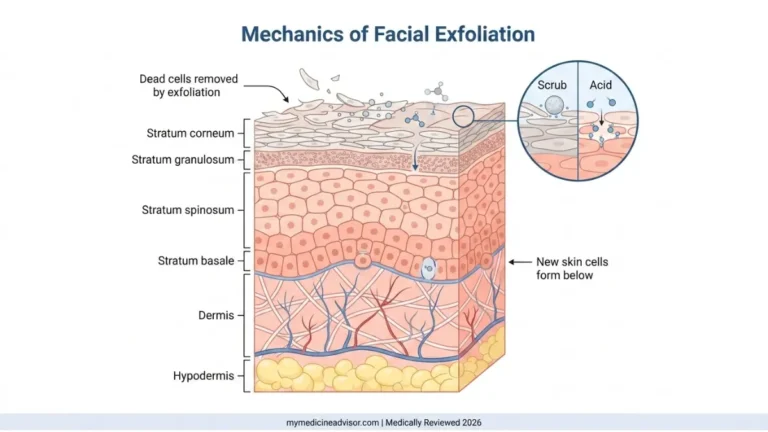
Dermaplaning — also called microplaning or blading — is a mechanical skin resurfacing technique. A licensed esthetician or dermatologist holds a sterile No. 10 surgical scalpel at a 45-degree angle and uses light, feathering strokes to systematically abrade the surface of the epidermis.
It removes two things simultaneously:
- Dead stratum corneum cells — the outermost, accumulated layer of dull, damaged skin
- Vellus hair (peach fuzz) — the fine, translucent facial hair that traps oil and debris
What most guides won’t tell you is that dermaplaning does something even more clinically significant: it significantly enhances the absorption of skincare products through the skin barrier. A 2023 peer-reviewed study published in AAPS PharmSciTech by researchers at East Tennessee State University found that dermaplaning measurably depletes the stratum corneum and produces a significant drop in skin electrical resistance, leading to substantially increased permeation of topical drugs and skincare actives through the treated skin. Put simply: your serums and moisturizers work harder after dermaplaning.
Does Hair Grow Back Thicker After Dermaplaning?
No — and this is physiologically impossible. Dermaplaning only removes vellus hair at the skin surface. It does not touch the hair follicle, which is the only structure that determines hair thickness, color, and growth rate. You may feel a slightly blunter tip as regrowth occurs, but the hair itself is biologically unchanged.
Dermaplaning vs. Similar Treatments: Quick Comparison
| Treatment | Tool | Skin Depth | Downtime | Who Performs |
|---|---|---|---|---|
| Dermaplaning | Sterile scalpel | Epidermis (stratum corneum) | None | Licensed esthetician / dermatologist |
| Shaving | Razor | Surface only | None | Self |
| Microdermabrasion | Crystal/diamond tip | Epidermis | Minimal (1–2 days) | Med spa technician |
| Dermabrasion | Motorized device | Into dermis | 1–2 weeks | Surgeon only |
| Chemical Peel | Acid solution | Epidermis to dermis | 3–14 days | Licensed professional |
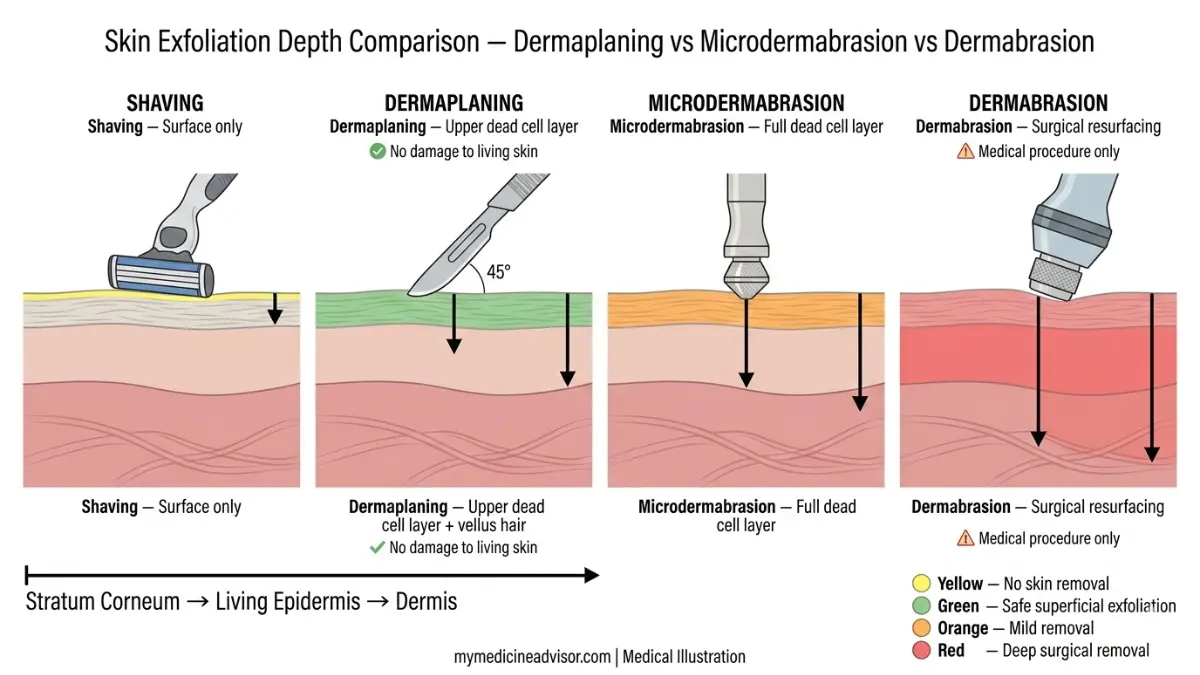
Dermaplaning is the only treatment that mechanically removes both dead skin and vellus hair in a single, chemical-free session. If you’re unsure whether a current skin condition could affect your candidacy, use our Symptom Checker to flag relevant concerns before booking your first appointment.
Dermaplaning Benefits — What 2026 Evidence Actually Shows
Dermaplaning delivers both immediate and cumulative benefits. Here’s what the evidence supports — with honest confidence ratings.
Proven Benefits (Evidence-Supported)
1. Instant Skin Brightening Removing the dead stratum corneum immediately reveals newer, fresher epidermal cells underneath. Most patients notice visible glow within hours of treatment. The American Academy of Dermatology confirms that regular exfoliation is one of the most evidence-backed strategies for maintaining healthy, radiant skin.
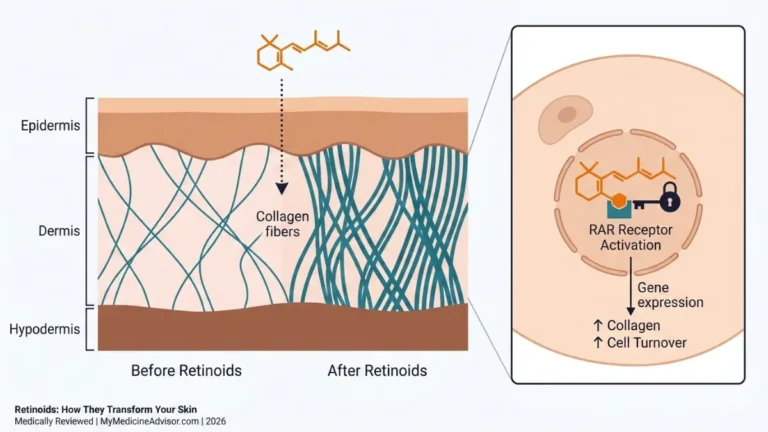
2. Superior Skincare Product Absorption This is the benefit dermatologists understate the most. With the dead-skin barrier removed, your vitamin C serums, hyaluronic acid, and retinoids penetrate significantly deeper — making your skincare routine measurably more effective.
3. Flawless Makeup Application Makeup artists have known this for decades. Dermaplaning creates a smooth, poreless-looking canvas. Foundation sits evenly, powder blurs seamlessly, and finish lasts longer.
4. Safe Exfoliation for Pregnant Women Most deep exfoliation options — chemical peels, retinoids, AHAs — are restricted during pregnancy. Dermaplaning (as a standalone treatment) is chemical-free, making it one of the few professional-grade exfoliation options considered safe during pregnancy. This is a major gap that WebMD and Healthline barely mention.
5. Mild Acne Scar and Hyperpigmentation Improvement Repeated dermaplaning sessions gradually remove superficial hyperpigmentation and smooth shallow acne scars by promoting accelerated skin cell turnover over time.
Evidence Confidence Table
| Benefit | Evidence Level | Confidence Rating |
|---|---|---|
| Skin smoothing & brightening | Strong (clinical) | ⭐⭐⭐⭐⭐ |
| Peach fuzz removal | Strong | ⭐⭐⭐⭐⭐ |
| Skincare product absorption | Moderate (peer-reviewed) | ⭐⭐⭐⭐ |
| Superficial acne scar improvement | Moderate | ⭐⭐⭐ |
| Fine line reduction | Moderate (anecdotal + clinical) | ⭐⭐⭐ |
The Benefits Your Dermatologist Might Understate
Glass Skin Effect: The Korean beauty “glass skin” trend — ultra-smooth, light-reflecting skin — is most reliably achieved through dermaplaning. Influencers on TikTok showing before-and-afters have driven that staggering 3.8 billion view count precisely because the visual results are undeniable.
The Men’s Benefit Nobody Talks About: Dermaplaning among men is a fast-growing segment, projected to expand at a 7.9% CAGR through 2030. Men with rough, textured skin or fine lines benefit from the same exfoliation effects — and unlike chemical peels, it carries no risk of ingredient sensitivity.
What This Means For You:
- After dermaplaning, apply your most potent serum first — your skin will absorb it far more effectively
- Schedule your treatment 3–5 days before an important event for peak glow
- If you’re pregnant and frustrated with dull skin, dermaplaning (without add-on peels) is a clinically safe option
Is Dermaplaning Right for You? A Dermatologist’s Honest Checklist
This is the section your provider’s brochure skips entirely. Before you book, match your skin profile to the matrix below.
The Skin-Type Suitability Matrix
| Skin Type | Safe for Dermaplaning? | Clinical Notes |
|---|---|---|
| Dry / Dull skin | ✅ Ideal candidate | Best results; immediate glow; book every 4 weeks |
| Oily skin | ✅ Yes | Reduces debris-clogged pores; space sessions 4–6 weeks |
| Sensitive skin | ✅ Yes (with care) | Request lighter pressure; skip chemical peel add-ons |
| Combination skin | ✅ Yes | Extra care around T-zone curves |
| Mature / Aging skin | ✅ Yes | Smooths fine lines; improves product penetration |
| Active acne / Pustules | ❌ Avoid | Blade can spread P. acnes bacteria across unaffected skin |
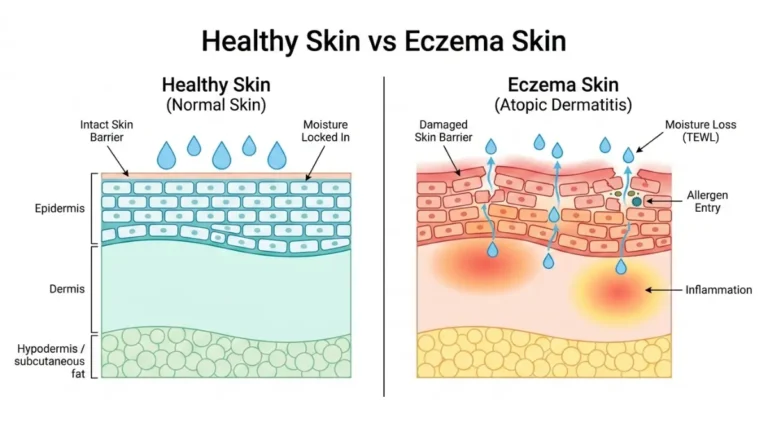
| Rosacea / Eczema / Psoriasis (active flare) | ❌ Avoid during flare | May worsen inflammation; consult dermatologist first |
| Dark skin (Fitzpatrick IV–VI) | ⚠️ Caution | Risk of post-inflammatory hyperpigmentation; seek a provider with experience in melanin-rich skin |
| Pregnant / Nursing | ✅ Safe (standalone only) | Avoid combined chemical peel sessions |
For those managing skin conditions like eczema or psoriasis, speak with your dermatologist before pursuing any exfoliation treatment.

The Medication Stop-Clock Nobody Tells You
This is the #1 most-searched question in dermaplaning patient Q&As — and competitors leave you with conflicting, vague answers. Here is the clinical-grade timeline:
| Medication / Product | Action Required Before Dermaplaning |
|---|---|
| Topical Retinol (OTC) | Stop 3–5 days before |
| Prescription Retinoids (Retin-A, Tretinoin) | Stop 7 days before |
| Adapalene (Differin) | Stop 7 days before |
| Accutane / Isotretinoin (oral) | Wait 6 months after your last dose |
| Glycolic Acid / Salicylic Acid | Stop 24–48 hours before |
| Benzoyl Peroxide | Stop 24–48 hours before |
| Post-treatment: Retinoids | Resume no earlier than 48–72 hours after |
| Post-treatment: Acids (AHA/BHA) | Resume after 48–72 hours |
Always disclose every medication and skincare product to your provider before treatment. This step is non-negotiable for your safety.
Absolute Contraindications — Do Not Proceed If You Have:
- Active acne lesions or cystic breakouts
- Cold sores / herpes simplex outbreak (active)
- Open wounds or skin infections in the treatment area
- Skin cancer in or near the treatment area
- Uncontrolled diabetes (impaired healing)
- Recent dermabrasion or deep chemical peel (within 2 weeks)
- Accutane use within the past 6 months
If you suspect a skin condition that might be a contraindication, our Symptom Checker can help you identify and document concerns to discuss with your provider.
Dermaplaning in 2026 — Real Costs, Real Results, Real Timeline
2026 U.S. Pricing Guide (Focus: American Patients)
Since the vast majority of our readers are in the USA, here is the most up-to-date national pricing data:
| Provider Type | Cost Per Session (USA) |
|---|---|
| Dermatologist’s office | $100–$200 |
| Medical spa (med spa) | $125–$250 |
| High-end luxury spa | $200–$300+ |
| Esthetics training schools | $50–$100 |
| At-home tools (DIY) | $5–$30 (tools only) |
Global reference pricing (Tier 1): UK: £60–£150 | Canada: CAD $100–$200 | Australia: AUD $100–$250
Money-saving tip: 3-session packages typically save $50–$120 vs. paying per session. Monthly memberships at med spas ($100–$150/month) are the most cost-efficient option for regular patients.
Insurance note: Dermaplaning is a cosmetic procedure. It is not covered by Medicare, Medicaid, or private health insurance.
Your Week-by-Week Results Timeline (Exclusive — No Competitor Publishes This)
| Timeframe | What Happens to Your Skin |
|---|---|
| Day 1 (immediately after) | Baby-smooth skin; peach fuzz gone; possible mild pinkness (resolves in hours) |
| Days 2–3 | Redness resolves completely; skincare products absorb visibly better |
| Day 7 | Radiant glow peaks; accelerated skin cell turnover visible |
| Day 14 | Optimal window for skincare product efficacy; makeup sits perfectly |
| Days 21–28 | Dead skin begins re-accumulating; ideal rebooking window |
| Ongoing (every 4–6 weeks) | Recommended professional treatment cycle aligned with skin’s natural 28-day renewal cycle |
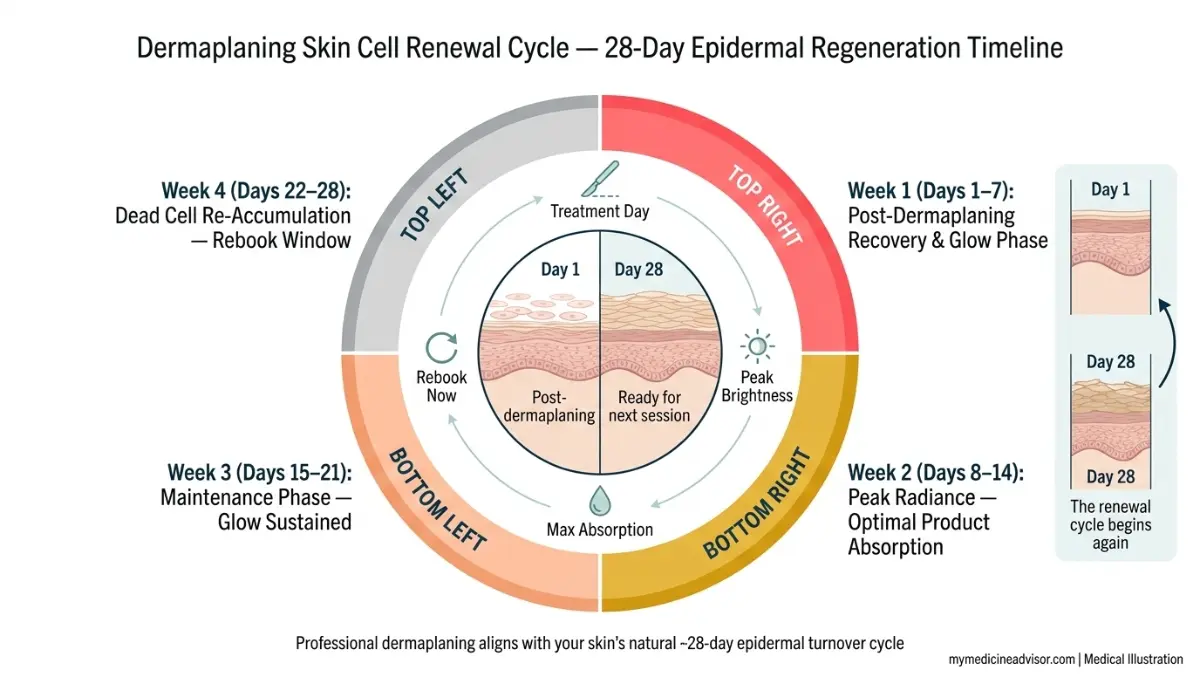
Post-Treatment Aftercare Protocol
Follow these steps precisely to protect your newly exposed skin:
- SPF 30+ sunscreen is mandatory for a minimum of 2 weeks post-treatment (your skin is more vulnerable to UV damage without its dead-cell shield)
- Avoid all exfoliants (AHAs, BHAs, physical scrubs) for 48–72 hours
- Cleanse with a gentle, acid-free cleanser twice daily
- Apply a fragrance-free hyaluronic acid serum — your skin will absorb it exceptionally well
- Avoid direct sun exposure for at least 3 days
- If makeup is needed the same day, choose mineral-based formulas
Proper skin hydration is critical in the days following your treatment. Use our Water Intake Calculator to ensure you’re meeting your daily hydration needs — hydrated skin heals and glows faster.
Is Dermaplaning Worth It? RealSelf community data shows an 83% “Worth It” rating from verified patient reviews. The answer is yes — when performed correctly.
At-Home Dermaplaning — The Risk Truth Your Provider Won’t Say Out Loud
Let’s address the elephant in the room: millions of people are buying $8 drugstore dermaplaning razors and trying to replicate a clinical procedure at home.
Here’s a real-world warning. Dr. Shasa Hu, Associate Professor of Dermatology at the University of Miami, documented a patient who self-dermaplaned at home twice — and both times developed a Staphylococcus aureus (staph) infection, resulting in skin damage and scarring. Without clinical-grade sterile technique, the risk is real.
The FDA’s cosmetic safety guidance underscores that improper use of sharp cosmetic instruments can cause cuts, infections, and permanent skin damage.
Professional vs. At-Home: The Honest Comparison
| Factor | Professional Dermaplaning | At-Home DIY |
|---|---|---|
| Blade | Medical-grade sterile scalpel (No. 10) | Consumer micro-razor |
| Exfoliation depth | Controlled epidermis removal | Surface-level only |
| Infection risk | Minimal (sterile protocol) | Moderate to high (user error) |
| Results | Clinical; last 3–4 weeks | Mild; last 1–2 weeks |
| Cost | $75–$300/session | $5–$30/month |
| Best used for | Acne scars, aging skin, full facial exfoliation | Peach fuzz maintenance only |

At-Home Safety Rules (If You Proceed Despite the Risks)
If you choose to use an at-home dermaplaning tool, follow these clinical guidelines:
- Cleanse face thoroughly with a gentle, non-acid cleanser first
- Use a brand-new, sterile blade — never reuse
- Hold blade at a 45-degree angle on taut, dry skin
- Use light, short upward strokes — never apply pressure
- Never use on active acne, open wounds, sunburned skin, or if you’ve taken Accutane within 6 months
- Apply broad-spectrum SPF 30+ immediately afterward
You might also find our guide on microneedling useful if you’re exploring alternatives to dermaplaning for deeper skin resurfacing concerns. For those considering other professional-grade skin treatments, our IPL treatment guide offers a similar candid comparison of what providers tell — and don’t tell — patients.
Dermaplaning in 2026 — The Expert Verdict
Our panel of international credentialed medical experts at mymedicineadvisor.com consistently rates dermaplaning as one of the safest, most accessible non-invasive skin resurfacing options available — particularly for patients who want real results without downtime, chemicals, or recovery periods.
The global evidence is clear: when performed by a trained professional on the right candidate, dermaplaning delivers clinically meaningful improvements in skin texture, brightness, and product absorption. The risks are real but entirely preventable with proper screening and technique.
Quick Reference Summary Table
| Question | Answer |
|---|---|
| Is dermaplaning safe? | Yes — when performed by a licensed professional |
| Does hair grow back thicker? | No — physiologically impossible |
| Safe during pregnancy? | Yes (standalone only — no chemical peel add-ons) |
| How often? | Every 3–6 weeks |
| Average US cost? | $75–$250 per session |
| Covered by insurance? | No — cosmetic procedure |
| Results last? | 3–4 weeks |
| At-home safe? | Partial — professional preferred; strict precautions required at home |
Final Expert Takeaway: Book with a licensed provider, disclose all medications, follow the aftercare protocol, and protect your skin with SPF. That’s the full picture your dermatologist’s brochure never gave you.
For a broader view of your skin and overall health, explore our Health Tips hub — covering everything from skin cancer early warning signs to the latest dermatology treatments in 2026.
If you’re researching complementary skin treatments, our expert guides on Ultherapy and Morpheus8 give you the same level of clinical honesty as this article.
Frequently Asked Questions About Dermaplaning
1. What is dermaplaning and what does it do?
Dermaplaning is a non-invasive facial exfoliation procedure where a sterile surgical scalpel removes dead skin cells and vellus hair (peach fuzz). It reveals smoother, brighter skin instantly, improves skincare product absorption, and creates a flawless canvas for makeup — all with no downtime.
2. Does dermaplaning hurt?
No. Most patients describe it as a light scraping or tickling sensation. The procedure is painless because only the outermost, already-dead skin layer is being removed. Discomfort is rare and typically limited to individuals with extremely sensitive skin.
3. Does hair grow back thicker or darker after dermaplaning?
No — this is one of the most persistent myths in skincare. Dermaplaning does not touch the hair follicle, which is the only structure that determines hair color and thickness. Regrowth will feel slightly blunt at first, but it returns to the same texture and color as before.
4. How long does dermaplaning last?
Results typically last 3–4 weeks. This aligns with the skin’s natural 28-day cell renewal cycle. Once dead cells begin re-accumulating, the glow fades — which is why most estheticians recommend rebooking every 4–6 weeks.
5. How often should you get dermaplaning?
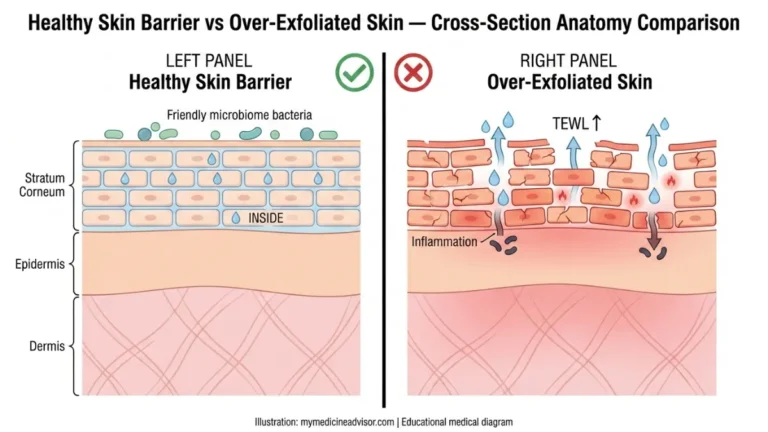
For professional treatments: every 3–6 weeks. For at-home tools: no more than every 1–2 weeks on healthy skin. Over-exfoliating can compromise your skin barrier and trigger irritation, dryness, or breakouts.
6. Is dermaplaning safe for dark skin tones?
Dermaplaning can be safe for darker skin tones (Fitzpatrick types IV–VI), but requires a provider with specific expertise in melanin-rich skin. The primary risk is post-inflammatory hyperpigmentation (PIH) if technique is improper. Always seek a specialist with documented experience in treating diverse skin tones.
7. Can you get dermaplaning while pregnant?
Yes — standalone dermaplaning (without chemical peel add-ons) is widely considered safe during pregnancy because it involves no chemicals, acids, or systemic absorption. Always consult your OB-GYN or midwife before any cosmetic procedure during pregnancy. Pregnant patients can also use our Pregnancy Due Date Calculator and Pregnancy Weight Gain Calculator for trimester-specific health planning.
8. What should I avoid before and after dermaplaning?
Before: Stop retinoids 5–7 days prior; stop AHAs/BHAs 24–48 hours prior; avoid Accutane for 6 months prior. After: No exfoliants for 48–72 hours; apply SPF 30+ daily for 2 weeks; avoid direct sun exposure for 3 days; use gentle, fragrance-free products only.
9. Is dermaplaning the same as shaving your face?
No — though both use a blade. Shaving uses a multi-blade razor that only cuts surface hair. Dermaplaning uses a single, medical-grade sterile scalpel that physically removes the outermost layer of dead skin cells and vellus hair in a single controlled pass. The exfoliation component is what makes dermaplaning clinically superior for skin renewal.
10. Can dermaplaning cause acne or breakouts?
It can, under two circumstances: (1) if performed on skin with active acne, spreading bacteria to surrounding areas, or (2) if heavy, pore-clogging products are applied immediately after. Following proper aftercare — light, non-comedogenic products and no occlusive makeup for 24 hours — minimizes this risk significantly.
11. Is dermaplaning covered by insurance?
No. Dermaplaning is classified as a cosmetic procedure and is not covered by Medicare, Medicaid, or private health insurance in the United States. Costs are entirely out-of-pocket, ranging from $75 to $300 per session depending on provider type and location.
This article was reviewed by the mymedicineadvisor.com medical expert panel — a team of 21 internationally credentialed medical professionals. For personalized medical advice, please consult a licensed dermatologist or board-certified esthetician.
About this content
How this article was put together: researched from recognised health sources, drafted with the help of AI tools, and edited by hand, with sources linked throughout.

Sameer Patel is the founder and editor of My Medicine Advisor. He is not a doctor or medical professional — before starting this site he worked in banking,…
Medical disclaimer
The content on MyMedicineAdvisor is provided for general informational and educational purposes only and is not a substitute for professional medical advice, diagnosis, or treatment. Health information on this website should not be used to diagnose, treat, cure, or prevent any condition without guidance from a qualified healthcare professional. Always seek the advice of your doctor, physician, or another licensed healthcare provider with any questions you may have regarding a medical condition, symptoms, medications, or treatment decisions.