On This Page – Quick Medical Summary
Mesothelioma and lung cancer are two distinct diseases. Mesothelioma forms in the mesothelium — the thin lining around the lungs and other organs. Lung cancer develops inside the lung tissue itself. They share symptoms, but their causes, diagnosis, treatment, and survival rates differ sharply. Knowing the difference could save your life.
The Misdiagnosis That Changed Everything
In 2022, Robert M., a 71-year-old retired shipyard mechanic from Philadelphia, was told he had advanced lung cancer. He started chemotherapy for a disease he didn’t actually have. Fourteen months later — after the wrong treatment, unnecessary side effects, and significant delays — a specialist biopsy revealed the truth: he had pleural mesothelioma.
This is not a rare error. According to published oncology research, approximately 22.6% of mesothelioma patients are initially misdiagnosed, most commonly with lung cancer. Two different cancers. Two completely different treatment paths. One misdiagnosis with life-altering consequences.
If you have unexplained chest symptoms and a history of asbestos exposure, use our free Symptom Checker before your next physician visit — it helps you document and organize your symptom history clearly.
Master Comparison Table: Mesothelioma vs Lung Cancer at a Glance
| Feature | Mesothelioma | Lung Cancer |
|---|---|---|
| Where it forms | Organ lining (pleura, peritoneum) | Inside lung tissue |
| Primary cause | Asbestos (only known cause) | Smoking, asbestos, radon, genetics |
| Annual US cases | ~3,000 | ~230,000 |
| Key symptoms | Pleural effusion, chest pain, breathlessness | Bloody cough, hoarseness, chest pain |
| Diagnosis challenge | Often misdiagnosed as lung cancer | More widely recognized |
| 5-year survival rate | ~12% (NCI SEER 2026) | ~22–25% overall |
| Median survival | 12–21 months with treatment | Stage-dependent; up to 68% at Stage I |
| Spreads to other organs? | Rarely — locally aggressive | Yes — early metastasis to brain, liver |
| Curative surgery possible? | Selected early-stage cases only | Yes — Stage I and II NSCLC |
| Specialist required? | Yes — mesothelioma specialist critical | Lung oncologist widely available |
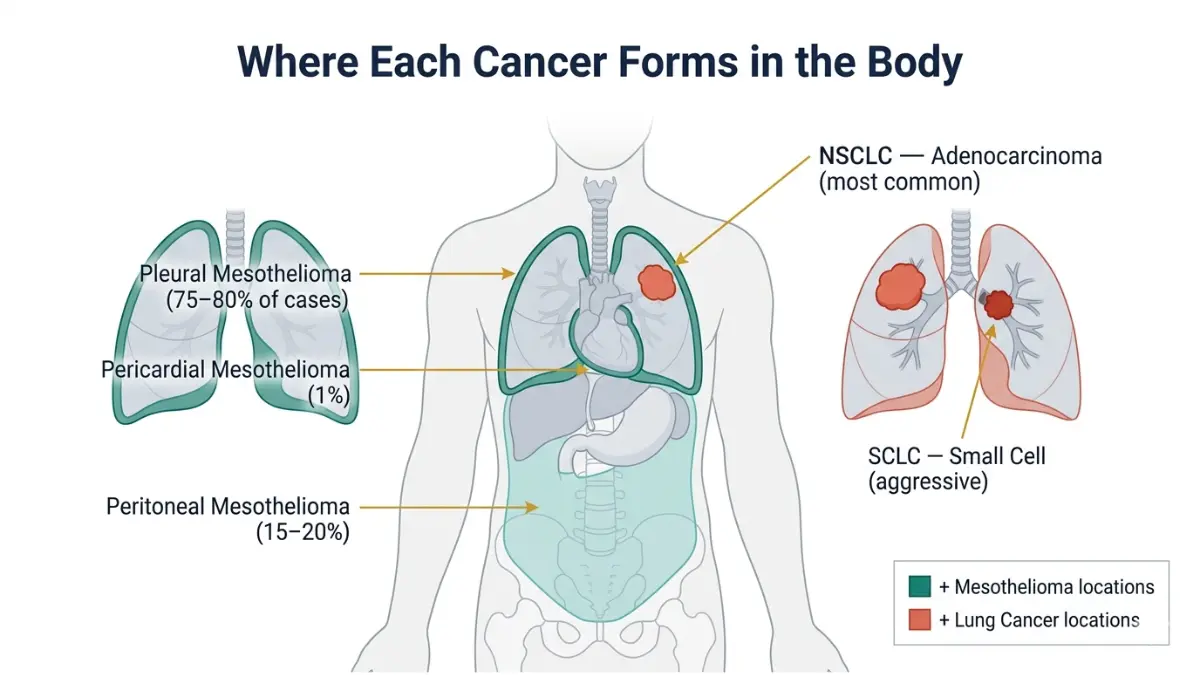
Difference #1 and #2 — Where These Cancers Form and What Triggers Them
Difference #1 — Tumor Location: Inside vs Outside the Lung
This is the most fundamental difference between mesothelioma and lung cancer — and the one that changes everything downstream.
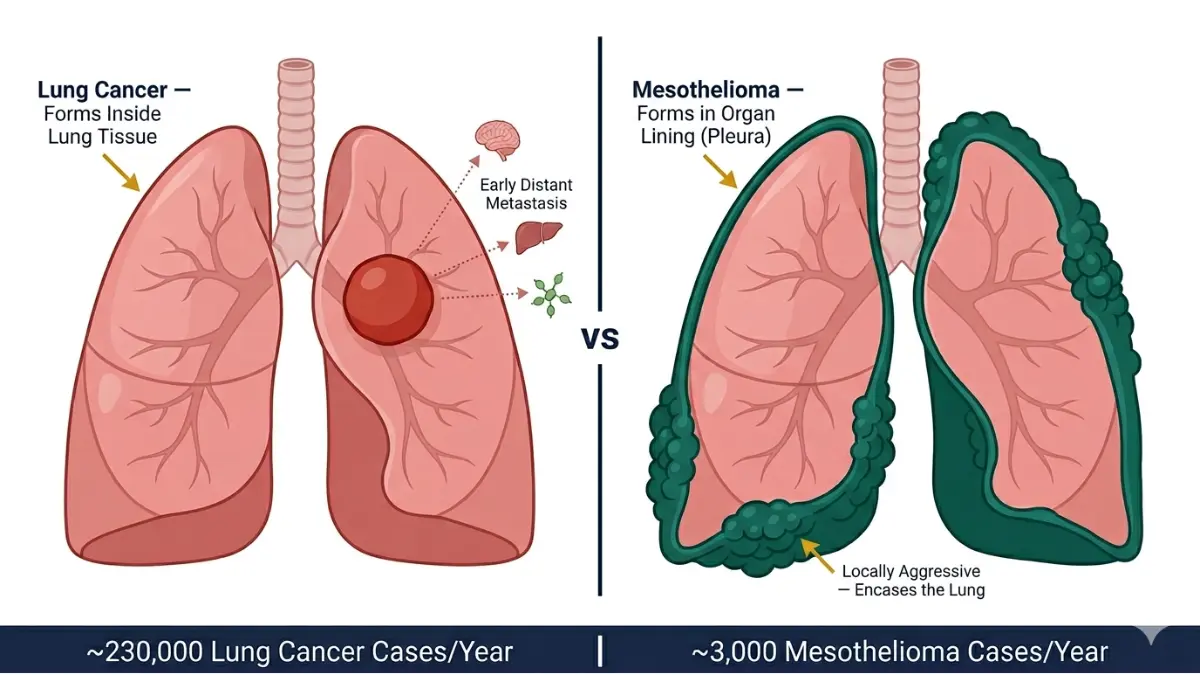
Lung cancer develops inside the lung itself, typically in the cells lining the airways (bronchi) or the small air sacs (alveoli). Tumors form as defined, solid masses with clear boundaries.
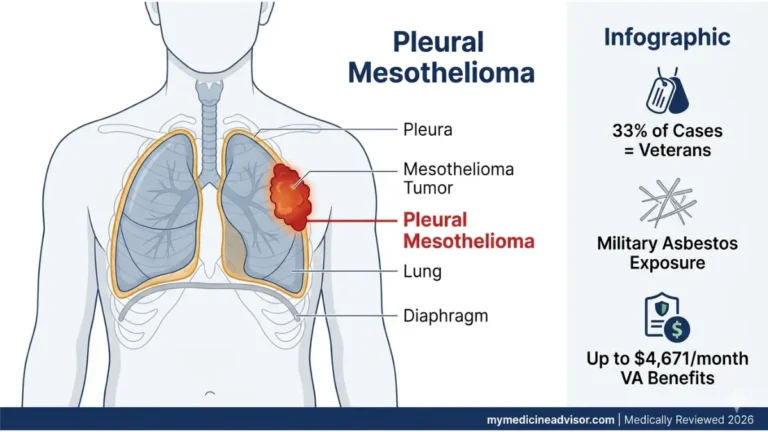
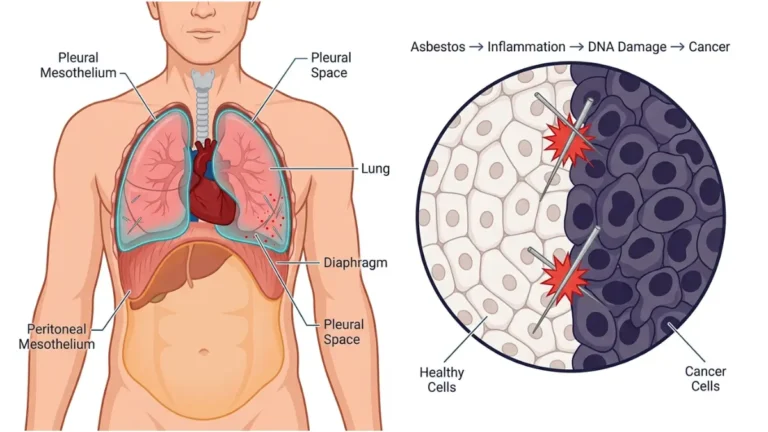
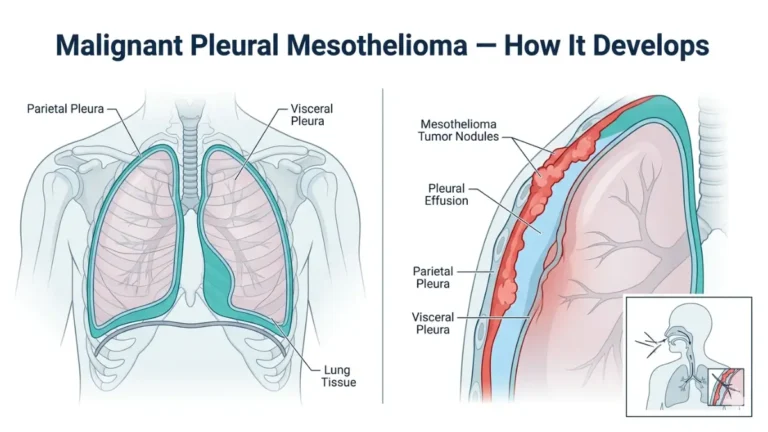
Mesothelioma develops in the mesothelium — a thin, two-layered membrane that wraps around organs. Picture the lungs enclosed in a delicate plastic sleeve. Mesothelioma attacks that sleeve. Lung cancer attacks what’s inside.
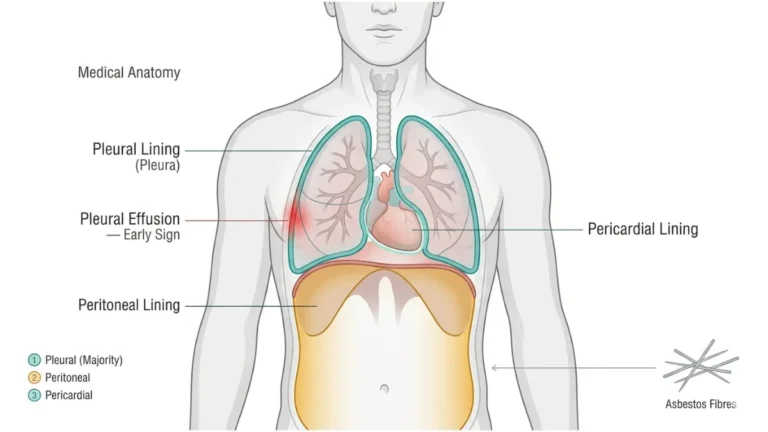
The most common form is pleural mesothelioma, which forms in the lining around the lungs (the pleura). This accounts for approximately 75–80% of all mesothelioma cases. Other forms include:
- Peritoneal mesothelioma — lining of the abdominal cavity (~15–20% of cases)
- Pericardial mesothelioma — lining of the heart (~1% of cases)
- Testicular mesothelioma — less than 1% of cases
Lung cancer also has two primary classifications:
- Non-small cell lung cancer (NSCLC) — accounts for ~85% of all lung cancer cases; includes adenocarcinoma, squamous cell carcinoma, and large cell carcinoma
- Small cell lung cancer (SCLC) — accounts for ~15%; highly aggressive and fast-spreading
To understand your full mesothelioma risk in context, read our detailed guide on pleural mesothelioma stages and types.
Difference #2 — Root Causes: The Asbestos Divide
This is the sharpest dividing line in the mesothelioma vs lung cancer comparison.
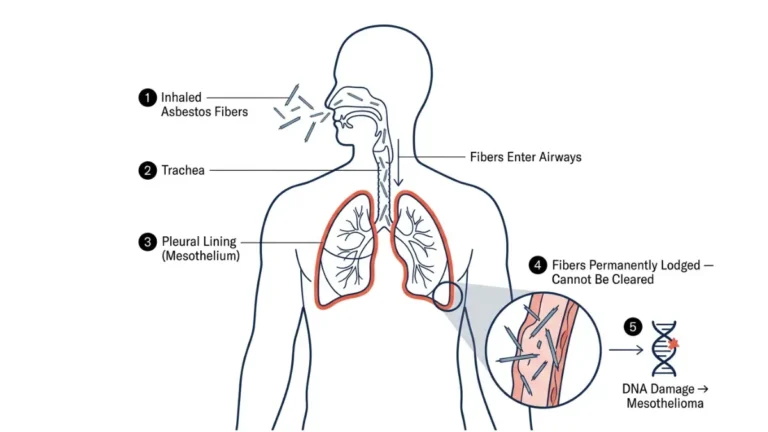
Mesothelioma has only one known cause: asbestos exposure. The NCI’s asbestos and cancer fact sheet confirms that most mesotheliomas are attributable to asbestos — a mineral used extensively in construction, shipbuilding, and manufacturing from the 1930s through the 1980s.
Workers most at risk include:
- Construction workers, insulation installers, plumbers
- Shipbuilders and Navy veterans
- Automotive mechanics (brake linings and gaskets)
- Textile mill and factory workers
- Family members of workers who brought asbestos home on clothing
Lung cancer has multiple causes:
- Smoking — responsible for approximately 80–85% of all lung cancer cases
- Asbestos exposure — a secondary but significant risk factor
- Radon gas — the second leading cause of lung cancer in the US
- Air pollution and occupational carcinogens
- Genetic mutations (EGFR, ALK, KRAS alterations)
One critical 2026 data point: the United States diagnoses approximately ~3,000 mesothelioma cases each year compared to ~230,000 lung cancer cases. For every single mesothelioma diagnosis, physicians encounter roughly 95 lung cancer diagnoses — which is exactly why mesothelioma is so frequently misidentified.
What This Means For You: If you worked in shipbuilding, construction, or manufacturing before 1990 — even briefly — disclose this to your physician now. Asbestos exposure 40 years ago still carries mesothelioma risk today. Use our Genetic Risk Assessment Tool to document your occupational and family risk factors before your next appointment.
Difference #3 and #4 — Overlapping Symptoms and Very Different Tumor Behavior
Difference #3 — Symptoms: What They Share and Where They Diverge
This is the core clinical trap that leads to misdiagnosis. Mesothelioma and lung cancer share enough symptoms to appear identical on an initial examination.
Shared symptoms of both cancers:
- Persistent chest pain
- Shortness of breath (dyspnea)
- Chronic dry or productive cough
- Unexplained fatigue
- Unintentional weight loss
- Fever and night sweats
Symptoms more specific to mesothelioma:
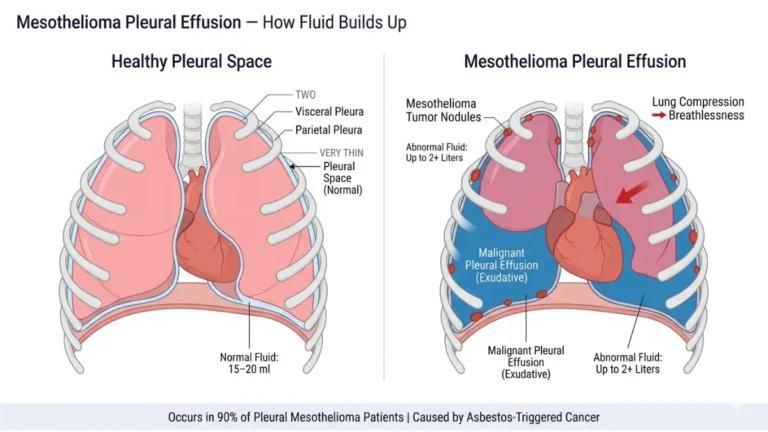
- Pleural effusion — abnormal fluid buildup between the lung and chest wall (present in up to 60% of pleural mesothelioma patients at diagnosis)
- Lumps or thickening along the chest wall
- Abdominal swelling and pain (peritoneal type)
- New-onset clubbing of fingers in some cases
Symptoms more specific to lung cancer:
- Hemoptysis — coughing up blood-streaked sputum
- Hoarseness — tumor pressing on the laryngeal nerve
- Superior vena cava syndrome — facial swelling and blue-tinted skin if the tumor compresses the vena cava
- Bone pain from early metastasis
The silent danger both share: Both cancers are typically asymptomatic until late stage — Stage III or Stage IV in most patients. By the time symptoms appear, curative surgery is often no longer possible. This is why screening awareness matters enormously for those with known risk factors.
For a comprehensive guide to early warning signs, read our detailed article on 5 signs and symptoms of mesothelioma.
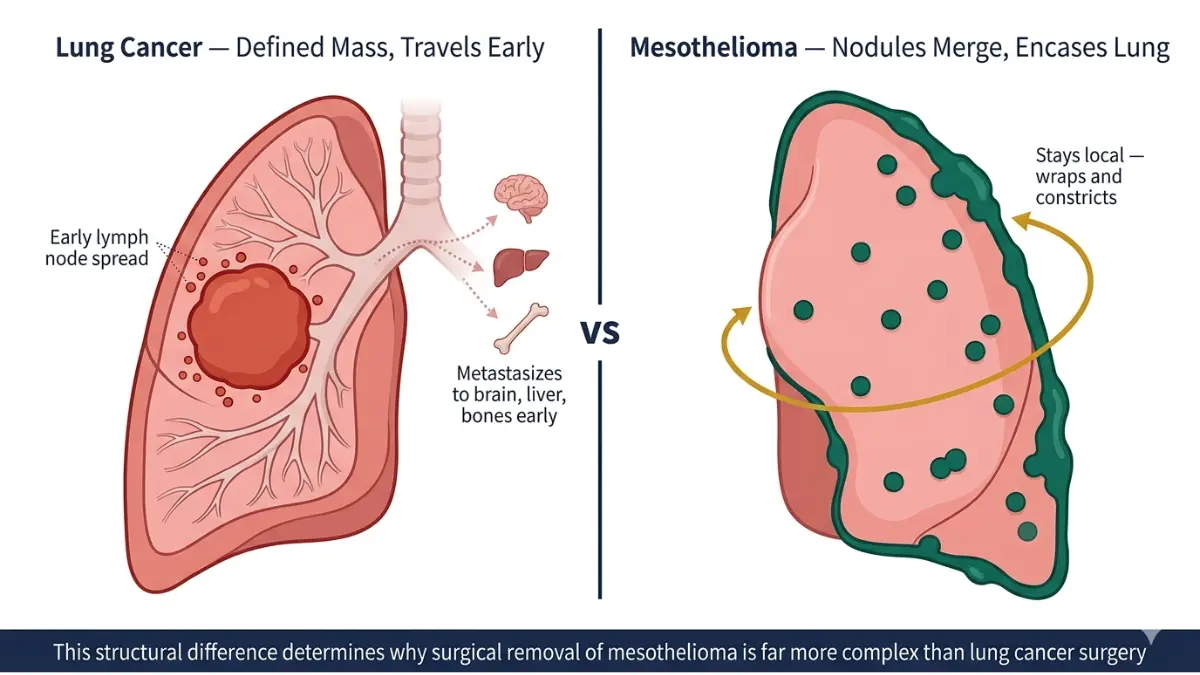
Difference #4 — Tumor Growth Pattern: A Critical Structural Difference
How these cancers grow is fundamentally different — and explains why treatment protocols cannot be interchanged.
Lung cancer forms as discrete, solid, well-defined masses inside the lung tissue. These tumors are measurable, often identifiable on CT scan, and tend to metastasize early — spreading to the lymph nodes, brain, liver, bones, and adrenal glands. This is why lung cancer staging focuses heavily on distant spread.
Mesothelioma begins as scattered microscopic nodules across the mesothelial lining. Over months to years, these nodules merge into a thick, sheath-like layer that progressively encases the lung or abdominal organs. Mesothelioma does not travel far — instead, it invades locally and aggressively, suffocating surrounding structures rather than sending distant metastases.
Bold Takeaway: Lung cancer travels far and fast. Mesothelioma stays close but wraps tightly — making surgical removal profoundly more complex than with most lung tumors.
This structural difference also explains why mesothelioma is so difficult to detect on standard imaging. There is often no single defined tumor to point to — just progressive thickening of a membrane that radiologists unfamiliar with the disease can easily overlook.
Difference #5 — Why Diagnosing Mesothelioma Is Far Harder Than Lung Cancer
The Diagnostic Gap No Competitor Mentions
Every competitor article on this topic lists the same imaging tools. None of them honestly address why mesothelioma diagnosis remains one of the most error-prone processes in oncology.
Shared diagnostic tools include:
- Chest X-ray (initial screening)
- CT scan and PET scan (detailed imaging)
- Bronchoscopy (airway inspection, more useful for lung cancer)
- Thoracentesis (fluid drainage and analysis for pleural effusion)
The critical fork point — biopsy and IHC staining:
A tissue biopsy is the only definitive way to distinguish mesothelioma from lung cancer. But even then, the cells can be deceptive.
Under a microscope, pleural mesothelioma often resembles adenocarcinoma — the most common subtype of NSCLC. Distinguishing them requires immunohistochemical (IHC) staining, a specialized panel of molecular markers that requires an experienced pathologist. Not every hospital laboratory has this expertise.
According to the NCI’s mesothelioma treatment guidelines, delivery of treatment at centers with established mesothelioma expertise consistently produces better outcomes — precisely because diagnosis accuracy is higher.
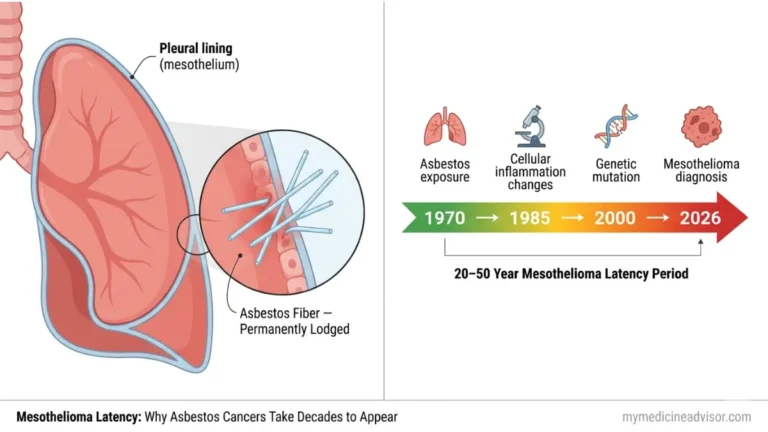
The latency trap: Mesothelioma has a latency period of 20 to 50 years between asbestos exposure and diagnosis. A patient diagnosed at age 72 may have been exposed to asbestos at age 28 — a job he barely remembers, in an era before safety regulations. Without that occupational history, the first-line assumption is almost always lung cancer.
Staging differences that matter:
| Stage | Mesothelioma (Pleural) | NSCLC |
|---|---|---|
| Stage I | Localized to one pleural layer | Tumor confined to lung, no lymph node spread |
| Stage II | Spreads to both pleural layers / diaphragm | Tumor larger or nearby lymph nodes involved |
| Stage III | Involves chest wall, lymph nodes | More lymph node involvement, nearby spread |
| Stage IV | Distant organs or opposite chest | Distant metastasis (brain, liver, bones) |
To understand biopsy results after a chest finding, see our comprehensive guide on how to read biopsy results.
What This Means For You: If your physician suspects a chest cancer and you have any asbestos exposure history — no matter how long ago — insist on a referral to an NCI-designated cancer center. Request a specialist biopsy with IHC staining. A second opinion is not optional; it is medically necessary.
Difference #6 — Treatment Approaches in 2026
Why the Same Treatment Protocol Cannot Be Used for Both
This is where the mesothelioma vs lung cancer distinction becomes a matter of life and death. Using the wrong treatment — even a partially wrong one — actively harms patients.
Lung Cancer Treatment in 2026:
For NSCLC (85% of lung cancer cases):
- Targeted therapy — EGFR inhibitors (osimertinib), ALK inhibitors (alectinib) for patients with specific mutations
- Immunotherapy — PD-1/PD-L1 checkpoint inhibitors (pembrolizumab/Keytruda), now used in first-line treatment for high PD-L1 expressors
- Surgery — curative resection is possible for Stage I and Stage II patients; lobectomy and pneumonectomy are standard
- CAR-T and emerging therapies in clinical trial phase
For SCLC (15% of lung cancer cases):
- Aggressive combination chemotherapy (etoposide + platinum) plus immunotherapy
- High recurrence rate; limited surgical role
Our article on FDA-approved lung cancer drugs in 2026 covers the full current treatment landscape.
Mesothelioma Treatment in 2026:
Surgery options:
- Extrapleural Pneumonectomy (EPP) — removes the affected lung, the pleura, part of the diaphragm, and the pericardial lining. Aggressive but potentially life-extending in early-stage patients.
- Pleurectomy/Decortication (P/D) — lung-sparing surgery that removes the pleural lining and all visible tumors. Less invasive than EPP.
- HIPEC (Hyperthermic Intraperitoneal Chemotherapy) for peritoneal mesothelioma — delivers heated chemotherapy directly into the abdominal cavity after cytoreductive surgery.
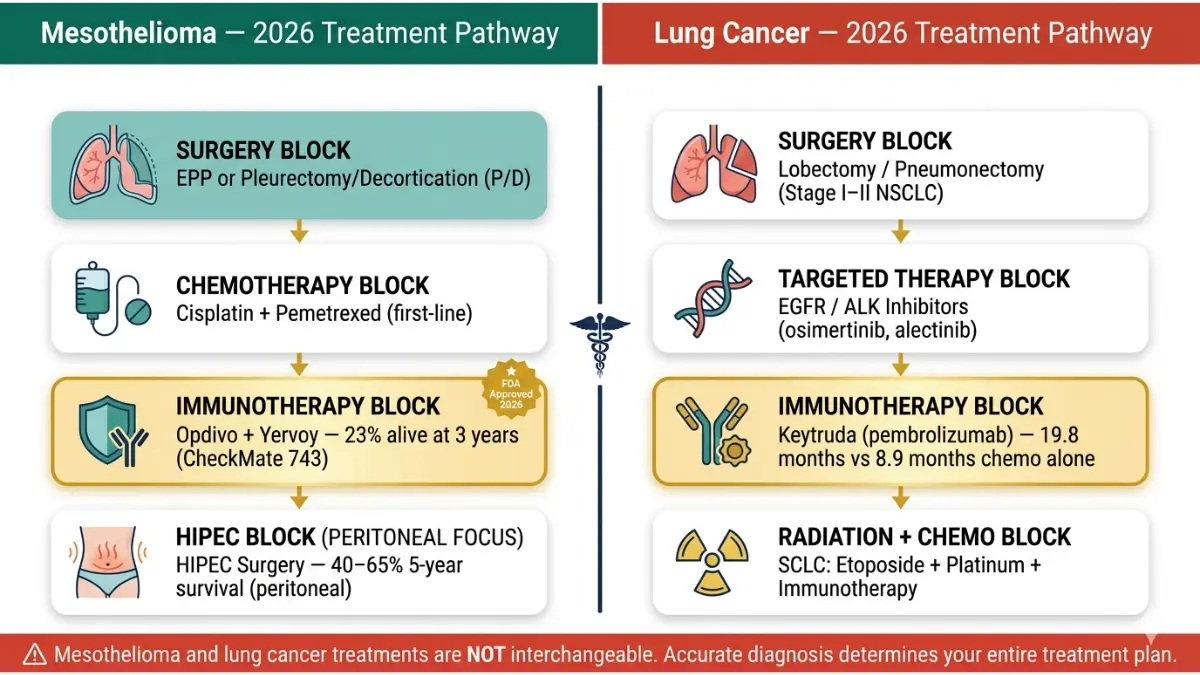
2026 Immunotherapy Breakthrough Data:
- Opdivo + Yervoy (nivolumab + ipilimumab) — CheckMate 743 trial: 23% of patients were alive at 3 years, compared to 15% on chemotherapy alone. Now FDA-approved as first-line treatment for unresectable pleural mesothelioma.
- Keytruda (pembrolizumab) — KEYNOTE-483 trial: patients lived 19.8 months vs 8.9 months on chemotherapy alone — more than doubling median survival.
For peritoneal mesothelioma, HIPEC combined with cytoreductive surgery has produced 40–65% five-year survival rates in select patients — one of the most remarkable oncology outcomes of the past decade. Read our in-depth guide on peritoneal mesothelioma survival outcomes.
Patients on multi-drug chemotherapy or immunotherapy regimens can use our Pill Identifier tool to accurately track and cross-reference medications.
Bold 2026 Takeaway: Immunotherapy has fundamentally changed the mesothelioma conversation. Patients who had no viable options five years ago now have FDA-approved regimens that measurably extend survival. Ask your oncologist specifically about immunotherapy eligibility and access to active clinical trials at ClinicalTrials.gov.
Difference #7 — Survival Rates in 2026
The Numbers Every Patient and Family Must Understand
No competitor article directly compares survival rates for both cancers side by side with 2026 data. Here it is — clearly, honestly, and completely.
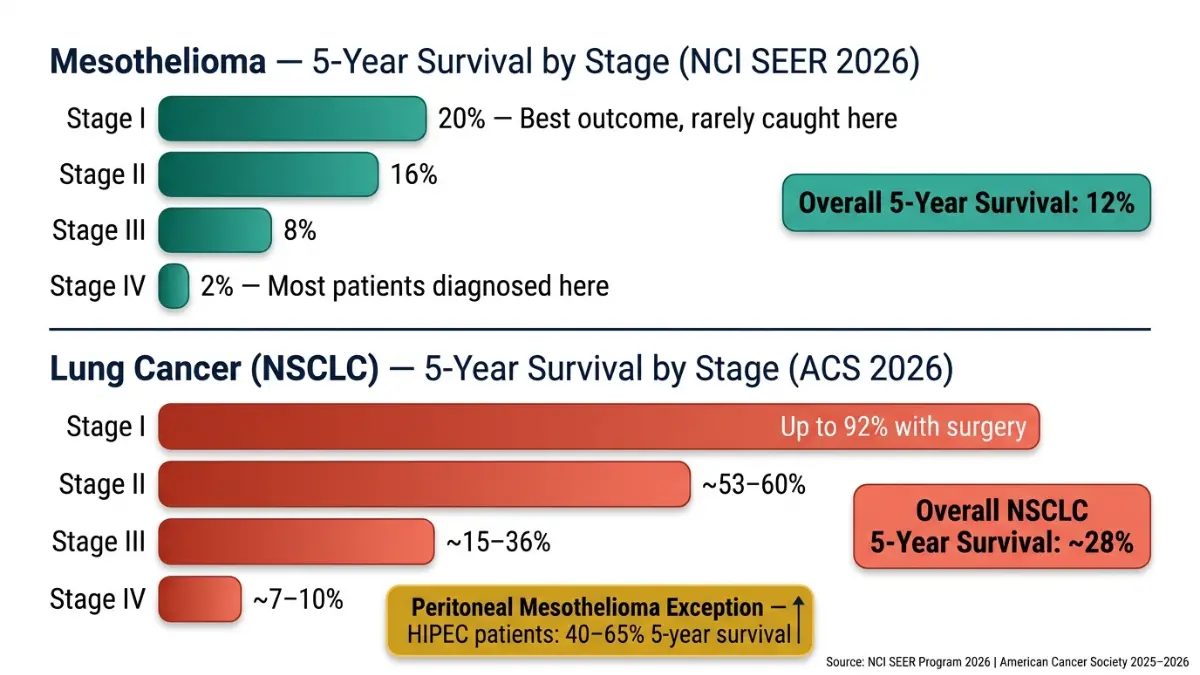
Mesothelioma Survival Rates (NCI SEER 2026):
| Stage | 5-Year Survival Rate | Median Survival |
|---|---|---|
| Stage I | ~16–20% | ~21 months |
| Stage II | ~10–16% | ~19 months |
| Stage III | ~8% | ~16 months |
| Stage IV | ~2% | ~12 months |
| Overall | ~12% | 12–21 months with treatment |
Source: American Cancer Society — Mesothelioma Survival Statistics, last revised February 2026.
Lung Cancer Survival Rates (ACS 2025–2026):
| Type / Stage | 5-Year Survival Rate |
|---|---|
| NSCLC — Stage I (localized) | 68–92% with surgery |
| NSCLC — Stage II | ~53–60% |
| NSCLC — Stage III | ~15–36% |
| NSCLC — Stage IV (metastatic) | ~7–10% |
| SCLC — All stages combined | ~5–10% |
| NSCLC Overall | ~28% |
The critical insight no competitor explains:
At Stage I, lung cancer and mesothelioma survival rates look similar on paper — but the comparison is deceptive. Mesothelioma is almost never diagnosed at Stage I. Because symptoms emerge so late and the disease so closely mimics lung cancer, the vast majority of mesothelioma patients are at Stage III or Stage IV at diagnosis. The theoretical Stage I figure is largely academic.
The peritoneal mesothelioma exception:
For patients with peritoneal mesothelioma who are eligible for HIPEC plus cytoreductive surgery, 5-year survival rates reach 40–65% — dramatically better than pleural mesothelioma. This subtype responds to a specific surgical intervention unavailable for pleural disease.
The gender survival gap:
Women with mesothelioma consistently outlive men with identical stage and diagnosis, even after researchers control for age and treatment type. This phenomenon is documented in SEER data and is an area of active oncology research.
What specialist center care does to the numbers:
Moffitt Cancer Center reported an overall 5-year mesothelioma survival rate of 17.3% as of 2022 — nearly 2.5 times the national average. The difference is not luck. It reflects diagnostic accuracy, access to clinical trials, and surgical expertise concentrated in one institution.
For a full exploration of how mesothelioma prognosis factors interact, see our comprehensive guide on mesothelioma survival rates and symptoms.
What This Means For You: Prognosis is not destiny. Where you receive care, how quickly you are diagnosed, and whether you access immunotherapy clinical trials all measurably shift outcomes. Act immediately — mesothelioma’s legal statute of limitations in most US states runs only 1 to 3 years from diagnosis.
Your Complete Action Plan — What To Do Right Now
7 Steps Every Patient and Family Must Take After a Chest Cancer Diagnosis
If you or a loved one has received or suspects a diagnosis of either mesothelioma or lung cancer, do not wait. These are time-sensitive steps that directly affect outcome.
1. Disclose your full occupational history immediately. Asbestos exposure from 20, 30, or even 50 years ago still carries mesothelioma risk today. Tell your physician every job you have ever held. Even secondary exposure — a spouse who worked in construction — matters.
2. Do not accept a diagnosis based on imaging alone. CT and PET scans cannot definitively separate mesothelioma from lung cancer. Insist on a tissue biopsy with immunohistochemical (IHC) staining. According to NCI treatment guidelines, specialist-center diagnosis is directly linked to better outcomes.
3. Get a second opinion at an NCI-designated cancer center. With a 22.6% mesothelioma misdiagnosis rate, a second opinion is not a sign of distrust — it is standard of care. Find NCI-designated centers at cancer.gov.
4. Ask specifically about immunotherapy eligibility. In 2026, FDA-approved immunotherapy combinations (Opdivo + Yervoy for mesothelioma; Keytruda for both cancers) are first-line options many community oncologists underutilize. You have the right to ask.
5. Search for active clinical trials. Visit ClinicalTrials.gov and search “mesothelioma 2026” or “lung cancer immunotherapy.” Experimental access can be the difference between 12 months and 5 years.
6. Consult a mesothelioma attorney if asbestos exposure is confirmed. Over $30 billion remains in asbestos bankruptcy trust funds designated for victims. Legal deadlines are strict — most states allow only 1 to 3 years from diagnosis to file a claim. Asbestos exposure was often corporate negligence, not personal choice.
7. Track your health systematically. Use our Symptom Checker and Genetic Risk Assessment Tool to build a thorough personal record before specialist appointments. Having documented symptom timelines and risk factor histories can meaningfully improve diagnostic efficiency.
Expert Consensus — What Mesothelioma Specialists Say in 2026
Dr. Jacques Fontaine, Thoracic Surgeon, Moffitt Cancer Center: “For every mesothelioma case we diagnose, we diagnose 95 lung cancers. The rarity of this disease is exactly why accurate diagnosis requires specialist involvement — general oncologists may encounter only one or two cases in their careers.”
NCI Clinical Guidance (2026): Mesothelioma treatment delivered at centers with established expertise and experience in this disease has shown consistently better outcomes than community-hospital treatment.
For additional context on how immunotherapy is transforming cancer care broadly, read our full guide on how immunotherapy works.
Medical Disclaimer: This article is for educational purposes only and does not constitute medical advice, diagnosis, or treatment. Always consult a qualified oncologist or licensed healthcare provider for any medical decisions. For emergencies, call 911 or visit your nearest emergency department immediately.
Frequently Asked Questions — Mesothelioma vs Lung Cancer
Q1. Is mesothelioma the same as lung cancer?
No. Mesothelioma forms in the mesothelium — the organ lining — while lung cancer forms inside the lung tissue. They are distinct diseases requiring completely different treatment protocols.
Q2. What is the biggest difference between mesothelioma and lung cancer?
Location of origin. Mesothelioma starts in the thin membrane wrapping the lung and other organs. Lung cancer begins inside the lung itself, usually near the airways or air sacs.
Q3. Can asbestos cause both mesothelioma and lung cancer?
Yes. Asbestos is the only known cause of mesothelioma. It is also a confirmed risk factor for lung cancer — and smokers exposed to asbestos face a risk of lung cancer that is compounded beyond either risk factor alone.
Q4. Which cancer is harder to diagnose — mesothelioma or lung cancer?
Mesothelioma by far. Its rarity, late-stage symptom onset, long latency period, and visual resemblance to lung cancer under imaging make it one of the most misdiagnosed cancers in American oncology.
Q5. What is the 5-year survival rate for mesothelioma vs lung cancer in 2026?
Mesothelioma has a 12% overall 5-year survival rate. Lung cancer averages 22–28% overall, with early-stage NSCLC patients achieving up to 92% survival at Stage I.
Q6. Can mesothelioma be misdiagnosed as lung cancer?
Yes — it occurs in approximately 22.6% of cases. Pleural mesothelioma most closely resembles adenocarcinoma (the most common NSCLC type) on imaging, requiring specialist biopsy with IHC staining for accurate diagnosis.
Q7. Does mesothelioma spread the same way as lung cancer?
No. Lung cancer metastasizes early to distant organs including the brain, liver, bones, and adrenal glands. Mesothelioma remains locally aggressive — encasing and invading nearby structures rather than sending distant metastases in most cases.
Q8. What are the newest mesothelioma treatments in 2026?
FDA-approved immunotherapy combinations — Opdivo plus Yervoy and Keytruda — have meaningfully extended survival. For peritoneal mesothelioma, HIPEC surgery has produced 5-year survival rates of 40–65% in eligible patients.
Q9. Who is most at risk for mesothelioma specifically?
Those with occupational asbestos exposure — construction workers, insulation installers, shipbuilders, Navy veterans, automotive mechanics, and factory workers — particularly those with exposures before 1990. Secondary exposure through a family member’s contaminated work clothing is also a documented risk.
Q10. How long after asbestos exposure does mesothelioma develop?
Typically 20 to 50 years. This extreme latency period means patients diagnosed today were most often exposed in the 1960s, 1970s, or 1980s — decades before modern asbestos regulations.
Q11. Should I see a different specialist for mesothelioma than for lung cancer?
Absolutely. Mesothelioma requires a dedicated specialist with experience in this rare disease. Most general thoracic oncologists see only one or two mesothelioma cases per year. Seeking care at an NCI-designated cancer center measurably improves both diagnostic accuracy and survival outcomes.
Explore more on mymedicineadvisor.com: What Is the Main Cause of Mesothelioma? | Mesothelioma Life Expectancy Guide | End-Stage Mesothelioma: What to Expect | Chemotherapy Guide 2026 | Radiation Therapy Explained
Medical disclaimer
The content on MyMedicineAdvisor is provided for general informational and educational purposes only and is not a substitute for professional medical advice, diagnosis, or treatment. Health information on this website should not be used to diagnose, treat, cure, or prevent any condition without guidance from a qualified healthcare professional. Always seek the advice of your doctor, physician, or another licensed healthcare provider with any questions you may have regarding a medical condition, symptoms, medications, or treatment decisions.