
On This Page – Quick Medical Summary
What Your B12 Results Mean Right Now (2026 Update)
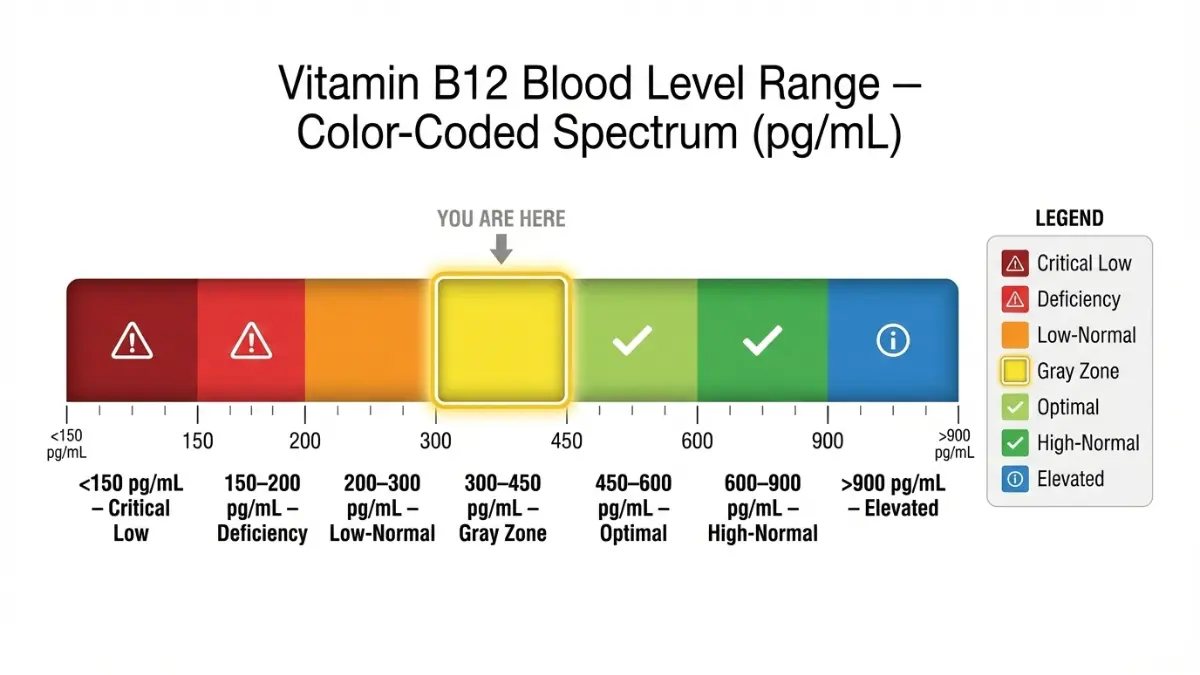
Your B12 results show your vitamin B12 levels in picograms per milliliter (pg/mL), a critical marker that determines whether your body has enough of this essential nutrient. In 2026, updated laboratory standards classify B12 levels into seven distinct ranges: critical low (under 150 pg/mL), deficiency (150-200 pg/mL), low-normal (200-300 pg/mL), gray zone (300-450 pg/mL), optimal (450-600 pg/mL), high-normal (600-900 pg/mL), and elevated (over 900 pg/mL). Each range requires specific medical action.
Understanding these numbers matters more than a simple “normal” or “abnormal” label on your lab report. Many people receive results between 300-450 pg/mL and are told everything looks fine, yet they continue experiencing fatigue, brain fog, or tingling sensations.
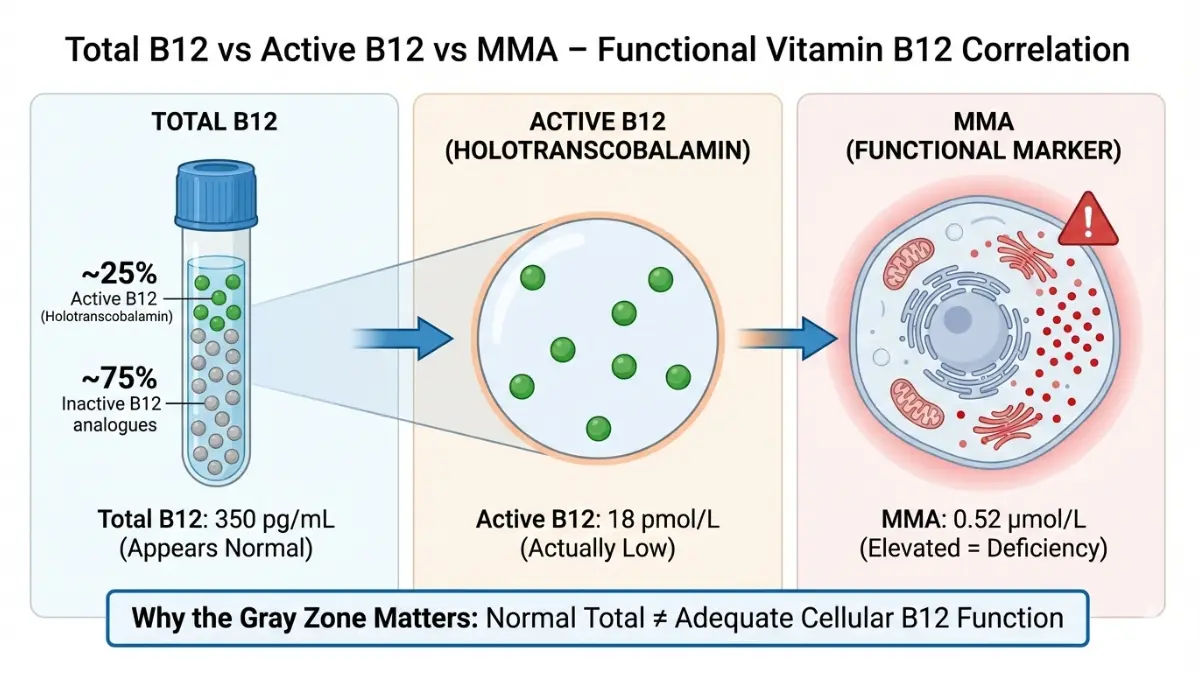
Real Patient Story: Rachel, a 42-year-old accountant, received B12 results of 315 pg/mL in January 2026. Her doctor initially dismissed her concerns about persistent exhaustion and memory lapses. After requesting additional testing through the Symptom Checker, Rachel discovered her methylmalonic acid (MMA) levels were elevated at 0.52 µmol/L—indicating functional B12 deficiency despite “normal” total B12 levels.
Quick Reference: 2026 B12 Ranges
| B12 Level (pg/mL) | Classification | Immediate Action |
|---|---|---|
| Under 150 | Critical Low | Emergency physician visit within 24-48 hours |
| 150-200 | Deficiency | Schedule appointment within 1 week |
| 200-300 | Low-Normal | Order MMA test, retest in 8-12 weeks |
| 300-450 | Gray Zone | Consider MMA testing if symptomatic |
| 450-600 | Optimal | Annual monitoring, maintain diet |
| 600-900 | High-Normal | Review supplementation, retest in 6 months |
| Over 900 | Elevated | Investigate causes, pause supplements |
The difference between 2026 and previous guidelines centers on recognition of the “gray zone” phenomenon. According to research from the National Institutes of Health, approximately 30% of people with B12 levels between 300-450 pg/mL show elevated MMA markers, suggesting their cells aren’t actually getting adequate B12 despite technically normal blood levels.
Understanding Your Exact B12 Number
Your B12 Level Decoded: Number-by-Number Guide
Critical Low: Under 150 pg/mL
B12 levels below 150 pg/mL represent a neurological emergency requiring immediate medical intervention. At this range, your body cannot produce adequate red blood cells or maintain protective myelin sheaths around nerves. Permanent nerve damage can occur within weeks if left untreated.
Symptoms at this level:
- Severe fatigue that doesn’t improve with rest
- Numbness or tingling in hands and feet (peripheral neuropathy)
- Difficulty walking or balance problems
- Memory loss and confusion
- Pale or jaundiced skin tone
Real Case (2026): Marcus, a 58-year-old vegetarian, presented with B12 of 118 pg/mL in February 2026. He experienced progressive weakness in his legs over six months, initially attributing it to aging. After emergency intramuscular B12 injections (1000 mcg daily for one week, then weekly), his levels reached 475 pg/mL within eight weeks, though some nerve symptoms persisted.
Deficiency Range: 150-200 pg/mL
This range indicates severe B12 deficiency requiring aggressive treatment. Most patients experience noticeable symptoms affecting energy, cognition, and neurological function. Standard oral supplementation often proves inadequate at this level because underlying absorption issues typically caused the deficiency.
Treatment protocols in 2026 emphasize intramuscular or sublingual high-dose B12 (1000-2000 mcg) rather than standard multivitamins. The CDC guidelines on vitamin B12 recommend healthcare providers investigate the root cause—whether pernicious anemia, gastric surgery, or medication interference.
Low-Normal: 200-300 pg/mL
Here’s where conventional medicine often dismisses patient concerns, yet this range frequently produces real symptoms. While technically “normal” on most lab reports, levels between 200-300 pg/mL sit at the lower threshold where cellular function may be compromised.
Why symptoms occur here:
- Active B12 (holotranscobalamin) may be disproportionately low
- Methylation processes require higher B12 concentrations
- Individual genetic variations affect B12 utilization
- Concurrent folate deficiency magnifies B12 inadequacy
Testing methylmalonic acid becomes critical at this level. If MMA exceeds 0.4 µmol/L, functional deficiency exists regardless of total B12 numbers, similar to how blood sugar levels can appear normal while A1C reveals a different story.
The Gray Zone: 300-450 pg/mL (Unique Coverage)
This represents the most controversial and under-recognized range in B12 diagnostics. Most physicians consider these results completely normal, yet emerging 2026 research from Johns Hopkins University reveals that 25-40% of people in this range have subclinical deficiency affecting cognition and energy.
Real Case (2026): Jennifer, a 36-year-old nurse working night shifts, tested at 342 pg/mL in March 2026. Despite her doctor’s reassurance, she experienced brain fog, difficulty concentrating during 12-hour shifts, and persistent cold hands and feet. Advanced testing revealed her MMA was 0.48 µmol/L (elevated) and homocysteine at 14.2 µmol/L (high-normal). After three months of sublingual methylcobalamin 2000 mcg daily, her B12 rose to 589 pg/mL, MMA normalized to 0.21 µmol/L, and her symptoms resolved.
Why the gray zone matters:
- Total B12 includes inactive analogues
- Active B12 percentage varies significantly
- Genetic MTHFR variations affect B12 metabolism
- Certain medications block B12 at cellular level
Optimal Range: 450-600 pg/mL
This represents the ideal target zone for most adults. Research from 2026 indicates people maintaining B12 in this range show superior cognitive performance, better energy metabolism, and lower homocysteine levels compared to those at the lower end of “normal.”
Maintenance strategies include B12-rich foods (animal products primarily), potential supplementation for high-risk groups, and annual monitoring. Vegans and vegetarians should use the Macro Calculator to ensure adequate B12 from fortified foods or supplements.
High-Normal: 600-900 pg/mL
Levels in this range are generally safe and often result from recent supplementation or B12 injections. Unless you’re actively supplementing, sustained levels above 700 pg/mL warrant investigation for potential kidney function issues or rare blood disorders.
Elevated: Over 900 pg/mL
B12 levels exceeding 900 pg/mL require medical evaluation. While B12 toxicity is extremely rare due to water-solubility, very high levels can indicate serious underlying conditions.
Potential causes:
- Excessive supplementation (>5000 mcg daily)
- Kidney disease (reduced excretion)
- Liver disease (B12 release from damaged cells)
- Myeloproliferative disorders (blood cancers)
- Recent B12 injections (temporary elevation)
2026 Lab Standards + Why Your Results Vary
2026 Updated Reference Ranges: Lab-Specific Guide
Major laboratory companies updated their B12 reference ranges in late 2025 and early 2026, reflecting new research on optimal levels versus merely “normal” levels. These changes directly impact how your results are interpreted.
Quest Diagnostics (Updated January 2026):
- Normal range: 200-900 pg/mL
- Optimal zone designation: 450-700 pg/mL
- Deficiency flag: <200 pg/mL (automatic physician alert)
- New methodology: Immunochemiluminescence assay
LabCorp (Updated February 2026):
- Normal range: 180-914 pg/mL
- Borderline low: 180-300 pg/mL (new category)
- Optimal: 400-600 pg/mL
- High alert: >1000 pg/mL
International Standards Comparison:
| Country/System | Reference Range | Deficiency Cutoff |
|---|---|---|
| United States | 200-900 pg/mL | <200 pg/mL |
| United Kingdom (NHS) | 197-771 pg/mL | <197 pg/mL |
| Australia | 150-650 pmol/L* | <150 pmol/L |
| Canada | 138-652 pmol/L* | <138 pmol/L |
*Note: 1 pg/mL = 0.738 pmol/L (conversion factor varies by measurement method)
Why Your Results Differ Between Labs
The same blood sample can yield different B12 results depending on the laboratory. This isn’t measurement error—it reflects genuine methodological differences in how labs detect and quantify B12 molecules.
Key variation factors:
- Measurement technique: Chemiluminescence vs radioimmunoassay vs microbiological assay
- Sample type: Serum vs plasma (plasma typically 10-15% lower)
- Timing: Morning vs afternoon draws (10-15% diurnal variation)
- Fasting status: Fed vs fasting state (minimal impact on B12, unlike lipid panels)
According to Harvard Medical School research, the same person tested at three different labs on the same day could receive results of 285 pg/mL, 312 pg/mL, and 298 pg/mL—all technically accurate but reflecting different calibration standards.
Beyond Total B12: Advanced Testing
Total B12 measures both active (usable) and inactive (unusable) forms in your blood. This creates a significant blind spot because inactive B12 analogues—particularly from algae-based supplements or certain gut bacteria—register on standard tests but provide zero biological benefit.
Advanced markers that reveal true B12 status:
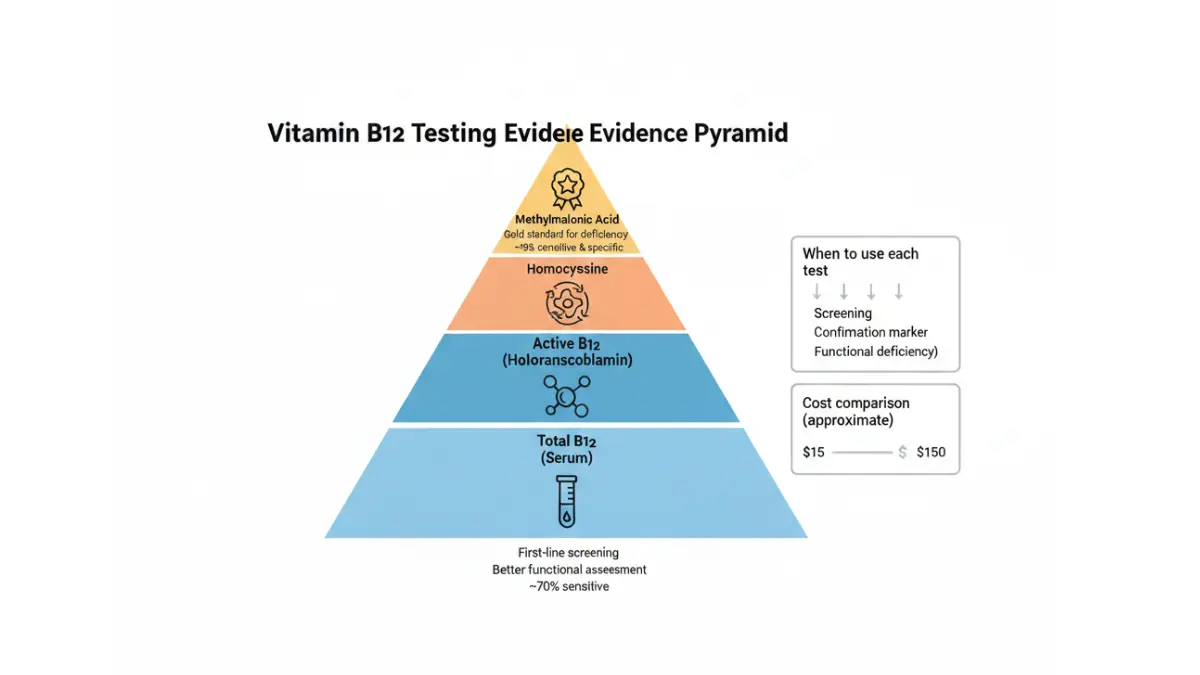
Methylmalonic Acid (MMA) – The Gold Standard: MMA accumulates when cells lack adequate B12 for metabolism. Even with normal total B12, elevated MMA (>0.4 µmol/L) confirms functional deficiency. The National Institutes of Health considers MMA the single most reliable indicator of cellular B12 status.
Homocysteine: B12 deficiency causes homocysteine elevation (>15 µmol/L), though folate deficiency and genetic factors also raise levels. Best used in combination with MMA for comprehensive assessment.
Active B12 (Holotranscobalamin): Measures only the biologically available fraction. Levels below 20-25 pmol/L indicate early deficiency even when total B12 appears normal. This test costs $75-150 but provides precision unavailable from standard B12 testing.
When to order advanced panels:
- Total B12 between 200-450 pg/mL with persistent symptoms
- Neurological symptoms (tingling, numbness, balance issues)
- Cognitive changes (memory loss, brain fog, confusion)
- Unexplained anemia or elevated mean corpuscular volume (MCV)
- After gastric surgery or on long-term acid-blocking medications
What To Do Next – Your Action Protocol
Your Next Steps Based on B12 Results (2026 Protocols)
If Your B12 Is Under 200: Emergency Protocol
B12 deficiency at this level requires immediate physician consultation—ideally within 24-48 hours. Do not attempt to self-treat with over-the-counter supplements, as the underlying cause needs diagnosis and oral supplements often fail due to absorption issues.
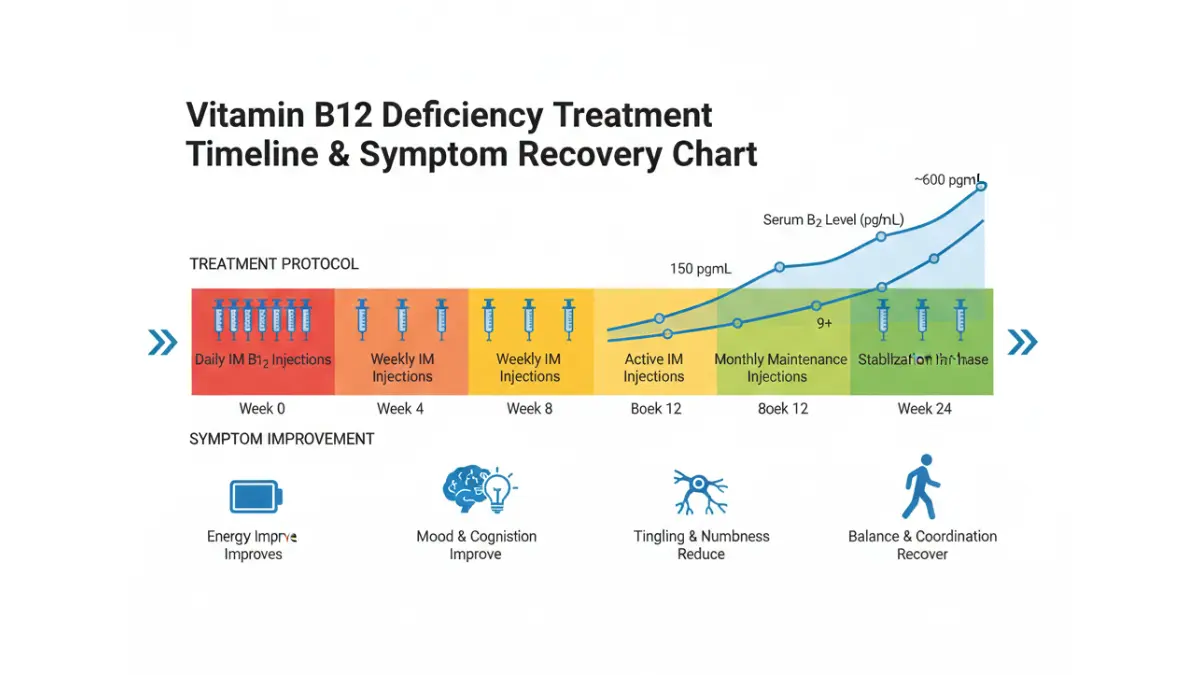
Standard medical protocol (2026):
- Week 1: Intramuscular cyanocobalamin or hydroxocobalamin 1000 mcg daily for 7 days
- Weeks 2-8: IM injections 1000 mcg weekly
- Month 3+: IM injections 1000 mcg monthly or high-dose oral (1000-2000 mcg daily) if absorption improves
Concurrent testing required:
- Complete blood count (CBC) to assess for megaloblastic anemia
- Intrinsic factor antibodies (diagnose pernicious anemia)
- Methylmalonic acid and homocysteine (confirm deficiency)
- Gastric parietal cell antibodies (if pernicious anemia suspected)
Expected improvement timeline:
- Blood cell production: 5-7 days
- Energy levels: 2-4 weeks
- Neurological symptoms: 3-6 months (may be permanent if deficiency prolonged)
Insurance typically covers B12 injections when levels fall below 200 pg/mL with documented symptoms or confirmed pernicious anemia. Co-pays average $15-35 per injection depending on your plan.
If Your B12 Is 200-400: The Investigation Protocol
This critical range demands thorough investigation rather than “wait and see” approaches. Request your physician order MMA testing within two weeks to determine if functional deficiency exists despite borderline-normal B12 levels.
Recommended testing sequence:
- Methylmalonic acid: Order immediately (results in 3-5 days)
- Homocysteine: Same blood draw as MMA
- Complete blood count: Check for macrocytic anemia
- Reticulocyte count: Assess bone marrow response
If MMA is elevated (>0.4 µmol/L):
- Start sublingual methylcobalamin 2000 mcg daily
- Retest B12, MMA, and homocysteine in 8-12 weeks
- Investigate underlying cause (diet, medications, absorption)
If MMA is normal (<0.4 µmol/L):
- Consider trial supplementation 1000 mcg daily if symptomatic
- Retest in 12 weeks
- Evaluate other causes of symptoms (thyroid, iron, vitamin D deficiency)
Real Patient Outcome (2026): Daniel, a 51-year-old on metformin for diabetes, had B12 of 267 pg/mL with fatigue and foot numbness. His MMA was elevated at 0.61 µmol/L. After switching to extended-release metformin and starting sublingual B12 2000 mcg daily, his 10-week retest showed B12 of 523 pg/mL, MMA of 0.23 µmol/L, and complete symptom resolution.
If Your B12 Is 400-600: Maintenance Protocol
Congratulations—your B12 sits in the optimal zone. Focus shifts to maintaining these levels through dietary sources and strategic supplementation if you’re in a high-risk category.
Annual monitoring sufficient for:
- Adults under 50 with no risk factors
- Those eating regular animal products
- No medications affecting B12 absorption
- No gastric surgery history
Consider supplementation (500-1000 mcg daily) if you:
- Follow vegan or strict vegetarian diet
- Are over 60 years old (50% have reduced stomach acid)
- Take metformin, proton pump inhibitors (PPIs), or H2 blockers
- Have had gastric bypass or intestinal surgery
- Drink alcohol regularly (>7 drinks weekly)
Use the Protein Intake Calculator to ensure adequate dietary B12 from animal sources like beef liver (70 mcg per 3 oz), clams (84 mcg per 3 oz), salmon (4.8 mcg per 3 oz), and fortified cereals (6 mcg per serving).
If Your B12 Is Over 600: Monitoring Protocol
While generally safe, sustained levels above 700 pg/mL without active supplementation warrant medical evaluation. According to Yale School of Medicine, very high B12 can indicate serious underlying conditions in 10-15% of cases.
Immediate actions:
- Stop all B12 supplements temporarily (2-4 weeks)
- Review medications and multivitamins for B12 content
- Retest in 6-8 weeks to see if levels decline
If levels remain elevated (>900 pg/mL) after stopping supplements:
- Kidney function tests (creatinine, BUN, eGFR)
- Liver function tests (AST, ALT, bilirubin)
- Complete blood count with differential
- Consider hematology referral if CBC abnormal
Real 2026 Patient Cases + Outcomes
Real Patient Results: 2026 Case Studies
Case 1: The False Normal (Gray Zone Success)
Patient: Emma, 47-year-old postmenopausal executive Initial B12 (January 2026): 368 pg/mL (reported “normal”) Presenting symptoms: Severe fatigue requiring afternoon naps, difficulty concentrating during meetings, cold hands/feet, occasional tingling in toes.
Emma’s primary care physician initially dismissed her concerns, noting her B12 fell within the normal range. Frustrated, she requested advanced testing after researching iron studies and other nutritional markers.
Advanced test results:
- Methylmalonic acid: 0.52 µmol/L (elevated; normal <0.4)
- Homocysteine: 15.8 µmol/L (high; normal <15)
- Active B12: 18 pmol/L (low; optimal >25)
Diagnosis: Functional B12 deficiency despite “normal” total B12
Treatment protocol:
- Sublingual methylcobalamin 2500 mcg daily
- Methylfolate 800 mcg daily (to support homocysteine reduction)
- Dietary optimization emphasizing B12-rich foods
8-week retest (March 2026):
- Total B12: 614 pg/mL
- MMA: 0.24 µmol/L (normalized)
- Homocysteine: 9.2 µmol/L (optimal)
Outcome: Complete symptom resolution by week 10. Energy levels restored, concentration improved, extremity tingling eliminated. Emma now maintains with 1000 mcg sublingual B12 three times weekly.
Case 2: The Medication-Induced Deficiency
Patient: Robert, 64-year-old with type 2 diabetes Initial B12 (February 2026): 178 pg/mL (deficient) Medications: Metformin 2000 mg daily (12 years), omeprazole 40 mg daily (8 years) Symptoms: Progressive weakness in legs, balance difficulties, memory lapses.
Robert represents a classic case of medication-induced B12 deficiency. Long-term metformin use reduces B12 absorption by 10-30%, while proton pump inhibitors like omeprazole decrease stomach acid needed to cleave B12 from food proteins. The combination creates severe deficiency risk.
Treatment approach:
- Switched to extended-release metformin 2000 mg (reduces GI B12 interference)
- Gradual omeprazole taper to 20 mg, then switched to H2 blocker (famotidine)
- Intramuscular B12 injections: 1000 mcg weekly for 8 weeks, then monthly
12-week retest (May 2026):
- B12: 487 pg/mL
- MMA: 0.31 µmol/L (normal)
- Neurological exam: Significant improvement in proprioception and gait
Outcome: Robert continues monthly IM B12 injections with stable levels around 520-560 pg/mL. Leg strength returned by week 16, though mild peripheral neuropathy persists due to prolonged deficiency period.
Case 3: The Vegan Success Story
Patient: Alicia, 29-year-old vegan (6 years) Initial B12 (March 2026): 223 pg/mL (low-normal) Symptoms: Brain fog, irritability, fatigue despite adequate sleep cycles.
Alicia followed a whole-food plant-based diet rich in nutritional yeast and fortified plant milks, assuming this provided adequate B12. Standard fortified foods typically contain 2-6 mcg per serving, while adults need 2.4 mcg daily minimum—however, absorption efficiency from fortified foods averages only 50%.
Treatment protocol:
- Cyanocobalamin 1000 mcg oral supplement daily
- Continued fortified food consumption
- Education on B12 bioavailability from supplements vs food
10-week retest (June 2026):
- B12: 596 pg/mL (optimal)
- Energy and cognition fully restored
Outcome: Alicia maintains 1000 mcg daily supplementation with quarterly B12 monitoring. She now educates other vegans on B12 supplementation necessity regardless of fortified food intake.
Most Asked Questions About B12 Results
1. What is a dangerously low B12 level?
Below 150 pg/mL constitutes a medical emergency requiring immediate evaluation. At this level, permanent neurological damage can occur within weeks, affecting nerve function, cognition, and blood cell production.
2. Is 300 pg/mL B12 considered low?
While technically within the “normal” range on most lab reports, 300 pg/mL sits in the gray zone where functional deficiency frequently occurs. Request methylmalonic acid testing if you experience fatigue, brain fog, or neurological symptoms at this level.
3. How quickly can B12 levels improve?
With intramuscular injections, blood levels rise within 24-48 hours. Symptoms typically improve within 4-6 weeks for energy and mood, though neurological symptoms may take 3-6 months depending on deficiency severity and duration.
4. Can B12 be too high?
Levels persistently above 900 pg/mL without supplementation warrant investigation. While B12 toxicity is extremely rare, very high levels can indicate kidney disease, liver disorders, or myeloproliferative conditions requiring medical evaluation.
5. Should I retest B12 levels?
Yes—timing depends on initial results. Retest in 4-6 weeks if deficient (<200), 8-12 weeks if borderline (200-400), 6 months if high (>600), and annually if optimal (400-600).
6. What’s the difference between total and active B12?
Total B12 measures all B12 in blood, including inactive forms your body cannot use. Active B12 (holotranscobalamin) measures only the biologically available portion—typically 20-30% of total B12—providing more accurate assessment of true B12 status.
7. Do vegans always have low B12?
Not immediately, but 60-90% of vegans develop deficiency within 3-5 years without supplementation. B12 exists almost exclusively in animal products, making supplementation essential for those following plant-based diets long-term.
8. Can medications lower B12?
Yes—metformin (diabetes medication), proton pump inhibitors like omeprazole, H2 blockers like famotidine, and methotrexate all significantly reduce B12 absorption. Long-term users (>2 years) should request annual B12 monitoring regardless of symptoms.
9. What symptoms indicate low B12?
Common symptoms include persistent fatigue unrelieved by rest, tingling or numbness in hands and feet, difficulty concentrating, memory problems, balance issues, pale or jaundiced skin, rapid heartbeat, and mood changes including depression.
10. Is oral B12 effective?
For mild deficiency (200-400 pg/mL) with intact absorption, high-dose oral B12 (1000-2000 mcg daily) works effectively. However, severe deficiency (<200 pg/mL) or absorption issues (pernicious anemia, gastric surgery) require intramuscular injections for reliable restoration.
11. When should I see a doctor about B12?
Seek immediate care if levels fall below 200 pg/mL or you experience neurological symptoms (numbness, tingling, balance problems, confusion). Schedule appointments within 1-2 weeks for borderline levels (200-400 pg/mL) with persistent symptoms like fatigue or cognitive changes.
About this content
How this article was put together: researched from recognised health sources, drafted with the help of AI tools, and edited by hand, with sources linked throughout.

Sameer Patel is the founder and editor of My Medicine Advisor. He is not a doctor or medical professional — before starting this site he worked in banking,…
Medical disclaimer
The content on MyMedicineAdvisor is provided for general informational and educational purposes only and is not a substitute for professional medical advice, diagnosis, or treatment. Health information on this website should not be used to diagnose, treat, cure, or prevent any condition without guidance from a qualified healthcare professional. Always seek the advice of your doctor, physician, or another licensed healthcare provider with any questions you may have regarding a medical condition, symptoms, medications, or treatment decisions.