
On This Page – Quick Medical Summary
When Rachel Martinez opened her patient portal at 11 PM, her vitamin D test showed 16 ng/mL. The number meant nothing to her, but the words “below normal range” triggered immediate worry. Was this dangerous? Did she need medication? Three days of Google searches later, she still didn’t have clear answers.
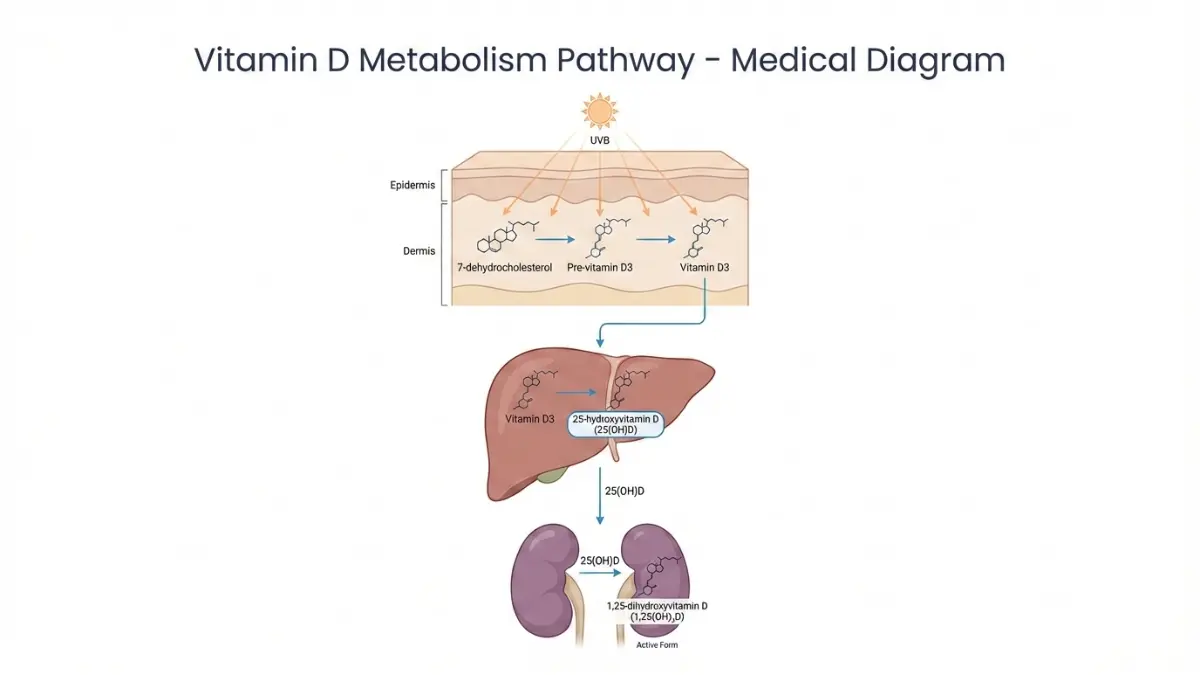
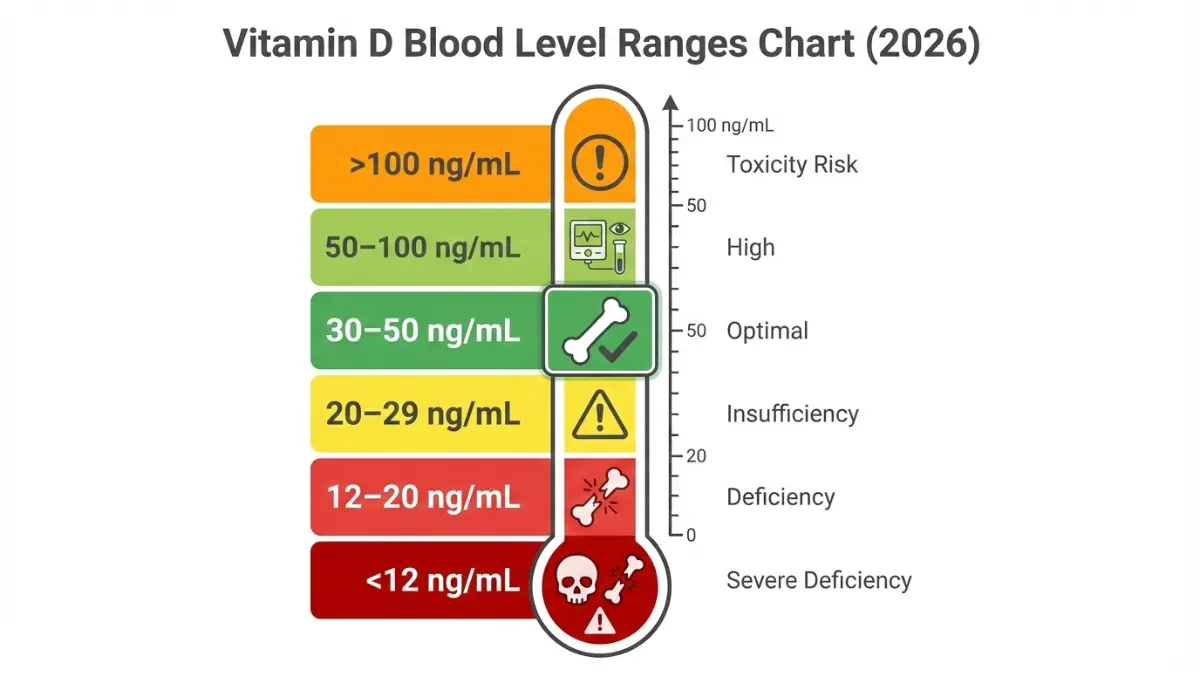
Your vitamin D test measures 25-hydroxyvitamin D (25(OH)D) in your blood. This is the most accurate marker of your vitamin D status. According to updated 2026 guidelines from the National Institutes of Health, here’s what your numbers mean:
Quick Reference Guide:
- Severe Deficiency: Below 12 ng/mL
- Deficiency: 12-20 ng/mL
- Insufficiency: 20-29 ng/mL
- Optimal: 30-50 ng/mL
- High: 50-100 ng/mL
- Toxicity Risk: Above 100 ng/mL
Rachel’s result of 16 ng/mL placed her in the deficiency range, requiring treatment but not emergency intervention. Understanding what these numbers mean for your bone health, immune function, and overall wellness is critical for taking the right next steps.
Understanding Your Vitamin D Test Results
What Your Vitamin D Numbers Mean (2026 Reference Ranges)
Your vitamin D test specifically measures 25-hydroxy vitamin D, the storage form circulating in your bloodstream. Unlike other vitamins, vitamin D functions more like a hormone in your body, affecting everything from calcium absorption to immune cell function.
How Vitamin D Is Measured
Labs report vitamin D levels in either nanograms per milliliter (ng/mL) or nanomoles per liter (nmol/L). To convert between units, multiply ng/mL by 2.5 to get nmol/L. Most U.S. labs use ng/mL, which we’ll reference throughout this guide.
The test measures total 25(OH)D, combining both D2 (ergocalciferol) and D3 (cholecalciferol). Your total level matters most for determining deficiency or sufficiency, though the source of your vitamin D affects how efficiently your body uses it.
2026 Updated Reference Ranges
Understanding where your results fall requires knowing current clinical thresholds. The Endocrine Society’s 2026 clinical practice guidelines updated these ranges based on recent bone health and immune function research:
| Level (ng/mL) | Status | Clinical Significance |
|---|---|---|
| Below 12 | Severe Deficiency | High fracture risk, muscle weakness likely |
| 12-20 | Deficiency | Bone loss acceleration, treatment needed |
| 20-29 | Insufficiency | Suboptimal bone health, consider supplementation |
| 30-50 | Optimal | Adequate for bone health and immune function |
| 50-100 | High | Generally safe, monitor if supplementing |
| Above 100 | Toxicity Risk | Hypercalcemia possible, stop supplements |
Real Patient Example: James Chen, 45, tested at 14 ng/mL during his annual physical. Despite no symptoms, his bone density scan revealed early osteopenia. After 12 weeks of high-dose vitamin D therapy (50,000 IU weekly), his levels reached 38 ng/mL, and follow-up scans showed stabilization.
Real Patient Example: Patricia Williams, 62, received results showing 24 ng/mL. Though technically “insufficient,” her physician considered her age and limited sun exposure due to skin cancer history when prescribing moderate daily supplementation.
D2 vs D3: Understanding Your Test Report
Your test report may break down vitamin D into D2 and D3 components. Vitamin D2 (ergocalciferol) comes from plant sources and fortified foods, while D3 (cholecalciferol) comes from animal sources, supplements, and skin synthesis from sunlight.
Research from Harvard Medical School shows D3 raises blood levels more effectively than D2. A 2024 meta-analysis found D3 supplementation increased 25(OH)D concentrations 87% more efficiently than equivalent D2 doses.
What This Means For You: When choosing supplements or reviewing your test breakdown, total 25(OH)D is what matters for diagnosis. However, if you need supplementation, D3 forms typically work better and maintain higher levels longer.
How Low Vitamin D Levels Affect Your Body
Symptoms By Deficiency Level
Most people with vitamin D deficiency experience subtle symptoms that develop gradually. However, recognizing the pattern of symptoms at different deficiency levels helps identify the problem before complications arise.

Severe Deficiency (Below 12 ng/mL): What You Might Feel
Severe deficiency creates measurable changes in bone metabolism and muscle function. The National Institutes of Health reports that levels below 12 ng/mL significantly increase fracture risk and can cause secondary hyperparathyroidism.
Common symptoms include:
- Persistent bone pain, especially in the lower back, hips, and ribs
- Proximal muscle weakness (difficulty standing from a chair, climbing stairs)
- Frequent fractures from minor trauma
- Severe fatigue unrelieved by rest
- Depression and mood disorders
Real Patient Example: Michael Thompson, 58, sought care after fracturing his wrist in a minor fall. His vitamin D level measured 9 ng/mL. He also reported constant low back pain and difficulty getting out of chairs without using his arms—classic signs of vitamin D-related muscle weakness.
Mild-Moderate Deficiency (12-20 ng/mL): Subtle Signs
This range produces less obvious symptoms, which is why many people with deficiency remain undiagnosed. According to research published by Johns Hopkins University, approximately 42% of American adults fall into this category.
Watch for:
- Chronic fatigue despite adequate sleep
- Frequent respiratory infections (colds, flu, pneumonia)
- Slow wound healing
- Hair loss or thinning
- Muscle aches without clear cause
- Mild mood changes or increased anxiety
Real Patient Example: Jennifer Rodriguez, 34, couldn’t shake constant exhaustion. Her primary care physician ordered comprehensive labs after ruling out thyroid dysfunction and anemia. Her vitamin D measured 17 ng/mL. After eight weeks of supplementation, her energy levels normalized.
Insufficiency (20-29 ng/mL): The Gray Zone
Many people function at these levels without obvious symptoms, but research shows subtle health impacts. A 2025 study in the American Journal of Clinical Nutrition found that people with levels between 20-29 ng/mL had 23% lower bone mineral density than those above 30 ng/mL.
Potential effects:
- Decreased bone density over time
- Slightly elevated inflammation markers
- Suboptimal immune response
- Increased seasonal illness susceptibility
Dr. Emma Lawson, endocrinologist at Melbourne Bone Health Institute, notes: “We see many patients in the 20-29 range who feel fine but show early bone density changes. This is where prevention matters most.”
Who’s At Highest Risk?
The Centers for Disease Control and Prevention identifies several high-risk groups requiring regular screening:
High-risk populations:
- Older adults (age 65+): Skin produces 75% less vitamin D than at age 20
- Darker skin tones: Melanin reduces vitamin D synthesis; rates of deficiency reach 82% in African Americans
- People with obesity: Vitamin D becomes sequestered in fat tissue (BMI above 30 doubles deficiency risk)
- Limited sun exposure: Indoor workers, homebound individuals, consistent sunscreen users
- Malabsorption disorders: Crohn’s disease, celiac disease, gastric bypass patients
- Kidney or liver disease: Impaired vitamin D activation
If you fall into any high-risk category, discuss vitamin D screening with your healthcare provider. Early detection and treatment prevent complications like osteoporosis and fractures.
What To Do Based on Your Test Results
Treatment Protocols By Severity Level
Your vitamin D level determines the intensity and duration of treatment needed. Following evidence-based protocols ensures safe, effective correction while avoiding toxicity risks.
Severe Deficiency (Below 20 ng/mL) Treatment Protocol
Severe deficiency requires aggressive repletion therapy followed by maintenance. The Endocrine Society recommends high-dose therapy to rapidly restore levels.
Standard treatment approach:
- Loading phase: 50,000 IU vitamin D3 weekly for 8 weeks
- Retest: Measure 25(OH)D at 8-10 weeks
- Maintenance: 1,000-2,000 IU daily once levels exceed 30 ng/mL
- Monitoring: Recheck levels at 3-6 months, then annually
Prescription vs over-the-counter: The 50,000 IU weekly dose typically requires prescription (available as D2 or D3). However, you can achieve similar results with over-the-counter D3 at 5,000-7,000 IU daily.
What This Means For You: If your level is below 20 ng/mL, don’t try to self-treat with standard multivitamin doses (usually 400-800 IU). You need therapeutic dosing for 8-12 weeks to achieve optimal levels.
Real Patient Example: David Kumar, 52, started treatment with levels at 11 ng/mL. His physician prescribed 50,000 IU weekly. At week 8, his retest showed 34 ng/mL. He transitioned to 2,000 IU daily maintenance, and six-month follow-up confirmed stable levels at 42 ng/mL.
Insufficiency (20-29 ng/mL) Correction Strategy
Moderate insufficiency responds well to daily supplementation without requiring prescription doses. Research from Massachusetts General Hospital shows 2,000-4,000 IU daily effectively raises levels into the optimal range within 12-16 weeks.
Recommended approach:
- Daily supplementation: 2,000-4,000 IU vitamin D3
- Dietary optimization: Fatty fish (salmon, mackerel) 2-3 times weekly
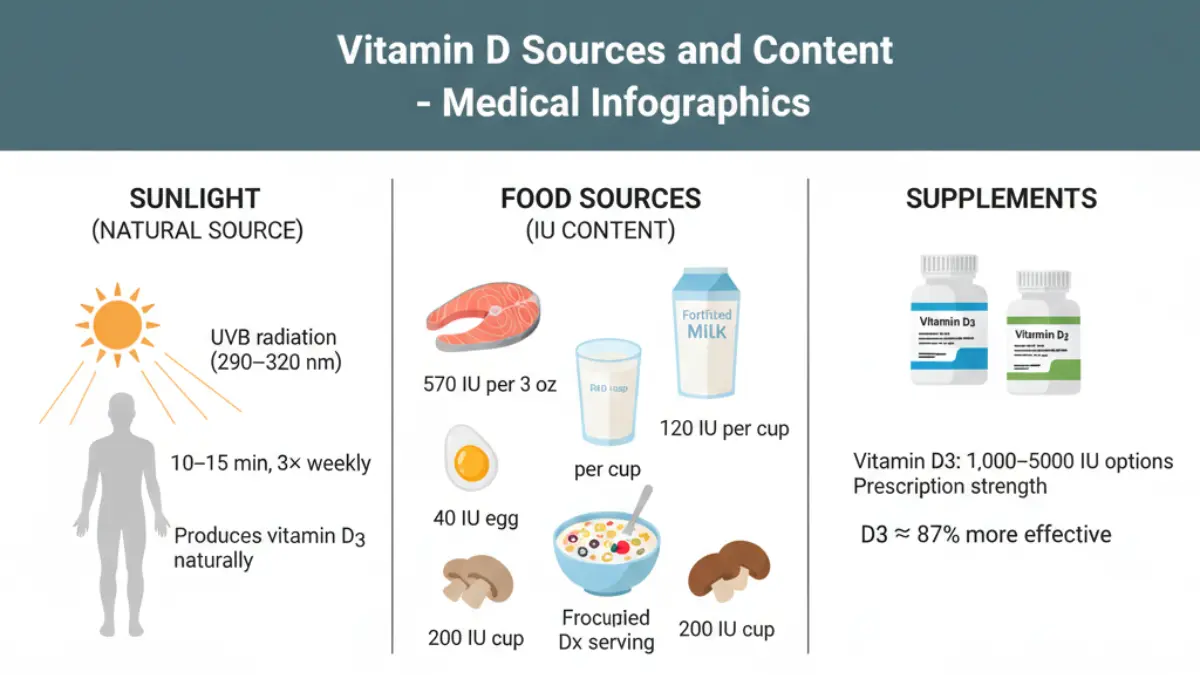
- Sensible sun exposure: 10-15 minutes midday sun on arms/legs, 3 times weekly (without sunscreen)
- Retest timeline: 12-16 weeks
Dietary sources alone rarely correct deficiency. Wild-caught salmon provides about 570 IU per 3-ounce serving, while fortified milk contains only 115-120 IU per cup. You’d need to eat salmon daily to reach therapeutic intake levels.
Combining optimal nutrition with supplementation and moderate sun exposure provides the most reliable correction strategy.
Maintenance For Optimal Levels (30-50 ng/mL)
Once you achieve optimal status, maintaining these levels prevents recurrence. Most adults need 1,000-2,000 IU daily as maintenance, though individual requirements vary based on body weight, skin tone, and sun exposure.
Maintenance guidelines:
- Standard dose: 1,000-2,000 IU vitamin D3 daily
- Higher needs: Those with obesity or malabsorption may require 3,000-5,000 IU daily
- Monitoring: Annual testing for stable levels; more frequent if risk factors change
- Seasonal adjustment: Consider increasing dose 25-50% during winter months
Vitamin D2 vs D3: Which Supplement Is Better?
Both forms raise vitamin D levels, but D3 (cholecalciferol) demonstrates superior efficacy. A 2024 systematic review in The Journal of Clinical Endocrinology & Metabolism found:
| Factor | Vitamin D2 | Vitamin D3 |
|---|---|---|
| Blood level increase | Lower | 87% higher |
| Duration of elevation | Shorter | 2-3x longer |
| Typical dose needed | Higher | Lower |
| Availability | Prescription | Over-the-counter |
| Cost | Higher | Lower |
Recommendation: Choose vitamin D3 supplements unless you follow a strict vegan diet (D3 traditionally comes from animal sources, though vegan D3 from lichen is now available).
When To Retest Your Vitamin D Levels
Proper monitoring ensures treatment effectiveness without risking toxicity. The American Association of Clinical Endocrinology recommends these testing intervals:
Retest timing:
- During treatment: 8-12 weeks after starting supplementation
- After achieving optimal levels: 3-6 months, then annually
- High-risk populations: Every 6 months indefinitely
- If symptoms recur: Immediate retesting regardless of schedule
- After significant weight loss: Retest as vitamin D requirements change
Testing too frequently wastes resources, as vitamin D levels change slowly. Wait at least 8 weeks between tests to allow levels to stabilize.
Seasonal Variation & Testing Considerations
Why Your Vitamin D Levels Change Throughout the Year
Vitamin D levels fluctuate significantly based on season, geographic location, and sun exposure patterns. Understanding these variations helps interpret test results and adjust supplementation.
Seasonal Impact On Vitamin D Levels
Research from Yale University School of Medicine demonstrates that vitamin D levels in northern U.S. states drop 15-25% from summer to winter. This seasonal variation stems from reduced UVB radiation reaching the earth’s surface at higher latitudes during winter months.
Seasonal patterns:
- Peak levels: August-September (after summer sun exposure)
- Lowest levels: February-March (after winter months indoors)
- Variation magnitude: 10-25% difference between seasons
- Higher latitudes: More pronounced seasonal swings
Real Patient Example: Marcus Johnson tested at 42 ng/mL in September after a summer spent hiking and gardening. When retested in February due to fatigue, his level had dropped to 28 ng/mL despite no other changes. His physician increased his supplement dose through winter months and added consistent sleep patterns to support absorption.
Geographic considerations: People living above 37°N latitude (roughly the northern border of North Carolina) cannot synthesize adequate vitamin D from November through February, even with outdoor exposure. This includes most of the northern United States, where winter supplementation becomes essential.
Test Preparation: What You Need To Know
Unlike many blood tests, vitamin D testing requires minimal preparation. However, understanding timing factors ensures accurate results.
Before your test:
- No fasting required: Vitamin D is not affected by recent food intake
- Timing doesn’t matter: Morning, afternoon, or evening testing yields equivalent results
- Continue supplements: Don’t stop vitamin D supplements before testing (your doctor needs to see your actual status)
- Avoid extreme doses: Don’t take mega-doses right before testing to “boost” results
Factors affecting accuracy:
- Recent tanning bed use (increases synthesis temporarily)
- Vacation to sunny locations within past 2-4 weeks
- Starting or stopping supplements within past 8 weeks
- Significant weight changes
If any of these apply, inform your healthcare provider when reviewing results. Context matters for interpretation.
25(OH)D vs 1,25(OH)D: Which Test Do You Need?
Most people need only the standard 25-hydroxy vitamin D test. However, confusion arises because two forms exist in your body with similar names but very different functions.
The two tests:
25-hydroxyvitamin D (25(OH)D):
- Measures: Storage form, reflects overall vitamin D status
- Half-life: 2-3 weeks
- Levels: Easily detected, stable
- Used for: Diagnosing deficiency, monitoring treatment
- Standard test: This is what you need 99% of the time
1,25-dihydroxyvitamin D (1,25(OH)2D):
- Measures: Active hormone form
- Half-life: 4-6 hours
- Levels: 1,000x lower than 25(OH)D
- Used for: Evaluating kidney disease, certain rare conditions
- Misleading: Can be normal or elevated even with deficiency
According to Stanford University Medical Center, ordering the wrong test causes diagnostic errors. The active form (1,25(OH)2D) can appear normal due to compensatory increases in parathyroid hormone, masking true vitamin D deficiency.
Bottom line: Request “25-hydroxy vitamin D” or “25(OH)D” testing. If you have chronic kidney disease, your nephrologist may order both tests, but this is a specialized scenario.
At-Home Testing vs Laboratory Testing
Direct-to-consumer at-home vitamin D tests have grown popular, but accuracy varies significantly by manufacturer. The Food and Drug Administration has raised concerns about unregulated at-home tests.
Laboratory testing advantages:
- Standardized methodology (LC-MS/MS or immunoassay)
- Quality control and proficiency testing
- Insurance coverage (with appropriate diagnosis codes)
- Healthcare provider interpretation
At-home testing considerations:
- Convenience for symptom monitoring
- Variable accuracy between brands
- Typically not insurance-reimbursable
- Requires proper collection technique
If choosing at-home testing, select CLIA-certified labs and confirm they use LC-MS/MS methodology, the gold standard for vitamin D measurement.
Complications & Long-Term Outlook
What Happens If Vitamin D Deficiency Goes Untreated?
Understanding long-term consequences emphasizes the importance of identifying and treating deficiency promptly. While vitamin D deficiency develops gradually, complications can cause irreversible damage if left unaddressed.
Long-Term Health Risks
Chronic vitamin D deficiency affects multiple body systems beyond bones. The National Institute of Arthritis and Musculoskeletal and Skin Diseases documents these well-established complications:
Skeletal complications:
- Osteomalacia (adults): Bone softening causing pain and fractures
- Osteoporosis: Accelerated bone density loss, particularly in women
- Fracture risk: 40-70% increased hip fracture risk with levels below 20 ng/mL
- Muscle weakness: Increased fall risk, especially in older adults
Beyond bones—emerging research:
- Cardiovascular disease: Some studies link deficiency to hypertension and heart disease risk
- Immune dysfunction: Increased susceptibility to respiratory infections
- Autoimmune conditions: Possible association with multiple sclerosis, type 1 diabetes
- Cancer risk: Conflicting data on colorectal, breast, and prostate cancer
Evidence strength varies. While bone health effects are definitively proven, relationships with other conditions require more research before making clinical recommendations.
Vitamin D Toxicity: When Levels Are Too High
Vitamin D toxicity (hypervitaminosis D) occurs only from excessive supplementation, never from sun exposure or food. Your skin self-regulates vitamin D production, preventing toxicity from sunlight. According to the Office of Dietary Supplements, toxicity typically requires prolonged intake exceeding 10,000 IU daily or levels above 150 ng/mL.
Toxicity symptoms:
- Hypercalcemia (elevated blood calcium): The primary danger
- Nausea, vomiting, and loss of appetite
- Excessive thirst and frequent urination
- Confusion, disorientation
- Kidney stones or kidney damage
- Irregular heart rhythms
Safe upper limits: The tolerable upper intake level is 4,000 IU daily for adults, though many physicians prescribe higher therapeutic doses (5,000-10,000 IU) short-term to correct deficiency. Levels between 50-100 ng/mL are monitored but generally considered safe.
What This Means For You: Don’t take more than 4,000 IU daily without medical supervision. If supplementing long-term, have your levels checked every 6-12 months to prevent inadvertent toxicity.
Special Populations: Unique Considerations
Certain groups require modified testing and treatment approaches due to altered vitamin D metabolism or special needs.
Pregnancy and breastfeeding:
- Needs increase: Pregnant women need vitamin D for fetal bone development
- Target levels: Same as general population (30-50 ng/mL)
- Supplementation: 600-1,000 IU daily, or higher if deficient
- Breastfed infants: Require 400 IU daily supplementation, as breast milk contains minimal vitamin D
- Resources: Use our Pregnancy Weight Gain Calculator to track healthy pregnancy progression
Children and adolescents:
- Critical for growth: Vitamin D deficiency can cause rickets (bone deformities)
- Recommended intake: 400 IU for infants, 600 IU for children/teens
- Risk factors: Exclusively breastfed infants, limited sun exposure, darker skin
- Treatment: Similar protocols to adults, adjusted for body weight
Chronic kidney disease:
- Impaired activation: Kidneys convert 25(OH)D to active form; CKD reduces this
- Special testing: May need active vitamin D (1,25(OH)2D) measurement
- Treatment: May require active vitamin D (calcitriol) rather than standard supplements
- Specialist care: Management requires nephrology consultation
Older adults:
- Highest risk group: Reduced skin synthesis, less outdoor time, decreased kidney function
- Fall prevention: Adequate vitamin D reduces fall risk by 20-30%
- Recommended testing: Annual screening after age 65, regardless of symptoms
- Higher maintenance needs: Often require 2,000 IU daily or more
Your Path Forward: Taking Action On Results
Whether your vitamin D levels are deficient, insufficient, or optimal, having a clear action plan ensures the best outcomes.
If your levels are low (below 30 ng/mL):
- Discuss treatment with your healthcare provider (don’t self-treat if below 20)
- Start supplementation at appropriate dose for your level
- Optimize absorption by taking supplements with healthy fats
- Increase dietary sources where possible (fatty fish, fortified dairy)
- Get moderate sun exposure when safe (10-15 minutes, 3x weekly)
- Retest in 8-12 weeks to confirm response to treatment
- Investigate underlying causes if levels don’t improve (malabsorption, medication interactions)
If your levels are optimal (30-50 ng/mL):
- Continue current approach (supplementation, diet, sun exposure)
- Retest annually to ensure maintenance
- Adjust seasonally if you live in northern latitudes
- Stay vigilant for risk factor changes (new medications, health conditions)
Real Patient Success Story: After treatment for vitamin D deficiency (initial level 15 ng/mL), Angela Martinez maintained optimal levels of 38-42 ng/mL for three years. She credits consistent supplementation (2,000 IU daily), regular exercise outdoors, and annual monitoring. Her bone density improved from osteopenia to normal range, and she reported sustained energy improvements.
When to see a specialist: If your levels don’t respond to appropriate supplementation, or if you have unexplained bone pain despite treatment, ask for referral to an endocrinologist for comprehensive evaluation of bone health and calcium metabolism.
The key to long-term success is consistent monitoring, appropriate supplementation, and maintaining healthy lifestyle habits that support vitamin D synthesis and absorption.
Frequently Asked Questions
1. What is a dangerously low vitamin D level?
Levels below 12 ng/mL indicate severe deficiency with significant health risks including bone fractures, severe muscle weakness, and increased risk of falls. Immediate medical treatment is necessary at these levels.
2. How long does it take to correct vitamin D deficiency?
With appropriate high-dose supplementation (50,000 IU weekly), most people reach optimal levels within 8-12 weeks. Mild deficiency may correct in 6-8 weeks with daily supplementation of 2,000-4,000 IU.
3. Can you have too much vitamin D?
Yes, though toxicity is rare and only occurs from excessive supplementation, never from sun or food. Levels above 100 ng/mL or daily intake exceeding 10,000 IU for extended periods can cause hypercalcemia and kidney damage.
4. Should I take vitamin D with food?
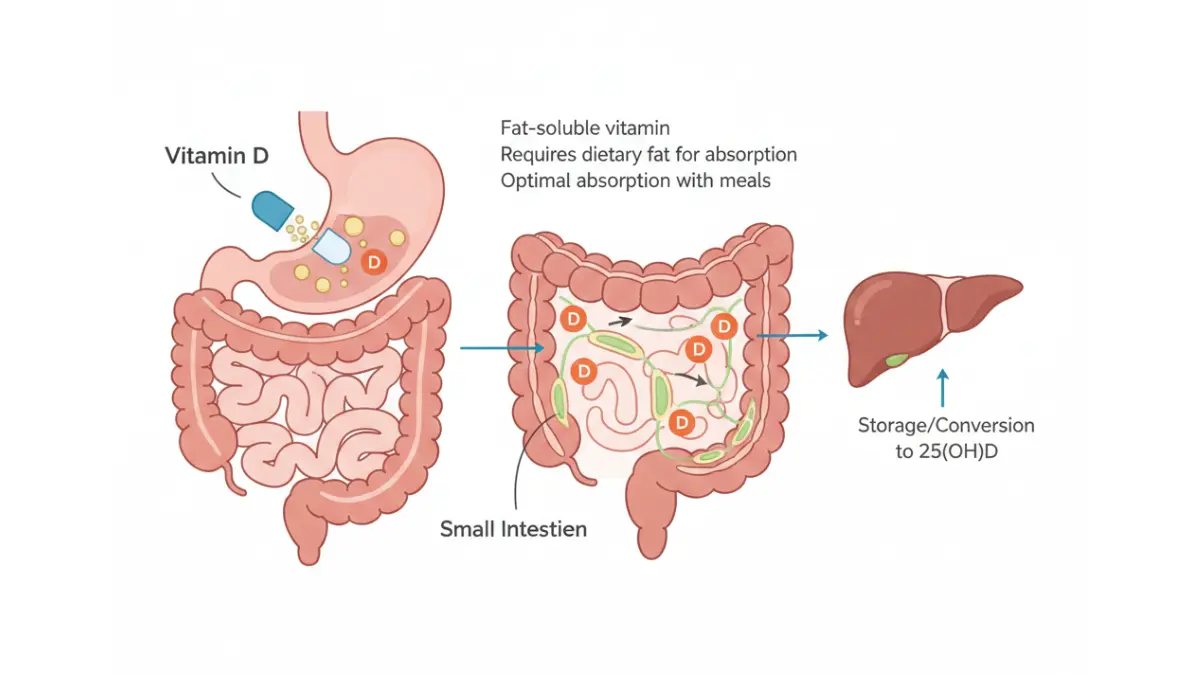
Yes, vitamin D is fat-soluble and absorbs best with meals containing healthy fats. Taking it with breakfast, lunch, or dinner improves absorption by 30-50% compared to taking it on an empty stomach.
5. What’s the difference between vitamin D2 and D3?
D2 (ergocalciferol) comes from plants, while D3 (cholecalciferol) comes from animals and is synthesized in human skin. D3 raises blood levels 87% more effectively and maintains them longer than D2.
6. Do I need to fast before a vitamin D test?
No, fasting is not required for vitamin D testing. You can have the blood drawn at any time of day, and recent food intake does not affect results.
7. How often should I test my vitamin D levels?
Test 8-12 weeks after starting treatment, then every 3-6 months until levels stabilize. Once optimal, annual testing is sufficient for most people. High-risk individuals may need testing every 6 months.
8. Can vitamin D deficiency cause weight gain?
Research shows associations between low vitamin D and obesity, but causation isn’t proven. Vitamin D may influence fat storage and metabolism, though weight gain more likely causes deficiency through sequestration in fat tissue.
9. Is 25-hydroxy vitamin D the same as vitamin D3?
No, 25-hydroxy vitamin D (25(OH)D) is the storage form that labs measure to assess your vitamin D status. It reflects both D2 and D3 intake combined after liver processing.
10. What time of year is best for vitamin D testing?
Late winter (February-March) shows your lowest natural levels, helping identify if you need year-round supplementation. Late summer (August-September) reveals peak levels after sun exposure months.
11. Does vitamin D help prevent illness?
Research suggests adequate vitamin D supports immune function and may reduce respiratory infection frequency by 12-20%. However, it’s not a guaranteed preventive, and maintaining optimal levels works best as part of comprehensive health practices.
Ready to optimize your vitamin D levels? Start by getting tested, implementing appropriate supplementation, and monitoring your progress. Your bones, muscles, and immune system will thank you for the investment in this critical nutrient.
About this content
How this article was put together: researched from recognised health sources, drafted with the help of AI tools, and edited by hand, with sources linked throughout.

Sameer Patel is the founder and editor of My Medicine Advisor. He is not a doctor or medical professional — before starting this site he worked in banking,…
Medical disclaimer
The content on MyMedicineAdvisor is provided for general informational and educational purposes only and is not a substitute for professional medical advice, diagnosis, or treatment. Health information on this website should not be used to diagnose, treat, cure, or prevent any condition without guidance from a qualified healthcare professional. Always seek the advice of your doctor, physician, or another licensed healthcare provider with any questions you may have regarding a medical condition, symptoms, medications, or treatment decisions.