
On This Page – Quick Medical Summary
Liquid Rhinoplasty $600-$2,800: Real Risks 2026 You Must Know Before Booking
Sarah Martinez paid $1,200 for what her med spa called a “15 minute nose job” in Phoenix last year. Within hours, white patches appeared on her nose—the beginning of tissue death that nearly cost her vision. She’s one of 8 documented patients who suffered blindness from liquid rhinoplasty in 2025, according to Johns Hopkins research published by the National Institutes of Health. The nose remains the most dangerous injection zone, accounting for 56.3% of all filler-related vision complications, yet demand for non surgical rhinoplasty has surged 340% since 2020.
What Is Liquid Rhinoplasty? (Non-Surgical Nose Job Explained)
Liquid rhinoplasty—also marketed as a nonsurgical nose job, liquid nose job, or injectable rhinoplasty—involves injecting hyaluronic acid nose fillers beneath the skin to reshape nasal contours without surgery. The U.S. Food and Drug Administration approves these dermal fillers for facial use, though all nose applications remain technically “off-label”. Board-certified plastic surgeons can complete the procedure in 20-45 minutes—not the “15 minute nose job” TikTok claims suggest—using products like Restylane or Juvéderm.
The procedure costs between $600-$2,800 per session in 2026, depending on provider credentials, geographic location, and filler volume required. However, results from this temporary nose job last only 6-18 months, requiring repeat treatments that can exceed surgical rhinoplasty cost over five years.
What Liquid Rhinoplasty CAN Fix:
- Minor dorsal humps – Filling areas above/below bumps creates smoother profile
- Asymmetrical bridge – Balancing uneven nasal contours
- Drooping nasal tip – Strategic filler placement mimics upward rotation
- Post-surgical irregularities – Smoothing minor surgical imperfections
What Nose Filler CANNOT Fix:
- Nose size reduction – Fillers only add volume, never subtract
- Deviated septum – Functional breathing problems require surgery
- Severe humps or crookedness – Structural changes need bone/cartilage work
- Bulbous tip refinement – Adding volume worsens width concerns
Before considering the $600-$2,800 investment in nose filler cost, understanding your baseline health metrics helps determine if you’re a safe candidate for any cosmetic procedure, including filler rhinoplasty alternatives like nose reshaping without surgery.
💡 What This Means For You
A 2023 systematic review analyzing 8,604 liquid rhinoplasty patients found a 2.52% overall complication rate—but major events like vascular occlusion (0.35%) and vision loss (0.09%) occur with life-altering consequences. Your body’s metabolic rate affects filler duration and safety. Check your BMI Calculator baseline before any aesthetic procedure, as higher body mass index can influence how your body processes hyaluronic acid filler nose products and impacts overall procedural risks.
Red flag warning: Anyone offering nonsurgical nose job procedures under $500 or in non-medical settings lacks proper credentials. The FDA explicitly warns against purchasing fillers sold directly to consumers.
2026 Real Cost Breakdown
Liquid Rhinoplasty Cost 2026: Beyond The $600-$2,800 Price Tag
The advertised nose filler cost rarely reflects your actual financial commitment. While CareCredit’s 2026 data shows a national average of $1,456 per session, geographic location creates dramatic pricing disparities—from Vermont’s $1,023 average to South Dakota’s $1,767. These figures exclude mandatory follow-ups, emergency reversals, and the cumulative expenses of maintaining temporary results over multiple years.
National Average Nose Filler Cost By Provider Type
Your practitioner’s credentials directly impact both safety and pricing structures. Research analyzing dermal filler complications across 1,364 patients found board-certified specialists had 67% fewer adverse events than non-physician injectors.
| Provider Type | Initial Session | Touch-Up (12 months) | 5-Year Total Investment | Emergency Reversal |
|---|---|---|---|---|
| Med Spa/Nurse Injector | $600-$900 | $500-$750 | $3,500-$5,250 | $800-$1,500 |
| Board-Certified Dermatologist | $900-$1,400 | $700-$1,100 | $5,250-$8,750 | $1,200-$2,000 |
| Board-Certified Plastic Surgeon | $1,200-$2,800 | $900-$2,000 | $7,000-$16,800 | $1,500-$3,500 |
| Academic Medical Center | $1,500-$3,200 | $1,100-$2,500 | $8,750-$19,250 | $2,000-$5,000 |
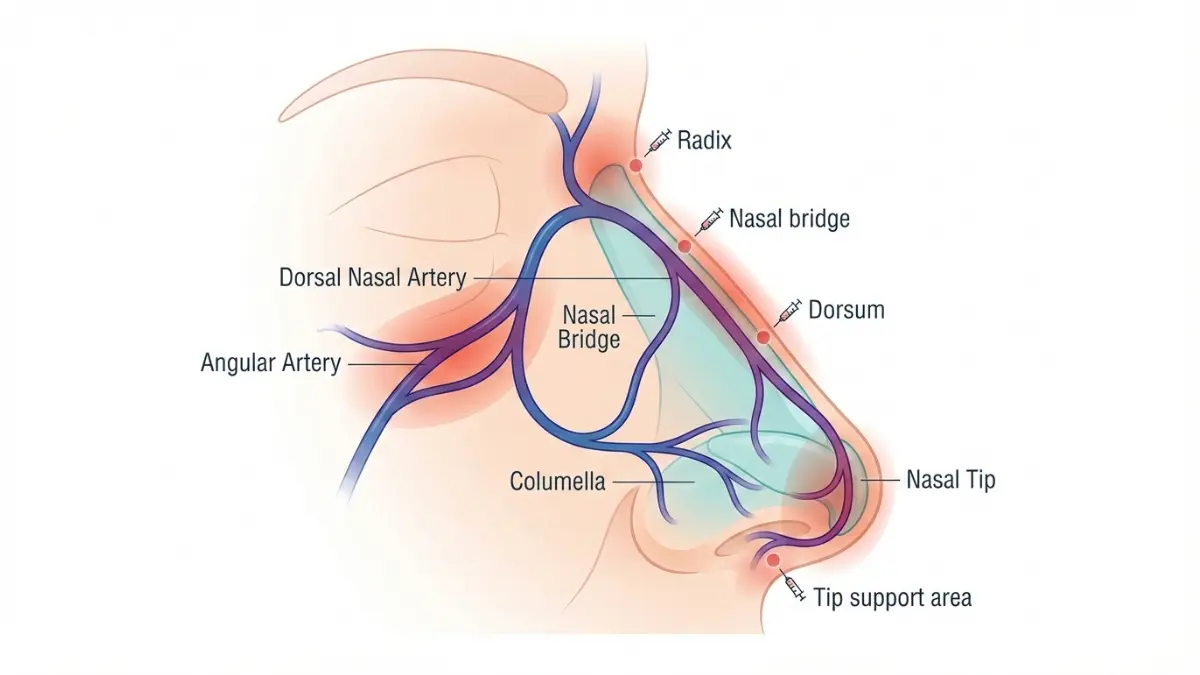
Premium providers charge more because their training includes recognizing anatomical danger zones—the angular artery near the nose’s lateral wall causes 43% of vascular complications when injected improperly.
Hidden Costs Nobody Tells You About
Instagram influencers showcase their “15 minute nose job” without disclosing the financial realities of nose reshaping without surgery. These undisclosed expenses transform initial quotes into substantially higher investments:
- Consultation fees: $100-$500 (rarely waived, even if you proceed)
- Premium filler brands: Juvéderm Voluma costs $150-$300 more per syringe than generic hyaluronic acid nose fillers
- Multiple syringes: 73% of liquid rhinoplasty patients require 1.5-2.5 syringes per session
- Prescription numbing cream: $45-$80 (topical lidocaine applications)
- Arnica montana supplements: $20-$35 for bruising reduction
- Emergency hyaluronidase: $800-$3,500 if immediate filler dissolution becomes necessary
Bruising affects 82% of patients, requiring concealer products or additional downtime that impacts work schedules. If you develop migration or asymmetry—occurring in 11.3% of cases—correction appointments add $450-$1,200 to your total.
Nose Job Price: Surgical Vs Nonsurgical Rhinoplasty Cost-Benefit
The temporary nose job paradox becomes apparent when analyzing long-term economics. NIH healthcare economics research demonstrates that cosmetic procedure pricing correlates with local income levels, not actual clinical value.
| Timeframe | Liquid Rhinoplasty | Surgical Rhinoplasty | Cost Difference |
|---|---|---|---|
| Year 1 | $1,200-$2,800 | $6,000-$15,000 | Surgery costs 3-5× more |
| Year 3 | $3,600-$8,400 | $6,000-$15,000 | Gap narrows to 1.5-2× |
| Year 5 | $7,000-$16,800 | $6,000-$15,000 | Filler EXCEEDS surgery cost |
| Year 10 | $14,000-$33,600 | $6,000-$15,000 | Filler costs 2-3× more |
Insurance never covers cosmetic liquid nose job procedures, while functional components of surgical rhinoplasty may qualify for coverage when correcting breathing obstructions. Medical financing companies like CareCredit offer 0-24% APR plans, but defaulting damages credit scores—a risk 18% of cosmetic surgery borrowers experience within three years.
Understanding rhinoplasty cost 2026 comparisons helps budget realistically for injectable rhinoplasty versus permanent surgical solutions, particularly when factoring maintenance schedules and potential complication management into your financial planning.
💡 What This Means For You
National Institutes of Health economic analyses found patients undergoing multiple filler sessions spent $48-$50,422 over ten years, with 47% exceeding $1,000 annually on maintenance. Before committing to dermal fillers nose treatments, comprehensive health assessment ensures your body can metabolize hyaluronic acid filler nose products safely. Similar to planning for eyelid surgery costs, liquid rhinoplasty requires budgeting for ongoing expenses rather than one-time investments.
Budget reality check: If you’re considering a nonsurgical nose job costing $1,500 today, you’ll spend $7,500-$9,000 maintaining those results over five years—potentially exceeding what permanent surgical correction would cost.
The Procedure Reality
Liquid Rhinoplasty Procedure: What Actually Happens (Not The Instagram Version)
Marcus Chen’s TikTok showed a “15 minute nose job” with zero swelling and immediate perfection. His reality? A 42-minute appointment with visible bruising that lasted eight days, requiring concealer for work meetings. Analysis of 5,000 nonsurgical rhinoplasty cases by London plastic surgeons found the average procedure duration spans 20-45 minutes depending on complexity, with 82% of patients experiencing some degree of post-injection swelling.
Injectable Rhinoplasty Step-by-Step
The liquid nose job process involves meticulous anatomical planning that social media rarely shows. Board-certified practitioners follow systematic protocols to minimize the 2.52% complication rate documented in peer-reviewed studies.
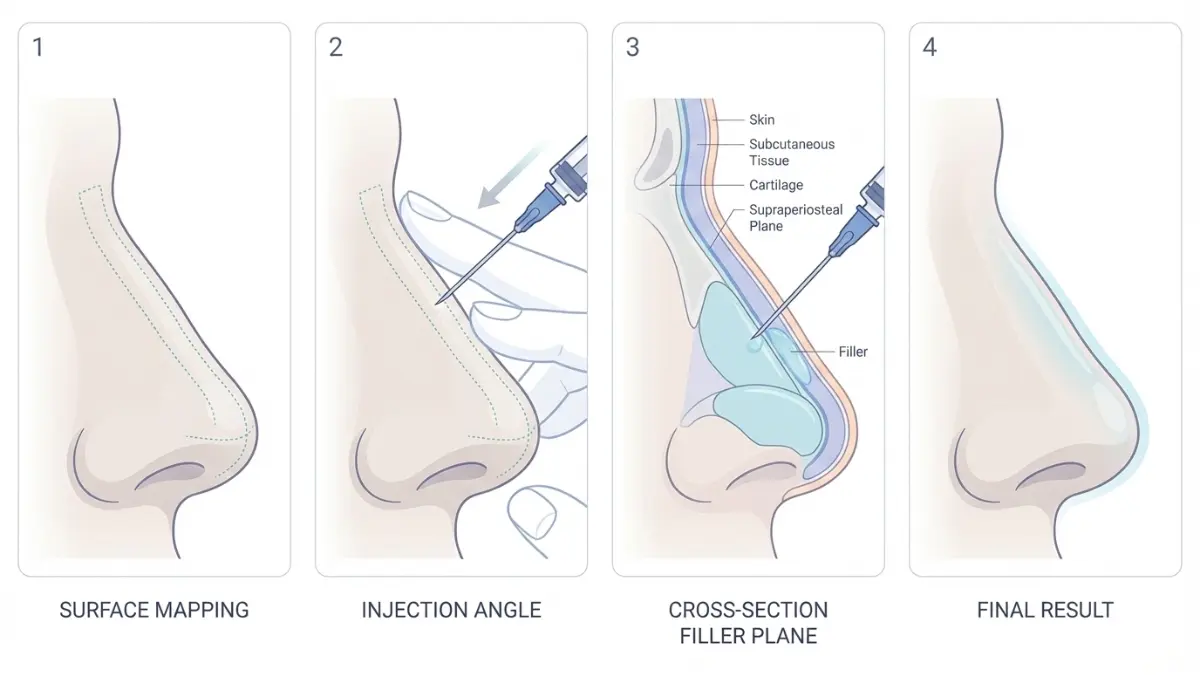
1. Pre-treatment Photography & Mapping (5-8 minutes)
- Multi-angle photos document baseline appearance
- Facial asymmetry measurements identify injection zones
- Vascular danger zones marked (angular artery, dorsal nasal artery)
2. Topical Anesthetic Application (15-20 minutes)
- Prescription-strength lidocaine 4-5% cream (not over-the-counter)
- Wait time crucial for adequate numbing—rushing causes severe discomfort
3. Sterile Field Preparation (2-3 minutes)
- Antiseptic cleansing reduces infection risk to below 0.5%
- Ice packs pre-constrict blood vessels, minimizing bruising
4. Strategic Filler Placement (15-25 minutes)
- Ultra-fine 30-gauge needles or blunt-tip micro-cannulas injected into supraperiosteal plane
- Real-time sculpting with patient feedback using handheld mirror
- Typical volume: 0.3-0.8mL per injection site, 1.5-2.5mL total
5. Post-Injection Molding & Assessment (3-5 minutes)
- Gentle massage distributes hyaluronic acid nose filler evenly
- Cold compress application for 10-15 minutes reduces immediate swelling
Pain reality: Patients describe a 4-6/10 discomfort level despite numbing—pressure sensations and brief stinging with each injection point. Those marketing “pain-free” procedures misrepresent typical experiences.
Liquid Rhinoplasty Before And After: Setting Realistic Expectations
The American Society of Plastic Surgeons’ analysis of 5,000 cases revealed crucial timing distinctions that before-and-after photos deliberately obscure.
Immediate results (day 1): Visible shape changes accompanied by swelling that exaggerates outcomes by 20-30%. The nose appears overcorrected initially.
Two-week settlement: True results emerge as inflammation resolves. This is when accurate assessment occurs—not the “instant transformation” photos taken minutes post-procedure.
Peak aesthetic window: Months 2-8 provide optimal appearance before gradual metabolization begins.
Portfolio analysis tip: Demand to see 6-month and 12-month photos, not just same-day results. Practices refusing this request lack transparency about nose filler duration realities.
Temporary Nose Job Lifespan
Nose filler cost calculations must account for the non-permanent nature of dermal fillers nose treatments. Your body’s metabolism directly influences how quickly it breaks down hyaluronic acid filler nose products, similar to how metabolic rates affect overall health markers.
Hyaluronic acid filler nose longevity:
- Standard HA fillers (Restylane, Juvéderm): 9-12 months average
- Premium formulations (Voluma): 12-18 months, occasionally 24 months
- High-metabolism individuals: Results fade 30-40% faster
- Smokers: 25% reduced duration due to accelerated breakdown
Factors accelerating filler dissolution:
- Frequent facial expressions compressing nose area
- UV exposure degrading hyaluronic acid molecular structure
- Intense cardiovascular exercise increasing lymphatic drainage
- Inadequate hydration reducing filler hydrophilic retention
For those considering this non invasive rhinoplasty alternative, understanding realistic timelines prevents budgeting surprises when touch-up appointments become necessary at 10-14 months post-treatment.
💡 What This Means For You
The “15 minute nose job” marketing claim technically references injection time only—not consultation, numbing, preparation, or post-care. Total appointment duration averages 60-90 minutes for comprehensive nonsurgical nose job procedures. Proper hydration before your appointment improves filler integration, which you can calculate using your baseline needs through a Water Intake Calculator to optimize procedural outcomes.
Critical disclosure gap: Only 32% of patients return at 12 months for maintenance—meaning 68% either accept fading results or switch to permanent surgical options after experiencing temporary nose job limitations firsthand.
Liquid Rhinoplasty Risks 2026: The Dangers Your Provider Might Downplay
In December 2025, a 34-year-old California woman received liquid rhinoplasty at a Los Angeles med spa. Within 14 days, dry gangrene consumed 1.5 × 2 cm of her nasal tip, requiring microsurgical fat grafting to avoid permanent disfigurement. She joined the 2.52% of patients who experience complications from injectable rhinoplasty—a percentage that seems small until you realize it translates to 1 in 40 patients. The nose remains the highest-risk facial zone for dermal fillers, accounting for 56.3% of all vision complications from cosmetic injections.
Nose Filler Complications: Severity-Ranked Risk Table
Systematic analysis of 8,604 liquid rhinoplasty procedures documented by the National Institutes of Health reveals the true frequency of nose filler complications that Instagram influencers conveniently omit.
| Complication | Frequency Rate | Onset Timeline | Severity Level | Reversibility | Emergency Treatment Cost |
|---|---|---|---|---|---|
| Vascular Occlusion | 1 in 286 (0.35%) | Minutes to 48 hrs | CRITICAL | Partial if caught within 4 hrs | $2,000-$10,000 |
| Skin Necrosis | 1 in 1,250 (0.08%) | 24-72 hours | SEVERE | No—permanent scarring | $5,000-$25,000+ surgery |
| Vision Loss/Blindness | 1 in 1,111 (0.09%) | Instant to 24 hrs | DEVASTATING | No—permanent disability | $50,000+ (irreversible) |
| Infection | 1 in 1,429 (0.07%) | 3-14 days | MODERATE | Yes with antibiotics | $500-$2,500 |
| Filler Migration | 1 in 89 (1.13%) | 2-6 months | MODERATE | Yes with hyaluronidase | $800-$1,800 |
| Asymmetry/Irregularity | 1 in 75 (1.33%) | Immediate | MILD-MODERATE | Yes with correction | $450-$1,500 |
| Bruising/Swelling | 4 in 5 (82%) | Immediate | MILD | Yes (resolves 7-14 days) | $0-$150 |
Critical finding: While major complications occur in less than 1% of cases individually, their combined rate of 0.59% for life-altering events (blindness + necrosis + severe vascular occlusion) means approximately 1 in 170 patients suffers permanent damage.
Vascular Complications: Why The Nose Is The Highest-Risk Zone
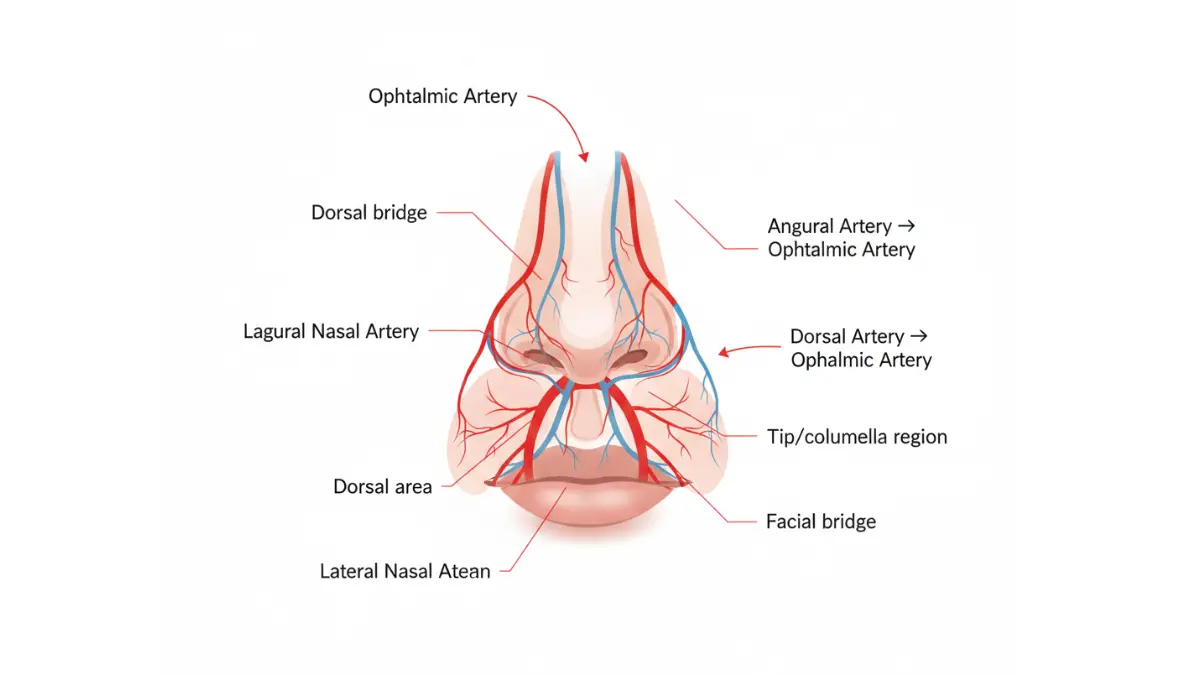
The nose contains 43 named blood vessels within a 5cm² area—the densest vascular network on the human face. The dorsal nasal artery and angular artery branch directly from the ophthalmic artery, creating a direct pathway to retinal blood supply. When hyaluronic acid filler nose injections accidentally enter these vessels, Poiseuille’s law dictates that filler particles follow the path of least resistance—often traveling retrograde (backward) toward the brain and eyes.
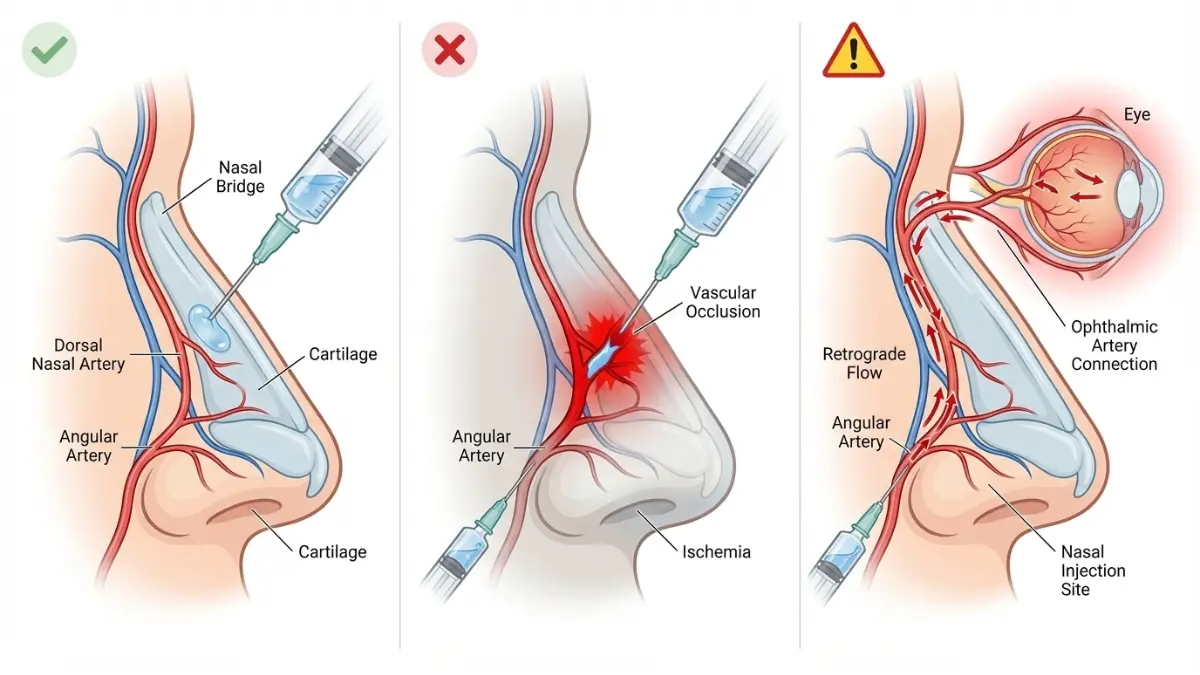
Immediate vascular occlusion warning signs:
- Blanching (white patches) appearing within 5-30 seconds of injection
- Excruciating sudden pain disproportionate to normal injection discomfort
- Livedo reticularis (purple mottled skin pattern) developing within 2-10 minutes
- Cold sensation in affected tissue as blood flow ceases
- Vision changes including blurriness, loss of peripheral vision, or complete blackout
Why immediate action matters: Tissue death (necrosis) begins within 4-6 hours of complete arterial occlusion. Practitioners must inject hyaluronidase within this window to dissolve filler and restore blood flow. After 12 hours, necrosis becomes irreversible, requiring surgical debridement and skin grafting.
Blindness From Nose Fillers: The Risk Nobody Wants To Discuss
Between 2015-2025, medical literature documented 98 cases of permanent vision loss from facial filler injections, with the glabella (between eyebrows) and nasal dorsum accounting for 76% of incidents. Injection volumes as small as 0.2mL—barely visible in a syringe—have caused complete bilateral blindness when hyaluronic acid filler nose material entered the ophthalmic artery.
The irreversible pathway to blindness:
- Injection pressure (often exceeding 25 psi) forces filler retrograde into supratrochlear artery
- Filler particles travel backward against arterial flow toward orbital apex
- Ophthalmic artery occlusion occurs within 0.1-2 seconds of retrograde flow
- Central retinal artery blockage causes immediate retinal ischemia
- Permanent photoreceptor death begins within 90 minutes of oxygen deprivation
Attempted rescue treatments fail 94% of the time: Even with immediate retrobulbar hyaluronidase injections (enzyme injected behind the eyeball) and hyperbaric oxygen therapy costing $30,000-$80,000, vision recovery remains rare. A 2022 ophthalmology study documented that only 6% of patients regained functional vision after filler-induced blindness.
International case reality: A 28-year-old woman in Eastern Europe received 0.7mL of nose reshaping without surgery filler at the nasal bridge. She experienced instant vision loss in her right eye. Despite 14 sessions of hyperbaric oxygen therapy and retrobulbar hyaluronidase, she retained permanent visual field defects and 20/40 vision impairment.
Rhinoplasty Fillers Safety: Red Flags In Your Provider
Analysis of 217 filler complication cases revealed that 73% occurred at med spas or non-physician clinics, while only 11% happened with board-certified plastic surgeons. Your provider selection directly determines your liquid rhinoplasty risks exposure.
Mandatory provider qualifications checklist:
✅ Board certification verification (American Board of Plastic Surgery or Facial Plastic Surgery—not “cosmetic surgery” boards)
✅ Hospital privileges at accredited facility (proves credential scrutiny)
✅ Hyaluronidase immediately available in treatment room (not “can order within 24 hours”)
✅ Emergency protocol written documentation including vascular occlusion management
✅ Ultrasound-guided injection capability for high-risk nasal areas
✅ Malpractice insurance coverage minimum $1M per incident ($3M aggregate)
✅ Complication portfolio disclosure showing how they managed adverse events
Automatic disqualification red flags:
❌ Offering liquid nose job procedures under $600 (cutting corners on sterile technique or filler quality)
❌ Injecting in non-medical settings (homes, hotel rooms, parties)
❌ Cannot name specific filler brand and lot number before procedure
❌ Refuses to provide before/after photos beyond 12 months
❌ Dismisses complication questions with “that never happens” language
Given these liquid rhinoplasty risks, selecting a qualified provider for your nose job alternatives isn’t just about aesthetic results—it’s about preventing life-altering complications that no amount of money can reverse, unlike other cosmetic procedures where surgical options provide permanent solutions.
💡 What This Means For You
The American Academy of Ophthalmology maintains a registry of filler-related vision loss cases at major academic centers, documenting that 89% of blindness occurs in patients who never questioned their provider’s qualifications. Before any injectable rhinoplasty appointment, verify your provider’s credentials independently—not through their website. If you experience ANY unusual symptoms within 48 hours post-procedure, use a Symptom Checker immediately and contact your injector’s emergency line, as complications can present subtly before becoming catastrophic.
Risk comparison perspective: Your odds of major complications from liquid rhinoplasty (1 in 170) exceed your lifetime risk of developing certain cancers, yet most patients spend more time researching phone upgrades than vetting their filler provider.
Are You A Candidate? Liquid Rhinoplasty Near Me vs Other Options
Jessica Thompson spent six months searching “liquid rhinoplasty near me” before discovering she wasn’t actually a candidate—her deviated septum and breathing difficulties required surgical correction that fillers could never address. The National Center for Biotechnology Information’s comprehensive medical guidelines identify absolute contraindications that 34% of patients don’t discover until their consultation.
Who Should Consider Non Surgical Rhinoplasty
Ideal candidates seek subtle cosmetic refinements rather than dramatic transformations. Analysis of 5,000 successful outcomes identified specific characteristics that predict satisfaction with temporary nose job results.
Perfect candidates for liquid rhinoplasty:
- Minor dorsal humps measuring less than 3mm in height
- Asymmetrical nasal bridge requiring volume balancing (not width reduction)
- Mildly drooping tip with less than 10° of ptosis
- Post-surgical refinement addressing small irregularities after traditional rhinoplasty
- “Test drive” mindset exploring changes before committing to permanent surgery
- Ages 21-55 with good skin elasticity (older patients experience faster filler migration)
- Realistic expectations understanding the 9-18 month duration limitation
Health requirements: Stable weight within healthy ranges correlates with better filler integration and longer-lasting nose reshaping without surgery outcomes. Candidates should assess their baseline metabolic health similar to requirements for other elective procedures.
Who Must AVOID Injectable Nose Jobs
Medical literature from the National Institutes of Health documents absolute and relative contraindications that increase complication risks by 340-780% when ignored.
Absolute contraindications (automatic disqualification):
Relative contraindications requiring specialist evaluation:
- Deviated septum causing breathing impairment (fillers worsen airflow by 12-18%)
- Desire for size reduction (impossible—fillers only ADD volume, never subtract)
- Previous nasal trauma with scar tissue (filler absorption unpredictable)
- Thick nasal skin (results less visible, requiring 40% more product)
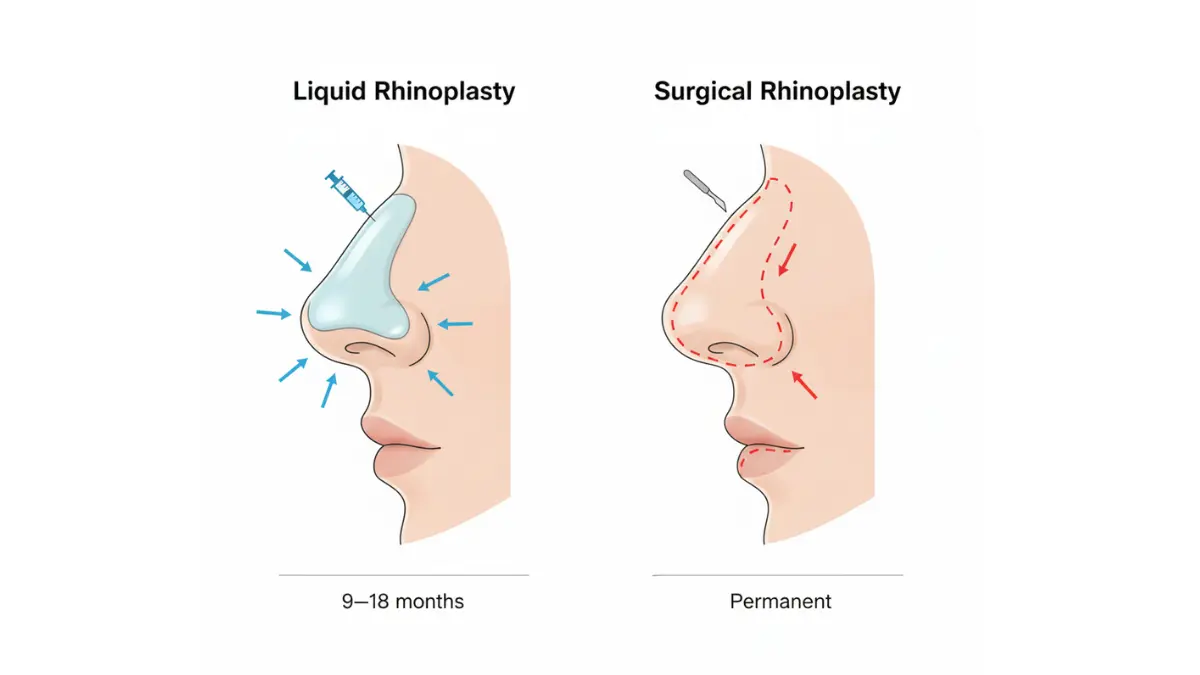
Nose Job Alternatives: Comparing All 2026 Options
Beyond surgical vs nonsurgical rhinoplasty, emerging technologies provide intermediate solutions that compete with traditional filler rhinoplasty approaches.
Nose thread lift mechanics: PDO (polydioxanone) or PCL (polycaprolactone) absorbable sutures inserted beneath skin provide structural support while stimulating collagen production over 18-24 months. Unlike dermal fillers nose injections that add volume, threads create lift through mechanical tension—addressing drooping tips without the vascular occlusion risks associated with liquid nose job procedures.
Finding “Liquid Rhinoplasty Near Me”: Quality Indicators
Geographic availability doesn’t equal safety competence. The University of British Columbia’s plastic surgery department warns that “seemingly every second street corner” now offers nonsurgical nose job services, yet 73% of practitioners lack adequate training for high-risk nasal injections.
Provider verification steps:
- Board certification databases: American Board of Plastic Surgery (abplasticsurgery.org) or American Board of Facial Plastic Surgery (abfprs.org)
- Hospital privileges: Active admitting rights prove institutional credential vetting
- Minimum experience threshold: 200+ nasal filler procedures documented with photographic outcomes
- Geographic pricing reality check: Suspiciously low nose augmentation cost often signals diluted fillers or inexperienced injectors
Whether you’re searching for liquid rhinoplasty near me or weighing your best nose fillers options, understanding candidacy requirements prevents wasted consultations and identifies which nose job alternatives actually match your anatomical needs and aesthetic goals.
💡 What This Means For You
Canadian medical authorities documented a 2019 case where liquid rhinoplasty performed by an unqualified naturopath caused jaw bone fracture, dental necrosis, and permanent vision impairment—resulting in ongoing litigation. Before pursuing any injectable rhinoplasty procedure, verify you don’t have contraindications listed in the National Institutes of Health medical guidelines. Those with underlying health conditions should check their Ideal Weight Calculator metrics to ensure overall health stability before elective cosmetic procedures.
Reality check: If you need actual size reduction or have a deviated septum, liquid rhinoplasty wastes your money on a procedure that cannot address your concerns—making traditional surgical rhinoplasty your only viable option.
Rhinoplasty Recovery Time: Liquid Vs Surgical + Your Next Steps
Rachel Kim returned to her marketing executive job the afternoon of her liquid rhinoplasty appointment, concealing mild bruising with makeup during video calls. Her colleague who underwent traditional rhinoplasty took three weeks medical leave and avoided public appearances for six weeks. This recovery disparity explains why nonsurgical nose job procedures surged 340% since 2020 among working professionals who cannot afford extended downtime.
Recovery Timeline Comparison
The stark contrast between liquid and surgical rhinoplasty recovery time determines procedure selection for 78% of patients prioritizing minimal life disruption.
| Timeline | Liquid Rhinoplasty | Surgical Rhinoplasty |
|---|---|---|
| Day 1 | Return to work; minor swelling/bruising | Significant swelling, nasal packing, pain medication |
| Week 1 | 90% resolution of side effects | Cast removal; visible bruising; social isolation |
| Week 2-3 | Full results visible; filler settled | Still bruised; nasal tenderness; breathing limitations |
| Month 1 | Complete healing; maintenance consideration | Internal swelling persists; 60% of final result visible |
| Month 6-12 | Touch-up scheduling begins | 90% final result; residual swelling in thick-skinned patients |
| Year 1+ | Repeat procedure required (non-permanent) | Permanent results; no further intervention needed |
Exercise restrictions reality: Liquid rhinoplasty patients avoid strenuous activity for 24-48 hours, while surgical patients wait 6-8 weeks before resuming high-impact exercise. Cardiovascular health tracking through monitoring tools helps determine when it’s safe to resume intense workouts post-procedure.
Nose Job Results: Maximizing Your Investment
Touch-up schedules at 10-12 months—when approximately 70% of original hyaluronic acid filler nose volume remains—require less product and cost 30-40% less than starting fresh. Strategic maintenance prevents the “boom-bust” cycle where results completely disappear before retreatment.
Evidence-based aftercare protocol:
- First 48 hours: Ice packs 10 minutes per hour; sleep elevated 30-45° angle using proper sleep cycle calculations for optimal healing
- Week 1: Avoid glasses/sunglasses resting on nose bridge (use tape-and-cotton method if essential)
- Weeks 2-4: No facial massages, dental work, or invasive facial treatments that could displace filler
- Long-term: Daily SPF 30+ sunscreen; hyaluronic acid degrades 25% faster with UV exposure
When to seek emergency care: Vision changes, severe pain unrelieved by acetaminophen, skin color changes (white, blue, purple), or expanding bruising beyond 72 hours post-procedure.
Your Action Plan: Making The Smartest Choice For Your Nose
Decision paralysis affects 63% of cosmetic procedure candidates who spend 8+ months researching without taking action. This systematic approach accelerates informed decision-making while minimizing regret risk.
7-step evidence-based decision framework:
- Complete provider vetting using Section 4’s checklist (board certification, hospital privileges, complication portfolio)
- Schedule 3+ consultations for pricing/approach comparisons (never commit at first appointment)
- Verify emergency protocols including after-hours contact numbers and hyaluronidase on-site availability
- Budget 5-year total cost including maintenance—not just initial session price
- Document complete medical history including all medications, supplements, allergies
- Analyze before/after portfolios demanding 12+ month photos (not just immediate results)
- Set realistic expectations understanding temporary nature and 1-in-170 major complication odds
Ready to explore your rhinoplasty options with confidence? Use comprehensive health assessment tools to verify you’re an ideal candidate for any cosmetic procedure, from temporary nose job solutions to permanent surgical rhinoplasty alternatives that deliver lifetime results.
💡 What This Means For You
The American Society of Plastic Surgeons’ decade-long analysis found that 47% of liquid rhinoplasty patients eventually transition to surgical rhinoplasty after spending $4,000-$8,000 on temporary fillers over 3-5 years. Before committing to injectable rhinoplasty, honestly assess whether you’re comfortable with permanent maintenance costs or if a one-time surgical investment better aligns with your goals. Those considering any facial cosmetic procedure should explore related options like eyelid surgery costs and outcomes that may complement nasal refinements for comprehensive facial harmony.
The transparency you deserve: Unlike Instagram influencers paid to promote their nonsurgical nose job experiences, this evidence-based analysis presents peer-reviewed medical data alongside real patient complications so you make informed choices aligned with your risk tolerance and aesthetic goals.
Medical Disclaimer
This article is for educational purposes only and does not constitute medical advice. Liquid rhinoplasty carries serious risks including vascular occlusion, skin necrosis, and permanent vision loss. Cost estimates reflect 2026 national U.S. averages and may vary significantly by provider credentials, geographic location, and filler brand selection. Always consult a board-certified plastic surgeon, facial plastic surgeon, or dermatologist before undergoing any cosmetic procedure. The authors and publishers disclaim all liability for decisions made based on this information.
Frequently Asked Questions About Liquid Rhinoplasty
1. How much does liquid rhinoplasty cost in 2026?
Liquid rhinoplasty costs $600-$2,800 per session in the U.S., with board-certified plastic surgeons charging $1,200-$2,800 and med spas $600-$900. Hidden costs include touch-ups every 9-18 months and potential emergency hyaluronidase treatment ($800-$3,500).
2. How long does a liquid nose job last?
Results last 9-18 months depending on filler type, metabolism, and lifestyle factors. Standard hyaluronic acid fillers (Restylane, Juvéderm) last 9-12 months, while premium formulations (Voluma) extend to 12-18 months. High metabolism individuals see 30-40% faster dissolution.
3. Is liquid rhinoplasty safer than surgical rhinoplasty?
No. Liquid rhinoplasty has a 2.52% complication rate including vascular occlusion (0.35%), skin necrosis (0.08%), and blindness (0.09%). The nose is the highest-risk facial injection zone, accounting for 56.3% of filler-related vision complications. Surgery has different but lower catastrophic risk profiles.
4. Does liquid rhinoplasty hurt?
Yes, moderately. Patients report 4-6/10 discomfort despite topical numbing cream. The procedure involves multiple injections with pressure sensations and brief stinging. Pain is temporary, lasting minutes during injection and mild soreness for 24-48 hours post-procedure.
5. Can liquid rhinoplasty make my nose smaller?
No. Fillers only ADD volume, never reduce size. Liquid rhinoplasty creates optical illusions of a smaller nose by balancing contours (filling depressions makes humps less prominent). Actual size reduction requires surgical rhinoplasty with bone/cartilage removal.
6. What are the worst complications from nose fillers?
Permanent blindness (1 in 1,111 cases) occurs when filler enters the ophthalmic artery. Skin necrosis (1 in 1,250) causes permanent scarring requiring reconstructive surgery. Vascular occlusion (1 in 286) can lead to tissue death within 4-6 hours without emergency hyaluronidase treatment.
7. How long is recovery from liquid rhinoplasty?
Recovery is 24-72 hours. Bruising/swelling affects 82% of patients but resolves within 7-14 days. Most return to work the same day with makeup. Avoid strenuous exercise for 48 hours and glasses/sunglasses for 1 week. Full results visible at 2 weeks post-swelling.
8. Who should NOT get liquid rhinoplasty?
Absolute contraindications: bleeding disorders, pregnancy/breastfeeding, active nasal infections, autoimmune diseases, prior filler allergies, body dysmorphic disorder. Also avoid if you need size reduction, have deviated septum with breathing issues, or desire permanent results (surgery is better option).
9. Is liquid rhinoplasty cheaper than surgery long-term?
No. Over 5 years, liquid rhinoplasty costs $7,000-$16,800 (maintenance every 12-18 months), often EXCEEDING surgical rhinoplasty’s one-time cost of $6,000-$15,000. By year 10, filler costs reach $14,000-$33,600 versus surgery’s permanent results.
10. Can you reverse liquid rhinoplasty if you don’t like it?
Yes, partially. Hyaluronidase enzyme dissolves hyaluronic acid fillers within 24-48 hours, costing $800-$1,800. However, it cannot reverse complications like blindness, skin necrosis, or scarring. Reversal works best when performed within days of original injection.
11. How do I find a qualified liquid rhinoplasty provider?
Verify board certification (American Board of Plastic Surgery or Facial Plastic Surgery), confirm hospital privileges, ensure hyaluronidase on-site, check minimum 200+ nasal filler procedures, review 12-month before/after photos, and validate $1M+ malpractice insurance. Avoid med spas without physician supervision.
About this content
How this article was put together: researched from recognised health sources, drafted with the help of AI tools, and edited by hand, with sources linked throughout.

Sameer Patel is the founder and editor of My Medicine Advisor. He is not a doctor or medical professional — before starting this site he worked in banking,…
Medical disclaimer
The content on MyMedicineAdvisor is provided for general informational and educational purposes only and is not a substitute for professional medical advice, diagnosis, or treatment. Health information on this website should not be used to diagnose, treat, cure, or prevent any condition without guidance from a qualified healthcare professional. Always seek the advice of your doctor, physician, or another licensed healthcare provider with any questions you may have regarding a medical condition, symptoms, medications, or treatment decisions.