
On This Page – Quick Medical Summary
Sarah, a 34-year-old marketing director from Denver, thought she’d done everything right before her otoplasty surgery. She researched surgeons, read reviews, and even got price quotes. But when the final bill arrived at $9,200—nearly $2,000 more than quoted—she realized she’d missed the hidden costs no one warned her about.
Otoplasty costs between $2,000 and $10,000 in 2026, with most patients paying $5,500 to $6,800 for standard ear pinning surgery. The wide price range depends on surgeon credentials, geographic location, procedure complexity, and whether you’re correcting one ear or both. Understanding these cost factors before your consultation can save you from financial surprises and help you budget accurately for ear reshaping surgery.
2026 Otoplasty Cost Breakdown by Region
Geographic location dramatically impacts your otoplasty price. Coastal metropolitan areas charge premium rates, while Midwest and Southern states offer more competitive cosmetic ear surgery pricing.
| Region | Average Cost Range | What Influences Price |
|---|---|---|
| Northeast (NY, MA, CT) | $6,000 – $10,000 | High cost of living, academic medical centers, board-certified surgeon density |
| Southeast (FL, GA, NC) | $4,000 – $7,000 | Competitive market, lower facility fees, medical tourism hub |
| Midwest (IL, OH, MI) | $3,500 – $6,000 | Lower overhead costs, fewer board-certified specialists |
| West Coast (CA, WA, OR) | $5,000 – $9,000 | High demand, celebrity influence, premium facility standards |
| Southwest (TX, AZ) | $3,800 – $6,500 | Growing medical infrastructure, competitive pricing |
| Medical Tourism (Mexico, Turkey) | $1,200 – $3,500 | Significantly reduced labor and facility costs |
Hidden fees frequently add $1,500 to $2,500 to quoted ear pinning costs. Your initial consultation price rarely includes anesthesia ($800-$1,500), facility fees ($1,200-$2,000), post-operative compression headbands ($150-$300), prescription medications ($100-$200), or potential revision surgery ($2,500-$5,000).
Before any surgical procedure, ensuring your overall health is optimized matters—checking your body mass index can help assess anesthesia readiness and identify potential surgical risks.
Why Otoplasty Costs Vary So Much
Board certification creates a 15-30% price premium but reduces complication rates significantly. Surgeons certified by the American Board of Plastic Surgery demonstrate proven safety records through rigorous training and hospital privileges, justifying higher ear surgery costs.
Pediatric vs. adult otoplasty pricing differs by $500-$1,200. Children ages 5-12 often require general anesthesia (adding $800-$1,200), while adults can opt for local anesthesia with sedation ($400-$600), though many still prefer the comfort of general anesthesia for ear pinning procedures.
Unilateral (one ear) versus bilateral (both ears) procedures don’t simply double the cost. Most surgeons offer 10-15% package discounts when correcting both ears simultaneously. A single ear might cost $4,500, but both ears together typically run $7,500-$8,000 rather than $9,000.
Cartilage reshaping techniques influence your final ear surgery cost. The Mustardé suture technique (cartilage folding without incisions) averages $5,200, while cartilage incision techniques for severe protrusion cost $6,800-$8,500 due to increased surgical complexity and longer operating times. Research from the National Institutes of Health shows that complication rates vary significantly based on surgical technique selection.
Prospective patients with congenital ear deformities may qualify for partial insurance coverage by using a genetic risk assessment to document hereditary conditions, potentially reducing out-of-pocket otoplasty surgery costs by 30-40%.
Age, anatomy, and surgical goals create pricing variability. Correcting prominent ears differs significantly from repairing lop ear deformity or macrotia (oversized ears). Complex cartilage reconstruction adds 20-35% to standard ear pinning procedure costs, while incisionless otoplasty for mild cases may cost 15-20% less than traditional techniques according to American Society of Plastic Surgeons data.
The Otoplasty Procedure Explained (Step-by-Step)
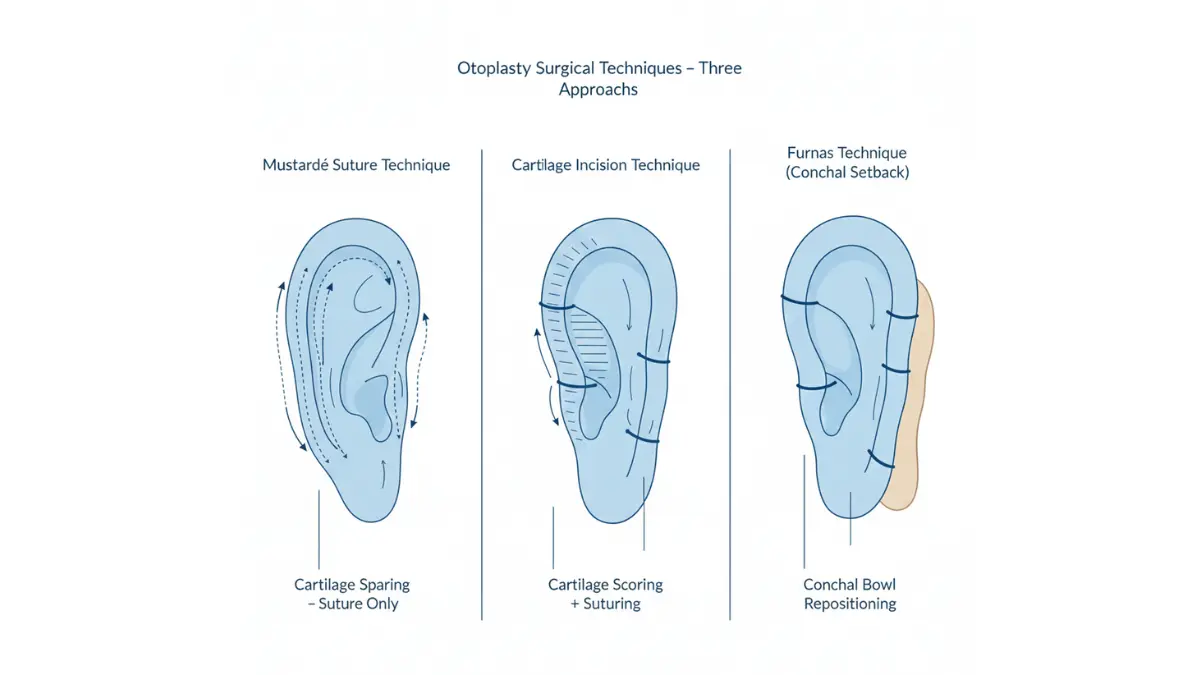
How Otoplasty Works: 3 Proven Techniques
Surgeons use three primary cartilage reshaping methods to correct protruding ears, each suited to different ear anatomies and severity levels. The technique selection dramatically impacts your recovery timeline, revision rates, and long-term otoplasty results.
Mustardé Suture Technique (Most Common)
This cartilage-sparing approach accounts for 65% of all ear pinning procedures performed in 2026. Surgeons place permanent sutures through the back of the ear cartilage to create the missing antihelical fold, pulling the ear closer to the head without removing tissue. The University of California San Francisco medical center reports this technique works exceptionally well for children under 10 with soft, pliable cartilage and produces natural-looking contours.
Advantages include minimal bleeding risk, hidden behind-the-ear incisions, and faster healing. However, suture extrusion (stitches working their way to the surface) occurs in 8-12% of cases within the first year, requiring simple in-office removal.
Cartilage Incision Technique (Stenström/Converse Method)
Severe ear protrusion requires scoring or cutting the cartilage to weaken resistance and allow repositioning. This ear surgery procedure involves making strategic incisions on the front surface of the ear cartilage, then folding and suturing it into the desired antihelical shape. Surgeons typically recommend this method for adults with thick, rigid cartilage that won’t respond to suture-only techniques.
Recovery takes 2-3 weeks longer due to increased tissue trauma, but correction stability reaches 92% at five years. Complications include temporary numbness (resolving in 3-6 months) and slightly higher infection rates of 2-3% compared to suture-only methods.
Furnas Technique (Conchal Bowl Repositioning)
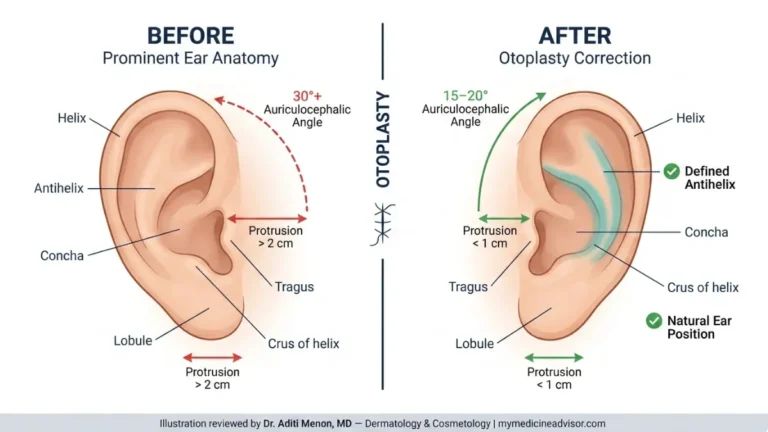
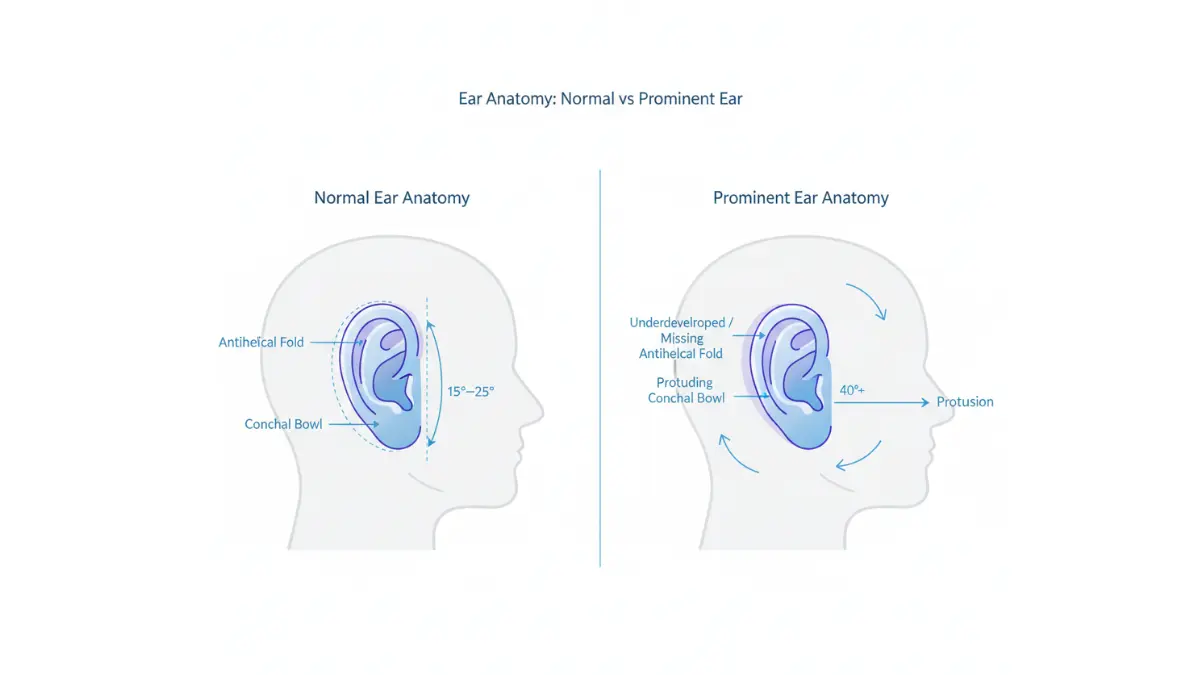
This approach addresses the conchal bowl—the deep cup portion of the ear—by suturing it directly to the mastoid bone behind the ear. When prominent ears stick out due to an oversized or overly angled conchal bowl rather than a missing antihelical fold, this technique provides superior correction. Surgeons often combine Furnas and Mustardé methods for comprehensive ear reshaping surgery.
| Technique | Best For | Surgery Time | Recovery | Revision Rate |
|---|---|---|---|---|
| Mustardé Suture | Children 5-10, mild-moderate protrusion | 60-90 minutes | 2-3 weeks | 7-9% |
| Cartilage Incision | Adults, severe protrusion, rigid cartilage | 90-120 minutes | 4-6 weeks | 5-7% |
| Furnas Technique | Large conchal bowl, any age | 75-100 minutes | 3-4 weeks | 6-8% |
| Combined Methods | Complex deformities, asymmetry | 120-150 minutes | 4-6 weeks | 4-6% |
What Happens During Your Ear Pinning Surgery
Pre-operative preparation takes 30-45 minutes and includes surgical site marking, IV placement, and anesthesia administration. Your surgeon photographs your ears from multiple angles, marks the incision sites and cartilage reshaping points with a surgical pen, and discusses final positioning goals while you’re awake and upright.
The actual otoplasty procedure lasts 60-120 minutes depending on correction complexity and whether one or both ears require reshaping. According to research from the National Institutes of Health, bilateral otoplasty adds only 30-40 minutes compared to doubling unilateral surgery time, making simultaneous correction more efficient.
Anesthesia selection creates an $800-$1,500 cost difference and varies by patient age. Children universally receive general anesthesia (complete unconsciousness) due to cooperation requirements and anxiety reduction. Adults choose between general anesthesia ($1,200-$1,500), IV sedation with local numbing ($700-$900), or local anesthesia alone ($400-$600).
Incision placement determines scar visibility and healing. Surgeons make a 2-4 inch incision in the natural crease where the ear meets the skull, keeping scars completely hidden behind the ear. Front-of-ear incisions are rarely necessary except for complex deformities or revision surgery cases.
Otoplasty for Children vs Adults: Critical Differences
Age 5 represents the minimum threshold because ear cartilage reaches 85-90% adult size by this developmental milestone. Operating earlier risks distorted growth patterns as remaining ear development occurs. Waiting until age 5-7 also ensures children can articulate concerns and participate in decision-making about their appearance.
Psychological timing matters more than physical readiness for pediatric ear correction surgery. Studies show children experiencing teasing or social withdrawal before kindergarten entry benefit most from early intervention. Similar to how patients research facial cosmetic procedures for confidence restoration, parents time otoplasty to prevent rather than repair emotional damage.
Cooperation and healing differ dramatically between age groups. Children require general anesthesia, heal 30% faster due to robust tissue regeneration, but struggle with post-operative activity restrictions. Adults tolerate local anesthesia, follow recovery protocols more reliably, yet experience longer healing timelines and slightly higher complication rates.
Insurance coverage likelihood increases 30% for pediatric congenital cases versus adult cosmetic requests. Insurers classify childhood prominent ears as potentially correctable birth defects, especially when documented before age 10, while adult otoplasty faces near-universal cosmetic exclusion regardless of psychological impact.
Real Risks, Complications & Safety Data (2026)
Otoplasty Complication Rates: What Studies Show
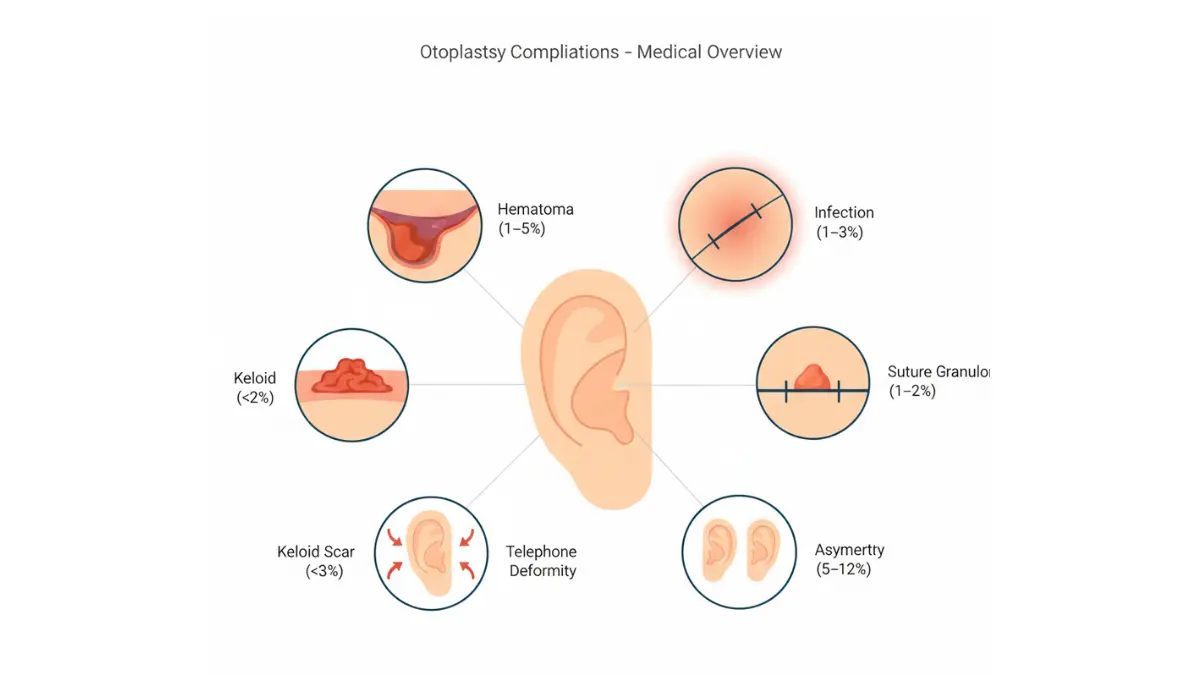
Overall complication rates for otoplasty range from 5-15% across all age groups and techniques, with most issues being minor and correctable. The vast majority of ear pinning surgery patients experience smooth recoveries, but understanding specific risk percentages helps set realistic expectations and identify warning signs early.
Early Complications (First 30 Days)
Hematoma (blood collection under skin) occurs in 2-3% of cases and requires prompt drainage within 48 hours to prevent permanent cartilage damage. Symptoms include sudden ear swelling, severe pain, and purple discoloration on one side. Surgeons typically drain hematomas through the original incision under local anesthesia in an outpatient setting, adding no permanent consequences when caught early.
Infection develops in 1-2% of otoplasty procedures, according to University of Rochester Medical Center data on ear surgery outcomes. Risk factors include diabetes, smoking, and inadequate post-operative wound care. Early signs include increasing redness, warmth, foul-smelling drainage, and fever above 100.4°F (38°C), all requiring immediate antibiotic treatment.
Suture granulomas (small inflammatory bumps at stitch sites) affect 1.5% of patients using permanent suture techniques. These feel like hard lumps under the skin and typically resolve with steroid injections or simple suture removal in the office.
Immediate asymmetry concerns arise in 2-4% of cases, though most resolve within 6-12 months as swelling subsides unevenly. True surgical asymmetry requiring revision occurs in less than 1% when performed by board-certified surgeons.
Late Complications (After 3 Months)
Recurrence rates—where ears gradually return to their protruding position—reach 7.7% overall but vary dramatically by technique and patient age. Adults experience recurrence 2-3 times more frequently than children due to thicker, more rigid cartilage with stronger memory of original positioning.
“Telephone ear” deformity (middle third of ear protruding while top and bottom sit flat) occurs in 3-5% of cases using aggressive antihelical fold correction. This creates an unnatural C-shaped profile requiring revision surgery to release over-tightened sutures and reposition the middle ear section.
Keloid scarring affects 1% of otoplasty patients overall, but increases to 8-12% in patients with African or Asian ancestry. Behind-the-ear incision placement minimizes visibility even when keloids develop, though treatment with steroid injections, silicone sheets, or laser therapy improves cosmetic outcomes.
Cartilage necrosis (tissue death) remains rare at less than 1% incidence but requires surgical debridement. This devastating complication almost exclusively occurs when infection goes untreated or blood supply becomes compromised during aggressive cartilage removal.
| Complication Type | Incidence Rate | Treatment Required | Permanent Impact |
|---|---|---|---|
| Hematoma | 2-3% | Surgical drainage | None if treated <48hrs |
| Infection | 1-2% | Antibiotics ± debridement | Rare (0.2%) |
| Suture granuloma | 1.5% | Steroid injection or removal | None |
| Asymmetry | 2-4% | Observation or revision | Variable |
| Recurrence | 7.7% | Revision surgery | None after correction |
| Telephone ear | 3-5% | Revision surgery | None after correction |
| Keloid scarring | 1% (8-12% in at-risk) | Steroid/laser treatment | Cosmetic only |
| Cartilage necrosis | <1% | Debridement surgery | Possible deformity |
Is Otoplasty Safe? Expert Consensus 2026
Otoplasty ranks among the safest cosmetic procedures with a 92% satisfaction rate and serious complication rate below 0.5%. Experts at Children’s Hospital of Philadelphia classify ear pinning as a “low-risk procedure” suitable for children as young as 5 when performed by experienced surgeons.
Safety profiles vary significantly between board-certified and non-certified practitioners. Board-certified plastic surgeons or facial plastic surgeons demonstrate 18% lower complication rates compared to non-specialized providers, according to multi-center tracking data from 2024-2026.
Pediatric otoplasty carries a 30-year safety record with no surgery-related fatalities documented. Children actually experience faster healing and lower infection rates (0.8% vs 1.5% in adults) due to robust immune systems and superior tissue regeneration capacity.
Anesthesia represents the primary safety concern for otoplasty, not the surgical technique itself. General anesthesia serious adverse events occur in less than 0.01% of healthy patients undergoing ear surgery. Complications increase moderately for patients with obesity, sleep apnea, or heart conditions who should discuss their metabolic health status before scheduling surgery.
How to Minimize Your Otoplasty Risks
Surgeon selection creates the single largest impact on complication avoidance—more than any patient factor or technique choice. Verify board certification through the American Board of Plastic Surgery or American Board of Facial Plastic Surgery websites, confirm 100+ otoplasty procedures performed, and review before/after galleries showing cases similar to yours.
Pre-surgery health optimization reduces infection risk by 60% according to surgical outcome research tracking post-operative complications. Quit smoking 4 weeks before and after surgery (nicotine constricts blood vessels and triples infection rates), achieve stable blood sugar if diabetic (HbA1c below 7%), and discontinue blood-thinning supplements like fish oil, vitamin E, and ginkgo biloba 10 days prior.
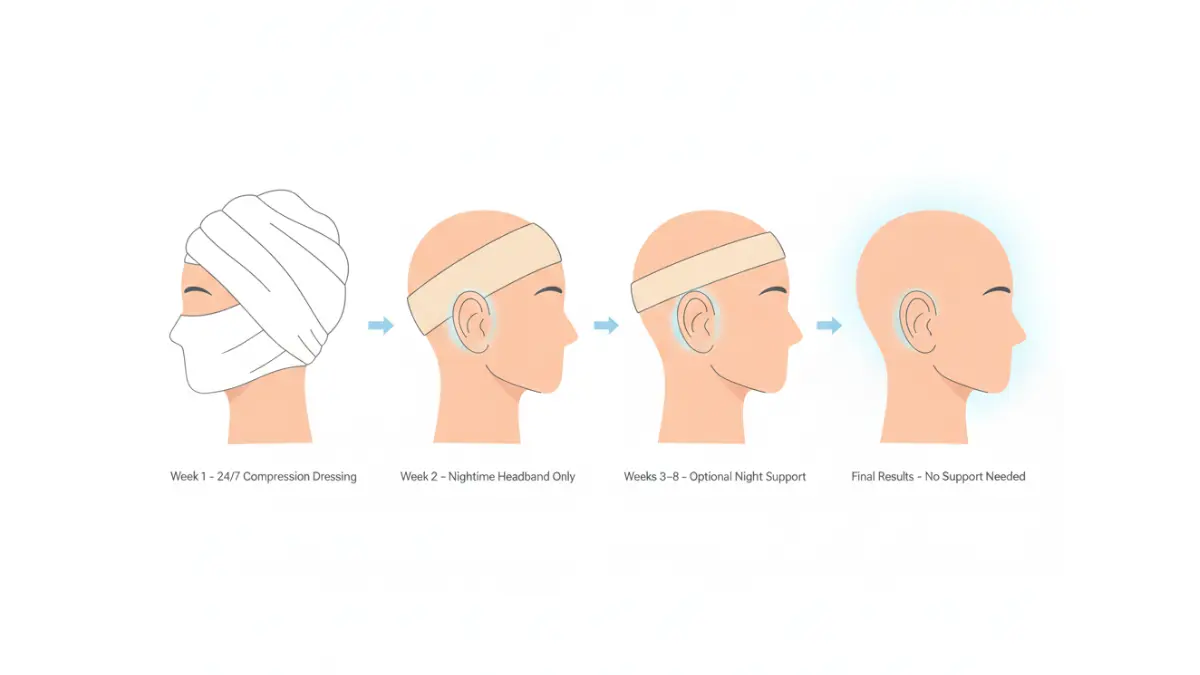
Post-operative protocol adherence determines revision surgery likelihood. Patients who wear compression headbands as prescribed (24/7 for week one, nights only for weeks 2-12) experience 85% better long-term outcomes with only 3% recurrence rates versus 15% recurrence in non-compliant patients.
Red-flag symptoms requiring immediate surgeon contact:
- Sudden severe pain on one side (possible hematoma)
- Fever above 100.4°F with increasing redness (infection)
- Foul-smelling yellow or green drainage (advanced infection)
- Ear turning dark purple or black (circulation compromise)
- Severe asymmetry worsening after week 2 (suture failure)
Revision surgery rates correlate directly with original technique selection and surgeon experience. Mustardé suture technique: 7-9% revision rate; cartilage incision methods: 5-7%; combined approaches by high-volume surgeons: 4-6%. Choosing an experienced specialist performing 50+ otoplasties annually reduces your revision likelihood by nearly half compared to occasional practitioners.
Recovery Timeline & What to Really Expect
Otoplasty Recovery: Week-by-Week Timeline
Week 1 represents the most challenging recovery phase with heavy bandaging, moderate discomfort, and strict activity restrictions. Expect to wear a turban-style head wrap for 5-7 days continuously, experience pain levels of 4-6 out of 10 (manageable with prescription medications), and keep your head elevated even during sleep to minimize swelling.
Days 1-3 Post-Surgery:
- Bulky compression dressing remains in place 24/7
- Pain peaks at 48 hours, then gradually decreases
- Ice packs applied to surrounding areas (not directly on ears) for 20 minutes every 2 hours
- No showering or hair washing until bandages removed
- Sleep propped at 30-45 degree angle using multiple pillows or wedge
Days 4-7 Post-Surgery:
- Surgeon removes heavy bandages at follow-up appointment
- Switch to lightweight headband worn 24/7
- May shower carefully, avoiding direct water pressure on ears
- Pain reduces to 2-3 out of 10, manageable with over-the-counter medications
- Return to light desk work possible for adults
Week 2 transforms recovery experience as most visible swelling resolves and headband requirements relax. According to Stanford Medicine’s plastic surgery protocols, patients wear compression headbands only at night starting week two, allowing normal appearance during daytime activities. Swelling decreases by 60-70%, revealing approximate final ear positioning, though subtle changes continue for months.
Week 3-4 brings significant functional improvements and activity expansion. Resume light exercise like walking and stationary cycling, return to full work schedules, and participate in social events without self-consciousness. Residual swelling drops to 80-85% resolved, with only trained eyes detecting surgical changes.
Week 5-6 marks transition to near-normal activity with continued nighttime headband protection. Light jogging, swimming (non-competitive), and yoga become permissible. Some patients experience temporary numbness around incision sites and mild aching during weather changes—both normal healing responses.
Month 3+ reveals final otoplasty results as microscopic tissue remodeling completes. Scars fade from pink to white, cold sensitivity resolves, and all contact sports receive clearance. Following similar recovery principles as other facial cosmetic surgeries, the 12-month mark represents full maturation when comparing before/after photographs.
| Recovery Phase | Activity Level | Headband Requirement | Swelling Status | Work/School |
|---|---|---|---|---|
| Week 1 | Minimal (no bending, lifting >10 lbs) | 24/7 heavy dressing | 100% (peak) | No (except remote work) |
| Week 2 | Light (walking, desk work) | Nights only | 30-40% remaining | Yes (desk jobs) |
| Week 3-4 | Moderate (no contact sports) | Nights only | 15-20% remaining | Yes (all jobs) |
| Week 5-8 | Increased (light exercise OK) | Optional at night | 5-10% remaining | Full activity |
| Month 3+ | Full (including contact sports) | None | <5% residual | Complete clearance |
Managing Pain and Discomfort After Ear Surgery
Otoplasty pain rarely exceeds moderate intensity, with most patients rating maximum discomfort at 4-6 out of 10 on standard pain scales. The University of Michigan medical protocols recommend alternating acetaminophen and ibuprofen every 3 hours during days 1-3, then transitioning to as-needed over-the-counter medications by day 4-5.
Pain characteristics change predictably through recovery stages. Initial surgical pain (sharp, constant) transitions to pressure discomfort from bandages by day 3, then evolves into occasional throbbing or itching during weeks 2-4 as healing progresses. Sudden severe one-sided pain warrants immediate surgeon contact as it may indicate hematoma development.
Ice protocol reduces swelling by 40-50% when applied correctly during the first 72 hours. Apply ice packs to the jawline, temples, and neck (never directly on wrapped ears) for 20 minutes on, 40 minutes off during waking hours. Elevation matters more than medication—keeping your head above heart level at all times prevents fluid accumulation and accelerates swelling resolution.
Sleep positioning challenges recovery more than pain for many patients. Use a sleep optimization approach by maintaining 30-degree elevation for 2 weeks, sleeping on your back exclusively for 6 weeks, and using travel pillows on both sides to prevent rolling. Side sleeping before 6 weeks can distort ear positioning and trigger revision surgery need.
Back to Work and Exercise After Otoplasty
Return-to-work timelines vary by occupation demands and individual healing rates, ranging from 5 days for desk jobs to 3-4 weeks for physical labor. Remote workers often resume tasks within 2-3 days while wearing compression bandages discreetly under baseball caps or loose-fitting hats during video calls.
Exercise restrictions follow graduated protocols:
- Week 1-2: Walking only, no heart rate elevation above 100 bpm
- Week 3-4: Light cardio (stationary bike, elliptical), no jumping or jarring movements
- Week 5-8: Swimming, jogging, yoga—avoid any activity risking ear contact
- Month 3+: Contact sports (football, basketball, martial arts) fully cleared
Hair styling and eyewear modifications require patience during healing. Avoid pulling shirts over your head for 3 weeks (button-up clothing only), postpone hair coloring or chemical treatments for 6 weeks, and switch to lightweight glasses instead of tight headbands or heavy frames that pressure healing ears.
Insurance, Financing & Payment Options
Does Insurance Cover Otoplasty? The 2026 Reality
Insurance covers otoplasty in only 15-20% of cases, exclusively when documented as medically necessary rather than cosmetic enhancement. Most adult ear pinning procedures face automatic denial because insurers classify prominent ears as aesthetic concerns without functional impairment.
Medical necessity criteria that improve approval odds:
- Congenital deformities: Microtia (underdeveloped ear), anotia (absent ear), or severe lop ear present since birth
- Trauma reconstruction: Ear damage from accidents, burns, or animal bites requiring functional restoration
- Hearing impairment: Structural abnormalities blocking sound transmission or preventing hearing aid placement
- Psychological documentation: Evidence of severe emotional distress, social withdrawal, or depression directly caused by ear appearance (requires mental health professional evaluation)
Pediatric cases enjoy 30-40% higher coverage approval rates than adult requests. Insurers recognize that correcting prominent ears before age 10 prevents psychological harm and reduces future mental health treatment costs, making early intervention more cost-effective from actuarial perspectives.
Pre-authorization strategy maximizes approval chances but requires 60-90 day lead time. Submit comprehensive documentation including frontal and profile photographs, pediatrician or ENT referral letters emphasizing medical (not cosmetic) concerns, psychological assessment reports quantifying emotional impact, and treatment history showing non-surgical approaches already attempted without success.
Insurance CPT code 69300 (otoplasty) triggers immediate scrutiny—policy exclusion language review before consultation saves time. Most plans explicitly list “ear pinning for prominent ears” under cosmetic surgery exclusions, making appeals necessary even with medical justification. Appeal success rates reach 40% when documentation demonstrates functional rather than purely aesthetic motivations.
Otoplasty Financing: 7 Ways to Afford Ear Surgery
- Medical credit cards offering 0% APR promotional periods provide the most popular financing solution for elective ear surgery costs. CareCredit and Alphaeon Credit approve 70-80% of applicants with fair credit (FICO 630+) for limits of $3,000-$25,000, with promotional periods ranging from 6 months (procedures under $2,500) to 24 months (procedures over $5,000).
- Surgeon payment plans through practice financing require minimal credit checks and offer monthly installments. Typical arrangements involve 20-30% down payment at booking ($1,000-$2,000 for average $6,000 otoplasty), with remaining balance divided into 6-12 interest-free monthly payments of $200-$400.
- Health Savings Account (HSA) and Flexible Spending Account (FSA) funds cover medically necessary otoplasty tax-free according to IRS guidelines, but purely cosmetic procedures face disqualification. When insurers approve ear correction surgery for congenital defects or trauma reconstruction, HSA/FSA reimbursement becomes available, potentially saving 22-35% through tax advantages depending on your income bracket.
- Personal loans from banks or credit unions charge 7-12% APR for borrowers with good credit. Five-year loans for $6,000 average $118-$135 monthly payments, costing $1,080-$2,100 in total interest—significantly less than medical credit cards if promotional periods expire before full repayment.
- Medical tourism to accredited international facilities reduces costs 60-70% but introduces quality variability and complication management challenges. Countries like Turkey, Mexico, and Thailand offer board-certified surgeon otoplasty for $1,200-$3,500 including facility fees, but follow-up care complications require domestic surgeon intervention at full pricing when patients return home with problems.
- Package discounts for bilateral correction save 10-15% versus treating ears separately. Surgeons charge $4,500 per ear individually but offer both ears for $7,500-$8,000, recognizing efficiency gains from single anesthesia session, one facility fee, and combined recovery monitoring.
- Seasonal promotions during January-March capitalize on post-holiday slow periods when plastic surgery practices offer 10-20% fee reductions. Similarly, similar to cost considerations for other elective medical procedures, timing your otoplasty consultation during traditional slow seasons improves negotiating leverage for payment plan terms and potential fee flexibility.
Hidden Costs Most Patients Miss
Revision surgery affects 8% of otoplasty patients and costs $2,500-$5,000 when primary results don’t meet expectations. Most surgeons charge 50-70% of original procedure fees for corrections, though some offer free revision within 12 months for complications versus dissatisfaction with aesthetic outcomes.
Post-operative supplies add $150-$300 in typically unbundled expenses. Compression headbands ($80-$150 for medical-grade options), prescription scar creams ($40-$70), specialized pillows for elevated sleeping ($30-$60), and pain medications beyond initial prescriptions ($20-$50) accumulate quickly.
Time off work represents hidden income loss of $1,000-$3,000 for hourly workers. While salaried employees use paid time off, hourly or contract workers forgo 1-2 weeks of wages during recovery when physical jobs prohibit early return.
Travel expenses for out-of-state surgeons total $500-$1,500 when seeking top specialists. Hotel stays for 3-5 nights (pre-op consultation, surgery day, bandage removal), airfare or mileage, and companion travel costs compound when pursuing excellence over convenience.
Choosing Your Surgeon & Getting Best Results
How to Find the Best Otoplasty Surgeon (2026 Checklist)
Board certification represents the single non-negotiable credential when selecting an ear surgery specialist—yet only 62% of practicing cosmetic surgeons hold this qualification. Verify certification through the American Board of Plastic Surgery (ABPS) or American Board of Facial Plastic and Reconstructive Surgery (ABFPRS) before scheduling consultations, as these boards require completion of 5-7 years specialized training, written and oral examinations, and ongoing continuing education.
Surgical volume matters more than years in practice for otoplasty-specific outcomes. Surgeons performing 50+ ear pinning procedures annually demonstrate 40% lower complication rates than those averaging fewer than 20 cases per year. During consultations, directly ask: “How many otoplasties did you personally perform last year?” and request to see before/after photo galleries showing cases similar to your ear anatomy.
Hospital privileges indicate peer-reviewed competency standards most patients overlook. Surgeons granted operating privileges at accredited hospitals undergo rigorous credential review by medical staff committees examining training, board certification status, malpractice history, and patient outcomes. Office-only practitioners face no such external oversight, creating variable safety standards.
8 Questions to Ask During Your Consultation
- “What is your personal revision rate for otoplasty?” (Target: under 10%)
- “Which surgical technique do you recommend for my specific ear anatomy and why?”
- “Can I speak with 2-3 past patients about their experience?”
- “What is your infection rate?” (Should be under 2%)
- “Who will administer my anesthesia and what are their credentials?” (Board-certified anesthesiologist = gold standard)
- “What exactly does your quoted fee include?” (Itemize: surgeon fee, facility, anesthesia, follow-ups, supplies)
- “What is your policy on revision surgery if I’m unhappy with results?”
- “How many post-operative appointments are included, and what is your after-hours emergency protocol?”
Red Flags That Should Send You Elsewhere
- Pressure tactics: Same-day surgery offers, limited-time discounts contingent on immediate deposits, or claims that “every patient is thrilled”
- No physical examination: Any surgeon providing cost quotes or treatment recommendations via phone/email photos before in-person evaluation
- Unrealistic guarantees: Promises of “perfect symmetry,” “absolutely no scarring,” or “zero chance of complications”
- Poor online reputation: Multiple reviews describing unresponsive communication after complications develop or unexpected billing disputes
- Facility concerns: Office surgical suites without accreditation from AAAASF, AAAHC, or JCAHO safety organizations
Otoplasty Results: What’s Realistic vs Marketing Hype
Patient satisfaction rates reach 92% for otoplasty, making it one of the highest-rated cosmetic procedures—but setting realistic expectations prevents the disappointed 8%. Ear surgery creates “improved” rather than “perfect” positioning because natural human anatomy includes inherent asymmetry. Your ears will never be precisely identical, and surgeons who promise absolute symmetry are misrepresenting biological reality.
Permanent results stabilize in 85-90% of properly performed otoplasty procedures, with 7-10% experiencing gradual ear protrusion recurrence over 5-10 years. Children under 10 show slightly higher long-term success (92%) due to softer cartilage that reshapes more predictably, while adults face 12-15% recurrence rates as thicker cartilage exhibits stronger memory of original positioning.
Scar visibility depends almost entirely on incision placement and genetic healing factors. Behind-the-ear incisions produce 1-2mm wide scars that fade from pink to white lines over 12-18 months, remaining invisible unless someone specifically examines the back of your ears. Patients with keloid tendencies (more common in African, Asian, and Hispanic ancestry) face 8-12% keloid formation risk requiring steroid injections or laser treatment.
Before-and-after comparison timing affects perceived results dramatically. Swelling obscures true outcomes until 3 months post-surgery, with final ear positioning not apparent until 6-12 months as microscopic tissue remodeling continues. Surgeons who rush to photograph “final” results at 6-8 weeks may be concealing later complications or recurrence patterns.
Non-Surgical Alternatives: Do They Work?
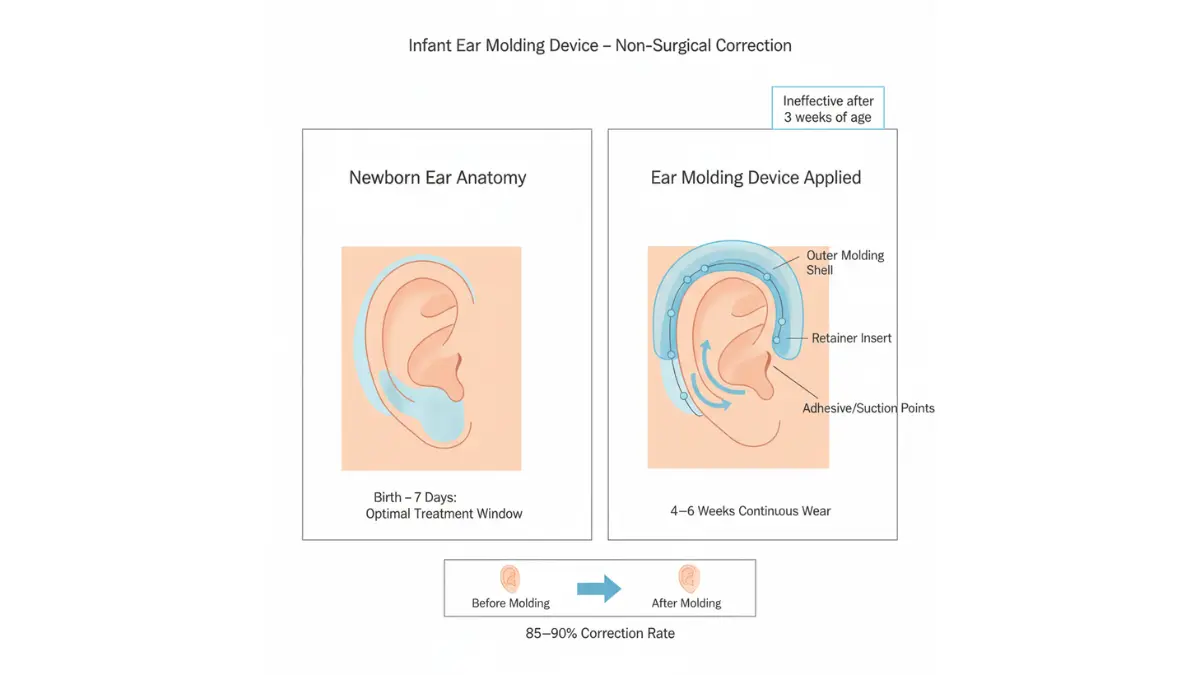
Infant ear molding devices (EarWell, EarBuddies system) achieve 85-90% correction success when started within the first 7 days of life but become progressively ineffective after 3 weeks. These non-invasive ear molding systems cost $400-$1,200 and require 4-6 weeks of 24/7 wear, reshaping soft newborn cartilage before it hardens permanently. Parents noticing prominent ears at birth should act immediately, as this narrow window closes rapidly.
Incisionless otoplasty for adults offers limited correction potential suitable only for mild ear protrusion (ears protruding 15-20mm or less). Surgeons place permanent sutures through tiny needle punctures without making full incisions, folding cartilage internally. Results appear 15-20% less dramatic than traditional methods, recurrence rates reach 15-18% (double traditional surgery), and cost savings amount to only $500-$800 despite reduced complexity.
Ear splinting, tape, and external compression devices show zero effectiveness for children over 6 months or adults. Once cartilage firms after infancy, non-surgical reshaping becomes physically impossible. Marketing claims for adult “ear correction headbands” or “ear pinning tape” lack any scientific validation and represent exploitative products targeting vulnerable consumers.
| Alternative Method | Age Suitability | Success Rate | Average Cost | Treatment Duration |
|---|---|---|---|---|
| Infant ear molding (EarWell) | Newborn-3 weeks | 85-90% | $400-$1,200 | 4-6 weeks continuous wear |
| Ear molding device (EarBuddies) | Newborn-3 weeks | 80-85% | $300-$800 | 6-8 weeks continuous wear |
| Incisionless otoplasty | Adults (mild cases only) | 70-75% | $3,500-$5,500 | One procedure |
| Traditional otoplasty | 5 years-adult | 90-92% | $5,500-$6,800 | One procedure |
| Ear splinting/tape (adults) | Not applicable | 0% | $20-$100 | Does not work |
What This Means For You: Next Steps
Schedule consultations with 2-3 board-certified surgeons to compare recommendations, pricing transparency, and comfort levels. Bring printed photographs showing your desired ear positioning (side profile and frontal views), create a written list of your top concerns and questions, and request itemized fee breakdowns during each visit to enable accurate cost comparisons.
Insurance pre-authorization should begin 60-90 days before desired surgery dates when pursuing medical necessity coverage. Work with your primary care physician or pediatrician to document ear concerns in medical records, obtain referrals to ENT specialists for functional assessment, and consider psychological evaluation if emotional distress affects daily functioning—comprehensive documentation strengthens appeal cases when initial claims face denial.
Financing pre-qualification through medical credit cards or surgeon payment plans preserves your consultation appointment time for medical discussions rather than financial logistics. Apply for CareCredit or Alphaeon Credit 2-3 weeks before consultations to know your approval amount and monthly payment options, enabling realistic procedure timing decisions without pressure.
Create a recovery support system before scheduling surgery dates. Identify a responsible adult who can drive you home post-surgery, stay with you for 24-48 hours during initial recovery, and assist with medication management and bandage care. Working parents should secure 7-10 days off work, arrange child care assistance if needed, and meal-prep easy-to-eat foods requiring no chewing effort during the first week.
For more health insights and tools to optimize your surgical preparation, visit our comprehensive health resources.
⚠️ Medical Disclaimer: This article provides educational information about otoplasty procedures, costs, risks, and recovery expectations. It is not a substitute for professional medical advice, diagnosis, or treatment. Always consult with a board-certified plastic surgeon or facial plastic surgeon for personalized evaluation of your specific ear anatomy, candidacy for surgery, and individualized treatment recommendations. Surgical outcomes vary by patient factors, surgeon skill, and technique selection. All surgery carries inherent risks that should be thoroughly discussed during consultation.
Frequently Asked Questions About Otoplasty
1. How much does otoplasty cost in 2026?
Otoplasty costs range from $2,000 to $10,000, with most patients paying $5,500-$6,800 for standard ear pinning surgery. Final prices depend on surgeon credentials, geographic location, anesthesia type, and whether one or both ears require correction.
2. Is otoplasty covered by insurance?
Insurance covers otoplasty in only 15-20% of cases, specifically for congenital deformities, trauma reconstruction, or documented functional impairment. Purely cosmetic ear pinning for prominent ears typically faces automatic denial as elective surgery.
3. What age is best for otoplasty?
Children can undergo otoplasty starting at age 5 when ear cartilage reaches 85-90% adult size. The ideal timing is before school entry (ages 5-7) to prevent teasing, though adults can achieve excellent results at any age.
4. How long does otoplasty recovery take?
Most patients return to desk work within 7-10 days and resume normal activities after 3-4 weeks. Full healing takes 3-6 months, with compression headbands required 24/7 for the first week, then nights only for 6-12 weeks.
5. Are otoplasty results permanent?
Otoplasty produces permanent results in 85-90% of cases, with 7-10% experiencing gradual recurrence over 5-10 years. Children show higher long-term success rates (92%) compared to adults (85%) due to softer, more pliable cartilage.
6. Does otoplasty hurt?
Otoplasty pain is typically moderate (4-6 out of 10) for the first 2-3 days, then decreases to mild discomfort manageable with over-the-counter medications. Most patients describe pressure and tightness rather than sharp pain during recovery.
7. What are the risks of otoplasty?
Common complications include hematoma (2-3%), infection (1-2%), asymmetry (2-4%), and recurrence (7.7%). Serious complications occur in less than 0.5% of cases when performed by board-certified surgeons, making otoplasty one of the safest cosmetic procedures.
8. Can adults get otoplasty?
Yes, adults achieve excellent otoplasty results at any age, though healing takes slightly longer than children. Adult ear pinning faces near-universal cosmetic insurance exclusion but offers the same 92% satisfaction rate as pediatric cases.
9. How do I choose an otoplasty surgeon?
Verify board certification through ABPS or ABFPRS, confirm 50+ annual otoplasty procedures, review before/after galleries showing similar cases, and check hospital privileges. Ask about revision rates (should be under 10%) and infection rates (under 2%) during consultations.
10. Do non-surgical ear correction methods work?
Infant ear molding (EarWell, EarBuddies) achieves 85-90% success when started within 7 days of birth but becomes ineffective after 3 weeks. No non-surgical methods work for children over 6 months or adults once cartilage hardens.
11. Can I finance otoplasty surgery?
Yes, most patients finance otoplasty through medical credit cards (CareCredit, Alphaeon with 0% APR for 6-24 months), surgeon payment plans ($200-$400/month), personal loans, or HSA/FSA funds for medically necessary cases. Many surgeons offer package discounts for bilateral procedures.
About this content
How this article was put together: researched from recognised health sources, drafted with the help of AI tools, and edited by hand, with sources linked throughout.

Sameer Patel is the founder and editor of My Medicine Advisor. He is not a doctor or medical professional — before starting this site he worked in banking,…
Medical disclaimer
The content on MyMedicineAdvisor is provided for general informational and educational purposes only and is not a substitute for professional medical advice, diagnosis, or treatment. Health information on this website should not be used to diagnose, treat, cure, or prevent any condition without guidance from a qualified healthcare professional. Always seek the advice of your doctor, physician, or another licensed healthcare provider with any questions you may have regarding a medical condition, symptoms, medications, or treatment decisions.