
On This Page – Quick Medical Summary
If you just opened your results and see a bold “H” or “L,” start here: a flagged value is a prompt to look closer, not a diagnosis. A basic metabolic panel is a common blood test measuring eight substances tied to your blood sugar, kidney function, and fluid and electrolyte balance. This guide serves three readers. If your results are in hand, skip to the ranges chart and what a high or low value can mean. If you’re preparing for the test, start with what it measures and how to read the report. If one specific number worries you, the interpretation sections are for you.
One thing shapes everything below: reference ranges vary slightly by lab, so the range printed on your report is the one that applies to you. This article is part of our full basic metabolic panel overview.
ℹ️ Medical Disclaimer: This article is general education, not medical advice, diagnosis, or treatment. Reference ranges differ between labs, and an out-of-range result does not by itself confirm any condition. Only a licensed clinician who knows your history can interpret your results, order confirmatory tests, or make decisions about medications, procedures, or insurance. If you feel acutely unwell, contact your provider or seek urgent care.
What the 8 tests in a BMP actually measure
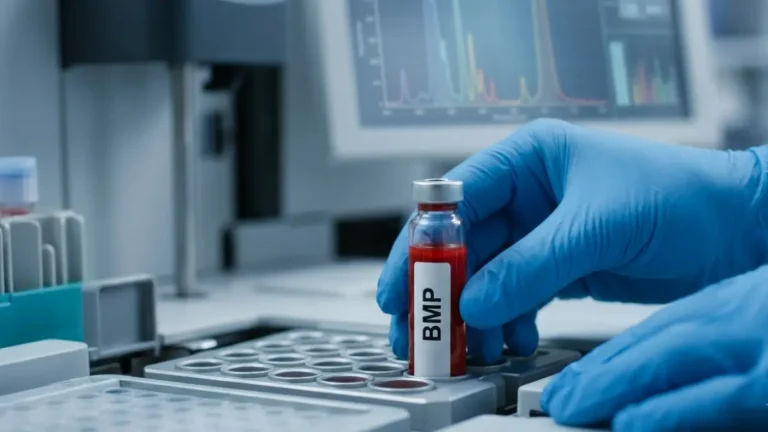
A basic metabolic panel groups eight blood chemicals that together show how your body is running. According to MedlinePlus (National Library of Medicine), the panel covers blood sugar, kidney markers, four electrolytes, and calcium.
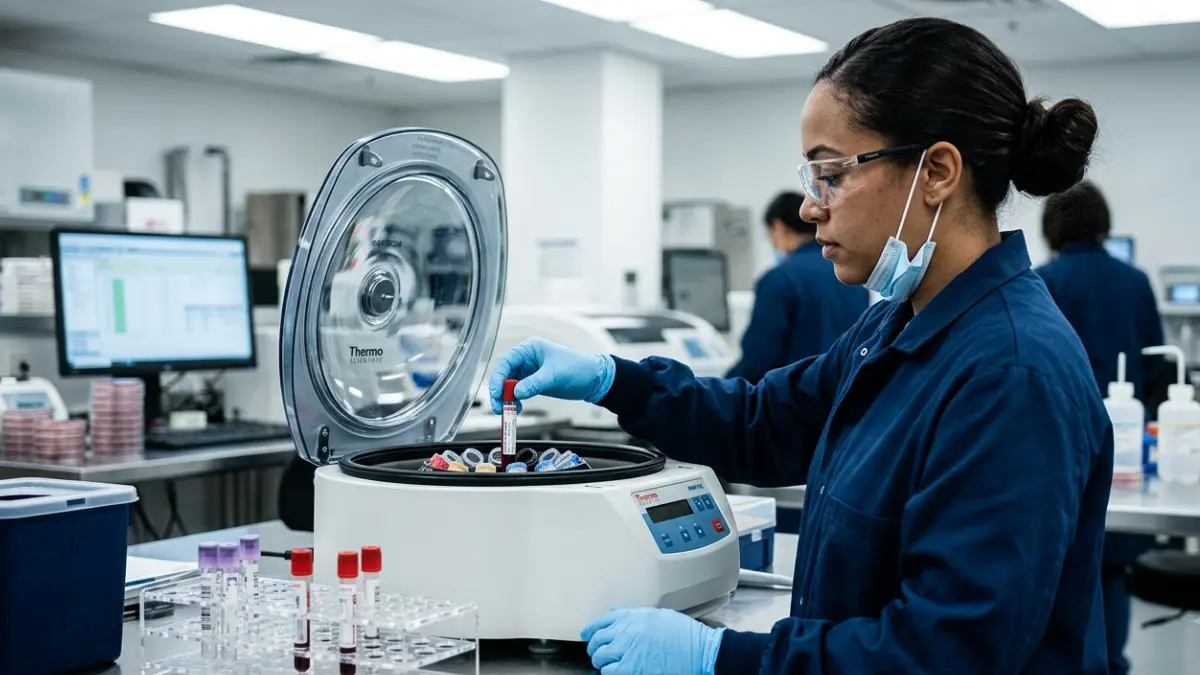
The first group is blood sugar and kidney waste. Glucose is your main energy source, and a high reading can flag diabetes. BUN (blood urea nitrogen) and creatinine are wastes your kidneys filter, so they’re read together as a snapshot of kidney function.
The second group is four electrolytes: sodium, potassium, chloride, and bicarbonate (reported as CO2). These charged minerals control the fluid in and around your cells and keep your blood’s acid-base balance steady.
🔬 How It Works: Bicarbonate acts as a chemical buffer in your blood, neutralizing the acids normal metabolism produces to hold your pH in a narrow range. That’s why an abnormal CO2 often points to a kidney or breathing issue rather than something you’d feel.
The eighth test is calcium, which nerves, muscles, and the heart need to fire correctly. One common mix-up: a basic panel isn’t a comprehensive metabolic panel — a CMP adds six more tests for proteins and liver enzymes, so the difference between a BMP and a CMP is worth a look if your report lists liver markers. For more on the charged minerals, see how your electrolytes work together.
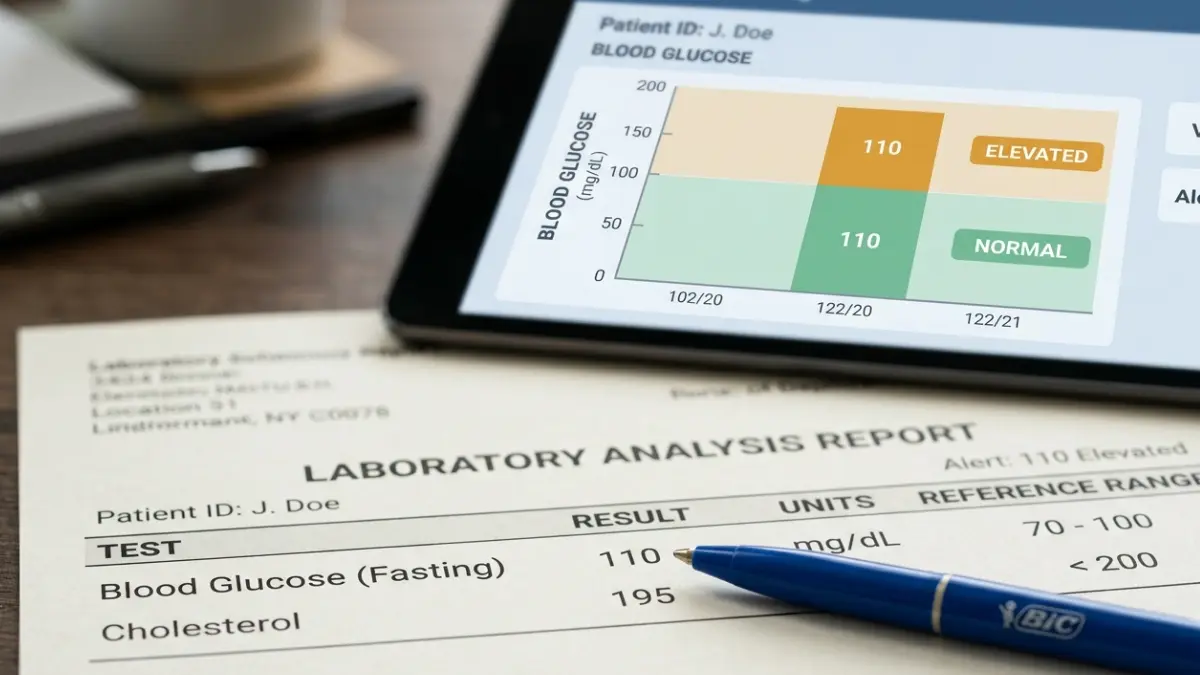
Basic metabolic panel normal ranges chart
A basic metabolic panel measures eight substances, and these are the typical adult reference ranges for each. The figures come from MedlinePlus (NIH); your lab’s cutoffs may differ by a point or two.
| Test | Typical adult range | SI units (approx.) | What it checks |
|---|---|---|---|
| Glucose | 64–100 mg/dL | 3.55–5.55 mmol/L | Blood sugar |
| BUN | 6–20 mg/dL | 2.14–7.14 mmol/L | Kidney function |
| Creatinine | 0.8–1.2 mg/dL | 70.7–106.1 µmol/L | Kidney function |
| Sodium | 136–144 mEq/L | 136–144 mmol/L | Fluid balance |
| Potassium | 3.7–5.2 mEq/L | 3.7–5.2 mmol/L | Nerve/muscle/heart |
| Chloride | 96–106 mEq/L | 96–106 mmol/L | Fluid + acid-base |
| CO2 (bicarbonate) | 23–29 mEq/L | 23–29 mmol/L | Acid-base balance |
| Calcium | 8.5–10.2 mg/dL | 2.13–2.55 mmol/L | Nerve/muscle/heart |
Source: MedlinePlus, National Library of Medicine (NIH), reference ranges reviewed 5/19/2025. Ranges vary slightly by laboratory.
Two notes on this chart. Glucose is the most variable value: MedlinePlus lists 64–100 mg/dL, while many labs use a fasting range near 70–99 mg/dL, so fasting status and your lab both matter. If your report uses different units, our blood sugar converter turns mg/dL into mmol/L in one step.
Your lab’s range may differ because instruments, methods, and reference populations aren’t identical — which is why the number beside your result is the one to trust. If your report shows the 14-value panel, our full CMP normal range chart covers the extra markers.
Reference range vs. a diagnosis: what “normal” really means
Being outside the reference range is a signal to investigate, not a verdict — and glucose shows why. The lab’s “normal” band and a clinical diagnosis are two different things.
Your lab prints a glucose reference range, but diabetes is defined by separate categories. Per the CDC’s diabetes testing guidance, a fasting blood sugar of 99 mg/dL or below is normal, 100–125 mg/dL is prediabetes, and 126 mg/dL or above meets the threshold for diabetes.
📊 Clinical Data Point: Fasting glucose — Normal ≤99 mg/dL, Prediabetes 100–125 mg/dL, Diabetes ≥126 mg/dL. Source: CDC, Diabetes Testing (reviewed 2025).
The key point: one glucose value on a basic panel can flag a concern but cannot diagnose diabetes. Under the American Diabetes Association’s 2026 Standards of Care, diagnosis needs repeat testing — a second fasting glucose, an A1c, or a glucose tolerance test — unless you have clear symptoms with a very high random reading. If your glucose is flagged, what a high glucose result means for diabetes covers the next steps.
✅ Patient Action: If your fasting glucose is flagged, ask your primary care provider: “Should I repeat this with a fasting glucose or A1c before we call it anything?”
Creatinine works similarly. Its value depends partly on you — muscle mass and other factors shift it — so labs often calculate an estimated glomerular filtration rate (eGFR) from creatinine to gauge kidney function more fairly.
What high or low BMP results can mean
An out-of-range value usually has more than one explanation, and everyday factors move these numbers without any disease. Start with the kidney markers, since they draw the most worry.
BUN and creatinine are read together. A high result can point to reduced kidney function, but dehydration, a high-protein diet, some medications, and (for creatinine) higher muscle mass also raise them — what BUN and creatinine reveal about your kidneys goes further.
Electrolytes shift for many reasons. Low or high sodium (hyponatremia or hypernatremia) and potassium (hypokalemia or hyperkalemia) can reflect hydration, kidney handling, or medications like diuretics, while an abnormal CO2 can signal an acid-base change.

⚠️ Clinical Warning: Potassium is one value where the degree of abnormality matters, because very high or very low potassium can affect heart rhythm. A markedly abnormal potassium is something your lab flags to your provider directly — not a number to act on yourself.
Glucose and calcium round out the panel. A high glucose can mean diabetes, but also stress, illness, or a recent meal if you weren’t fasting; what a high glucose result means has the fuller picture. Because the panel measures total calcium, a low calcium value sometimes reflects low protein rather than a true calcium problem.
🩺 Physician Note: A frequent point of confusion is treating one flag as proof of disease. Clinicians read the whole panel alongside your symptoms and history, and often recheck a borderline value before concluding anything.
How to read your own BMP report
Reading a report is a repeatable process you can do on your phone with the results open. The goal is to match each value to the right range and know what to ask.
Work through it in order:
- Find the test name and your result number.
- Read across to the reference range printed on your report — not a generic online chart.
- Note any flag (H, L, or highlighting) beside it.
- Check the units, since mg/dL and mmol/L use very different numbers.
- Write down anything flagged, plus how you felt around the blood draw, for your appointment.

Two details help. Use the range on your own report, since that’s the lab’s calibrated cutoff. And if a value is borderline, ask whether it should simply be rechecked — timing, hydration, and fasting all nudge results. Our walkthrough of full panel results uses the same method for the 14-value test, and whether you need to fast beforehand explains when fasting changes your glucose.
When a BMP result needs prompt medical attention
Most out-of-range results are followed up at a routine pace, but some situations shouldn’t wait — and the trigger is how you feel, not a number. This is general education, not a self-triage tool.
Contact your provider promptly, or seek urgent care, if a flagged result comes with symptoms like severe weakness, confusion, difficulty breathing, a fast or irregular heartbeat, or a marked change in urination. Those signs warrant a real-time conversation with a clinician rather than waiting.
There’s a reassuring backstop. Laboratories set their own critical values, and when a result crosses one, the lab notifies your ordering provider directly — so a genuinely dangerous number rarely goes unnoticed. That’s also why chasing specific “danger” thresholds yourself isn’t useful: your care team is alerted to results needing urgent action, and context decides what happens next. For a general-education look at which results need prompt attention, we cover it without turning it into a self-diagnosis checklist.
Basic metabolic panel: frequently asked questions
1. What are the 8 tests in a basic metabolic panel?
A basic metabolic panel measures glucose, BUN, creatinine, sodium, potassium, chloride, bicarbonate (CO2), and calcium. Together they check blood sugar, kidney function, fluid and electrolyte balance, and acid-base status — a routine snapshot of your chemistry rather than a test for one disease.
2. Do basic metabolic panel normal ranges vary by lab?
Yes. Reference ranges vary slightly between labs because instruments, methods, and reference populations differ. That’s why the range printed on your own basic metabolic panel report is the one that applies to you, and a value flagged at one lab might read differently at another.
3. What is a normal blood glucose level on a BMP?
MedlinePlus lists a basic metabolic panel glucose range of 64–100 mg/dL, and many labs use a fasting range near 70–99 mg/dL. Fasting status affects it, and diabetes is defined separately, so one reading can flag but not diagnose a problem. Discuss any flagged glucose with your provider.
4. What do BUN and creatinine measure?
BUN and creatinine are wastes your kidneys filter, so on a basic metabolic panel they’re read together as a measure of kidney function. Hydration, diet, medications, and muscle mass also move them, so a single high value isn’t proof of kidney disease. Your provider interprets them in context.
5. What does a high or low sodium or potassium result mean?
On a basic metabolic panel, abnormal sodium (hyponatremia or hypernatremia) or potassium (hypokalemia or hyperkalemia) can reflect hydration, kidney handling, or medications like diuretics. Potassium especially can affect heart rhythm at extremes. Review any significant abnormality with your clinician.
6. Is a basic metabolic panel the same as a CMP or “CHEM-7”?
Not quite. A basic metabolic panel is the 8-test panel (also called CHEM-7 or BMP-7). A comprehensive metabolic panel adds six tests for proteins and liver enzymes, for 14 total. If your report shows liver markers or albumin, you likely had a CMP instead.
7. Do I need to fast for a basic metabolic panel?
It depends why the test was ordered. Fasting mainly affects your glucose result, so if blood sugar is a focus, your provider may ask you to avoid food and drink for several hours beforehand. Follow the specific instructions your provider or lab gives you.
8. Does an out-of-range result mean I have a disease?
No. On a basic metabolic panel, a value outside the reference range is a signal to look closer, not a diagnosis. Everyday factors like hydration, diet, timing, and medications move these numbers, and clinicians read the whole panel with your history first. Review flagged results with your provider.
9. What is a critical or dangerous BMP value?
Laboratories define their own critical values and notify your ordering provider directly when a basic metabolic panel result crosses one, so urgent results rarely go unnoticed. Because context decides what a number means, this article doesn’t publish danger thresholds. If you feel acutely unwell, contact your provider or seek urgent care.
10. How do I convert mg/dL to mmol/L on my report?
Some basic metabolic panel values — glucose, BUN, creatinine, calcium — can be reported in conventional (mg/dL) or SI (mmol/L) units, which use very different numbers for the same result. A conversion tool handles the math, and checking your lab’s units prevents misreading a normal value.
11. How accurate is a home BMP compared with a lab test?
An at-home basic metabolic panel is convenient but isn’t a substitute for a provider-ordered, provider-interpreted test. Sample handling and missing clinical context matter, and results still need a clinician to read against your history. Use home results as a prompt for a conversation, not a diagnosis.
Putting your BMP results in context
The idea worth keeping: compare each value to the range on your own report, and treat a flag as a reason to ask questions, not a conclusion. A basic metabolic panel is a snapshot of your chemistry, and one number rarely tells the whole story.
Bring flagged values to your next appointment, note how you felt around the blood draw, and ask whether a borderline result should be rechecked. Your provider can combine the numbers with your history and decide whether anything further is needed — exactly how these results are meant to be used.
About this content
How this article was put together: researched from recognised health sources, drafted with the help of AI tools, and edited by hand, with sources linked throughout.

Sameer Patel is the founder and editor of My Medicine Advisor. He is not a doctor or medical professional — before starting this site he worked in banking,…
Medical disclaimer
The content on MyMedicineAdvisor is provided for general informational and educational purposes only and is not a substitute for professional medical advice, diagnosis, or treatment. Health information on this website should not be used to diagnose, treat, cure, or prevent any condition without guidance from a qualified healthcare professional. Always seek the advice of your doctor, physician, or another licensed healthcare provider with any questions you may have regarding a medical condition, symptoms, medications, or treatment decisions.