
On This Page – Quick Medical Summary
Can you order a BMP without a doctor?
In most US states you can buy a basic metabolic panel yourself, online, without an appointment. What the phrase “without a doctor” hides is that a licensed provider you never meet still places the order — and that is what makes it a real lab order rather than a retail purchase.
Where you are right now decides which part of this page matters:
- No provider, or no appointment available — the ordering process is in the next section.
- Tracking a value you already know about — start with the panel-contents check, then what the number is worth.
- A doctor already ran this panel and you want the numbers — you may not need to buy anything.
- Symptoms today, such as new confusion, vomiting that will not stop, not passing urine, or severe weakness — a mail-order test is the wrong tool, and the last section explains why.
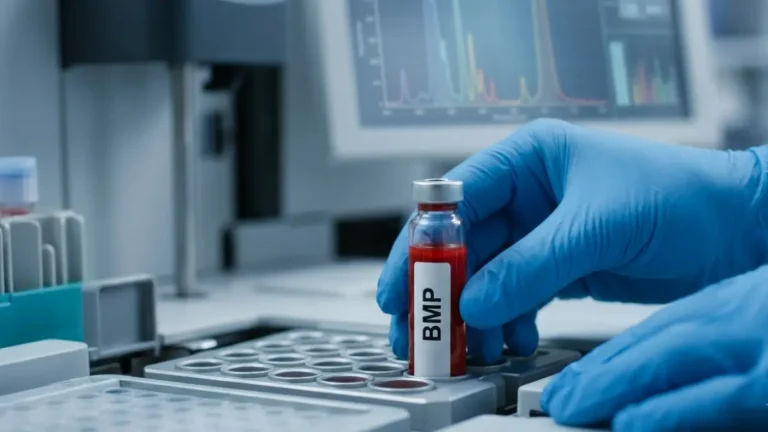
A BMP is a group of eight measurements taken from a single blood sample: blood sugar, calcium, four electrolytes, and two waste products your kidneys clear. The pillar guide covers what a basic metabolic panel measures one value at a time.
ℹ️ Medical Disclaimer: This article explains how self-ordered laboratory testing works in the United States. It does not diagnose, interpret your results, recommend a test for your situation, or give legal, insurance, or billing advice — state rules change, and coverage decisions rest with your insurer. Before acting on any result, or deciding not to act, consult a board-certified primary care physician or the specialist managing the condition you are tracking.
How to order a BMP online, step by step
A self-ordered lab test follows the same five steps at every major service:
- Choose a testing company that runs its samples in a CLIA-certified laboratory.
- Select the panel and pay directly — no prescription is written and no insurance claim is filed.
- An independent provider working with that company reviews the request and places the order.
- Give the sample, either at a patient service center or using a collection kit mailed to you.
- Results post to a secure online account in your name.
Who places the order if you don’t have one
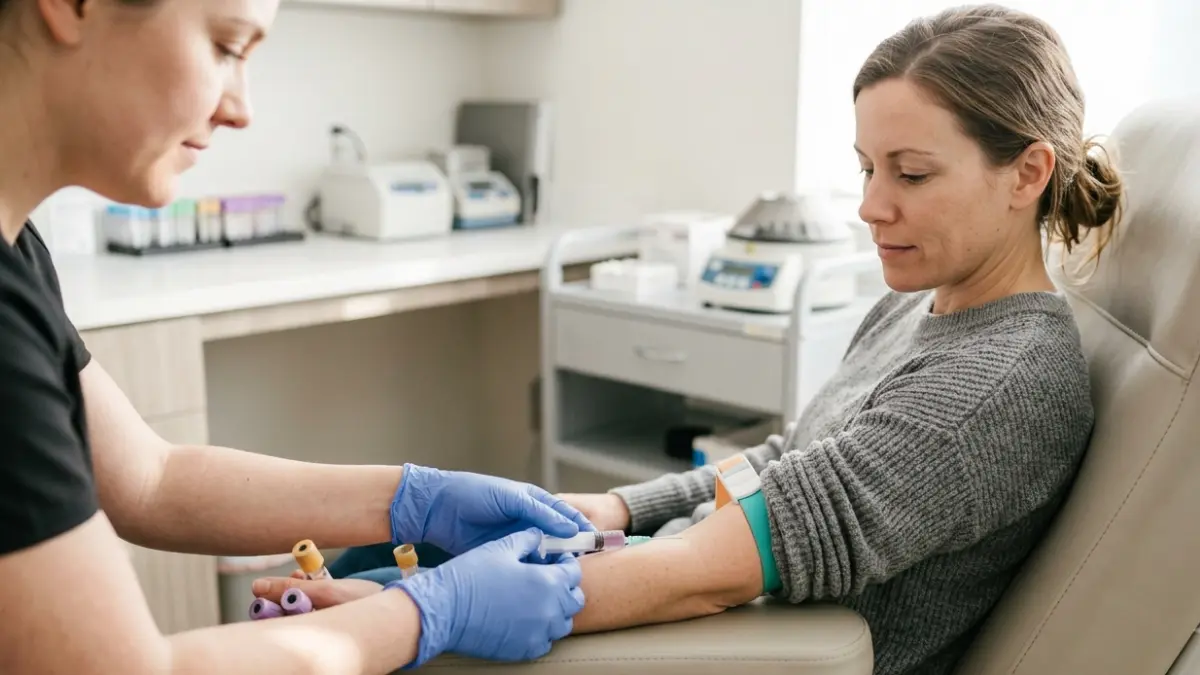
The provider who signs that order is not your doctor and does not take over your care. Labcorp’s consumer service describes results being shared with the independent healthcare provider who placed the order, and Quest launched its consumer platform on the same model, with independent physicians providing oversight. They authorize the test; they do not review your history or follow you afterwards.
Lab draw or at-home collection kit
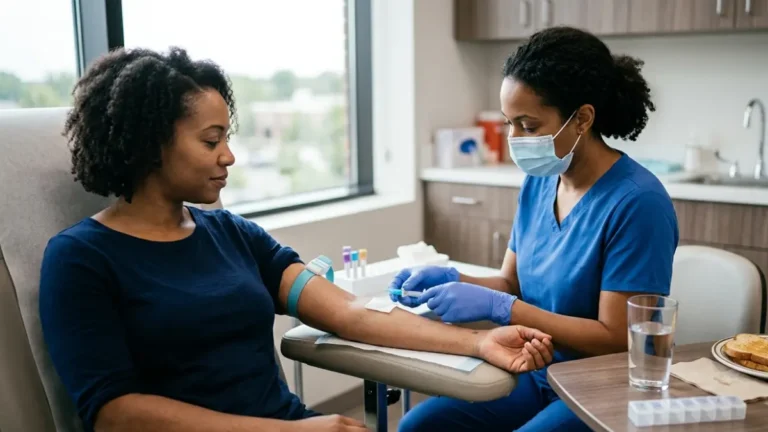
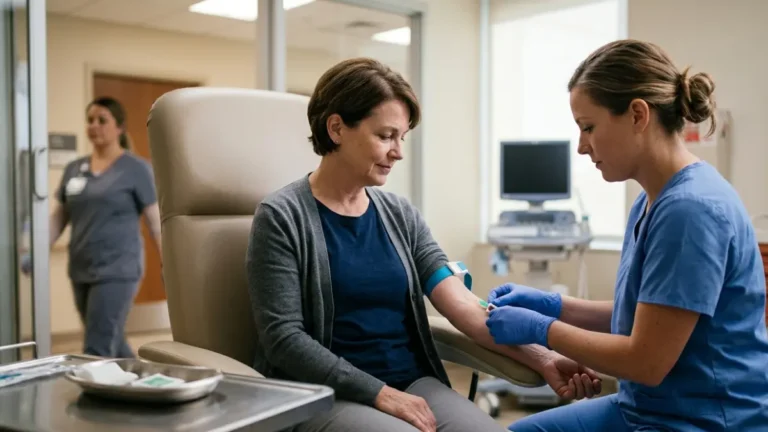
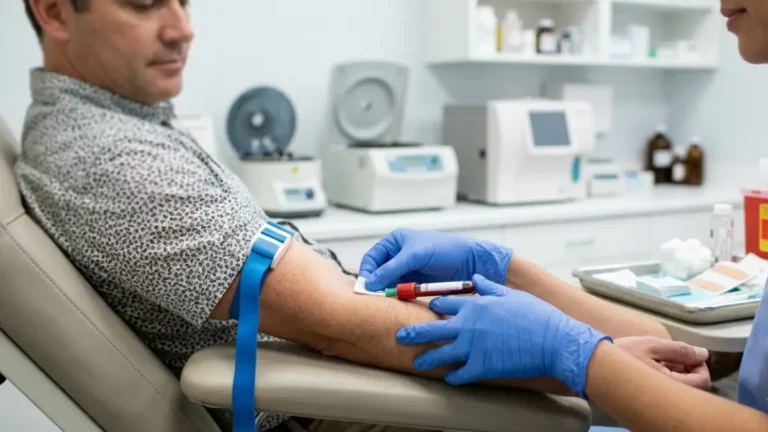
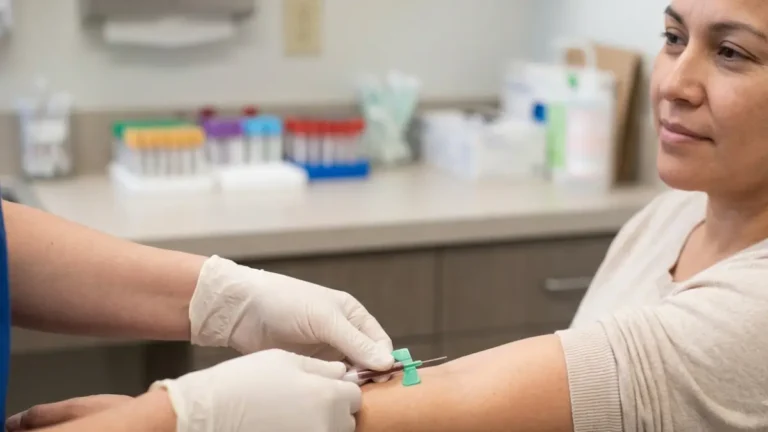
The National Library of Medicine separates home testing into two kinds. A self-test is performed entirely at home and returns an immediate result; a self-collection test means you take the sample at home, mail it to a laboratory, and receive results through a provider or an online portal. A BMP is normally drawn from a vein in your arm by a health care professional, which is why most services route this panel to a collection site rather than a mailbox.
🔬 How It Works: The two routes differ in what happens before the measurement, not in the measurement itself. At a service center a trained professional draws the sample straight into the tube the laboratory expects; with a mail-in kit you collect and package it yourself. The guidance on at-home test kits from the National Library of Medicine is the same for every home kit: follow the instructions exactly, because even minor changes can affect the result.
If you are weighing a kit against a lab visit, our guide to at-home metabolic panel testing compares the two.
What to do before you go
Preparation is where self-ordered testing quietly goes wrong, because nobody is there to tell you what a nurse would. The National Library of Medicine says you may need to fast for eight hours before a BMP — may, because the requirement depends on which values are being read. Our guide to whether you need to fast for a BMP explains when it applies, and your booking confirmation will state the service’s own rule.
Make sure you’re buying the right panel
The costliest mistake in self-ordered testing is buying a panel that does not contain the value you wanted checked. A BMP measures eight substances; a comprehensive metabolic panel includes those same eight plus six more covering proteins and liver enzymes, as the National Library of Medicine’s page on what a BMP measures sets out.
| Panel | What it covers | Results reported | Best for |
|---|---|---|---|
| Basic metabolic panel (BMP) | Blood sugar, calcium, four electrolytes, two kidney waste products | 8 | Checking kidney function, electrolyte balance, and blood glucose |
| Comprehensive metabolic panel (CMP) | Everything in a BMP, plus albumin, total protein, bilirubin, and three liver enzymes | 14 | Adding liver and protein information to the same draw |
| Neither panel | A1c, cholesterol, blood counts, thyroid, urine protein | — | Ordering separately when one of these is what you actually want |
Panel contents verified against the National Library of Medicine’s basic metabolic panel and comprehensive metabolic panel pages, updated September 2024.
Why the menu may show a CMP instead
Consumer menus often lead with the 14-value panel, and that is not a substitution error — it contains everything a BMP does. If the eight values are what you came for, a CMP gives you those eight and more; the difference is price and six extra results you did not ask for. Our comparison of a BMP against a CMP covers which one answers which question.
Four things people assume are included
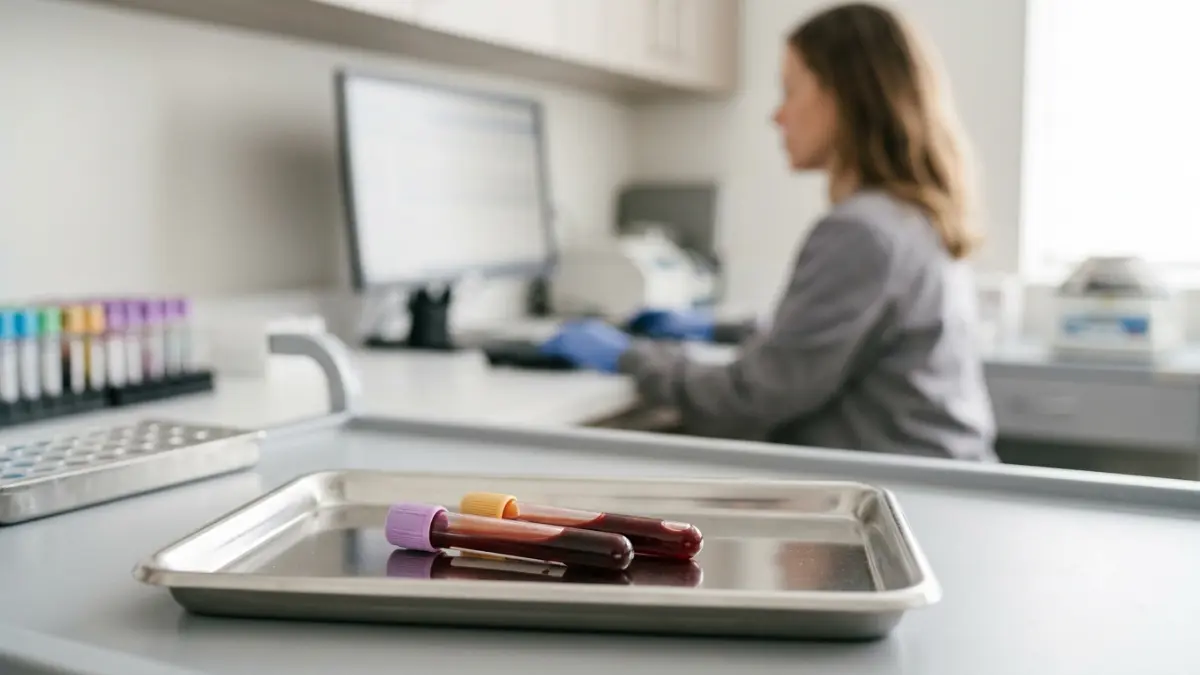
A BMP does not report A1c, cholesterol, a blood count, or thyroid function — each is a separate order. It also does not test urine, which matters because blood is only half of how kidney health is assessed. The same panel is sold under older names too: the National Library of Medicine lists chem 7, chemistry panel, chemistry screen, and electrolyte panel as other names for it, and our guide to blood panel names decodes the rest.
Whether you can do this depends on your state
Ordering your own blood work is governed by state law, not by the testing company — and the published lists of which states restrict it disagree with each other.
Why the published state lists disagree
One direct-to-consumer retailer names two restricted states on its own site. Independent guides published in 2026 name three. An older state legislative research report names a different set again, including states no current guide mentions.
New York shows why the rosters fail. New York’s own laboratory regulator, the Wadsworth Center’s Clinical Laboratory Evaluation Program, publishes not a ban but a scope rule: under amendments effective 24 September 2002, a permitted New York laboratory may offer certain tests directly to consumers without written authorization from a medical professional. That option is limited to tests for which the FDA has approved an over-the-counter kit or collection device, and to tests for the same purpose.
The practical consequence is that “is it legal in my state” is the wrong question. The right one is “does this specific test fall inside my state’s rule” — and that depends on a federal device list, not on a map in a blog post.
How to check your own state in two minutes
Start the order and enter your address. Every major service blocks checkout where it cannot fulfil, so a rejection at that step answers the question for that seller. For the authoritative version, your state health department’s clinical laboratory program publishes its own rule, and that page outranks any comparison article — including this one.
✅ Patient Action: Before you pay, search your state health department’s website for “clinical laboratory” or “direct access testing” and read its own page. If no rule is findable, ask the testing company in writing which state authority lets it accept an order from your address.
Self-ordered tests are normally paid out of pocket, and the price shown is the price of the test, not of anything that follows it. What the same panel costs through different routes is covered in our guide to what a BMP costs.
Getting your results — and what the lab owes you
You may not need to buy a new test to see an old one. A federal rule finalized in February 2014 amended CLIA so that a laboratory can give you — or a person you designate, or your personal representative — access to your completed test reports on request, and it removed the HIPAA exception that had kept CLIA-certified laboratories outside the individual right of access. CMS published the change as a strengthening of your right to request lab reports directly.
📊 Clinical Data Point: In most cases, copies of your completed test reports must be provided within 30 days of your request — Source: Centers for Medicare & Medicaid Services, final rule announcement, February 2014.
The report you may already be entitled to
If any provider has ordered a BMP for you before, that report exists and you can ask for it. The request may need to be in writing, and you may be charged for copying, mailing, or the media it arrives on. For caregivers, the same rule covers a designated person or a personal representative — the route an adult child uses to request a parent’s results.

What the lab is not required to do
The rule gives you the report. It does not require the laboratory to explain it, and a self-ordered result arrives without the clinical context a provider would supply. Results also take time to post, and a value needing prompt attention may bring a phone call rather than a portal message — our guides to waiting for blood test results and results that need urgent attention cover both.
Why a self-ordered result can mislead you
A number on its own is not an answer, and three specific things sit between a lab result and one.
You can’t compare it to your old results
Laboratories often use different testing methods, so they publish different reference ranges and sometimes different units of measurement. The National Library of Medicine’s guidance on why lab reference ranges differ is direct: use the range printed on your own report, do not compare your result against a range found elsewhere, and do not compare results from different laboratories — to follow a trend over time, use the same laboratory each time.
The sample itself can move the number
Potassium is the value most sensitive to how the blood was collected. Repeated clenching and relaxing of your fist just before or during the draw can temporarily raise your potassium and lead to an incorrect result.
🔬 How It Works: Almost all of your body’s potassium sits inside your cells rather than in the blood around them. Anything that stresses or damages cells during collection can release some of that potassium into the sample — so the laboratory measures the sample correctly, and the number still does not describe you. This is why an unexplained high potassium in someone with no symptoms is generally confirmed before anyone acts on it.
Food, medicines, and the draw itself all shift these values in documented ways, collected in our guide to what affects BMP results.
Nobody is holding the result but you
The FDA’s position on direct-to-consumer tests is that they are not a substitute for a traditional health care evaluation, including recommended screenings and visits to a provider. The National Library of Medicine adds that at-home testing does not replace a provider’s guidance and treatment, that you should follow up regardless of the result, and that you should not change any medicine because of a test result without speaking to whoever prescribed it.
✅ Patient Action: Take the printed report — not a screenshot of the summary — to a primary care physician, or the specialist managing the condition you were tracking, and ask: “Does this value change anything, and do you want to repeat it at your own laboratory?”
When ordering online is the wrong move
This section is for a small group of readers; everyone else can read straight past it. If you are on this page because of symptoms happening right now, a self-ordered test is the wrong instrument for the job.

⚠️ Clinical Warning: New confusion, vomiting that will not stop, not passing urine, or severe weakness are reasons to be examined the same day — not reasons to order a panel. The National Library of Medicine lists being treated in the emergency room among the situations where a BMP is run, which means the panel is used alongside an examination, never instead of one. A mailed or scheduled test returns a number days after the decision had to be made.
A BMP cannot rule out an emergency, and a result inside the reference range cannot make symptoms safe. What the panel actually does in urgent settings, and why it is ordered there as part of a broader assessment, is explained in our guide to why a BMP is run in an emergency.
✅ Patient Action: If any of the above describes you, contact urgent care or emergency services now and say exactly which symptoms started and when. Bring a list of everything you take, including over-the-counter medicines and supplements.
Common questions about ordering a BMP yourself
1. Do I need a doctor’s order to get a BMP?
In most US states you can order a BMP online without seeing a doctor, but an order is still written — an independent provider working with the testing service reviews your request and places it. Your own doctor is not involved, and the ordering provider does not take over your care. Rules differ by state, so confirm yours before paying.
2. Who actually places the order if I don’t have a doctor?
An independent licensed provider contracted by the testing company. Labcorp’s consumer service refers to results being shared with the independent healthcare provider who placed the order, and Quest launched its consumer platform on the same model. That provider authorizes the test only; they do not review your history, manage your treatment, or follow up with you afterwards.
3. Is a BMP the same thing as a CMP?
No. A BMP measures eight substances; a comprehensive metabolic panel measures those same eight plus six more — albumin, total protein, bilirubin, and three liver enzymes — for 14 results. A CMP therefore contains everything a BMP does. Ask a primary care physician which of the two answers the question you are trying to settle.
4. Can I use an at-home kit instead of going to a lab?
Sometimes. The National Library of Medicine describes two kinds of home test: self-tests that give an immediate result, and self-collection tests you mail to a laboratory. A BMP is normally drawn from a vein by a health care professional, so most services route this panel to a collection site instead. Follow whichever instructions your kit gives exactly.
5. Do I have to fast before a self-ordered BMP?
Possibly. The National Library of Medicine says you may need to fast for eight hours before a BMP, and may is the operative word — the requirement depends on which values are being read and on the service’s own protocol. Check the instruction on your order confirmation, and ask the testing service if it is unclear.
6. Which states restrict ordering your own lab tests?
Published lists disagree, so this article does not print one. What is verifiable is the rule: state law decides, and states differ in kind, not only in whether a restriction exists. New York’s laboratory regulator, for instance, permits direct access testing only for tests with an FDA-approved over-the-counter equivalent. Check your own state health department’s page.
7. Can I get my results straight from the lab?
Yes. A federal rule finalized in 2014 lets a laboratory give you, a person you designate, or your personal representative access to your completed test reports on request, and in most cases copies must be provided within 30 days. You may have to ask in writing and pay for copying or mailing.
8. Will anyone explain my results to me?
Not necessarily. The rule giving you access to completed reports does not require the laboratory to interpret them, and a self-ordered result arrives without clinical context. Reference ranges also differ between laboratories, so the range printed on your own report is the only one that applies to it. Take the report to a primary care physician for interpretation.
What to do next
Three routes lead out of this page, and only one of them involves buying anything.
If you want the panel and your state’s rule allows it, check the contents before you pay and pick a collection method you can follow precisely. If a provider has run a BMP for you before, request that report first — it costs less and it arrives with a history attached. If symptoms brought you here, book the appointment instead.
Once a report exists, the work shifts from ordering to reading. Our guide to what an abnormal BMP value can mean covers the eight results one at a time, and the full BMP guide puts them back together.
About this content
How this article was put together: researched from recognised health sources, drafted with the help of AI tools, and edited by hand, with sources linked throughout.

Sameer Patel is the founder and editor of My Medicine Advisor. He is not a doctor or medical professional — before starting this site he worked in banking,…
Medical disclaimer
The content on MyMedicineAdvisor is provided for general informational and educational purposes only and is not a substitute for professional medical advice, diagnosis, or treatment. Health information on this website should not be used to diagnose, treat, cure, or prevent any condition without guidance from a qualified healthcare professional. Always seek the advice of your doctor, physician, or another licensed healthcare provider with any questions you may have regarding a medical condition, symptoms, medications, or treatment decisions.