
On This Page – Quick Medical Summary
What is a Chem 7 blood test?
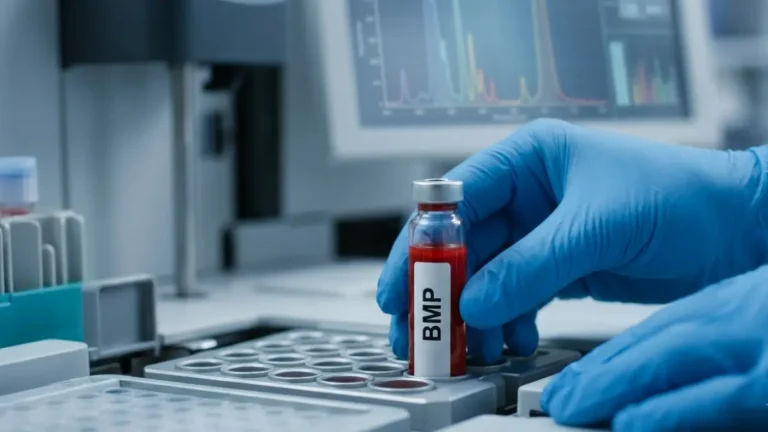
A Chem 7 is another name for a basic metabolic panel (BMP), one of the most common blood tests doctors order. It measures eight substances that reflect your electrolytes, kidney function, and blood sugar. Seeing “Chem 7” on an order, a bill, or a results portal is routine, not alarming.
Use this guide by situation: this section and the next explain the name, the naming section explains why your report shows eight values when it says “seven,” and later sections compare it to a CMP and help you read results. Our full basic metabolic panel guide goes deeper. In short, a Chem 7 and your eight results are the same test — the gap between “7” and “8” is one substance.
ℹ️ Medical Disclaimer: This article is general health education, not medical advice or diagnosis. Test names and contents vary by lab. Decisions about diagnosis, treatment, medication, procedures, or insurance — and the ranges that apply to you — belong with a qualified healthcare professional who has your results.
What does a Chem 7 measure?
A Chem 7 measures seven to eight substances that snapshot your body’s chemistry — electrolytes, kidney markers, and blood sugar, plus calcium in the eight-test version.
The electrolytes and kidney markers
It measures four electrolytes — sodium, potassium, chloride, and carbon dioxide (bicarbonate) — which control fluid and acid-base (pH) balance; read more on the electrolytes in the panel. It also measures two kidney markers, BUN (blood urea nitrogen) and creatinine, waste products your kidneys filter. A Chem 7 includes both, not one or the other — a detail some sites get wrong; see what BUN and creatinine measure.
Where glucose (and calcium) fit
It checks glucose, your blood sugar, where a high result can signal diabetes. The eight-test version adds calcium.
🔬 How It Works: Every value comes from one tube of blood — electrolytes show fluid and pH balance, BUN and creatinine show kidney filtering, and glucose reflects blood sugar.
📊 Clinical Data Point: A basic metabolic panel measures 8 different substances — Source: MedlinePlus, National Library of Medicine (NIH), 2024.
These components come from the National Library of Medicine’s page on the basic metabolic panel.
Why does a Chem 7 have so many names?
One test can be a Chem 7, a Chem 8, an SMA-7, a BMP, or even an electrolyte panel. Most labels point to the same family; what changes is how many substances are measured.
Chem 7, Chem 8, SMA-7, and BMP
| Panel name | Number of tests | What it includes | Key clinical detail |
|---|---|---|---|
| Chem 7 / SMA-7 | 7 | Four electrolytes (sodium, potassium, chloride, CO2), BUN, creatinine, glucose | Traditional version — no calcium |
| Chem 8 / BMP | 8 | A Chem 7 plus calcium | What most labs run — the eight values on your report |
| Electrolyte panel | ~4 (sometimes more) | Electrolytes only (sodium, potassium, chloride, bicarbonate; sometimes calcium, magnesium, phosphate) | No glucose or kidney markers |
| CMP / Chem 14 | 14 | The BMP’s 8 plus 6 liver and protein tests | Adds albumin, total protein, ALP, ALT, AST, bilirubin |
Contents verified against MedlinePlus (NIH/National Library of Medicine); the “Chem”-number labels are traditional lab shorthand.
🩺 Physician Note: The “Chem” in Chem 7 refers to how many substances are measured; “SMA-7” (Sequential Multiple Analysis-7) is an older name for the same panel, from the analyzers that first ran these tests together.
The Chem 7 vs Chem 8 difference is calcium
The one difference that matters is calcium: a Chem 7 has seven substances; adding calcium makes it a Chem 8. Because most labs run the eight-substance version, your report can show eight values under a “Chem 7” order — and MedlinePlus lists “chem 7” as an official BMP name for that same test.
Names that sound the same but aren’t
On an itemized bill, the billing code 80048 simply means a basic metabolic panel was billed.
Chem 7 vs comprehensive metabolic panel: what’s the difference?
Telling a Chem 7 apart from a comprehensive metabolic panel (CMP) is easier as a nested family: electrolyte panel (smallest), Chem 7/BMP (eight tests), CMP (largest).

Chem 7 (BMP) vs CMP
A CMP has the same eight tests as a Chem 7 (BMP) plus six more for liver enzymes and proteins — 14 in total. A provider picks a CMP when they also want liver and protein status; our BMP versus CMP comparison covers when each is used, with the official list on the comprehensive metabolic panel page.
Where a standalone electrolyte panel fits
The trap: MedlinePlus lists “electrolyte panel” as a BMP other name, yet also has a standalone electrolyte panel measuring electrolytes only — no glucose, no kidney markers. So the phrase can mean the full Chem 7 or a narrower test. A complete blood count differs again, counting cells rather than chemistry — see how a CBC differs from a BMP.
Bigger chemistry panels (Chem 12, Chem 14, Chem 20)
“Chem 12,” “Chem 14,” and “Chem 20” are larger panels whose contents vary by lab; “Chem 14” often matches a CMP.
Why would a doctor order a Chem 7?
A Chem 7 is ordered for everyday reasons — screening, checkups, and monitoring — not because something specific is wrong.

Routine checkups and monitoring
Providers order it at a regular checkup to catch problems before symptoms appear, and to monitor conditions like high blood pressure or kidney disease.
In the emergency room
It’s also one of the most common blood tests in the emergency room, where a fast look at electrolytes and kidney values helps guide care for symptoms like fatigue, confusion, or vomiting.
Do you need to fast?
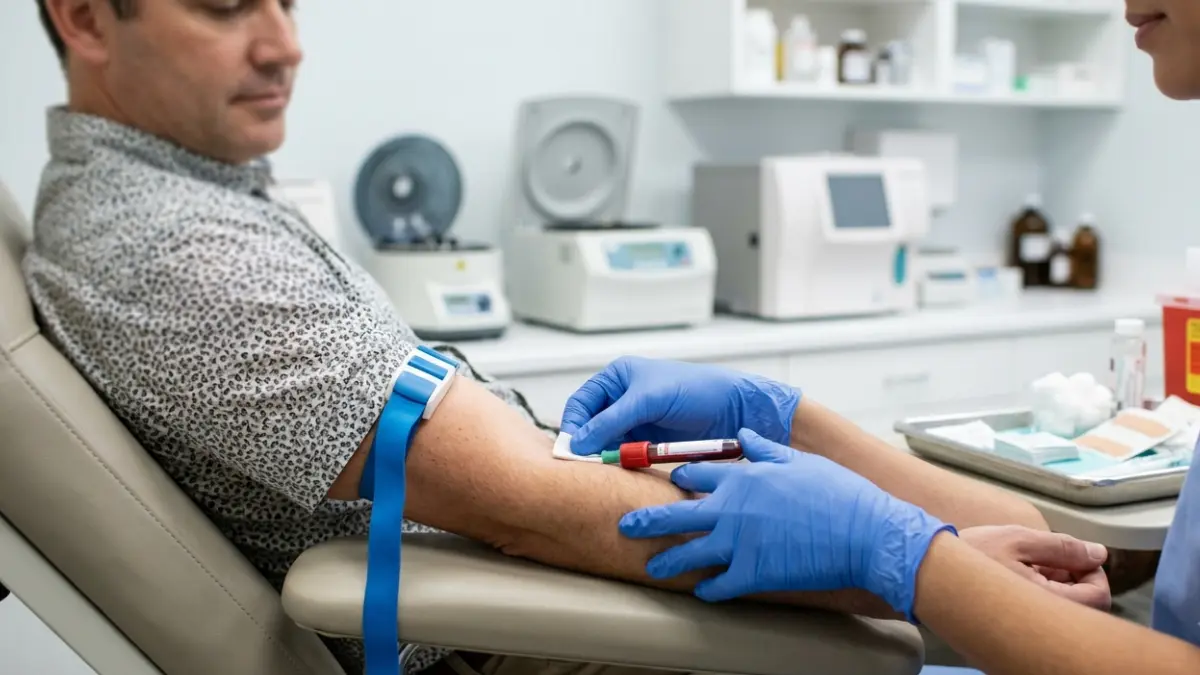
You may need to fast for about eight hours, mainly for an accurate glucose reading, though it depends on why the test was ordered; our guide covers whether you need to fast, and MedlinePlus explains fasting before a blood test. The draw itself is quick — usually under five minutes.
✅ Patient Action: Ask the provider or clinic that ordered your Chem 7 whether you need to fast, and for how many hours — the answer depends on why they ordered it.
What do Chem 7 results mean?
A single flagged value on a Chem 7 is a prompt for a conversation, not a diagnosis. Two ideas make results less intimidating.

Reference ranges vary by lab
The reference range on your report is the one that applies to you, because ranges differ by lab. Compare your number to your own report, not a figure online — our basic metabolic panel normal ranges guide explains the chart, and MedlinePlus covers how lab reference ranges work.
A flagged value isn’t a diagnosis
An abnormal result usually needs follow-up testing, and providers read it alongside your symptoms and history — so how to read your panel results and what a high glucose result can mean are starting points, not verdicts. If your glucose is in unfamiliar units, convert it between mg/dL and mmol/L.
The “fishbone” shorthand you might see
Clinicians sometimes record these values in a shorthand grid nicknamed the “fishbone” — the same numbers, arranged compactly.
✅ Patient Action: Bring your result printout to your primary care provider and ask which values fell outside your lab’s range and whether any need repeat testing.
When Chem 7 results need prompt attention — and name mix-ups to avoid
Most Chem 7 results are routine, but two points matter — one about safety, one about names.
Results that shouldn’t wait
Some abnormal electrolyte or glucose results signal conditions needing prompt care, and which numbers count as urgent is best handled with your clinician — see results that need prompt attention.
⚠️ Clinical Warning: A Chem 7 can flag electrolyte, kidney, or blood-sugar problems, but this article can’t tell you whether your values are dangerous. Very high or low electrolyte or glucose levels can be emergencies — for severe symptoms, seek care rather than waiting for a callback.
Don’t confuse the names on your order
Because “Chem 7,” “electrolyte panel,” and “CMP” get used loosely, one label can mean fewer or more tests than another. If it matters which tests you receive, confirm the order.
✅ Patient Action: For severe or sudden symptoms — confusion, trouble breathing, or persistent vomiting — seek care right away rather than waiting for results, and ask the clinician to check your electrolytes and kidney values.
Chem 7 blood test: frequently asked questions
1. Is a Chem 7 the same as a BMP?
Yes — “Chem 7” is another name for a basic metabolic panel, which MedlinePlus lists as an official alternate name. Both are the same routine test of electrolytes, kidney markers, and blood sugar.
2. What is the difference between a Chem 7 and a Chem 8?
One test: calcium. A Chem 7 measures seven substances; adding calcium makes it a Chem 8. Most labs run the eight-test version, so your report may show eight values even under a “Chem 7” order.
3. What does the “7” in Chem 7 stand for?
The seven substances measured: four electrolytes (sodium, potassium, chloride, bicarbonate), two kidney markers (BUN and creatinine), and glucose. It includes both BUN and creatinine, not one or the other.
4. Is a Chem 7 the same as an electrolyte panel?
Not exactly. A standalone electrolyte panel usually measures only electrolytes; a Chem 7 also includes kidney markers and glucose. MedlinePlus also lists “electrolyte panel” as a BMP name, so confirm the order.
5. What is the difference between a Chem 7 and a CMP?
A comprehensive metabolic panel (CMP) adds six liver-and-protein tests to the eight in a Chem 7/BMP — 14 in total. A provider orders one when they also want your liver status.
6. Do I need to fast for a Chem 7?
Sometimes — you may need to fast about eight hours for an accurate glucose reading, depending on why it was ordered. Drink only water while fasting, and confirm instructions with the ordering provider.
7. Why is a Chem 7 also called SMA-7?
SMA-7 means “Sequential Multiple Analysis-7,” a name from the older automated analyzers that ran these seven tests together. It refers to the same panel as a Chem 7 — one of several historical names.
8. What conditions can a Chem 7 detect?
It shows kidney function, electrolyte and fluid balance, blood sugar, and acid-base balance, and can flag issues like kidney disease. It’s a screening tool, not a diagnosis — discuss flagged results with your provider.
9. Is a Chem 7 done in the emergency room?
Yes — it’s one of the most common blood tests in the ER because it quickly shows electrolyte, kidney, and blood-sugar status. It’s also used at routine checkups and to monitor ongoing conditions.
10. What is the billing code for a Chem 7?
On an itemized bill, a Chem 7/BMP typically appears under CPT code 80048. Seeing that code means a basic metabolic panel was billed. For costs and billing errors, see our BMP billing guide.
11. What do abnormal Chem 7 results mean?
An abnormal value can point to issues like kidney disease or diabetes complications, but it isn’t a diagnosis on its own and usually needs more tests. Ranges vary by lab; discuss results with your provider.
The bottom line on the Chem 7 blood test
If “Chem 7” threw you, here’s the short version: it’s a routine basic metabolic panel, the eight-versus-seven puzzle is just calcium, and the numbers that matter are on your own report.
For the full picture of every value, our complete basic metabolic panel guide is the natural next step — and when results arrive, bring the printout to your provider so the ranges that apply to you guide the conversation.
About this content
How this article was put together: researched from recognised health sources, drafted with the help of AI tools, and edited by hand, with sources linked throughout.

Sameer Patel is the founder and editor of My Medicine Advisor. He is not a doctor or medical professional — before starting this site he worked in banking,…
Medical disclaimer
The content on MyMedicineAdvisor is provided for general informational and educational purposes only and is not a substitute for professional medical advice, diagnosis, or treatment. Health information on this website should not be used to diagnose, treat, cure, or prevent any condition without guidance from a qualified healthcare professional. Always seek the advice of your doctor, physician, or another licensed healthcare provider with any questions you may have regarding a medical condition, symptoms, medications, or treatment decisions.